To save content items to your account,
please confirm that you agree to abide by our usage policies.
If this is the first time you use this feature, you will be asked to authorise Cambridge Core to connect with your account.
Find out more about saving content to .
To save content items to your Kindle, first ensure no-reply@cambridge.org
is added to your Approved Personal Document E-mail List under your Personal Document Settings
on the Manage Your Content and Devices page of your Amazon account. Then enter the ‘name’ part
of your Kindle email address below.
Find out more about saving to your Kindle.
Note you can select to save to either the @free.kindle.com or @kindle.com variations.
‘@free.kindle.com’ emails are free but can only be saved to your device when it is connected to wi-fi.
‘@kindle.com’ emails can be delivered even when you are not connected to wi-fi, but note that service fees apply.
The International Monetary Fund (IMF) has emerged as a key player in climate policy. The organization introduced its Climate Strategy in 2021 and established the Resilience and Sustainability Facility in 2022 to provide financial support to countries facing adaptation and mitigation challenges. The IMF's closer engagement with the economic dimensions of climate change holds the promise of helping countries pre-empt large-scale economic dislocations from climate risks. But how much progress has the IMF made in supporting the green transition? What is the policy track record of the IMF's climate loans? How do regular IMF loans and mandated reforms encompass climate considerations? How have the IMF's economic surveillance activities considered climate risks? Based on new evidence, the findings in this Element point to the multifaceted, and at times contradictory, ways green transition objectives have become embedded within IMF activities. This title is also available as Open Access on Cambridge Core.
This new reading of American modernism examines the cartographic literature of the United States and places it in context of the state's overseas expansion. It stretches the map of US literature across an imperial archipelago of territories, bringing canonical American authors into relation with writers who are comparatively under-represented in modernist studies. The book argues that literary artists from across US dominion responded to space-dominating technologies of empire and retooled them to imagine counter-cartographies, designs that challenged the official geographies of the United States.
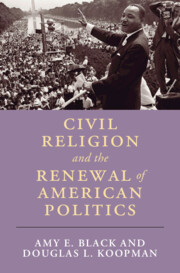
American culture is evolving rapidly as a result of shifts in its religious landscape. American civil religion is robust enough to make room for new perspectives, as religious pluralism is foundational for democracy. Moreover, as Amy Black and Douglas L. Koopman argue, American religion and politics are indivisible. In this study, they interrogate three visions of American identity: Christian nationalism, strict secularism, and civil religion. Whereas the growth of Christian nationalism and strict secularism foster division and threaten consensus, by contrast, a dynamic, self-critical civil religion strengthens democracy. When civil religion makes room for robust religious pluralism to thrive, religious and nonreligious people can coexist peacefully in the public square. Integrating insights from political science, history, religious studies, and sociology, Black and Koopman trace the role of religion in American politics and culture, assess the current religious and political landscape, and offer insights into paths by which the United States might reach a new working consensus that strengthens democracy.
The growing numbers of women living with HIV begged a question: Why and how were women contracting HIV? Chapter 4, “Sex Bargains,” tracks the emergence of a new logic that centered heterosexual sex as the site of women’s vulnerability. Focusing in on the interpersonal negotiation before surrounding sex had a powerful effect: It obfuscated the role of structural responses to the epidemic, from housing to harm reduction, and instead focused public health interventions on individual behavior. This chapter follows an influential debate between law and economics scholars and feminist activists on the question of the sex bargain.
This concluding chapter, “Governing the Unknown: Legal–Scientific Settlements,” offers a new framework to describe the momentary stabilization of scientific facts in and through lawmaking: legal–scientific settlements. From these legal–scientific settlements emerge a range of distributional consequences that have material effects on people’s lives and shape the ability of individuals to survive and thrive despite public health crises.
Chapter 3, “Experiments in Risk: Women and Clinical Trials,” follows feminist advocates as they set out to use the law to mandate the inclusion of women in clinical trials. With the advent of HIV treatment, people with HIV began to survive longer. A new problem emerged: Women were being excluded from clinical trials due to a 1977 Food and Drug Administration (FDA) guideline concerned about the impact of experimental drugs on women’s reproduction and the fetus. Not only did this mean that women could not access experimental treatments, it also resulted in confusion around how to treat women with HIV. Feminists began to advocate for a change in the FDA guidance which was excluding women from clinical trials. In keeping with the broader demands in the feminist movement at the time, feminists asserted that women should be able to choose to enroll in trials despite potential exposure to risks. Buoyed by ideas of choice and bodily autonomy, feminist AIDS activists were able to undo the FDA’s reticence to enroll women in clinical trials altering scientific research in HIV and beyond.
This introduction lays out a core argument of the book: that social movements mobilize law and legal institutions to unsettle expert consensus and alter the distribution of material resources. This chapter describes how feminist activists concerned about women and AIDS sought to reset public health practice on surveillance, diagnosis, risk, and treatment to effectuate feminist goals, including access to public health resources and welfare benefits.
Artificial Intelligence (AI) was seemingly everywhere by the end of 2024, and the 2024 US presidential election was the first American national election to be conducted wholly in an AI era. Nevertheless, relatively little is known about how effectively generative AI contributes to learning about politics. This study explores that question in the context of research on subnational US politics. Based on a novel methodology that combines the analysis of AI-generated profiles on several US states with interviews with state-level experts, this article identifies and analyses a prevalent national bias in the state-level content produced by generative AI. This bias is both a consequence of and a contributor to the problem of the nationalization of American politics, which itself undermines the principles of federalism that undergird Madisonian democracy in the United States.
Chapter 1, “‘We Are Not Immune’: A New Branch of the Feminist Women’s Health Movement,” begins by describing the emergence of a new coalition of feminists who turned their attention to the HIV epidemic in an attempt to understand how the virus would impact women. Together they realized that HIV was killing women more often than the those in charge of the AIDS response acknowledged. The failure to recognize and respond to issues facing women with HIV was due, in part, to the Centers for Disease Control and Prevention definition of AIDS that did not include gynecological infections. The incomplete definition of AIDS resulted in a lack of data on women with HIV and impacted the Social Security Administration’s determinations of who should receive benefits. Allying with lawyers and fellow activists, feminists set out to challenge the law and science of the epidemic.
Chapter 2, “Litigating Risk: The Law and Politics of Disease in the Administrative State,” turns to the litigation and activism that resulted in the shift in the Centers for Disease Control and Prevention definition of AIDS and turned attention to women’s risk of contracting HIV. The chapter tracks how litigation and advocacy were central to the shift in the CDC definition of AIDS. Feminist success would result in many more women being diagnosed with HIV, resulting in a greater ability to access benefits. This life-changing shift would mark a major victory for the feminist women’s health movement.
As heterosexual sex became a driving explanation, feminist debates about sex and power took center stage in the AIDS response. At the heart of this feminist struggle is the question of sex work. Some feminists, carceral antitrafficking feminists, saw sex work as the objectification and exploitation of women. Others saw it as a site of agency and power. Chapter 5, “The Sex Wars Come to AIDS: Risk and Consent,” follows these debates as they moved into public health and the AIDS response. Sex workers were (and continue to be) among the hardest hit with HIV. They were also some of the most powerful advocates of harm reduction. Empowering sex worker communities would turn out to be one of the most reliable ways to slow the spread of HIV. But for feminists who saw sex work as exploitation, these public health interventions were aiding in the exploitation of women. Buoyed by political conservatives and the antitrafficking movement, carceral antitrafficking feminists successfully lobbied for restrictions on funding sex worker projects. The consequences were deadly.
A truly unique all-embracing narrative of the American war in Afghanistan from the own words of its architects. Choosing Defeat takes an unparalleled inside look at America's longest war, pulling back the curtain on the inner deliberations behind the scenes. The author combines his own extensive experience in the Army, the CIA, and the White House, with interviews from policymakers within the Bush, Obama, and Trump administrations, to produce a groundbreaking study of how American leaders make wartime decisions. Transporting you inside the White House Situation Room, every key strategic debate over twenty years – from the immediate aftermath of 9/11, to Obama's surge and withdrawal, to Trump's negotiations with the Taliban, and Biden's final pullout is carefully reconstructed. Paul D. Miller identifies issues in US leadership, governance, military strategy, and policymaking that extend beyond the war in Afghanistan and highlight the existence of deeper problems in American foreign policy.
This Element explores misinformation as a challenge for democracies, using experiments from Germany, Italy, and the UK to assess the role of user-generated corrections on social media. A sample of more than 170,000 observations across a wide range of topics (COVID, climate change, 5G etc.) is used to test whether social corrections help reduce the perceived accuracy of false news and whether miscorrections decrease the credibility of true news. Corrections reduce the perceived accuracy of misinformation, but miscorrections can harm perceptions of true news. The Element also assesses the mechanisms of social corrections, finding evidence for recency effects rather than systematic processing. Additional analyses show the characteristics of individuals who have more difficulties identifying false news. Survey data is included on characteristics of people who write comments often. The conclusion highlights that social corrections can mislead, but also work as remedy. The Element ends with best practices for effective corrections.