To save content items to your account,
please confirm that you agree to abide by our usage policies.
If this is the first time you use this feature, you will be asked to authorise Cambridge Core to connect with your account.
Find out more about saving content to .
To save content items to your Kindle, first ensure no-reply@cambridge.org
is added to your Approved Personal Document E-mail List under your Personal Document Settings
on the Manage Your Content and Devices page of your Amazon account. Then enter the ‘name’ part
of your Kindle email address below.
Find out more about saving to your Kindle.
Note you can select to save to either the @free.kindle.com or @kindle.com variations.
‘@free.kindle.com’ emails are free but can only be saved to your device when it is connected to wi-fi.
‘@kindle.com’ emails can be delivered even when you are not connected to wi-fi, but note that service fees apply.
Reconsidering nineteenth-century Cuban history from the perspective of African-identified people requires that we read Cuban history as tragedy. While there were several important socio-political transitions during Cuba’s long nineteenth century, including slave emancipation in 1886, de-Africanization, or the processes by which colonialists and their successors endeavored to corral, contain, control, co-opt, and eliminate African influences in Cuba persisted well into the twentieth century. Even though these repressive efforts were never fully successful, centering traditional forms of resistance alone leads us to ignore alternative paths/ideas/options that surfaced in response to White supremacy. Simply put, these alternatives garner less attention because they do not fit our narrative constructs and are hard for us to “think.” Centering de-Africanization as process offers a helpful corrective to progressivist and romantic narratives. This essay situates one historical case study in a differently conceived nineteenth-century Cuba to explore forms of resistance that were effectively silenced at the time of their enunciation. In exploring the methodological approaches to understanding this specific case, the essay contributes to a rising trend in Latin American and Latinx studies that centers the importance of Afro-diasporic peoples’ roles in shaping the histories of Latin America and of Latinx experiences in the United States.
José Rizal spearheaded an anticolonial literary movement that aimed to deepen the understanding of Filipinos’ emerging identity through critical engagement with colonial archives. Through his writings in Spanish, the Filipino anticolonial leader gathers and constructs his people’s prehistory in order to promote and comprehend the identity-political transformation his writings describe and prescribe, the consolidation of a “Filipino” identity different from the term’s previous definition of “Spaniards born in the Philippines.” Through analysis of his annotations to Antonio Morga’s Sucesos de las Islas Filipinas and his novel Noli me tangere, I argue that Rizal serves as a useful prototype for Colonial Latinx studies, as both model and cautionary tale. I eventually conclude that Rizal’s literary and historiographical contributions must be understood as on the one hand, a register of colonial maladies – frustrations with powerful Spanish friars and inept and naïve colonized peoples alike – and on the other hand, a rehearsal space for future liberties, including the freedom to define one’s own identity in dialogue with and against colonial expectations and discourses.
This chapter examines the work of three contemporary US poets – Daniel Borzutzky, Rosa Alcalá, and Wendy W. Walters – who explore how capitalist processes help to construct and “translate” race and gender into partitioned conditions of subjectivation and what Iris Marion Young, after Jean-Paul Sartre, calls serial collective identities. All three authors help us to reimagine the political economy of race in terms of bounded yet globally interconnected material contexts of action rather than as relations between collective subjects with fixed group attributes. These poets instead represent race as a social form of constraint and possibility powerfully conditioned by a capitalist logic of accumulation, spatial containment, and an international division of labor simultaneously dividing and connecting populations across great distances and differences.
How has American “money art” responded to new developments in financialized capitalism? Why do bills and coins continue to feature prominently in American art, given the turn toward cashless transactions? This chapter first contextualizes these questions, by considering prominent historical themes in American money art. Then, it focuses on how works from the past three decades by Dread Scott, Martha Rosler, and Pope.L explore the relationship between money and everyday performance. These works position coins and bills as objects that continue to organize people’s actions, behaviors, and beliefs, even though their roles in society are changing. Within financialized capitalism, people’s embodied habits of handling money reveal a tacit faith in currency as a trusted store of value – even as crisis-ridden financial systems upend commonsense faith in money. Scott, Rosler, and Pope.L, among other artists, inaugurate an approach to money art that I term “performing currency”: choreographing action around coins and bills as a way to contemplate how rapidly changing financial conditions clash with long-standing embodied habits of handling money.
This chapter explores the medically-trained writer, Robert Montgomery Bird, and his fraught experience of the way the competing ontological paradigms that inflected Edgar Huntly also conditioned early nineteenth-century medical discourse. Bird uses his picaresque novel, Sheppard Lee (1836), to interrogate what was called “regular” medical discourse and its mind-centered ontology, and to imagine instead the ontological possibilities that result from the body-centered ontology of metempsychosis. For Bird, metempsychosis involves our consciousness migrating from one body to another, and being defined by its different embodiment. In representing the lived experience of both white and Black embodiment, Bird uses metempsychosis to interrogate “regular” medicine’s mind-centered ontological paradigm, even as he puts pressure on “irregular” medicine as well. As I argue, Bird understands conscious existence as ontological drift, as I call it, a far less clear, but far more capacious ontology than either regular or irregular medical discourses entertain. By “minding the body” in this way, Bird uses his novel’s interrogation of the mind-body relationship to imagine a less repressive, but not unproblematic, form of racialized conscious existence in the antebellum period.
With the 1912 elections, 18 years of Republican control of the Senate came to an abrupt end. In Chapter 6, we examine the institutional inventions of the 63rd Congress (1913–15), when, in a newly competitive world, the Democratic floor leader—John W. Kern (D, Ind.), a progressive senator closely allied with the newly elected president Woodrow Wilson—became the first person widely regarded as an elected majority leader of the Senate, with responsibility for devising and implementing party strategy. The Republicans, now in the minority, created their own position of elected floor leader in 1913, following the generation-old Democratic model, and both parties invented the position of whip. Other developments, such as the emergence of the modern use of unanimous consent agreements, the creation of party floor staff, and, for the Democrats, entrusting committee assignments to their leadership, were accomplished in the 1910s and 1920s.
This chapter describes the critical and speculative capacities of the Occupy novel, or contemporary novels that represent Occupy Wall Street and the Occupy movement more broadly. It argues that such fiction represents the financialization of everyday life, that is, the colonization of personal life and political subjectivity by Wall Street or finance capital. In doing so, it returns the question of social class to the center of US political debates. However, the Occupy novel also speculates on the possibilities of postcapitalist social life; it treats Occupy Wall Street as prefiguring new kinds of economic relations and social conducts. The chapter frames the Occupy novel in terms of its predecessor, the fiction of the post-2008 financial recession (“crunch lit”). Whereas crunch lit diagnoses financialization as a problem of households (personal debt, family crisis, and so on), the Occupy novel asks whether literature (and art in general) might have the capacity to engage in social struggle, to imagine new forms of public life.
In the 1970s, due to the Nixon administration’s decision to abolish the gold standard, money entered into an ontological crisis. This crisis has reverberated, via an avalanche of other financial events in the decade and after, all the way into the twenty-first century. In this chapter, I consider various novels (and some films as well) that point to deep philosophical relations between the kinds of questions that money’s post-1970 ontological crisis opens up, and the art of fiction-writing. These relations are especially evident in the tensions between literary realism – exemplified in the field by Tom Wolfe’s The Bonfire of the Vanities (1987) – and postmodernism, which comes to challenge realism in the early 1970s, exactly when money’s ontological crisis opens up. Whereas the realist project, which has seen a revival after the 2007–8 global market crash, seeks to provide epistemological responses to money’s ongoing crisis – a descriptive and explanatory project that is necessary, even if it may be doomed to failure – post-1970s postmodernism and more experimental fiction are better placed to engage money’s ontological crisis, which has laid bare the ways in which money exceeds what we can know about it and demands a realism that is speculative – like contemporary finance itself.
On their first arrival in North America, Europeans entered a strange land but, most of all, an unfamiliar Indigenous economy. While capitalism functioned on a disembodied trade of goods or an abstract exchange of currency, Native societies honored the idea of the gift. On this belief in a gift economy, Indigenous people nurtured trade relations, but also diplomacy, war alliances, marriage, friendship, and peoplehood and ecology themselves. This chapter elucidates the idea and operation of an Indigenous gift economy, as it served and serves Native nations, and explores the gift’s impact on and disruption of European and American capitalist market economies. From this alternative Indigenous economic approach, as presented in anthropology as well as in traditional Indigenous thought, we turn to several representative works in American literature, from ancient myth and early testimony to autobiography, novel, and poetry, to illustrate the place of Indigenous ceremony, such as the giveaway and the potlatch, in its resistance to destructive colonial policy such as removal and allotment. Ultimately, Indigenous gift exchange economies give voice to America’s haunted money, from wampum to bucks, in which Native land was never “the gift outright.”
The Electoral College can misfire, electing a president who loses the popular vote (as in 2000 and 2016), but the presidential nomination process can misfire as well, producing a nominee (as in 1952 or, more recently, 2016) who is less popular among party voters than other candidates in the party. The cause of this is the byzantine web of state laws and party rules governing the process. This book explores those rules, enabling us to make sense of the process and understand how presidential candidates have been selected throughout American history. Surprisingly, for much of American history, the major party’s nominees were chosen by party leaders, not ordinary voters, and even today, the process is far less democratic than many imagine. Not every voter is able to participate in the process, and not every vote is weighted equally. This book examines the evolution of the rules governing the nomination process and how those rules contribute to the increasing ideological polarization of our politics today.
This article explores the role of race in discussions of women and aging in the early twentieth century. It first examines the uses of whiteness in Charlotte Perkins Gilman’s problematic defense of older women, and then compares it with works by Harlem educator Elise McDougald. It investigates McDougald’s use of different life stages to disrupt anti-Black representations that stand in stark contrast to Gilman’s project. The article incorporates history and theories of aging, gender, and race, as well as literary analysis, to evaluate the long-standing and under-theorized importance of race in constructs of age and aging.
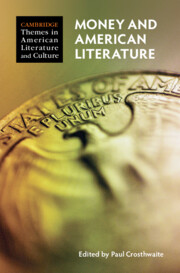
Few topics are as central to the American literary imagination as money. American writers' preoccupations with money predate the foundation of the United States and persist to the present day. Writers have been among the sharpest critics and most enchanted observers of an American social world dominated by the 'cash nexus'; and they have reckoned with imaginative writing's own deep and ambivalent entanglements with the logics of inscription, circulation, and valuation that define the money economy itself. As a dominant measure of value, money has also profoundly shaped representations of race, ethnicity, gender, and sexuality. American literature's engagements with money – and with directly related topics including debt, credit, finance, and the capitalist market – are among Americanists' most prominent concerns. This landmark volume synthesizes and builds upon the abundance of research in the field to provide the first comprehensive mapping of money's crucial role over five centuries of American literary history.
This essay addresses the role of whiteness in slave narratives, a body of writing that featured the voices and experiences of African Americans, arguing that white American culture is fundamental to these narratives. This foundational presence is clear in the narratives’ representation of white slave owners, in the prefaces or other material added to slave narratives by white writers, and in the fact that some narratives were wholly written by white writers, representing the experience of formerly enslaved African Americans. But it is important to understand that white American culture made the slave narratives necessary and that these narratives work to persuade white Americans of moral imperatives for which African Americans needed no persuasion.
This chapter traces the recent turn to form in Latinx literary studies. While the field has long privileged the historical in shaping debates and organizing Latinx cultural production, there is a growing group of scholars taking the formal as their point of departure by studying components that range from genre to word choice, from page layout to punctuation. Concerned less with the who, what, and where of literary texts, this new approach focuses more on how. That is, how our privileged objects of study – race and racism, community and coalition, gender and sexuality – are represented on and off the page. Linking these recent approaches to a longer tradition of queer Latinx performance studies, a branch of scholarship long attuned to the importance of gesture, corporality, and affect, this chapter models formal analysis by taking works by Carmen María Machado and Justin Torres as representative case studies.