To save content items to your account,
please confirm that you agree to abide by our usage policies.
If this is the first time you use this feature, you will be asked to authorise Cambridge Core to connect with your account.
Find out more about saving content to .
To save content items to your Kindle, first ensure no-reply@cambridge.org
is added to your Approved Personal Document E-mail List under your Personal Document Settings
on the Manage Your Content and Devices page of your Amazon account. Then enter the ‘name’ part
of your Kindle email address below.
Find out more about saving to your Kindle.
Note you can select to save to either the @free.kindle.com or @kindle.com variations.
‘@free.kindle.com’ emails are free but can only be saved to your device when it is connected to wi-fi.
‘@kindle.com’ emails can be delivered even when you are not connected to wi-fi, but note that service fees apply.
The final chapter concludes with broader implications. After recapping how the previous chapters fit together to form a larger window on social control beyond coercion, it scrutinizes the limits of political atomization with a focus on perverse outcomes that result from the accumulated effects of individualization. Next are implications for China for inequality, the economy, migrant welfare and citizenship, and the authoritarian state’s social control toolbox. China is not alone in using political atomization, and a comparative perspective can spur future research on how the phenomenon already exists in not only other developing and authoritarian countries but also in democracies and developed countries. It ends with an examination of inequality and the state, noting that individual-level schemes are no match for systemic deflection and demobilization to address the entrenchment of inequality in social policy.
Although rural migrants are frequently deflected and only selectively incorporated into urban public benefits, they have ways to undercut elements of social control and attain some education and health care. Resourcefulness and practical priorities help them find bureaucrats who practice co-migrant empathy and work within existing formal institutions to pry open what institutional leeway they can. When those are insufficient or inaccessible, they create and turn to private alternatives to get health care and education in the city. “People-run” schools are informal institutions that fill the gaps of public service provision, enabling migrants to keep their jobs when they get sick or have families in their destinations. However, because they are makeshift and typically operate on the outskirts of cities and in the shadows of legality, they can become subject to sudden intervention or regulation by the state. At other times, the government allows them to operate. The subversion of control is possible but not without the risk of being reverted into a target of the state.
Municipalities deflect demands for benefits instead of meeting them or denying them outright to resist and undermine elements of the central government’s urbanization strategy. This diffuse promise of phantom services operates at what is experienced by local officials and migrants as the person-by-person micro-level of provision. Urban authorities sometimes do so by establishing nearly impossible eligibility requirements or requiring paperwork that outsiders struggle to obtain. At times they also nudge migrants to seek health care or education elsewhere by enforcing dormant rules or by shutting down a locally available service provider. Local officials use these ploys for both political and practical reasons. Limiting access isolates and disempowers migrants and is cheaper than offering benefits. Phantom services are a consequence of the localization of the household registration system and a sign that new axes of inequality and gradations of second-class citizenship have emerged.
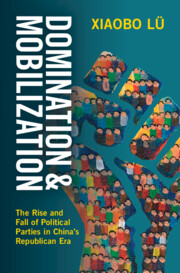
Examining the miraculous rise of the Chinese Communist Party (CCP) and the surprising downfall of the Kuomintang (KMT) in the early twentieth century, Xiaobo Lü reveals that domination and mobilization are key for authoritarian parties to seize state power, challenging the prevailing wisdom on power-sharing and emphasizing the importance of dominant party leaders for organizational strength and resource mobilization. Lü convincingly argues that the CCP's mass mobilization infrastructure, initially seen as a disadvantage before the Sino-Japanese War, became a powerful asset during the war and led to its victory. The KMT's elite mobilization infrastructure, conversely, was decimated by the war, and its lack of a strong leader prevented a successful shift in party-building strategy. Party building subsequently played a pivotal role in shaping the successes and failures of resource mobilization for both parties. The book sheds new light on the origins of the CCP and the inner workings of revolutionary parties, making in a landmark study in Chinese politics.
A major debate is underway in China on a proposed law that would grant new rights to Chinese workers. The debate has not been widely reported outside of China; until recently it has been almost entirely ignored by media in the United States. But when the Chinese government opened a 30-day public comment period this spring, it received nearly 200,000 comments, the majority from ordinary workers. But some comments also came from big U.S.- and European-based global corporations and their lobbying groups. These powerful forces squarely opposed the new law.
Wal-Mart's recent agreement to recognize unions in China has made headlines worldwide. But Wal-Mart and other corporations, including Google, UPS, Microsoft, Nike, AT&T, and Intel, have acted through the American Chamber of Commerce in Shanghai (AmCham) and other industry associations to try to block Chinese legislation that would significantly increase the power and protection of workers.
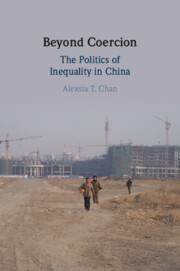
Beyond Coercion offers a new perspective on mechanisms of social control practiced by authoritarian regimes. Focusing on the Chinese state, Alexsia T. Chan presents an original theory and concept of political atomization, which explains how the state maintains social control and entrenches structural inequality. Chan investigates why migrant workers in China still lack access to urban public services despite national directives to incorporate them into cities, reported worker shortages, and ongoing labor unrest. Through a meticulous analysis of the implementation of policies said to expand workers' rights, she shows how these policies often end up undermining their claims to benefits. The book argues that local governments provide public services for migrants using a process of political individualization, which enables the state to exercise control beyond coercion by atomizing those who might otherwise mobilize against it. This title is part of the Flip it Open Programme and may also be available Open Access. Check our website Cambridge Core for details.
After the Japanese colonization of Taiwan in 1895, various Japanese Buddhist sectarian traditions arrived in Taiwan and those bringing them actively approached local Buddhist monks and monasteries for cooperation. After 1915, Taiwanese monks separated into two factions: one faction headed to mainland China to study, and the other to Japan. At the same time, indigenous Buddhist traditions in Taiwan gradually developed into four sectarian groups, whose founders all shared deep ties with the Yongquan Temple of Drum Mountain (Gushan) in Fujian province on the mainland. Japanese Buddhists targeted them in particular for co-optation. Venerable Shanhui, who is the focus of this article, was the founder of one of these lineages. Venerable Shanhui was inducted into the Japanese Sōtō Zen sect and was appointed as the abbot of the Lingquan Temple by the head priest (kanchō) of the Sōtō sect in August 1907. Between 1911 and 1939, Venerable Shanhui was active in various chaplaincies in mainland China and Southeast Asia. In December 1933, he returned to Taiwan from Singapore via Hangzhou, where he became president of the Hangzhou Sino-Japanese Buddhist Society. In August 1939, Shanhui accepted the invitation of Narita Hōzui, then abbot of the Sōtō Zen temple Chōtokuin in Shanghai, to leave Taiwan and perform missionary work at temples in central China. This article also examines the existence of two different Hangzhou Sino-Japanese Buddhist societies and Shanhui’s relationship to them.
This article examines the activities of the Japanese Buddhist priest Ueda Tenzui (1899–1974) in wartime Thailand and Burma. Ueda initially went to Southeast Asia to pursue his studies of Buddhist precepts. During the war, he joined a pacification team of the Japanese military in occupied Burma and, as part of this role, became the headteacher of a Japanese language school. He was later ordained and served for some time as a monk in the Burmese Theravada tradition. Since the 1970s, research on Japanese Buddhist involvement in Japan’s wars has focused on criticizing those who cooperated with the war effort and praising those who resisted. In this regard, Ueda is unquestionably a ‘collaborator’. Yet, his case demonstrates the importance of the concept of the ‘grey zone’ between the two extremes of collaboration and resistance. While we have to acknowledge that Ueda acted in support of the war effort at the request of the military, he was also a scholar and a practitioner who deepened his understanding of Theravada Buddhism through personal experience. Ueda criticized the war after Japan’s defeat and also came to actively appreciate Burmese Buddhism’s strict adherence to the precepts. At the same time, he never showed a critical attitude towards Japanese Buddhism. Ueda’s thinking is characterized by his ability to find commonalities between Burmese and Japanese Buddhism without ranking them according to some hierarchy of superiority and inferiority, while also recognizing the differences that exist between these two branches of Buddhism.
Examining Olympic opening and closing ceremonies from the perspective of relational creativity, this article analyzes the 1998 Nagano Winter Olympics’ opening ceremony and the 2016 Rio Games’ Japanese closing ceremony—both experimented with transitory meanings exploring alternative representations of Japan. We consider them as cases of relational creativity; the Nagano opening ceremony explored the fusion of local religious traditions and Western influences, while the Rio closing ceremony experimented with meanings of urban cosmopolitanism, consumerism, as well as cultural and social inclusivity.
This article discusses the activities of three Buddhist monks: the Japanese Fujii Sōsen (1896–1971) and Kanda Eun (1901–1948), as well as the Chinese Daxing (1900–1952) in Second World War-era China and how their paths intersected. Daxing, who remained in the area occupied by Japan, has been accused of having been too accommodating towards the Japanese forces. However, while Daxing did indeed interact with pro-Japanese Buddhist organizations, his actual relationship with the occupation was a lot more ambiguous, as shown by his lacklustre involvement with Japanese-sponsored initiatives. Fujii and Kanda were deeply involved in Sino-Japanese Buddhist exchange from the late 1920s and were two of the few Japanese Buddhists who also became fluent in Chinese. While they remained highly sympathetic to the plight of the Chinese people, they also continued to work with the Japanese occupiers. Thus, the space occupied by Daxing, Fujii, and Kanda is not easily covered by either ‘resistance’ or ‘collaboration’, but falls uneasily between the two. The article uses the example of these three figures to delineate this ambiguous space and examine how Buddhists sought to navigate the treacherous terrain of occupied China.
In July 1934, the Second General Conference of Pan-Pacific Young Buddhists’ Associations was held in Tokyo and Kyoto. Despite the event’s grand scale, with roughly a thousand participants attending from across Asia and North America, and its aspiration to use Buddhist solidarity to promote international goodwill, only a handful of delegates represented the Republic of China. The general absence of Chinese Buddhist leaders was due to widespread anger over the conference organizers’ treating Manchukuo, Japan’s puppet state in Manchuria, as an independent nation in conference materials. Yet conference attendees (including Japanese, Chinese, and others) were not necessarily collaborationists who supported Japan’s imperial expansion, as some used the platform to criticize Japanese imperialism and the conference’s normalization of Manchukuo.
This article uses this 1934 conference as a lens through which to examine the complex relations between Buddhists from Japan and China (and elsewhere) and Japan’s early wartime empire. It argues that many occupied a kind of ‘grey zone’ between collaboration and resistance, hoping that Buddhist institutions could promote genuinely peaceful international relations, but also aware that their involvement in Japanese projects could be used to help justify Japanese imperialism. It first provides an overview of the colonial and anti-colonial politics of international Buddhist conferences in the early twentieth century (with particular attention given to the First Pan-Pacific Young Men’s Buddhist Associations Conference held in Honolulu in 1930) before closely examining the organization of the second conference, especially the controversies that developed around the Chinese delegation that led to a near-boycott by Chinese Buddhists.
Tokyo Governor Koike Yuriko’s vision of a city where everyone can “shine” masks systemic contradictions in Japan’s future-making endeavors. While public proclamations frame Tokyo as inclusive and equitable, actions by Koike’s administration reveal abiding inequities. These efforts align with decades-long projects, most recently manifested in Society 5.0 and the Sustainable Development Goals (SDGs), which prioritize market-driven growth while erasing systemic concerns of poverty and homelessness. Ethnographic insights from advocacy groups highlight the necessity of cultivating meaningful alternatives that emphasize empathetic dignity—a critique that underscores the necessity of reimagining Japan’s trajectory beyond performative policies of technologically mediated utopia futures.
This article discusses the activities of the Sino-Japanese Society of the Study of Esoteric Buddhism, which was active in North China from the early 1930s until the end of the Second World War. The organization was founded by Yoshii Hōjun, a young priest of the Japanese Shingon sect. It attracted the support of a wide range of actors, including a range of former Beiyang government politicians, Japanese diplomats, as well as prominent members of the Japanese community in North China. It had contacts in the Japanese military that have garnered the Society the reputation of having been a front for Japanese intelligence operations. This article critically investigates these claims and seeks to understand the relationship between religion and politics manifested in the Study Society for Esoteric Buddhism. Its history reflects the fraught relations between the two nations as well as between the various interest groups on both sides and thus provides a window into the complexities of pre-war North China in the 1930s.