To save content items to your account,
please confirm that you agree to abide by our usage policies.
If this is the first time you use this feature, you will be asked to authorise Cambridge Core to connect with your account.
Find out more about saving content to .
To save content items to your Kindle, first ensure no-reply@cambridge.org
is added to your Approved Personal Document E-mail List under your Personal Document Settings
on the Manage Your Content and Devices page of your Amazon account. Then enter the ‘name’ part
of your Kindle email address below.
Find out more about saving to your Kindle.
Note you can select to save to either the @free.kindle.com or @kindle.com variations.
‘@free.kindle.com’ emails are free but can only be saved to your device when it is connected to wi-fi.
‘@kindle.com’ emails can be delivered even when you are not connected to wi-fi, but note that service fees apply.
According to a philosophical commonplace, Aristotle defined human beings as rational animals. When one takes a closer look at the surviving texts, however, it is surprisingly hard to find such a definition. Of course, Aristotle repeatedly stresses that he regards rationality as the crucial differentiating characteristic of human beings, but he nowhere defines the essence of what it is to be human in these terms. What is more, Aristotle’s abundant remarks about human nature are scattered throughout his texts, and he offers no systematic treatise on human beings.
The notion that human beings are imperfect in many ways and that their perfection requires special means is commonly associated with Plato rather than with Aristotle. Plato not only treats the objects of the material world as deficient copies of their immaterial and eternal models or ‘forms’ in general, but displays a pessimistic view of human nature in particular. It must, of course, remain forever a matter of debate in how far Plato shares the view about the poor natural endowment of human beings that he lets the famous sophist Protagoras pronounce in the dialogue he named after him (Prot. 320c–324d). But there are good reasons for assuming that Plato at least shared the sophist’s diagnosis concerning the natural human endowment in two respects: (i) in comparison with other animals, humans are born in a particularly vulnerable state. They are, by nature, provided neither with food nor with cover nor with the means of self-defence: ‘naked, unshod, unbedded, and unarmed’ (Prot. 321c). According to Protagoras’ myth, the poverty of human nature is compensated for only by the ‘gift of Prometheus’: it is the invention of fire and of certain crafts that ensures the provision of life’s necessities. (ii) The Promethean gift of the crafts alone would have been insufficient to ensure the survival of the human race. The formation of communities, as a means of defence and mutual support, required Zeus’s special gift of ‘political art’. Without the notions of justice and shame, humans would inevitably have destroyed each other. Just like the technical arts, according to the myth in the Protagoras, the social arts are not part of the natural human endowment. Their development presupposes training and teaching over many years. It is a task that requires the joint efforts of the entire community.
According to a philosophical commonplace, Aristotle defined human beings as rational animals. When one takes a closer look at the surviving texts, however, it is surprisingly hard to find such a definition. Of course, Aristotle repeatedly stresses that he regards rationality as the crucial differentiating characteristic of human beings, but he nowhere defines the essence of what it is to be human in these terms. What is more, Aristotle’s abundant remarks about human nature are scattered throughout his texts, and he offers no systematic treatise on human beings.
The claim that human beings are by nature political animals is one of the most fundamental of Aristotle’s Politics, and, understandably, it has received a lot of attention.1 One very interesting, and fruitful, trend has appealed to the biological works to illuminate this famous thesis.2 This strategy has brought to light a broad conception of politicality which is exhibited by humans and other gregarious animals, including bees, wasps, ants, and cranes.3 As scholars have rightly emphasised, political animals in the broad sense collectively pursue a common end via a differentiation of roles or tasks. Different broadly political species have different common ends. Bees promote the good of the hive, wasps that of the nest, and so on. Nonetheless, every broadly political species has a shared end – really, a shared way of life – that all of its members promote in different ways. This is true of humans, although their way of life specifically involves forming and sustaining poleis, which makes them political in another, narrower, sense as well.4
If someone has considered the study of the other animals to lack value, he ought to think the same thing about himself as well; for it is impossible to look at the parts from which mankind has been constituted—blood, flesh, bones, blood vessels, and other such parts—without considerable disgust.
Aristotle establishes in this passage a strong link between a substance’s ergon and its aretē.2Ergon is commonly translated as ‘function’.3 In many cases, it is even conceived of as something’s function or purpose in the literal sense. At least this is how Socrates appears to define the term at the end of the Republic, book I, claiming that a substance’s ergon refers to the work for which the substance is the sole or best instrument (352e and 353a). Socrates’ reference to the pruning knife to cut vines is the paradigm case. While their shoots could also be cut with a carving knife, or a chisel, or many other tools, Socrates explains how no tool does it better than the pruning knife, which is made for the purpose. Thus, according to him, we are entitled to define the ergon or function of the pruning knife to be the act of pruning. As Socrates further states (353b), everything that has an ergon also has a distinct virtue (aretē) or vice (kakia). While it is through its virtue that it performs its ergon well, the opposed vice makes it perform its ergon poorly (353c). Socrates claims this model holds not only for artefacts such as the pruning knife, but more generally: In the same way it is attributed to the knife, it is also attributed to the eye, the horse, and the human being. Since artefacts are considered paradigmatic, we may call the Socratic model the functionalist conception of virtue. Virtue here means a substance’s fitness to serve a distinct purpose that is assigned to it; it means aptitude, serviceability, or even instrumentality.4
An important question regarding Aristotle’s moral anthropology is whether or not human beings can become perfectly good. Should we consider Aristotle’s paradigmatically virtuous agent (who appears under the different names of spoudaios, phronimos, agathos, epainetos, epieikēs, or kalos kagathos) as an ideal figure, i.e. as someone who permanently and infallibly executes morally correct actions? Is his character irreversibly transformed into a state of perfection? Might we describe his inner condition as that of perfect psychic harmony? Or is it true, as some interpreters claimed, notably Shane Drefcinski and Howard Curzer,1 that the virtuous man (Aristotle never mentions female candidates) can act badly? Does he perform, at least to some extent or from time to time, slightly suboptimal actions, or perhaps even more: evil deeds? If Aristotle’s moral anthropology allowed for some imperfection or even considered imperfection as an unavoidable part of the human condition, it would be close to the view of the philosophos held by Plato. If, on the other hand, Aristotle defended an ideal of absolute perfection, he would be somewhere contiguous to the Stoic concept of the sage (sophos).
In the following chapter I would like to draw the reader’s attention to a passage in Aristotle’s De Caelo that, to my mind, reveals some of Aristotle’s deeply rooted presuppositions about the role and the standing of human beings within the cosmos. Strictly speaking, the passage, which is in book II, chapter 12 of De Caelo, is not meant to discuss anthropological questions; it rather unfolds a comparison between celestial bodies and living beings. In the course of this comparison it turns out, somewhat surprisingly, that out of all the kinds of celestial bodies, it is the planets whose nature is most akin to that of mankind. Since explanation, both in Aristotle and in real life, proceeds from what is better known and more fundamental to what is less known and in need of an explanation – in the given case from living beings, such as plants, animals, and humans, to celestial bodies – the very idea of this comparison presupposes that there are certain facts about human beings that are relatively uncontroversial and are not themselves in need of explanation. Owing to this general setting we can be confident that the characteristics of human beings that Aristotle adduces are thought to be general truths about the human condition – although he does not really engage with the details and the implications of these supposed truths.
Human beings are not the only social animals, according to Aristotle. He doesn’t even think they are the only political animals. And in the beginning of book 8 of the Nicomachean Ethics, he suggests that non-human animals can also be friends with each other: most of them entertain friendships with their young, as well as with other members of their own species.1 So, is friendship not uniquely human either?
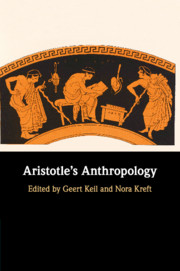
This is the first collection of essays devoted specifically to the nature and significance of Aristotle's anthropological philosophy, covering the full range of his ethical, metaphysical and biological works. The book is organised into four parts, two of which deal with the metaphysics and biology of human nature and two of which discuss the anthropological foundations and implications of Aristotle's ethico-political works. The essay topics range from human nature and morality to friendship and politics, including original discussion and fresh perspectives on rationalism, the intellect, perception, virtue, the faculty of speech and the differences and similarities between human and non-human animals. Wide-ranging and innovative, the volume will be highly relevant for readers studying Aristotle as well as for anyone working on either ancient or contemporary philosophical anthropology.
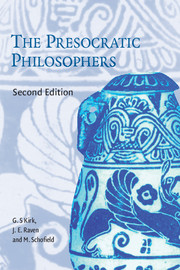
Beginning with a long and extensively rewritten introduction surveying the predecessors of the Presocratics, this book traces the intellectual revolution initiated by Thales in the sixth century BC to its culmination in the metaphysics of Parmenides and the complex physical theories of Anaxagoras and the Atomists in the fifth century it is based on a selection of some six hundred texts, in Greek and a close English translation which in this edition is given more prominence. These provide the basis for a detailed critical study of the principal individual thinkers of the time. Besides serving as an essential text for undergraduate and graduate courses in Greek philosophy and in the history of science, this book will appeal to a wide range of readers with interests in philosophy, theology, the history of ideas and of the ancient world, and indeed to anyone who wants an authoritative account of the Presocratics.
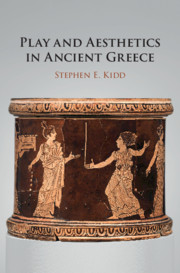
What is art's relationship to play? Those interested in this question tend to look to modern philosophy for answers, but, as this book shows, the question was already debated in antiquity by luminaries like Plato and Aristotle. Over the course of eight chapters, this book contextualizes those debates, and demonstrates their significance for theoretical problems today. Topics include the ancient child psychology at the root of the ancient Greek word for 'play' (paidia), the numerous toys that have survived from antiquity, and the meaning of play's conceptual opposite, the 'serious' (spoudaios). What emerges is a concept of play markedly different from the one we have inherited from modernity. Play is not a certain set of activities which unleashes a certain feeling of pleasure; it is rather a certain feeling of pleasure that unleashes the activities we think of as 'play'. As such, it offers a new set of theoretical challenges.
If play can make anything into a pleasure object, what role is left for the objects themselves, whether they be toys or traditional objects of art? This chapter studies the concrete realia of ancient play—the knucklebones, dolls, dice, yo-yos, wind-up toys, and so forth—via both literary and archaeological evidence. The fact that the Greek words for “toy”—athurma and paignion—regularly denote jewelry, baubles, trinkets, and other such sparkling items lends support to the overarching thesis of this book: just as the verb paizō can denote “delight”, under which the English “play” might be thought of as a subcategory, so too paignia chiefly denotes “pleasure objects”, under which the English “toys” can be thought of as a subcategory. But this poses problems even while it lends support. Considering that play is typically omnivorous—a player can play with anything (sticks, rocks, potsherds)—what is the nature of this more limited set of objects, namely “toys”? If the pleasures of play are self-emanating, how do these special objects come to be recognized as more pleasurable than everyday objects, as if they themselves were the sources of pleasure?
Explores the differences between English "play" and Greek paidia, focusing especially on passages in which Greek paidia seems to imply an emotion, feeling, or mood (Hippocrates' Sacred Disease, depictions of personified Paidia on vases, etc.). Argues that this meaning of paidia is consequential for questions of aesthetics because play is regularly associated with singing, dancing, and music, and because Plato uses "play" as a category covering what we today think of as the "arts" (e.g. painting, sculpture, theater, music, dance, etc.). The eight chapters of the book are then overviewed. At the end, the concept of play (paidia) is disentangled from that of mimesis.
Considers how the Greek notion of paidia might help resolve some knotty problems that often arise in modern theorizing about play. Play is often described as accompanied by pleasure or giving rise to pleasure, while, at other times, pleasure is hardly mentioned at all. The Greek notions of paidia suggest an alternative, that play is a manifestation of pleasure itself, and for this reason there can be no moment during play without pleasure, since pleasure is its defining feature. Putting paidia into dialogue with modern play theorists such as Huizinga, Caillois, Gadamer, and others, I consider both the strengths and weaknesses of such a pleasure model of play.