To save content items to your account,
please confirm that you agree to abide by our usage policies.
If this is the first time you use this feature, you will be asked to authorise Cambridge Core to connect with your account.
Find out more about saving content to .
To save content items to your Kindle, first ensure no-reply@cambridge.org
is added to your Approved Personal Document E-mail List under your Personal Document Settings
on the Manage Your Content and Devices page of your Amazon account. Then enter the ‘name’ part
of your Kindle email address below.
Find out more about saving to your Kindle.
Note you can select to save to either the @free.kindle.com or @kindle.com variations.
‘@free.kindle.com’ emails are free but can only be saved to your device when it is connected to wi-fi.
‘@kindle.com’ emails can be delivered even when you are not connected to wi-fi, but note that service fees apply.
In this volume, David Litwa offers a fresh introduction to the 'gnostic Bible,' arguably the most significant and widely read of all gnostic Christian texts ever written. Providing a fresh introduction to a particular version of the Secret Book of John, namely the shorter version that is found in Nag Hammadi Codex III, his study includes a new translation of this text and an extensive commentary in which he introduces the notable features of this codex and interrogates whether the Secret Book emerged from an actual gnostic community. Litwa also posits solutions to many questions related to this text, notably: its date and find spot, its relationship to the treatise known and summarized by Irenaeus in the late second century, its interpretation and re-creation of the book of Genesis for Christian readers, its novel interpretation of Greco-Roman philosophy, its foundations in apostolic authority, and the reception of the Secret Book of John in late antiquity, well into the fifth century CE.
The Gospel of Truth is an early Christian homily in which an anonymous and independent-minded teacher communicates his understanding of the core Christian message to his own immediate circle and a wider audience elsewhere. For this author, the gospel is the good news that in the person of Jesus, the divine Father has made himself known to his elect, calling them out of a nightmare-like existence in ignorance and illusion into the knowledge of himself. In this volume, Francis Watson provides a new and accessible translation of this text, along with a thorough analysis of it, both in its own terms and in its reception by later readers. He argues that its closest affinities lie with New Testament texts such as the Gospel of John and the Pauline letters. Watson also demonstrates how The Gospel of Truth is a work of literary quality and theological originality and why it deserves the attention of all students and scholars of early Christianity.
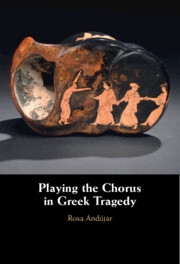
Modern audiences see the chorus as an emblematic yet static element of ancient Greek drama, whose reflective songs puncture the action. This is the first book to look beyond these odes to the group's complex and varied roles as actors and physical performers. It argues that the chorus' flexibility and interactive nature has been occluded by the desire from Aristotle onwards to assign the group a single formal role. It presents four choreographies that ancient playwrights employed across tragedy, satyr play, and comedy: fragmentation, augmentation, interruption, and interactivity. By illustrating how the chorus was split, augmented, interrupted, and placed in dialogue, this book shows how dramatists experimented with the chorus' configuration and continual presence. The multiple self-reflexive ways in which ancient dramatists staged the group confirms that the chorus was not only a nimble dramatic instrument, but also a laboratory for experimenting with a range of dramatic possibilities.
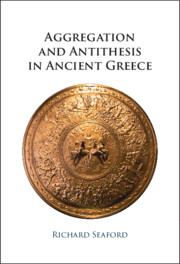
What is the relationship between forms of thought in literature, philosophy and visual art in ancient Greece, and how are these forms related to their socio-political and economic context? This is the question raised by Richard Seaford in his final book. His answer is framed in terms of the relationship between aggregation and antithesis. In Greece between the eight and fourth centuries BCE, Seaford traces a progressive and complex shift from aggregation to antithesis in literature, philosophy and visual art, and correlates this with the shift from a pre-monetary and pre-polis society to a monetised polis. In the Platonic metaphysics of being, he identifies a further move, the negation of antithesis, which he links with the non-circulating possession of money. In this characteristically ambitious and challenging study, Richard Seaford extends his socio-economic analysis of Greek culture to visual art and includes contrasts with Near Eastern society and art.
Luke’s prologue presses the question raised in Part I (“What is a Gospel?”) into new territory: what about the many other writings that variously recorded Jesus’s life and/or teachings not included in the New Testament canon? Many of them also accrued the title “Gospel,” generally conformed to the definition outlined in Part I, and populated the literary landscape of early Christianity into Origen’s own day. This chapter considers how, in Origen’s view, one may distinguish the four received Gospels from the many others, and how he understands Luke (in particular) to have participated in this process of discernment in the way he hands on the traditions he receives. Origen cannot accept that Luke’s own language allows one to reduce his intent with these narratives to matters of plain facticity. Something, as Luke says, had “come to pass among us,” something of which he and his tradents had become fully convinced, something that had made of them all servants of its proclamation: “attendants of the word.” In other words, the very writing of these stories becomes, in Origen’s view, a form of “spiritual reading” of Jesus’s early life.
There has never been a time when the life of Jesus has not presented some occasion for scandal. Although the primordial scandal of the Christian Gospel unfolded around the figure of a crucified Messiah, this book takes as its principal subject a derivative scandal: the scandal of the Christian Gospels; namely, the impediments – even offenses – to literary, historical, and logical sense that only seem to multiply in proportion to one’s intimacy with the narratives of the four Evangelists. The suggestion of such things will itself be scandalous to some.
What sort of thing are the narratives of the life of Jesus, literarily speaking? (History? Biography? Fiction? Myth?) And what bearing does their genre have on the manner of interpretation proper to them? This chapter attends to Origen’s account of the Gospels’ genre, literary precedents, and relationship to other forms of ancient literature in order to establish why he believes the Gospels cannot be read as transparently historical narratives. Here, I propose that the kind of narratives Origen believes the Evangelists compose is directly comparable to the stories one finds throughout the scriptures of Israel. Furthermore, Origen also relates the Gospels’ literary similarity to Jewish biblical narrative to the way they both share a similarly complex relationship to facticity. The Gospels, in sum, all narrate the deeds, sufferings, and words of Jesus “under the form of history”; these historical narratives are of a mixed character, interweaving things that happened with things that didn’t and even couldn’t, with an eye toward presenting the events recorded to have happened to Jesus figuratively.
Origen’s examination of Jesus’s baptism in Against Celsus offers readers a particularly secure first footing for apprehending his sense of the Gospel narratives’ “mixed” character. That Jesus was baptized by John is hardly problematic, historically speaking. But the events narrated to have taken place directly after the baptism presented no less difficulty for readers in antiquity than they do for readers today. Origen preserves Celsus’s dismissal of the descent of the dove and voice from heaven as an obvious fiction. Origen, however, resists the judgment. Why? His reply to Celsus puts the whole complex of first principles detailed in Part I to work. According to Origen’s view, one can receive the narrative to be “true” inasmuch as it depicts, in figurative language drawn from prophetic literary tropes, Jesus’s own interior inspiration at the commencement of his public ministry. In short, the story narrates something real, something “historical” even, precisely insofar as it is entirely spiritual. The Evangelists then came to share in the same kind of vision Jesus is said to have had at his baptism and narrated “in figures” what they, too, had “perceived in their own understanding.”
This chapter turns from the question of the Gospels’ literary form to that of their literary formation. According to David Strauss, no preceding understanding of the Gospels shared closer proximity to the emerging “mythical point of view” than “ancient allegorical interpretation” – an astonishing claim left unexamined since his Life of Jesus was first published. Strauss’s comparison of the mythical and allegorical views cuts closer to the heart of Origen’s sense of the figurative nature of the Gospels than any other account of early criticism of the Gospels. Nevertheless, I challenge Strauss’s final charge of unrestrained interpretive “arbitrariness” resulting from Origen’s view. I show instead that Origen locates the formation of the Gospel narratives in the Evangelists freely “making use” of the traditions they had received for their own purposes, freedom reflected in the distinctive (even discordant) characteristics of their narratives, which differ according to how the authors sought, “each in his own way,” to “teach what they had perceived in their own mind by way of figures.” Thus, for Origen, the Evangelists themselves were “figurative readers” of the life of Jesus.
As soon as one comes to terms with Origen’s historiographically and literarily sensitive criteria for how to read and understand the Gospel narratives, one may realize that the Gospels have simultaneously formed his vision of what history itself is by presenting this life to us “under the form of history” and “in figures” they reveal that history is itself a “sign of something.” Thus, for Origen, when one finally reaches into the “depths of the evangelical mind” and discerns “the naked truth of the figures therein,” one discovers a “spiritual Gospel,” yes, but one breaks through the “shell” of these historical narratives only to find history anew, even one’s very own, transfigured and “taken up into the Gospel” – the eternal Gospel – whose sacrament is the glorified Son of Man.
Origen makes sense of the Gospel traditions by receiving them as if the Evangelists were themselves figurative readers of the life of Jesus. Advancing this thesis one stage further, this final chapter discovers Origen locating the inspiration for the Gospels’ literary form in the figure of Jesus himself. That is, Origen believes that the canonical records of Jesus’s life indicate that he also was a “spiritual reader” of this particular epoch in the history of Israel and, ultimately, the role of his own life therein. For an archetypal expression of Jesus’s figurative mode of discourse, no series of passages more clearly establishes Origen’s view – that Jesus himself “intended to teach what he perceived in his own understanding by way of figures” – than his interpretation of Jesus’s prophetic Son of Man sayings. Here, I show that one can take up the whole matrix of first principles developed in the preceding chapters on the nature of the Gospel narratives and may, with startling immediacy, transpose them into a distillate of the nature of Jesus’s own discourses.