To save content items to your account,
please confirm that you agree to abide by our usage policies.
If this is the first time you use this feature, you will be asked to authorise Cambridge Core to connect with your account.
Find out more about saving content to .
To save content items to your Kindle, first ensure no-reply@cambridge.org
is added to your Approved Personal Document E-mail List under your Personal Document Settings
on the Manage Your Content and Devices page of your Amazon account. Then enter the ‘name’ part
of your Kindle email address below.
Find out more about saving to your Kindle.
Note you can select to save to either the @free.kindle.com or @kindle.com variations.
‘@free.kindle.com’ emails are free but can only be saved to your device when it is connected to wi-fi.
‘@kindle.com’ emails can be delivered even when you are not connected to wi-fi, but note that service fees apply.
As a disciplinary formation, medieval studies has long been structured by authoritative hierarchies and conservative scholarly decorums; the associated fear of error in medieval studies dates back to the Renaissance and the Protestant reformation. In contrast, medievalism increasingly celebrates creative play and imaginative invention. Such invention inevitably produces anxiety about historical accuracy. Popular scholarship and journalism in turn are often attracted to the abject otherness of the Middle Ages, especially the torture practices associated with its judicial systems. Such practices are designed to solicit the truth, and so, like illness, mortality and death, they are a useful double trope through which to analyse the relationship between medieval and medievalist approaches to the past.
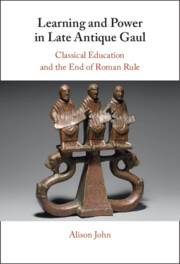
This book traces the changing political and social roles of classical education in late antique Gaul. It argues that the collapse of Roman political power in Gaul changed the way education was practiced and perceived by Gallo-Romans. Neither the barbarian kingdoms nor the Church directly caused the decline of classical schools, but these new structures of power did not encourage or support a cultural and political climate in which classical education mattered; while Latin remained the language of the Church, and literacy and knowledge of law were valued by barbarian courts, training in classical grammar and rhetoric was no longer seen as a prerequisite for political power and cultural prestige. This study demonstrates that these fundamental shifts in what education meant to individuals and power brokers resulted in the eventual end of the classical schools of grammar and rhetoric that had once defined Roman aristocratic public and private life.
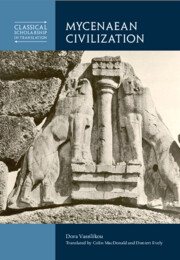
The Bronze Age of Greece was unknown until the end of the 19th century, when Heinrich Schliemann's excavations stunned the world by bringing to light the glamour of Mycenaean elite society. This book, by one of Greece's most distinguished archaeologists, provides a complete introduction to Mycenaean life and archaeology. Through both chronological and thematic chapters, it examines the main Mycenaean centres, the palaces and kingship, the social structure, writing, religion and its political implications, and the contacts and relations of the Mycenaeans with neighbouring countries, especially Asia Minor, Egypt, the coast of Syria-Palestine and Italy. Attention is paid to the distinctive Mycenaean art, including monumental architecture, gold and silver metalwork and jewellery, and the book is supported by over 300 illustrations. Dora Vassilikou concludes by examining the simultaneous catastrophes that brought the Bronze Age of the Eastern Aegean to its end and opened up a new era.
Medieval film' forces us into a double-take on chronology. This book argues that such a playful confusion of temporalities is a fundamental characteristic not just of the term but also of medieval films themselves. Medieval films reflect on the fact that they make present a past that was never filmable and offer alternatives to chronological conceptions of time. The book examines the contrasting uses, or non-uses, of medieval art objects in two medieval films and assesses how they contribute to the films' overall authenticity-effects. It makes tentative contribution to a list of such characteristics: that the fragmented visual profile of the medieval makes medieval authenticity-effects particularly troublesome to produce. The reliance of film theory on medievalism has never been acknowledged by film scholars. The book shows the ways in which preconceived notions of the Middle Ages filtered into and were influenced by film theory throughout the twentieth century; and to what extent film theory relies on knowledge about the Middle Ages for its basic principles. It explores to what extent medieval film engages with questions of language, and to what extent these engagements may be distinctive. Cinematic medievalism participated in and drew on a wider cultural and political preoccupation with the Middle Ages. Romanticism posited the Middle Ages as an alternative, utopian realm promising creative and political possibility. The book argues that certain films with medieval themes and settings, mostly dating from the 1940s to the 1960s, demonstrate a surprising affinity with the themes and techniques associated with film noir.
This book on Geoffrey Chaucer explores the relationship between Chaucer's poetry and the change and conflict characteristic of his day and the sorts of literary and non-literary conventions that were at his disposal for making sense of the society around him. Critics who consider the social meaning of Chaucer's Canterbury Tales fall into two main schools: those who present his social thought as an expression of the dominant spirit or ideology of his day and those who see Chaucer as possessing a more heterodox voice. Many of the present generation of Chaucer critics have been trained either as 'Robertsonians' or as 'Donaldsonians'. For D. W. Robertson, even those medieval poems which do not explicitly address religious issues were frequently intended to promote the Augustinian doctrine of charity beneath a pleasing surface; for E. Talbot Donaldson, there are 'no such poems in Middle English'. The book sets out the basics of the Augustinian doctrine of charity and of medieval allegorical theory and examines 'patristic' interpretations of Chaucer's work, particularly of the 'Nun's Priest Tale'. It looks at the humanist alternative to the patristic method and assesses the strengths and weaknesses of the patristic approach. The book also outlines some of the major medieval discourses about sexual difference which inform Chaucer's depiction of women, in particular, the tendency of medieval writers to polarise their views of women, condemning them to the pit or elevating them to the pedestal.
This chapter focuses on a conjunction of contemporary ideas concerning nation, history and race, all of which, participated in popular and academic constructions of the medieval. As well as causing political controversy from the moment of its release, D. W. Griffith's The Birth of a Nation was hailed as a milestone in cinema history. Endorsed on a political level by President Woodrow Wilson, whose scholarship on the American Civil War was explicitly referenced in the film's intertitles, it was also praised by film critics and viewers alike for its innovative style and use of technology. Cinematic medievalism participated in and drew on a wider cultural and political preoccupation with the Middle Ages. In popular culture the Middle Ages were often imagined in a spectacular mode, a mode they shared with 'historical realism' and cinematic technology.
This chapter outlines some of the major medieval discourses about sexual difference which inform Chaucer's depiction of women in the Canterbury Tales, in particular, the tendency of medieval writers to polarise their views of women, condemning them to the pit or elevating them to the pedestal. It asks whether any of these views can be equated with Chaucer's own position by examining the Wife of Bath's rejection of the pedestal. It explores the alternative to both the pit and the pedestal offered in the 'Tale of Melibee' and the 'Parson's Tale'. It is possible and legitimate for modern critics to argue that Chaucer intended peple to interpret the Wife as a corroboration of misogynist attitudes. It would be wrong to portray medieval views of women as universally or straight forwardly misogynist or to see the idealisation of women as the only medieval alternative to such misogyny.
Many of the present generation of Chaucer critics have been trained either as 'Robertsonians' or as 'Donaldsonians'. For Robertson, even those medieval poems which do not explicitly address religious issues were frequently intended to promote the Augustinian doctrine of charity beneath a pleasing surface; for Donaldson, there are 'no such poems in Middle English'. This chapter sets out the basics of the Augustinian doctrine of charity and of medieval allegorical theory and examines 'patristic' interpretations of Chaucer's work, particularly of the 'Nun's Priest Tale'. It looks at the humanist alternative to the patristic method and concludes with an assessment of the strengths and weaknesses of the patristic approach. The chapter argues that the 'Nun's Priest's Tale' can be seen as a satire of rhetorically inflated and over-serious accounts of the human condition.
This chapter examines the various modes of film practice adopted for representing the Middle Ages, from the epic historical adventure film to low-budget art-house fare. It suggests that film-makers frequently blur the boundaries between different historical periods, and that there is something specific about the way the premodern past is represented as dangerous and dirty. The chapter compares representations of the medieval with representations of the more modern past, arguing that the former tend to adopt a more populist and masculine appeal than the numerous middle-brow costume dramas set in the nineteenth and early twentieth centuries. It considers the ways in which the films engage with questions of national identity and national cinema, in an era in which film production is increasingly transnational. The chapter focuses on films released since 1980 - a little over fifty of which have offered some version of the British medieval past.
This introduction presents an overview of key concepts discussed in the subsequent chapters of this book. The book argues that a playful confusion of temporalities is a fundamental characteristic not just of the term but also of medieval films themselves. Medieval films reflect on the fact that they make present a past that was never filmable and offer alternatives to chronological conceptions of time. The book traces the special relationship to temporality that characterises medieval film to its roots in the overlap of medievalism, film history and film theory. It suggests further examples of such new ways in which films that engage with the Middle Ages will be relevant to the present and future. Medieval film is not condemned to perpetuate the status quo, but, through its very position outside the historiographical and generic mainstreams can alter representations of history and cinematic modes.
It would seem that on virtually every aspect of Geoffrey Chaucer's work, his readers are currently assailed by a host of mutually exclusive interpretations and critical approaches. On the one hand, Chaucer is an Augustinian allegorist; on the other, he is sceptical about exegesis as a mode of interpretation and satirises the excesses of moral allegorising. On the one hand, he is a misogynist; on the other, he a defender of women. This book emphasises the ways in which seeing Chaucer in the context of the political issues, social values, generic conventions and literary theory of his own day can help us to understand the meaning of his work. It concludes that what a contextual approach to Chaucer's work reveals, above all else, is that literary texts are nowhere more historical in their nature than when they seek to pass themselves off as timeless and dehistoricised.
This chapter focuses on a select group of films set in Middle Ages, produced in Italy at two moments of dramatic transformation in Italian culture and politics the Fascist era during 1930s and early 1940s and the epoch of the 'Economic Miracle' in the 1960s. It examines how cinema appropriates the past so as to recognise 'the power it holds from its shameful kinship with the makers of history and the tellers of stories, in Jacques Ranciere's words. The chapter explains the films that have chosen probes their kinship with modes of history making, to understand better how these different cinematic inventions shed light on conceptions of medievalism and, further, on the contemporary cultural and political moments of their creators. Cinematic fables of power, such as Condottieri and La corona di ferro, are allegories containing the shards of residual elements and emergent cultural memories of medievalism as legend and folklore.