To save content items to your account,
please confirm that you agree to abide by our usage policies.
If this is the first time you use this feature, you will be asked to authorise Cambridge Core to connect with your account.
Find out more about saving content to .
To save content items to your Kindle, first ensure no-reply@cambridge.org
is added to your Approved Personal Document E-mail List under your Personal Document Settings
on the Manage Your Content and Devices page of your Amazon account. Then enter the ‘name’ part
of your Kindle email address below.
Find out more about saving to your Kindle.
Note you can select to save to either the @free.kindle.com or @kindle.com variations.
‘@free.kindle.com’ emails are free but can only be saved to your device when it is connected to wi-fi.
‘@kindle.com’ emails can be delivered even when you are not connected to wi-fi, but note that service fees apply.
The optical theory of light-scattering by nonspherical particles is fundamental to remote sensing of the atmosphere and ocean, as well as other areas of computational physics, medical scanning, and electromagnetics. At present, many training programs in light scattering are woefully lacking. This book fills the void in existing research on light-scattering research and training, particularly in the case of large scattering particles, and provides a solid foundation on which future research can be based, including suggestions for directions for further work in the field. With the elucidation of the theoretical basis for light scattering (particularly within the framework of the physical-geometric optics method) and the demonstration of practical applications, this book will be invaluable for training future scientists in the discipline of light scattering, as well as for researchers and professionals using remote sensing techniques to analyse the properties of the atmosphere and oceans, and in the area of biophotonics.
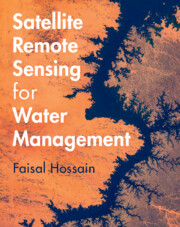
This textbook reflects the changing landscape of water management by combining the fields of satellite remote sensing and water management. Divided into three major sections, it begins by discussing the information that satellite remote sensing can provide about water, and then moves on to examine how it can address real-world management challenges, focusing on precipitation, surface water, irrigation management, reservoir monitoring, and water temperature tracking. The final part analyses governance and social issues that have recently been given more attention as the world reckons with social justice and equity aspects of engineering solutions. This book uses case studies from around the globe to demonstrate how satellite remote sensing can improve traditional water practices and includes end-of-chapter exercises to facilitate student learning. It is intended for advanced undergraduate and graduate students in water resource management, and as reference textbook for researchers and professionals.
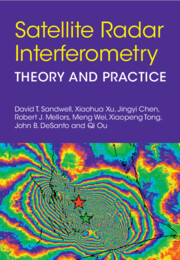
Synthetic Aperture Radar Interferometry (InSAR) is an active remote sensing method that uses repeated radar scans of the Earth's solid surface to measure relative deformation at centimeter precision over a wide swath. It has revolutionized our understanding of the earthquake cycle, volcanic eruptions, landslides, glacier flow, ice grounding lines, ground fluid injection/withdrawal, underground nuclear tests, and other applications requiring high spatial resolution measurements of ground deformation. This book examines the theory behind and the applications of InSAR for measuring surface deformation. The most recent generation of InSAR satellites have transformed the method from investigating 10's to 100's of SAR images to processing 1000's and 10,000's of images using a wide range of computer facilities. This book is intended for students and researchers in the physical sciences, particularly for those working in geophysics, natural hazards, space geodesy, and remote sensing. This title is also available as Open Access on Cambridge Core.
In the previous chapter we learned how satellite data to estimate various water targets such as precipitation and surface water, can be combined in a model-reservoir system to track a reservoir’s dynamic state and understand river regulation. In this chapter we will cover how satellite data can be used to manage crops and irrigation. We will learn how satellite data can be used to estimate an area under a specific crop using classification techniques, which then helps us understand the water need for that area. Next we will learn methods to estimate crop water demand and actual crop water consumption.
David T. Sandwell, Scripps Institution of Oceanography, University of California, San Diego,Xiaohua Xu, University of Science and Technology of China,Jingyi Chen, University of Texas at Austin,Robert J. Mellors, Scripps Institution of Oceanography, University of California, San Diego,Meng Wei, University of Rhode Island,Xiaopeng Tong, Institute of Geophysics, China Earthquake Administration,John B. DeSanto, University of Washington,Qi Ou, University of Edinburgh
Chapter 3 details the kinematics of satellite orbits and their use in InSAR processing and its automation. It covers the six parameters needed to describe an orbit (Kepler elements or Cartesian state vector), transforming coordinates from an Earth-fixed frame to the satellite frame, and methods to calculate a centimeter-accuracy satellite trajectory from a sequence of state vectors.
In this chapter, we will cover the remote sensing of precipitation to understand how precipitation is tracked. Precipitation is considered one of the most important components of the water cycle that drives the availability of water and its management. For example, precipitation leads to runoff and streamflow, irrigates a field of crops and provides the water for crop growth, fills up lakes, reservoirs and ponds that are a key source for water management. The understanding of precipitation remote sensing will pave the way for learning more complex water management applications that are being increasingly carried out around the world today using satellite water data. We will first cover the history of precipitation remote sensing that began with using active sensing and ground radar. Next, we will cover satellite-based sensing where the challenges and complexities are different. The pros and cons of using various electromagnetic wavelengths will be covered. Finally, we will cover the topic of multi-sensor precipitation estimation based on the synergistic use of multiple satellite sensors spanning different wavelengths of the electromagnetic spectrum.
David T. Sandwell, Scripps Institution of Oceanography, University of California, San Diego,Xiaohua Xu, University of Science and Technology of China,Jingyi Chen, University of Texas at Austin,Robert J. Mellors, Scripps Institution of Oceanography, University of California, San Diego,Meng Wei, University of Rhode Island,Xiaopeng Tong, Institute of Geophysics, China Earthquake Administration,John B. DeSanto, University of Washington,Qi Ou, University of Edinburgh
In the previous chapter we covered how satellite remote sensing can be used to classify areas under a crop, estimate their crop water demand and actual crop water consumption. This information can be used for irrigation management using satellite data. In this chapter we will cover how satellite data can be used to estimate temperature of surface water. We will cover the basic principle behind the estimation technique, understand the limitation of the technique and then build some data literacy to derive the surface temperature of water in regulated rivers ourselves.
David T. Sandwell, Scripps Institution of Oceanography, University of California, San Diego,Xiaohua Xu, University of Science and Technology of China,Jingyi Chen, University of Texas at Austin,Robert J. Mellors, Scripps Institution of Oceanography, University of California, San Diego,Meng Wei, University of Rhode Island,Xiaopeng Tong, Institute of Geophysics, China Earthquake Administration,John B. DeSanto, University of Washington,Qi Ou, University of Edinburgh
Chapter 8 explores a wide range of SAR operational modes, including polarization and wide swath modes. It reviews the fundamental limitation of the standard swath-mode acquisition and discusses three methods for increasing swath width: ScanSAR, Terrain Observation by Progressive Scans (TOPS), and SweepSAR for the upcoming NISAR mission.
David T. Sandwell, Scripps Institution of Oceanography, University of California, San Diego,Xiaohua Xu, University of Science and Technology of China,Jingyi Chen, University of Texas at Austin,Robert J. Mellors, Scripps Institution of Oceanography, University of California, San Diego,Meng Wei, University of Rhode Island,Xiaopeng Tong, Institute of Geophysics, China Earthquake Administration,John B. DeSanto, University of Washington,Qi Ou, University of Edinburgh
Chapter 5 explains the process of forming an interferogram from two geometrically aligned SLC images and methods for extracting deformation and topography from the interferometric phase. It also covers critical baseline, geocoding, and geocoded SLCs.
David T. Sandwell, Scripps Institution of Oceanography, University of California, San Diego,Xiaohua Xu, University of Science and Technology of China,Jingyi Chen, University of Texas at Austin,Robert J. Mellors, Scripps Institution of Oceanography, University of California, San Diego,Meng Wei, University of Rhode Island,Xiaopeng Tong, Institute of Geophysics, China Earthquake Administration,John B. DeSanto, University of Washington,Qi Ou, University of Edinburgh
Chapter 9 examines the three factors that affect radar range measurement: spatial and temporal variations of the dry and wet components of the troposphere, phase advance of radar waves through the ionosphere, and the solid Earth tides. It also discusses practical corrections and mitigation approaches.
David T. Sandwell, Scripps Institution of Oceanography, University of California, San Diego,Xiaohua Xu, University of Science and Technology of China,Jingyi Chen, University of Texas at Austin,Robert J. Mellors, Scripps Institution of Oceanography, University of California, San Diego,Meng Wei, University of Rhode Island,Xiaopeng Tong, Institute of Geophysics, China Earthquake Administration,John B. DeSanto, University of Washington,Qi Ou, University of Edinburgh
Chapter 4 provides a comprehensive presentation of the commonly used range-Doppler algorithm for focusing complex backscatter data into a single-look complex (SLC) image.
In this Chapter, we will explore how reservoirs can be monitored from space for water management. Today it is now possible to track the dynamic state of reservoirs at temporal and spatial scales of satellite remote sensing. This dynamic state comprises inflow, outflow, surface area, storage change and evaporative losses. Most of these variables can be modeled using satellite data or directly estimated using satellite data. This chapter will introduce readers to the Reservoir Assessment Tool (RAT) that we have developed as an open-source complete package for users to use the full power of satellite remote sensing to track reservoirs anywhere.
This chapter will explore the topic of citizen science in the context of water management using satellite remote sensing. This is a broad field and the goal here is to expose readers to a social yet important issue of using citizens to carry out science for building more robust management solutions. As mentioned earlier in Chapter 11, this chapter is in no way comprehensive. The objective here is to encourage readers to start thinking about the idea of citizen science and the positive role it can play in building more equitable satellite-based water management solutions
In this chapter and the next, we will be switching gears to transition to less-technical but more social and governance related issues where satellite remote sensing of water can play a positive role. So far, we have learned up to chapter 10 are technical aspects of satellite remote sensing of water and their applications in water management. In this chapter, we will explore the potential of satellite remote sensing for social justice in water management.
In the previous chapter we covered how satellite remote sensing can be used to detect water on the surface in terms of its spatial extent, elevation and change in storage. In this chapter, we will cover how discharge can be estimated using satellite-based observables, such as those from the newly launched Surface Water and Ocean Topography (SWOT) mission mentioned in Chapter 6.