To save content items to your account,
please confirm that you agree to abide by our usage policies.
If this is the first time you use this feature, you will be asked to authorise Cambridge Core to connect with your account.
Find out more about saving content to .
To save content items to your Kindle, first ensure no-reply@cambridge.org
is added to your Approved Personal Document E-mail List under your Personal Document Settings
on the Manage Your Content and Devices page of your Amazon account. Then enter the ‘name’ part
of your Kindle email address below.
Find out more about saving to your Kindle.
Note you can select to save to either the @free.kindle.com or @kindle.com variations.
‘@free.kindle.com’ emails are free but can only be saved to your device when it is connected to wi-fi.
‘@kindle.com’ emails can be delivered even when you are not connected to wi-fi, but note that service fees apply.
Chapter 8 provides correlations that can be used to solve external flow forced convection problems where an external flow is defined as one where the boundary layer can grow without bound. For flow over a flat plate located sufficiently far from any other surface, the boundary layer is never confined by the presence of another object and therefore continues to grow from the leading edge to the trailing edge. An internal flow is defined as a flow situation where the growth of the boundary layer is confined; that is, the boundary layers can only grow to a certain thickness before being constrained. Internal flows are often encountered in engineering applications (e.g., the flow through tubes or ducts).
From a thermodynamic perspective, thermal energy can be transferred across a boundary (i.e., heat transfer can occur) by only two mechanisms: conduction and radiation. Conduction is the process in which energy exchange occurs due to the interactions of molecular (or smaller) scale energy carriers within a material. The conduction process is intuitive; it is easy to imagine energy carriers having a higher level of energy (represented by their temperature) colliding with neighboring particles and thereby transferring some of their energy to them. Radiation is a very different heat transfer process because energy is transferred without the involvement of any molecular interactions. Radiation energy exchange is related to electromagnetic waves and therefore can occur over long distances through a complete vacuum. For example, the energy that our planet receives from the Sun is a result of radiation exchange. This chapter presents an introduction to radiation heat transfer with a focus on providing methods for solving radiation problems.
Chapter 5 discussed transient problems in which the spatial temperature gradients within a solid object can be neglected and therefore the problem is approximately zero-dimensional (0-D). In these lumped capacitance transient problems the solution is a function only of time. Lumped capacitance problems essentially ignore the process of conduction as being unimportant. This chapter discusses transient problems where internal, spatial temperature gradients related to energy transfer by conduction are nonnegligible (i.e., the Biot number is not much less than unity). The first section provides some conceptual tools that are not exact, but can be used to develop an understanding of transient conduction problems. More sophisticated analytical and numerical solutions that provide more exact solutions are presented in the remaining sections.
Mass transfer occurs whenever fluid flows; that is, some mass is transferred from one place to another. However, the focus in this chapter is on the transport of one chemical species (or component) within a mixture that occurs as a direct result of a concentration gradient, independent of a pressure gradient. This type of mass transfer is called diffusion. A familiar example of diffusion mass transfer is the humidification process that occurs when an open container of water is allowed to sit out in a room. The gas in the room is a mixture of air (which is itself a mixture of oxygen, nitrogen, and other gases) and water vapor. The air–water mixture in contact with the surface of the liquid water is nearly saturated with water vapor and so it has a relatively high concentration of water vapor. The air–water mixture further from the liquid has a lower concentration of water vapor. Therefore, there is a concentration gradient that drives a mass transfer process causing water to be transported from the liquid surface to the air in the room, thereby humidifying it.
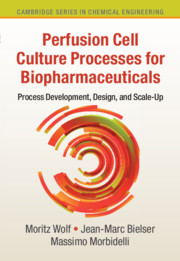
Master the design and operation of perfusion cell cultures with this authoritative reference. Discover the current state-of-the-art in the design and operation of continuous bioreactors, with emphasis on mammalian cell cultures for producing therapeutic proteins. Topics include the current market for recombinant therapeutic proteins, current industry challenges and the potential contribution of continuous manufacturing. Provides coverage of every step of process development and reactor operation, including small scale screening to lab-scale and scale-up to manufacturing scale. Illustrated through real-life case studies, this is a perfect resource for groups active in the cell culture field, as well as graduate students in areas such as chemical engineering, biotechnology, chemistry and biology, and to those in the pharmaceutical industry, particularly biopharma, biotechnology and food or agro industry.
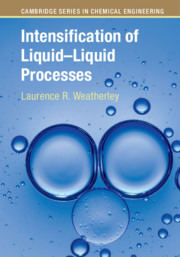
Explore and review novel techniques for intensifying transport and reaction in liquid-liquid and related systems with this essential toolkit. Topics include discussion of the principles of process intensification, the nexus between process intensification and sustainable engineering, and the fundamentals of liquid-liquid contacting, from an expert with over forty-five years' experience in the field. Providing promising directions for investment and for new research in process intensification, in addition to a unique review of the fundamentals of the topic, this book is the perfect guide for senior undergraduate students, graduate students, developers, and research staff in chemical engineering and biochemical engineering.
Areas of overlap between intensification in liquid–liquid systems and membrane technology intensification are highlighted. Liquid membrane systems, supported liquid membranes, pertraction, and application to liquid–liquid coalescence are discussed. Fundamentals of emulsion formation are reviewed, including thermodynamic aspects and the importance of emulsion properties for application. The role of surfactants in emulsion stability is discussed. Characterization of emulsions and predictive methods for emulsion drop size are described. The immobilization of solvents onto hollow fiber membranes is described and the advantages of low solvent inventory and ease of phase separation are highlighted. The basic principle of application of a liquid membrane system is described, showing the generic process steps: emulsification, contact with the feed phase, emulsion breakage, and product recovery. The role of facilitated transport is also described. Different configurations are compared, including hybrid liquid membranes, polymer inclusion membranes, and colloidal liquid aphrons. Selected examples of application of liquid membrane systems are described.
Phase-transfer catalysis involves chemical reactions which occur in a two-phase liquid–liquid system and it has been shown to provide an effective method for organic synthesis. Phase-transfer catalytic reactions can facilitate high conversions and reaction selectivity and thus are consistent with the principles of green chemistry and process intensification. The basic mechanisms involved in phase-transfer catalysis and the related suite of reactions that involve catalytic transfer hydrogenations are briefly described and reviewed. The requirements and benefits of phase-transfer catalytic systems are summarized. Organic syntheses which exploit the principles of phase-transfer catalysis are described as examples of intensification. These include: synthesis of phenyl alkyl acetonitriles, transfer hydrogenations, alkyl oxidation and sulfonation reactions, etherification of cresols in a three-phase system, organic oxidations, nitrations, polymerizations, and organic condensation reactions. The enhancement of phase-transfer catalysis using other intensification methods, such as ultrasonics, is also described.
High gravity fields are exploited in a range of processes involving liquid–liquid dispersions. The accelerative forces achieved acting on dispersed drops can be several thousand-fold that of gravity. The benefits of the presence of the high gravity field include short residence times, efficient separations, less material hold-up, and reduction of equipment size. The development of spinning disk contactors for intensified liquid–liquid contacting is described, with discussion of the hydrodynamic phenomena which underpin the enhancements in mass transfer and reaction. A number of variants are described, including impinging jet contactors, parallel spinning tube contactors, and annular centrifugal contactors. Theoretical analysis of the fluid mechanics in spinning disk contactors and parallel spinning disk contactors is presented, with good comparison to experimental observation. The role of Taylor–Couette flows in spinning tube contactors is briefly discussed. Possibilities for intensifying the performance of tubular membrane contactors using high gravity fields are discussed, together with scope for conducting enantiomeric separations by application of high gravity.
The underlying theory of electrostatics, relating electric field strength, charge, and electrical forces, is summarized. The relationships between electrical forces, droplet size, and motion in liquid–liquid systems are discussed. The mechanisms controlling single charged drop size and motion are reviewed from relevant literature, demonstrating good prediction of drop size and motion trajectory. The phenomenon of electrostatic dispersion and interfacial disruption is discussed with a summary of cloud modeling techniques that enable theoretical description of drop number and size distribution to be performed. Theory of drop behavior is extended to describe mass transfer and reaction kinetics in liquid–liquid systems. The impact of interfacial disturbance, which is enhanced in the presence of electrical fields, is considered in some detail with presentation of the controlling relationships. Navier–Stokes and continuity equations are adapted to include terms for electrical field influence on interfacial tension and interfacial flows resulting from heterogeneous charge distribution. The chapter concludes with a brief summary of potential industry applications.
Ionic liquids are organic salts with potential for intensification of liquid–liquid processes. The structures of a range of significant ionic liquids are presented. The focus is on intensification of classical organic reactions and separations using ionic liquids in liquid–liquid systems. Their role as reaction media is briefly reviewed. Phase equilibrium properties of several liquid–liquid systems involving ionic liquids are described, demonstrating their potential for azeotrope breakage in vapor–liquid and liquid–liquid systems. Application of ionic liquid technology to phase-transfer catalysis is discussed, with inclusion of the classic example of the dimerization of butene to iso-octenes. The potential role of ionic liquids for the exploitation of biocatalytic processes is highlighted, with discussion of the potentially toxic effects on living biomass and on the activity of enzymes. The significance of the toxicity of some ionic liquids is summarized, together with a short discussion of potentially wider environmental impacts. The degradability of ionic liquids is an important part of environmental assessment that is also considered.