To save content items to your account,
please confirm that you agree to abide by our usage policies.
If this is the first time you use this feature, you will be asked to authorise Cambridge Core to connect with your account.
Find out more about saving content to .
To save content items to your Kindle, first ensure no-reply@cambridge.org
is added to your Approved Personal Document E-mail List under your Personal Document Settings
on the Manage Your Content and Devices page of your Amazon account. Then enter the ‘name’ part
of your Kindle email address below.
Find out more about saving to your Kindle.
Note you can select to save to either the @free.kindle.com or @kindle.com variations.
‘@free.kindle.com’ emails are free but can only be saved to your device when it is connected to wi-fi.
‘@kindle.com’ emails can be delivered even when you are not connected to wi-fi, but note that service fees apply.
What does modeling involve? Why should we care about modeling? Do I have to be a math whiz to succeed? How can this book help me to get started in modeling (in case I do care)? These are some of the questions we try to answer in this introductory chapter. This chapter is critical and should not be skipped.
What is modeling?
By modeling, we mean developing a replica on a computer of a physical process that interests us so that we can manipulate the process on the computer. In contrast with a computer-aided design (CAD) model which deals mostly with geometric or solid modeling, shading, etc., we must include the detailed physics of the system in order to evaluate its performance. In short, such a model involves simplifying the geometry and physics of a real situation and solving the simplified equations that describe the physics, using a software that is primarily an equation solver.
You have modeled before. As a child, you learned that the area of a trapezoid is the height multiplied by the average of the two bases. If we program this on a calculator, so that we only have to input the height and the two bases and the calculator spits out the area, we have a model for area calculation.
Simulation is an important component of the engineering design process in many sectors. The integration of simulation into undergraduate engineering education in an appropriate manner, so that it enhances the fundamentals, and also provides students with a cutting-edge tool, has been in the forefront of education thinking, as evidenced by the interest in a recent workshop at Cornell University (ISTEC, 2008), and in a report by the National Science Foundation (NSF, 2006). The tremendous growth in biomedical engineering over the last 10–15 years has encouraged increased quantitative treatment of biomedical product, process and equipment design, and design of treatment procedures. Such quantitative treatment has made simulation into a useful tool in biomedical applications as well. The synergy between increased use of simulation and the availability of improved interfaces has brought down the barriers to the use of simulation, from only specialized modelers, to just about anyone who has the necessary prerequisite of the physical process (engineering science content such as heat transfer or mass transfer). The increased need in industry and research, and the lower barrier to modeling can be integrated further by having all the essential information under one umbrella – which is the goal for this book. This introductory book walks a person without any prior knowledge in modeling through all of the necessary steps thus helping them to join the modeling community, and thereby enabling a productivity tool for design and research.
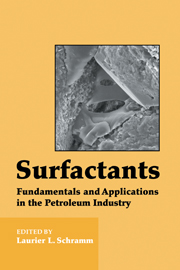
This 2000 book provides an introduction to the nature, occurrence, physical properties, propagation and uses of surfactants in the petroleum industry. It is aimed principally at scientists and engineers who may encounter or use surfactants, whether in process design, petroleum production, or research and development. The primary focus is on applications of the principles of colloid and interface science to surfactant applications in the petroleum industry, and includes attention to practical processes and problems. Applications of surfactants in the petroleum industry are of great practical importance and are also quite diverse, since surfactants may be applied to advantage throughout the petroleum production process: in reservoirs, in oil and gas wells, in surface processing operations, and in environmental, health and safety applications. In each case appropriate knowledge and practices determine the economic and technical successes of the industrial process concerned. The book includes a comprehensive glossary, indexed and fully cross-referenced.
Gas-solid flows are involved in numerous industrial processes and occur in various natural phenomena. This authoritative book addresses the fundamental principles that govern gas-solid flows and the application of these principles to various gas-solid flow systems. The book is arranged in two parts: Part I deals with basic relationships and phenomena, including particle size and properties, collision mechanics, momentum transfer, heat and mass transfer, basic equations, and intrinsic phenomena in gas-solid flows. Part II discusses gas-solid flow systems of industrial interest such as gas-solid separators, hoppers and standpipes, dense-phase fluidised beds, fluidised beds, pneumatic conveying systems, and heat and mass transfer in fluidisation systems. As a comprehensive text on gas-solid flows, including end-of-chapter problems, this book is aimed at graduate students, but will also be useful to a broad range of engineers and applied scientists.
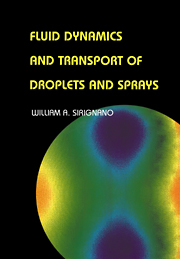
The study of droplets and sprays has developed rapidly over the past two decades because of their many important applications, from automobile engine combustion to drug aerosols. This book addresses the complex subject of the interactions of droplets and sprays. Along with a strong theoretical foundation, the book presents results in a way that will be useful for engineering practice, with summaries of key formulae and examples of various spray computations. Among topics covered are transient heating (or cooling) and vaporization (or condensation), multicomponent liquid droplet vaporization, near critical and supercritical ambient conditions, interaction of droplets with turbulent or vortical structures, distortion of the spherical shape and secondary atomization of the droplets, and computational issues. As an authoritative review of the science and technology of droplets and sprays, this book will be useful for graduate students, researchers, and practising engineers.
Small solid particles adsorbed at liquid interfaces arise in many industrial products and process, such as anti-foam formulations, crude oil emulsions and flotation. They act in many ways like traditional surfactant molecules, but offer distinct advantages. However, the understanding of how these particles operate in such systems is minimal. This book brings together the diverse topics actively being investigated, with contributions from leading experts in the field. After an introduction to the basic concepts and principles, the book divides into two sections. The first deals with particles at planar liquid interfaces, with chapters of an experimental and theoretical nature. The second concentrates on the behaviour of particles at curved liquid interfaces, including particle-stabilized foams and emulsions and new materials derived from such systems. This collection will be of interest to academic researchers and graduate students in chemistry, physics, chemical engineering, pharmacy, food science and materials science.
This book describes the most reliable methods available for evaluating the transport properties, such as viscosity, thermal conductivity and diffusion, of pure gases and fluid mixtures. Particular emphasis is placed on recent theoretical advances in our understanding of fluid transport properties in all the different regions of temperature and pressure. In addition to the important theoretical tools, the different methods of data representation are also covered, followed by a section which demonstrates the application of selected models in a range of circumstances. Case studies of transport property analysis for real fluids are then given, and the book concludes with a discussion of various international data banks and prediction packages. Advanced students of kinetic theory, as well as engineers and scientists involved with the design of process equipment or the interpretation of measurements of fluid transport properties, will find this book indispensable.
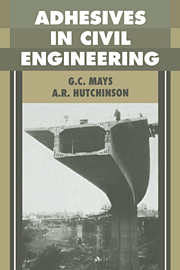
This book provides a complete and clear introduction to the use of adhesives to form load-bearing joints in bridges, civil engineering and building structures. Recent advances in adhesive technology have led to a rapid growth in the use of adhesives and in many cases, the use of adhesives can prove more convenient, less expensive, stronger, and more durable than traditional methods of joining. The first part of this book addresses the crucial factors involved in the formation of a successful adhesive joint, including adhesive selection, surface preparation, joint design, fabrication and protection from the environment. The second part of the book describes the growing uses of adhesives to repair and strengthen existing structures, in addition to describing their use in new constructions and applications which are now being developed for the future. The connections between the two parts of the book are brought out wherever possible so that the links between theory and practice are emphasized. The book gives the reader all the information required to fully exploit the economic and technical advantages of adhesives over conventional methods. Professional civil and structural engineers in higher education and industry will find this book invaluable as will graduate students of construction.
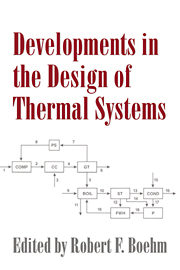
Thermal systems are essential features in power, chemical processing, air conditioning, and other industries where heat and power are used. As the cost and complexity of designing thermal systems have increased, the need to understand and improve the design process has also grown. This book describes recent progress in the design of thermal systems. The book begins with a brief history and outline of developments in thermal system design. Chapters then discuss computer design tools for the power and chemical industries, predicting physical properties with computational tools, the use of 'pinch analysis' to improve thermal efficiency, applications of the exergy concept, the emerging concept of thermoeconomics, and the potential for artificial intelligence and expert systems in the design of thermal systems. With chapters written by internationally recognised authorities, the book offers a state-of-the-art review for both researchers and practitioners in mechanical, aerospace, chemical, and power engineering.
Flow Measurement Handbook is an information-packed reference for engineers on flow measuring techniques and instruments. Striking a balance between laboratory ideal and the realities of field experience, this handy tool provides a wealth of practical advice on the design, operation, and performance of a broad range of flowmeters. The book begins with a brief review of fluid mechanics principles, how to select a flowmeter, and a variety of calibration methods. Each of the following chapters is devoted to a class of flowmeters and includes detailed information on design, applications, installation, calibration, operation, and advantages and disadvantages. Among the flowmeters discussed are orifice plate meters, venturi meters and standard nozzles, critical flow venturi nozzles, positive displacement flowmeters, turbine and related flowmeters, vortex shedding and fluidic flowmeters, electromagnetic flowmeters, ultrasonic flowmeters, and coriolis flowmeters. Also covered are mass flow measurements using multiple sensors, thermal flowmeters, angular momentum devices, probes, and modern control systems. Many chapters conclude with an appendix on the theory behind the techniques discussed.