Refine search
Actions for selected content:
9808 results in Engineering: general interest
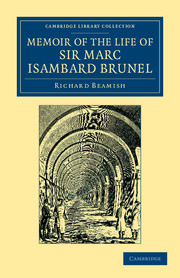
Memoir of the Life of Sir Marc Isambard Brunel
-
- Published online:
- 05 October 2014
- Print publication:
- 22 August 2013
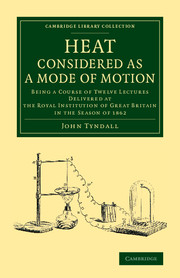
Heat Considered as a Mode of Motion
- Being a Course of Twelve Lectures Delivered at the Royal Institution of Great Britain in the Season of 1862
-
- Published online:
- 05 October 2014
- Print publication:
- 13 February 2014
- First published in:
- 1863
CHAP. V - DIFFERENT KINDS OF ROADS, AND MODES OF CONSTRUCTING THEM
-
- Book:
- A Treatise on Roads
- Published online:
- 05 June 2015
- Print publication:
- 25 September 2014, pp 100-171
-
- Chapter
- Export citation
APPENDIX, NO. II - Report of Mr. Telford respecting the Street Pavements, &c. of the Parish of St. George, Hanover Square
- from APPENDIX
-
- Book:
- A Treatise on Roads
- Published online:
- 05 June 2015
- Print publication:
- 25 September 2014, pp 348-359
-
- Chapter
- Export citation
Contents
-
- Book:
- The Mechanical Principles of Engineering and Architecture
- Published online:
- 05 June 2016
- Print publication:
- 25 September 2014, pp xix-xxiii
-
- Chapter
- Export citation
PREFACE
-
- Book:
- The Mechanical Principles of Engineering and Architecture
- Published online:
- 05 June 2016
- Print publication:
- 25 September 2014, pp v-xviii
-
- Chapter
- Export citation
CHAP. XIII - CARRIAGES
-
- Book:
- A Treatise on Roads
- Published online:
- 05 June 2015
- Print publication:
- 25 September 2014, pp 295-320
-
- Chapter
- Export citation
CHAPTER I - RULES FOR TRACING THE LINE OF A NEW ROAD
-
- Book:
- A Treatise on Roads
- Published online:
- 05 June 2015
- Print publication:
- 25 September 2014, pp 35-55
-
- Chapter
- Export citation
EXAMPLES OF DIAGRAMS OF FORCES FOR STRUCTURES BELONGING TO CLASS I
- from PART II - ON DIAGRAMS OF FORCES WITH NUMEROUS EXAMPLES
-
- Book:
- Economics of Construction in Relation to Framed Structures
- Published online:
- 05 June 2016
- Print publication:
- 25 September 2014, pp 62-68
-
- Chapter
- Export citation
NOTE D
- from NOTES
-
- Book:
- A Treatise on Roads
- Published online:
- 05 June 2015
- Print publication:
- 25 September 2014, pp 461-466
-
- Chapter
- Export citation
Colophon
-
- Book:
- A Treatise on Roads
- Published online:
- 05 June 2015
- Print publication:
- 25 September 2014, pp ii-ii
-
- Chapter
- Export citation
Note A
- from APPENDIX
-
- Book:
- The Mechanical Principles of Engineering and Architecture
- Published online:
- 05 June 2016
- Print publication:
- 25 September 2014, pp 605-606
-
- Chapter
- Export citation
CHAP. VI - FENCES
-
- Book:
- A Treatise on Roads
- Published online:
- 05 June 2015
- Print publication:
- 25 September 2014, pp 172-175
-
- Chapter
- Export citation
Note B - Poncelet's Theorem
- from APPENDIX
-
- Book:
- The Mechanical Principles of Engineering and Architecture
- Published online:
- 05 June 2016
- Print publication:
- 25 September 2014, pp 606-610
-
- Chapter
- Export citation
APPENDIX, NO. V - Evidence given before the Committee of the House of Commons on Roads in 1836, by Mr. John Provis, Mr. John Macneill, and Dr. Lardner
- from APPENDIX
-
- Book:
- A Treatise on Roads
- Published online:
- 05 June 2015
- Print publication:
- 25 September 2014, pp 385-432
-
- Chapter
- Export citation
Frontmatter
-
- Book:
- Economics of Construction in Relation to Framed Structures
- Published online:
- 05 June 2016
- Print publication:
- 25 September 2014, pp i-iv
-
- Chapter
- Export citation
Table II - Showing the Angle of Rupture ψ of an Arch whose Loading is of the same Material with its Voussoirs, and whose Extrados is inclined at a given Angle to the Horizon
- from APPENDIX
-
- Book:
- The Mechanical Principles of Engineering and Architecture
- Published online:
- 05 June 2016
- Print publication:
- 25 September 2014, pp 616-618
-
- Chapter
- Export citation
APPENDIX, NO. III - Observations on Mr.Walker's Evidence before the Select Committee of the House of Commons, in 1819
- from APPENDIX
-
- Book:
- A Treatise on Roads
- Published online:
- 05 June 2015
- Print publication:
- 25 September 2014, pp 360-366
-
- Chapter
- Export citation
PART V - THE STRENGTH OF MATERIALS
-
- Book:
- The Mechanical Principles of Engineering and Architecture
- Published online:
- 05 June 2016
- Print publication:
- 25 September 2014, pp 486-585
-
- Chapter
- Export citation
CHAR XI - ROAD INSTRUMENTS AND TOOLS
-
- Book:
- A Treatise on Roads
- Published online:
- 05 June 2015
- Print publication:
- 25 September 2014, pp 253-262
-
- Chapter
- Export citation
