To save content items to your account,
please confirm that you agree to abide by our usage policies.
If this is the first time you use this feature, you will be asked to authorise Cambridge Core to connect with your account.
Find out more about saving content to .
To save content items to your Kindle, first ensure no-reply@cambridge.org
is added to your Approved Personal Document E-mail List under your Personal Document Settings
on the Manage Your Content and Devices page of your Amazon account. Then enter the ‘name’ part
of your Kindle email address below.
Find out more about saving to your Kindle.
Note you can select to save to either the @free.kindle.com or @kindle.com variations.
‘@free.kindle.com’ emails are free but can only be saved to your device when it is connected to wi-fi.
‘@kindle.com’ emails can be delivered even when you are not connected to wi-fi, but note that service fees apply.
A decade ago, I was recruited by the University of Amsterdam to help designand develop Future Planet Studies, an interdisciplinary Bachelor'sprogramme that takes as its point of departure the challenges related tosafeguarding a sustainable future for humankind on our planet. The issuesinvolved – such as climate change, energy, food and water demand– are so complex and so difficult to resolve that they have beencalled persistent or ‘wicked’ problems. Assembling expertsfrom various fields of science for the programme was a challenging yetrewarding task. We needed to gather together human geographers and politicalscientists as well as earth scientists and ecologists, not to mentionexperts on the economic and communications aspects of the various issues. Mybackground in philosophy of science and psychology proved useful – ithelped me understand the different positions held by the professors andlecturers. Realising that their positions could vary significantly, I paidclose attention to the different ways they perceived the challenges, bothwith regard to the actual problems and to the development of a completelynew curriculum that broke with conventional academic rules and regulations.Only by taking these various perspectives into account could we hope todevelop a suitable curriculum, i.e. an educational programme designed toaddress the complex problems that represent the central focus of thisprogramme.
When I was given responsibility for a course on philosophy of science andvision development within the programme, I faced similar challenges. It wasdifficult to find appropriate material. Traditional books on philosophy ofscience offer relatively few answers to many of today's questions.Either they focus on the natural sciences or the social sciences or thehumanities; they rarely cover more than one domain. Yet we need to examineall of these and how they interact with each other to be able to find thenecessary integrated approaches to contemporary challenges. Moreover, theavailable books usually focus on the history of the philosophy of science,while our concern is to tackle the urgent complex problems of today andtomorrow. Obviously, knowledge and experience gained in the past provide acrucial foundation for our efforts today, yet our explicit focus is thefuture. We need the latest insights and innovative visions to inspire us tofind viable solutions. I undertook to write this book in the hope that Icould help to fill that gap and meet these needs.
The general aim of philosophy, in one of the most simple and straightforwarddefinitions, is to try to find out how we can come to grips with reality.Philosophers are interested in finding out how we can develop knowledgeabout the world we live in and how we can describe and explain the phenomenain that world in order to gain deeper insights. They are also interested indeveloping solutions to tackle problematic issues and in reflecting on thesocial and ethical consequences. Yet in a world where we are faced withphenomena characterised by immense complexity, formulating an answer to thatquestion is neither simple nor straightforward. Indeed, the complex problemsof today pose a huge challenge to scientists. Trying to understand them andformulating theories to explain how they work is no small matter. Providingideas for possible solutions and anticipating their effects is even moredifficult. To better understand what the challenge actually entails, westart this first chapter by taking a closer look at the nature of complexproblems. These turn out to have a rather peculiar character, different inimportant respects from problems encountered in earlier stages of humanhistory.
Next, we examine how science can help satisfy our current knowledge needs. Weexplore how modern science has evolved and the vision of knowledgeproduction it entails. We review the useful insights and explanations it hasproduced. Yet as we investigate its foundations, it becomes clear that theassumptions underlying the standard scientific approachcannot simply be taken for granted. For one, not everyone agrees that theyapply to every area of science. Another reason is that these assumptionsfail when employed in the context of complex issues that scientists facetoday.
This gives cause for explicitly reflecting on the role of assumptions inscience in general. In doing so, we find that they are unavoidable. Innormal, everyday science, assumptions exercise an enormous influence on thechoices researchers make in their search for scientific explanations.
The subtitle of this book promises that it is not only about philosophy ofscience but also about vision development. It is now time to live up to thispromise. We leave the terrain of ‘pure’ scientific knowledgeand tread into the field of visionary thought, although the idea thatscience and vision are distinct, separable categories is also scrutinisedhere. What we hope to show in this chapter is how vision-led science caninform and inspire evidence-based visions that can help safeguard asustainable future for all who live on this planet.
In the first section, we reflect on the role of science in society today andin the future. After all that has been said, the rationality project– of which science is a part – is critically examined oncemore. This leads us to conclude that while science has brought us valuableknowledge, it leaves us empty-handed as regards the insights and skills thatare needed to put scientific knowledge into practice. We review how thecurrent academic system has helped to discourage the transfer andimplementation of knowledge in society, and what may be done to improveit.
We continue by reviewing various ways to implement futures thinking inscientific practice, but not without first investigating what we mean by‘vision’. While we herald inspiring visions that stimulate usto take action and to design potential solutions to the challenges we face,we should avoid the trap of modernity, when ‘Vision’ was stillwritten with a capital ‘V’. In the end, such grandiose‘Visions’ often turn out to be disillusions. One way to findinspiring visions may be to develop scenarios that offer us ideas of more orless desirable futures. If a vision is powerful enough, it may even lead toa change in our worldview and trigger a paradigm change. We know that a newoutlook on reality that is captured in complexity thinking is thought tolead to (or already have led to) a system change in the field of science.Here we investigate whether this change remains limited to the scientificresearch practice or whether it is also needed or actually happening inscience education.
Studying complex issues at the interface of humanity and the planet meansthat we need to relate to ‘wicked’ and ‘messy’problems that are driven by intricate causal relations, correlations andcomplex feedback loops. Ensuing from constantly changing environments, theyare characterised as value-laden, open, multi-dimensional, ambiguous,unstable, uncertain and unpredictable. Still, we would hope that scienceenables us to develop knowledge that is robust enough to help find solutionsto these rather persistent issues. In this chapter we will find out whetherand how this can be done by reflecting on the implications of complexitythinking for the scientific research practice.
We start with a short recapitulation of the various functions that theavailable types of research can perform. Then we review how they can becombined and integrated to meet the demands of complexity thinking, and whatthis requires of science. We devote special attention to the question of howresearch projects can be designed in such a way as to enhance the engagementof scientific researchers and other stakeholders in real-lifecomplexity.
Next, we address whether and under what conditions we can maintain the claimthat science leads to societal progress. Arguing that the traditionalstandards for scientific knowledge are not suited to assess the knowledgeprocesses involved in inquiries into ‘wicked’ problems, wereflect on what could be regarded as more adequate quality criteria forpresent-day science.
In the conclusion, we evaluate what this all means for the institutionalmake-up of society and for researchers who are engaging in projectsconcerning ‘wicked’ problems. We summarise the types ofknowledge they need to acquire and the kind of skills they need to developto be able to deal with complexity.
Towards a Complexity-Based, Integrated Research Approach
In mode 1, the standard method is the leading model. Research projects arepreferably set up as empirical or modelling cycles. Via systematic research,increasingly sophisticated theories are constructed from which hypothesesare deduced or projections and simulations are designed that are tested byempirical experimentation, model runs, statistical inference andmathematical computation.
In this chapter we examine three approaches to scientific knowledgeproduction that have evolved over the last hundred years. Two of theseapproaches developed over a period of over half a century, with roots thatdate back even further. One is more recent. In some respects they arecrucially different, with assumptions that vary profoundly. While this canlead to tensions, we can see how the various approaches shed light ondifferent yet equally important aspects of scientific endeavour in theworld, particularly with regard to the study of complex problems at theinterface of humanity and the planet.
We start with an exploration of how the standard scientific research methodhas evolved since the mid-twentieth century. As chapter 1 has shown, thisvaluable method has helped provide insights into the structures of our worldand explanations of key phenomena around us. But we also address possibleobjections to the proposed scientific procedure.
In the social sciences and the humanities, the diverging points of viewregarding the basic assumptions underlying the ‘standard’model have led to an alternative approach that is focused on understandingrather than explaining. Instead of aiming to discover truth through logicalinference and empirical observation, the focus is on the role ofinterpretation in the construction of knowledge. Thisalternative throws new light on the scientific enterprise, although it alsohas its own problems.
Under the banner of complexity thinking, we are currently witnessing the riseof another approach to science as systems thinking evolves, using computermodels and simulations. It resembles the traditional way of dealing withreality, since explanation is still seen as an important foundation ofknowledge. But it also transcends the standard scientific method byexpanding investigations beyond reality as it is now and extending into thefuture to say something about reality as it potentially can be.
After reviewing all three approaches, we can conclude that there is more thanone way to conduct scientific research. If this is a problem, then it is aluxury problem, since we probably need every available approach to obtainthe range and depth of insight needed to tackle the complex issues oftoday.
In the previous chapter, we found that models and simulations can be definedas idealised structures that are used to represent the world. We try to gainunderstanding of a complex, real-world system by designing simpler,hypothetical systems that resemble it in relevant respects. Like theories,models and simulations function as explanatory models to get to grips withreality. But to what extent can we hold on to the idea that these theoriesand models adequately represent the world's structures? This questionforms the topic of the first section in this chapter. We examine the variousviews on the representative function of theories and models and thedifficulties they entail. The main objection is that they fail to take intoaccount that theories and models need designers to be developed, i.e.scientists with at least a vague but most often a well-defined purpose forthe explanatory model. This purpose is in turn based on a pre-establishedinterpretative framework.
This points to a lesson that we have learned from interpretivism: reality isnot a given but is to a large extent constructed by us, by human beings. Weapproach reality with certain theories that help us to make sense of ourenvironment. This is certainly true of theories we develop about the socialworld, yet it is no less so of the models and simulations we build of thephysical world. This claim that our quest for knowledge is inevitablyinfluenced by interpretation does not sit well with the aim and claim ofobjective representation. In the second section, we present illustrativemetaphors for both the representative and interpretative approach toknowledge acquisition – Mastermind and mapmaking – and comparethese divergent views from a critical, complexity-oriented perspective.
In the subsequent section, we look for ways to overcome the impending clashbetween the various conceptions of science by introducing a new way oflooking at reality. In addition to the structural dimension, the agencydimension is also taken into account, thus repairing the flaw in perspectivethat may have been present in the previous chapters. This more sophisticatedview of reality offers a better foundation for studying the‘wicked’ problems at the interface of human activity andplanetary processes. Precisely this interface has inspired some scientiststo propose a new metaphor – the coral reef – which may offer amore suitable way to visualise the knowledge process in relation to complexissues.
In the first three chapters, we have come to regard modern science as asystematic learning process through which we try to find rationalexplanations of and solutions to our problems. In this chapter, it is timeto take a closer look at what this rational learning process actuallyentails and how it can serve society.
If we examine the underlying concept of rationality, we find out that theconcept driving modern science was redefined over the last couple ofcenturies and has ended up being a much more confined understanding of what‘being rational’ entails. This much more restricted concept ofrationality has led to a society and knowledge system that may be veryefficient and most certainly has contributed to progress and prosperity, butin other respects can be said to be sub-optimal. In modern society, thereduced, instrumental version of the original rationality concept has cometo dominate to such an extent that the economic and technical interests seemto have taken over. This has resulted in a rather one-dimensionalrationalisation process that does not always produce the outcomes we wishand that also leads to unintended, unwelcome side effects.
This gives cause for a critical analysis of whether and how science actuallyserves society. In this analysis, the presentation of science as anobjective and neutral enterprise is scrutinised, however attractive thisimage may be for policymakers who prefer that their decisions be backed byseemingly ‘hard’ scientific evidence. In addition to pointingout the dangers of value-laden science and the cherry picking of data bypolicymakers and other stakeholders, we take some time to reflect on why itis that society often fails to absorb scientific knowledge. And we comparethe traditional modus operandi of science with newer types of science thatseem to hold more promise in this regard.
Having found out that some (if not most) of the ‘wicked’problems we are faced with are unintended, unwanted side effects ofwell-intended scientific solutions, we are forced to conclude that rationaldecisions are not by definition wise decisions. Since we are not content todismiss modernity's rationality process as a failureand regard it as a project that we had better abandon altogether, weinvestigate what we can do to bridge the existing gap between rational andwise decisions.
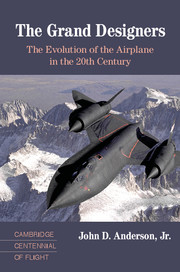
The airplane has experienced phenomenal advancement in the twentieth century, changing at an exponential rate from the Wright brothers to the present day. In this ground breaking work based on new research, Dr John D. Anderson, Jr, a curator at the National Air and Space Museum, analyzes the historical development of the conceptual design process of the airplane. He aims to answer the question of whether airplane advancement has been driven by a parallel advancement in the intellectual methodology of conceptual airplane design. In doing so, Anderson identifies and examines six case histories of 'grand designers' in this field, and challenges some of the preconceived notions of how the intellectual methodology of conceptual airplane design advanced. Filled with over one hundred illustrations which bring his words to life, Anderson unfolds the lives and thoughts of these grand designers.