To save content items to your account,
please confirm that you agree to abide by our usage policies.
If this is the first time you use this feature, you will be asked to authorise Cambridge Core to connect with your account.
Find out more about saving content to .
To save content items to your Kindle, first ensure no-reply@cambridge.org
is added to your Approved Personal Document E-mail List under your Personal Document Settings
on the Manage Your Content and Devices page of your Amazon account. Then enter the ‘name’ part
of your Kindle email address below.
Find out more about saving to your Kindle.
Note you can select to save to either the @free.kindle.com or @kindle.com variations.
‘@free.kindle.com’ emails are free but can only be saved to your device when it is connected to wi-fi.
‘@kindle.com’ emails can be delivered even when you are not connected to wi-fi, but note that service fees apply.
The American inventor Samuel Morse (1791–1872) spent decades fighting to be recognised for his key role in devising the electromagnetic telegraph. While he will always be remembered in the history of telecommunications, and for co-developing the code which bears his name, Morse started out as a painter and also involved himself in matters of politics over the course of his career. Published in 1914, this two-volume collection of personal papers was edited by his son, who provides helpful commentary throughout, illuminating the struggles and successes of a remarkable life. Volume 1 includes observations made in Europe while Morse studied painting. During the Napoleonic wars, he writes letters home describing the rising level of crime and social unrest in London, mentioning that he sleeps with a pistol. He is in London when Spencer Perceval is assassinated and later writes of meeting Turner, 'the best landscape painter living'.
Though raised in Newcastle's coal-mining community, Charles Hutton (1737–1823) went on to make his mark as a teacher and mathematician. A fellow of the Royal Society (and recipient of the Copley medal), he carried out research into the convergence of series, ballistics, and the density of the earth. After flooding destroyed several bridges across the Tyne in November 1771, he began to study the design of bridges, and published this mathematical treatment in 1772. It demonstrates the ideal properties of arches and piers, with due consideration given to the force of water flowing against these structures. Hutton's practical observations also enhance a section that provides definitions of relevant terms. Not merely a solution to the demands of transport and trade, a well-designed bridge, in Hutton's eyes, stands as a structure of elegance and beauty.
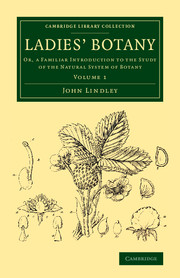
The horticulturalist John Lindley (1799–1865) worked for Sir Joseph Banks, and was later instrumental in saving the Royal Horticultural Society from financial disaster. He was a prolific author of works for gardening practitioners but also for a non-specialist readership, and many of his books have been reissued in this series. The first volume of this two-volume work was published in 1834, and the second in 1837. At a time when botany was regarded as the only science suitable for study by women and girls, Lindley felt that there was a lack of books for 'those who would become acquainted with Botany as an amusement and a relaxation', and attempted to meet this need. The first volume, in the form of engaging letters to a lady, was originally intended to stand alone. Illustrated with detailed botanical drawings, it schools the student in botanical form and taxonomy as well as nomenclature.
A member of the Académie française, Henri Poincaré (1854–1912) was one of the greatest mathematicians and theoretical physicists of the late nineteenth and early twentieth centuries. His discovery of chaotic motion laid the foundations of modern chaos theory, and he was acknowledged by Einstein as a key contributor in the field of special relativity. He earned his enduring reputation as a philosopher of mathematics and science with this elegantly written work, which was first published in French as three separate essays: Science and Hypothesis (1902), The Value of Science (1905), and Science and Method (1908). Poincaré asserts that much scientific work is a matter of convention, and that intuition and prediction play key roles. George Halsted's authorised 1913 English translation retains Poincaré's lucid prose style, presenting complex ideas for both professional scientists and those readers interested in the history of mathematics and the philosophy of science.
After a brief career at sea, during which he tested Harrison's chronometer for the Board of Longitude, John Robison (1739–1805) became lecturer in chemistry at the University of Glasgow. In 1774, having spent a period teaching mathematics in Russia, he returned to Scotland as professor of natural philosophy at Edinburgh. Despite his busy schedule, he contributed major articles on the sciences to the Encyclopaedia Britannica, giving an overview of contemporary scientific knowledge for the educated layperson. After his death, these and other pieces of his scientific writing were edited by his former pupil David Brewster (1781–1868) and were finally published in four volumes in 1822, with a separate volume of illustrative plates. This reissue incorporates those plates in the relevant volumes of text. Volume 3 reprints Robison's large treatise on astronomy, based on his university lectures, as well as his articles on telescopes and pneumatics.
From the 1770s onwards, John Banks (1740–1805) taught natural philosophy and gave courses of public lectures across the north west of England. Much of his work aimed to show engineers, mechanics and artisans how they could benefit from expanding their practical and theoretical knowledge. In this 1803 publication, Banks ranges across mechanics, hydraulics and the strength of materials. He considers various designs for important industrial machines, such as watermills, pumps and steam engines, offering calculations of their power. Drawing on his own experiments, as well as those of others, he shows readers how to estimate the strength of wooden and iron beams, and how to calculate the airflow from a pair of bellows. Diverse in its topics, the book sheds light on how rational calculation came to be applied to the machinery of the industrial revolution. Banks' Treatise on Mills (2nd edition, 1815) is also reissued in this series.
As a philosopher, psychologist, and physician, the German thinker Hermann Lotze (1817–81) defies classification. Working in the mid-nineteenth-century era of programmatic realism, he critically reviewed and rearranged theories and concepts in books on pathology, physiology, medical psychology, anthropology, history, aesthetics, metaphysics, logic, and religion. Leading anatomists and physiologists reworked his hypotheses about the central and autonomic nervous systems. Dozens of fin-de-siècle philosophical contemporaries emulated him, yet often without acknowledgment, precisely because he had made conjecture and refutation into a method. In spite of Lotze's status as a pivotal figure in nineteenth-century intellectual thought, no complete treatment of his work exists, and certainly no effort to take account of the feminist secondary literature. Hermann Lotze: An Intellectual Biography is the first full-length historical study of Lotze's intellectual origins, scientific community, institutional context, and worldwide reception.
Published in 1901, this illustrated two-volume biography of the renowned English naturalist Gilbert White (1720–93) presents a thorough account of his life and achievements. Prepared by White's great-great-nephew Rashleigh Holt-White (1826–1920), it incorporates a selection of White's correspondence with family and friends, providing valuable insights into his beliefs and character. Included are letters sent by White's lifelong friend John Mulso (1721–91), who praised the naturalist's work, predicting it would 'immortalise' White and his Hampshire village. Still considered a classic text, The Natural History and Antiquities of Selborne (1789), featuring White's careful observations of local flora and fauna, is also reissued in the Cambridge Library Collection. In the present work, Holt-White sought to correct the 'erroneous statements' that had previously been made about his relative. Volume 1 covers White's life and achievements up to August 1776, including his studies at Oxford and his ordination as a priest.
The surgeon and anatomist John Hunter (1728–93) left a famous legacy in the Hunterian Museum of medical specimens now in the Royal College of Surgeons, and in this collection of his writings, edited by James Palmer, with a biography by Drewry Ottley, published between 1835 and 1837. The first four volumes are of text, and the larger Volume 5 contains plates. Hunter had begun his career as a demonstrator in the anatomy classes of his brother William, before qualifying as a surgeon. He regarded surgery as evidence of failure - the mutilation of a patient who could not be cured by other means - and his studies of anatomy and natural history were driven by his belief that it was necessary to understand the normal physiological processes before attempting to cure the abnormal ones. Volume 5 contains the plates which accompany the works in the other volumes, along with notes.
Employed early in his career by Sir Joseph Banks, the botanist John Lindley (1799–1865) is best known for his recommendation that Kew Gardens should become a national botanical institution, and for saving the Royal Horticultural Society from financial disaster. As an author, he is best remembered for his works on taxonomy and classification. A partisan of the 'natural' system rather than the Linnaean, Lindley published this 1841 work, the fourth edition of his Outline of the First Principles of Botany, under a new title to emphasise not only that it was 'much extended, and, it is hoped, improved', but also that it was a textbook for students of 'structural, physiological, systematical, and medical' botany. He defines the different elements of a plant, and provides a checklist for identification of plant families, before discussing the various 'natural' systems of classification, including his own, and the different practical uses of plants.
Officially opened in 1682, the Canal du Midi, designed and built by the engineers Pierre-Paul Riquet and François Andréossy, stretched from Toulouse to the Mediterranean. The present work was written by Andréossy's descendant, Antoine-François Andréossy (1761–1828), a French general and diplomat. A member of the Académie des Sciences, he analyses here the terrain of the south of France to show how and why the canal was built. Notably, the work became known for the author's argument that Riquet had usurped the glory that really belonged to his ancestor. Concluding with original documents from the period of the canal's construction, along with an appendix giving details on the canal's route, the book is reissued here in its first edition of 1800. A second edition appeared in 1804, and a third edition was begun but never completed.
Georges Cuvier (1769–1832), one of the founding figures of vertebrate palaeontology, pursued a successful scientific career despite the political upheavals in France during his lifetime. In the 1790s, Cuvier's work on fossils of large mammals including mammoths enabled him to show that extinction was a scientific fact. In 1812 Cuvier published this four-volume illustrated collection of his papers on palaeontology, osteology (notably dentition) and stratigraphy. It was followed in 1817 by his famous Le règne animal, available in the Cambridge Library Collection both in French and in Edward Griffith's expanded English translation (1827–35). Volume 3 of Recherches sur les ossemens fossiles recounts Cuvier's excitement at acquiring fossils from gypsum quarries near Paris, and the challenges of piecing the fragments together correctly. Cuvier describes the methodical reconstruction of the pachyderm fossils and lists other fossils occurring in the same rock formations: carnivores, an opossum, birds, reptiles, and fish.
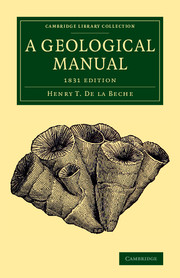
Sir Henry Thomas De la Beche (1796–1855) served as president of the Geological Society from 1847 to 1849, having contributed greatly to the development of geological science and surveying in the first half of the nineteenth century. He was also instrumental in the establishment of the Museum of Practical Geology in London. Reissued here in its 1831 first edition (which Darwin had with him aboard the Beagle), this work sought to help students to grasp the fundamentals of a rapidly advancing science. The first section considers the Earth's shape, density, temperature and other characteristics. The next part includes discussion of beaches, volcanos, and coastal processes. De la Beche then presents descriptions of various rock types, reflecting the state of contemporary geological knowledge. Highly successful, the book went through two further English editions; the expanded third edition is also reissued in this series.
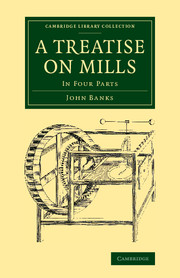
From the 1770s onwards, John Banks (1740–1805) lectured on natural philosophy across the north-west of England. Much of his work aimed to show engineers, mechanics and artisans how they could benefit from expanding their theoretical knowledge. First published in 1795, and reissued here in its 1815 second edition, this work shows how to calculate the power limits of waterwheels, millstones and other commercially important machines. In the author's words, a key aim is to avoid wasted effort 'in attempting what men of science know to be impossible'. Starting with the mechanics of circular motion, he leads the reader step by step through a series of worked problems, showing the theory's practical applications. He then moves on to his experiments on the flow of water, and uses his results to better analyse the various types of waterwheel. Banks' On the Power of Machines (1803) is also reissued in this series.
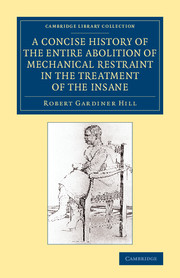
The most famous nineteenth-century British reformer of care for the mentally ill and disabled was undoubtedly John Conolly, whose 1856 Treatment of the Insane without Mechanical Restraints is also reissued in this series. However, Conolly's work at the Hanwell Asylum near London was based in part on the pioneering efforts of Edward Parker Charlesworth (1781–1853) and his younger colleague Robert Gardiner Hill (1811–78), who had already (and controversially) abolished physical restraint in the Lincoln Asylum by 1838. Conolly is known to have visited and been impressed by the Lincoln hospital, but his supporters, and his own book, suggested his primacy in the field, and Hill published this work in 1857 in order to refute Conolly's claims. The first part consists of Hill's account of his and Charlesworth's reforms at Lincoln, and the second reprints many of the letters and pamphlets which focused on the topic during this period.
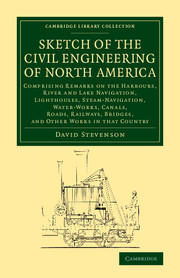
Comprising Remarks on the Harbours, River and Lake Navigation, Lighthouses, Steam-Navigation, Water-Works, Canals, Roads, Railways, Bridges, and Other Works in that Country
A distinguished civil engineer, David Stevenson (1815–86) continued his father's work of designing and building lighthouses around the coast of his native Scotland. His three-month tour of the United States and Canada in 1837 resulted in this highly detailed and unprecedented survey, first published in 1838. Stevenson covers a large number of engineering works, ranging from lighthouses and canals through to roads, bridges and railways. Notably, Stevenson's praise for North America's faster and sleeker steam vessels led British shipbuilders to emulate the models he describes and illustrates in this text. The work remains a historically valuable assessment of the continent's infrastructure at a time of great industrial expansion. Stevenson's The Principles and Practice of Canal and River Engineering, 2nd edition (1872) and his Life of Robert Stevenson (1878), a biography of his father, are also reissued in this series.
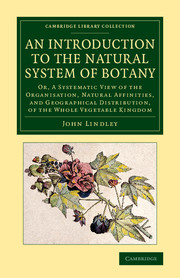
Employed early in his career by Sir Joseph Banks, the botanist John Lindley (1799–1865) is best known for his recommendation that Kew Gardens should become a national botanical institution, and for saving the Royal Horticultural Society from financial disaster. As an author, he is best remembered for his works on taxonomy and classification. A partisan of the 'natural' system of Jussieu rather than the Linnaean, Lindley writes, in his preface to this 1830 work, that it was originally created for his own use, to avoid having recourse to 'rare, costly and expensive publications' available only in the libraries of the wealthy. His intention is to give a 'systematic view of the organisation, natural affinities, and geographical distribution of the whole vegetable kingdom', as well as of the uses of plants 'in medicine, the arts, and rural or domestic economy'. The work is important in the history of taxonomy.
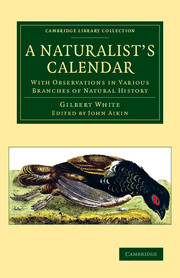
The naturalist Gilbert White (1720–93) was known for his meticulous observations of flora and fauna in their natural environment, primarily around his village of Selborne in Hampshire. This posthumous 1795 publication, edited by the physician and writer John Aikin (1747–1822), comprises a collection of extracts from White's previously unpublished papers from 1768 to his death. Presented here for 'lovers of natural knowledge' is a full year of White's observations. Following the month-by-month record of natural events, the book contains brief studies of birds, quadrupeds, insects, plants and the weather. A lifelong lover of the outdoors, White had kept a near daily record of his activities for more than forty years. Regarded as one of the fathers of ecology, inspiring others to appreciate the natural world, White is best known for The Natural History and Antiquities of Selborne (1789), which is also reissued in the Cambridge Library Collection.
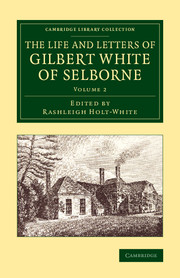
Published in 1901, this illustrated two-volume biography of the renowned English naturalist Gilbert White (1720–93) presents a thorough account of his life and achievements. Prepared by White's great-great-nephew Rashleigh Holt-White (1826–1920), it incorporates a selection of White's correspondence with family and friends, providing valuable insights into his beliefs and character. Included are letters sent by White's lifelong friend John Mulso (1721–91), who praised the naturalist's work, predicting it would 'immortalise' White and his Hampshire village. Still considered a classic text, The Natural History and Antiquities of Selborne (1789), featuring White's careful observations of local flora and fauna, is also reissued in the Cambridge Library Collection. In the present work, Holt-White sought to correct the 'erroneous statements' that had previously been made about his relative. Volume 2 traces White's life from September 1776, considering the impact of the loss of family members, and his legacy after his death.
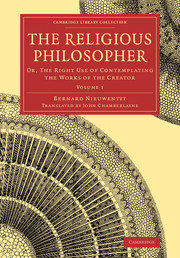
Originally published in Dutch in 1715, this two-volume work by the philosopher and theologian Bernard Nieuwentyt (1654–1718) is reissued here in the 1724 third edition of the English translation by John Chamberlayne (1668/9–1723). The book seeks to persuade both Christians and atheists that scientific examination of the natural world is compatible with religious belief. According to Chamberlayne, Nieuwentyt published this illustrated work to 'magnify the Wisdom and Goodness of God' while challenging those who did not see proof of the divine in nature. The work is known to have influenced the natural theology of the English philosopher William Paley (1743–1805), whose famous analogy of the watchmaker is believed to have been taken directly from Nieuwentyt. Arguing against rationalist philosophers such as Spinoza, Volume 1 defends natural theology and presents a series of detailed 'contemplations' about the complexity of the human body.