To save content items to your account,
please confirm that you agree to abide by our usage policies.
If this is the first time you use this feature, you will be asked to authorise Cambridge Core to connect with your account.
Find out more about saving content to .
To save content items to your Kindle, first ensure no-reply@cambridge.org
is added to your Approved Personal Document E-mail List under your Personal Document Settings
on the Manage Your Content and Devices page of your Amazon account. Then enter the ‘name’ part
of your Kindle email address below.
Find out more about saving to your Kindle.
Note you can select to save to either the @free.kindle.com or @kindle.com variations.
‘@free.kindle.com’ emails are free but can only be saved to your device when it is connected to wi-fi.
‘@kindle.com’ emails can be delivered even when you are not connected to wi-fi, but note that service fees apply.
Richard Jefferies (1848–1887) remains one of the most thoughtful and most lyrical writers on the English countryside. He had aspirations to make a living as a novelist, but it was his short, factually based articles for The Live Stock Journal and other magazines, drawn from a wealth of knowledge of the rural community into which he had been born, which when collected in book form brought him recognition (though not wealth), and which continued to be read and admired after his early death. The Hills and the Vale, first released in 1909, contains a collection of published and unpublished essays and articles. Written in Jefferies' highly descriptive style, these essays describe rural life and nature in England, illustrating folk traditions and important natural events in rural communities. The sense of wonder evoked by the natural world, which permeates all of Jefferies' works, is fully exemplified in this volume.
Richard Jefferies (1848–1887) remains one of the most thoughtful and most lyrical writers on the English countryside. He had aspirations to make a living as a novelist, but it was his short, factually based articles for The Live Stock Journal and other magazines, drawn from a wealth of knowledge of the rural community into which he had been born, which, when brought together in book form, brought him recognition (though not wealth) and which continued to be read and admired after his early death. This volume, first published in 1884, contains a collection of essays and articles previously published during his career. Written in Jefferies' highly descriptive style, these essays describe rural life and nature in England, illustrating folk traditions and important natural events in rural communities. The mysticism and wonder of the natural world which exemplifies Jefferies' works is fully illustrated in these essays.
In the Land of the Blue Gown, first published in 1908, is a thorough and descriptive non-fiction work by Mrs Archibald Little. Born in 1845, she became best known for her travel writing and for her campaign against the Chinese custom of foot-binding. Mrs Little travelled widely both alone and with her husband, Archibald (1838–1909), and eventually settled in the Sichuan province of China. She admired many aspects of Chinese culture, but made it her life's work to become a vigorous leader of the anti-foot-binding movement. This book paints a marvellously descriptive account of her travels to Beijing and remoter parts, and describes her views on the culture, scenery, customs, religion, and much more. The book is extensively illustrated throughout, and also includes a chapter on her 'anti-foot-binding tour'. Other books by Mrs Little and her husband are also reissued in this series.
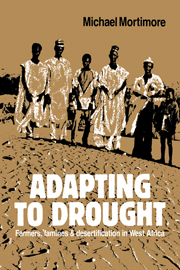
The image of Africa in the modern world has come to be shaped by perceptions of the drylands and their problems of poverty, drought, degradation, and famine. Michael Mortimore offers an alternative and revisionist thesis, dismissing on theoretical and empirical grounds the conventional view of runaway desertification, driven by population growth and inappropriate land use. In its place he suggests a more optimistic model of sustainable land use, based on researched case studies from East and West Africa where indigenous technological adaptation has put population growth and market opportunities to advantage. He also proposes a more appropriate set of policy priorities to support dryland peoples in their efforts to sustain land and livelihoods. The result is a remarkably clear synthesis of much of the best work that has emerged over past years.
A work of outstanding originality and importance, which will become a cornerstone in the philosophy of geography, this book asks: What is human science? Is a truly human science of geography possible? What notions of spatiality adequately describe human spatial experience and behaviour? It sets out to answer these questions through a discussion of the nature of science in the human sciences, and, specifically, of the role of phenomenology in such inquiry. It criticises established understanding of phenomenology in these sciences, and demonstrates how they are integrally related to each other. The need for a reflective geography to accompany all empirical science is argued strongly. The discussion is organised into four parts: geography and traditional metaphysics; geography and phenomenology; phenomenology and the question of human science; and human science, worldhood and place. The author draws upon the works, of Husserl, Heidegger, Gadamer and Kockelmans in particular.
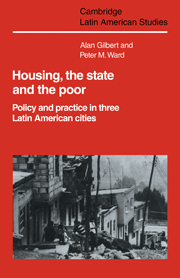
Originally published in 1985, this book is concerned with the housing and service needs of the poor in Latin America and how they are articulated and satisfied. It examines the aims and implementation of government policies towards low-income housing dwellers and tries to relate those policies to the wider interests of the state. It discusses how the poor perceive the constraints on barrio servicing and improvement, their involvement in community organisations and the role the community and its leaders play in influencing state action. Since housing and servicing issues directly impinge on the interests of politicians, bureaucrats, landowners and real-estate developers, as well as on those of the poor, patterns of provision mirror closely the nature of the relationships between the poor and the wider urban society. The main theme of this book is thus the allocation of resources within urban society and the operation of political and administrative power at city level. The book will interest not only those concerned with housing and planning but also those who wish to understand social and economic policies towards the poor in most kinds of Third World city.
This book embodies the results of thirteen years of research in drought-prone rural areas in the semi-arid zone of northern Nigeria. It describes the patterns of adaptive behaviour observed among Hausa, Ful'be and Manga communities in response to recurrent drought in the 1970s and 1980s. The question of desertification is explored in an area where the visible evidence of moving sand dunes is dramatic blame are examined in relation to the field evidence. A critique is offered of deterministic theories and authoritarian solutions. Professor Mortimore demonstrates a parallel between the observable resilience of semi-arid ecosystems and the adaptive strategies of the human communities that inhabit them and suggests policy directions for strengthening that resilience.
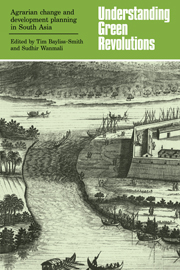
Peasant societies in the Third World have undergone changes that are often regarded as sweeping and unparalleled; rapid population growth, progressive integration into the market economy and a Green Revolution in agricultural technology. This book is a critical examination of the truth behind these stereotypes. Twenty-one specialists in the field of development studies look at the reality of agrarian change, either through historical analysis, or through in-depth village field-work, or from their experience as development planners. The first four chapters provide the historical context of agrarian change in India, Latin America and pre-industrial Europe. These are followed by eight detailed case studies of the impact of the green Revolution at village level in India, Sri Lanka and Bangladesh. The book finishes with six analysis of the effectiveness of government policies designed to intervene in the development process in South Asia and in East Africa. The contributors to this book share a commitment to an interdisciplinary approach to the study of development problems.
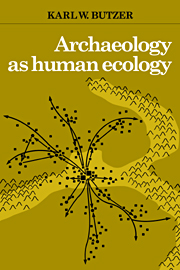
Archaeology as Human Ecology is a new introduction to concepts and methods in archaeology. It deals not with artifacts, but with sites, settlements, and subsistence. Karl W. Butzer's goal is to interpret the ecosystem of which an archaeologicial site or site network was part. Components of this study include geo-archaeology, archaeobotany, zoo-archaeology, and archaeometry. These methods are then used in examining interactions between human communities and their biophysical environment: the impact of settlement on site formation and the effects of subsistence activities on plants, animals, soils, and overall landscape modification. Finally, the methods and theoretical approach, are applied to examine the processes of cultural change and continuity. The approach of Archaeology as Human Ecology goes far beyond traditional environmental archaeology, which is concerned with simple reconstruction. It provides a clear, systemic approach that immediately allows an assessment of interactions. For the first time, it attempts to develop a comprehensive spatial archaeology - one that is far more than derivative spatial analysis.
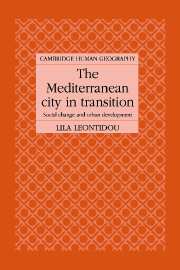
Postwar capitalist development has involved a transition from polarization toward diffuse urbanization and flexibility. The timing and form of this transition and its effects on spatial structures have varied, as is especially evident in the case of Mediterranean Europe. Focusing upon Greater Athens between 1948 and 1981 - the crucial period of the transition - Lila Leontidou explores the role of social classes in urban development. The emergence of new processes in cities such as Athens, Salonica, Rome, Naples, Milan, Madrid, Barcelona and Lisbon is different in both timing and manner from that of northern European cities, but, as Dr Leontidou argues, this should not be attributed to poverty or inexplicable cultural peculiarities. Instead interaction between popular spontaneity, economic forces and State control has played a major role.
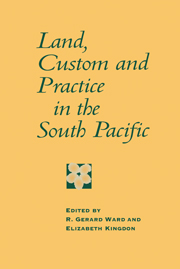
Land tenure arrangements are intimately linked with the organization of society, the economy, political structures and geography. In the South Pacific Islands the majority of land is held by community groups under 'customary' or 'traditional' forms of tenure. This book argues that land formerly held in common is now often controlled and used exclusively by individuals or nuclear families - it is being privatized. Detailed case studies demonstrate these trends in Western Samoa, Tonga, Vanuatu and Fiji. Parallels are noted from Asia, Europe and Africa, where comparable forces of commercialization, individualization and socio-political change have brought comparable results. The denial of these trends by policy makers in the region reflects an interest in maintaining the image of traditionalism and its associated status and power. The divergence between rhetoric and reality creates dilemmas for many Pacific Islanders and their leaders.
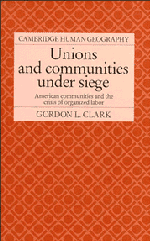
The essential argument of this book is that the current crisis of US unions ought to be considered in terms of the local context of labor-management relations; that is, the communities in which men and women live and work. Whether by design or necessity, the structure of New Deal national labor legislation has sustained, and maintained, distinctive local labor-management practices. As the economies of American communities (and the world) have become highly interdependent, reflecting the evolution of corporate structure and trade between economies, unions movement can be traced to unions' dependence upon inter-community solidarity, a fragile democratic ideal which is often overwhelmed by economic imperatives operating at higher scales in other places. An important objective of Professor Clark in this work is to demonstrate the significance of the intersection between communities, unions, and institutions, in understanding the prospects for American unionism.
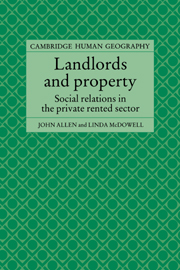
The issue of private landlordism in Britain touches a raw political nerve. There is no shortage of prescription as to what should be done with the rented housing market and private landlords. Yet surprisingly little is known about the structure and diversity of private landlordism and the variety of private tenants' housing needs - a prerequisite for policy intervention. This book provides an anatomy of the nature of private landlordism in the 1980s, the types of landlord in the market, the scope of their activities, and the choices and constraints that guide their actions in the market. It shows how the pattern of change in the private rented sector has been not one of straightforward decline, but one of structural unevenness shaped by a combination of three general processes - disinvestment, investment and informalization - which vary in impact from place to place. Adopting a realist methodological approach, the authors attempt to capture both the general characterisation of landlordism and the processes shaping the private rental sector and their diverse geographical form across space and through time. This approach is illustrated by an extensive investigation in two local housing markets in inner London. Finally, the authors examine the scope for change in the private rented sector and argue for a combination of public and private initiatives that is sensitive to the differences among local housing markets and that relates to the demands/needs of those groups at present dependent on private renting for accommodation.
The last three chapters focused on the changes that have unfolded in Konso, and the way they have impacted on the institutions that are central to the production of Konso indigenous agriculture and landscape. Together with the earlier chapters, they emphasize the way in which material struggles over land and labour are played out in discursive struggles over the legitimacy of different beliefs and forms of identification (Konso ‘custom’, Protestant Christian, Orthodox Christian). In this conclusion, I return more explicitly to the landscape and examine what can be learnt from the material presented here about how landscapes like Konso are produced and maintained over time. I also explore the significance of this account for development practice and policy.
The principal message is that the terraced landscape of Konso is a cultural landscape; it is produced out of networks of collaborative action which are also networks of meaning. Historically, the indigenous institution of the poqalla has been central to the network of meaning, and has helped to produce the landscape and the indigenous intensive landscape that it supports. The poqallas have been powerful institutions because they were intimately connected to others in Konso, who identified with them personally: the poqallas were their relatives; they represented, structurally, every Konso person's father and their origins. The poqallas also performed multiple functions, providing material, juridical, social and cultural support. In rituals, the poqallas were thought to be able to influence forces beyond the control of ordinary mortals.
The previous two chapters explored the way in which the values and practices of the Derg government and Protestant Christians intersected. The relationship between these two bodies was not straightforward as they did not share the same values, but they shared some of the same goals. They shared a desire to eradicate aspects of culture they found harmful, and they were both modernizing in their own ways. The outcome of this convergence of aims was a ‘discourse coalition’ (Hajer, 1995). The Protestant Christians became some of the main supporters of reforms brought in by the Derg. As a result Konso society became bifurcated. Two groups of people, discourses, and ‘ways of doing things’ emerged, which are described here as corresponding to Bourdieu's orthodoxy and heterodoxy. The orthodoxy was made up of customary practices based in the belief that ‘they are the way things have always been’. They had the legitimacy of ‘tradition’, the power of the belief in ‘das “ewig Gestrigen”’, ‘the eternal yesterday’ (Weber, 1978). The heterodoxy was made up of a combination of appropriated Derg policies and Protestant Christian teachings. Whereas the orthodoxy involved a commitment to the indigenous institutions of the poqalla, to customary tenure and to indigenous networks of labour access, the heterodoxy involved a commitment to state-defined land tenure, and rejected indigenous practices as ‘devil worship’. The heterodoxy saw itself as ‘modern’, the customary as ‘traditional’.
Chapters Two, Three and Four examined the way in which the production and reproduction of the landscape in Konso is part of a social, cultural, ritual and political process of which the poqallas are at the heart. The power of the poqallas rests in their control over and embodiment of forms of social, symbolic and economic capital. The study of the poqalla shows that the institutions for managing land and labour are embedded in other aspects of society to the point that the economic, the ritual, the judicial, and the political cannot be separated. This raises questions about the usefulness of the term ‘embeddedness’, often used to refer to non-economic aspects of production in economics. The term ‘embedded’ implies that the economic (or productive) practices are grounded within existing social networks and cultural beliefs and practices, from which, therefore, it could be separated. This research shows that the economic, ritual, social and political are mutually constitutive. Everyday life in Konso (and elsewhere) is made up of interactions and exchanges between people which are at once social, cultural, ritual, economic and political; it is difficult to prioritize any one dimension of an exchange over another. To separate them would be to impose dichotomies and divisions between different sectors that do not exist in practice.
The last chapter compared data from oral histories, from burial statues, and from the political events from the 1890s, to argue that the role of the poqalla in the production of the landscape is ancient.
In this chapter, the study of the poqallas is developed further to examine more critically the nature of the power relations that exist between the poqallas and others. The previous chapters have demonstrated that the poqallas play a role in turning the stony grounds into fertile ones, which means that they exist as a form of institution central to the intensive agriculture. Development organizations have ‘discovered’ the importance of the institutional dimensions of environmental management in recent years, and indigenous institutions are seen as particularly valuable resources because they are considered to be already existing institutions that can potentially be harnessed for environment and development ends. These approaches to working with indigenous institutions tend to focus on identifying and illustrating the role that they play in environmental management. In arguing for these institutions' positive role, there is little time to think more critically about the nature of the power relations between these institutions and the others in the community. If anything, development organizations normally assume that the institutions are the legitimate representatives of the community and working for the common good.
This chapter argues that development organizations need to think more carefully about the nature of the power of the institutions with which they are working. For example, are they simply representatives of the community among whom they live and institutions that provide a coping mechanism for the poor and sustain the landesque capital?
The 1974 revolution heralded the beginning of a new period in Ethiopia. The Derg government penetrated the structures of government more deeply into the grassroots communities of southern Ethiopia than any regime that had gone before. In this chapter, the general history of the revolution is reviewed, setting the context for the discussion of the experience in Konso. As well as exploring the way the revolution impacted on Konso, the way in which the ideas and practices associated with the revolution combined with those of Protestant Christians, described in the last chapter, is examined. The combination of the modernizing forces of Protestant Christianity and scientific socialism had severe impacts on the institution of the poqalla. As the modern project failed, however, some Konso began to seek alternative forms of meaning and organization, and returned to some of their older institutions, including the poqalla. Here the orthodoxy of customary practices and the institution of poqalla show their resilience.
The impact of the revolution and the Derg period in Ethiopia
The revolutionary government was known as the Derg, from the Amharic word for ‘committee’. The events surrounding and following the 1974 revolution in Ethiopia have been described in some detail by Clapham (1988), Dessalegn Rahmato (1984), Ottaway and Ottaway (1978), Pankhurst (1992), Donham (1999) and James et al. (2002). The revolution brought some dramatic transformations, including changes in state administrative structures at the local level, and a land reform programme implemented in 1975, which has been described as one of the most radical agricultural reforms that have been set in motion in sub-Saharan Africa (Dessalegn, 1984).