To save content items to your account,
please confirm that you agree to abide by our usage policies.
If this is the first time you use this feature, you will be asked to authorise Cambridge Core to connect with your account.
Find out more about saving content to .
To save content items to your Kindle, first ensure no-reply@cambridge.org
is added to your Approved Personal Document E-mail List under your Personal Document Settings
on the Manage Your Content and Devices page of your Amazon account. Then enter the ‘name’ part
of your Kindle email address below.
Find out more about saving to your Kindle.
Note you can select to save to either the @free.kindle.com or @kindle.com variations.
‘@free.kindle.com’ emails are free but can only be saved to your device when it is connected to wi-fi.
‘@kindle.com’ emails can be delivered even when you are not connected to wi-fi, but note that service fees apply.
From the Blue Ridge overlook in Shenandoah National Park, Virginia, USA, one can see the broad Shenandoah Valley, split by Massanutten Mountain, with more ridges and valleys in the distance (Fig. 9.1). This view of the Appalachian ridges and valleys provides a classic example of an eroded fold and thrust belt, where parallel ridges of hard, resistant rocks are separated by valleys underlain by comparatively softer rocks. Fold and thrust belt topography develops on folded bedrock structures called anticlines and synclines (Fig. 9.2). But this type of geologic structure is not without a long back-story. Most of the folded rocks underlying these mountains were originally deposited as flat-lying sediments, hundreds of millions of years ago. The folding occurred much later, driven by compressive forces associated with continental collision. Millions of years of subsequent erosion on these rocks were then required to give us the landscapes we see today.
Rivers and their valleys have long been a source of contemplation and wonder. They are not only key geomorphic agents, but they are also economically important, acting as transportation arteries, sources of irrigation water and food, and as generators of hydropower. We also use rivers for drinking, waste disposal, and for a variety of recreational activities. Many geomorphologists consider running water to be the most dominant and important geomorphic process – shaping landscapes everywhere. Even in deserts, running water is often the most important and widespread geomorphic agent.
Most valleys have a stream or a river at their bottom. In ancient days, it was thought that water simply “found” its way into preexisting valleys, forming rivers there. Geomorphologists now know that most valleys were formed by the rivers currently within them, which moved sediment out and carved the valley over time.
Arches, hoodoos, buttes, mesas … these are the picturesque landforms that most tourists and landscape-lovers know about, and which are the focus of many parks and recreation areas. All of these landforms are bedrock-controlled, with rock at or immediately beneath the surface. This chapter introduces a wide array of bedrock-controlled landforms. Most have formed on sedimentary rock, the most common rock in Earth’s upper crust. Thus, much of the focus in this chapter will be on landforms developed on flat-lying bedrock strata (layers) that have experienced minimal tectonic disturbance throughout their history. Chapters 9 and 10 focus on bedrock-controlled landforms formed on much more tectonically active landscapes.
Weathering is central to geomorphology; without it, landforms would not exist. Weathering sculpts rocks and landscapes at all scales, from producing tiny pits on rock surfaces to forming large valleys. It is everywhere.
However, weathering does not work alone. Instead, it operates alongside other surficial processes to produce the landscapes we see around us. Weathering is often defined as the in situ (meaning “in position”) breakdown of rocks and minerals. It is distinct from erosion, which involves the removal and transport of material, usually downslope. Often, weathering preconditions rocks for erosion by making them weaker and less coherent. Together, weathering and erosion operate to form landforms via denudation – the overall lowering of the land surface.
G. K. Gilbert is considered one of the founders of modern geomorphology (see Chapter 2). In his 1877 report on the geology of the Henry Mountains of Utah, he wrote that (p. 109).
How old is the Grand Canyon? When did the glaciers last retreat from this area? How long does it take to form an inch of topsoil? When did the earthquake occur that formed these rock scarps? These are the questions that geomorphologists ponder. This chapter will outline the tools and approaches we use to answer such questions.
Establishing how old a landform might be, that is, when it formed, has always occupied the mindset of geomorphologists. If we know how OLD a landform is, then we can begin to understand how it is evolving, how fast it might be changing, and how it formed in the first place. Fortunately, various dating principles and techniques now exist to address these issues. These techniques require the ability to measure change in a system or a landform over time, with the (usual) goal of establishing the age of a sediment package or a landform.
Geomorphology is the study of landforms – their evolution, shape (morphology), and composition. The word comes from the Greek (geo, Earth, morphos, referring to form, and ology, a branch of knowledge). Landforms come in all types, shapes, sizes, compositions, and ages. There is a landform for everyone, and no two are exactly alike. Understanding Earth’s landforms – how they are formed, altered, destroyed, and/or buried by various geologic processes – is at the core of geomorphology. This textbook will teach you the language and concepts that will help you to understand the workings of many of Earth’s physical systems. Our goal is to equip you with the vocabulary and toolkit for understanding why Earth’s physical landscapes look the way they do. This knowledge will help us all to better manage our fragile natural resources.
Plants and animals are, unquestionably, important geomorphic agents. Nonetheless, their key roles in the geomorphic system have only recently been properly appreciated and studied. In fact, the term biogeomorphology was only introduced in 1988, by Professor Heather Viles, as an approach to geomorphology that explicitly considers the role of organisms.
Biogeomorphology focuses on the influence of plants, animals, and microorganisms on landforms and geomorphic processes, and vice versa. This chapter examines how the field of biogeomorphology has expanded since its formal definition in 1988. We will discuss the role of plants in geomorphology, usually simply referred to as phytogeomorphology, as well as the role of animals, whose role in landscape evolution is captured by the term zoogeomorphology. Despite the emphasis that researchers have placed on the role of macroorganisms in geomorphology, some more recent, pioneering work has also shown that microorganisms are also important.
Exploration of planetary bodies beyond Earth is occurring at an ever-increasing rate. What used to be points of light in the night sky are now amazing, complicated, and intriguing objects of geologic study. For extraterrestrial bodies with solid surfaces – such as rocky planets, asteroids, and icy bodies – the study of planetary bodies as geologic objects includes careful scrutiny of their surfaces. Planetary exploration is an examination of geomorphology, as our interpretations of other planetary surfaces are largely guided by geomorphic studies done on Earth. At the same time, planetary landforms developed in different geologic conditions than on Earth – such as under different gravities, in different materials (like ice instead of rock), and beneath different atmospheric pressures or compositions.
This chapter illustrates that various geomorphic processes observed on Earth occur on other planets as well, and also how the resultant landforms contrast with those found on Earth.
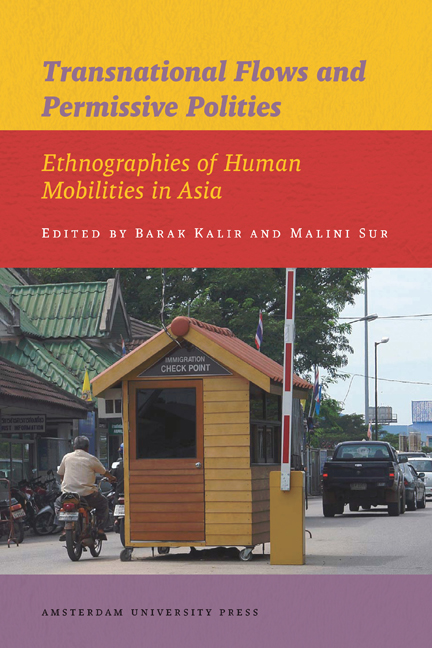
Transnational Flows and Permissive Polities examines how legality and other sources of authority intersect in the regulation of human mobility. The book focuses on the ethnographic exploration of the experiences and views of mobile subjects in the vast and rapidly changing continent of Asia. The contributors analyze tensions between the letter of the law and social legitimation, territorial boundaries and commodity flows, state practices and migrant subjectivities, and labour brokerage and national and international organizations. This volume offers key insights for students of globalization and transnationality and policy relevance for development practitioners, governments, and NGOs.
Western Sørkapp Land is a very remote and diverse region, which is representative of the European Arctic. The book describes the transformation of the environment and landscape of Western Sørkapp Land based on research data collected by Jagiellonian University scientific expeditions in the period 1980-1986 and 2008. Western Sørkapp Land has been experiencing dramatic natural changes such as glacial recession, the emergence of new landforms and Quaternary deposits as well as changes in the water drainage and network due to global warming. The establishment of South Spitsbergen National Park has led to a regeneration of the local reindeer herd and consequently the overgrazing of the local tundra resulting in altered plant communities. The transformation of Western Sørkapp Land will continue and its potential directions are outlined in the book.
Inhabited by Polynesians since the thirteenth century and discovered by Europeans in the seventeenth, New Zealand is a geologically diverse island group where active volcanoes and frequent earthquakes have resulted in a rich variety of rock formations and geothermal activity. In 1859–60, the geologist Ferdinand von Hochstetter (1829–84) was employed by Auckland's government to undertake the first systematic geological survey of the islands, the results of which were first published in German in 1863 and translated into this English version in 1867. Hochstetter describes his travels across New Zealand, his encounters with native people and his scientific observations. He analyses plants, wildlife and fossils, describes mountains, rocks and boiling springs, and evaluates evidence of glaciers and tectonic activity. As a result of Hochstetter's work, several species in New Zealand were named after him. This book remains a valuable resource in the history of Australasian natural science.