To save content items to your account,
please confirm that you agree to abide by our usage policies.
If this is the first time you use this feature, you will be asked to authorise Cambridge Core to connect with your account.
Find out more about saving content to .
To save content items to your Kindle, first ensure no-reply@cambridge.org
is added to your Approved Personal Document E-mail List under your Personal Document Settings
on the Manage Your Content and Devices page of your Amazon account. Then enter the ‘name’ part
of your Kindle email address below.
Find out more about saving to your Kindle.
Note you can select to save to either the @free.kindle.com or @kindle.com variations.
‘@free.kindle.com’ emails are free but can only be saved to your device when it is connected to wi-fi.
‘@kindle.com’ emails can be delivered even when you are not connected to wi-fi, but note that service fees apply.
This chapter provides a detailed assessment of Walter Bailey’s medical genres in the vernacular and how they reflect changing thought styles from scholasticism to empiricism. The ongoing process is demonstrated by first-hand evidence obtained by analysing both macrolevel structural compositions of genres and various text types within them. Language change is located on the discourse level by identifying stylistic varieties, showing the mechanism of change on the ideological level. Bailey belonged to the learned elite of his time and mastered a large repertoire of different genres and text types. He gives us convincing proof of the early transition period by employing old and creating new ways of writing. He developed the genre script of the scholastic commentary to unprecedented perfection in Peppers (1588), and innovated a new style of reporting on his experiments in Waters a year earlier. The passage anticipates the future way of doing and writing science, showing the author’s curiosity and inquisitiveness, qualities that are typically attributed to seventeenth-century Royal Society scientists. The new mode of knowing surfaces passim in his other texts too, where observation of nature is preferred to book wisdom.
The most widely copied plague treatise in medieval England was the one attributed to John of Burgundy. Despite such widespread dissemination, its main period of production in the British Isles seems to have been limited to the Middle Ages, as it never appeared as an English early modern printed edition, being superseded by different plague tracts. Nevertheless, despite the lack of a printed edition, handwritten copies of John of Burgundy do survive after 1500. They are hitherto neglected witnesses to a treatise that formed the foundation of medical response to the bubonic plague in the British Isles for 200 years and whose cultural reach and influence were much greater than is often acknowledged. The purpose of this chapter is to describe the manuscript context of these late survivals of the John of Burgundy tract and examine their contents, noting any evidence of continued use of the treatise and developments in medical or religious discourse.
Arderne’s writings retained their popularity in both Latin and English after 1500, showing the artificiality of the supposed division between medieval and early modern. This chapter investigates surviving manuscripts made in the sixteenth and seventeenth centuries, commissioned or owned by practising surgeons and medics, rather than by university teachers or scholars. These manuscripts were heavily illustrated within or alongside the text-block, reinforcing the textual bias towards visualisation and personal witness. As case studies, the chapter will also consider the single printing (1588) of Arderne’s writings on fistula in ano, edited by the barber surgeon John Read, and a manuscript owned c.1645–8 by the ship’s surgeon Walter Hamond, who reflected on the continued usefulness of Arderne’s surgical techniques and recipes, suggested some improvements, and also commented on the financial charges Arderne made for his services and their contemporary equivalents.
This chapter considers the characteristics and contexts of three eighteenth-century encyclopaedic dictionaries: Cyclopaedia (1728) by Ephraim Chambers, A medicinal dictionary (1742–45) by Robert James, and The first part of a dictionary of chemistry (1789) by James Keir, especially in relation to their own comments on their intentions. Chambers’s is generalist, while the other two are specialist works on medicine and chemistry. The Cyclopaedia had a long and acclaimed afterlife, while James’s dictionary was translated into French and Italian, but did not reach a second edition in England. Keir’s remained unfinished. An attempt is made to position these works in their larger lexicographical and scientific context, primarily through their paratexts.
This chapter explores several Early Modern English medical recipe compilations extant in manuscripts held in Glasgow University Library to investigate the recipe genre as reflection of that time period. No other genre is so permeable to the changes in the cultural and social spheres, given that recipes mirror the contemporary society where they were written. This fact is especially noticeable in the abundance of new substances that are incorporated in the recipes of the period from the Continent and, especially, from the New World.
A key element of medieval and early modern medical practice was the creation of a positive attitude in the patient. To this end, a variety of persuasive strategies were employed, which are amply documented in available records of European medical texts, especially recipes. This chapter demonstrates through qualitative software analysis the conceptual categories related to persuasion and positive attitude, with special regard to their usage patterns, frequencies, and typical co-occurrences in the most common genre of sixteenth/seventeenth-century Medical Hungarian, that of medical recipes.
This introductory chapter discusses the contents of the volume with its focus on genres and text traditions of medical discourse in a diachronic perspective. Variability of medical language with its conventions and traditions of writing is a leading theme in several chapters and surfaces in others as well. The social and cultural contexts of production and use as well as meaning-making processes of written texts as communicative events receive attention. All contributions take context in textual production and use into account. Another point of emphasis is variation in discourse forms in texts that were removed from the original settings and repurposed for new readerships. Texts circulating in Britain are at centre stage, but medical discourses reflecting common ideological assumptions had a broad currency and English writers shared profoundly in the pan-European medical culture.
The study of persuasion in texts focuses on the means and strategies to alter the audience’s attitude and on bringing about a change in their minds. Persuasion can seldom be associated with linguistic phenomena or categories, or in other words, linguistic categories often contribute towards the persuasiveness of a text, carrying other functions at the same time. This chapter will investigate the ways in which persuasion is interlaced with the informative and instructive contents of Early Modern English medical recipes, looking beyond the customary recipe collections into other medical genres and the recipes embedded in their texts. The approach adopts metadiscourse analysis as a tool to map linguistic item inventories by which to anchor the classical concepts of persuasion to linguistic phenomena. The study suggests that persuasion in medical recipes resides in such linguistic phenomena that can be identified by metadiscourse categories. The approach provides a useful tool for triangulating one’s observations about the persuasiveness of a text. One of the trends emerging in the Early Modern English period is the increasing variety of metadiscourse classes used in recipes.
New resources have led to new insights into the history of English vocabulary. The appearance of machine-readable corpora has made it possible to contextualise particular idiolectal usages much more comprehensively than was possible until recently. Such developments have allowed, through the harnessing of the large bodies of data to be found in the Oxford English Dictionary and other resources, a much better understanding of intertextual engagement: what might be called authorial invention, the focus of this chapter. The chapter focuses on authorial invention during the Romantic period, with reference to three writers whose imaginative outputs drew profoundly on their understanding of medicine: Samuel Taylor Coleridge (1772–1834), Mary Shelley (1797–1851), and John Keats (1795–1821). As Richard Holmes has argued, Romanticism drew profoundly on its scientific inheritance, in the cases analysed here derived from direct or indirect encounters with thinkers such as Thomas Beddoes (1760–1808), Astley Cooper (1768–1841), William Cullen (1710–1790), and Erasmus Darwin (1731–1802). However, they transformed this inheritance through what Holmes terms ‘imaginative intensity’.
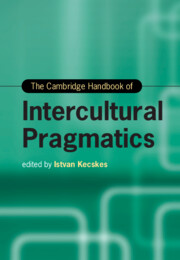
Intercultural pragmatics addresses one of the major issues of human communication in the globalized world: how do people interact with each other in a language other than their native tongue, and with native speakers of the language of interaction? Bringing together a globally-representative team of scholars, this Handbook provides an authoritative overview to this fascinating field of study, as well as a theoretical framework. Chapters are grouped into 5 thematic areas: theoretical foundation, key issues in Intercultural Pragmatics research, the interface between Intercultural Pragmatics and related disciplines, Intercultural Pragmatics in different types of communication, and language learning. It addresses key concepts and research issues in Intercultural Pragmatics, and will trigger fresh lines of enquiry and generate new research questions. Comprehensive in its scope, it is essential reading not only for scholars of pragmatics, but also of discourse analysis, cognitive linguistics, communication, sociolinguistics, linguistic anthropology, and second language teaching and learning.