To save content items to your account,
please confirm that you agree to abide by our usage policies.
If this is the first time you use this feature, you will be asked to authorise Cambridge Core to connect with your account.
Find out more about saving content to .
To save content items to your Kindle, first ensure no-reply@cambridge.org
is added to your Approved Personal Document E-mail List under your Personal Document Settings
on the Manage Your Content and Devices page of your Amazon account. Then enter the ‘name’ part
of your Kindle email address below.
Find out more about saving to your Kindle.
Note you can select to save to either the @free.kindle.com or @kindle.com variations.
‘@free.kindle.com’ emails are free but can only be saved to your device when it is connected to wi-fi.
‘@kindle.com’ emails can be delivered even when you are not connected to wi-fi, but note that service fees apply.
Chapter 8 summarizes findings and reviews the implications of previous chapters, including health and safety considerations related to screen time and online interaction. Specifically, it recapitulates guidelines on how to fit gaming and written online interaction into children’s lives in a balanced, principled way, to promote safe, collaborative learning with other children and adults. These guidelines also summarize previously discussed criteria for selecting and setting up appropriate videogame and social media interaction to maximize learning benefits and safety. These include the introduction of developmental guidelines and goals for video games, as there are for children’s books, to provide appropriate scaffolded support for children, including for the development of children’s first and additional languages. Suggestions for conducting further research using conversation analysis in this area are also discussed, to cover a range of similar digital contexts and age groups.
Based on insights from previous research, Chapter 4 introduces the language and complex interactional structure of video game interaction, including both online and offline elements. While the chapter identifies multiple combinations and configurations of gaming interaction which are available to children, most research studies are focused on co-located collaborative gaming, where children game side by side rather than at a distance. The chapter develops an analytical framework based on conversation analysis principles, which is applicable to most games, and which is the basis for analysis of Minecraft text chat in Chapter 5. This framework considers interactivity as a social rather than technical accomplishment, to assess videogames’ potential to promote children’s learning through interaction. This chapter includes an analysis of the language used when co-present gamers play face-to-face, which reveals that despite its interactional complexity, gaming language is often linguistically limited, as imperative forms, instructions, exclamations and interjections constitute most of the language used by gamers. This language may however be valuable to children for game-related problem solving and relationship building. It is also an opportunity for authentic language practice on specific language learning objectives where gamers are using a second language.
Chapter 1 provides an overview of screen time concerns reported in the media and research, with consideration of relevant learning and interaction theories which indicate that face-to-face social interaction, talk and play are essential for the linguistic and cognitive development of children. This chapter also revisits the fundamental multimodality of face-to-face interaction. The shift from face-to-face to online multimodal interaction therefore requires users to make complex linguistic and interactional adaptations to be able to achieve understanding and affiliation with interlocutors in online contexts, as occurred with the advent of the telephone. This is especially true of the most common form of online interaction, text chat, which is a unique hybrid form of social written interaction, with its own specific affordances and constraints for children’s social and linguistic development. This chapter presents key interactional differences between face-to-face and written online interaction, based on conversational resources available (or unavailable) to users in either setting, including videogame settings. This discussion provides a necessary basis for investigation of children’s written interaction in subsequent chapters.
Chapter 3 focuses on massively multiplayer online game and chat software Club Penguin that was popular with children until the desktop version was closed down in 2018. The chapter reveals unique aspects of Club Penguin chat environments, including evanescent posts which constrain interaction due to users’ lack of access to review of their conversation. The analysis of Club Penguin chat interaction distinguishes between open conversation, which is similar to ordinary conversation but in written form, role-play and more structured play-oriented social interaction, which is constrained by game rules. The chapter identifies available linguistic resources to ascertain their potential to create naturalistic conversational sequences and routines. The analysis of real life chats reveals that children use the restricted language creatively and effectively in social interaction and virtual play with other users, with greater variety of linguistic devices and negotiations evident in small group exchanges. Some of these exchanges include negotiations related to inclusion of other children, which suggest that this environment may provide opportunities for children’s social development, ideally under adult supervision. Linguistic analysis in fact indicates that despite the software’s linguistic restrictions, which are intended to promote safety, children’s safety can be elusive when users deploy ambiguous polysemic vocabulary.
In this chapter, analysis focuses principally on asynchronous substrand comments on an Ethan Gamer YouTube video, which are elicited by single main strand comments. Analysis reveals that in most instances, YouTube main and substrand comments interaction has a unique one-way structure, where comments by individual users are addressed mainly to the producer and participant of the video, in this case Ethan Gamer, or to the commenter who posts the main strand comment which elicits the substrand. While adjacency and sequence are disrupted by various software features in the main strand comments, sequentiality is adhered to in the substrand comments where users have access to meaningful written interaction and conversational sequences. However, Ethan Gamer’s replies to commenters’ posts are infrequent. Nonetheless, Ethan Gamer YouTube commenters use the substrand comments tool to connect with both unknown and familiar other users, engaging mainly in talk about gaming hardware, Ethan Gamer’s gameplay, and sometimes to clarify their actual age where adults’ accounts are being used to access YouTube. Nostalgic YouTube substrand posts may also comprise tellings, which suggest commenters’ social orientation through a search for commonality with other users.
This chapter applies principles outlined in previous chapters, especially Chapter 4 Videogame Talk, to understand group written interaction between Ethan Gamer and his fans, as visible on a public YouTube Minecraft gaming session. Unlike games such as FIFA where game objectives and points scoring dominate, Minecraft involves building digital environments, similar to Lego. The game software facilitates both written and spoken talk for the collaborative achievement of game activities, though survival and progression through levels are objectives in most Minecraft contexts. Analysis indicates that affiliative social talk, including reciprocal greetings, positive evaluations and smiley emoticons deployed by game participants promote a supportive gaming environment while also modeling prosocial affiliative gaming behaviours. Teamwork and problem-solving behaviours which scaffold game participants in their game play are also enacted frequently and reciprocally in text chat. These include requests or offers of assistance and advice giving related to the game-in-progress, including coordination of defensive actions as a result of a threat, which may require collaborative team work to progress the game. Both Ethan Gamer’s voice interaction and the group chat interactions promote a supportive prosocial environment which can be shared with all participants, including YouTube viewers.
Chapter 7 introduces the topic of online grooming of children, which is facilitated by text chat due to the anonymity it provides predators. It examines one published example of chat interaction between an identified offender and his young teenage victim, which provides new insights on the interactional behaviours of predators when attempting to groom children, in the early nonsexual stages of online relationships. The analysis of this single episode demonstrates that online predators may use self-disclosure and personal announcements intended to provoke interest and sympathy in their victims. This has the effect of the victim letting down her guard and submitting personal self-disclosures of her own. Specifically, initial grooming trajectories may include getting acquainted behaviours, small talk, troubles announcements, self-disclosures involving personal life, expression of feelings; requests for information about relationships and discussion of sexual interests. While not evident in the examined chat interaction, exchange of photographs is also known to be common. Chapter findings suggest that it may be possible to recognize online predators and protect children, in early nonsexual stages of grooming, though further conversation analytical research across a variety of contexts and age groups is urgently needed.
This introduction to discourse analysis provides students with an accessible, yet comprehensive, overview of the subject and all the skills and knowledge needed to become capable discourse analysts. Through practical coverage and advice, this book introduces discourse analysis as a set of analytical tools and perspectives that can be applied to an assignment, project, or thesis. Across seven chapters the book is divided according to practical themes and topics allowing students to establish a deeper understanding of discourse analysis. Students will be taught how to identify and categorise established theories and methodologies, including conversation analysis, critical discourse analysis and more. Through figures, examples, chapter summaries, and over thirty learning activities, this volume teaches students the foundational skills to approach the analytical process with more confidence and background knowledge, suitable for undergraduate and graduate students studying discourse analysis.
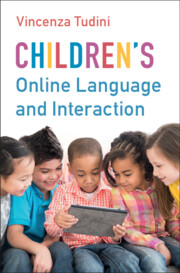
Children spend a significant amount of time interacting online rather than face-to-face. Yet we know very little about the language they use during interaction, whether they are gaming or texting. Drawing on cutting-edge research, this timely book applies Conversation Analysis (CA) techniques to investigate children's online language and interaction. Tudini provides a step-by-step analysis of authentic posts made by children on social media, messaging apps and gaming platforms, highlighting linguistic and interactional features. The book addresses the risks inherent in children's online interaction and the role of protective adults, yet also celebrates children's linguistic creativity and ability to adapt to new forms of communication. It also provides principled advice on how to support children in integrating online interaction into their lives productively and safely, to assist parents and teachers. Addressing a highly topical area, it is essential reading for students and researchers of applied linguistics, communication, education and sociology.
Conversation Analysis (CA) is one of the predominant methods for the detailed study of human social interaction. Bringing together thirty-four chapters written by a team of world-renowned experts, this Handbook represents the first comprehensive overview of conversation-analytic methods. Topics include how to collect, manage, and transcribe data; how to explore data in search of possible phenomena; how to form and develop collections of phenomena; how to use different types of evidence to analyze data; how to code and quantify interaction; and how to apply, publish, and communicate findings to those who stand to benefit from them. Each method is introduced clearly and systematically, and examples of CA in different languages and cultures are included, to show how it can be applied in multiple settings. Comprehensive yet accessible, it is essential reading for researchers and advanced students in disciplines such as Linguistics, Sociology, Anthropology, Communication and Psychology.
This chapter provides an overview of methods for data collection in Conversation Analysis and practical advice on collecting interactional data. We touch on several recurrent issues that researchers encounter in the process. These issues include accessing data; the use of existing data (including user-uploaded, like YouTube); navigating gatekeepers in accessing a setting; building trust with members of a setting; building ethnographic understanding of activities under examination; obtaining ethical approvals; protecting privacy of participants; methods and materials for informed consent (including with populations with diminished capacities); devising a recording schedule; deciding when/how often to record; selecting the right quantity and type of recording equipment; considerations of spatial and audio environments; the use of alternative technologies for recording; recording mediated interactions; procedures and check-lists for before recording; positioning and framing the camera; when to press record and when to press stop; navigating the presence of the researcher-recorder on site; and gathering supplementary documentation from the setting.