Refine search
Actions for selected content:
9652 results in Comparative Law
Contents
-
- Book:
- Due Process of Lawmaking
- Published online:
- 18 December 2014
- Print publication:
- 22 January 2015, pp v-viii
-
- Chapter
- Export citation
Index
-
- Book:
- Due Process of Lawmaking
- Published online:
- 18 December 2014
- Print publication:
- 22 January 2015, pp 291-296
-
- Chapter
- Export citation
Conclusion
-
- Book:
- Due Process of Lawmaking
- Published online:
- 18 December 2014
- Print publication:
- 22 January 2015, pp 261-276
-
- Chapter
- Export citation
2 - The United States
-
- Book:
- Due Process of Lawmaking
- Published online:
- 18 December 2014
- Print publication:
- 22 January 2015, pp 31-102
-
- Chapter
- Export citation
Due Process of Lawmaking - Half title page
-
- Book:
- Due Process of Lawmaking
- Published online:
- 18 December 2014
- Print publication:
- 22 January 2015, pp i-ii
-
- Chapter
- Export citation
5 - The European Union
-
- Book:
- Due Process of Lawmaking
- Published online:
- 18 December 2014
- Print publication:
- 22 January 2015, pp 216-260
-
- Chapter
- Export citation

Intimations of Global Law
-
- Published online:
- 05 January 2015
- Print publication:
- 22 November 2014
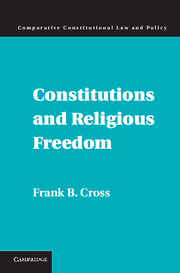
Constitutions and Religious Freedom
-
- Published online:
- 05 January 2015
- Print publication:
- 05 February 2015

Due Process of Lawmaking
- The United States, South Africa, Germany, and the European Union
-
- Published online:
- 18 December 2014
- Print publication:
- 22 January 2015
1 - Introduction
-
-
- Book:
- Asian Courts in Context
- Published online:
- 05 December 2014
- Print publication:
- 11 December 2014, pp 1-74
-
- Chapter
- Export citation
11 - Courts in Malaysia and judiciary initiated reforms
- from Part II - Courts in fast developing economies
-
-
- Book:
- Asian Courts in Context
- Published online:
- 05 December 2014
- Print publication:
- 11 December 2014, pp 375-406
-
- Chapter
- Export citation
Part I - Courts in advanced economies
-
- Book:
- Asian Courts in Context
- Published online:
- 05 December 2014
- Print publication:
- 11 December 2014, pp 75-266
-
- Chapter
- Export citation
Part II - Courts in fast developing economies
-
- Book:
- Asian Courts in Context
- Published online:
- 05 December 2014
- Print publication:
- 11 December 2014, pp 267-581
-
- Chapter
- Export citation
Asian Courts in Context - Title page
-
-
- Book:
- Asian Courts in Context
- Published online:
- 05 December 2014
- Print publication:
- 11 December 2014, pp iii-iii
-
- Chapter
- Export citation
Index
-
- Book:
- Asian Courts in Context
- Published online:
- 05 December 2014
- Print publication:
- 11 December 2014, pp 582-617
-
- Chapter
- Export citation
8 - Courts in Indonesia: a mix of Western and local character
- from Part II - Courts in fast developing economies
-
-
- Book:
- Asian Courts in Context
- Published online:
- 05 December 2014
- Print publication:
- 11 December 2014, pp 303-339
-
- Chapter
- Export citation
10 - The Philippines’ post-Marcos judiciary: the institutional turn and the populist backlash
- from Part II - Courts in fast developing economies
-
-
- Book:
- Asian Courts in Context
- Published online:
- 05 December 2014
- Print publication:
- 11 December 2014, pp 356-374
-
- Chapter
- Export citation
5 - Hong Kong: common law Courts in China
- from Part I - Courts in advanced economies
-
-
- Book:
- Asian Courts in Context
- Published online:
- 05 December 2014
- Print publication:
- 11 December 2014, pp 183-227
-
- Chapter
- Export citation
3 - Courts in the Republic of Korea: featuring a built-in authoritarian legacy of centralization and bureaucratization
- from Part I - Courts in advanced economies
-
-
- Book:
- Asian Courts in Context
- Published online:
- 05 December 2014
- Print publication:
- 11 December 2014, pp 112-142
-
- Chapter
- Export citation
Acknowledgments
-
-
- Book:
- Asian Courts in Context
- Published online:
- 05 December 2014
- Print publication:
- 11 December 2014, pp xii-xiv
-
- Chapter
- Export citation
