To save content items to your account,
please confirm that you agree to abide by our usage policies.
If this is the first time you use this feature, you will be asked to authorise Cambridge Core to connect with your account.
Find out more about saving content to .
To save content items to your Kindle, first ensure no-reply@cambridge.org
is added to your Approved Personal Document E-mail List under your Personal Document Settings
on the Manage Your Content and Devices page of your Amazon account. Then enter the ‘name’ part
of your Kindle email address below.
Find out more about saving to your Kindle.
Note you can select to save to either the @free.kindle.com or @kindle.com variations.
‘@free.kindle.com’ emails are free but can only be saved to your device when it is connected to wi-fi.
‘@kindle.com’ emails can be delivered even when you are not connected to wi-fi, but note that service fees apply.
The future of neutrality in comparative perspective
This comparative analysis of the constitutional law of religion–state relations in the United States and Germany, focusing on the principle of state neutrality, has demonstrated how comparative constitutional inquiry may inform domestic constitutional deliberations. Neutrality, a notoriously ambiguous concept, is a shared feature of the constitutional law of religion–state relations in both constitutional systems. Both share as key features a roughly similar set of constitutional provisions: one set of provisions concerning religious free exercise and one set of provisions concerning nonestablishment. Having identified a common general direction toward neutrality, sufficient room for the individual interpretation of neutrality remains. Thus, neutrality does not mean the same in both instances, but useful insights can be gained by inquiring into the substantive content of the neutrality principle elsewhere.
As demonstrated, the discussion of state neutrality in religion–state relations breaks down into largely parallel themes. The starting points might be identified as polar opposites: a strong notion of separation in the United States, and an extensive system of cooperation in Germany. In the United States, neutrality as it is used today means “less distance” between church and state while in Germany, conversely, neutrality means “more distance” between church and state.
This chapter explores the common narrative of state neutrality in several contexts. Reading current cases in the area of religion–state relations in Germany and the United States, one might at first glance think that a form of convergence is at work. Both countries appear to be employing the same principle, namely state neutrality, as an analytical approach to religion–state relations; at least this is what the language in the respective courts’ constitutional analyses would have the casual reader believe. Starting from opposite sides of the religion–state relationship spectrum, it seems that while the degree of separation may be declining in the United States, it is increasing in Germany. Indeed, scholars have asserted a narrowing gap between Germany and the United States on religion–state matters.This chapter investigates whether – and if so, how – this narrowing gap is reflected in linguistic convergence on the principle of state neutrality.
Generally, it may be hypothesized that as Germany is faced with growing religious diversity and trying to accommodate a more religiously heterogeneous population, a different approach than the previously dominant close cooperation between the state and the two large Christian churches becomes necessary. The United States, conversely, is increasingly addressing the challenge of a desire by some parts of the population for a greater degree of incorporation of religious elements into public life. It has been suggested that the shift occurring in the United States is based on the assumption that “excluding religion from public life improperly disadvantages it, and … secularism has no special claim to constitutional legitimacy.” This insight, commentators claim, has long been recognized in Germany. But, as in Germany, there is also increasing pluralism – including both religious diversity and a strong secularist sentiment – in the United States.
The current debate about comparative analysis in constitutional law must be seen in a larger societal context. Considering this societal perspective is important for two reasons. First, the “culture wars” thesis and American exceptionalism are frequently cited in the literature as reasons for the heated debate over comparative constitutional law and its references in the Supreme Court. Second, both discourses must also be considered in the study of neutrality in religion–state relations, because religion features prominently in both. Thus, these underlying discourses provide a shared backdrop for both the contemporary debate concerning comparative constitutional law generally and the comparative study of religion–state relations in particular. The role of religion in public life is considered a key “battleground” in the political debate over social issues sometimes called the “culture wars,” and assertions of American exceptionalism routinely include religion as an area fundamentally different in the United States, especially as compared to Europe.
This chapter addresses the “culture wars” and American exceptionalism discourses in turn, demonstrating first that the core of the “culture wars” is an elite discourse primarily targeted at political mass mobilization. Whether successful or not, it has been employed over a period of time to reach and activate the electorate on narrowly defined policy interests focused primarily on social issues. As such, the “culture wars” argument per se provides no principled basis for opposition to a comparative approach to constitutional questions. Importantly for this discussion, transdenominational religious alliances appear to have formed around certain issues, thus giving religion a key role in the wider “culture wars” discourse. American exceptionalism has two distinct facets: one is isolationist and one favors international engagement. The political dimension has to be kept in mind in the comparative discussion that follows. Assertions of religious exceptionalism feature prominently in the American exceptionalism literature, but again do not provide a principled argument against engaging in a comparative study of neutrality in religion–state relations. This chapter explores the roots of these discourses and demonstrates their current impact. As will be shown, the use of comparative constitutional inquiries in “culture war cases” may be an avenue of explaining the intensity of the debate and the vigorous opposition articulated by opponents. Indeed, several scholars consider it more likely that the outcome in those cases, rather than the practice itself, triggers such strong responses. Further, culture wars issues appear to be a primary target in contemporary criticisms of “judicial activism.”
The comparative study of neutrality in religion–state relations that follows does not take place in an intellectual vacuum. In addition to the rich literature on comparative law generally, there is an ever-growing body of literature on comparative constitutional law. In the United States, comparative constitutional law has lately become both an emerging field of study and a controversial notion. A quite remarkable debate has developed over the last decade on the proper role – if any – of comparative constitutional law. That debate forms the background for this inquiry.
The disagreement over a comparative approach to constitutional interpretation and study is perhaps one of the most prominent debates in contemporary US constitutional law discourse. All relevant groups of actors, including academics and judges as well as politicians, are engaged in the debate that is taking place in the scholarly literature, in opinions of the United States Supreme Court, in legislative debates in Congress, and in the media. The underlying questions touch on the core understanding of what constitutions are and how they should be interpreted. This chapter is a primarily descriptive account of that debate; the goal is not to recap the entire debate, but to address a few particularly important issues.
This chapter turns to the historical developments that led to the rise of neutrality, as illustrated by the review of case law of the US Supreme Court and the German Federal Constitutional Court in Chapter 4. The turn toward neutrality, a shared occurrence in the constitutional adjudication of the respective courts, must be historically contextualized. Contextualization illustrates that the underlying societal forces, in particular increasing religious pluralism, are somewhat similar and seemingly contributed to the ascent of neutrality. Moreover, the history and the philosophical foundations in the two countries, while often portrayed as diametrically opposed, seem to be more complex than conventional wisdom might suggest. Historical indeterminacy at the roots shapes both constitutional frameworks, and although it may have different sources, constitutional compromise is a shared phenomenon. The interrelation of church and state in Europe was largely undisputed for centuries, but subsequent constitutional developments based on a series of compromises caused significant indeterminacy in the German constitutional religion–state framework. The assertion that separation of church and state was at the basis of the American founding, or conversely the founding myth of the United States as a Christian nation, has always been ambiguous at best.
Founding discourses
As this discussion will demonstrate, one key insight is the indeterminacy of history at the time of the respective “foundings,” as well as their resulting limited significance for resolving contemporary constitutional issues. The “founding” in neither case was a singular event but rather the result of a long prior history. But this long prior history is subject to perspectival interpretation. An inquiry into the founding discourses, as we have seen, cannot give definitive answers to current constitutional questions. In the United States and Germany, an institutional division between church and state evolved over time; in both constitutional systems, a corresponding constitutional provision demands the separation of church and state. Determining the relationship between church and state first requires a distinction between the two. In central and western Europe, this distinction is a product of the modern period. Since the early Middle Ages, secular and religious forces repeatedly clashed over the organizational competences within the unified sphere of church and state. Key elements on the way to the functional separation of church and state are the end of religious unity with the emergence of different religious groups disputing each other’s legitimacy, and the rise of the modern state that asserted its legitimacy independent of a religious basis. The split, however, was not a singular event but historically developed over time; at different layers of the political order, moreover, it progressed at varying speeds. Take the German example. What did it mean for the Empire to stay out of the religious disagreement that resulted from the Protestant Reformation? What, on the other hand, was the result of the Empire’s position vis-à-vis those territories in which an established religion continued? Though these historical questions are fundamental to understanding the legal and cultural underpinnings of contemporary developments – perhaps most prominently in Germany the dual phenomena of secularization and pluralization – they cannot be solely determinative for resolving religion–state conflicts.
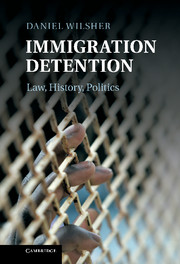
The liberal legal ideal of protection of the individual against administrative detention without trial is embodied in the habeas corpus tradition. However, the use of detention to control immigration has gone from a wartime exception to normal practice, thus calling into question modern states' adherence to the rule of law. Daniel Wilsher traces how modern states have come to use long-term detention of immigrants without judicial control. He examines the wider emerging international human rights challenge presented by detention based upon protecting 'national sovereignty' in an age of global migration. He explores the vulnerable political status of immigrants and shows how attempts to close liberal societies can create 'unwanted persons' who are denied fundamental rights. To conclude, he proposes a set of standards to ensure that efforts to control migration, including the use of detention, conform to principles of law and uphold basic rights regardless of immigration status.
As we have seen, the most commonly stated rationale for immigration detention has been an instrumental one; to ensure expulsion is successful. Not infrequently, however, ‘immigration’ powers have been used to detain foreigners to achieve non-immigration objectives. Moral panics in relation to crime have coalesced around aliens and supported the use of preventive detention without trial pending deportation. The fear of anarchists in Edwardian England through to the American Red Scares in the 1920s and the Cold War all show the same pattern of incarceration aimed at the suppression of political activity by foreigners deemed subversive by the state. Whilst this has been ostensibly linked to deportation, citizens have been left free to engage in such action without internment. In more recent years, the risk posed by international terrorism has led governments to use ‘immigration’ powers to preventively detain unwanted foreigners. Detention of foreigners has proved a flexible political tool to meet many situations beyond merely expulsion goals. Governments have been able to employ what would normally be considered ‘emergency’ powers to preventively detain without generalizing the powers to all.
In this chapter we examine the contention that lack of immigration status serves as a justification for dispensing with orthodox notions of the rule of law and due process. There is, of course, no doubt that permanent incarceration will limit the risk of aliens committing harmful or unacceptable acts. Save for in exceptional circumstances, preventive detention of citizens is either unconstitutional or politically unacceptable. In the case of migrants, by contrast, far from being exceptional, preventive detention has become quite normal. This is very clear in the growth of mandatory detention for those convicted of even relatively minor criminal offences, but goes further to include persons merely suspected of posing a threat. Most importantly, in cases involving allegedly dangerous aliens, detention periods have been especially prolonged by executive agencies and legislators. In such cases, detention can drag on for years whilst diplomatic negotiations take place between countries, with only speculative chances of successful expulsion.
Alien friends and alien enemies in the early modern period: libertarian equality and open borders
Until there was immigration control, there could be no immigration detention. Looking at liberal states in the mid-nineteenth century, we can see a relative lack of concern about ‘the border’ as a site of regulation. The crucial distinction was between ‘enemy’ and ‘friend’. Wars created ‘enemy aliens’ who were dealt with under the government's war powers and according to customary international law with its reciprocal arrangements for prisoner exchange. Thus, outside wars, aliens were not generally subject to controls on movement. As regards internal law relating to friendly aliens, there was a trend towards repealing former protectionist restrictions on their economic activities. The emerging global capitalist economy sought to find the highest rates of return and the commercial rights to trade became the new basis for international law. Free labour migration, within and between friendly nations, based upon wage competition, was a crucial element in supporting capital formation and this underpinned the ‘right’ of movement for aliens. Furthermore, in the new revolutionary governments of America and France, this was underpinned by the emerging idea of ‘inalienable’ Rights of Man, stripping away the former distinctions based upon rank or religion. Alienage appeared as another such arbitrary characteristic too.
These cosmopolitan times were reflected in significant juristic and public opinion disparaging discrimination against aliens. The libertarianism of the era was also suspicious of executive interference with civil rights, regardless of nationality. The distinction between alien friends and alien enemies was, however, fragile. As we shall see, the birth of the idea of immigration control largely destroyed this division; war powers in respect of enemy aliens mutated, sometimes through emergency powers, into a new general power over all aliens.
Over one hundred years ago states began to assert a legal power to select amongst arriving immigrants prior to admission. Engaging the rights of friendly aliens to enter or remain was viewed as an aspect of the foreign relations power. This brief process first took place on ships or docksides, and involved care, as well as control. The conflict with the habeas corpus tradition could be papered over; these modest interferences with liberty were seen as ancillary to migration management. Longer detentions only occurred during discrete war or national security crises when the state's prerogative powers over defence again largely eclipsed the rule of law. Detention remained a relatively contained phenomenon for the most part.
Deeper consideration of the relationship between liberty of the person and restrictions on free movement has only come about in the last thirty years. As the politics of border control have become more inflamed, the scale and periods of detention have increased. Inland prisons and detention centres holding thousands have emerged. No longer simply a tool of selection at the border or for the expulsion of small numbers of dangerous persons, immigration powers have come to be employed to incarcerate ‘unauthorized’ aliens in unaccountable ways. Nor has this been confined to national security or emergency situations. Government practices have called into question the existence of a fundamental right to liberty for any unauthorized aliens. This is part of a wider political trend which seeks to deny entitlements to persons lacking immigration status, a trend presenting a fundamental threat to the post-war ideal of ‘universal’ human rights. Liberal legal systems have become compromised; to reaffirm the importance of individual liberty for all persons challenges the modern political tendency to portray unauthorized migrants as an ‘enemy’ to be segregated and repelled.
Introduction: open borders and the meaning of ‘security’
The European Union (EU) is the most advanced treaty-based international organization in the world. It has gone furthest along the route towards integration between sovereign states, falling short of actual merger into a federal nation. The principles of direct effect and supremacy of the law evolved by the European Court of Justice (ECJ) have given European law special status going beyond ‘ordinary’ treaty law. Removing barriers to the free movement of persons within the EU has been a central legal and political project. EU nationals’ rights to move have cut into Member State discretion over security and migration. This has arisen largely from their political status as ‘friends’ (‘EU citizens’, even) no longer subject to arbitrary prerogative measures, but rather the bearers of migration rights protected by legal reason and principle. Loss of ‘sovereignty’ over migration is a legal truth for Member States, not just a practical reality.
Administrative detention of foreigners is at first sight anathema in the world's grandest open-borders project. Nevertheless, the same concerns found in national politics over unauthorized migration have been translated up to EU level. The ‘security’ agenda has been directed outwards to the EU's external borders and inwards towards unauthozised non-EU nationals detected internally. Whilst unthinkable for EU citizens, broad detention powers over asylum seekers and unauthorized migrants have been endorsed. Through undermining internal border controls, the EU has both created new ‘friends’ and constructed new ‘enemies’ against whom controls have been enhanced.
Introduction: the aliens power and the new politics of enforcement
This chapter explores the political and legal evolution of detention since World War Two, particularly over the last thirty years. As we saw, the ‘aliens power’ had been firmly established in legal doctrine as a, now separate, descendant of the war power. Although extended alien detention had generally been reserved for wars or national security situations, this power had the potential to foster more permanent restrictions. Courts had not found a clear jurisprudential or political reason to apply basic constitutional safeguards to unwanted aliens, non-parties to the social contract. Detention had been glossed over as a ‘necessary’ part of deportation or as ‘temporary confinement’. Detainees were deemed ‘not to have entered’, despite being incarcerated. The legal foundations were thus firmly in place for employment of mass detention should the political conditions arise.
The immediate decades after World War Two were ones of economic recovery during which migration was often openly encouraged. Barring national security scares, there was no sense of crisis around borders. This had changed decisively by the 1970s when a new and diffuse climate of fear over migration emerged. Those simply entering or arriving without permission, whether seeking asylum or economic opportunity, became seen as a ‘security’ threat. The period since has witnessed the full flowering of the illiberal potential of the aliens power, with a massive expansion of detention facilities in peacetime. Justification was sought in a range of bureaucratic instrumental goals; as a deterrent to irregular migration outside of permitted channels, to secure removal or maintain the ‘integrity’ of immigration laws and as a form of public or national security precaution. However, the increased hostility toward migration in public debate also meant that expanded detention had politically symbolic dimensions. It marked out more clearly the liberal state's capacity for extraordinary measures against ‘outsiders’ to protect ‘insiders’. The permanent emergency had arrived.
The detention of foreigners under the auspices of immigration powers has grown enormously in both its scope and scale during the last thirty years. In a pattern repeated throughout developed nations, and increasingly copied by others, unauthorized or rejected foreigners are being held in prison-like facilities for extended periods without serious legal controls or accountability. The causes of this rise in immigration-related detention are many, but the results are clear; imprisonment of individuals without the normal due process safeguards commonly demanded in liberal democracies is now taking place on a vast scale. This process of ‘warehousing’ immigrants, outside the mainstream of the law, has entailed much that is arbitrary or inhumane. We can see this as part of a more general trend towards ‘politicizing’ the treatment of unauthorized migrants. This book is an attempt to explain the historical development of this phenomenon and to explore the underlying legal and political challenges that it exposes for societies ostensibly committed to a public policy based upon liberal reason and the rule of law.
From free movement to border controls: the alien as liberal subject in the nineteenth century
The ‘alien’ was not always so alien. The impetus towards free trade that prevailed during most of the nineteenth century encompassed labour migration. For a time, the development of liberal principles of economics and constitutionalism marched together to enhance the status of aliens. The increasing recognition of equality to act on the market, stripping away old restrictions based upon privileges and status, extended to aliens’ protection within the economic order of liberalized economies.
Introduction: the new detention as politics or as law?
The last thirty years have revealed a distinct politics of immigration detention which was not apparent in earlier periods of migration control. As we have seen, although restrictions on migration have been long standing, the scale and duration of detention was previously limited. Apart from during wartime or national security scares, in practice, detainees were not held for long periods and there was little impetus to construct large permanent detention spaces. Whilst deportation and exclusion policy were debated, detention rarely attracted serious concerns. This has now all changed. Modern practices tell us much about the politics of migration in contemporary societies. Detention reveals itself to be of a highly political nature, having arisen largely outside the realm of precise moral and legal reasoning. This politicization of detention has been expressed in arbitrary practices that cut across liberal principles of the rule of law, equality and respect for individual liberty.
This will lead us to assess the intimate and dialectical relationship between law and politics. The treatment of migrants is an important test of the extent to which political actors within modern democracies have been willing and able to consistently pursue non-liberal methods. It has long been clear that contemporary immigration politics inhabits an uncertain and shifting space between liberal and non-liberal ideas. The liberal tradition finds expression in the legal values of respect for individual autonomy and reason. Expression of such ideas would see detainees being treated according to precise legal standards, for example, as criminal suspects or prisoners of war. Such standards reflect well-established legal and moral principles over pure political calculation. By contrast, where mainly political factors determine how persons are detained there are few legal standards on view. We may consider such immigrants as ‘emergency detainees’ or ‘unwanted persons’. The same may be said where detainees are held in special zones, deliberately created by the political branch to exist outside the reach of the law.
Introduction: sovereignty and the treatment of aliens
In this chapter we seek to explore the interaction between the development of national detention policies and international law. Until the advent of modern international human rights law, however, there was little international discussion of the issue. Since the ninteenth century, customary international law had given states a right to take action for injury to their nationals abroad, but in practice such protection was largely confined to Western diplomats or business interests. As nineteenth-century liberal cosmopolitanism, with its emphasis on the mutual benefits of free trade in labour, came under pressure, sending and receiving states began to see international obligations differently. In countries wishing to shape or curb mass migration, legal opinion began to discuss immigration control alongside war and invasion as a fundamental aspect of sovereignty. Domestic politics in receiving states gradually eclipsed the idea that there might be serious legal limitations on the treatment of friendly aliens. Diplomatic discussions over migration continued, but trailed way behind the development of border controls and enforcement apparatuses.
That states had an almost arbitrary and unlimited power over migration became an ‘accepted maxim’, at least in most common law countries. Such expressions have been repeatedly used to support alien detention as simply an inherent aspect of this legal power. James Nafziger argues, however, such broad pronouncements were misleading. Reviewing the opinions of legal scholars of the time, he concludes that the Anglo-American judgments discussed in Chapter 1 practised selective quotation. They were strongly influenced by the positivist view that, in order to be truly ‘sovereign’, law-makers within a given territory must not be subject to any external power.