To save content items to your account,
please confirm that you agree to abide by our usage policies.
If this is the first time you use this feature, you will be asked to authorise Cambridge Core to connect with your account.
Find out more about saving content to .
To save content items to your Kindle, first ensure no-reply@cambridge.org
is added to your Approved Personal Document E-mail List under your Personal Document Settings
on the Manage Your Content and Devices page of your Amazon account. Then enter the ‘name’ part
of your Kindle email address below.
Find out more about saving to your Kindle.
Note you can select to save to either the @free.kindle.com or @kindle.com variations.
‘@free.kindle.com’ emails are free but can only be saved to your device when it is connected to wi-fi.
‘@kindle.com’ emails can be delivered even when you are not connected to wi-fi, but note that service fees apply.
This lecture considered the limited ways in which injury or harm is understood, particularly in US political and legal culture. The concern is with the inability of contemporary constitutional or political theory to interpret the failure of collective or state action as constituting a harm worthy of recognition and compelling remedial action. In this lecture, I am interested in the norms and values that inform the principles governing the exercise of action and restraint on the part of the state when it acts as sovereign and in its relationship with individuals as political or legal subjects.
The idea that constitutional injury or harm can be caused by state inaction is not well-developed in US political and legal culture. Indeed, the norms and values informing our ideas of appropriate actions on the part of the state, as well as defining the corresponding entitlements of political or legal subjects, are firmly anchored in the principle of non-intervention or inaction. The spectre of state or public interference with individual privacy or liberty interests haunts the American constitutional order and shapes what is perceived as constituting injurious state action. Restraints on the state are viewed as imposed by the terms of the social contract, which is often referred to as creating a system of ‘negative rights’. By contrast, ‘positive rights’ would place affirmative obligations on the state (and/or others) to act in the interest of others.
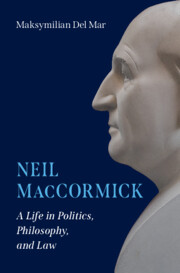
Neil MacCormick (1941–2009) was one of the twentieth century's most important legal philosophers and one of Scotland's most influential public intellectuals. This book tells the story of his political and philosophical life, from his intensely political childhood as the son of 'King John', one of the founders of the Scottish National Party, through to his involvement in Scottish politics – especially as the author of SNP's constitutional policy – and his role as a Member of the European Parliament, helping to draft the European Constitution. With special attention to MacCormick's character, this book offers a reading of his entire oeuvre, covering his contributions to theories of legal and moral reasoning, institutional legal theory, nationalism, post-sovereignty, subsidiarity, and constitutional pluralism in Europe. This book reads MacCormick as a highly creative thinker who excelled in the art of constructing inclusive middles and thereby developed his own distinctive approach to politics and philosophy.
This chapter offers an example of conceptual instrumentalist analysis. Being instrumentalist in nature, the analysis focuses on the degree to which one plausible doctrinal design or another best advances the underlying social policies sought to be achieved in a given area of law. Unlike classic empirical analysis, however, the social policies at play in conceptual instrumentalist analysis are not concrete practical benefits that might be furthered in the real world, like greater compensation or deterrence, but are instead more abstract preferred outcomes, like greater fairness or the presence of sufficient fault by a certain party before the imposition of legal liability. Of course, appellate court analysis of any particular legal issue might involve elements of both empirical and conceptual instrumentalist analysis.
The focus of the analysis in this chapter is the tort law requirement of causation. The account presented seeks to explain the structure of this long-standing requirement, the meaning ascribed to the distinction between actual and proximate cause, and the rationale underlying the various exceptions to the main rule that have been developed over time.
There is a millennia-old tradition of practical reason in the law. For the last two centuries, various determinist imaginaries have chipped away at that tradition, with one of the newest being strict textualism. This chapter contrasts the interpretive methods that Cicero put forward in his early work, De Inventione, dating to the early first century BCE, with those presented by a greatly influential 2012 book coauthored by Justice Antonin Scalia, Reading Law. The chapter contends that Reading Law offers a method for interpreting, or construing, legal texts that is replete with the hallmarks of practical reason, but the rhetoric with which Reading Law characterizes its method is thoroughly deterministic. This chapter contends that this rhetoric encourages judges to hide their reasoning behind application of simplistic (and often incorrect) “rules” for textual interpretation. The chapter illustrates the contrast in the two approaches by discussing a Texas Court of Appeals opinion – which exhibits Ciceronian practical reason – and the Texas Supreme Court’s opinion in the same case – which exhibits Scalian determinism.
Despite widespread and well-reasoned objections to its methods, originalism has gained widespread prominence as the au courant doctrine of legal interpretation. This chapter offers a rhetorical analysis of originalism’s ethos – namely its communal indwelling rooted in rule of law and American democratic values – to explain its strange persistence as well as provide a critical starting point for developing effective critical interventions in future jurisprudential debates about the merits of originalism as a theory of legal meaning. Drawing from Martin Heidegger’s theorizing of ethos, the chapter reconceptualizes ethos and recovers its full meaning beyond good character and wisdom. The chapter situates this full meaning within the emergence of modern originalism as represented in the work of Professor Raoul Berger and then traces the meaning’s evolution through the work of Justice Antonin Scalia and Professor Larry Solum, who both rely on the ethos of indwelling to overcome originalism’s deficiencies rather than their perceived ethos of personal character and effective reasoning. The chapter demonstrates that it was Berger, Scalia, and Solum’s ability to connect their work to a deep-seated shared sense of communal identity that enabled them to secure a place of pride for originalism in jurisprudential debates.
This chapter examines the anonymous Dissoi Logoi, attributed to a sophistic author in Greece in the late fifth century BCE. The chapter uses the ancient text, and the practices of listening that it implies, to imagine how law students might be taught to listen rhetorically to the materials they encounter in their training. To focus the discussion, the chapter analyzes how a contemporary law school casebook teaches State v. Norman, a case about a woman convicted of voluntary manslaughter in the death of her abusive husband. The case is included in a number of criminal law casebooks to teach theories of self-defense; it is also widely cited and discussed by scholars of intimate partner violence law and advocacy. The chapter argues that case books have the potential to encourage students to listen to arguments on either side of a question but that this potential can be thwarted by editorial decisions. It suggests ways that readers can listen rhetorically to law school materials to hear not only the multiple voices present (and missing) from cases but also the voices framing the cases.
This chapter offers a brief overview of the basic thesis of the book – that we are currently in a period of widely understood instrumentalism with respect to the creation of common law by appellate courts in the United States. This modern era follows, almost by default, a long and traditional period of formalism, during which it was presumed that the nature of common law creation by appellate courts was fundamentally logical, objective, and mechanistic in nature. Belief in this understanding of appellate court lawmaking was discredited by the legal realist movement, which began in the first third of the twentieth century, and left a void that was filled by instrumentalism.
The current era of common law lawmaking is characterized by a conceptually incoherent and frequently inconsistent amalgam of formalist and instrumentalist elements. This has resulted in practice by, and before, appellate courts in the United States that is often opaque and confusing.
After reviewing the prior analysis in the book concerning the nature and the consequences of the paradigm shift in the conventional understanding of appellate court lawmaking, this chapter focuses on the unsystematic amalgam of formalist and instrumentalist elements that currently characterizes practice before appellate courts, and that also characterizes a large number of modern appellate court opinions. What harm is there in the lack of a more disciplined and methodical approach to instrumentalist analysis by appellant litigators and appellate courts?
The chapter also focuses on the seeming denial that has been exhibited by the legal community with regard to the shift from formalism to instrumentalism and the continuing delay in any meaningful attempt to alter traditional approaches to appellate judge selection and customs of appellate practice so that they might function more coherently and more effectively in an instrumentalist era. What can be reasonably expected in the short, medium, and long term with respect to the prospect of such changes?
This chapter explores Locke’s theory of language in the Essay Concerning Human Understanding and its history of influence on judicial thinking about hearsay evidence. Hearsay is distrusted because it is language all the way down – testimony based on second-hand narrative – rather than language grounded in the empirical world. The chapter analyzes three contemporary US Supreme Court opinions using this framework, Ohio v. Roberts (1980), Crawford v. Washington (2004), and Davis v. Washington/Hammon v. Indiana (2006).
Starting in the 1920s, the traditional conception of what appellate judges were actually doing when they made common law became the subject of sustained critique. Often collectively labeled as the Legal Realists, or the Legal Realist Movement, those advancing this critique aggressively challenged the formalist claim that the lawmaking work of appellate judges was fundamentally an objective, value-neutral, and preference-free enterprise that relied heavily upon formal deductive logic to select among possible versions of legal doctrine.
Instead, the legal realists argued that no matter how much appellate court opinions presented in realist terms the ultimate choices being made, those choices were nearly always the product of the judges’ reliance upon personal social judgments and preferences. They asserted that there was, in fact, little objective, detached, or scientific in these judges’ decisions to make one or another possible version of legal doctrine the binding and authoritative law of the jurisdiction.
During the middle period of the twentieth century, the legal realist critique of traditional formalism came to enjoy a consensus among the professional and academic legal community. Little sincere belief in the formalist paradigm remained by the last half of the twentieth century.
This chapter offers an example of classic empirical instrumentalist analysis. The issue is whether American tort law should or should not adopt under the negligence cause of action a general duty to reasonably and affirmatively aid another in peril.
A traditional formalist approach to the question, one that seeks to begin with a first principle of morality that might be thought of as being part of a larger natural law and then engages in an application of deductive logic to reach a conclusion, would almost certainly resolve the issue in favor of adopting such a formal tort law duty, as has much of the developed world.
An instrumentalist analysis, in contrast, would seek to identify and weigh the practical benefits and costs of each plausible resolution of the issue, selecting as the authoritative legal rule the one that promises the best net societal benefit. The degree to which that rule accurately articulated a conventional moral or religious posture would be largely irrelevant.
This chapter develops and presents a thorough instrumentalist analysis of this fascinating and complex issue. In so doing, it provides a rich rationale for the current dominant position of American tort law.
Appellate court opinions are often criticized for establishing difficult precedent as a result of imperfect reasoning.This chapter, inspired by Giambattista Vico, explores the role that prerational judgment, embodied in the sensus communis, plays in the authoring of what will become unintentionally difficult precedent, using Schuette v. BAMN (2014) and its relevant precedent as an example. In Schuette the Court ruled that a voter-approved constitutional amendment that removed the power to implement affirmative action plans was not an Equal Protection violation. The chapter argues that in the opinions that preceded Schuette, the Court was accustomed to the evils the majority could undertake to preserve white dominance and maintain the status quo. Those Courts could not have anticipated the extent to which the future Court would understand that dynamic as a problem of another time. Further, it demonstrates how critics of that precedent similarly fail to account for the role of sensus communis in those earlier cases (and in their own appraisal of them) through their insistence that those opinions should have anticipated the controversies and the shifts in language that accompanied them.