To save content items to your account,
please confirm that you agree to abide by our usage policies.
If this is the first time you use this feature, you will be asked to authorise Cambridge Core to connect with your account.
Find out more about saving content to .
To save content items to your Kindle, first ensure no-reply@cambridge.org
is added to your Approved Personal Document E-mail List under your Personal Document Settings
on the Manage Your Content and Devices page of your Amazon account. Then enter the ‘name’ part
of your Kindle email address below.
Find out more about saving to your Kindle.
Note you can select to save to either the @free.kindle.com or @kindle.com variations.
‘@free.kindle.com’ emails are free but can only be saved to your device when it is connected to wi-fi.
‘@kindle.com’ emails can be delivered even when you are not connected to wi-fi, but note that service fees apply.
The Argentinean biosafety regulatory has played a strategic role in the development of the biotechnology industry in the country. It is usually recognized as one of the key elements for the country becoming one of the first to incorporate GM technologies into its agricultural sector. Its most salient aspect, however, is not the system's pioneering nature, but how it has evolved since and its adaptation to the changing nature of the challenges it has had to face in the context of the complex international trade environment that the country had to face as a major exporter of agricultural. The chapter reviews the system's major components and how they come together in the decision making process, highlighting the role of the Advisory Committee on Agricultural biotechnology in the risk evaluation process, as well as other institutional features, particularly how scientific and political perspectives are dealt with, and stakeholders participation throughout the different stage is assured. It also elaborates on how Òfit for purposeÓ strategies have been brought in and concludes with some comments on how to deal with the unresolved issue of asynchronicity and some prospects for the future.
This chapter considers the risk assessment of GM crops from a regulatory perspective. It is based on the experiences of the Organisation for Economic Co-operation and Development (OECD), which is an intergovernmental organisation.. Specifically, it describes how national authorities work together at OECD primarily to develop consensus documents which include information that regulators believe are important in risk assessment. Many of the documents address crops such as maize, soy bean, cotton, papaya, sugar cane and cassava, which have been the subject of genetic modification. Other documents address traits which have been introduced into crops through genetic modification such as herbicide tolerance and insect resistance. Although OECD is limited to thirty-five member countries, the OECD activities related to the risk assessment of GMOs are open to the active participation of a wider group of countries, including some developing countries and countries in transition, especially those with an interest and/ or experience in the risk assessment of GM crops. The consensus documents are intended as practical tools to assist in the risk assessment of transgenic crops.
In order for developing countries to receive the benefits of genetically modified crops, assessments of both food safety and environmental risk must be conducted by the appropriate regulatory authorities to assure that the crops being imported or developed by scientists in-country are safe for cultivation and consumption. The status of regulatory capacity and policy in Africa exemplifies the challenges faced by developing countries. The Codex Alimentarius Commission have developed internationally accepted guidelines for the food safety assessment of genetically modified crops. However, constraints ranging from lack of expertise, limited financial and infrastructure capacity, to difficulties in political and organizational structure pose obstacles that require new solutions, including regional approaches to generating food safety data and conducting food safety assessments. These solutions will create a regulatory environment where proper assessments are conducted within the realities faced by developing countries, in order to assure safe access to genetically modified crops
India's tryst with biotechnology began in 1983 with the formation of a board on biotechnology which was later converted into a Department of Biotechnology. The regulatory framework has evolved since the early 1990s through rules, regulations and guidelines under Environment (Protection) Act 1986. This chapter provides an overview of the regulatory regime in India for GM crops and division of power at different levels. It describes India's experiences with the regulatory regime in the case of Bt cotton, which has been a great success. In the case of Bt brinjal it discusses the factors that led to the moratorium despite approval by the Genetic Engineering Appraisal Committee and the impact of the polarization of views on regulation of GM crops. It analyses the ongoing evaluation of GM mustard and GM chick pea for commercial release and highlights the regulatory costs as a constraint. Based on the past experience and current debates, it identifies the challenges before the regulatory regime and suggests that the current one be replaced by a new regime. The key features of the proposed regime are indicated.
None of the GM crops with health benefits are currently available to consumers. Through the use of GM technology, various crops have been successfully engineered to introduce or elevate micronutrient concentrations. Rice, as one of the world's most important staple crops, has often been targeted as an appropriate vehicle for transgenic biofortification. This chapter summarizes key findings of consumer research and impact studies on two biofortified rice crops (Golden Rice (GR) and Folate Biofortified Rice (FBR)) as well as multi-biofortified rice. The results lend support for its large potential as a complementary micronutrient strategy. While consumers, both in target regions and developed countries, are generally in favour of, and prepared to pay a premium for GR and FBR, its introduction would generate large health benefits at a relatively low cost. Despite these positive findings, these GM rice crops with health benefits are expected to face various challenges, particularly those related to the regulatory process. Even once they would be approved for commercialization, efforts are needed to ensure a sustainable, effective delivery, from resource-poor farmers to consumers at high risk.
Mass media are intermediaries between citizens and governments in the formulation of national GMO regulation, and are used by different interest groups in an attempt to influence consumer attitudes and policy outcome. The channels through which mass media influence the public perception towards GM crops and food and the achievement of a political equilibrium to formulate GMO regulations are discussed based on social science and political economy literature. Correlation between indicators of regulation quality, mass media and the restrictiveness of GMO regulations are also shown, distinguishing between developed and less developed countries. Finally, recommendations for communication strategies are derived, taking into account the challenges of modern media and the regulation of new plant breeding techniques
The adoption of genetically modified (GM) crops is currently limited to a few African countries such as South Africa, Sudan and Burkina Faso partly due to lack of functional biosafety systems and precautionary principles invoked by many Africa countries. Out of these three countries, Burkina Faso is the only West African country growing a GM crop on a commercial basis. This chapter discusses the achievement of Burkina Faso with Bt cotton; especially how it has benefitted small-scale farmers; how Burkina Faso became a showcase for GM technology in Africa; the current scenario of the technology in West Africa with focus on Burkina Faso's experience; and developments coming from other West African countries, specifically Ghana and Nigeria. The chapter describes the challenges of adoption of GM technology, citing the example of Bt cotton qualities, as recently revealed in Burkina Faso and how this may affect other countries' uptake of GM technology in the sub-region. Finally, the chapter emphasises the need to increase the level of expertise in biosafety areas and strengthen the scientific community by investing in modern biotechnology R&D programmes.
In many developing countries open access to biosafety-related reports is ineffectively ensured and public participation in decision-making processes is hardly promoted. Recent studies indicate lack of transparency and public consultation in the GMO approval process among the most important triggers of public concerns. This chapter aims to propose a more open and participatory approach to decision making about GMO releases. In this framework, risk communication is seen as an integral component of biosafety risk analysis and includes the two distinct but complementary functions of access to information and public participation. Adoption of a participatory approach is suggested, the advantages and challenges of which are critically considered in light of the experience gained with previous communication strategies. Considering that the promotion of public participation in decision-making processes exceeds the function of risk communication the authors propose to adopt the term 'biosafety communication' and describe the major features of the proposed approach. If correctly utilised biosafety communication can ensure a smoother implementation of biosafety regulation and contribute to greater stakeholders' buy-in and wider public's acceptance of biosafety-related decisions.
Developing countries have manifested interest in socio-economic considerations (SEC) for GMOs from the beginning of the negotiations for the Cartagena Protocol on Biosafety. Yet to include SEC in GMO decision-making is no easy decision. It needs to balance arguments for and against, such as the presence of many crop and livestock centres of origin or diversity, the cultivation of non-GM plants as an important source of revenue, and a majority of the population depending upon agriculture for their wellbeing, versus further complicating regulatory processes, increases in costs, lack of institutional support or expertise. However, if a country would decide to include SEC in GMO decision-making, the ensuing regulatory framework would greatly benefit from the use of the scientific method while ensuring that values are not excluded. Such a framework would need to be flexible and inclusive, and allow the identification of and focus on key issues as well as using information available elsewhere. This chapter proposes a logical framework with these characteristics based on the concepts of evidence based policy and problem formulation.
The colourful world of systematic risk analysis has just had its 25th birthday. In 1983 the US National Research Council issued the now famous Red Book, which laid out the foundation for the global risk analysis framework. This was modified in 1993 with the Blue Book and in 1996 by the Orange Book, which together contributed to the current stoplight risk analysis system (with green, yellow or red decisions) that operates in most developed countries. With the expansion of risky possibilities and the extension of the use of the risk analysis framework to new areas, the system at times seems to have degenerated at times into a debate that can be characterized as a mix of black and white positions mediated by complex shades of grey realities. This paper examines the underlying principles of risk analysis, the operation of the current systems of risk analysis and the challenges of emerging risks for both citizens, consumers, producers and regulators
Starting from an examination of the risk based focus of the Cartagena Protocol on Biosafety, this chapter examines the extent to which a focus on risk and a neglect of consideration of benefits has led to the current regulatory impasse blocking the introduction of GMOs in many developing countries. The potential benefits for developing countries include environmental, agricultural, health and socio-economic aspects. A survey of the GMO-related legislation in 38 developing countries revealed that few of them made explicit provision for consideration of risks. The European position specifically excludes consideration of benefits, and this is likely to affect attitudes in developing countries. There is a need to develop a structured approach to risk-benefit analysis, and for there to be more emphasis on communication of benefits, particularly since the next generation of nutritionally enhanced crops should bring real benefits to the consumer
When considering the options for labelling of GM food, consumers' rights are critical. One of the rights, namely, safety of GM food is addressed by the extensive requirements from governments to ensure food safety. Two more rights remain to be answered; to have information and to be able to choose between GM food and non-GM food. This chapter deals with a plethora of labelling regimes, out of which Codex Alimentarius could not achieve harmonisation. The many factors that impact on GM labelling regimes are reviewed and discussed, such as global trade, markets, and consumer literacy and awareness. Labelling of GM-food will not necessarily meet the consumers' need for choice and information on a very technical subject such as biotechnology. One of the most serious impacts of GM labelling could be the cost implications to consumers and governments. The probable increase in cost of food is a major concern for developing countries as it could affect the consumers' right to satisfaction of a basic need which is to have food. This chapter makes a number of recommendations for GM labelling in developing countries.
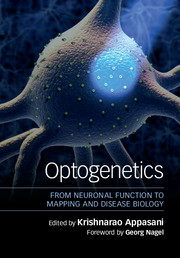
Discovered little more than a decade ago, optogenetics - a revolutionary technique combining genetic and optical methods to observe and control the function of neurons - is now a widely used research tool. Optogenetics-driven research has led to insights into Parkinson's disease and other neurological and psychiatric disorders. With contributions from leaders and innovators from both academia and industry, this volume explores the discovery and application of optogenetics, from the basic science to its potential clinical use. Chapters cover a range of optogenetics applications, including for brain circuits, plasticity, memory, learning, sleep, vision and neurodegenerative and neuropsychiatric diseases. Providing authoritative coverage of the huge potential that optogenetics research carries, this is an ideal resource for researchers and graduate students, as well as for those working in the biotechnology and pharmaceutical industries and in a clinical setting.