To save content items to your account,
please confirm that you agree to abide by our usage policies.
If this is the first time you use this feature, you will be asked to authorise Cambridge Core to connect with your account.
Find out more about saving content to .
To save content items to your Kindle, first ensure no-reply@cambridge.org
is added to your Approved Personal Document E-mail List under your Personal Document Settings
on the Manage Your Content and Devices page of your Amazon account. Then enter the ‘name’ part
of your Kindle email address below.
Find out more about saving to your Kindle.
Note you can select to save to either the @free.kindle.com or @kindle.com variations.
‘@free.kindle.com’ emails are free but can only be saved to your device when it is connected to wi-fi.
‘@kindle.com’ emails can be delivered even when you are not connected to wi-fi, but note that service fees apply.
South Africa's mediterranean-type climate (MTC) region is the smallest of the five MTC regions, centered in the southwestern corner of the Western Cape Province (Fig. 7.1). This Cape region is dominated by fynbos shrublands (see Fig. 1.6e) but this fynbos biome continues eastward far outside the MTC. The Cape region is unusual in that shrublands dominate under climate regimes that also support forests. Entire landscapes can support alternative ecosystem states. Even the semi-arid areas can support entirely different vegetation: fire-prone shrublands or fire-resistant broadleaf thickets. Perhaps more than any other MTC region, fire plays a central role in determining major vegetation patterns of winter rainfall regions of South Africa. Soils are also thought to be of major importance since much of the Cape's MTC region is on nutrient-poor sandy soils (see Fig. 1.5). A complex interplay between soils, fire and climate and, in the east, large mammal herbivory, determines boundaries of major biomes. The Cape Floristic Region is extremely rich in species with very high levels of endemism (Linder 2003). It is the world's richest temperate flora and is largely restricted to fire-prone ecosystems (Cowling et al. 1996; Linder 2003). So, contrary to the widely held popular belief that fires are an anthropogenic disturbance (e.g. Pillans 1924; Axelrod 1980), or merely incidental to this formation (Hopper 2009), a rich endemic flora has evolved in the Cape whose members are overwhelmingly fire dependent, implying a long history of natural fires as a selective force.
Major Vegetation Patterns
This chapter discusses fire regimes in the Cape region, what little is known of their determinants, and how they influence major vegetation patterns in the region. Though a large number of studies have explored plant responses to fire (reviewed by Bond 1997; Cowling et al. 1997a), these are heavily biased toward fynbos shrublands, the dominant vegetation cover of the region (Fig. 7.2). Fire responses of species belonging to other vegetation types are poorly known. Yet the existence of these other vegetation types is one of the central conundrums of the Cape region. It implies failure of climate alone to explain apparent convergence with other MTC regions (Chapter 1). For example, low shrublands would be expected in deserts replaced, as rainfall progressively increases, by taller shrublands, woodlands and then forests. But this is clearly not the case in the Cape region. The dominant fynbos vegetation shows very little variation in aboveground biomass from arid desert fringes (mean annual precipitation ~250 mm) to rain-drenched high-altitude heathlands (> 3000 mm) (Fig. 7.3). Yet across the entire rainfall gradient fynbos co-occurs with alternative ecosystems with much greater woody biomass. These broadleaf thickets and forests have an entirely different floristic and functional composition and often are restricted to isolated fire-protected refugia (Fig. 7.2; Taylor 1978; Kruger 1979; Cowling et al. 2005; Rebelo et al. 2006). The implication is that apparent convergence of shrubby fynbos growth forms with other MTC plant communities cannot be understood in terms of climate alone and that one needs to think in terms of the climate, fire, geology filter (see Fig. 1.4).
On the west coast of North America lies the state of California, USA (Fig. 5.1), the bulk of which is dominated by a mediterranean-type climate (MTC). Elevations range from sea level to over 4000 m. Mountain ranges are largely oriented north to south with a major valley between the coastal ranges and the interior Sierra Nevada range. In the rain shadow east of the interior mountain ranges the climate is more continental with much colder winters and increasing proportion of summer precipitation eastward. This easternmost part of the state has steppe climates in the northern portion and desert climates in the south. In Arizona and a few other parts of southwestern USA and northeastern Mexico are disjunct patches of sclerophyllous-leaved vegetation that closely resembles California MTC vegetation. These include evergreen shrublands, broadleaf woodlands and conifer forests and represent mediterranean-type vegetation (MTV) under non-MTCs. Further east at similar latitudes but under different climates are sclerophyll forests with many similarities to MTC conifer forests.
The California Floristic Province (Raven & Axelrod 1978) essentially circumscribes the MTC vegetation of North America and extends across the latitudinal range of the state. On the western slopes of the major mountain ranges is a rich diversity of vegetation types that change along the elevational gradient. Ascending the coastal mountains the main vegetation types sort out along gradients of decreasing aridity in the following order: grasslands, semi-deciduous woody sage scrub, evergreen chaparral shrublands, oak woodlands and conifer forests. A similar pattern is evident on the west side of the interior Sierra Nevada except for the absence of sage scrub. These vegetation types exhibit marked differences in fire regime and tolerance to disturbance tied to the different patterns of fuel structure resulting from changes in dominant growth forms along the elevational gradient. Along this gradient there is an interaction between fires and aridity such that lower fire frequency is required to displace shrubland associations with grasslands and other herbaceous vegetation on xeric than on mesic landscapes (Keeley 2002b). Consequently there are complex local mosaics due to differences in aspect and fire history (see Fig. 1.6c).
Integrating Climate, Fire and Geology in a Fire-prone World
Fire challenges the long-standing hegemony of ecology, biogeography and paleoecology that climate and soils are sufficient to explain the origin and distribution of plant species. In a world where half of the land surface is fire-prone (Krawchuk et al. 2009), understanding the past and predicting the future requires a close integration of climate, fire and geology. The dogma that fire is an anthropogenic phenomenon of little use in understanding paleoecology (Axelrod 1980, 1989), or merely incidental to vegetation development (Hopper 2009), is rapidly being replaced with a better understanding of paleofire's impact on land plant evolution (Scott 2000; Pausas & Keeley 2009). Attempts to model future global vegetation patterns have been demonstrated to be inadequate without including both natural and anthropogenic fire regimes (Bond et al. 2005).
Bond and Keeley (2005) outlined the conundrum posed by alternative explanations for the present distribution of vegetation and assembly of communities. Classical explanations have invoked resource-based mechanisms that are driven by climate and soils. There are ecosystems where resource-based mechanisms may be sufficient, but on many seasonally dry landscapes ecosystem processes such as fire play a major role in the organization and evolution of vegetation.
The Mediterranean Basin is a meeting point of three continents, Europe, Asia and Africa, and this is responsible for the great diversity of plants, animals and cultures that formed the cradle of Western civilization. It is considered one of the biodiversity hotspots (Myers et al. 2000) because of its high species richness and high proportion of endemisms (Thompson 2005). The total area showing a mediterranean-type climate (MTC) is about 2.3 million km2, with transitions toward temperate forest ecosystems (in the European mountains) and toward arid ecosystems (in North Africa and the Near East). It is not only the largest of the five MTC regions, but also the most geographically complex (with more than 40 000 km of rough coast in different peninsulas and islands) as well as the most socio-economically, culturally and politically varied. Elevations range up to 3756 m in the east (the highest peak in the Taurus mountains, Turkey) and up to 4167 m in the west (the highest peak in the Atlas mountains, Morocco). There are many volcanoes in Italy and the Aegean Islands, with frequent minor eruptions and rare major explosions. The MTC region of the basin corresponds to a narrow rim around the Mediterranean Sea (Fig. 4.1), and includes: (1) in southern Europe, most of the Iberian peninsula (Portugal and Spain), south of France, most of Italy and Greece, the coast of Croatia, Montenegro and Albania; (2) in southwest Asia (the Near East), Cyprus, Lebanon, Palestine, Israel, most of Turkey, and the coast of Syria; and (3) in North Africa (the Magreb), the north of Tunisia, Algeria, Morocco and small coastal areas of Libya. It also includes all the islands in the Mediterranean Sea.
In general terms, summers are hot and dry and winters are mild and relatively wet; winters may be cold in the interior areas with a continental climate influence (e.g. central Spain and central Turkey). The configuration of seas, peninsulas and islands, and the topographic complexity of the area, produce a great regional variety of weather and climate. Rainfall ranges from semi-arid conditions (<300 mm) up to over 2000 mm, and peaks in autumn and spring (in the west) and in autumn and winter (in the east). Because of the air masses' trajectories, the wettest parts of the basin are typically the western parts of the peninsulas (Iberian, Italian and Balkan peninsulas). There are also clear gradients from the colder and wetter northwest (southern France and northern Iberia) to the hotter and more arid south and southeast parts of the basin (North Africa and the Near East). The temperature-moderating effect of the sea is highest in the west (Atlantic coast) and lessens toward the east (water temperatures rise from west to east).
A significant portion of Earth is subject to periodic fires. There is a paradox in that these fire-prone landscapes have historically been interpreted in terms of just climate and geology, with limited consideration of the evolutionary and ecological role that fire has had in shaping functional types and community assembly. The theme throughout this book is that plant traits and plant communities over much of the fire-prone portions of the globe cannot be understood without consideration of the climate–fire–geology filter that controls the assembly of these systems. One rationale for focusing on mediterranean-type climate (MTC) regions is that vast portions of these landscapes are annually subjected to high fire risk. High fire danger is a consequence of climate and plant structure and many features of both are shared between the five MTC regions. These ecosystems in widely disjunct parts of the globe are tied together by a long history of convergent evolution/ecology studies that began with nineteenth-century geographic comparisons of plant morphologies. These early geographers were “fire-blind” in failing to recognize some of the most critical factors responsible for convergence. Indeed, even very keen observers such as Charles Darwin visited the highly fire-prone Eucalyptus woodland of Australia and failed to appreciate the extraordinary story of fire adaptation on this landscape. Substantial scientific focus on these ecosystems over the past several decades has provided a wealth of background information necessary for interpreting the role of fire in driving the degree of convergence in plant traits and community assembly, as well as insights into reasons for examples of non-convergence between these regions.
This book is about fire and the ecosystem role it plays in plant communities with distributions centered in one of the five mediterranean-type climate (MTC) regions of the world (Fig. 1.1). These landscapes are related by their marked climatic seasonality, with precipitation in the winter under mild temperatures and drought in the summer coupled with high temperatures (Box 1.1). MTCs are regions where precipitation exceeds potential evapotranspiration during the rainy season (Rundel 2010), resulting in sufficient plant growth that becomes highly flammable during the summer dry season, a unifying factor that has played out in common ecological responses to fire. Collectively these regions comprise only about 2% of the land area of the world but they house more than 15% of the total vascular plant flora (Rundel 2004). All are dominated by fire-prone ecosystems often juxtaposed with major metropolitan centers (Fig. 1.2) and are dominated by fire-adapted vegetation resulting from a long evolutionary association with fire (Pausas & Keeley 2009).
Photosynthetic plant cells are compartmentalized into subcellular organelles such as chloroplasts, mitochondria, peroxisomes, the cytosol and the vacuole. Although this compartmentation serves to isolate particular functions to particular subcellular locations, the successful metabolic activity of the cell is actually dependent on a controlled and coordinated interaction between these organelles. In this book, leading scientists have contributed reviews of current research on the interaction of organelles in processes such as C3, C4, C3-C4, and CAM photosynthesis, photorespiration, substrate and protein transport, respiration, lipid metabolism and organelle biogenesis. The result is a comprehensive volume which provides a rich source of reference and information for plant biochemists and their students.
Henslow's importance as Darwin's mentor is well established. He recommended Darwin for the post of naturalist on the Beagle and also encouraged him to read Lyell's pivotal geology text (also reissued in this series). While professor of botany at Cambridge, Henslow nurtured independent inquiry and acute observation in his students. These attributes are evident in this liberally illustrated 1835 book, which also reveals the influence of Candolle's Théorie Elémentaire de la Botanique (1813) and Physiologie Végétale (1832). Henslow's book, like his meticulous research papers and his innovative lectures, included focussed investigations on the nature and stability of 'species'. Charles Darwin paid such close attention that he became known as 'the man who walks with Henslow', and Henslow's teachings were to echo through Darwin's writings, from his jottings in notebooks on the Beagle onward. This reissue gives modern readers easy access to the work of this inspirational scientist.
This volume contains five pamphlets which illustrate the world in which Charles Darwin moved in Cambridge, and the slow development of life and earth sciences as subjects of academic study. (Darwin himself was officially following a course of study which would fit him to become an Anglican parson). The first pamphlet (from 1821) is a proposed series of lectures on geology by Adam Sedgwick, who taught Darwin the rudiments of the subject during a tour of north Wales. The next two are botany courses proposed by John Stevens Henslow, the mentor and close friend who first suggested that Darwin should go as naturalist on the Beagle voyage. Henslow read extracts of Darwin's letters to him to a meeting of the Cambridge Philosophical Society and published them at his own expense (the fourth pamphlet). The final pamphlet is an impassioned plea from Henslow for support for a new University Botanic Garden.
The climbing habit in plants has apparently evolved numerous times. Species that climb are well represented in habitats ranging from tropical rain forests through temperate forests to semi-deserts. The Biology of Vines, first published in 1992, is a treatment of what is known about climbing plants, written by a group of experts and covering topics ranging from the biomechanics of twining to silvicultural methods for controlling vine infestations. Also included are detailed accounts of climbing plant evolution, stem anatomy and function, climbing mechanics, carbon and water relations, reproductive ecology, the role of vines in forest communities and their economic importance. The chapters are based on research on herbaceous vines and woody climbers (lianas) in both temperate and tropical zones, deserts and rain-forests and Old and New World areas. Much remains to be learned about the biology of these plants, but this volume provides a substantial foundation upon which further research can be based.
Eastern African rain forests are remarkable in their high level of endemism. Miocene uplift of the central African plateau separated these montane and coastal forests from the main Guineo-Congolian forest of west and central Africa. Since then, stable Indian Ocean temperatures maintained a region of high rainfall throughout Pleistocene droughts that devastated forest elsewhere on the continent. Relics of the former Pan-African rain forest survived here, the study of which provides a unique insight into tropical evolutionary processes. This book brings together research on the animals, plants and geography of this intriguing residual forest, and highlights the need for effective management practices to conserve its exceptional biodiversity in the face of increasing pressure for land for cultivation.
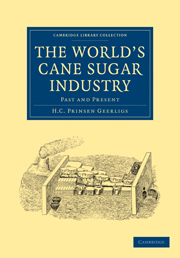
H. C. Prinsen Geerligs (b.1864) was a Dutch microbiologist and Director of the Sugar Experiment Station in Java, an important research centre at the heart of the sugar industry. A leading expert in the production of sugar and the workings of the international market, Geerligs presents a detailed and comprehensive history of the industry, from its ancient origins through to the early twentieth century. Developing into a global industry during a time of great turbulence, the story of sugar interweaves with the history of slavery and colonial expansion, and into an age where science revolutionised production methods. As well as detailing the survival and growth of the industry through wars, piracy, conquest and social change, this book includes detailed country-by-country studies of the state of the industry in 1912 when the book was first published. A fascinating portrait of industrial and commercial history from an expert eyewitness.
Despite an upsurge in national and international debate on environmental issues since the Earth Summit in Rio de Janeiro in 1992, fungi, vital to the functioning of terrestrial and aquatic ecosystems, are rarely mentioned. This volume helps redress this imbalance by considering fungi in the context of the impact of humankind's activity on their habitats. The presentation of experimental evidence is a major feature of the volume. Contributions on the effects of global warming, UV-B radiation, atmospheric and terrestrial pollutants, deforestation in the tropics, loss of biodiversity, genetic engineering and chaos theory ensure a topical and balanced coverage, with both ecological and physiological viewpoints being represented. This timely review will be of interest to all mycologists and those ecologists concerned with environmental change.
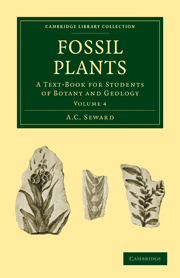
A. C. Seward (1863–1941) was an eminent English geologist and botanist who pioneered the study of palaeobotany. After graduating from St John's College, Cambridge, in 1886 Seward was appointed a University Lecturer in Botany in 1890. In 1898 he was elected a Fellow of the Royal Society, and was appointed Professor of Botany in 1906. These volumes, published to great acclaim between 1898 and 1919, provide a detailed discussion and study of an emerging science. In the early nineteenth century, research and critical literature concerning palaeobotany was scattered across disciplines. In these volumes Seward synthesised and revised this research and also included a substantial amount of new material. Furnished with concise descriptions of fossil plants, detailed figures and extensive bibliographies these volumes became the standard reference for palaeobotany well into the twentieth century. Volume 4, first published in 1919, contains systematic descriptions of fossil ginkgoales and coniferales.
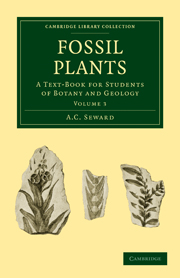
A. C. Seward (1863–1941) was an eminent English geologist and botanist who pioneered the study of palaeobotany. After graduating from St John's College, Cambridge, in 1886 Seward was appointed a University Lecturer in Botany in 1890. In 1898 he was elected a Fellow of the Royal Society, and was appointed Professor of Botany in 1906. These volumes, published to great acclaim between 1898 and 1919, provide a detailed discussion and study of an emerging science. In the early nineteenth century, research and critical literature concerning palaeobotany was scattered across disciplines. In these volumes Seward synthesised and revised this research and also included a substantial amount of new material. Furnished with concise descriptions of fossil plants, detailed figures and extensive bibliographies these volumes became the standard reference for palaeobotany well into the twentieth century. Volume 3, first published in 1917, contains systematic descriptions of fossil seed plants.
A. C. Seward (1863–1941) was an eminent English geologist and botanist who pioneered the study of palaeobotany. After graduating from St John's College, Cambridge, in 1886 Seward was appointed a University Lecturer in Botany in 1890. In 1898 he was elected a Fellow of the Royal Society, and was appointed Professor of Botany in 1906. These volumes, published to great acclaim between 1898 and 1919, provide a detailed discussion and study of an emerging science. In the early nineteenth century, research and critical literature concerning palaeobotany was scattered across disciplines. In these volumes Seward synthesised and revised this research and also included a substantial amount of new material. Furnished with concise descriptions of fossil plants, detailed figures and extensive bibliographies these volumes became the standard reference for palaeobotany well into the twentieth century. Volume 2, first published in 1910, contains systematic descriptions of fossil ferns.
A. C. Seward (1863–1941) was an eminent English geologist and botanist who pioneered the study of palaeobotany. After graduating from St John's College, Cambridge, in 1886 Seward was appointed a University Lecturer in Botany in 1890. In 1898 he was elected a Fellow of the Royal Society, and was appointed Professor of Botany in 1906. These volumes, published to great acclaim between 1898 and 1919, provide a detailed discussion and study of an emerging science. In the early nineteenth century, research and critical literature concerning palaeobotany was scattered across disciplines. In these volumes Seward synthesised and revised this research and also included a substantial amount of new material. Furnished with concise descriptions of fossil plants, detailed figures and extensive bibliographies these volumes became the standard reference for palaeobotany well into the twentieth century. Volume 1, published in 1898, contains an overview of palaeobotany with systematic descriptions of fossil plants.