To save content items to your account,
please confirm that you agree to abide by our usage policies.
If this is the first time you use this feature, you will be asked to authorise Cambridge Core to connect with your account.
Find out more about saving content to .
To save content items to your Kindle, first ensure no-reply@cambridge.org
is added to your Approved Personal Document E-mail List under your Personal Document Settings
on the Manage Your Content and Devices page of your Amazon account. Then enter the ‘name’ part
of your Kindle email address below.
Find out more about saving to your Kindle.
Note you can select to save to either the @free.kindle.com or @kindle.com variations.
‘@free.kindle.com’ emails are free but can only be saved to your device when it is connected to wi-fi.
‘@kindle.com’ emails can be delivered even when you are not connected to wi-fi, but note that service fees apply.
An overview of selection criteria for waste processing and disposal technologies is given. A systematic approach for selection of an optimal technology is proposed. Optimal selection of a technical processing and disposal option is case specific to the waste management needs. Waste streams considered are from nuclear applications, research, power generation, nuclear fuel cycle activities and decommissioning of nuclear facilities as well as for NORM-containing waste.
Using DC-RF magnetron sputtering method, the stress free c- and r-oriented Cr2O3 thin films were grown on c- and r-cut sapphire substrates, respectively. The c-oriented film grown at 580 ºC shows the smoothest surface with a surface average (Ra) of 0.17, although the c-surface energy is the highest. The origin of the smooth surface is expected that the presence of a twin grain due to a dislocation of Cr atoms, demonstrated by a reciprocal space mapping. The step height corresponding to that of the bulk is clearly observed. The r-oriented films epitaxially grow without twin grain. The Ra is 1.56 in the film grown at 580 ºC because of deep trenches due to a lattice mismatch and no dislocation like c-oriented films. Since the surface energy of the r-surface is the lowest, the terrace is quite smooth in one grain even at higher substrate temperature of 840 ºC.
As an alternative to crystalline silicon or thin film solar cells on rigid glass substrates, we aim to fabricate amorphous silicon (a-Si)/nanocrystalline silicon (nc-Si) tandem thin film solar cells on cheap flexible substrates. We have chosen polycarbonate as the superstrate and adapted the a-Si and nc-Si deposition processes for deposition at a maximum temperature of 130°. Because a-Si deposited at low temperatures has a high band gap, we were able to fabricate very thin (<1.2 μm) a-Si/nc-Si solar cells, because the high band gap of the a-Si shifts the current generation more towards the bottom cell, allowing for a much thinner (900 nm) bottom cell. The somewhat lower Jsc of the complete cell is partly compensated by a higher Vocwhich results in an initial conversion efficiency of 9.5% for the low temperature tandem solar cells on glass.
High reliability, low power consumption and high speed laser diodes are required for optical interconnect. We developed 1060nm VCSELs with InGaAs/GaAs strained quantum wells, oxide-confined and double intra-cavity structures for that purpose. As for the power consumption, low power dissipation of 0.14 mW/Gbps at 10 Gbps operation has been achieved. Clear eye openings up to 20 Gbps were confirmed at a low bias current of 5 mA. In the reliability test, accelerated aging tests were performed up to 5,000 hours at 6 mA in three different temperatures, 70 oC, 90 oC and 120 oC. The total number of the VCSELs was 4,898 pcs (approximately 5,000). No failure was observed. Under the normal operating condition of 40 oC and 6 mA, the total device-hours was 7.75×10⁷ hours assuming Ea = 0.35 eV according to Telcordia GR-468-CORE. The random failure rate of 30 FIT with the confidence level (C.L.) of 90 % and 12 FIT with the C.L. of 60 % were estimated. To estimate the wear-out lifetime and the number of FITs, high stressed aging tests with 170 oC and 6 mA were performed. With the acceleration factor of Ea = 0.7 eV in the wear-out failure, the median lifetime was 3,000 hours which was equivalent to 300 years in 40 oC ambient. The FIT numbers due to the wear-out were estimated as 0.3 FIT for 10 years. Compared with the random failure rate of 30 FIT, the wear-out failure rates are considered to be negligible. In the extremely long term aging test with 90 oC and 6 mA, no wear-out trend has been observed in both threshold current and optical power up to 20,000 hours operation. These results indicate that 1060 nm VCSEL is promising light source used in optical interconnect for high performance computers and data centers.
Silicon steels are materials used in construction of electric motors and transformers. Silicon is an effective element to improve the electrical and magnetic properties. During the solidification stage is defined the distribution of solute on the solid as segregation or coring. This paper researched the effect of the percentage of silicon on the microstructure and segregation profiles of the Fe-0.5wt%Si, Fe-1.5wt%Si and Fe-3wt%Si cast alloys. The samples were metallographically prepared by conventional techniques. The concentration of silicon in grain boundary regions was carried out by scanning electron microscopy (SEM) with EDS-WDS microanalysis, the morphological changes of the grain as a function of silicon was evaluated by optical microscopy. Experimental microsegregation patterns showed significant difference from the Scheil model and greater agreement with this model when considering convective-diffusive conditions. The microstructural study revealed discrepancies with the solidification pattern governed by the solidification interval.
We report on the fabrication of ZnO nanosheets on Graphene and other substrates at ambient conditions. The growth mechanism and the effect of the substrate are also discussed. Our synthesis method is based on sonochemical reaction of Zinc nitrate hexahydrate and hexamethylenetetramine in aqueous solutions. Extensive analysis by transmission electron microscopy, energy dispersive x-ray spectroscopy (EDS) revealed crystalline ZnO composition of the ZnO nanosheets. The proposed method is a rapid, inexpensive, low-temperature, catalystfree, CMOS compatible and environmentally benign alternative to existing growth techniques.
We present the key assumptions and results of a newly developed theory inorder to account for the self-consistent cascade effects of counterioncondensation and volume collapse of polyeletrolyte gels. In the presenttheory, the role of the specificity and valency of counterions on the volumetransitions are also treated. These features and the fluctuations of monomerconcentration and local electrolyte charge density are included on top ofthe familiar features of the Flory-Huggins theory and the classical rubberelasticity theory in the previously used Flory-Dusek-Patterson-Tanaka theoryof polyelectrolyte gels. We have computed the swelling equilibria bysatisfying the multicomponent nature of the system and the Donnanequilibria. A few major effects are illustrated in terms of the dependenceof volume transition on the solvent quality, temperature, saltconcentration, valency and specificity of the counterion, and polymer chargedensity. Criteria for the emergence of a reentrant volume transition arealso derived.
The reliability of the electrical characteristics of SiC “Super” Junction Transistors (SJTs) is investigated under long-term avalanche-mode, DC and pulsed-current operation. There is absolutely no change in the blocking I-V characteristics after a 934 hour repetitive avalanche stress test. Long-term operation of the Gate-Source diode (open-Drain mode) alone does not result in any degradation of the on-state voltage drop (VF) or current gain (β). Long-term operation in common-Source mode results in negligible VF or β degradation, if the base-plate is maintained at 25 °C. A greater degradation of β results with increasing base-plate temperature. The same total electrical charge, if passed through the SJT as a pulsed current instead of a DC current results in a smaller β reduction. It is also shown that this β degradation can be reversed by annealing at ≥ 200 °C, suggesting the possibility of degradation-free operation of SiC SJTs, when operating in pulsed current mode at ≥ 200 °C temperatures.
In this paper, the effect of anodization time on the properties of TiO2 nanotube humidity sensors is reported. TiO2 nanotube arrays were grown by anodization of Ti foil using diethylene glycol and ammonium fluoride. Highly ordered TiO2 nanotube arrays were obtained, with the length of tube increasing from 4 to 20 μm as the time of anodization increases, at the expense of nanotube integrity. Humidity sensors based on TiO2 nanotube arrays were fabricated in impedance mode with ITO as top contact. The results revealed that sensor performance does not correlate with anodization time, regardless of enhanced area, showing an optimum morphology at 4h and 10h. The increase resistivity of the sensors upon water exposure, a donor molecule, is explained by the lack of TiO2 stoichiometry and the fluctuations in the concentration of oxygen vacancies.
Tin oxide thin films were prepared by spray pyrolysis method using SnCl2.2H2O as starting precursor and deposited on glass substrate. Three groups of samples with different preparation conditions (temperature, time and thickness) were synthetized. The samples were characterized using Scanning Electron Microscope (SEM), X-Ray Diffraction (XRD), UV-Visible Spectroscopy and Van der Pauw four-point electrical measurements. The grain size in the samples changes from 80 to 500 nm. Optical and electrical parameters were measured or calculated, such as: band gap, refractive index, sheet resistance, transmittance spectrum and figure of merit. Film thicknesses were obtained from fringes features in the transmittance spectra with a variation from 76 to 761 nm. A mechanism of transformation from tin dichloride to tin oxide is proposed and discussed; additionally the visual yellow color of some samples, related with a low transparency, is associated to the amount of abhurite or tin hydroxide complex coexisting with tin oxide. The figure of merit showed that 500 ºC, 42 sprays and 1 hour of annealing time were the best conditions in the preparation of SnO2 with TCO properties.
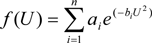
Understanding the morphology of catalytically active materials has been approached successfully in past decades using field electron microscopy in scanning and transmission modes. In this respect, some simulated TEM measurements for unsupported promoted molybdenum di-sulfide (MoS2/Co) provided some insights about molecular structure in those catalytic layered transition metal sulfides (LTMS). However, due to poor resolution, lack of color enhancement, and other factors, sections of those materials observed under TEM do not resolve the structure by itself; in particular about the localization of cobalt atoms for promoted MoS2 unsupported catalyst. This work concludes an epitaxial growth of MoS2 slabs over (111)-Co9S8 crystallographic plane, with a stacking degree size of 6 slabs. Results presented in here are obtained using experimental HRTEM and TEM simulations using the multi-slice method with a slice thickness of 25 Å and projected potential, where ai and bi are coefficients to be determined.
This paper presents Thermal Laser Separation (TLS) as a novel dicing technology for silicon carbide (SiC) wafers. Results of this work will play an important role in improving the SiC dicing process regarding throughput and edge quality. TLS process parameters were developed for separating 4H-SiC wafers. Separated SiC dies were analyzed and compared with results produced with current state of the art blade dicing technology. For the first time, fully processed 100 mm 4H-SiC wafers with a thickness of 450 μm, including epi-layer and back side metal layers, could be separated with feed rates up to 200 mm/s. Besides the vastly improved dicing speed, the TLS separation process results in two important features of the separated SiC devices: First, edges are free of chipping and therefore of higher quality than the edges produced by blade dicing. Second, the TLS process is kerf free, which allows for reducing the necessary dicing street width and hence increasing the number of devices per wafer.
Using ab-initio calculations and kinetic Monte Carlo simulations, we demonstrate that the deposition geometries of palladium are strongly dependent on the polarization direction of the LiNbO3 substrate. Different stoichiometries and atomic structures of the positively and the negatively polarized substrates cause substantially different bonding configurations of palladium and energy barriers for the movement of Pd clusters. Our simulations predict that palladium atoms form bulky clusters on the positive surface, while they are deposited in a dispersed or planar manner on the negative surface at moderate temperature. We suggest that Inoue and coworkers’ observation [J. Phys. Chem.88, 1148 (1984)] that the catalytic activity of palladium depends on polarization direction of LiNbO3 substrate is, at least in part, due to differences in the geometric structures of palladium and the LiNbO3 surface.
In order to enhance the safety of geological disposal and the reliability of the safety assessment carried out for each stage of the geological disposal project, an assessment methodology focused on a sensitivity analysis and an evaluation of importance, which incorporates “system understanding” and “information feedback” into the existing assessment approach, has been developed in this study. In this paper, the assessment methodology and the assessment results as applied for the transuranic (TRU) waste disposal system in Japan will be described. In the sensitivity analysis, an approximate analytical solution was used in order to understand the response characteristics of the engineered barrier system (EBS). In the importance evaluation, important factors relating to the robustness of system safety were identified based on the response characteristics. Furthermore, important features, events, and processes (FEPs) related to such factors and high-impact scenarios were identified based on the information accumulated through “system understanding” and “information feedback”. Based on this approach, the robustness of the TRU waste disposal system was assessed and measures for improving the robustness were identified.
Growth enhancement characteristics of plants are investigated using an atmospheric discharge plasma. Atmospheric pressure plasma torch is consisted of alumina ceramics tube and the steel mesh electrodes wound inside and outside of the tube. The growth enhancement was observed in the length of stem and root of plants after the plasma irradiation to seeds. The stem length increases approximately 2.8 times after the cultivation time of 24 h. And the effect is found to be maintained for 40 h, after sowing seeds. The mechanism of the growth enhancement would be the redox reaction inside plant cells induced by oxygen radicals.
An ancient iron sword (ca 2,000 year old) excavated from Ohtake-nishi archaeological site in Osaka Prefecture, is one of the oldest cast iron swords in Japan. Because of a good state of preservation, such as the sharply-defined “Shinogi” (the longitudinal ridge) on the surface, we studied relationship between the burial environment and corrosion behavior. As environmental conditions, we investigated groundwater chemistry and corrosion rate with iron probe monitor, etc. Regarding corrosion state, we analyzed corrosion depths with an X-ray computed tomography and corrosion products with a portable X-ray diffractometer equipped with X-ray fluorescence spectrometer. As results, we found that the redox potential and dissolved oxygen level as environmental conditions were very low, and that the corrosion rate (7.5×10⁻⁴ mm/y) evaluated from measured corrosion depths was smaller than the probe corrosion rate (3.2–5.2×10⁻² mm/y) by two orders of magnitude. The results suggested that the corrosion layer of siderite formed on the iron sword surface inhibited corrosion reaction.
Light trapping is essential to harvest long wavelength red and near-infrared photons in thin film silicon solar cells. Traditionally light trapping has been achieved with a randomly roughened Ag/ZnO back reflector, which scatters incoming light uniformly through all angles, and enhances currents and cell efficiencies over a flat back reflector. A new approach using periodically textured photonic-plasmonic arrays has been recently shown to be very promising for harvesting long wavelength photons, through diffraction of light and plasmonic light concentration. Here we investigate the combination of these two approaches of random scattering and plasmonic effects to increase cell performance even further. An array of periodic conical back reflectors was fabricated by nanoimprint lithography and coated with Ag. These back reflectors were systematically annealed to generate different amounts of random texture, at smaller spatial scales, superimposed on a larger scale periodic texture. nc-Si solar cells were grown on flat, periodic photonic-plasmonic substrates, and randomly roughened photonic-plasmonic substrates. There were large improvements (>20%) in the current and light absorption of the photonic-plasmonic substrates relative to flat. The additional random features introduced on the photonic-plasmonic substrates did not improve the current and light absorption further, over a large range of randomization features.
The first step in the processing of low- and medium-level liquid radioactive waste is the reduction in the volume of liquid containing small concentrations of radionuclides. Various methods for concentration of radioactive waste have been studied and developed at the Institute of Nuclear Chemistry and Technology, including membrane processes. Reverse osmosis was implemented at the Radioactive Waste Management Plant. Other methods such as ultrafiltration, membrane distillation, adsorption and different integrated processes were studied in the scope of national and international projects.
This paper presents the results of research performed at Institute of Nuclear Chemistry and Technology in Warsaw concerning radioactive liquid waste treatment and the programs of implementation of these methods at nuclear centers producing such wastes, as well as the plans for the utilization of the knowledge and experience and designs of schemes for radioactive waste management in future nuclear power industry. The integrated system developed on the basis of research will be a prototype for further implementation.
Physically crosslinked hydrogels based on gelatin functionalized with desaminotyrosine (DAT) (giving Gel-DAT) or desaminotyrosyl tyrosine (DATT) (resulting in Gel-DATT) have shown high potential as biomaterials. Here, protein adsorption to the functionalized gelatins in comparison to gelatin was quantified to see if the functionalization and chain organization of gelatins has an influence on the amount of proteins being adsorbed. For this purpose, gelatin, Gel-DAT, and Gel-DATT were incubated with water or aq. solutions of bovine serum albumin (BSA), fibrinogen, or fibronectin, respectively, at physiological concentrations. Protein concentrations in the supernatant were determined with the bicinchoninic acid (BCA) assay before and after the contact. BSA adsorption to the materials was influenced as well by the hydrophobicity of the material as the degree of swelling, with the observation that higher protein concentrations led to lower protein adsorption. The highest amount of fibronectin was adsorbed to Gel-DAT, followed by gelatin and Gel-DATT, with only small differences for different initial protein concentrations. Fibrinogen adsorption increased with increasing concentration. In the future, adsorption studies based on specific antibody-based techniques might enable quantification of the proteins also in competition assays and direct quantification of adsorbed material.
The incomplete fit of full cast crown restorations remains a critical problem for dentists, leading many researchers to study this problem. Marginal and internal accuracy of fit is valued as one of the most important criteria for the clinical quality and success of complete crowns. The geometry of tooth preparation has been the subject of many debates without clear evidence that one type of tooth preparation or method of fabrication provides consistently superior marginal fit. The objective of this study was to evaluate, by finite element analysis, the influence of different marginal geometries (shoulderless, chamfer, shoulder) on the stress distribution in teeth prepared for cast metal crowns.
A 3D model of a molar was created: intact teeth, unrestored teeth different marginal geometries: shoulderless, with chamfer, with shoulder preparations; the same tooth restored full cast metal crowns. These were exported in Ansys finite element analysis software for structural simulations.
The values of the maximal equivalent stress were higher for the shoulder preparations, but distributed under the preparation line. Regarding the stress distribution for the other two preparation designs, the largest area is present for the chamfer preparation, followed by the shoulderless preparation.
Within the limitations of the present study, the shoulder preparation is the recommended preparation design from biomechanical point of view. It is followed by the shoulderless preparation. Chamfer margins are less favorable only from this point of view. In light of these results, consideration should be given to the designs from prophylactic and biological points of view, with emphasis on conserving tooth structure and preventing preparation trauma.
