To save content items to your account,
please confirm that you agree to abide by our usage policies.
If this is the first time you use this feature, you will be asked to authorise Cambridge Core to connect with your account.
Find out more about saving content to .
To save content items to your Kindle, first ensure no-reply@cambridge.org
is added to your Approved Personal Document E-mail List under your Personal Document Settings
on the Manage Your Content and Devices page of your Amazon account. Then enter the ‘name’ part
of your Kindle email address below.
Find out more about saving to your Kindle.
Note you can select to save to either the @free.kindle.com or @kindle.com variations.
‘@free.kindle.com’ emails are free but can only be saved to your device when it is connected to wi-fi.
‘@kindle.com’ emails can be delivered even when you are not connected to wi-fi, but note that service fees apply.
Jack Boss's third book on the most famous member of the 'second Viennese School', this work offers an intriguing revisionist history of Schoenberg's early music. It provides close readings of six pieces from Op. 1 to Op. 9, illustrated by detailed motivic analyses as well as Schenkerian graphs, to show how tonality and motive work together to project the 'musical idea,' and how Schoenberg's tonal style gradually became more dissonant, leading to atonality. Boss's earlier books argued that the atonal and twelve-tone works were part of a consistent development tied together by the expression of a common narrative-the conflict, elaboration, and resolution of what Schoenberg himself called the 'idea.' This book completes the circle by showing that the early, tonal works also project musical idea narratives. It justifies Schoenberg's preference for setting music to text early in his career, by showing how his chosen texts helped shape these narratives of conflict and resolution.
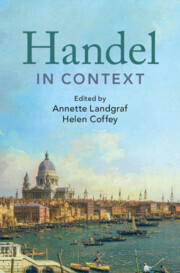
A celebrity in his own time, Handel remains popular with performers, music-lovers and scholars today. The specially commissioned contributions to this volume will enable students, teachers and concert-goers to better appreciate his music through a deeper understanding of the world in which he lived. The chapters focus on key aspects of the composer's career within the different social, political, cultural and musical contexts he experienced in Britain and Europe. They explore Handel's lifestyle and his personal and professional relationships; the various musical establishments for which he worked; the styles, practices and personnel that shaped his compositions; and the influence, reception and legacy of his music during and since his lifetime. Writing from a variety of perspectives, authors shed light on each topic while helping readers to navigate the breadth of recent scholarship. This book is an essential reference work for anybody studying Handel's music or that of his eighteenth-century contemporaries.
Sixty years after their final collaboration Rodgers and Hammerstein remain central figures in the world of musical theatre, and their global influence continues to be felt. This Companion presents their iconic work for a new generation of students, teachers and fans, giving both historical context and new perspectives on the partners, the people with whom they collaborated, and the shows they created. A chapter is devoted to each musical, from Oklahoma! to The Sound of Music, providing key information about that work in both its staged and film versions, and analysis of its distinctive features including those that present challenges for practitioners, audiences and researchers today. The volume also introduces the early careers of both creators and Rodgers's work after Hammerstein's death. The contributions represent a variety of complementary disciplinary backgrounds that can serve as models for future study not just on Rodgers and Hammerstein but also on musical theatre more generally.
The first book in the English language to take a comparative look at the various roles played by all kinds of music and musicians in the fascist regimes of the twentieth century. It provides detailed overviews of musical life in Fascist Italy and Nazi Germany and identifies and challenges some of the stereotypes that became ingrained over the latter half of the twentieth century. Alongside comparative studies drawn from the German and Italian examples, the book presents case studies from a variety of regimes and situations. It analyses and compares numerous aspects of fascism (ideology, thought, practice, policy) in their interfaces with music and musicians across the twentieth century. Its broad range of topics expands the reader's horizons beyond a debate on 'music and totalitarianism' currently too often restricted to Stalinism on the one hand and Nazism on the other.
In the history of Western music, no single figure has been as closely tied to the Enlightenment as Beethoven: he is regarded as the composer who embodies ideals such as freedom and humanism that many celebrate as the Enlightenment's legacy. This view, however, rests on a very narrow conception of the Enlightenment that aggressively stresses secularism and political liberalism. More recent historical research has shown that the Enlightenment's outlook on political and religious issues was more diverse and nuanced than traditional accounts have depicted it. The essays in this volume consider how new ways of thinking about the Enlightenment can alter the way we understand Beethoven and his music. By rethinking Beethoven and the Enlightenment, this book questions the Beethoven we know in both the popular and scholarly imagination and redefines the role the composer plays in the history of Western music.
The Día de la toma [Conquest Day], held every 2nd January, celebrates the Catholic 'reconquest' of the Nasrid Kingdom of Granada (1492), which resulted in the collapse of Muslim Spain. The festival has become politicised by ultra-nationalist, anti-immigration groups, as well as Andalusian regionalist movements that want the event to become a 'festival of tolerance'. I examine the 'soundtrack' of the festival in dialogue with work on music and politics, sound studies, cultural memory and affect. From fascist anthems, to chants and flamenco fusions, music and sound serve conflicting readings of Granada's cultural memory. I argue that musical and sonic protest delineates conflicting political and territorial positions in a city that is polarised along regionalist vs nationalist and multiculturalist vs nativist lines. Moreover, I contend that the festival highlights an ambivalence towards the city's Muslim community, and so I consider how this community is sounded and silenced at the event.
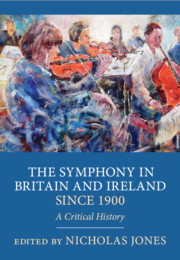
The symphony has long stood as one of music's most prestigious and enduring genres, yet in Britain and Ireland its story since 1900 remains surprisingly underexplored. This landmark volume offers the first comprehensive account of the symphony's trajectory across the twentieth and twenty-first centuries, revealing a rich, multifaceted tradition shaped by an extraordinary diversity of voices, styles and contexts. Drawing together distinguished international scholars and composers, the book surveys both celebrated figures such as Elgar, Vaughan Williams and Tippett, and lesser-known yet vital contributors including Ruth Gipps, Ina Boyle and Alan Bush. Through historical, analytical, and critical perspectives, contributors examine commissioning networks, cultural influences, performance traditions and questions of identity, representation and reception. Contemporary reflections by leading composers extend the discussion into the present, where changing approaches and aesthetics challenge and expand definitions of the symphony itself. Accessible, authoritative and groundbreaking, this volume redefines our understanding of the British and Irish symphony – past, present and future.
The Parisian Musical Avant-Garde during the Great War brings music in the city to life during and immediately after the conflict. It tells the extraordinary story of singer, Jane Bathori, who became temporary director of an avant-garde theatre in Paris, the Théâtre du Vieux-Colombier. Drawing on a wide inter-artistic network, Bathori collaborated with writers, set designers, choreographers, performers and composers to create highly original programmes by commissioning new works, reviving early music, staging chamber opera, mixing high art music with folk, popular and patriotic songs, and incorporating literary events. Bathori is remembered for her advocacy of composers such as Ravel, Satie, Poulenc and Milhaud, but was systematically written out of theatre history. Drawing on a rich range of archival materials, I show that her war-time artistic action sparked inter-artistic collaborations and shaped interwar musical taste, alongside figures such as Serge Diaghilev and Jean Cocteau.
The first major transatlantic study of Italian opera between 1870 and 1922, this book investigates the changing operatic relations between Italy and the Americas during the crucial decades from Italian unification until the rise of Fascism. Opera held a key role in Italy's self-image at this time, with Milan at its centre – but New York and Buenos Aires emerged as global operatic capitals and key destinations for Italian emigrants. Through a series of case studies focused on canonical and overlooked operas, the book uncovers the vital role of the United States and Argentina in both defining and challenging links between Italy, Italian opera and an imagined Italianness, including within Italy itself. Modern associations between Italian opera and Italian identity were in crucial respects forged in – and via – the Americas during this period: shaped by changing economic relations, transatlantic emigration and new technological media for operatic production and consumption.
Spain's musical history has often resided on – or been consigned to – the margins of historical narratives about mainstream European culture. As a result, Spanish music is universally popular but seldom well understood outside Iberia. This volume offers, for the first time in English, a comprehensive survey of music in Spain from the Middle Ages to the modern era, including both classical and popular traditions. With chapters from a group of leading music scholars, the book reevaluates the history of music in Spain, from devotional works of the Middle Ages and Renaissance to masterpieces of the postwar avant-garde. It surveys a deep legacy of classical music as well as a rich heritage of folklore comprising songs and dances from Spain's many regions, especially but not exclusively Andalusian flamenco. Folklore in turn informed the nationalist repertoire with which music lovers are most familiar, including pieces by Albéniz, Granados, Falla, Rodrigo, and many others.
Informed by fascinating interviews, photographs, and previously unexamined archival materials, this book reveals a compelling story of Yugoslav avant-garde and experimental music from 1945 until 1991, ending with the year when all artistic activities came to a sudden halt with the start of the Yugoslav wars. It examines the political, social, and cultural events that gave rise to the flourishing avant-garde scene in the country and follows the emergence and development of Yugoslav cultural programs in the postwar period that made the republic a magnet for cultural exchange, through to the sudden and violent dissolution of those programs with the collapse of the political state. The book is the first full-length book in English on the subject, and provides an indispensable, interdisciplinary resource that will contribute to the preservation of this legacy. This title is also available as Open Access on Cambridge Core.
Chapter 5 is the last of three chapters to consider the material production of Dominican liturgical books. This chapter situates the context of the production of the three liturgical exemplars: Rome, Santa Sabina, XIV L 1; London, British Library, Add. 23935; and Salamanca, San Esteban, SAL.–CL.01. It examines the intersection between the Dominicans and the blossoming Parisian book trade, the pecia system of book production, and the relationship between the Dominicans at the Parisian convent of St-Jacques and their neighbouring book-maker, Guillaume de Sens. Close palaeographical and codicological study of the exemplars reveals certain guiding principles that governed the production, within which individual copyists and artists had the freedom to execute and manipulate the contents. Drawing together the three chapters of Part II, this chapter considers the interaction of the various book trades in the making of the exemplars, shedding light not only on the book-making practices of the Dominicans, but also the Parisian book trade more generally.
Chapter 8 is the third of four chapters to consider one element of the Dominican liturgy, focussing here on the sources and unique characteristics of the Dominican divine office. Drawing on data from previous studies of the office, and in particular of office responsory chants, this chapter positions the Dominican office within a wider network of liturgical traditions. The Dominican office was clearly adopted by the Teutonic Knights, the Crosiers, and in certain Scandinavian dioceses. The source for the Dominican office is less [clear-cut]. Some traits of the Dominican office can also be observed in the advent responsories of the Cistercians and of British cathedrals, and in the responsory verses in office books from Provence; these may either have been sources for the Dominican office, or they may have shared a common source. The chapter concludes by noting distinctive features of the Dominican office and its books, for the purposes of facilitating identification of other Dominican office books.
This chapter sets the scene for the book. It introduces the Dominican order, the context of its foundation in the thirteenth century, and its relationship to other liturgical traditions. Like many other new religious orders, the Dominican order underwent a period of liturgical revision in the decades following its foundation. Three ‘exemplar’ manuscripts survive that record the final authoritative version of the Dominican liturgy; this book uses the exemplars as a lens through which the Dominican liturgy can be examined. The chapter sets out the two key themes that shape the remainder of the book, namely the making of the Dominican liturgy in terms of the material production of Dominican liturgical books, and in terms of the creation of the Dominican liturgy and chant recorded in the exemplars. The chapter closes with an outline of the book’s chapters and appendices.
Chapter 6 is the first of four chapters to consider one element of the Dominican liturgy, focussing here on the thirteenth-century development of the calendar of saints’ feasts. This chapter draws on the sanctoral cycles from books for the mass and office that survive from the earliest years of the Dominican order and from the initial revision of the Dominican liturgy by a commission of four friars. It compares these with the sanctoral cycle of Humbert of Romans’ final revision of the liturgy, as recorded in three exemplars: Rome, Santa Sabina, XIV L 1; London, British Library, Add. 23935; and Salamanca, San Esteban, SAL.–CL.01. Five distinct stages are identified, including a previously unknown period of unofficial revision prior to the commission of the four friars. Various trends are identified regarding the types of feasts that were added to, removed from, promoted and/or relegated in the Dominican calendar over the course of the revision. The final portion of the chapter examines how certain tell-tale corrections to Santa Sabina XIV L 1 coincide with points at which changes were made to the saints celebrated by the Dominicans.