To save content items to your account,
please confirm that you agree to abide by our usage policies.
If this is the first time you use this feature, you will be asked to authorise Cambridge Core to connect with your account.
Find out more about saving content to .
To save content items to your Kindle, first ensure no-reply@cambridge.org
is added to your Approved Personal Document E-mail List under your Personal Document Settings
on the Manage Your Content and Devices page of your Amazon account. Then enter the ‘name’ part
of your Kindle email address below.
Find out more about saving to your Kindle.
Note you can select to save to either the @free.kindle.com or @kindle.com variations.
‘@free.kindle.com’ emails are free but can only be saved to your device when it is connected to wi-fi.
‘@kindle.com’ emails can be delivered even when you are not connected to wi-fi, but note that service fees apply.
Franz Lehár's 1928 Berlin operetta Friederike boasts an unusual subject: a romantic incident in the early life of Johann Wolfgang von Goethe. Weimar Berlin is usually considered as a haven for experimentation between high and low culture, a bifurcated view which has dominated German studies, but in this article I argue that Friederike is best considered as an example of the middlebrow. I examine the many sources which contributed to Friederike, from Goethe to Wagner to contemporary plays; analyse the score's stylistic allusions and the performance of star tenor Richard Tauber; and finally turn to Lehár's rhetorical positioning of his work on the Berlin theatrical scene. I argue that operetta scholarship itself has traditionally been ill-equipped to deal with Lehár's late works and operetta more generally, and that middlebrow studies’ nuanced consideration of questions of art, commerce and prestige can contribute more widely to operetta and Weimar historiography.
Like many modernist engagements with the theme of outsider identity, Alexander Zemlinsky's 1921 opera Der Zwerg (The Dwarf) finds its dramatic nexus in the disabled body. In opera, such bodies are not only (historically) texted but also (presently) performed, with modern stagings offering a form of mediation between the historical and contemporary. With reference to two productions of Der Zwerg, this article unpicks aspects of the representation and performance of disability on the operatic stage. I first explore disability's simultaneous exaggeration and disappearance as a result of the problematic practice of ‘disability mimicry’. The effects of this practice and its proximity to issues of authenticity and embodiment are only made more tangible in the context of live performance, where attempts to embody disability's physicality are often sensationalised and unconvincing at best. However, disability can be, and is, represented in myriad ways. While disability mimicry can engender modes of perceiving disability from a voyeuristic perspective, these productions in fact make use of processes of ‘enfreakment’ to present disability through modes of theatrical production and aesthetic choice. This raises pertinent questions about why and by what means the disabled body is mobilised (or not) on the operatic stage, highlighting, moreover, disability's tendency to indicate meaning in registers beyond the body.
The Doctor of Myddfai (1995), Peter Maxwell Davies's third full-scale opera and his first collaboration with David Pountney, is a work that occupies an important position within the composer's output for the opera house and theatre. However, whereas a significant amount of scholarly attention has been afforded to Davies's music-theatre works of the 1960s and the operas Taverner (1962–8) and Resurrection (1986–7), The Doctor of Myddfai has been somewhat neglected by comparison. This article examines the opera from two perspectives. The first addresses the work's dystopian setting and argues that key issues highlighted in the libretto – especially in relation to certain political concerns and environmental anxieties – have a strong contemporary resonance. The second focuses on the opera's articulation of Welsh identity, particularly through the use of Welsh folklore, native landscape and place, and indigenous musical signifiers. The intersection of these two elements – the work's celebration of Welshness and its dystopian qualities – imbues the opera with an intrinsic yet highly productive sense of tension and opposition: characteristics that drive the work towards its compelling conclusion.
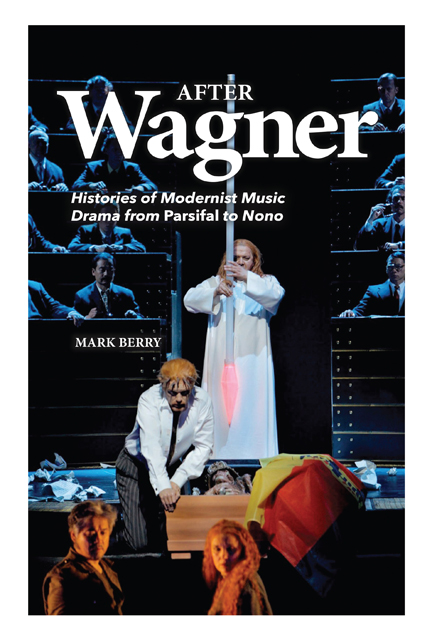
Offers histories of music drama beginning with Wagner's Parsifal and then looking at works by Arnold Schoenberg, Richard Strauss, Luigi Dallapiccola, Luigi Nono and Hans Werner Henze.
Surveys the history of contractual sexual arrangements between Westerners and Japanese women that emerged in the treaty ports of Japan after 1858, a practice that became known as “monthly,” “temporary,” or “Japanese” marriage. Contemporary accounts, diaries, and reminiscences suggest that the outlines of such liaisons and even their contractual terminology would eventually underlie Benjamin Franklin Pinkerton’s duplicitous relationship with Cio-Cio-san. Although this practice became widely known in the West largely through Pierre Loti’s Madame Chrysanthème (1888), its connection to John Luther Long’s “Madame Butterfly,” and by extension to Puccini’s opera, is substantially more complicated than generally assumed.
This article examines the conception and subsequent reception of Jaromír Weinberger's 1927 opera Schwanda the Bagpiper in the context of various expressions of nationalism, anti-Semitism and Jewish identity politics throughout the interwar period. It takes into consideration the many historical, political and musical junctures before and during the opera's trajectory. While remaining rooted in nineteenth-century Czech nationalism, Weinberger sought to blend a plurality of cultural expressions, thus responding to the transitory state of nationalism during the interwar period. This is evident in the dialectics of the work – including its music, its libretto by Miloš Kareš and the first production. In this way, Schwanda and its divergent reception represents young Czechoslovakia's liminalities in relation to nationalism and the complexities of the new multi-ethnic state, especially with regard to its minorities. The article thus offers insights into the phenomenon of nationalism, which at the time of the opera's conception was inescapably co-constructed with anti-Semitism, and demonstrates Schwanda's importance as part of larger histories of European music and opera.
Examines Luigi Illica’s draft libretto and its comic opposition of West and East. The opening scene occidentalizes the hero as Sir Francis Blummy Pinkerton, using details from Pierre Loti’s novel to express his unsympathetic views of Japan and his “marriage” as a joke, while a later scene/act, set at the American consulate, foregrounds the “comedy” of Butterfly’s failed acculturation, climaxing in her disillusioning encounter with Pinkerton’s New American Wife. Orientalizing Cio-Cio-san from a prevalently racist European perspective as naïve and inscrutable, however, prevented Illica from investing her with the interiority necessary for the emotional high points of a tragic opera. His concluding scenes rely on narrative intermezzi to evoke the heroine’s state of mind, using images from ukiyo-e artist Hokusai to create a bleak ambience for the almost wordless suicide of a culturally alienated subject.
Surveys the first decades of Madama Butterfly’s reception in Japan, which motivated de-orientalizing productions that changed or deleted passages considered comically inaccurate or insulting, often reimagining the heroine as an exemplar of pure-hearted Japanese womanhood. Discussion concentrates on three landmark productions. (1) A partial first staging (1914), featuring soprano Takaori Sumiko and her conductor husband Shuichi, who created a scandal with encores that included a celebration of strip-tease dances in treaty-port teahouses. (2) A “corrected” production (1930) by composer Yamada Kosaku and translator Horiuchi Keizo. The score and libretto were drastically emended by changing Puccini’s borrowings from Japanese music and deleting the entire wedding scene and other offensive passages, thus suppressing the opera’s location in late nineteenth-century treaty-port culture. (3) A 1936 production of the opera by Miura Tamaki, the most famous Japanese soprano of the period, celebrating her return to Japan from a career abroad. It legitimized the heroine’s marriage by adding a Shinto priest and emphasizing the tragedy of her maternal sacrifice.
Begins by contrasting representations of a “Japanese marriage” in Pierre Loti’s Madame Chrysanthème and John Luther Long’s “Madame Butterfly.” Loti’s fictitious autobiography imbeds a whimsical mènage within an evocative and exotic – but pervasively racist – representation of Japan and the Japanese. Long’s third-person narrative focuses on the private tragedy of an American naval officer’s capricious “westernization” of a naïve “temporary wife” and her ensuing cultural alienation. Although Long engages in an intertextual critique with Loti, his story is primarily based on a real-life incident in Nagasaki witnessed by his missionary sister, Jennie Long Correll. Reminiscences by her in 1931 make it possible to reconstruct elements of the original event and even suggest a probable model for the American protagonist.
Approaches the opera from a postcolonial perspective, using scores published before the elimination of “offensive” passages in later editions. Emphasizing the relationship between the libretto and its musical setting, it suggests how a temporary “marriage” leaves Cio-Cio-san trapped between her Japanese ethnicity and her desired identity as Mrs. Benjamin Franklin Pinkerton. The West–East hierarchy of act 1, with the hero’s “pseudo-wedding” dictating the action, followed by the heroine’s entrance and exchanges that ground her in a Japanese milieu, culminates in an extended seduction/love duet fraught with cultural difference. Act 2 foregrounds a dialogic construction of Cio-Cio-san’s dilemma: while Illica endowed her with infantilizing preconceptions of Japanese identity, Giacosa added the agency of a geisha and the interiority characteristic of an operatic heroine. As a result, the orientalizing “comedy” of Cio-Cio-san’s failed acculturation as “Madama B. F. Pinkerton” coexists with the intense emotion of arias performing her delusion and suicide, which is complicated by the unusual presence of a mixed-race child.
When Alexander Grechaninov's opera Sister Beatrice on a text by Maurice Maeterlinck premiered in Moscow in 1912, it promised to bring together two conceptual worlds, those of symbolist aesthetics and the Russian Orthodox liturgy. Critics who hoped that Grechaninov's experience as a composer of sacred music would help bring alive the ‘unheard music’ of Maeterlinck's symbolist ‘Miracle Play’, however, were sorely disappointed. The opera drew scorn from critics for its overly concrete musical rhetoric, while conservative commentators levelled claims of blasphemy. In this article, I consider the two scenes depicting miracles in Sister Beatrice to demonstrate how it negotiated these competing perspectives, employing insights from religious philosophy as well as symbolist aesthetics. Drawing on new archival evidence, I also demonstrate how church and state censors co-participated with composers and critics debating whether and how the sacred might be displayed on stage and in sound.
Chapter 6 focuses on Madama Butterfly into Japanese theatre genres: a Takarazuka Condensed Madama Butterfly (1931), which updates the opera’s bicultural tragedy in the increasingly xenophobic atmosphere of Showa cultural politics; a Bunraku puppet play recuperating the heroine in the tradition of a Japanese lovers’ tragedy (1956); and a haunting Takarazuka Three Generation Cho-Cho-san (1953), tracing the fates of Butterfly’s son (and US naval officer) Joey and his beloved Kiyo across three generations of Japanese-American history to their eventual happy reunion in post–A-bomb Nagasaki.
It’s difficult to stop here. The Takarazuka Chōchō-san sandaiki immediately generated a spin-off Comedy of Miss Butterfly (Kigeki Chō-Chō san), which premiered in February 1954 at the Imperial Theatre in Tokyo. Pinkerton’s son is among the first troops to land in occupied Japan and soon finds a second Butterfly. Fortunately, his fiancée – not incidentally named Kate – knows about the scandal of the young officer’s father and follows him to Japan to avert a second tragedy.1 There is a happy ending: Kate II weds Pinkerton II, and Butterfly II finds happiness with a character named – Yamadori. In that same year Takarazuka also furnished the setting for James A. Michener’s Sayonara, whose hero, a Korean war fighter pilot, falls in love with a Takarazuka otokoyaku performing Pinkerton in a musical revue called Swing Butterfly, thus presenting the affair from an American perspective.