Refine search
Actions for selected content:
4138 results in Logic
7 - Logic and Deduction in the Middle Ages and the Modern Period
- from Part II - The History of Deduction
-
- Book:
- The Dialogical Roots of Deduction
- Published online:
- 10 December 2020
- Print publication:
- 17 December 2020, pp 131-148
-
- Chapter
- Export citation
9 - The Ontogeny of Deductive Reasoning
- from Part III - Deduction and Cognition
-
- Book:
- The Dialogical Roots of Deduction
- Published online:
- 10 December 2020
- Print publication:
- 17 December 2020, pp 169-186
-
- Chapter
- Export citation
2 - Back to the Roots of Deduction
- from Part I - The Philosophy of Deduction
-
- Book:
- The Dialogical Roots of Deduction
- Published online:
- 10 December 2020
- Print publication:
- 17 December 2020, pp 22-36
-
- Chapter
- Export citation
Part I - The Philosophy of Deduction
-
- Book:
- The Dialogical Roots of Deduction
- Published online:
- 10 December 2020
- Print publication:
- 17 December 2020, pp 1-84
-
- Chapter
- Export citation
8 - How We Reason, Individually and in Groups
- from Part III - Deduction and Cognition
-
- Book:
- The Dialogical Roots of Deduction
- Published online:
- 10 December 2020
- Print publication:
- 17 December 2020, pp 151-168
-
- Chapter
- Export citation
Contents
-
- Book:
- The Dialogical Roots of Deduction
- Published online:
- 10 December 2020
- Print publication:
- 17 December 2020, pp v-vii
-
- Chapter
- Export citation
Copyright page
-
- Book:
- The Dialogical Roots of Deduction
- Published online:
- 10 December 2020
- Print publication:
- 17 December 2020, pp iv-iv
-
- Chapter
- Export citation
4 - Deduction as a Dialogical Notion
- from Part I - The Philosophy of Deduction
-
- Book:
- The Dialogical Roots of Deduction
- Published online:
- 10 December 2020
- Print publication:
- 17 December 2020, pp 61-84
-
- Chapter
- Export citation
Preface
-
- Book:
- The Dialogical Roots of Deduction
- Published online:
- 10 December 2020
- Print publication:
- 17 December 2020, pp ix-xiv
-
- Chapter
- Export citation
References
-
- Book:
- The Dialogical Roots of Deduction
- Published online:
- 10 December 2020
- Print publication:
- 17 December 2020, pp 238-260
-
- Chapter
- Export citation
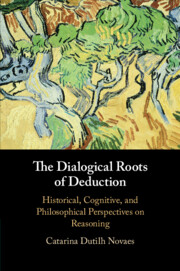
The Dialogical Roots of Deduction
- Historical, Cognitive, and Philosophical Perspectives on Reasoning
-
- Published online:
- 10 December 2020
- Print publication:
- 17 December 2020

Mediality in the Middle Ages
- Abundance and Lack
-
- Published by:
- Arc Humanities Press
- Published online:
- 20 November 2020
- Print publication:
- 31 December 2019
-
- Book
- Export citation
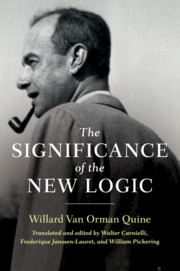
The Significance of the New Logic
-
- Published online:
- 20 October 2020
- Print publication:
- 10 May 2018
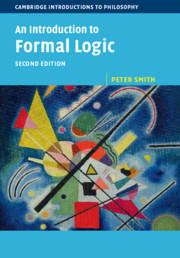
An Introduction to Formal Logic
-
- Published online:
- 10 July 2020
- Print publication:
- 25 June 2020
-
- Textbook
- Export citation
13 - Expressive adequacy
-
- Book:
- An Introduction to Formal Logic
- Published online:
- 10 July 2020
- Print publication:
- 25 June 2020, pp 113-119
-
- Chapter
- Export citation
Preface
-
- Book:
- An Introduction to Formal Logic
- Published online:
- 10 July 2020
- Print publication:
- 25 June 2020, pp vii-viii
-
- Chapter
- Export citation
22 - PL proofs: conditionals
-
- Book:
- An Introduction to Formal Logic
- Published online:
- 10 July 2020
- Print publication:
- 25 June 2020, pp 203-210
-
- Chapter
- Export citation
18 - The truth-functional conditional
-
- Book:
- An Introduction to Formal Logic
- Published online:
- 10 July 2020
- Print publication:
- 25 June 2020, pp 148-161
-
- Chapter
- Export citation
Interlude: From informal to formal logic
-
- Book:
- An Introduction to Formal Logic
- Published online:
- 10 July 2020
- Print publication:
- 25 June 2020, pp 59-60
-
- Chapter
- Export citation
16 - More about tautological entailment
-
- Book:
- An Introduction to Formal Logic
- Published online:
- 10 July 2020
- Print publication:
- 25 June 2020, pp 137-144
-
- Chapter
- Export citation
