Refine search
Actions for selected content:
1480 results in Medieval philosophy
6 - Aristotle’s ‘physical’ works and the Arabic tradition
-
-
- Book:
- Aristotle and the Arabic Tradition
- Published online:
- 05 October 2015
- Print publication:
- 17 September 2015, pp 105-120
-
- Chapter
- Export citation
3 - What if that (is) why? Avicenna’s taxonomy of scientific inquiries
-
-
- Book:
- Aristotle and the Arabic Tradition
- Published online:
- 05 October 2015
- Print publication:
- 17 September 2015, pp 50-75
-
- Chapter
- Export citation
9 - Averroes on intentionality and the human experience of the natural world
-
-
- Book:
- Aristotle and the Arabic Tradition
- Published online:
- 05 October 2015
- Print publication:
- 17 September 2015, pp 164-176
-
- Chapter
- Export citation
4 - The Rhetoric and Poetics in the Islamic world
-
-
- Book:
- Aristotle and the Arabic Tradition
- Published online:
- 05 October 2015
- Print publication:
- 17 September 2015, pp 76-91
-
- Chapter
- Export citation
Index
-
- Book:
- Aristotle and the Arabic Tradition
- Published online:
- 05 October 2015
- Print publication:
- 17 September 2015, pp 261-266
-
- Chapter
- Export citation
Copyright page
-
- Book:
- Aristotle and the Arabic Tradition
- Published online:
- 05 October 2015
- Print publication:
- 17 September 2015, pp iv-iv
-
- Chapter
- Export citation
7 - Defining nature: from Aristotle to Philoponus to Avicenna
-
-
- Book:
- Aristotle and the Arabic Tradition
- Published online:
- 05 October 2015
- Print publication:
- 17 September 2015, pp 121-142
-
- Chapter
- Export citation
Acknowledgments
-
- Book:
- Aristotle and the Arabic Tradition
- Published online:
- 05 October 2015
- Print publication:
- 17 September 2015, pp x-x
-
- Chapter
- Export citation
References
-
- Book:
- Aristotle and the Arabic Tradition
- Published online:
- 05 October 2015
- Print publication:
- 17 September 2015, pp 234-260
-
- Chapter
- Export citation
Introduction
-
-
- Book:
- Aristotle and the Arabic Tradition
- Published online:
- 05 October 2015
- Print publication:
- 17 September 2015, pp 1-10
-
- Chapter
- Export citation
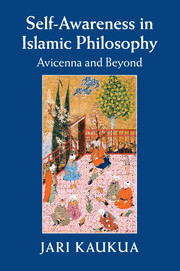
Self-Awareness in Islamic Philosophy
- Avicenna and Beyond
-
- Published online:
- 05 January 2015
- Print publication:
- 01 January 2015
Chapter 4 - In the first person: Avicenna’s concept of self-awarenessreconstructed
-
- Book:
- Self-Awareness in Islamic Philosophy
- Published online:
- 05 January 2015
- Print publication:
- 01 January 2015, pp 62-103
-
- Chapter
- Export citation
Chapter 6 - Self-awareness, presence, appearance: theishrāqīcontext
-
- Book:
- Self-Awareness in Islamic Philosophy
- Published online:
- 05 January 2015
- Print publication:
- 01 January 2015, pp 124-160
-
- Chapter
- Export citation
Chapter 7 - Mullā Ṣadrā on self-awareness
-
- Book:
- Self-Awareness in Islamic Philosophy
- Published online:
- 05 January 2015
- Print publication:
- 01 January 2015, pp 161-191
-
- Chapter
- Export citation
Acknowledgements
-
- Book:
- Self-Awareness in Islamic Philosophy
- Published online:
- 05 January 2015
- Print publication:
- 01 January 2015, pp ix-x
-
- Chapter
- Export citation
Contents
-
- Book:
- Self-Awareness in Islamic Philosophy
- Published online:
- 05 January 2015
- Print publication:
- 01 January 2015, pp vii-viii
-
- Chapter
- Export citation
Chapter 2 - Avicenna and the phenomenon of self-awareness: the experiential basis of the flying man
-
- Book:
- Self-Awareness in Islamic Philosophy
- Published online:
- 05 January 2015
- Print publication:
- 01 January 2015, pp 30-42
-
- Chapter
- Export citation
Chapter 3 - Self-awareness as existence: Avicenna on the individuality of an incorporeal substance
-
- Book:
- Self-Awareness in Islamic Philosophy
- Published online:
- 05 January 2015
- Print publication:
- 01 January 2015, pp 43-61
-
- Chapter
- Export citation
Copyright page
-
- Book:
- Self-Awareness in Islamic Philosophy
- Published online:
- 05 January 2015
- Print publication:
- 01 January 2015, pp iv-iv
-
- Chapter
- Export citation
Self-Awareness in Islamic Philosophy - Half title page
-
- Book:
- Self-Awareness in Islamic Philosophy
- Published online:
- 05 January 2015
- Print publication:
- 01 January 2015, pp i-ii
-
- Chapter
- Export citation
