To save content items to your account,
please confirm that you agree to abide by our usage policies.
If this is the first time you use this feature, you will be asked to authorise Cambridge Core to connect with your account.
Find out more about saving content to .
To save content items to your Kindle, first ensure no-reply@cambridge.org
is added to your Approved Personal Document E-mail List under your Personal Document Settings
on the Manage Your Content and Devices page of your Amazon account. Then enter the ‘name’ part
of your Kindle email address below.
Find out more about saving to your Kindle.
Note you can select to save to either the @free.kindle.com or @kindle.com variations.
‘@free.kindle.com’ emails are free but can only be saved to your device when it is connected to wi-fi.
‘@kindle.com’ emails can be delivered even when you are not connected to wi-fi, but note that service fees apply.
The metre is the length of the path travelled by light in vacuum during a time interval of 1/299 792 458 of a second.
The dimension of length is [L], its unit is the metre and its symbol m.
The original definition of the metre was one ten millionth of the distance from the Earth's north pole to its equator, determined along a meridian arc that ran from Dunkirk in the north to Barcelona in the south. Observations were begun in 1792 by J. B. J. Delambre, who worked from Paris northwards and P. F. A. Méchain who made measurements from Paris to Barcelona. They completed their task in seven years and the metre thus determined was modelled in pure platinum as a one-metre-long bar (Alder, 2004).
Linear astronomical distances and diameters
The sizes of and the distances between astronomical bodies is generally extremely large by everyday terrestrial standards. This has resulted in astronomers inventing units such as the light year, the astronomical unit and the parsec, which are, at first sight, better able to deal with very large distances. The SI unit of length, the metre, used in conjunction with common prefixes is normally only used for measurements within the Solar System.
Size of the Earth
Were the Earth a perfect sphere it would follow from the original definition of the metre that its diameter would be 4 × 10⁷/π m.
Commission 12 of the International Astronomical Union encompasses investigations of the internal structure and dynamics of the Sun, mostly accessible through the techniques of local and global helioseismology, the quiet solar atmosphere, solar radiation and its variability, and the nature of relatively stable magnetic structures like sunspots, faculae and the magnetic network. The Commission sees participation of over 350 scientists worldwide.
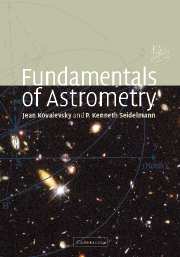
Astrometry encompasses all that is necessary to provide the positions and motions of celestial bodies. This includes observational techniques, instrumentation, processing and analysis of observational data, reference systems and frames, and the resulting astronomical phenomena. Astrometry is fundamental to all other fields of astronomy, from the pointing of telescopes, to navigation and guidance systems, to distance and motion determinations for astrophysics. In the last few decades, new observational techniques have enabled improvements in accuracy by orders of magnitude. Starting from basic principles, this book provides the fundamentals for this new astrometry at milli- and micro-arcsecond accuracies. Topics include: basics of general relativity; co-ordinate systems; vectors, tensors, quaternions, and observational uncertainties; determination and use of the celestial and terrestrial reference systems and frames; applications of new observational techniques; present and future star catalogues and double star astrometry. This comprehensive reference will be invaluable for graduate students and research astronomers.
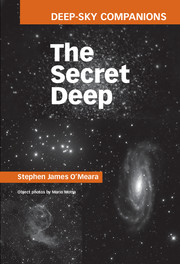
In this fresh list, Stephen James O'Meara presents 109 new objects for stargazers to observe. The Secret Deep list contains many exceptional objects, including a planetary nebula whose last thermal pulse produced a circumstellar shell similar to the one expected in the final days of our Sun's life; a piece of the only supernova remnant known visible to the unaided eye; the flattest galaxy known; the largest edge-on galaxy in the heavens; the brightest quasar; and the companion star to one of the first black hole candidates ever discovered. Each object is accompanied by beautiful photographs and sketches, original finder charts, visual histories and up-to-date astrophysical information to enrich the observing experience. Featuring galaxies, clusters and nebulae not covered in other Deep-Sky Companions books, this is a wonderful addition to the series and an essential guide for any deep-sky observer.
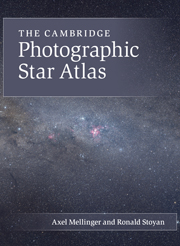
Using the latest methods in digital photography and image processing, The Cambridge Photographic Star Atlas presents the whole sky through large-scale photographic images with corresponding charts. Each double-page spread shows a section of the night sky and is accompanied by an inverted chart highlighting and naming double stars, variable stars, open clusters, galactic and planetary nebulae, globular clusters and galaxies. The 82 large-scale charts, with a scale of 1° per cm, identify over 1500 deep-sky objects and 2500 stars. Providing a giant mosaic of the entire sky, this unique atlas is unparalleled in detail and completeness, making it indispensable for visual observers and astrophotographers.
At present, dwarf M stars are being considered as potential hosts for habitable planets. However, an important fraction of these stars are flare stars, which among other kind of radiation, emit large amounts of UV radiation during flares, and it is unknown how this events can affect life, since biological systems are particularly vulnerable to UV. In this work we evaluate a well known dMe star, EV Lacertae (GJ 873) as a potential host for the emergence and evolution of life, focusing on the effects of the UV emission associated with flare activity. Since UV-C is particularly harmful for living organisms, we studied the effect of UV-C radiation on halophile archaea cultures. The halophile archaea or haloarchaea are extremophile microorganisms, which inhabit in hypersaline environments and which show several mechanisms to cope with UV radiation since they are naturally exposed to intense solar UV radiation on Earth. To select the irradiance to be tested, we considered a moderate flare on this star. We obtained the mean value for the UV-C irradiance integrating the IUE spectrum in the impulsive phase, and considering a hypothetical planet in the center of the liquid water habitability zone. To select the irradiation times we took the most frequent duration of flares on this star which is from 9 to 27 minutes. Our results show that even after considerable UV damage, the haloarchaeal cells survive at the tested doses, showing that this kind of life could survive in a relatively hostile UV environment.
We performed a search for ground level solar cosmic ray enhancements on the full five minute database of the Mexico City neutron monitor using wavelet filters and two different statistical tests. We present a detailed analysis of the time series of November 2, 1992, where we found a previously unreported increment matching the onset time of the impulsive phase of the Ground Level Enhancement No. 54, thus providing evidence of an effective detection of high energy solar cosmic rays. This technique may help to find still undiscovered GLE signals in the Worldwide Neutron Monitor Database, to refine GLE spectra and, probably, to find a relationship between the latter and the solar cycle.
We show that only two adjustments are necessary to harmonize the Group Sunspot Number with the Zürich Sunspot Number. The latter has been increased from the 1940s on to the present by 20% due to weighting of sunspot counts according to size of the spots and can be corrected by increasing the earlier values as well. The Group Sunspot Number before ~1885 is too low by ~50%. With these adjustments a single sunspot number series results. Of note is that there is no longer a distinct Modern Grand Maximum.
Intrinsic and induced planetary magnetospheres are the result of the transfer of energy and linear momentum between the solar wind and, respectively, the magnetic field and the atmospheres of solar system bodies. This transfer seems to be, however, more critical to the atmospheric evolution of unmagnetized objects such as Mars and Venus, as locally ionized planetary particles are accelerated by solar-wind induced electric fields, leading to atmospheric escape. The nature of the obstacle to the solar wind being different, intrinsic and induced magnetospheres respond differently to solar cycle changes in solar photon flux and solar wind properties. The influence of solar variability on planetary magnetospheres and its implications for atmospheric evolution based upon remote and in situ spacecraft measurements, and numerical simulations are discussed. In particular, the case of unmagnetized objects where non-thermal escape process might have played a role in their habitability conditions is considered.
We discuss the general properties of stellar cycles with emphasis on their amplitudes as a function of stellar parameters, particularly those stellar characteristics relevant to dynamo-driven magnetic activity. We deduce an empirical scaling relation between cycle frequency and differential rotation based on previously established empirical relations. We also compare the recent Cycle 23 to cycles in solar-type stars. We find that the extended minimum of Cycle 23 resembled in its Ca II H & K emission at minimum the mean levels of activity seen in stars with no cycles.
We summarize the fifty-year concerted effort to place the “activity” of the Sun in the context of the stars. As a working definition of solar activity in the context of stars, we adopt those globally–observable variations on time scales below thermal time scales, of ~105 yr for the convection zone. So defined, activity is dominated by magnetic–field evolution, including the 22–year Hale cycle, the typical time it takes for the quasi-periodic reversal in which the global magnetic–field takes place. This is accompanied by sunspot variations with 11 year periods, known since the time of Schwabe, as well as faster variations due to rotation of active regions and flaring. “Diagnostics and indices” are terms given to the indirect signatures of varying magnetic–fields, including the photometric (broad-band) variations associated with the sunspot cycle, and variations of the accompanying heated plasma in higher layers of stellar atmospheres seen at special optical wavelengths, and UV and X-ray wavelengths. Our attention is also focussed on the theme of the Symposium by examining evidence for deep and extended minima of stars, and placing the 70–year long solar Maunder Minimum into a stellar context.
We present a three-dimensional model of rotating convection combined with a simplified model of a corona in spherical coordinates. The motions in the convection zone generate a large-scale magnetic field which is sporadically ejected into the outer layers above. Our model corona is approximately isothermal, but it includes density stratification due to gravity.
We have investigated two full solar rotations belonging to two distinct solar minima, in the frame of two coordinated observational and research campaigns. The nearly uninterrupted gathering of solar coronal data since the beginning of the SOHO era offers the exceptional possibility of comparing two solar minima for the first time, with regard to coronal transients. This study characterizes the variety of outward-travelling transients observed in the solar corona during both time intervals, from very narrow jet-like events to coronal mass ejections (CMEs). Their solar source regions and ensuing interplanetary structures were identified and characterized. Multi-wavelength images from the space missions SOHO, Yohkoh and STEREO, and ground-based observatories were studied for coronal ejecta and their solar sources, while in situ data registered by the ACE spacecraft were inspected for interplanetary CMEs and magnetic clouds. Instrumental aspects such as dissimilar resolution, cadence, and fields of view are considered in order to discern instrumentally-driven disparities from inherent differences between solar minima.
The geomagnetic field (Bgeo) sets a lower cutoff rigidity (Rc) to the entry of cosmic particles to Earth which depends on the geomagnetic activity. From numerical simulations of the trajectory of a proton (performed with the MAGCOS code) in the Bgeo, we use backtracking to analyze particles arriving at the Auger Observatory location. We determine the asymptotic trajectories and the values of Rc in different incidence directions. Simulations were done using several models of Bgeo that emulate different geomagnetic conditions.
We explore various ideas of what a star in a Maunder-like magnetic minimum would look like, and ways of finding stars in such a state, and make some estimates of their physical and magnetic activity properties. We discuss new X-ray observations of a small selection of candidates for being in magnetic grand minima. These are then compared with the Sun and other low activity stars.
In the framework of the IAU Working Group on Comparative Solar Minima, we investigate the latitudinal deflection of Coronal Mass Ejections (CMEs) with respect to the location of their uniquely identified solar source regions. Data compiled during the Whole Sun Month (WSM) and Whole Heliosphere Interval (WHI) campaigns allowed for comparisons between the two last solar minima.
The analysis of the coronal streamers’ distribution during these intervals led to study of the dependence of CME deflection on the angular separation between their source regions and the nearest streamer. All performed analyses consider exclusively projected structures on the plane of the sky, disregarding longitudinal deflections as well.
The results of the present study indicate that for both minima most of the events (62.5% for WSM, 84.2% for WHI) are deflected towards the nearest streamer, following the boundary conditions imposed by the heliospheric current sheet.
Most of the deflections found in the WHI period could be explained by the more complex structure in the global distribution of magnetic field present during that minimum. On the other hand, the low number of events detected during the WSM period hinders the statistical comparison between both campaigns.
We present a simple coronal heating model based on a cellular automaton approach. Following Parker's suggestion (1988), we consider the corona to be made up of elemental magnetic strands that accumulate magnetic stress due to the photospheric displacements of their footpoints. Magnetic energy is eventually released in small scale reconnection events. The model consists of a 2D grid in which strand footpoints travel with random displacements simulating convective motions. Each time two strands interact, a critical condition is tested (as in self-organized critical models), and if the condition is fulfilled, the strands reconnect and energy is released. We model the plasma response to the heating events and obtain synthetic observations. We compare the output of the model with real observations from Hinode/XRT and discuss the implications of our results for coronal heating.
Global suface temperature has showed a rise trend in the last 150 years. This has been mainly attributed to the anthropogenic induced grenhouse gases emissions. However, the role of natural processes is not completely understood and should not be underestimated. In this work, we compare the long term variability of solar activity (as quantified by the sunspot number) with several surface temperature series from different geographical regions (global, hemispheric and latitudinal ranges). The interval of analysis is 1880-2005. The data are analyzed with wavelet multiresolution technique. It has been found that the solar activity long term trend has a maximum around 1970, while air surface temperature series showed maximum (still rising) at 2005. There are differences in the long term trend for Northern and Southern hemispheres. These differences and the relation with solar activity are discussed in this work.
Cliver & Ling (2010) recently suggested that the solar wind had a floor or ground-state magnetic field strength at Earth of ~2.8 nT and that the source of the field was the slow solar wind. This picture has recently been given impetus by the evidence presented by Schrijver et al. (2011) that the Sun has a minimal magnetic state that was approached globally in 2009, a year in which Earth was imbedded in slow solar wind ~70% of the time. A precursor relation between the solar dipole field strength at solar minimum and the peak sunspot number (SSNMAX) of the subsequent 11-yr cycle suggests that during Maunder-type minima (when SSNMAX was ~0), the solar polar field strength approaches zero - indicating weak or absent polar coronal holes and an increase to nearly ~100% in the time that Earth spends in slow solar wind.