To save content items to your account,
please confirm that you agree to abide by our usage policies.
If this is the first time you use this feature, you will be asked to authorise Cambridge Core to connect with your account.
Find out more about saving content to .
To save content items to your Kindle, first ensure no-reply@cambridge.org
is added to your Approved Personal Document E-mail List under your Personal Document Settings
on the Manage Your Content and Devices page of your Amazon account. Then enter the ‘name’ part
of your Kindle email address below.
Find out more about saving to your Kindle.
Note you can select to save to either the @free.kindle.com or @kindle.com variations.
‘@free.kindle.com’ emails are free but can only be saved to your device when it is connected to wi-fi.
‘@kindle.com’ emails can be delivered even when you are not connected to wi-fi, but note that service fees apply.
With the advances in high angular resolution (sub)millimeter observations of low-mass protostars, windows of opportunities are opening up for very detailed studies of the molecular structure of star forming regions on wide range of spatial scales. Deeply embedded protostars provide an important laboratory to study the chemistry of star formation – providing the link between dense regions in molecular clouds from which stars are formed, i.e., the initial conditions and the end product in terms of, e.g., disk and planet formation. High angular resolution observations at (sub)millimeter wavelengths provide an important tool for studying the chemical composition of such low-mass protostars. They for example constrain the spatial molecular abundance variations – and can thereby identify which species are useful tracers of different components of the protostars at different evolutionary stages. In this review I discuss the possibilities and limitations of using high angular resolution (sub)millimeter interferometric observations for studying the chemical evolution of low-mass protostars – with a particular keen eye toward near-future ALMA observations.
The diffuse interstellar medium (ISM) hosts the first steps of interstellar chemistry and the seeds of dense structures. Since its turbulent pressure by far exceeds its thermal pressure, turbulence must play a prominent role in its evolution. Fed at galactic scales, turbulent energy cascades down to the dissipation scales, but as in both laboratory and atmospheric turbulence, it does so in an intermittent way : only a tiny fraction of the small-scales is fed by the turbulent cascade, so that dissipation occurs in bursts. In diffuse molecular clouds, where they can be observed, the signatures of intermittency are: (1) the non-Gaussian statistics of velocity increments, and (2) the existence of coherent structures of intense velocity-shear that appear to channel the large-scale turbulent energy down to milliparsec scales. Attempts at modelling the warm chemistry triggered in the diffuse ISM by bursts of turbulent dissipation are promising : in this framework, the so far unexplained molecular richness observed in this medium is naturally understood, in particular its CH+, HCO+ and CO abundances. Turbulent dissipation is also likely at the origin of the H2 rotational line emission of the diffuse ISM and of a significant fraction of its [C II] emission.
There is a broad consensus that many, if not most, of the unidentified spectral lines in astrophysical spectra are due to transitions in excited vibrational states of a relatively small number of molecules, the astrophysical weeds. For these unidentified lines, it is somewhat less well understood that the spectroscopic effort required to characterize them in the traditional quantum mechanical catalog approach is substantially larger because of significant perturbations. We have previously discussed a new experimental approach that addresses this challenge. This approach is based on the analysis of many complete, intensity-calibrated spectra taken over a range of temperatures. However, the spectroscopic completeness of this approach results in a much larger database. These data can be transfer to the astrophysical community in a variety of ways, but because an order of magnitude larger number of lines is included, consideration must be given to implementation strategies.
We recently identified several emission bands in the Spitzer-IRS spectrum of the unusual planetary nebula Tc 1 with the infrared active vibrational modes of the neutral fullerene species C60 and C70. Since then, the fullerene bands have been detected in a variety of sources representing circumstellar and interstellar environments. Abundance estimates suggest that C60 represents ~0.1%–1.5% of the available carbon in those sources. The observed relative band intensities in various sources are not fully compatible with single-photon heating and fluorescent cooling, and are better reproduced by a thermal distribution at least in some sources. The observational data suggests that fullerenes form in the circumstellar environments of evolved stars, and survive in the interstellar medium. Precisely how they form is still a matter of debate.
The z=0.89 spiral galaxy located on the line of sight to the quasar PKS1830-211 is right now the extragalactic object with the largest number of detected molecular species (34, plus isotopic variants). This remarkable molecular inventory was recently built after an unbiased spectral survey of molecular absorption lines with the Australia Telescope Compact Array in the 7 mm band. We present the results of this survey, as a showcase of the various interests of molecular absorption studies at intermediate redshift: chemical inventory and gas properties in distant galaxies, chemical enrichment history of the Universe, measurements of the CMB temperature as a function of z, and constraints on the constancy of fundamental constants.
Icy grain mantles are commonly observed through infrared spectroscopy toward dense clouds, cloud cores, protostellar envelopes and protoplanetary disks. Up to 80% of the available oxygen, carbon and nitrogen are found in such ices; the most common ice constituents – H2O, CO2 and CO – are second in abundance only to H2 in many star forming regions. In addition to being a molecular reservoir, ice chemistry is responsible for much of the chemical evolution from H2O to complex, prebiotic molecules. Combining the exisiting ISO, Spitzer, VLT and Keck ice data results in a large sample of ice sources (~80) that span all stages of star formation and a large range of protostellar luminosities (<0.1–105 L⊙). Here we summarize the different techniques that have been applied to mine this ice data set on information on typical ice compositions in different environments and what this implies about how ices form and evolve during star and planet formation. The focus is on how to maximize the use of empirical constraints from ice observations, followed by the application of information from experiments and models. This strategy is used to identify ice bands and to constrain which ices form early during cloud formation, which form later in the prestellar core and which require protostellar heat and/or UV radiation to form. The utility of statistical tests, survival analysis and ice maps is highlighted; the latter directly reveals that the prestellar ice formation takes place in two phases, associated with H2O and CO ice formation, respectively, and that most protostellar ice variation can be explained by differences in the prestellar CO ice formation stage. Finally, special attention is paid to the difficulty of observing complex ices directly and how gas observations, experiments and models help in constraining this ice chemistry stage.
In this paper we review recent progress in our understanding of the chemical evolution of protoplanetary disks. Current observational constraints and theoretical modeling on the chemical composition of gas and dust in these systems are presented. Strong variations of temperature, density, high-energy radiation intensities in these disks, both radially and vertically, result in a peculiar disk chemical structure, where a variety of processes are active. In hot, dilute and heavily irradiated atmosphere only the most photostable simple radicals and atoms and atomic ions exist, formed by gas-phase processes. Beneath the atmosphere a partly UV-shielded, warm molecular layer is located, where high-energy radiation drives rich ion-molecule and radical-radical chemistry, both in the gas phase and on dust surfaces. In a cold, dense, dark disk midplane many molecules are frozen out, forming thick icy mantles where surface chemistry is active and where complex polyatomic (organic) species are synthesized. Dynamical processes affect disk chemical composition by enriching it in abundances of complex species produced via slow surface processes, which will become detectable with ALMA.
Low-mass star forming regions are rich inventories of complex organic molecules. Furthermore, they show significant chemical diversity even among sources in a similar physical evolutionary stage (i.e. Class 0 sources). One distinct case is the hot corino chemistry characterized by rich existence of saturated complex organic molecules such as HCOOCH3 and C2H5CN, whereas the other is the warm carbon-chain chemistry (WCCC) characterized by extraordinary richness of unsaturated complex organic molecules such as carbon-chain molecules. We here summarize these observational achievements during the last decade, and present a unified picture of carbon chemistry in low-mass protostellar cores. The chemical diversity most likely originates from the source-to-source difference in chemical compositions of grain mantles. In particular, the gas-phase abundance of CH4 evaporated from grain mantles is thought to be a key factor for appearance of WCCC. The origin of the diversity and its evolution to protopranetary disks are discussed.
Sample return missions offer opportunities to learn things about other objects in our Solar System (and beyond) that cannot be determined by observations using in situ spacecraft. This is largely because the returned samples can be studied in terrestrial laboratories where the analyses are not limited by the constraints - power, mass, time, precision, etc. - imposed by normal spacecraft operations. In addition, the returned samples serve as a scientific resource that is available far into the future; the study of the samples can continue long after the original spacecraft mission is finished. This means the samples can be continually revisited as both our scientific understanding and analytical techniques improve with time.
These advantages come with some additional difficulties, however. In particular, sample return missions must deal with the additional difficulties of proximity operations near the objects they are to sample, and they must be capable of successfully making a round trip between the Earth and the sampled object. Such missions therefore need to take special precautions against unique hazards and be designed to successfully complete relatively extended mission durations.
Despite these difficulties, several recent missions have managed to successfully complete sample returns from a number of Solar System objects. These include the Stardust mission (samples from Comet 81P/Wild 2), the Hayabusa mission (samples from asteroid 25143 Itokawa), and the Genesis mission (samples of solar wind). This paper will review the advantages and difficulties of sample return missions in general and will summarize some key findings of the recent Stardust and Hayabusa missions.
40 years have passed since the first molecular detection outside our Galaxy. Since then, our knowledge on the distribution, kinematics and composition of the molecular material in the extragalactic ISM has built up significantly based not only on the carbon monoxide observations but also in the more than 50 molecular species detected. In particular, line surveys have been proven to be excellent tools to study the chemical composition in the nuclei of galaxies. Such studies have been favored by the increasing instantaneous bandwidth of current mm and sub-mm facilities. Here I will summarize the highlights of extragalactic molecular spectroscopy, mostly focusing in the results from molecular line surveys published in the last few years as well as the aims of still ongoing projects.
Bipolar outflows constitute some of the best laboratories to study shock chemistry in the interstellar medium. A number of molecular species have their abundance enhanced by several orders of magnitude in the outflow gas, likely as a combined result of dust mantle disruption and high temperature gas chemistry, and therefore become sensitive indicators of the physical changes taking place in the shock. Identifying these species and understanding their chemical behavior is therefore of high interest both to chemical studies and to our understanding of the star-formation process. Here we review some of the recent progress in the study of the molecular composition of bipolar outflows, with emphasis in the tracers most relevant for shock chemistry. As we discuss, there has been rapid progress both in characterizing the molecular composition of certain outflows as well as in modeling the chemical processes likely involved. However, a number of limitations still affect our understanding of outflow chemistry. These include a very limited statistical approach in the observations and a dependence of the models on plane-parallel shocks, which cannot reproduce the observed wing morphology of the lines. We finish our contribution by discussing the chemistry of the so-called extremely high velocity component, which seems different from the rest of the outflow and may originate in the wind from the very vicinity of the protostar.
The chemistry of the early Universe is a fascinating field of study. Even in the absence of any elements heavier than lithium, a surprising degree of chemical complexity proves to be possible, giving the topic considerable interest in its own right. In addition, the fact that molecular hydrogen plays a key role in the formation of the first stars and galaxies means that if we want to understand the formation of these objects, we must first develop a good understanding of the chemical evolution of the gas. In this review, I first give a brief introduction to the chemistry occurring in the gas prior to the formation of the first stars and galaxies, and then go on to discuss in more detail the main chemical processes occurring during the gravitational collapse of gas from intergalactic to protostellar densities, and how these processes influence the final outcome of the collapse.
The insoluble organic material preserved in primitive chondritic meteorites shares many similarities with the refractory organic material in interplanetary dust particles and comets, suggesting that there is a genetic link between the organic matter in objects that formed between ~3 AU and ~30 AU from the Sun. These similarities include large D and 15N enrichments in bulk and even more extreme enrichments in isotopic hotspots. The enrichments attest to formation in very cold environments, either in the outer Solar System or the protosolar molecular cloud. There are many properties of this organic material that are consistent with an interstellar origin, but a Solar System origin cannot be ruled out. Similar organic material is presumably an important component of most protoplanetary disks, and heating or sputtering of this material would be a source of PAHs in disks. The soluble organic matter was more heavily effected by processes on the chondritic parent bodies than the insoluble material. Amino acids, for instance, probably formed by reaction of ketones and aldehydes with NH3 and HCN. The accretion of the relatively volatile NH3 and HCN, presumably in ices, strengthens the chondrite-comet connection. However, unlike most comets the water in chondrites, when it was accreted, had D/H ratios that were similar to or depleted relative to Earth.
The first molecules detected at infrared wavelengths in the ejecta of a Type II supernova, namely SN1987A, consisted of CO and SiO. Since then, confirmation of the formation of these two species in several other supernovae a few hundred days after explosion has been obtained. However, supernova environments appear to hamper the synthesis of large, complex species due to the lack of microscopically-mixed hydrogen deep in supernova cores. Because these environments also form carbon and silicate dust, it is of importance to understand the role played by molecules in the depletion of elements and how chemical species get incorporated into dust grains. In the present paper, we review our current knowledge of the molecular component of supernova ejecta, and present new trends and results on the synthesis of molecules in these harsh, explosive events.
The interstellar medium constitutes a physically and chemically complex component of galaxies and is important in the cycle of matter and the evolution of stars. From various spectroscopic clues we now know that the interstellar medium is rich in organic compounds. However, identifying the exact nature of all these components remains a challenge. In particular the identification of the so-called diffuse band carriers has been alluding astronomers for almost a century.
In recent decades, observational, experimental and theoretical advances have rapidly lead to renewed interest in the diffuse interstellar bands (DIBs). This has been instigated partly by their perceived relation to the infrared aromatic emission bands, the UV extinction bump and far-UV rise, and the growing number of (small) organic molecules identified in space.
This chapter gives an overview of the observational properties and behaviour of the DIBs, and their presence throughout the Universe. I will highlight recent progress in identifying their carriers and discuss their potential as tracers and probes of (extra)-Galactic ISM conditions.
The number of contributions to the Symposium was so high that only the review and invited talks have found place, in the form of articles, in this volume. This Appendix lists all these additional contributions (oral and posters) which are not present as articles. The abstracts of all contributions were published in a booklet produced by the Local Organizing Committee and are available at the SAO/NASA Astrophysics Data System (ADS). More information on these contributions (PowerPoint presentations and/or articles) have been made public in the Internet web site of the conference (http://cab.inta-csic.es/molecular_universe/).
Stars like our Sun and planets like our Earth form in dense regions within interstellar molecular clouds, called pre-stellar cores (PSCs). PSCs provide the initial conditions in the process of star and planet formation. In the past 15 years, detailed observations of (low-mass) PSCs in nearby molecular cloud complexes have allowed us to find that they are cold (T < 10K) and quiescent (molecular line widths are close to thermal), with a chemistry profoundly affected by molecular freeze-out onto dust grains. In these conditions, deuterated molecules flourish, becoming the best tools to unveil the PSC physical and chemical structure. Despite their apparent simplicity, PSCs still offer puzzles to solve and they are far from being completely understood. For example, what is happening to the gas and dust in their nuclei (the future stellar cradles) is still a mystery that awaits for ALMA. Other important questions are: how do different environments and external conditions affect the PSC physical/chemical structure? Are PSCs in high-mass star forming regions similar to the well-known low-mass PSCs? Here I review observational and theoretical work on PSCs in nearby molecular cloud complexes and the ongoing search and study of massive PSCs embedded in infrared dark clouds (IRDCs), which host the initial conditions for stellar cluster and high-mass star formation.
It has been a long standing problem in astrochemistry to explain how molecules can form in a highly dilute environment such as the interstellar medium. In the last decennium more and more evidence has been found that the observed mix of small and complex, stable and highly transient species in space is the cumulative result of gas phase and solid state reactions as well as gas-grain interactions. Solid state reactions on icy dust grains are specifically found to play an important role in the formation of the more complex “organic” compounds. In order to investigate the underlying physical and chemical processes detailed laboratory based experiments are needed that simulate surface reactions triggered by processes as different as thermal heating, photon (UV) irradiation and particle (atom, cosmic ray, electron) bombardment of interstellar ice analogues. Here, some of the latest research performed in the Sackler Laboratory for Astrophysics in Leiden, the Netherlands is reviewed. The focus is on hydrogenation, i.e., H-atom addition reactions and vacuum ultraviolet irradiation of interstellar ice analogues at astronomically relevant temperatures. It is shown that solid state processes are crucial in the chemical evolution of the interstellar medium, providing pathways towards molecular complexity in space.
There remain many fundamental unanswered questions about protoplanetary disks, including how (and if?) they form planets, how mass is transferred through the disk and onto the star, and how they ultimately disperse. Also, a major goal of protoplanetary disk studies is to understand the relationship between disk properties and the physical and chemical properties of planetary systems. IR molecular spectroscopy is a particularly powerful tool for probing the conditions and physical process in protoplanetary disks, which are too small and close to their parent stars to be imaged with ease. I will discuss the suite of infrared molecular transitions observed to date, which highlight the following three techniques of IR spectroscopy. Firstly, line shapes and strengths can be used as tracers of disk physics, including volatile condensation/evaporation, photo-processes, grain growth and turbulence. Secondly, observations of multiple molecular abundances provide constraints for disk chemical models, which may ultimately help explain the great diversity of planetary bodies. Finally, resolved line shapes and spectro-astrometry provide a means to study disk structure on extremely small size scales. Because IR observations are typically sensitive to radii of a few AU or smaller, the processes and structures being probed are relevant to the birth and growth of terrestrial and giant planets. Recent results that I will highlight include the discovery of a multitude of molecules in disks around sun-like stars (including H2O, OH, HCN, C2H2 and CO2), with detection rates that depend on stellar mass, constraints on gas mass and location in transitional disks, detection and characterization of ‘snow lines’, measurements of inner disk rims, and detections of inner disk asymmetries. I will also discuss how IR spectroscopy will remain relevant even with the emergence of facilities such as ALMA, as it allows us to connect the conditions in terrestrial-planet-forming regions with those in the cold outer reaches of disks, and to better construct a comprehensive understanding of the nature of protoplanetary disks.
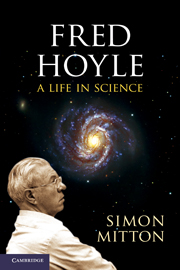
The scientific life of Fred Hoyle (1915–2001) was truly unparalleled. During his career he wrote groundbreaking scientific papers and caused bitter disputes in the scientific community with his revolutionary theories. Hoyle is best known for showing that we are all, literally, made of stardust in his paper explaining how carbon, and then all the heavier elements, were created by nuclear reactions inside stars. However, he constantly courted controversy and two years later he followed this with his 'steady state' theory of the universe. This challenged another model of the universe, which Hoyle called the 'big bang' theory. Fred Hoyle was also famous amongst the general public. He popularised his research through radio and television broadcasts and wrote best-selling novels. Written from personal accounts and interviews with Hoyle's contemporaries, this book gives valuable personal insights into Fred Hoyle and his unforgettable life.