To save content items to your account,
please confirm that you agree to abide by our usage policies.
If this is the first time you use this feature, you will be asked to authorise Cambridge Core to connect with your account.
Find out more about saving content to .
To save content items to your Kindle, first ensure no-reply@cambridge.org
is added to your Approved Personal Document E-mail List under your Personal Document Settings
on the Manage Your Content and Devices page of your Amazon account. Then enter the ‘name’ part
of your Kindle email address below.
Find out more about saving to your Kindle.
Note you can select to save to either the @free.kindle.com or @kindle.com variations.
‘@free.kindle.com’ emails are free but can only be saved to your device when it is connected to wi-fi.
‘@kindle.com’ emails can be delivered even when you are not connected to wi-fi, but note that service fees apply.
I would like to begin by saying what a pleasure it is for me to be here. For my entire adult life I have wanted to come to Australia. Actually, I have been invited to visit here twice before, but each time I was thwarted by circumstances beyond my control. But this time I was determined to (a) prove that the third time is indeed the charm, and (b) pay homage to Walter Stibbs, who in my mind is the epitome of a scholar and a gentleman. I have known Walter as colleague, teacher, and friend, not to mention as an inspiration, both professional and personal. So I am here today to try to give some sense of progress in the study of stellar atmospheres, a field that Walter has graced with his virtuosic touch. I will follow an unabashedly personal path, describing the development as I experienced it. I will focus almost entirely on early-type stars, where we may reasonably expect the atmospheric layers to be homogeneous, and in radiative equilibrium. Only at the end will I mention our nearest stellar neighbor, the Sun, which, because we can study it in so much detail, offers counterexamples to almost all of the the theory that works so well for early-type stars. I offer apologies in advance to anyone this approach may offend.
Optically, the Zone of Avoidance (ZOA) can only be explored to within a few degrees of the Galactic Equator. This restriction does not apply to radio wavelengths where we are able to detect galaxies at great distances behind the Galactic Plane. Using the Parkes 21 cm multibeam instrument we have detected neutral hydrogen (HI) in 42 galaxies in the region of the Great Attractor. We have been able to identify nine galaxies and make positional associations with a further six from existing optical catalogues, which makes at least 60% of these galaxies new discoveries.
In this paper we present a new method for obtaining the optical wavelength-dependent reddening function of planetary nebulae (PN), using the nebular and stellar continuum. The data used was a spectrum of NGC 6302 obtained using the Double Beam Spectrograph on the 2.3 m telescope at Siding Springs Observatory over three nights. This resulted in a spectrum covering a wavelength range 3300–8600 Å with a large dynamical range and a mean signal to noise of >102 Å−1 in the nebular continuum. With such a high S/N the continuum can be accurately compared with a theoretical model of nebular plus stellar continuum. The nebular electron temperature and density used in the model are determined using ratios of prominent emission lines. The reddening function can then be obtained from the ratio of the theoretical and the observed continuum. In the case of NGC 6302, it is known that much of the reddening arises from dust within or around the nebula, so that any differences between the measured reddening law and the 'standard' interstellar reddening law will reflect differences in the nebular grain size distribution or composition. We find that for NGC 6302, the visible to IR extinction law is indistinguishable from 'standard' interstellar reddening, but that the UV extinction curve is much steeper than normal, suggesting that more small dust grains had been ejected into the nebula by the PN central star. We have detected the continuum from the central star and determined its Zanstra temperature to be of order 150,000 K. Finally, using the extinction law that we have determined, we present a complete dereddened line list of nearly 600 emission lines, and report on the detection of the He(2–10) and He(2–8) Raman features at λ4331 Å and λ4852 Å, and the detection of Raman scattered O VI features at λ6830 Å and λ7087 Å. We believe this to be the first detection of this process in a PN.
In blazar models both protons and electrons may be efficiently accelerated in jets and produce γ-rays. Here we discuss the interactions of these γ-rays with different radiation fields. The external radiation fields within a few parsecs from the black hole involved in such interactions could be the direct radiation from the accretion disk coupled with the jet, the infrared radiation from a dusty torus, and the emission line radiation from the broad line region surrounding the accretion disk. The optical thickness for absorption of γ-ray photons in the external radiation fields is analysed for blazars and quasars.
Based on the unification theory of active galactic nuclei we briefly review the evidence for the existence of small scale dust tori in blazars/FR I. We propose that the existing jet–accretion disk symbiosis extrapolates to a large scale symbiosis between other important dusty constituents of the blazar/FR I family.
Our R-band data show that the optical light from Malin 1 corresponds well with the >2-arcmin extent of the galaxy's Hı content and continues well beyond previously published V-band optical light radial profiles. Analysis of our image yields improved understanding of the galaxy's properties. We measure ellipticity of 0.20 ± 0.03, implying inclination of 38 ± 3°, and we trace the radial profile to 77arcsec. A single dusty spiral arm is also weakly discernable, and is consistent with the rotation direction of the Hı and spiral structure of the inner disk. Possible scenarios for the origin of the spiral structure are discussed.
We present three Virtual Observatory tools developed at the Australia Telescope National Facility (ATNF) for the storage, processing and visualization of Australia Telescope Compact Array (ATCA) data. These are the Australia Telescope Online Archive, a prototype data-reduction pipeline, and the Remote Visualization System. These tools were developed in the context of the Virtual Observatory and were intended to be both useful for astronomers and technology demonstrators. We discuss the design and implementation of these tools, as well as issues that should be considered when developing similar systems for future telescopes.
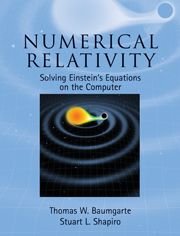
Aimed at students and researchers entering the field, this pedagogical introduction to numerical relativity will also interest scientists seeking a broad survey of its challenges and achievements. Assuming only a basic knowledge of classical general relativity, the book develops the mathematical formalism from first principles, and then highlights some of the pioneering simulations involving black holes and neutron stars, gravitational collapse and gravitational waves. The book contains 300 exercises to help readers master new material as it is presented. Numerous illustrations, many in color, assist in visualizing new geometric concepts and highlighting the results of computer simulations. Summary boxes encapsulate some of the most important results for quick reference. Applications covered include calculations of coalescing binary black holes and binary neutron stars, rotating stars, colliding star clusters, gravitational and magnetorotational collapse, critical phenomena, the generation of gravitational waves, and other topics of current physical and astrophysical significance.
There is now evidence that there may be a strong source of cosmic ray particles in the general direction of the Galactic Centre. The likelihood is that the observed particles are neutrons with energies of about 1018 eV. Associated with the production of those neutrons, we would expect that large numbers of charged cosmic rays would also be produced, and we investigate here the directional properties of those charged particles as they may be observed at the distance of the Earth from the Galactic Centre. We follow the propagation of such particles through a simple Galactic magnetic field model with both a turbulent and a regular field to determine what field properties most affect the observed beam. It appears that the turbulent field component is crucial to any resulting charged particle observations.
We present the design of, and a first analysis of data from, the atmospheric seeing monitor at the Australia Telescope Compact Array (ATCA). The seeing monitor has been operational almost continuously since 2004 May and every 10min delivers a measurement of the atmospheric phase stability at the observatory. Its measurements can be used by observers to help in deciding whether it is worth carrying out observations at millimetre wavelengths or whether a longer-wavelength backup project should be observed. We present a statistical analysis of the data recorded since 2004 September to characterize the annual variations in atmospheric path length fluctuations. Our analysis shows that in terms of phase stability, nights in spring, summer, and autumn are as good as, or better than, days in winter. We also find that the data imply that the turbulence in the lower few hundred metres of the atmosphere is predominantly responsible for the atmospheric seeing.
In this contribution a broad overview of the methodologies of cosmological N-body simulations and a short introduction explaining the general idea behind such simulations is presented. After explaining how to set up the initial conditions using a set of N particles two (diverse) techniques are presented for evolving these particles forward in time under the influence of their self-gravity. One technique (tree codes) is solely based upon a sophistication of the direct particle–particle summation whereas the other method relies on the continuous (de-)construction of arbitrarily shaped grids and is realized in adaptive mesh refinement codes.
We present the results obtained from unfiltered photometric CCD observations of the newly discovered cataclysmic variable SDSS J040714.78–064425.1 made during seven nights in 2003 November. We establish the dwarf nova nature of the object as it was in outburst during our observations. We also confirm the presence of deep eclipses with a period of 0.17017 ± 0.00003 d in the optical light curve of the star. In addition, we found periods of 0.166 ± 0.001 d and possibly also 5.3 ± 0.7 d in the data. The 0.17017 d periodicity is consistent within the errors with the proposed orbital period of 0.165 and 0.1700 d. Using the known relation between the orbital and superhump periods, we interpret the 0.166 and 5.3 d periods as the negative superhump and the nodal precession period respectively. SDSS J040714.78–064425.1 is then classified as a negative superhump system with one of the largest orbital periods.
Gamma-ray telescopes are capable of measuring radioactive trace isotopes from cosmic nucleosynthesis events. Such measurements address new isotope production rather directly for a few key isotopes such as 44Ti, 26Al, 60Fe, and 56Ni, as well as positrons from the β+-decay variety. Experiments of the past decades have now established an astronomy with γ-ray lines, which is an important part of the study of nucleosynthesis environments in cosmic sources. For massive stars and supernovae, important constraints have been set: Co isotope decays in SN1987A directly demonstrated the synthesis of new isotopes in core-collapse supernovae, 44Ti from the 340-year-old Cas A supernova supports the concept of α-rich freeze-out, but results in interesting puzzles pursued by theoretical studies and future experiments. 26Al and 60Fe has been measured from superimposed nucleosynthesis within our Galaxy, and sets constraints on massive-star interior structure through its intensity ratio of ∼15%. The 26Al γ-ray line is now seen to trace current star formation and even the kinematics of interstellar medium throughout the Galaxy. Positron annihilation emission from nucleosynthesis throughout the plane of our Galaxy appears to be mainly from 26Al and other supernova radioactivity, but the striking brightness of the Galaxy's bulge region in positron annihilation γ-rays presents a puzzle involving several astrophysics issues beyond nuclear astrophysics. This paper focuses mainly on a discussion of 26Al and 60Fe from massive-star nucleosynthesis.
Asymptotic giant branch stars are expected to produce 22Ne through the combined H and He burning that operates during their thermally pulsing evolution. However, observationally there is a fairly tight correlation between the O and Ne abundances as measured in planetary nebulae in various populations. In this paper we use recent detailed stellar evolutionary calculations for compositions appropriate to the Galaxy and the Large Magellanic Cloud, in an attempt to determine if the models are consistent with the observed abundances. We show that there is only a narrow range in stellar mass, about 2 to 4 M⊙ (lower for lower [Fe/H]) where 22Ne is produced in sufficient quantities to affect the total observed elemental neon abundance, which is mostly 20Ne. The models appear to be consistent with the observations, but a more thorough analysis is required.
In past decades a lot of progress has been made towards understanding the main s-process component that takes place in thermally pulsing Asymptotic Giant Branch (AGB) stars. During this process about half of the heavy elements, mainly between 90 ≤ A ≤ 209 are synthesized. Improvements were made in stellar modeling as well as in measuring relevant nuclear data for a better description of the main s process. The weak s process, which contributes to the production of lighter nuclei in the mass range 56 ≤ A ≤ 90 operates in massive stars (M ≥ 8 M⊙) and is much less understood. A better characterization of the weak s component would help disentangle the various contributions to element production in this region. For this purpose, a series of measurements of neutron-capture cross sections have been performed on medium-mass nuclei at the 3.7-MV Van de Graaff accelerator at FZK using the activation method. Also, neutron captures on abundant light elements with A < 56 play an important role for s-process nucleosynthesis, since they act as neutron poisons and affect the stellar neutron balance. New results are presented for the (n, γ) cross sections of 41K and 45Sc, and revisions are reported for a number of cross sections based on improved spectroscopic information.
I report a model for the formation of Saturn's family of mid-sized icy moons to coincide with the first flypast of Rhea by the Cassini spacecraft on 2005 November 26. It is proposed that the moons had condensed from a concentric family of orbiting gas rings that were shed some 4.6 × 10⁹ yr ago by the proto-Saturnian (hereafter p-Sat) cloud. The p-Sat cloud is made up of gas and residual grains of the gas ring that was shed by the proto-Solar cloud (hereafter PSC) at Saturn's orbit. The bulk of the condensate within this proto-Solar ring accumulates to form Saturn's central core of mass ∼10–20 M⊕ (M⊕ = Earth mass). The process of formation of Saturn's solid core thus provides an opportunity for the p-Sat cloud to become depleted in rock and water ice relative to the usual solar abundances of these materials. Nitrogen, which exists as uncondensing N2 in the PSC and as NH3 in the p-Sat cloud, retains its solar abundance relative to H2. If the depletion factor of solids relative to gas is ζdep = 0.25, as suggested by the low mass of Rhea relative to solar abundance expectations, the mass-percent ratio of NH3 to H2O in the dense p-Sat cloud is 36:64. Numerical and structural models for Rhea are constructed on the basis of a ‘cosmogonic’ bulk chemical composition of hydrated rock (mass fraction 0.385), H2O ice (0.395), and NH3 ice (0.220). It is difficult to construct a chemically differentiated model of Rhea whose mean density matches the observed value ρRhea = 1.23 ± 0.02 g cm−3 for reasonable bounds of the controlling parameters. Chemically homogeneous models can, however, be constrained to match the observed Rhea density provided that the mass fraction of NH3 is permitted to exceed the cosmogonic value by a factor ζNH3 = 1.20–1.35. A large proportion of NH3 in the ice mass inhibits the formation of the dense crystalline phase II of H2O ice at high pressure. This may explain the lack of compressional features on the surface of the satellite that are expected as a result of ice II formation in the cooling core. The favoured model of Rhea is chemically uniform and has mass proportions of rock (0.369), H2O ice (0.378), and NH3 ice (0.253). The enhancement factor of NH3 lies within the measured uncertainties of the solar abundance of nitrogen. The satellite is very cold and nearly isodense. The predicted axial moment-of-inertia coefficient is [C/MR2]Rhea = 0.399 ± 0.004.
Recently the observationally derived stellar-wind mass-loss rates for Wolf-Rayet stars, or massive naked helium stars, have been revised downwards by a substantial amount. We present evolutionary calculations of helium stars incorporating such revised mass-loss rates, as well as mass transfer to a close compact binary companion. Our models reach final masses well in excess of 10 M⊙, consistent with the observed masses of black holes in X-ray binaries. This resolves the discrepancy found with previously assumed high mass-loss rates between the final masses of stars which spend most of their helium-burning lifetime as Wolf-Rayet stars (˜3 M⊙) and the minimum observed black hole masses (6 M⊙). Our calculations also suggest that there are two distinct classes of progenitors for Type Ic supernovae: one with very large initial masses (35 M⊙), which are still massive when they explode and leave black hole remnants, and one with moderate initial masses (˜12–20 M⊙) undergoing binary interaction, which end up with small pre-explosion masses and leave neutron star remnants.
We present results from a spectral line survey of the young stellar object IRAS 17470-2853, undertaken to examine chemical changes during the evolution from hot molecular cores to ultracompact HII regions. Observations were carried out with the Mopra 22 m radio telescope in the frequency range from 86.1 to 92.1 GHz. A total of 21 lines from 9 molecules were detected. Except for CH3CN they are all simple molecules. We compare the results to the ultracompact HII region G34.3+0.15, where spectral line surveys in the frequency range 80–115 GHz and 330–360 GHz have been performed. While the molecular lines detected are similar, their widths and intensities are somewhat narrower and lower, respectively, in IRAS 17470-2853. The typical line width of ˜5 km s−1 indicates relatively quiet or quasi-thermal emission. On the other hand, a significant difference in TA* (HNC)/TA*(HCN) has been found: 0.8 for IRAS 17470-2853 compared to 2.6 for G34.3+0.15. The broad line width of SiO (υ=0, J=2–1), ˜9 km s−1, suggests that IRAS 17470-2853 is experiencing a shock generated by the embedded object. Column densities, or lower limits to them, are derived for observed molecules.
A new beam-combination and detection system has been installed in the Sydney University Stellar Interferometer working at the red end of the visual spectrum (λλ 500–950 nm) to complement the existing blue-sensitive system (λλ 430–520 nm) and to provide an increase in sensitivity. Dichroic beam-splitters have been introduced to allow simultaneous observations with both spectral systems, albeit with some restriction on the spectral range of the longer wavelength system (λλ 550–760 nm). The blue system has been upgraded to allow remote selection of wavelength and spectral bandpass, and to enable simultaneous operation with the red system with the latter providing fringe-envelope tracking. The new system and upgrades are described and examples of commissioning tests presented. As an illustration of the improvement in performance the measurement of the angular diameter of the southern F supergiant δ CMa is described and compared with previous determinations.