To save content items to your account,
please confirm that you agree to abide by our usage policies.
If this is the first time you use this feature, you will be asked to authorise Cambridge Core to connect with your account.
Find out more about saving content to .
To save content items to your Kindle, first ensure no-reply@cambridge.org
is added to your Approved Personal Document E-mail List under your Personal Document Settings
on the Manage Your Content and Devices page of your Amazon account. Then enter the ‘name’ part
of your Kindle email address below.
Find out more about saving to your Kindle.
Note you can select to save to either the @free.kindle.com or @kindle.com variations.
‘@free.kindle.com’ emails are free but can only be saved to your device when it is connected to wi-fi.
‘@kindle.com’ emails can be delivered even when you are not connected to wi-fi, but note that service fees apply.
A comparison of the Jovian and Saturnian rings is made by reviewing the recent advances in planetary spacecraft exploration and theoretical study. Two main issues are addressed, namely, the different structures of these two planetary ring systems and the water ice composition of the Saturnian rings. It is suggested that answers might be found by invoking tidal capture of Trans-Neptunian Objects with highly differentiated structures even though catastrophic breakup of pre-existing satellites in the ring regions remains a real possibility. Erosion mechanisms such as meteoroid impact, photo-sputtering, orbital instability of charged dust particles and thermal evaporation acting at different time scales could lead to the preservation of the Saturnian ring system but not the Jovian ring system of large mass originally.
Galileo's work had a profound influence on our understanding of the question of “other worlds” and the possibility of other intelligent life in the universe. When he saw the Moon with its mountains, and Jupiter with its moons, he implicitly recognized that these were physical places and thus could themselves be possible abodes for life. But some ancient and medieval scholars had already suggested as much, though without the empirical backing that Galileo's observations provided. Thus perhaps an even more important influence on the development of these ideas is that Galileo made them popular with the educated public, rather than merely the speculations of specialists. By inciting the popular imagination to take seriously the possibility of other worlds, he engaged subsequent generations of philosophers and storytellers to explore the possibilities and implications of life on those worlds.
Galileo's support to the Copernican theory was decisive for the revolutionary astronomical discoveries he achieved in 1610. We trace the origins of Galileo's conversion to the Copernican theory, discussing in particular the Dialogo de Cecco di Ronchitti da Bruzene in perpuosito de La Stella Nuova. Later developments of Galileo's works are briefly treated.
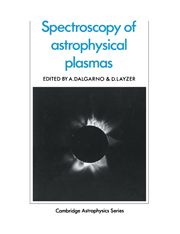
A group of acknowledged experts describe the use of spectroscopy as a diagnostic probe of astronomical environments. The broad sweep of the book enables good coverage to be given to all the situations in which plasmas are encounteres in astronomical investigations. Specifically, the articles include quasars, Seyfert galaxies, active galactic nuclei, the solar chromosphere and corona, galactic HII regions, circumstellar shells, interstellar gas, supernova remnants and interstellar clouds. The book includes an account of the basic aspects of spectroscopy in a chapter on laboratory astrophysics. The book was stimulated by the extraordinary contributions to astronomical spectroscopy of Leo Goldberg, and is dedicated to him. Throughout, this book is written with the needs of students in astronomy and astrophysics in mind. Each chapter includes a summary or conclusions about the future direction of research. Furthermore there are extensive bibliographies. This textbook is therefore an excellent introduction to research in astrophysics and it will act as a pathfinder to the primary literature.
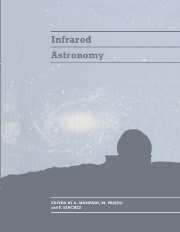
What do we understand of the birth and death of stars? What is the nature of the tiny dust grains that permeate our Galaxy and other galaxies? And how likely is the existence of brown dwarfs, extrasolar planets or other sub-stellar mass objects? These are just a few of the questions that can now be addressed in a new era of infrared observations. IR astronomy has been revolutionised over the past few years by the widespread availability of large, very sensitive IR arrays and the success of IR satellites (IRAS in particular). Several IR space missions due for launch over the next few years promise an exciting future too. For these reasons, the IV Canary Islands Winter School of Astrophysics was dedicated to this burgeoning field. Its primary goal was to introduce graduate students and researchers from other areas to the important new observations and physical ideas that are emerging in this wide-ranging field of research. Lectures from nine leading researchers, renowned for their teaching abilities, are gathered in this volume. These nine chapters provide an excellent introduction as well as a thorough and up-to-date review of developments - essential reading for graduate students entering IR astronomy, and professionals from other areas who realise the importance that IR astronomy may have on their research.
The study of cataclysmic variables - interacting binary stars containing a white dwarf accreting from an orbiting companion - is undergoing an exciting renaissance, as it embraces observations at all wavelengths. Cataclysmic variables allow, in particular, the direct and detailed study of equilibrium and non-equilibrium accretion discs; in turn these developments also help in our understanding of X-ray binaries, black holes and active galactic nuclei. This timely volume provides the first comprehensive survey of cataclysmic variable stars, integrating theory and observation into a single, synthesised text. An introductory chapter gives the historical background of studies of cataclysmic variables. The author then goes on to give an up-to-date review of both the observations (at all wavelengths, and over all time-scales), the theories, the models of the structures and accretion processes believed to be involved. A very detailed bibliography is also provided to guide the reader to pertinent primary literature.
This book, first published in 2000, provides a comprehensive introduction to the theory of magnetic field line reconnection, now a major subject in plasma physics. The book focuses on the various reconnection mechanisms dominating magnetic processes under the different plasma conditions encountered in astrophysical systems and in laboratory fusion devices. The book consists of two major parts: the first deals with the classical resistive approach, while the second presents an overview of weakly collisional or collisionless plasmas. Applications primarily concern astrophysical phenomena and dynamo theory, with emphasis on the solar and geodynamo, as well as magnetospheric substorms, the most spectacular reconnection events in the magnetospheric plasma. The theoretical procedures and results also apply directly to reconnection processes in laboratory plasmas, in particular the sawtooth phenomenon in tokamaks. The book will be of value to graduate students and researchers interested in magnetic processes both in astrophysical and laboratory plasma physics.
Astronomers are at a double disadvantage compared to other scientists. As in other sciences, we have to work hard to determine the physical nature of systems we are studying. But unlike a chemist in the lab, we are constrained to do this passively, by collecting observations from a remote vantage point. To make matters worse, we often don't even know where objects of interest are located. All we can see is a twodimensional projection of their positions on the sky. Adding depth to that projection – finding the distances to objects – has required as much ingenuity and effort as any other endeavor in astronomy.
Thus, it took decades after the advent of photography before it was realized that galaxies are more than just spiral nebulae within the Milky Way. Until their true distances could be established, it was impossible for Edwin Hubble to discover the relationship between redshift and distance and to deduce the expansion of the Universe. Likewise, the immense distances to quasars were not accepted immediately by all astronomers, who questioned the applicability of Hubble's expansion law to objects so strange. Given these historical precedents, perhaps it is not too surprising that it took more than 20 years to discover the extraordinary nature of gamma-ray bursts.
The story of gamma-ray bursts dates back to the 1960s. American scientists at Los Alamos had developed the Vela system of satellites, whose purpose was to monitor clandestine tests of nuclear weapons in space by detecting the associated gamma-ray emission. Gamma rays are the form of electromagnetic radiation with the shortest wavelengths and, correspondingly, the highest energies – higher than X-rays. Occasional flashes were indeed recorded, but it took several years before the scientists became convinced that these gamma-ray bursts were natural rather than sinister in their origins, and weren't instrumental artifacts. Not until 1973 was the discovery announced in The Astrophysical Journal. Typical bursts lasted for several seconds, though there was often flickering on much shorter timescales.
This discovery stimulated an avalanche of theoretical speculation. Less than two years later, at the 1974 Texas Symposium on Relativistic Astrophysics, the American physicist Malvin Ruderman reviewed a long catalog of exotic ideas that had already appeared in the literature.
When the Universe was only 10 to 20 percent of its current age, or about 2 billion years old, quasars were far commoner than they are now. The bright quasar nearest to us, 3C 273, is more than a billion light-years away. Although it is hundreds of times more luminous than a galaxy, its remoteness renders it a thousand times too faint to be seen with the naked eye. In contrast, a hypothetical astronomer living during the “quasar era” would find the nearest quasar “only” about 25 million light-years away, and it would be just bright enough to be seen with the naked eye on a dark night (i.e., comparable in brightness to a 5th-magnitude star). We might have expected quasars to be closer at that time because the entire Universe had not expanded as much since its origin in the big bang. But the effect is much larger than can be accounted for in this way: quasars were a thousand times more common then, relative to galaxies, than they are today.
It has been recognized since the 1960s that every quasar must leave behind a massive black hole remnant. But are the large black holes at the centers of nearby galaxies the remnants of quasars? This question can be answered observationally.
The Rise and Fall of Quasars
It seems unbelievable that we can tell what the Universe was like billions of years ago, but there's nothing very mysterious about this. When we observe a galaxy or quasar at high redshift, we are not only seeing out to a very large distance – we are also looking backward in time. The light reaching the Keck Telescopes on the summit of Mauna Kea in Hawaii tonight might have left a quasar when the Universe was a small fraction of its present age. So, to find out what the Universe was like when it was much younger, we need “merely” to catalog the mix of objects found at distant redshifts. Carrying out such a program, however, is hard, painstaking work. Oftentimes, the objects being surveyed are close to the limits of detectability, and there is always the problem of “incompleteness”: the likelihood that some objects that should be in the catalog will be misidentified or otherwise missed. In the early days of quasar research, the samples were not systematically obtained, and it was a time-consuming procedure to measure redshifts.
The force of gravity is described by an inverse square law, just like the electrical attraction between positive and negative charges. We can get a “feel” for the relative strength of gravity by considering its effect in a single hydrogen molecule, containing two protons. The gravitational attraction between two protons is only 10–36 as strong as the electrical attraction, which is of course why atomic physicists can safely ignore it. But every gravitating body has the same “sign” of gravitational charge: there is no near-cancellation of positive and negative, as there is for the electrical forces within any macroscopic body. Gravity can therefore become significant when huge numbers of atoms are packed together.
We can measure gravity's importance by working out the “gravitational binding en ergy” per hydrogen atom. This quantity, discussed in Chapter 1 in the cases of globular clusters and planets in the Solar System, measures the amount of energy needed to move a particle away from a mass to a large distance. The gravitational binding energy of a particle orbiting a mass M at a distance r depends on M/r. When N atoms are packed together in a sphere (at a given density), the mass M will be proportional to N (and thus M/r to N/r), and the radius r will be proportional to N1/3. The gravitational binding energy per atom (proportional to N/r) therefore goes as N/N1/3, equal to N2/3. Gravity starts off with a “handicap” compared to the electrical forces that hold atoms together. But as we consider larger and larger aggregations of atoms, it gradually “catches up”: specifically, it gains by a factor of 100 for each thousandfold rise in N, and becomes dominant when N is as large as 1036×3/2 = 1054. This simple argument encapuslates the basic physical reason why stars are as massive as they are: a cold body containing more than 1054 hydrogen atoms (or protons) would be compressed, because gravity is too strong to be balanced by the same interatomic forces as in ordinary solids. A cold body with N larger than 1057 is so completely crushed that it forms a black hole. (This is the famous “Chandrasekhar limit.”) A hot body of this mass can become a hydrogen-burning star.
Not long after “spiral nebulae” and their elliptical cousins were recognized as “island universes” of stars and gas separate from the Milky Way, astronomers began to realize that something strange was going on in the centers of many galaxies. Often, there lurked intense concentrations of blue light. This light had characteristics quite unlike the radiation associated with aggregates of stars and gas, the normal components of galaxies. Its spectrum contained too much blue and ultraviolet light to come from ordinary stars, even if they were very hot. Sometimes these central sources of energy were as bright as the entire surrounding galaxy, and later it was discovered that their brightness often varied. Galaxies containing these central sources came to be known as active galaxies, and the central sources themselves are called active galactic nuclei, or AGN for short. The most extreme examples are called quasars. Observations made in the radio band revealed even more bizarre behavior, the narrow, fast jets of gas to which we devote the next chapter.
The discovery and interpretation of active galaxies and quasars was a convoluted process, with many false starts and wrong turns. Perhaps more than any other phenomenon discussed in this book, the discovery of the nature of AGN involved serendipity in its purest form. AGN even trump pulsars on this score, since astronomers were already looking for neutron stars in 1968 and Franco Pacini had even suggested that spinning magnetized neutron stars might radiate – although he hadn't guessed that they would pulse! No one had predicted or even speculated that galaxies could be “active.” It required accidental discoveries by both radio and optical astronomers before it became clear that observers had found one of the most energetic phenomena in the Universe – and, as it turned out, the “smoking gun” of massive black holes in the nuclei of galaxies.
Signs of Activity
Evidence that some form of violent activity was occurring in the centers of galaxies had trickled in for nearly half a century before quasars were finally discovered in 1963. Heber D. Curtis, then Director of Lick Observatory near San Jose, California, had discovered in 1917 that the nearby galaxy M87 had a jetlike feature emanating from its nucleus. He remarked on its peculiarity but did not follow up his observation.
The black holes we have discussed in this book – mainly the supermassive ones in galactic nuclei, but also the stellar-mass black holes that are the evolutionary endpoint of some stars – are faits accompli. We clearly see their manifestations, and with a few diversions our main task has been to describe what they are like. There is nothing mysterious about the origins of the stellar-mass holes – they are the inescapable fates of stars too massive to settle into retirement as white dwarfs or neutron stars. The origins of the hugely massive holes in galactic centers are less certain, but we can be confident that much of their growth, at least, is attended by the spectacular luminosity of quasars or the vast jets of radio galaxies, which are easily visible.
Black holes tend to be thought of in apocalyptic terms that make it difficult to consider them as being “commonplace,” at least as much so as stars and galaxies. The 1979 Walt Disney Productions film, The Black Hole, typifies popular conceptions in portraying a place of doom, a terra incognita at the edge of the Universe. We have tried to dispel such overromanticized notions by concentrating on the concrete ways in which black holes have been sought and found, and the ways in which they affect their environments.
Although we view the evidence for black holes with equanimity, we also recognize that black holes are extraordinary features of the Universe. While general relativity gives us a nearly perfect description of their interactions with the outside world, their interiors – where all paths must converge toward a point at which physics as we know it breaks down – fill even jaded astrophysicists with awe. To say that the Universe is sprinkled with black hole singularities – each shrouded by a horizon – is quite a statement indeed.
A useful concept for characterizing the trajectory of a particle is to describe its “worldline” through “hyperspace,” that is, its trajectory through space and time. There is a lot of hyperspace in the Universe, and the chance of any two worldlines intersecting by design is small. For example, suppose you were playing interstellar billiards and you wished to hit the eight ball with the cue ball from a distance of 30 000 light-years. It would not be easy.
Over four hundred years have passed since Copernicus dethroned the Earth from the privileged central position accorded to it by Ptolemy’s cosmology, and described the general layout of the Solar System as it is accepted today. But the eventual abandonment of Copernicus's heliocentric picture – in which the Sun is regarded as the central body in the Universe, not just the focus of the Solar System – and the full realization of the scale of the cosmos came about much more gradually and was completed only recently. In 1750, Thomas Wright of Durham, a self-educated teacher of astronomy, argued that the Milky Way, which appears to the naked eye as a diffuse band of light on the sky, could be explained as a thin slab or disk of stars in which the Solar System is embedded; William Herschel put this idea on a more precise footing in the 1780s. Wright's prescient ideas were popularized (in somewhat distorted form) through a pamphlet written by the philosopher Immanuel Kant, who added his own, equally remarkable conjecture that the Milky Way, our Galaxy, is just one fairly typical galaxy similar to the hundreds of millions of others that can be registered by a large telescope, and that galaxies are the basic units making up the large-scale Universe. Despite this startlingly modern view, the “spiral nebulae” photographed by late-nineteenth and early-twentieth century telescopes were not widely regarded as distant “island universes” until Edwin Hubble succeeded in establishing their enormous distances in the 1920s.
Our foray into the study of galaxies aims squarely at their centers – their nuclei – where we will find the conditions ripe for the formation of very massive black holes. Before focusing on the pyrotechnics sometimes engendered by these holes, and the strong evidence for their existence in “normal” galaxies like out own, we need to understand their environments and why they exist at all. To reach that point, we must first describe how galaxies are put together and how they evolve with time.
Normal Galaxies
Galaxies – giant assemblages of stars, gas, and dust – are supported against gravitational collapse through the motions of their stars. Beyond this general statement of gravitational equilibrium, no theory analogous to the well-developed theory of stellar structure exists to explain the gross properties of galaxies. Nevertheless, galaxies constitute the most conspicuous large-scale features of the cosmos.
As early as 1967 black holes were creeping into public consciousness. On the television program Star Trek, Captain Kirk and the crew of the starship Enterprise were caught in the gravitational field of an “uncharted black star” and were propelled backward in time. Astronomers then had no clue whether black holes were real or just theoreticians’ constructs. Certainly no serious evidence of their reality existed, and few would have guessed that they would soon become the object of intense astronomical study. Until the 1970s, the black hole was still a novel concept, studied by specialists in Einstein's general theory of relativity. And that theory itself (though already several decades old) had only tentative empirical support. Gravity, one of the fundamental forces of nature, was still poorly understood.
Thanks to a technological revolution in observational astronomy – new detectors and mirror designs in optical telescopes, radio telescopes that offer far sharper images than even the best optical instruments, and observations made from space, revealing the sky at infrared, ultraviolet, X-ray, and gamma-ray wavelengths – we are now confident that there are millions of black holes in every galaxy. Each of these holes is the remnant of an ordinary star several times more massive than the Sun. More remarkably, giant black holes, weighing as much as millions (or even billions) of suns, lurk in the centers of most galaxies. The most energetic phenomena in the Universe – quasars, and jets a million light-years long erupting from the centers of galaxies – are powered by black holes. The same phenomena, in miniature, are energized by the smaller holes within our own Galaxy.
This book describes the extraordinary ways in which black holes make their presence known. We discuss the designs and accidents through which they were discovered, and how far we have come toward understanding their relationship to other structures in the cosmos. Every advance in technology has disclosed an assortment of dazzling, unexpected phenomena. Some of these phenomena, like “gravitational lenses,” are well understood and are being co-opted as tools in the search for black holes and other forms of “dark matter”; others, such as gamma-ray bursts, remain poorly understood.