


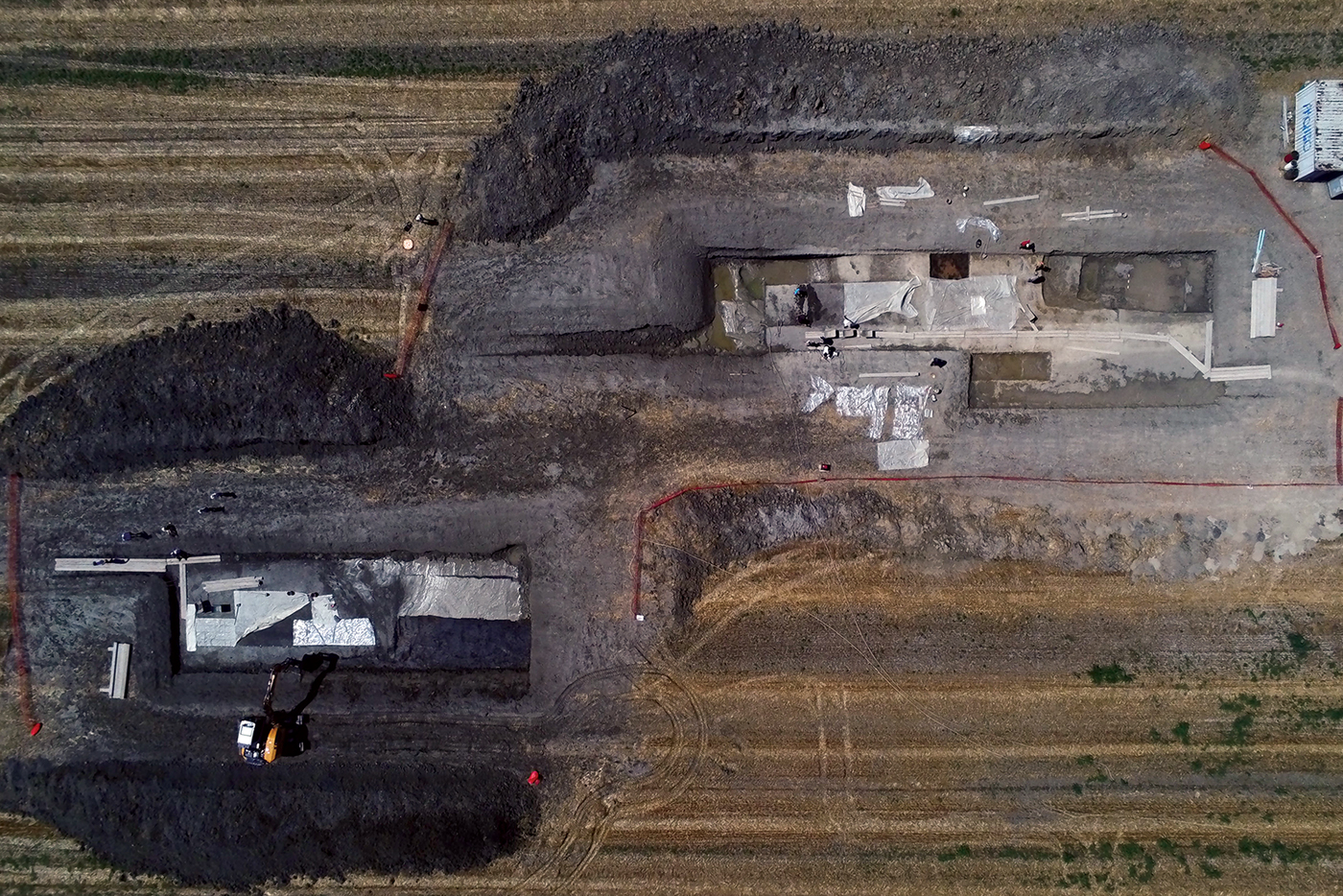
Drone photograph of the opening of trenches for the 2019 excavation season at the Terramara Santa Rosa di Poviglio, northern Italy. Terramare settlements—banked-and-moated villages of the Middle to Late Bronze Ages (c. 1600–1150 BC)—are distributed across the alluvial plain of the Po River. A three-decade-long multidisciplinary investigation at the Santa Rosa site has provided detailed insight into the organisation of this Bronze Age village and the wider historical trajectory of the Terramare culture. Each summer, the opening of the trenches with the removal of recent alluvial deposits forms a sort of ritual, an important and familiar process for every long-term excavation project. Photograph: Filippo Brandolini/Mauro Cremaschi/Andrea Zerboni, Università degli Studi di Milano; © MiBAC.
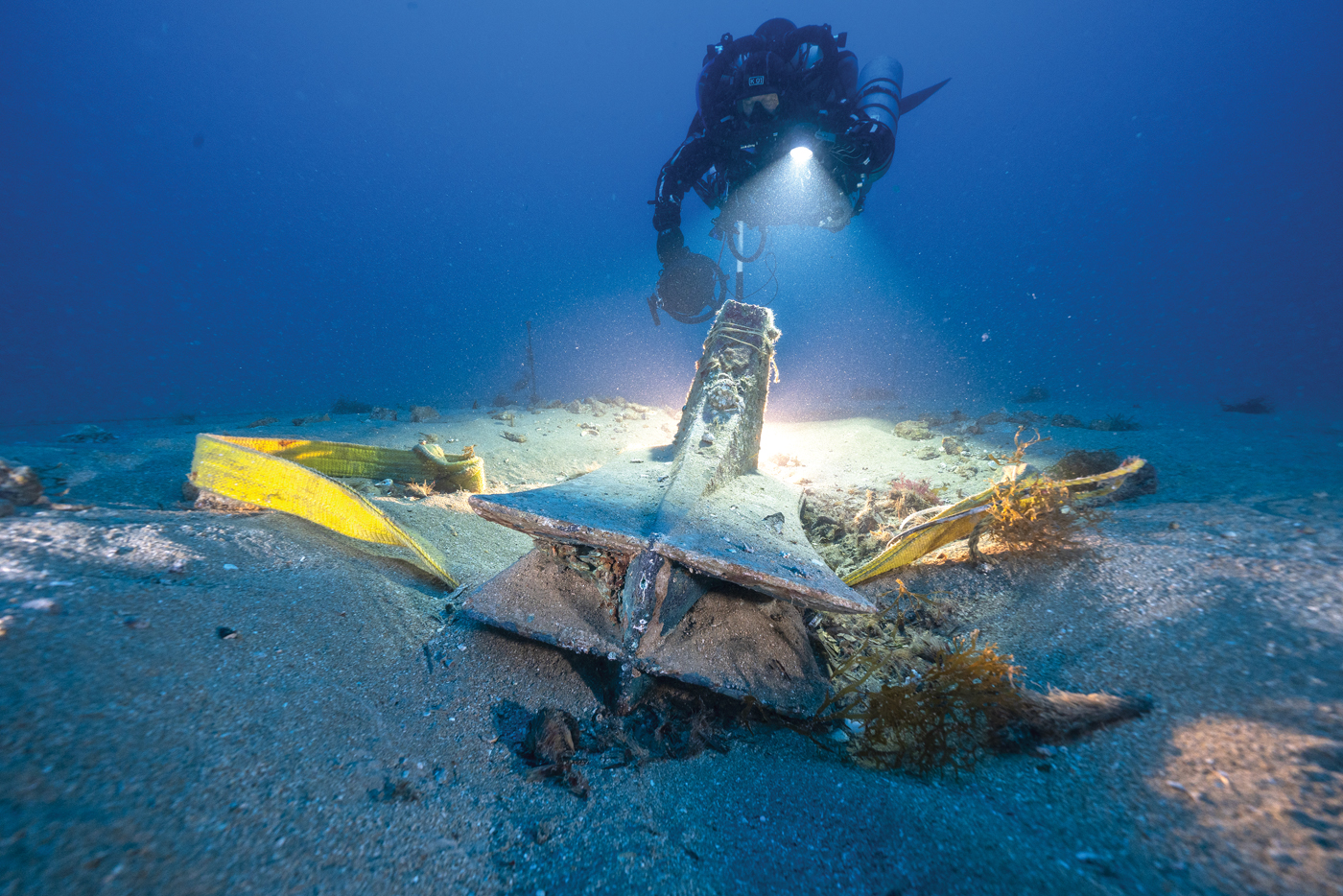
Divers prepare the Egadi 16 Ram for lifting from the seabed during July 2019. The bronze ram is one of 23 found over the past 14 years at the site of the Battle of the Egadi Islands. The concluding encounter of the First Punic War, the battle was fought off the western coast of Sicily on 10 March 241 BC. The near complete destruction of the Carthaginian fleet handed Rome control of the Western Mediterranean. Ram 16 features an embedded fragment of wood indicating impact with another vessel some time before the warship sank. Photograph: Claudio Provenzani; © Global Underwater Explorers/Soprintendenza del Mare—Sicilia/RPM Nautical Foundation).
Burning questions
 Back in April this year, flames took hold at Notre Dame Cathedral in Paris. Striking footage of the collapsing spire and the smouldering ruins on the following morning elicited expressions of shock and disbelief. Next came the analysis of the fire's cause and symbolism and the political commitments to rebuild; and then, swiftly after, the offers of funding and debate about exactly how to restore this masterpiece of Gothic architecture. The response of the establishment to this unexpected tragedy was not only prominent, but also rapid and decisive.
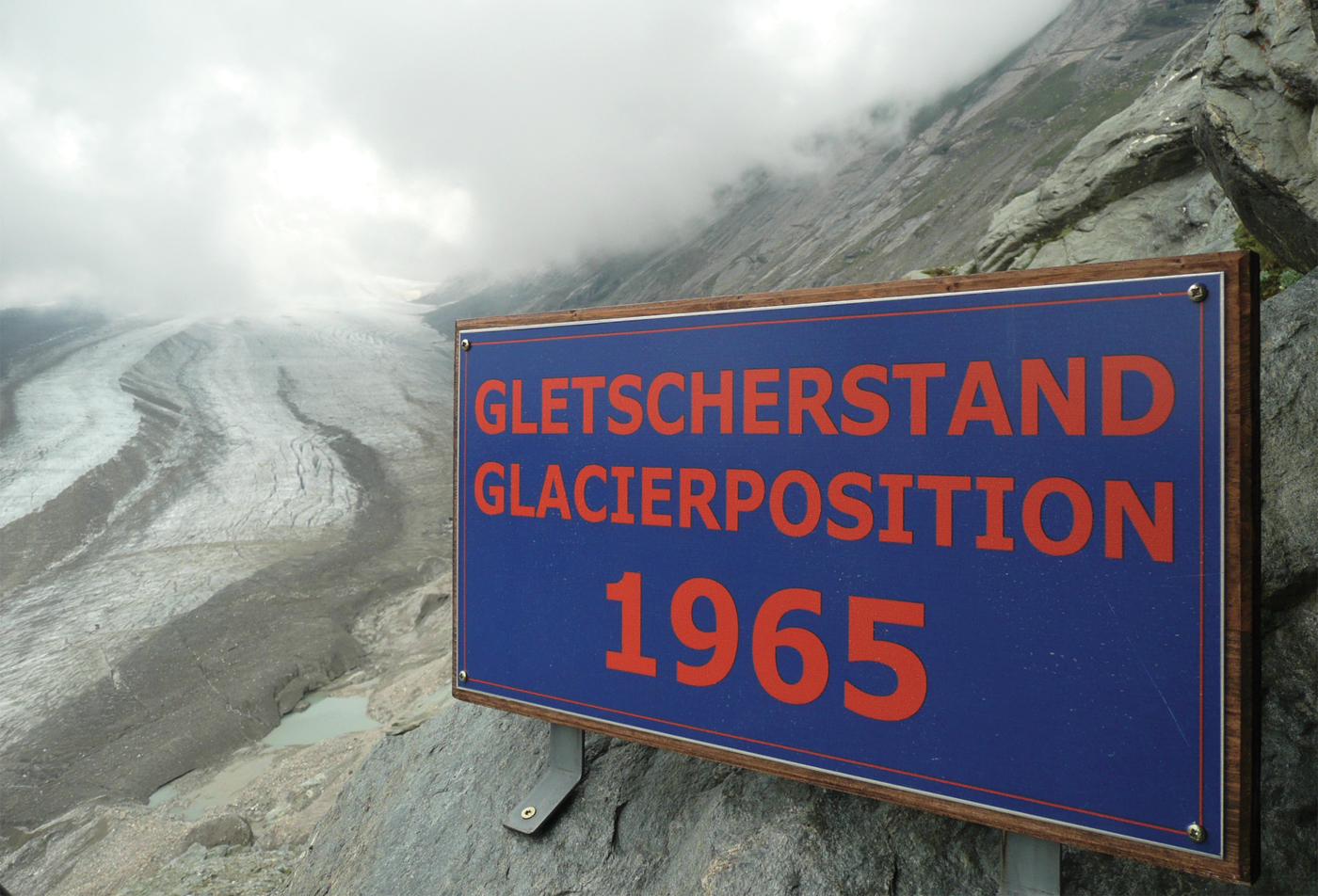
A few months later in August, on the side of a remote and barren mountain in Iceland, a small group led by that country's prime minister unveiled a plaque:
A letter to the future
Ok is the first Icelandic glacier to lose its status as a glacier.
In the next 200 years all our glaciers are expected to follow the same path.
This monument is to acknowledge that we know
what is happening and what needs to be done.
Only you know if we did it.
Ágúst 2019
415ppm CO2
In contrast with the extensive media coverage of the Notre Dame fire, this ‘funeral’ ceremony for the Okjökull (Ok glacier) received negligible attention in the press. In the long run, however, there can be little doubt as to which of these two events will come to symbolise our legacy to future generations. For, of course, the death of the Ok glacier is not an isolated event; around our rapidly heating world, glaciers are in retreat and ice sheets are thinning. In September came a second funeral ceremony, for the Pizol glacier in Switzerland, and the news that Sweden's tallest mountain, Kebnekaise, is now only that country's second tallest mountain as a result of the climate-induced shrinkage of its ice cap; in East Africa, the summit snow on Mount Kilimanjaro, eulogised by Hemingway, has almost completely disappeared. But, as noted by Innocent Pikirayi in his recent keynote at the European Association of Archaeologists (EAA) meeting in Bern, these losses are of more than symbolic significance—there are major implications for local communities. Indeed, the publication at the end of September of the ‘Special Report on the Ocean and Cryosphere in a Changing Climate’, by the Intergovernmental Panel on Climate Change (IPCC), highlights not only the global extent of change, but also the far-reaching effects. For example, the accelerated retreat of the Hindu Kush-Himalaya ice sheet, which feeds some of the major rivers of South, East and Southeast Asia, has lost a quarter of its volume over the past 50 years, threatening the livelihoods of more than 1.5 billion people across the region.
The summer's headlines, however, have been dominated not by ice, but by fire. Around the northern latitudes, wildfires are part of the normal ecological cycle, but in recent years the number of fires recorded in Alaska, Canada, Greenland, Russia and Scandinavia have increased. 2018 was bad; 2019 has been worse. Record-breaking temperatures and tinder-dry vegetation have combined to fuel thousands of fires, releasing vast quantities of carbon dioxide and methane, and depositing soot onto snow and ice sheets, reducing their reflectivity and hastening the speed at which they melt (Figure 1).
Pasterze Glacier, beneath the Grossglockner. Austria's largest glacier has lost half of its volume since first measured in 1851.
Archaeologists are often the inadvertent beneficiaries of others’ unfortunate encounters with natural disasters: volcanic eruptions, earthquakes, storms, floods and fires. But the increasing rate at which sites and objects are reported from melting ice patches, eroding coastlines and charred forests speaks to a wider environmental disaster—of which humanity as a whole is both a victim and a perpetrator. What role does archaeology play, or might it play, in this context? Archaeologists and the many specialists with whom we collaborate to study the past are more aware than most of the instability of climate and environment through the Holocene, from rapidly rising sea-levels to the aridification of the Green Sahara. But a report published in July by the International Council on Monuments and Sites (ICOMOS) argues the necessity for a much closer collaboration between, on the one hand, archaeologists, heritage professionals and social scientists, and, on the other, climate scientists and policymakers. The ‘Future of Our Pasts: Engaging Cultural Heritage in Climate Action’ report, launched at the forty-third session of the World Heritage Committee in Baku, identifies a pressing need to address the cultural dimensions of climate change, including both better evaluation and mitigation of the impact of climate change on cultural heritage and as a source of information and inspiration for the development of resilience.Footnote 1 Taking a global perspective, with contributors from Africa, Asia, Australia, Europe and North and South America, the report seeks to draw cultural heritage more firmly into the implementation of the Paris Climate Agreement (striving to limit the global temperature increase to 1.5°C above pre-industrial levels) and the UN Sustainable Development Goals. The authors, for example, argue not only for the importance of learning from past societal adaptations to environmental change, but also for a broader ‘leveraging’ of pride in local places and landscapes and the promotion of social values to support resilience and sustainability. Archaeologists alone will not solve the climate crisis, but as the report makes clear, climate scientists need help to transform their policies into practice. As a discipline, we need to work harder to communicate that the study of the past is integral to the planet's collective future. But between the past and the future lies the present, where we are confronted with a series of challenges, both personal and political, daunting or even paralysing in scale and complexity.
At an individual level, it can be difficult to perceive climate change and therefore to motivate action. The image of a burning cathedral has more immediacy than the concept of a burning planet; a day that is 0.5°C warmer is imperceptible, but a climate that is 0.5°C warmer will affect millions through rising sea levels. Such differences of scale make it hard to comprehend the problem and to feel empowered to act—how will one person's decision to go vegan or take the train make a difference? For all of our ingenuity, humans did not evolve to perceive such vast and complex connections across time and space. It is easy as individuals to feel overwhelmed and disempowered.
There are also challenges at the corporate or political level. As fires burned around the Arctic Circle, just south of the Equator, the Amazon was also ablaze. Here, however, many of the fires were deliberately and illegally set, using slash-and-burn methods to clear the forest for cattle grazing, logging and mining. Over recent decades, archaeologists have demonstrated that large parts of the Amazon region have been modified for centuries and millennia by human actions, including the use of fire.Footnote 2 The unprecedented extent of the fires of the past summer, however, have pushed the issue up the political agenda. The G7 leaders meeting at Biarritz in August, for example, offered financial assistance and threatened economic sanctions if action was not taken to contain the fires and enforce environmental protection laws. The Brazilian president was quick to respond with a war of words, including the claim that the fires had been started by the very NGOs who had called attention to the environmental destruction in the first place. As if a reminder were necessary, the episode illustrates that, just as the need for concerted collective action to address climate change has become more urgent than ever, the revival of nationalism and political differences has made cooperation harder. Or, more succinctly, despite the clarity of the science and the urgency of the message, action is being held back because climate change is both cognitively remote and politically divisive.
The personal is the political
 Over the summer, the direct action group Extinction Rebellion has protested on the streets of the UK and around the world to draw attention to the climate emergency. At the same time, some scientists are concluding that rational argument alone is insufficient to ensure that their research findings are acted upon and that direct action is required to draw attention to the scale and urgency of the problem.Footnote 3 Archaeologists have certainly involved themselves in direct action for other causes, such as Indigenous land rights.Footnote 4 Is climate change the logical next step? If so, archaeologists will first need to look at their own carbon footprints. A session at the EAA in Bern in September considered ‘Bending the arc of history to a low carbon future’, with speakers addressing the ‘cognitive dissonance’ between what we say about climate change and what we do.
We can all begin with individual actions. The message of the Swedish schoolgirl Greta Thunberg that ‘No one is too small to make a difference’ has struck a chord around the world. In terms of emissions, her carbon-neutral transatlantic crossing is a drop in the ocean. But, symbolically, it is powerful, in large part because Thunberg is not an anonymous committee publishing data and policies, but a relatable human being with a message, a tangible character with a compelling story to tell. Indeed, some climate scientists have turned precisely to narrative in order to frame their evidence and communicate with audiences; research increasingly demonstrates that a narrative structure stimulates experiential processing and heightens affective and emotional engagement with information and issues. In turn, this can lead to action.Footnote 5
Is there a particular role here for archaeologists? The co-emergence of archaeology and European nation states has been well explored. Archaeologists provided many of the raw materials for the development of national myths—sites, objects and landscapes—and were central to the writing of these narratives.Footnote 6 Over the past 30 years, archaeologists have also been some of the most active in deconstructing such political stories. Might these skills and experience now find new purpose in not only documenting past climate change, but also creating new narratives to help trigger the emotional responses needed to overcome the paralysing enormity of such global crises?
All of these general themes were brought together at the most recent Annual Meeting of the EAA. To mark the twenty-fifth anniversary of the organisation's foundation in 1994, the EAA 2019 ‘Bern Statement on Archaeology and the Future of Democracy’ was proposed and ratified.Footnote 7 When the association was formed in the mid 1990s, post-Cold War Europe was awash with optimism and energy; 25 years later, cultural and political trends across the continent present a very different landscape. The EAA 2019 Bern Statement responds to these challenges by asserting renewed purpose for the discipline. Three key paragraphs are:
EAA is fundamentally committed to the Council of Europe's understanding of cultural heritage as a framework source of collective European ideals, principles and values. These are derived from a shared experience of past conflict and its impacts, and a knowledge of the progress that has moved Europe forward through peace and cooperation. EAA, as countless other organisations, shares the common objective of Europe for peaceful and stable societies, founded on respect for human rights, intellectual and academic freedom, democracy, cultural diversity and the rule of law.
[…]
Archaeologists gain particular insight into human conditions (physical, environmental and social) and human social organisation from a deep time perspective. Archaeologists therefore can predict to some extent a great range of possible developmental scenarios for the future, together with their trajectories and conditions.
It is from this professional background that we regard it as our civic duty, along with other experts, to engage in political debate, to present our knowledge, options and consequences of social and political actions. To fulfil our societal role effectively, we require the unrestricted environment of academic freedom and institutional independence. That freedom must be protected. In this way we can assist in informing the decision-making processes of our democratic institutions in a context of freedom of expression and dissemination, and intellectual independence.
The EAA 2019 Bern Statement explicitly links the diverse challenges facing the past, present and future of the continent and sets out a high-level mission statement that resonates far beyond European archaeology. Over recent years, Antiquity has published research and debate on many of these themes, environmental, social and political, and upcoming issues will feature more such contributions, including articles addressing marine plastic pollution and debating the concept of sustainability.
Peer Review Week 16–20 September
 Just as it takes a village to raise a child, a whole community lies behind each research article that appears in the pages of an academic journal. Key amongst this group of invisible contributors are the peer reviewers. To submit one's labours for peer review can be a daunting process. Surely few authors can positively relish the thought of receiving their peer reviewers’ reports? Yet, as both authors and readers, we have every reason to be grateful for the work of these expert commentators, who provide their services for free and whose efforts are often unacknowledged. Very few articles are not improved by revisions in response to peer reviewer comments, sometimes advising moderation of the claims made, sometimes pushing the authors to be more ambitious. Much more than academic gatekeeping, fact-checking or proofreading, peer review at its best is a form of scholarly mentoring—collegiate and constructive input to guide authors and ensure the accurate and articulate presentation of their research to the highest standards and with the widest impact. The breadth of material submitted to Antiquity means that I am particularly grateful to our specialist peer reviewers for the hundreds of reports that they provide each year, helping to inform and improve what we publish. On behalf of both our authors and readers, a hearty thanks to all the peer reviewers who have contributed over the past year.
Ceramic sequence
 This current issue features archaeological research from around the world, from Cambodia to the Caribbean, and extending from the Upper Palaeolithic through to the twentieth century. Within this mix, however, are two particular groups of articles: one thematic and the other chronological/geographic. Pottery—either complete vessels or more often fragmentary sherds—is one of the most characteristic and abundant of finds recovered from the excavation of sites from later prehistory onwards. A rich source of information about technological practices, economic networks, cultural identities and, not least, chronology, pottery is integral to archaeological analysis. But the very ubiquity of ceramic material and the challenges of processing, analysing and storing large quantities of pottery can distract from recognition of the value to be extracted from these humble scraps of baked clay. In this issue, three papers on different periods and regions turn the spotlight onto the ceramic evidence. Womack et al. address questions around continuity and change in pottery traditions in Late Neolithic central China. In Gansu province, significant change in the form and decoration of pottery at the end of the second millennium BC has been linked to radical social and economic reorganisation, perhaps even population replacement in the context of rapid climate change. Petrographic analysis by Womack et al., however, demonstrates a strong continuity of paste recipes, or ceramic fabrics, alongside the shifts in form and decoration, leading the authors to consider the role of ‘communities of practice’ in potting traditions and the need for caution in equating change in decorative styles with the arrival of new cultural groups.
Meanwhile, in the far north-west of China, in Xinjiang, Doumany Dupuy et al. examine the Bronze Age Andronovo ceramic tradition. Here, the reconstruction of the chaîne opératoire also demonstrates a strong continuity in local paste recipes as well as vessel forms. In this case, a more general ceramic conservatism contrasts with the growing evidence of the extent to which connectivity across second-millennium BC Eurasia led to the transmission of knowledge about metallurgy and the spread of plants and animals between East and West. Instead of approaching the Bortala Valley as one more stopping point along the ‘Silk Road’, the authors use the persistence of a local ceramic tradition to begin defining the valley as a place in its own right. Finally, if pottery did not travel far from its place of production in Bronze Age Central Asia, Ebert et al. use neutron activation analysis to demonstrate how the production and distribution of pottery from the Preclassic Maya site of Cahal Pech in Belize was linked to growing inter-regional, socio-political and economic complexity. Here, the increasingly wide distribution of pottery is linked to the developing importance of exchange within emerging regional economies, alongside growth of monumental civic centres and the status of powerful individuals.
Collectively, these three papers illustrate a range of approaches to pottery produced in very different social and economic contexts. All of them, however, emphasise the importance of combining methods in order to develop a more nuanced understanding of the role and significance of pottery in past societies, from the provenancing of raw materials and the reconstruction of vessel-building techniques through to stylistic analysis of decoration and the examination of depositional contexts.
Bronze bonanza
 The Bronze Age was an era of enhanced European mobility and connectivity. Our second group of articles addresses three key aspects of this pivotal period: the sourcing of metals, the development of weighing and measuring systems, and violence. The copper mine at Great Orme on the north coast of Wales is one of the largest known in Europe. Yet, despite the astonishing extent of this complex of tunnels and waste dumps, it has been argued to represent the aggregated result of many centuries of small-scale exploitation. In their article, Williams and Le Carlier de Veslud use new chemical and isotopic characterisation of the copper ores to assess the scale and timing of the ore extraction and the distribution of metal, in the form of the bronze objects, across Britain and beyond. The results indicate a concentrated 200-year window of exploitation, which in turn suggests a much larger and more complex operation, probably involving specialist mining communities; it also firmly locks the Great Orme mine into the wider exchange networks of Bronze Age Europe. But how, more generally, were these long-distance networks facilitated? In his article, Lorenz Rahmstorf turns to the identification of weights and weight-regulated artefacts and their role in defining ‘value ratios’ and promoting exchange, perhaps even within a commercial context (i.e. trade). Previous studies have identified weight-regulated objects from a number of sites across continental Bronze Age Europe, but to date no examples have been recognised from British contexts. Here, Rahmstorf uses a statistical method to examine a variety of gold objects from North-western Europe such as torcs, identifying regular units of weight that point towards the existence of a ‘bullion-currency’ during the later second and early first millennia BC.
The final paper in this trio of articles on Bronze Age Europe turns to an altogether darker theme: violence. The huge numbers of swords, spearheads and other weapons that so powerfully define our perception of the European Bronze Age are often reduced to objects of aesthetic or ritual significance. Use-wear analysis, however, makes clear that at least some of these weapons were used in combat, and the Tollense battlefield site in north-eastern Germany, strewn with the remains of more than 100 individuals, provides graphic testament to violent conflict during the Bronze Age.Footnote 8 In their article, Uhlig et al. present a new assemblage of objects from the Tollense site, which demonstrates similarities to grave goods recovered from burials hundreds of kilometres to the south. The authors argue that these objects represent the personal equipment of a warrior from central Southern Europe who died on the battlefield near the Baltic coast. As a group, these three articles on Bronze Age Europe speak to a world of enhanced cultural connectivity, economic integration and human mobility.
In addition to ceramic analyses and Bronze Age Europe, there is plenty of other content to explore in this issue, including the identification and lidar-mapping of an early Angkorian urban centre (one of the first capitals of the Khmer Empire), Mahendraparvata in Cambodia, and a debate section on the persistent challenges of European Upper Palaeolithic cultural taxonomies. You will also find the usual range of book reviews, a selection of online Project Gallery articles (available at: antiquity.ac.uk/open/projgall) and a review of the ‘Lande: The Calais “Jungle” and Beyond’ exhibition currently on show at the Pitt Rivers Museum in Oxford. As ever, we would love to hear your news about recent discoveries, upcoming conferences and new books and projects. All of our contact information can be found on our website (antiquity.ac.uk/contact). We look forward to hearing from you!



