





Introduction
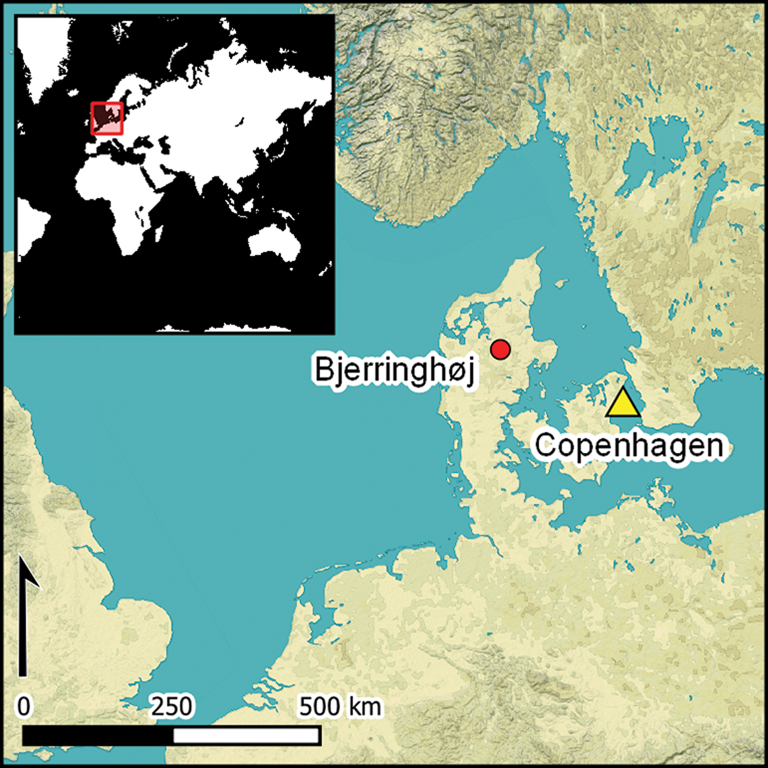
The nineteenth-century excavation of the Bjerringhøj mound, at the village of Mammen in Jutland, recovered one of the most iconic Danish Viking Age burials. The site is particularly notable for the discovery of an iron axe decorated with silver inlay, after which the Viking Age ‘Mammen style’ is named (Fuglesang Reference Fuglesang, Iversen, Näsman and Vellev1991: 83). Viking Age society in the tenth century AD was characterised by extreme diversity in grave forms, with clear distinctions between rich and poor. Most graves yield few or no grave goods, whereas very rich burials contain weapons, riding gear and jewellery, according to sex, age and social status (Kleiminger Reference Kleiminger1993; Jensen Reference Jensen2004: 336–38). The Bjerringhøj burial undoubtedly belongs to this special group of graves and, since its discovery, has played an important role in advancing our understanding of Viking Age (AD 800–1050) culture (Worsaae Reference Worsaae1869; Munksgaard Reference Munksgaard and Høgestøl1984). It has even been suggested that the Bjerringhøj individual was linked to the royal Jelling Dynasty (Iversen & Näsman Reference Iversen, Näsman, Iversen, Näsman and Vellev1991: 60). The burial is also known for its many exceptional and well-preserved textiles featuring silk, gold, silver and precious dyestuffs, which emphasise the unique and high status of the individual interred in the mound (Østergård Reference Østergård, Iversen, Näsman and Vellev1991; Walton Reference Walton, Iversen, Näsman and Vellev1991).
Unfortunately, however, we still know very little about the buried individual, as the human bones recovered during the 1868 excavation have been missing within the National Museum of Denmark's collection for more than 100 years. The loss or misplacement of finds during registration or storage is not unheard of in the museum world, either due to a lack of understanding of their scientific value, or mistakes when handling the finds. It can take less than a second to mix artefacts from two contexts, but several years to correct the mistake. In the case of Bjerringhøj, the misplacement of the bones has, until now, limited the opportunity to recover biographical and palaeopathological information about the buried individual such as sex, age and stature and any pathologies. They could potentially also help to reconstruct the size and shape of the clothing. The fortuitous rediscovery of the bones as part of the analysis of the Bjerringhøj textiles has facilitated a more nuanced interpretation of this individual within Viking Age society.
Bjerringhøj: the excavation in 1868 and re-excavation in 1986
The burial mound, Bjerringhøj, in the village of Mammen, near Viborg in Denmark, was excavated in 1868, revealing a very rich Viking Age burial. The landowner, Laust Pedersen Skomager, needed soil to fill a nearby depression and, helped by other local farmers (Feddersen Reference Feddersen1868–1869: 168), removed the topsoil from the mound, which stood approximately 4m in height. The farmers soon identified the mound as a burial site and continued digging, exposing the central grave, from which they removed the finds and shared them amongst the village farmers. Fortuitously, Arthur Feddersen from Viborg Cathedral School—who had a passionate interest in archaeology—heard about the excavation and quickly went to Bjerringhøj, only to discover the careless treatment of the burial and the finds. He observed fragments of textiles, clumps of down feathers and human bones scattered in the soil, with nothing left in situ. Feddersen began the difficult job of collecting the remaining finds and interviewing the farmers about the grave structure and position of the grave goods (Feddersen Reference Feddersen1868–1869: 168). A few days later, architect Frits Uldall arrived at Mammen to investigate further and record the burial. Eventually, the objects dispersed amongst the villagers were recovered and sent to the National Museum of Denmark in Copenhagen to be included in the institution's collection (Vellev Reference Vellev, Iversen, Näsman and Vellev1991: 12–13).
The mound contained a wooden chamber, sealed with blue clay (Figure 1). Within a wooden coffin placed inside the chamber, the deceased was positioned on a layer of down feathers—possibly a mattress—and clad in garments of wool with decorations in silk, silver and gold threads (Iversen & Näsman Reference Iversen, Näsman, Iversen, Näsman and Vellev1991: 45; Rimstad Reference Rimstad2019: 12–15). Two iron axes, one with silver inlay, were placed near the feet of the individual, and a 0.57m-long bee's wax candle was found on top of the coffin. Also found inside the chamber were two wooden buckets and a bronze kettle. Re-excavation of the burial mound in 1986, initiated by Jens Vellev and Mette Iversen from the Viborg Stiftsmuseum, confirmed this configuration and provided a dendrochronological date for the burial of AD 970–971 (Andersen Reference Andersen, Iversen, Näsman and Vellev1991; Iversen Reference Iversen, Iversen, Näsman and Vellev1991: 27–29). Only a few new artefacts were recovered, predominantly comprising minute traces of organic material, a few fragments of textile, down feathers and a 10mm-long gold thread.
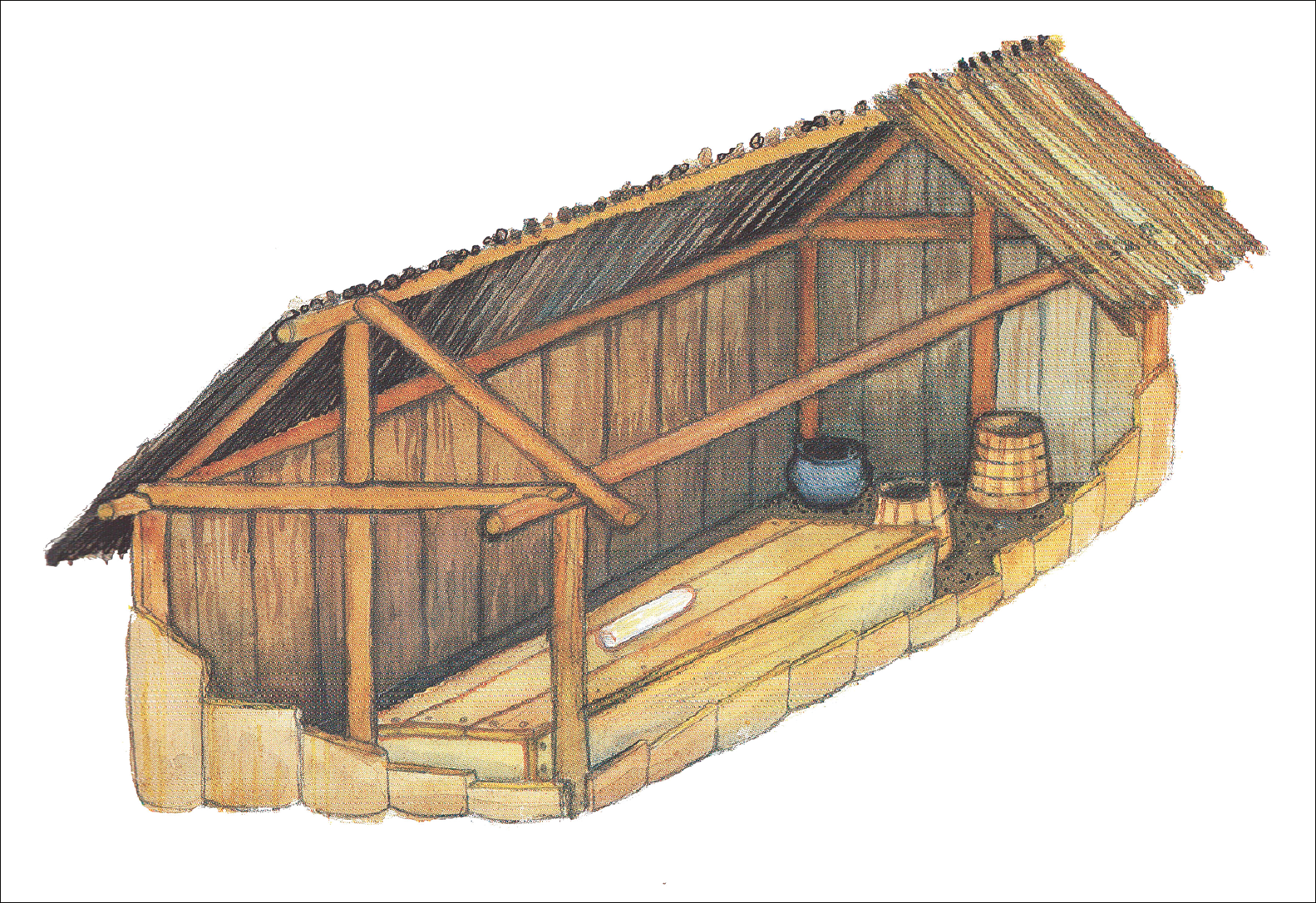
Figure 1. Reconstruction of the burial chamber in Bjerringhøj (illustration by U. Seeberg).
The missing bones from the Bjerringhøj burial
Feddersen (Reference Feddersen1868–1869: 171) wrote of the human bones from Bjerringhøj: “The few [preserved] bones of the body struck me; of the head only a fragmented molar was preserved”. The bones were analysed by F. Schmidt of the University of Copenhagen. The results of this analysis are known from a short note, dated 1872, written by Henry Petersen from the National Museum of Denmark:
Of the collected bones from the Mammen burial, from the younger part of the Iron Age, Professor F. Schmidt declared that they belonged to a fully grown and well-built adult. A curiosity is the right radius, which is significantly more gracile than the right ulna, why also the right hand may have been more gracile. The heel bone, which is preserved from the right foot, also seems more gracile than what is normal today. The leftovers of the enamel of a tooth is the front molar in the right side of the mandible, it has a random wear.
This passage represents the only extant description of the human remains from Bjerringhøj. In the general account of the burial, the individual is assumed to be male (Iversen & Näsman Reference Iversen, Näsman, Iversen, Näsman and Vellev1991: 45, 60–61), even though Petersen's note attempts no sex determination. Petersen's observations about the unusually gracile bones, however, have been used to propose alternative interpretations: that the grave was that of a female, or part of a double burial of a male and a female (Hansen Reference Hansen, Iversen, Näsman and Vellev1991: 147). Without the bones, the sex of the individual(s) has, until now, been impossible to determine.
The 1986 re-excavation located only a single small bone fragment, which could not be assigned as human (Rimstad Reference Rimstad2009: 44). In preparation for publication of the re-excavation of the Bjerringhøj mound, the human remains recovered during the original excavations were sought in the National Museum of Denmark's collection, but they could not be located (Vellev Reference Vellev, Iversen, Näsman and Vellev1991: 25). A subsequent search in 2009 of the Anthropological Collection at the Department of Forensic Medicine, University of Copenhagen—where most of the human remains belonging to the National Museum of Denmark's prehistoric collections are stored—also failed to locate the Bjerringhøj bones (Rimstad Reference Rimstad2009: 44). It seemed that the bones had been lost forever.
Two mixed contexts
The Fashioning the Viking Age project is a collaboration between the National Museum of Denmark, the Centre for Textile Research at the Saxo Institute, University of Copenhagen, and the Land of Legends Centre for Historical-Archaeological Research and Communication in Lejre. Launched in 2018, a central aim of the project is to perform detailed new analyses of the Bjerringhøj textiles and other related high-status textile finds from Danish Viking Age graves (Mannering Reference Mannering2018). As part of the assessment of Viking Age textile finds at the National Museum of Denmark, the project discovered that the stored material from another Viking Age burial, Slotsbjergby on Zealand, included a box containing an assemblage of human bones. From museum protocol, we know that the two extant textile fragments from Slotsbjergby were found in 1897, and that they were “sitting on a human bone in a gravel pit, close to a modern churchyard” (Protocol number C9166 at the National Museum of Denmark). It is not recorded, however, whether the bone was also sent to the museum.
The two Slotsbjergby textiles were originally analysed by Thomas Thomsen (Reference Thomsen1900: 271) and later by Margrethe Hald in the 1940s (Reference Hald1980: 118–21). The first textile is a piece of a wide, tablet-woven band made of silk and gold threads. The second is made of coarse wool in two-ply yarn (a yarn twisted from two smaller threads) (Figure 2). Neither Thomsen nor Hald mention any preserved human bones in connection with the Slotsbjergby textiles. The bones in the box labelled ‘Slotsbjergby’, on the other hand, have at least two types of very different textiles adhering to them. It is puzzling as to why Hald—an expert in Danish prehistoric textiles—did not mention in her analysis of the Slotsbjergby and the Bjerringhøj finds the presence of textiles attached to the bones (Hald Reference Hald1980: 102–21). The most plausible explanation is that she was unaware of these textiles and that the bones had already been misplaced by the time of her analyses in the 1940s. By 1984, however, the box of finds and human bones had been linked with Slotsbjergby. In their publication Iron Age man in Denmark, Sellevold et al. (Reference Sellevold, Hansen and Jørgensen1984: 104) briefly state that the finds from Slotsbjergby comprised the “remains of leather and textiles (silk with gold thread woven in)”, as well as an incomplete skeleton with “fragments of right humerus and radius, femora and left tibia”. This description matches the collection of bone elements today labelled ‘Slotsbjergby’. Evidently, sometime between the 1950s and 1984, someone at the Museum must have linked the bones with the Slotsbjergby location and stored the box of bones along with the other finds from that site. We, on the other hand, argue that these are the missing bones from Bjerringhøj.
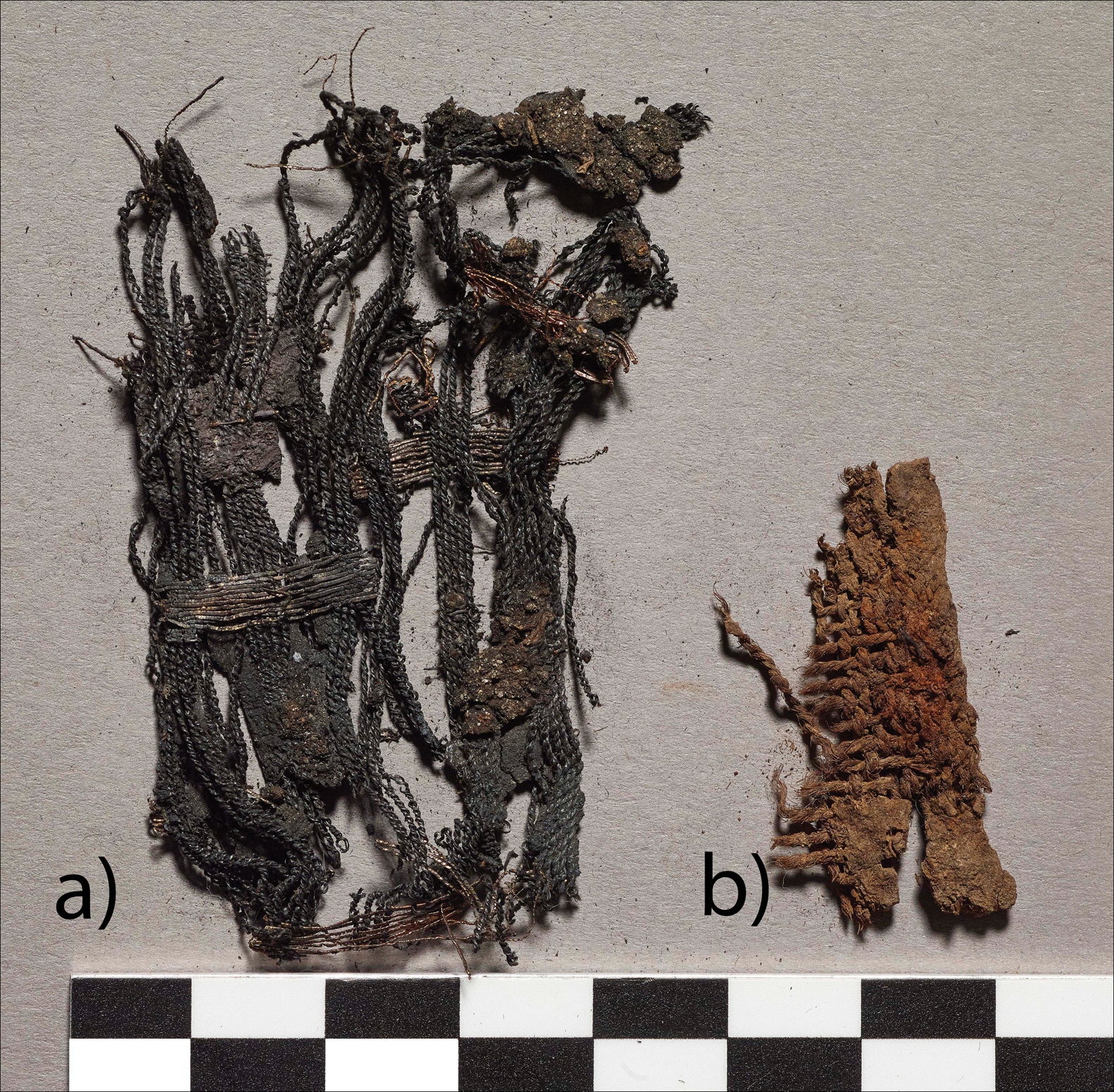
Figure 2. The textiles from Slotsbjergby: a) fragment of a tablet-woven band of silk and gold threads; b) fragment of coarse wool textile of two-ply yarn (photograph by R. Fortuna, National Museum of Denmark).
The bone evidence
There are potentially several ways to assess whether the human bones found with the Slotsbjergby finds actually derive from the Bjerringhøj burial; first, a comparison of the 1872 anatomy report with new osteological analyses of the actual bones. Today, there are 11 identifiable bone elements, most of them from the lower part of the body, plus a number of smaller bone fragments and mummified soft tissue (Figure 3 & Table 1). The skeletal elements are dark brown in colour, with areas of green-turquoise vivianite staining, particularly in the longitudinal cracks exposing the inside of the long bone shafts. All of the elements have varying amounts of adhering soft (human) tissue, down, feathers, fur and textile.
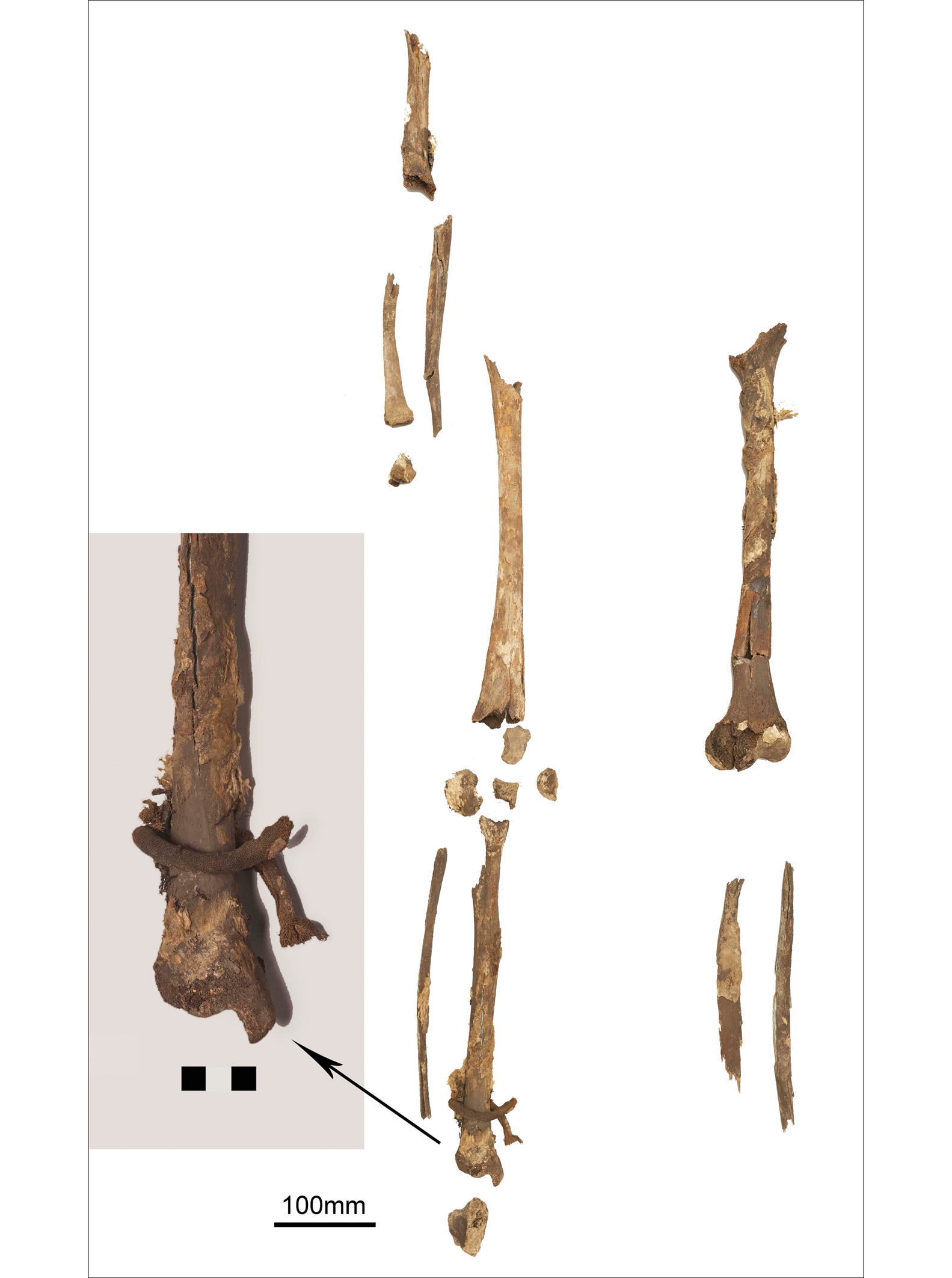
Figure 3. The collection of human bones in the Slotsbjergby box, with detail of the wool roll around the right tibia (photograph by R. Fortuna, National Museum of Denmark).
Table 1. Description of the human bone elements from Bjerringhøj.

The overall skeletal preservation is poor. None of the bones are intact, and they are fragile and brittle. The extant remains include the shafts of the right humerus and right ulna, the lower part of a right radius, and the trapezium and the trapezoid from the right wrist. From the lower body, the shafts of the right and left femora are present, along with the broken distal end of the left femur, a fragment of an unsided patella, a right tibia with a broken proximal epiphysis, a fragment of the left tibia shaft, the shafts of the right and left fibulae, and a fragment of the right calcaneus.
The sex of the individual can only be estimated based on metric analyses of the bones. The bicondylar width of the distal left femur (Stewart Reference Stewart1979) suggests possible male sex. The age is estimated on the basis of epiphyseal fusion stages of the lower limb bones (Scheuer & Black Reference Scheuer and Black2000) combined with evidence of degenerative changes and markings of muscle insertions (Loeser Reference Loeser2010). The individual is thus estimated to be an adult, possibly older than 30 years. As none of the long bones are intact, it is not possible to calculate stature with any degree of accuracy. An estimated measurement of the length of the right tibia is attempted by holding the fragmented proximal end together with the shaft in anatomical position (Table 1). Application of Boldsen's (Reference Boldsen1990) stature-regression formula for males yields an estimate of 1.71–1.78m.
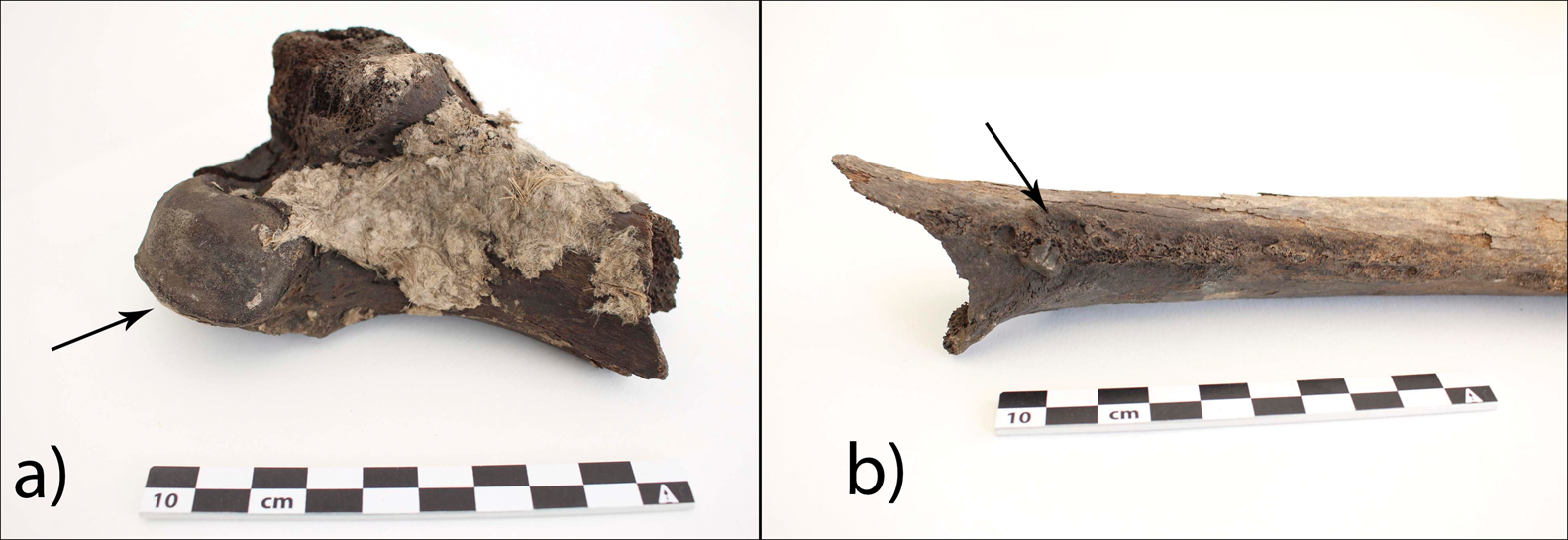
The poor state of preservation limits the observation of pathological changes and possible differential diagnoses. Nevertheless, the presence of smooth, striated periosteal new bone (periostitis) observed on the shafts of the tibia and fibulae indicate that there has been an inflammation in the membrane (periosteum) that covered the bone, which had healed by the time of death. Such an inflammation can be induced by multiple factors, including local trauma and infection (Roberts Reference Roberts and Buikstra2019). Evidence of slight degenerative joint change is visible as new bone formation (osteophytosis) around the joint margins of the distal left femur (Figure 4a). In addition, there is pronounced bone proliferation and evidence for inflammation at the insertion sites for the gluteus maximus muscle on both femora (Figure 4b). As this muscle functions primarily during flexing and standing activities, such as stair climbing, standing from a sitting position or perhaps riding, the individual probably conducted this type of movement frequently.
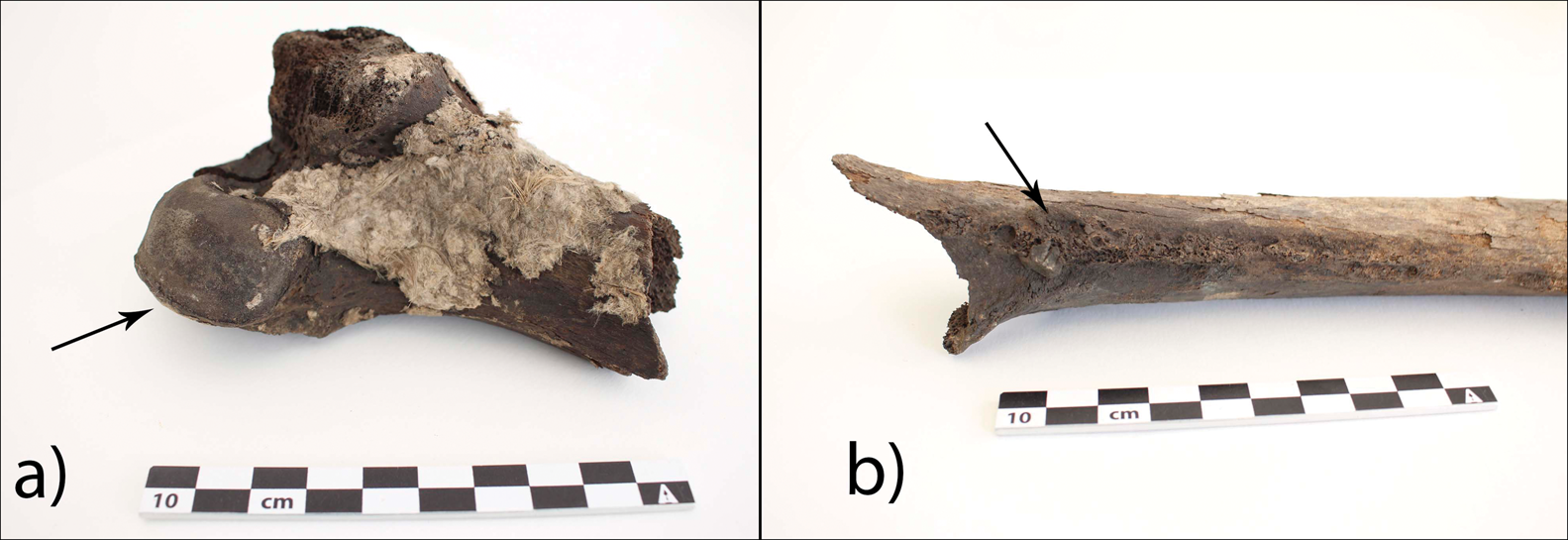
Figure 4. a) Left femur, distal end with slight marginal lipping along joint margins, with down attached to the shaft; b) right femur, proximal posterior side with marking of the muscle insertion for gluteus maximus (photograph by C. Rimstad).
The right radius and calcaneus appear slightly more gracile than the rest of the skeleton, as pointed out in the 1872 report of the Bjerringhøj bones. The shaft of the radius appears to be unusually slim when compared with the more ‘normal’ ulna and humerus. As none of these bones are intact, however, it is not possible to articulate them. Although the calcaneus is also damaged, when compared with the size of the distal right tibia, it appears too small to be from the same individual. The colour of the radius and the calcaneus matches the rest of the skeletal elements, and they exhibit the same porous surface. In addition, the distal epiphyseal line of the radius is fused, but still visible, suggesting that this element belongs to a young adult (approximately 17–18 years old if female, and 19–20 if male (Greulich & Pyle Reference Greulich and Pyle1950)) (Figure 5). This contrasts with the degenerative changes seen in the left knee, which possibly signify an older adult.

Figure 5. The right radius with the distal epiphyseal line closed but still visible (photograph by C. Rimstad).
Several conclusions can be drawn from our osteological analysis. First, it is evident that all the bones mentioned in the 1872 anatomy report are present, except for the small fragment of enamel from a molar, which could easily have been lost during a century of handling by many different researchers. Our analysis further suggests that the skeletal remains could represent a mix of two individuals: an older possible male and a younger, more gracile individual, as already suggested in the 1872 report. An alternative explanation for the gracile bones could be an underdeveloped lower right arm, although one would also expect the right ulna to appear gracile, and this would not explain the gracile calcaneus.
Estimating the sex of the individual with the gracile bones is not possible through osteological analysis. While an actual sex determination could, in theory, be made by DNA analysis, the bones are in a very poor condition. Hence, the risk of contamination by exogenous DNA is very high. Recent research has shown that when skeletal material is poorly preserved, the only element that yields sufficiently higher endogenous DNA than teeth is the petrous portion of the temporal bone (Pinhasi et al. Reference Pinhasi2015). Unfortunately, neither teeth nor petrous bones are present among the bones analysed here, so the chance of successfully extracting endogenous DNA is minimal or non-existent. For the moment, it can only be concluded that the bone assemblage suggests the presence of an adult (possible) male of more than 30 years of age, along with a second, younger individual. Regardless, this does not change the fact that the bones match the 1872 description of the human remains from Bjerringhøj. In addition, a recent radiocarbon analysis (AAR-32149: 1185±24 BP) as part of the current research dates the bones to cal AD 893–990 (at 95.4% confidence, after reservoir correction and using OxCal v4.4.2 for calibration; Bronk Ramsey Reference Bronk Ramsey2009; Reimer et al. Reference Reimer2020), which overlaps with the dendrochronological dating of the Bjerringhøj burial (AD 970–971).
The textile evidence
Another important method of confirming that the human bones derive from the Bjerringhøj burial is through a comparative analysis of the textiles. As described above, the crude methods of the original excavation of the site fragmented the associated textiles. Nevertheless, they still represent the largest textile assemblage from any Danish Viking Age grave. If the burial had been excavated to a professional standard in 1868, it is likely that the clothing would have been more or less complete. Even so, the Bjerringhøj textiles are unique compared with other textiles from contemporaneous Danish burials. The preservation of textiles in these other burials is often poor, and they usually only survive adhering to metal objects, such as oval brooches or buckles; larger pieces of textiles with seams and decorations are extremely rare (Jørgensen Reference Jørgensen1986: 83; Krag Reference Krag1994: 13). More often than not, the material is wool. The textiles from Bjerringhøj stand in great contrast to this general picture.
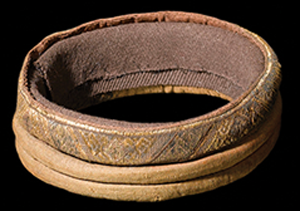
The most well-known pieces from Bjerringhøj are the two so-called ‘cape bands’ and a pair of woven cuffs. Made of padded silk fabrics, they are decorated with delicate, tablet-woven bands in silk, silver and gold threads (Figure 6). The quantity of silk found at Bjerringhøj far exceeds any other known Danish Viking Age burial. Approximately 1m2 of an embroidered wool textile survives. This is split into more than 64 fragments, all with various embroidered patterns, such as birds, human faces and acanthus leaves (Figure 7). One piece of this embroidered wool textile was radiocarbon-dated for the current project to cal AD 892–993 (AAR-32148: 1108±23 BP using OxCal v4.4.2 for calibration; Bronk Ramsey Reference Bronk Ramsey2009; Reimer et al. Reference Reimer2020). This is the only such burial with embroidered textile from Denmark in this period. Another important textile from Bjerringhøj is a rectangular piece, 135 × 100mm, of a thin, openly woven textile, which was originally dyed blue (Figure 8) (Walton Reference Walton, Iversen, Näsman and Vellev1991: 140).

Figure 6. The woven cuffs from Bjerringhøj (photograph by R. Fortuna, National Museum of Denmark).

Figure 7. Detail of the embroidered wool textile from Bjerringhøj, fragment seven (photograph by R. Fortuna, National Museum of Denmark).

Figure 8. The openly woven wool tabby textile from Bjerringhøj, which was originally rolled together and used as padding in the ankle cuffs (photograph by R. Fortuna, National Museum of Denmark).
The textile fragments adhering to the human bones are predominantly found on the right tibia. The femora and fibulae, however, also have textile fragments and textile imprints on them, as well as fur on their upper and lower parts. Altogether, three different types of textile present on the bones match those reported from the Bjerringhøj burial excavations. A large, 50 × 25mm piece of a 2/1 twill is preserved approximately 0.11m from the distal end of the right tibia. Small stitches with a two-ply yarn (embroidery threads) are fastened to the textile. These characteristics are identical to the embroidered textile from Bjerringhøj (see Table S1 in the online supplementary material (OSM)). A very different type of textile is attached approximately 80mm from the distal end of the tibia. Here, two rolls of woven cloth adhere to the bone (Figure 3). The longest and best preserved roll is around 170mm long and 8mm in diameter, encircling the tibia, with an opening to the medial side. Fragments of a similar roll are located just above the first roll, but only 45mm of textile is preserved on the tibia's posterior side, which is also covered in down feathers. The rest of the roll was found in the box as a loose fragment measuring 110mm in length. All of the rolls are constructed of an openly woven wool tabby, with traces of blue colour pigments in the fibres, indicating that the fabric was originally dyed blue. The rolls were made by folding a square textile in half and then rolling it into a cylindrical shape. This textile type is identical to the rolled paddings found inside the two woven cuffs from Bjerringhøj. Furthermore, it is now evident that it is also identical to the above-mentioned openly woven tabby fragment (see Table S2). This textile was probably unfolded from its roll shape before it came to the museum. This interpretation is further substantiated by the small stripes still visible in the weave that come from the rolling of the fabric (Figure 8). While there are many suggestions (by re-enactors) as to how the open blue weave from the Bjerringhøj burial was used in the outfit, it has never before been demonstrated that it was used as a concealed padding roll.
Beneath the lowest roll on the tibia is a small fragment of a tablet-woven band with gold and silver threads (Figure 9). More of the same tablet-woven band is located on a piece of dried human skin on the posterior of the tibia, and as two loose fragments, measuring 140 × 7mm and 60 × 7mm, respectively. The smaller piece retains the shape of a half circle from its original placement around the tibia. The tablet-woven band is made with two outer silk tablet warps, along with wefts of silk and silver threads, creating a geometrical pattern. The band is unique in its construction, but resembles several of the tablet-woven bands from Bjerringhøj, which hints at a common production tradition.

Figure 9. The tablet-woven band from the right tibia; scale in centimetres (photograph by R. Fortuna, National Museum of Denmark).
Altogether, there are remnants of three different types of textile on the bones: a 2/1 twill, two rolls of blue, openly woven tabby and a tablet-woven band. When the data from the two rolls and the tablet-woven bands are combined, it is possible to reconstruct the presence of a cuff encircling the right ankle, decorated with a tablet-woven band—a construction that closely resembles the two complete, woven cuffs from Bjerringhøj. The textiles that were placed around the left ankle must have had a similar construction, and we suggest that the openly woven textile from the Bjerringhøj burial constitutes one of these rolls.
The use of the wrist cuffs has been discussed in earlier publications (e.g. Hansen Reference Hansen, Iversen, Näsman and Vellev1991: 145–46; Knudsen Reference Knudsen2007: 8–9). These cuffs are complete, with no traces of stitch holes or attachments for a sleeve or other garment. The cuffs must therefore have been separate components that could be added to the outfit as required, but this was probably not the case with the ankle cuffs. The outer fabric has not survived, neither are there any stitch holes in the wool rolls. We suggest, however, that the ankle cuffs must have been visible and sewn-on the lower part of the trousers legs. The placement of the rolls at the ankle further shows that the trousers must have been long, rather than knee- or three-quarter length. This is an important observation, as evidence for long trousers from this period is rare, aside from in iconographic sources (Mannering Reference Mannering2017).
Old bones, new interpretation
The evidence presented above provides a convincing case to support the argument that the human bones currently connected to Slotsbjergby actually derive from the Bjerringhøj burial. Through new analyses of the bones and a comparative re-analysis of the textiles, it has been possible to match the material with that recorded at the time of the original excavation. Furthermore, new radiocarbon dates from the bones and the embroidered textile are compatible (Figure 10).
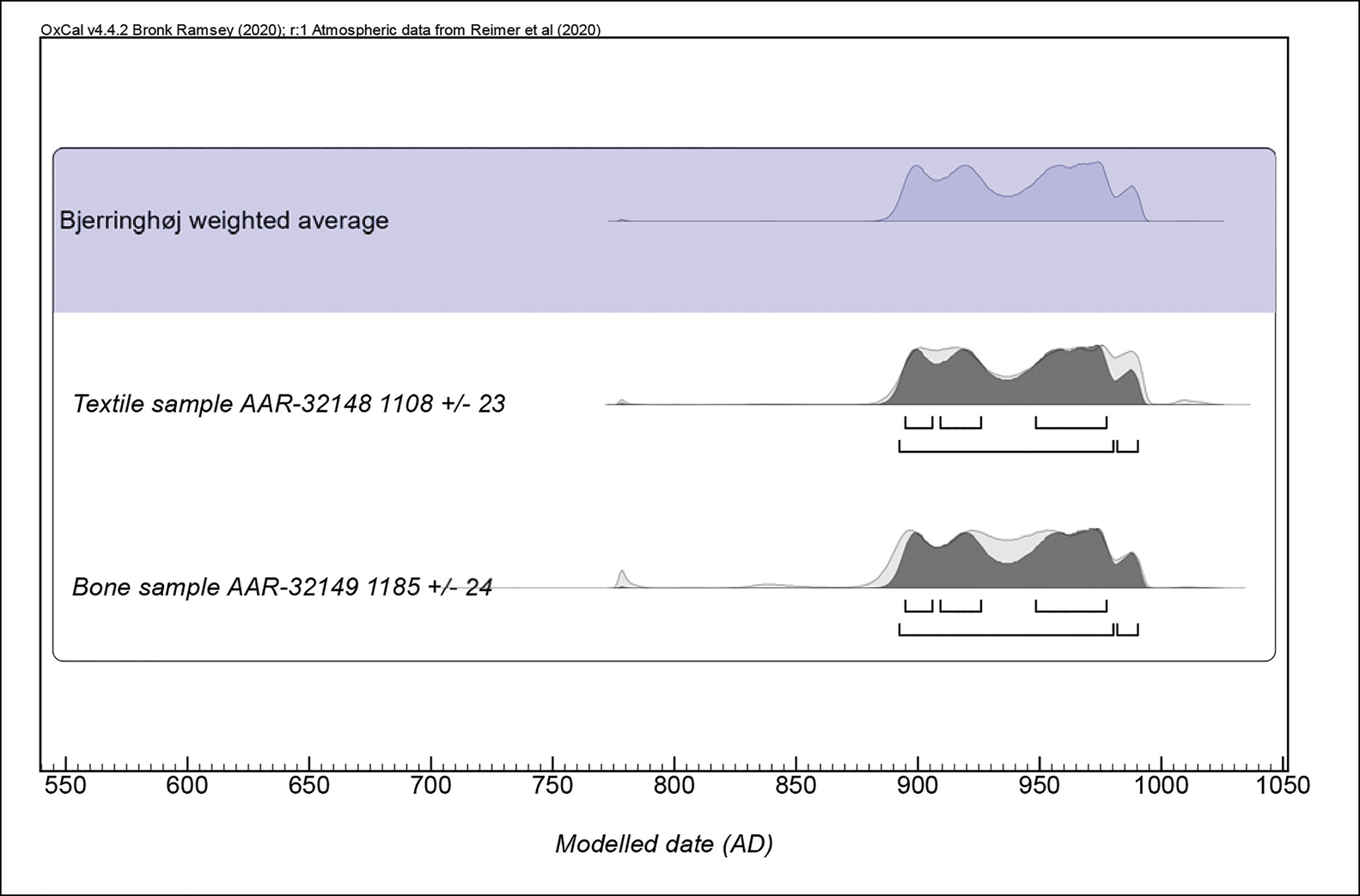
Figure 10. Plot with a modelled weighted average of the two dated samples from the Bjerringhøj burial. The isotope data from the bone sample indicated a marine input in the diet (15 per cent), and the date was therefore reservoir-corrected to 1123±24 BP (1185 C14 y—400*0,154) before calibration (using OxCal v4.4.2 and the IntCal20 calibration curve); Bronk Ramsey Reference Bronk Ramsey2009; Reimer et al. Reference Reimer2020).
The current bone inventory matches the 1872 anthropological description, with only the enamel fragment missing. The same number and types of bones are present, and the information about the gracile radius and calcaneus bones can be physically verified. We now know that the individual buried in the Bjerringhøj grave was an adult, most likely male, whose pronounced muscle-insertion sites imply frequent participation in intense physical activity, possibly connected to riding—evidence for which is known from other high-status Scandinavian graves in the form of horse remains and riding gear (Sørensen Reference Sørensen2001: 105–108). Refined DNA analysis methods in the future may reveal the precise sex of the deceased and clarify whether the grave contained more than one individual.
Three types of textiles found on the human bones match several of the extant textiles from Bjerringhøj; all are notably different from the Slotsbjergby textiles. The textile remains preserved on the bones verify that the embroidered fabric was placed on top of the body as a garment or cover that reached down below the knees. As no seams are preserved, the outline of this outfit remains uncertain. The openly woven rolls and the tablet-woven band represent components used for ankle cuffs. This implies the presence of a pair of long trousers usually associated with males in iconographic representations (Mannering Reference Mannering2017), which, again, supports the interpretation of the burial as belonging to a male. No traces were found of the trousers themselves, and it could be that they were made from a plant-fibre textile, such as flax or hemp, which has not survived in the burial environment.
The human bones and textiles, previously assumed to be associated with Slotsbjergby, have now been reconnected with the high-status Bjerringhøj burial. Furthermore, the analyses have yielded important information that offers new interpretations of the Bjerringhøj outfit, and Viking Age clothing in general. As an archaeological detective story, this research also demonstrates the importance of in-depth reinvestigations of old finds, and how it is essential to adopt a source-critical approach when dealing with museum collections.
Acknowledgements
We thank our colleagues at the National Museum of Denmark for their help with accessing, sampling and photographing the finds, and for interesting discussions about the scientific implications of this discovery.
Funding statement
We thank the Velux Foundations for funding the Fashioning the Viking Age project.
Supplementary material
To view supplementary material for this article, please visit https://doi.org/10.15184/aqy.2020.189




 Open access

