

Hostname: page-component-5d84bcc8dc-b9bcm Total loading time: 0 Render date: 2026-09-13T04:13:24.635Z Has data issue: false hasContentIssue false

DEGREES OF RANDOMIZED COMPUTABILITY

Published online by Cambridge University Press:  27 September 2021

RUPERT HÖLZL
Affiliation:
INSTITUT 1, FAKULTÄT FÜR INFORMATIK UNIVERSITÄT DER BUNDESWEHR MÜNCHEN WERNER-HEISENBERG-WEG 39, 85579 NEUBIBERG, GERMANY E-mail: r@hoelzl.fr URL: http://hoelzl.fr
CHRISTOPHER P. PORTER
Affiliation:
DEPARTMENT OF MATHEMATICS AND COMPUTER SCIENCE DRAKE UNIVERSITY, DES MOINES, IA 50311, USA E-mail: cp@cpporter.com URL: http://cpporter.com

Abstract

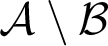
In this survey we discuss work of Levin and V’yugin on collections of sequences that are non-negligible in the sense that they can be computed by a probabilistic algorithm with positive probability. More precisely, Levin and V’yugin introduced an ordering on collections of sequences that are closed under Turing equivalence. Roughly speaking, given two such collections $\mathcal {A}$ and $\mathcal {B}$, $\mathcal {A}$ is below $\mathcal {B}$ in this ordering if $\mathcal {A}\setminus \mathcal {B}$ is negligible. The degree structure associated with this ordering, the Levin–V’yugin degrees (or $\mathrm {LV}$-degrees), can be shown to be a Boolean algebra, and in fact a measure algebra. We demonstrate the interactions of this work with recent results in computability theory and algorithmic randomness: First, we recall the definition of the Levin–V’yugin algebra and identify connections between its properties and classical properties from computability theory. In particular, we apply results on the interactions between notions of randomness and Turing reducibility to establish new facts about specific LV-degrees, such as the LV-degree of the collection of 1-generic sequences, that of the collection of sequences of hyperimmune degree, and those collections corresponding to various notions of effective randomness. Next, we provide a detailed explanation of a complex technique developed by V’yugin that allows the construction of semi-measures into which computability-theoretic properties can be encoded. We provide two examples of the use of this technique by explicating a result of V’yugin’s about the LV-degree of the collection of Martin-Löf random sequences and extending the result to the LV-degree of the collection of sequences of DNC degree.

Information

Type
Articles
Copyright
© The Author(s), 2021. Published by Cambridge University Press on behalf of The Association for Symbolic Logic

Access options

Get access to the full version of this content by using one of the access options below. (Log in options will check for institutional or personal access. Content may require purchase if you do not have access.)

Article purchase

Temporarily unavailable