





Introduction
The core question of personality development is ‘How do you become who you are?’. ‘How do you become’ relates to the process of development and ‘who you are’ relates to all the things that make you unique as a person. Adolescence is an important period for personality development in which there are leaps in one’s biological, cognitive, psychological, and social development (Costa et al., Reference Costa, McCrae and Löckenhoff2019; Lerner et al., Reference Lerner, Boyd and Du2010). Over the years, many different models have been proposed to describe and examine personality development. All of these models agree on the importance of person–environment transactions (e.g., Asendorpf & Motti-Stefanidi, Reference Asendorpf and Motti-Stefanidi2018; Clark, Reference Clark2005; McCrae & Costa, Reference McCrae and Costa1997; Roberts, Reference Roberts2009; Shiner & DeYoung, Reference Shiner, DeYoung and Zelazo2011; Van den Akker et al., Reference Van den Akker, Deković, Asscher and Prinzie2014). These models are partially tested empirically and predominantly described theoretically. The recently proposed DAE model, integrating Dispositional (D), Adaptational (A), and Environmental (E) variables, is built on a strong theoretical foundation, utilizes an integrative perspective, and has been tested empirically (Asendorpf & Motti-Stefanidi, Reference Asendorpf and Motti-Stefanidi2018). In this study, we will add to the empirical research on this model by conceptually replicating the DAE model in a community sample at the interface of adaptive and maladaptive personality development and in the context of a developmental pathway that may lead to personality pathology.
D, A, and E at the interface of adaptive and maladaptive personality development
Personality development can be thought of as a process of interactions between a person and its environment (Laceulle & Van Aken, Reference Laceulle, Aken, Zeigler-Hill and Shackelford2018). This dynamic interplay of person and environmental characteristics over time is assumed to promote either resilience or risk, adaptation or maladaptation (Cicchetti & Toth, Reference Cicchetti and Toth2009; Newton-Howes et al., Reference Newton-Howes, Clark and Chanen2015; Roberts & Robins, Reference Roberts and Robins2004). Person characteristics are differentiated in dispositions and adaptations. Dispositions can be thought of as abstract, enduring, and relatively stable personality traits (e.g., agreeableness). In interaction with the environment, dispositions become expressed as adaptations: unique, situational, and relatively variable characteristics (e.g., social functioning; McAdams & Pals, Reference McAdams and Pals2006). The distinction between dispositions and adaptations has appeared to be difficult but, nevertheless, possible to make, both conceptually and empirically (Henry & Mõttus, Reference Henry and Mõttus2020). This distinction may be particularly valuable because bidirectional influences between these person-characteristics and the environmental context may change with developmental phases (Rutter & Sroufe, Reference Rutter and Sroufe2000). Dispositions and adaptations may alternate as driving forces of personality development through self-stabilizing or -destabilizing processes, as key developmental milestones in specific phases emphasize either opportunities for adaptation or risks for maladaptation (Asendorpf & Motti-Stefanidi, Reference Asendorpf and Motti-Stefanidi2018, p. 168; Cicchetti & Rogosch, Reference Cicchetti and Rogosch2002; Shiner et al., Reference Shiner, Masten and Tellegen2002). Adolescence is a particularly important phase to examine personality at the interface of adaptive and maladaptive development and, therefore, potential pathways towards personality pathology. This phase of increasing autonomy as individuals transition to an independent, adult role requires the development of specific adaptive self and interpersonal functioning skills. These skills are compromised in individuals with personality pathology, which has been found to have its onset in adolescence (APA, 2013; Cicchetti & Rogosch, Reference Cicchetti and Rogosch2002; Sharp, Reference Sharp2020). With a prevalence of 10%–15% of personality pathology in community samples, some adolescents may be at risk to experience personality pathology at some point (Johnson et al., Reference Johnson, Cohen, Kasen, Skodol and Oldham2008). Therefore, this distinction between dispositions and adaptations within a community sample of adolescents could provide nuances in understanding pathways of personality development (Granic et al., Reference Granic, Lewis and Lichwarck-Aschoff2018; Rothbart, Reference Rothbart2004).
The DAE model is based on the understanding of person-environment transactions as the mechanism of personality development. This provides a framework to empirically disentangle associations between variables that are proposed to play a role by using building blocks of triples (Asendorpf & Motti-Stefanidi, Reference Asendorpf and Motti-Stefanidi2018). These DAE-triples consist of specific combinations of DAE variables. In the current investigation, focusing on the intersection of adaptive and maladaptive personality development, we purposefully selected D, A and E variables that have been associated with pathways towards personality pathology.
D: Neuroticism, disagreeableness and unconscientiousness
First, the D refers to dispositions or personality traits. In this study we consider neuroticism (disposition to experience psychological distress), disagreeableness (disposition to be cynical, callous, and antagonistic), and unconscientiousness (disposition to be lax, disorganized, and lackadaisical; Costa & McCrea, Reference Costa and McCrea1992). Neuroticism (N) has been found to be a robust non-specific indicator that captures shared ‘general features’ of personality pathology (Brandes et al., Reference Brandes, Herzhoff, Smack and Tackett2019; Caspi et al., Reference Caspi, Houts, Belsky, Goldman-Mellor, Harrington, Israel, Meier, Ramrakha, Shalev, Poulton and Moffitt2014; Sharp et al., Reference Sharp, Wright, Fowler, Frueh, Allen, Oldham and Clark2015). Also, disagreeableness (A) and unconscientiousness (C) have been associated with personality pathology (De Clercq et al., Reference De Clercq, De Fruyt and Van Leeuwen2004; Samuel & Widiger, Reference Samuel and Widiger2008). This particular trait profile (i.e., high levels of neuroticism and low levels of agreeableness and conscientiousness) has been termed the vulnerability profile as it is well-established that it relates to personality pathology and, in particular, borderline personality disorder (Fowler et al., Reference Fowler, Madan, Allen, Patriquin, Sharp, Oldham and Frueh2018; Morey et al., Reference Morey, Gunderson, Quigley, Shea, Skodol, McGlashan, Stout and Zanarini2002; Saulsman & Page, Reference Saulsman and Page2004). Moreover, this personality trait profile has been described as a higher order ‘stability’-factor within the Big Five that reflects stability in (dis-)functioning on emotional, motivational and social domains (DeYoung et al., Reference DeYoung, Peterson and Higgins2002).
A: Social problems
Second, the A refers to (mal-)Adaptation. Here, maladaptation can be conceptualized as the inability to show adaptive behavior in different areas of psychosocial (i.e., self and interpersonal) functioning (Eisenberg et al., Reference Eisenberg, Spinrad and Eggum2010). Key moments for adaptation or maladaption are the attainment of developmental milestones. Gaining social competence and functioning in a social network of peer relations is such a milestone and problems in attaining these milestones are particularly related to personality pathology in adolescence (Dow-Edwards et al., Reference Dow-Edwards, MacMaster, Peterson, Niesink, Andersen and Braams2019; Pincus et al., Reference Pincus, Cain and Halberstadt2020; Shiner, Reference Shiner2009). In fact, personality pathology can be conceptualized as ‘adaptive failure’, or the incompetence to adequately reach developmental milestones (Livesley & Jang, Reference Livesley and Jang2000). Even so, personality pathology can be considered an interpersonal problem in its core (Hopwood et al., Reference Hopwood, Wright, Ansell and Pincus2013). As such, problems in interpersonal functioning that may be emphasized as maladaptation during adolescence may indicate the onset of personality pathology if they problems are severe and persistent (APA, 2013; Pincus et al., Reference Pincus, Cain and Halberstadt2020; Shiner, Reference Shiner2009; Wright et al., Reference Wright, Hallquist, Beeney and Pilkonis2013).
E: Quality of the parent–child relationship
Third, the E refers to an environmental context that hinders or facilitates development. A context of dysfunctional parenting that is non-supportive of reaching developmental milestones that arise at certain ages may contribute to pathways towards personality pathology in particular (Steele et al., Reference Steele, Townsend and Grenyer2019) and psychopathology in general (Erikson, Reference Erikson1963, Reference Erikson1968). One of the key developmental milestones in adolescence is gaining autonomy. A key task for parents, therefore, is supporting their childrens’ autonomy while maintaining a warm and close bond (Beveridge & Berg, Reference Beveridge and Berg2007; Soenens et al., Reference Soenens, Vansteenkiste, Beyers and Bornstein2019; Wray-Lake et al., Reference Wray-Lake, Crouter and McHale2010). Specifically, if adolescents are confronted with ambiguity, anxiety, or conflict when striving for autonomy it is helpful that the relation with parents offers a safe and supportive environment for this process of maturation (Spear & Kulbok, Reference Spear and Kulbok2004; Van den Akker et al., Reference Van den Akker, Deković, Asscher and Prinzie2014).
DAE-model assumptions
To disentangle directions between the D, A, and E variables in shaping one’s personality development, the DAE-model assumes that the variables have a unique and distinguishable role which can be tested with specific hypotheses (Asendorpf & Motti-Stefanidi, Reference Asendorpf and Motti-Stefanidi2018, p.171). To our knowledge, no empirical tests of the DAE model in the specific context of the vulnerability trait profile and a potential pathway towards personality pathology have been conducted. In one empirical study, Asendorpf and Motti-Stefanidi (Reference Asendorpf and Motti-Stefanidi2018), found that personality traits (D) have a strong influence on conduct and self-esteem with peers (A) and that this adaptation mediates the association between personality traits and peer acceptance or rejection (E) in adolescents. The DAE-triple in the current study allows to specifically focus on personality development in a community sample of adolescents, with a focus on the vulnerability trait profile (D), social problems (A), and quality of the parent–child relationship (E). The hypothesized longitudinal associations, as described by Asendorpf and Motti-Stefanidi (Reference Asendorpf and Motti-Stefanidi2018) are presented in Figure 1 and described below in the context of our chosen DAE triple.
Cross-lagged panel model of high Neuroticism, Disagreeableness and Unconscientiousness (D), Social Problems (A), and perceived warmth and autonomy support from parents (E). NB. For reasons of visual clarity, only the most prominent relations that are hypothesized by the DAE model are depicted.
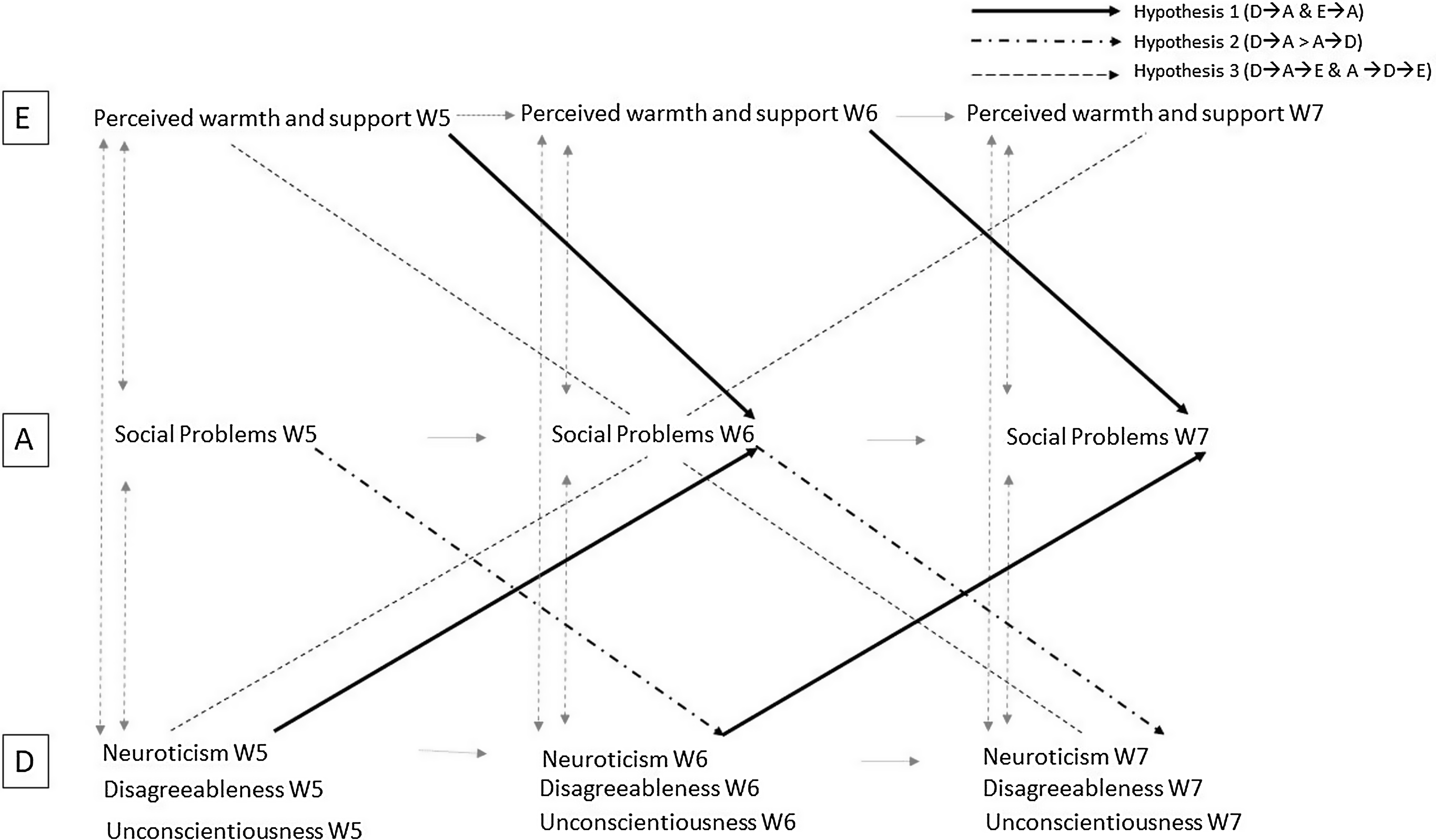
Hypothesis 1: A prospective co-influence of D and E on A : Neuroticism, disagreeableness and unconscientiousness (D) and the quality of the parent-child relationship (E) significantly influence social problems (A; D → A and E → A).
First, support has been found for the association of these personality traits with social problems (Du et al., Reference Du, Yardley and Thomas2021) with high levels of neuroticism more generally and low levels of agreeableness and conscientiousness specifically related to social problems (Asendorpf & Van Aken, Reference Asendorpf and Van Aken2003; Lynam et al., Reference Lynam, Caspi, Moffitt, Raine, Loeber and Stouthamer-Loeber2005; Vanwoerden et al., Reference Vanwoerden, Franssens, Sharp and De Clercq2021). Second, support has been found for the influence of perceived warmth and autonomy support from parents on social functioning: several studies indicate that warmth and autonomy support were related to social orientation, number of friendships, and peer acceptance or rejection in young children and levels of general social well-being in adolescents (Clark & Ladd, Reference Clark and Ladd2000; Tanhaye Reshvanloo et al., Reference Tanhaye Reshvanloo, Saeidi Rezvani, Jami and Seadatee Shamir2020). Longitudinal studies suggested that problems with establishing autonomy from parents and maintaining warm attachment relations with parents were linked to external problem behaviors, including social problems and social skills (Allen et al., Reference Allen, Hauser, Eickholt, Bell and OʼConnor1994; Allen et al., Reference Allen, Marsh, McFarland, McElhaney, Land, Jodl and Peck2002).
Hypothesis 2. Causal dominance of D over A : The influence of neuroticism, disagreeableness and unconscientiousness on social problems (D → A) is stronger than vice versa (A → D).
There are contrasting findings concerning causal dominance of the personality traits over social problems. On the one hand, neuroticism specifically has been found to be a genetically inheritable feature that underlies psychopathology (Hink et al., Reference Hink, Rhee, Corley, Cosgrove, Hewitt, Schulz-Heik, Lahey and Waldman2013; Kotov et al., Reference Kotov, Gamez, Schmidt and Watson2010) and predicts several adaptive outcomes such as self-efficacy (Deutz et al., Reference Deutz, van Eldik, Over de Vest, Ringoot, de Haan and Prinzie2021). High levels of neuroticism and low levels of agreeableness and conscientiousness have been found to be a consistent correlate and risk factor in the development of antisocial or externalizing behaviors (Lynam et al., Reference Lynam, Caspi, Moffitt, Raine, Loeber and Stouthamer-Loeber2005; Miller et al., Reference Miller, Lynam and Leukefeld2003; Ruiz et al., Reference Ruiz, Pincus and Schinka2008; Van den Akker et al., Reference Van den Akker, Deković and Prinzie2010). Moreover, dispositions (D) and adaptations (A) have been referred to as core and surface characteristics based on the assumption that dispositions are more stable and immune to environmental influences, whereas adaptations are less stable and easily influenced by the environment (Asendorpf & Van Aken, Reference Asendorpf and Van Aken2003a; Costa et al., Reference Costa, McCrae and Löckenhoff2019). On the other hand, interpersonal problems have been found to predict maladaptive personality traits (Mervielde et al., Reference Mervielde, De Clercq, De Fruyt and Van Leeuwen2005; Stepp et al., Reference Stepp, Smith, Morse, Hallquist and Pilkonis2012). Social experiences, like social exclusion, are found to influence personality traits (DeWall et al., Reference DeWall, Deckman, Pond and Bonser2011). Moreover, evidence has been reported for a bidirectional effect, in which externalizing problems, including social problems, predict personality trait domains and vice versa (Klimstra et al., Reference Klimstra, Akse, Hale, Raaijmakers and Meeus2010; Klimstra et al., Reference Klimstra, Luyckx, Hale and Goossens2014).
These contrasting findings may have to do with a blurred line between what can be considered a disposition or an adaptation (Henry & Mõttus, Reference Henry and Mõttus2020; Kandler et al., Reference Kandler, Zimmermann and McAdams2014). In fact, as suggested by Asendorpf & Motti-Stefanidi (Reference Asendorpf and Motti-Stefanidi2018) what a disposition and an adaptation are may shift during development through self-stabilizing (adaptation becomes disposition) or destabilizing (disposition becomes adaptation) processes. In line with D → A, dispositions can be seen as relatively stable constructs that influence the risk of developing mental disorders, termed the vulnerability model (Laceulle et al., Reference Laceulle, Ormel, Vollebergh, Van Aken and Nederhof2014). Whereas, in line with A → D, maladaptations or enduring mental disorders can also influence an individual’s personality traits, termed the scar model (Krueger & Tackett, Reference Krueger and Tackett2003; Ormel et al., Reference Ormel, Oerlemans, Raven, Oldehinkel and Laceulle2020). There are many models that describe personality development, however because the vulnerability and scar model hypothesis match the DAE-hypothesis these are considered in this study.
Hypothesis 3. The association between D and E is mediated by A: The influence of neuroticism, disagreeableness and unconscientiousness on the quality of the parent-child relationship (D → E) or vice versa (E → D), is mediated by social problems (D → A → E or E → A → D).
First, support has been found for the influence of these personality traits on perceived warmth and autonomy support. Adolescents with more favorable personality traits perceived more support from parents and lower parental coercion than adolescents with less favorable personality traits (Van Aken & Semon Dubas, Reference Van Aken and Semon Dubas2004; Van den Akker et al., Reference Van den Akker, Deković, Asscher and Prinzie2014). High or low levels of personality traits, specifically agreeableness, may elicit or diminish supportive parenting behaviors (Branje et al., Reference Branje, van Lieshout and van Aken2004; De Haan et al., Reference De Haan, Deković and Prinzie2012). In turn, variability in personality traits was found as a function of parenting: autonomy-supportive parenting elicited expression of favorable personality traits (e.g., conscientiousness, agreeableness), whereas parenting that thwarted autonomy resulted in less favorable personality traits (e.g., disagreeableness and neuroticism; La Guardia & Ryan, Reference La Guardia and Ryan2007). Second, previous findings support the hypothesis of a mediating influence of Social Problems (D → A → E or E → A → D). Antisocial behavior and poor social skills may prevent parents from acting warmly and supportive of reaching developmental milestones, especially if personality traits such as disagreeableness make sustaining a warm relationship and navigating development challenging (Mabbe et al., Reference Mabbe, Soenens, Vansteenkiste and Van Leeuwen2016; Vasilev et al., Reference Vasilev, Crowell, Beauchaine, Mead and Gatzke-Kopp2009). In line with the difficult distinction between dispositions and adaptations (Allemand et al., Reference Allemand, Grünenfelder-Steiger, Flückiger, Zeigler-Hill and Shackelford2020), we will test the additional hypothesis that dispositions – and not adaptations – have a mediating role in personality development (A → D → E or E → D → A).
This study
With this study, we aim to gain insight in personality development in a community sample of adolescents by conceptually replicating the DAE-model. Specifically, we investigate the hypothesized interrelations between constructs that are found to play a role in a potential pathway towards personality pathology within the DAE model: three personality traits (D) that constitute the vulnerability trait profile (neuroticism, disagreeableness and unconscientiousness), social problems (A), and quality of the parent–child relationship (E), which is operationalized in this study as self-reported perceived warmth and autonomy support from both father and mother. The results of this study may shed light not only on adolescent personality development at the interface of adaption and maladaptation but also on whether the DAE model can be conceptually replicated in this context.
Method
Participants and sampling
This study used data from the ongoing longitudinal Flemish Study on Parenting, Personality, and Development (FSPPD). A detailed description of recruitment, informed consent procedures, and sample characteristics is provided by Prinzie et al. (Reference Prinzie, Onghena, Hellinckx, Grietens, Ghesquière and Colpin2004). Many manuscripts have used this dataset; for example, Deutz et al. (Reference Deutz, Woltering, Vossen, Deković, van Baar and Prinzie2019). In 1999, a proportionally stratified sample of 167 schools in Flanders (Belgium) was composed on the basis of the distribution of schools across the five Flemish provinces. Strata were constructed according to geographical location (province), age, and sex. Children, parents, and teachers were selected randomly (i.e., the names of the children who have had their birthday before 31 March were arranged alphabetically; the second and the last child but one were selected). Because only three measurement waves contained measures of interest, our study analyzed data from the fifth wave (2007), the sixth wave (2009), and the seventh wave (2012).
Sample
The sample consisted of 463 adolescents (52% self-identified female) in the fifth wave, of 433 adolescents (53% female) in the sixth wave, and of 404 (53% female) adolescents in the seventh wave that completed all measures. Some adolescents (N = 3) had missing data on all measures in all waves. They were not included in the analyses due to lack of data for estimation, resulting in a sample of 460 adolescents. Adolescents were between 11 and 16 years of age in the fifth wave, between 13 and 18 years in the sixth wave, and between 16 and 21 years in the seventh wave (W5: M = 13.6 years, SD = 1.14; W6: M = 15.5, SD = 1.16; W7: M = 18.6, SD = 1.16). Of the 463 adolescents in the fifth wave, 88% lived with both parents 10% had divorced parents, and the remainder were unknown.
Measures
Dispositions
Adolescents completed the lexically based Dutch questionnaire Hierarchical Personality Inventory for Children to measure child personality traits (HiPIC; Mervielde & De Fruyt, Reference Mervielde, De Fruyt, Mervielde, Deary, De Fruyt and Ostendorf1999). Adolescents rated characteristics on a 5 point Likert scale ranging from 1 (completely not applicable) to 5 (completely applicable).; Examples of these characteristics include ‘I am quick to panic’ (high neuroticism), ‘I am quick to lash out’ (disagreeableness), or ‘I make a mess of things’ (unconscientiousness). The HiPIC is an empirically derived questionnaire, including 144 items, grouped into five factors: Extraversion, Benevolence (corresponding to Agreeableness), Conscientiousness, Emotional Stability (corresponding to Neuroticism), and Imagination (corresponding to Openness). Findings concerning the structural replicability, validity, and temporal stability of the HiPIC have been reported by De Fruyt et al. (Reference De Fruyt, Bartels, Van Leeuwen, De Clercq, Decuyper and Mervielde2006), Prinzie and Deković (Reference Prinzie and Deković2008) and Van den Akker et al. (Reference Van den Akker, Deković, Asscher and Prinzie2014). Internal consistencies of the personality traits over the three waves in this study were .87/.90/.91 for Neuroticism, .90/.92/.93 for Conscientiousness and .89/.89/.89 for Agreeableness respectively. Even though the HiPIC factors may have slightly different names, they are commonly used as a conceptualization of the Big Five personality traits and we will also use them as such (De Clercq et al., Reference De Clercq, De Fruyt and Van Leeuwen2004; De Fruyt et al., Reference De Fruyt, Mervielde, Hoekstra and Rolland2000; De Pauw, Reference De Pauw and Widiger2017; De Maat et al., Reference De Maat, Lucassen, Shiner and Prinziein press). Since the HiPIC is originally used to measure adaptive personality traits, the three personality trait dimensions were inversely coded to fit the perspective of this study; namely, investigating the potential developmental pathway towards personality pathology. In this study, the factors that constitute the vulnerability trait profile were used and coded in the direction of this vulnerability profile; i.e, Neuroticism, Disagreeableness, and Unconscientiousness.
Adaptations
Adolescents completed the Youth-Self Report (YSR), which includes the social problems scale (YSR; Achenbach, Reference Achenbach1991; Verhulst et al., Reference Verhulst, van der Ende and Koot1997). Behavioral items (e.g., ‘I am not liked by other kids’ or ‘I act too young for my age’) were rated on a 3-point Likert scale ranging from 0 (not true) to 2 (very true or often true). The YSR has demonstrated adequate reliability and validity for use with children over the age of 11 years old (Achenbach, Reference Achenbach1991; Ebesutani et al., Reference Ebesutani, Bernstein, Martinez, Chorpita and Weisz2011). The Social Problems scale was constructed by taking the mean of 11 items. Internal consistencies over the three waves of this study were .68/.66/.66.
Environment
Adolescents completed the autonomy scale of the Mother Father Peer Inventory (MFP-33; Epstein, Reference Epstein1983; Locke & Prinz, Reference Locke and Prinz2002). This 7-item scale assesses to which extent adolescents perceive their parents as supportive in gaining autonomy (e.g., ‘encourages me to make my own decisions’). Scores are given on a 4 point Likert scale ranging from 1 (completely not true) to 4 (completely true). Internal consistencies over the three waves of this study were .74/.83/.86 for perceived autonomy support from mothers and .79/.86/.89 for perceived autonomy support from fathers. Adolescents also completed the Parenting Practices Questionnaire (PPQ; Robinson et al., Reference Robinson, Mandleco, Frost Olsen and Hart1995). This 10-item questionnaire assesses to which extent adolescents perceive parents as warm and involved (e.g., ‘shows affection by cuddling, kissing or holding me’). Scores are given on a 5-point Likert scale ranging from 1 (never) to 5 (always). Internal consistencies over the three waves of this study were .87/.87/.91 for perceived maternal warmth and .89/.89/.92 for perceived paternal warmth. Both the MFP-33 and the PPQ have demonstrated adequate reliability and validity (Locke & Prinz, Reference Locke and Prinz2002).
Analytical plan
First, in order to construct a variable that represents the perceived environment of the adolescents as closely as possible we created one latent ‘E’-variable in Mplus by estimating factor scores on for perceived warmth and autonomy support from mother and father. This model was then improved based on modification indices by adding covariance statements between some of the variables. Model fit for this model was χ2 = 234.65, df = 29, CFI = .904, RMSEA = .119. Latent factor scores were saved and included in the dataset as one variable score. Longitudinal associations between the three personality traits, social problems, and the perceived quality of the parent-child relationship were assessed with a cross-lagged panel model by means of structural equation modeling in Mplus 8.2 (Muthén & Muthén, Reference Muthén and Muthén2017). Maximum Likelihood Robust (MLR) estimation was used (Satorra & Bentler, Reference Satorra, Bentler, von Eye and Clogg1994) to take into account the non-normal distribution of social problems. Model fit was judged by assessing RMSEA’s, CFI’s and Chi-square with a RMSEA below .08 and a CFI larger than .90 being indicative of a relatively good model fit (Kline, Reference Kline1998). There has been critique on ‘normal’ cross-lagged panel models in comparison to random intercept cross-lagged panel models (Hamaker et al., Reference Hamaker, Kuiper and Grasman2015). However, since the goal of this study was not to distinguish within and between person effects but to conceptually replicate and test the DAE-model, we used traditional cross-lagged panel modelling to ensure comparisons with previous studies (Asendorpf & Motti-Stefanidi, Reference Asendorpf and Motti-Stefanidi2018, Klimstra et al., Reference Klimstra, Akse, Hale, Raaijmakers and Meeus2010).
We tested the hypothesis-driven DAE model by modelling the paths that are hypothesized in the DAE-model (see Figure 1, Table 3–5). We tested a model with all paths constrained (Model 1) against a model with all paths freely estimated (Model 2). Then we tested a model in which the structural model stabilities and within wave correlations were freely estimated but the lagged effects were constrained to be equal (Model 3), corresponding to the models that were run by Asendorpf and Motti-Stefanidi (Reference Asendorpf and Motti-Stefanidi2018). Thereafter we tested whether the bidirectional relations between dispositions and adaptations could be constrained to be equal (Model 4) and whether a model with differential constraints between the cross-paths should be favored over a model with all cross-paths constrained (Model 5). Thus, we tested several nested models relying on three criteria to compare nested models: a significant chi-square Satorra-Bentler difference test (Steiger et al., Reference Steiger, Shapiro and Browne1985), a difference in CFI of >.01 (Cheung & Rensvold, Reference Cheung and Rensvold2002), and a difference in RMSEA of >.01 (Chen, Reference Chen2007). For the comparison of models, we only favored the less parsimonious model if at least two of these criteria were satisfied.
Results
Descriptives
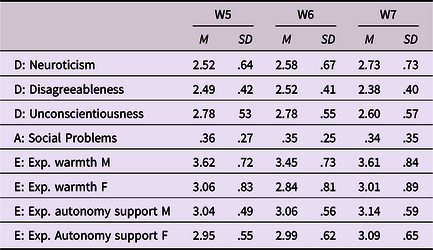
Means and standard deviations of all variables are presented in Table 1 and correlations are presented in Table 2. All variables were mean-centered.
Means and standard deviations of the D, A, E constructs
Correlations between the dispositional traits (Neuroticism (N), Disagreeableness (A), Unconscientiousness (C), Social Problems (SP), the perceived relationship quality (warmth and autonomy support) with parents (E) and Age across waves (W5, W6, W7)
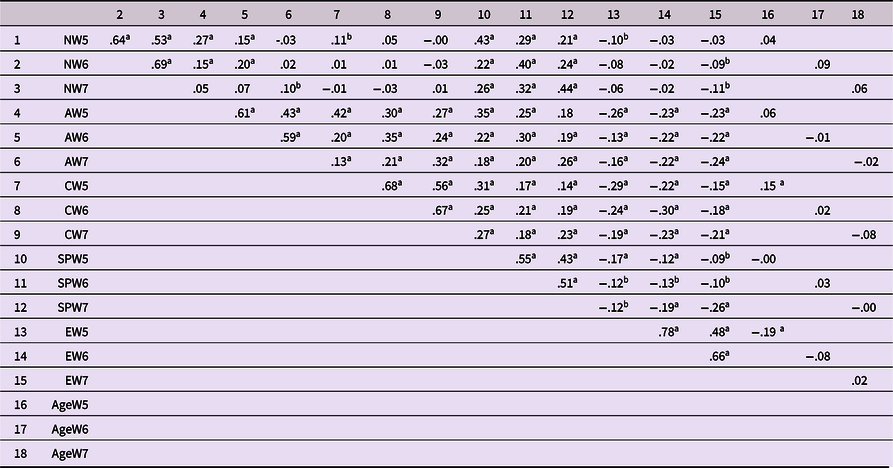
a p < .001, b p < .05.
A test of the DAE model
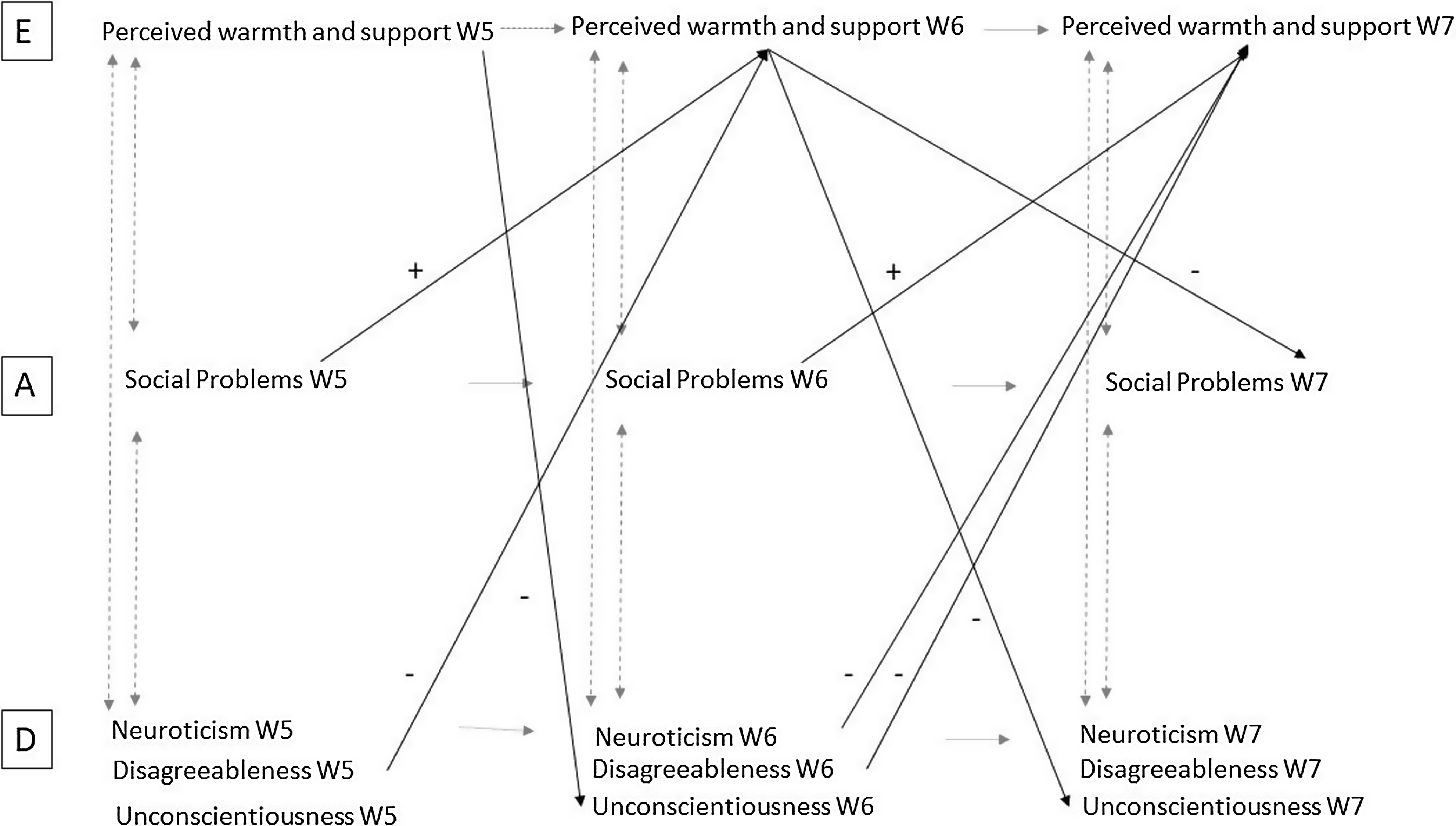
The DAE-model is presented in Figure 1. The results of the model comparison and fit statistics are presented in Tables 3–5, in which the final models are outlined. The model with all cross-paths constrained but all structural model stabilities freely estimated is identical to the model that was tested by Asendorpf and Motti-Stefanidi (Reference Asendorpf and Motti-Stefanidi2018, p. 171), with the exception that we do not model latent variables. This model (model 4, Tables 4 and 5) could be chosen as the most parsimonious model for disagreeableness and unconscientiousness. However, for neuroticism we had to choose a less parsimonious model (model 5, Table 3) in which the lagged effects varied between waves based on model comparison results. Model fit indices for each model are described below. Stability paths were freely estimated and are presented in Table 6. The three DAE-model hypotheses were tested and results are presented in Tables 7 and 8. The statistically significant predictive relations are presented in Figure 2. Standardized results were examined to indicate the relative strength of the effects. All analyses were controlled for age.
The significant results of the three cross-lagged panel models and the direction of these predictive relations, + positive, − negative.
Selection process of the best fitting model for Neuroticism
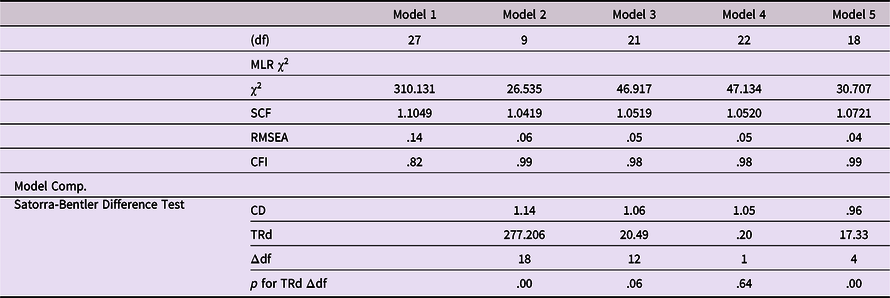
Model 1: Fully unconstrained model, Model 2: Fully constrained model, Model 3: Model with stability paths freely estimated and cross-paths constrained, Model 4: Model with stability paths freely estimated, cross-paths constrained and the paths between D and A constrained to be equal. Model 5: Model with stability paths freely estimated, the paths between D and A constrained to be equal and the paths between A and E and E and D freely estimated.
Selection process of the best fitting model Disagreeableness
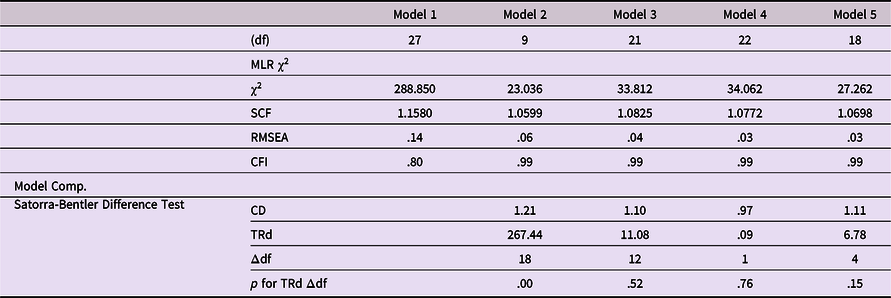
Model 1: Fully unconstrained model, Model 2: Fully constrained model, Model 3: Model with stability paths freely estimated and cross-paths constrained, Model 4: Model with stability paths freely estimated, cross-paths constrained and the paths between D and A constrained to be equal. Model 5: Model with stability paths freely estimated, the paths between D and A constrained to be equal and the paths between A and E and E and D freely estimated.
Selection process of the best fitting model for Unconscientiousness
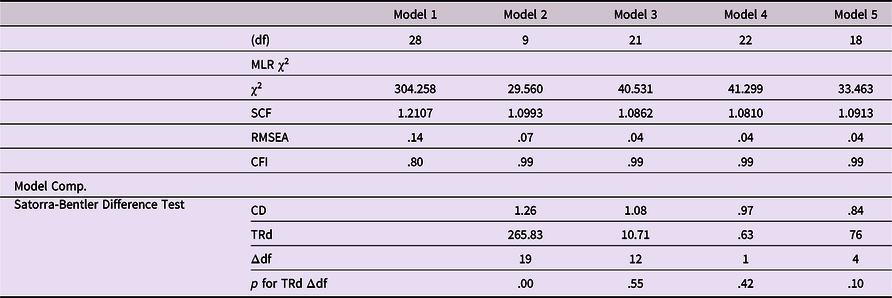
Model 1: Fully unconstrained model, Model 2: Fully constrained model, Model 3: Model with stability paths freely estimated and cross-paths constrained, Model 4: Model with stability paths freely estimated, cross-paths constrained and the paths between D and A constrained to be equal. Model 5: Model with stability paths freely estimated, the paths between D and A constrained to be equal and the paths between A and E and E and D freely estimated.
Estimated stability paths of the D, A, E constructs

N.B. N = High Neuroticism, A = Low Agreeableness, C = Low Conscientiousness.
**<.001, *<.05.
Test of the DAE-hypotheses for Disagreeableness and Unconscientiousness
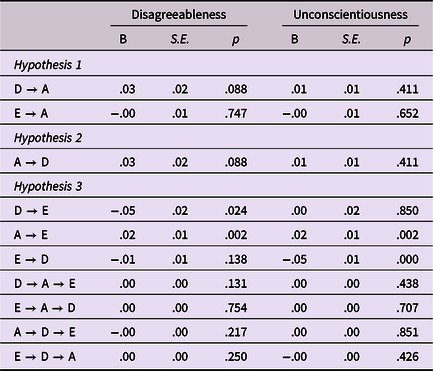
N.B. ‘ → ’ = predicting.
Test of the DAE-hypotheses for Neuroticism
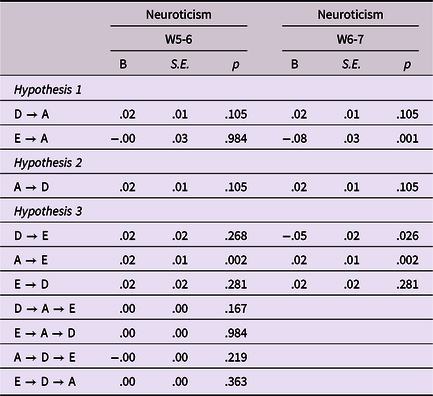
N.B. ‘ → ’ = predicting.
Neuroticism
Fit indices for the model with neuroticism as disposition (model 5, Table 3) were: χ2 = 30.71**, df = 18, CFI = .99, RMSEA = .04. Concerning H1, we did not find a coinfluence of D and E on A. Levels of neuroticism did not predict levels of social problems (D → A). Although the quality of the parent–child relationship did predict levels of social problems (E → A) from the 6th to the 7th wave, this was not the case from the 5th to the 6th wave. This indicates that a better perceived quality of the parent–child relationship is more predictive of fewer social problems between middle and late adolescence than early and middle adolescence. Concerning H2, more social problems did not predict higher levels of neuroticism (A → D). The effects of D on A and vice versa could be constrained to be equal. Concerning H3, we found that high levels of neuroticism predicted lower perceived parent-child relationship quality and that more social problems predicted higher perceived parent-child relationship quality (D → E and A → E). However, these effects were mediated by neither D nor A.
Disagreeableness
Fit indices for the model with disagreeableness as disposition (model 4, Table 4) were: χ2 = 34.06**, df = 22, CFI = .99, RMSEA = .04. Concerning H1, results did not indicate a co-influence of D and E on A, meaning that levels of disagreeableness and the perceived quality of the parent–child relationship did not predict levels of social problems over time. Concerning H2, more social problems did not predict higher levels of disagreeableness (A → D). The effects of D on A and vice versa could be constrained to be equal. Concerning H3, we found that high levels of disagreeableness predicted lower perceived parent-child relationship quality and that more social problems predicted higher perceived parent-child relationship quality (D → E and A → E). However, these effects were mediated by neither D nor A.
Unconscientiousness
Fit indices for the model with unconscientiousness as disposition (model 4, Table 5) were: χ2 = 41.30**, df = 22, CFI = .99, RMSEA = .04. Concerning H1, results did not indicate a coinfluence of D and E on A. Neither higher levels of unconscientiousness nor the quality of the parent–child relationship predicted more social problems (D & E → A). Concerning H2, we found that more social problems did not predict higher levels of unconscientiousness (A → D). The effects of D on A and vice versa could be constrained to be equal. Concerning H3, we found that more social problems predicted higher parent–child relationship quality (A → E). In turn, a higher parent–child relationship quality predicted lower levels of unconscientiousness (E → D). However, these effects were mediated by neither D nor A.
Discussion
The goal of this study was to increase our understanding of personality at the interface of adaptive and maladaptive developmental pathways by conceptually replicating the DAE model (Asendorpf & Motti-Stefanidi, Reference Asendorpf and Motti-Stefanidi2018) in a community sample of adolescents. We studied the longitudinal effects of D, A, and E variables that are found to play a role in shaping personality (dis-)functioning; i.e., neuroticism, disagreeableness, unconscientiousness, social problems, and quality of the parent–child relationship (perceived warmth and autonomy support from mother and father). The DAE model provides a general and flexible framework for empirical tests of specific hypotheses that are grounded in theory.
In this longitudinal study covering 5 years, we examined three cross-lagged panel models to investigate the effect of the three personality traits (i.e., dispositions) separately. Our correlational results indicated that individuals with more social problems reported a lower perceived quality of the parent–child relationship and higher levels of neuroticism, disagreeableness, and unconscientiousness. Furthermore, those who reported a higher perceived quality of the parent–child relationship reported lower levels of disagreeableness and unconscientiousness. Results of our longitudinal DAE-models were partially in line with the findings of Asendorpf and Motti-Stefanidi (Reference Asendorpf and Motti-Stefanidi2018). First, concerning the predictive relation between the A and E variables, we found support for the influence of adaptations on the environment. Specifically, more social problems predicted a higher perceived quality of the parent–child relationship. Second, the role of the three dispositions was more complex; the results indicated that higher levels of disagreeableness, in all waves, and of neuroticism, from the 6th to the 7th wave, predicted a lower quality of the parent-child relationship. A higher quality of the parent–child relationship in turn predicted lower levels of unconscientiousness. Further, in the model in which neuroticism was considered, a higher quality of the parent-child relationship predicted lower levels of social problems from the 6th to the 7th wave. Thus, we could not fully support the H1 hypothesis, but found partial support when looking at neuroticism only. Third, we found no evidence for bidirectional influences of the dispositions neuroticism, disagreeableness, and unconscientiousness on social problems as adaptation. These effects of D on A and vice versa could be constrained to be equal in all three models, which indicates that our results do not support H2. Finally, whereas examining H3 provided insight in the differential role of D, A, and E variables in personality development, we did not find support for mediation effects. Social problems did not explain the effect between dispositions and the quality of the parent–child relationship nor did dispositions explain the effect between social problems and the quality of the parent-child relationship.
What do these findings tell us about personality development?
First, they give insight into the role of the perceived quality of the parent-child relationship during the developmental phase of increased emphasis on social functioning. In our community sample of adolescents, more social problems predicted a higher perceived quality of the parent–child relationship two and three years later. This may be because parents observe their children struggling in the social domain and increase their involvement to support them in navigating this difficult developmental phase. This interpretation is based on Kerr and Stattin (Reference Kerr, Stattin, Crouter and Booth2003) who suggest that parenting is often a result of the characteristics or behavior of adolescents. This particular association was examined by Branje et al. (Reference Branje, Hale, Meeus, Kerr, Stattin and Engels2008) by asking adolescents the question ‘when you are having problems in relations with someone else, or when you are feeling lonely, who helps you?’. Results revealed that emotional problems seemed to increase perceived parental support and parent–adolescent communications (Helsen et al., Reference Helsen, Vollebergh and Meeus2000). Data from a meta-analysis by Gorrese (Reference Gorrese2016) supported the hypothesis that social problems lead to distress and internalizing problems, which in turn may lead to increased parental involvement. In addition, and in line with our finding of fewer social problems, a large body of research has consistently shown that quality of the parent–child relationship is associated with many positive outcomes during adolescence, such as improved social skills, greater well-being (Anaya & Pérez-Edgar, Reference Anaya and Pérez-Edgar2019; Branje et al., Reference Branje, Hale, Meeus, Kerr, Stattin and Engels2008), and a decrease in externalizing problems (Zhang et al., Reference Zhang, Lee, Piehler, Gewirtz and August2020).
Second, our consideration of the three personality traits gives insight into the complexity of person-environment transactions and how these shape both adaptive and maladaptive pathways of personality development. As a possible explanation for the consistent positive effect of parenting on a broad range of adolescent outcomes, our findings indicated that higher quality of the parent–child relationship predicts lower levels of unconscientiousness over time. This is in line with previous findings that describe how parenting investment or involvement, particularly in a higher SES sample, promotes higher levels of conscientiousness (Conger et al., Reference Conger, Martin and Masarik2021; Schofield et al., Reference Schofield, Conger, Donnellan, Jochem, Widaman and Conger2012; Van den Akker et al., Reference Van den Akker, Deković, Asscher and Prinzie2014). This finding emphasizes the importance of the parent–child relationship as a beneficial environmental factor that drives adaptive pathways of personality development in this phase. However, the reverse also appears to be true. Higher levels of disagreeableness and neuroticism demonstrated a negative predictive effect on the perceived quality of the parent–child relationship. This finding has been documented before as agreeableness seems to be a strong longitudinal predictor of perceived parental warmth and support (Branje et al., Reference Branje, van Lieshout and van Aken2004; De Haan, Dekovic, & Prinzie, Reference De Haan, Deković and Prinzie2012; Van den Akker et al., Reference Van den Akker, Deković, Asscher and Prinzie2014).
Third, even though all the concurrent associations indicated that the three personality traits were associated with social problems – which is as expected and in line with previous studies (Holland & Roisman, Reference Holland and Roisman2008; Jensen-Campbell & Malcolm, Reference Jensen-Campbell and Malcolm2007) – we did not find bidirectional predictive influences between the D and A variables. Despite neuroticism being frequently found as a general predictor of psychopathology and personality pathology in particular (Kotov et al., Reference Kotov, Gamez, Schmidt and Watson2010; Shields et al., Reference Shields, Giljen, España and Tackett2021; Widiger & Oltmanns, Reference Widiger and Oltmanns2017), it did not predict higher levels of social problems in our study. Previous studies have argued that neuroticism may predominantly predict internalizing problems (Mezquita et al., Reference Mezquita, Ibáñez, Villa, Fañanás, Moya-Higueras and Ortet2015). However, the vulnerability profile, in general, and higher levels of disagreeableness and unconscientiousness, in particularly, have been found to be predictive of externalizing problems and aggression (Favini et al., Reference Favini, Gerbino, Eisenberg, Lunetti and Thartori2018; Klimstra et al., Reference Klimstra, Akse, Hale, Raaijmakers and Meeus2010; Mezquita et al., Reference Mezquita, Ibáñez, Villa, Fañanás, Moya-Higueras and Ortet2015). In comparison to what may be expected in a clinical sample (Rescorla et al., Reference Rescorla, Ewing, Ivanova, Aebi, Bilenberg, Dieleman and Verhulst2017), the community sample reported relatively low levels of social problems, which are also less extreme than externalizing problems or aggression. This may play a role in this unexpected non-finding.
Our question whether maladaptive personality development is best described by a vulnerability model or a scar model could not be answered based on our results due to the lack of evidence for predictive relations between D and A variables. It is important that future research in a clinical sample replicates this examination. Two outcomes may be hypothesized: (1) Either the results will be the same, because in this large community sample a similar spectrum of scores on personality traits and social problems is expected compared to what may be expected in a clinical sample (Van Dijk et al., Reference Van Dijk, Krueger and Laceulle2020). This is in line with a ‘shifting’ notion of psychopathology in general and personality pathology in particular as dimensional constructs ((Hopwood et al., Reference Hopwood, Kotov, Krueger, Watson, Widiger, Althoff, Ansell, Bach, Bagby, Blais, Bornovalova, Chmielewski, Cicero, Conway, De Clercq, De Fruyt, Docherty, Eaton, Edens and Zimmermann2018). This means that there is no clear-cut distinction between ‘clinical’ and ‘non-clinical’. Adolescents in community samples may be on maladaptive developmental pathways and adolescents in clinical samples may be on adaptive developmental pathways. Therefore, a broad range of scores may be found in both samples. Or (2) the results will show stronger relations if, in contrast to the relatively low variance in this community sample, more extreme levels of D, A, and E constructs allow for more variance to be explained by the variables. Support for this latter hypothesis comes from a study by Ro and Clark (Reference Ro and Clark2013), who found strong associations between personality traits and social functioning in a clinical sample and only modest associations in a non-clinical sample. Indeed, in a clinical sample, maladaptive personality traits were found to be predictive of social problems (VanWoerden et al., Reference Vanwoerden, Franssens, Sharp and De Clercq2021). It is notable that in all models the effects of dispositions on adaptations and vice versa could be constrained to be equal. This hints at the discussion as to whether a distinction can be made between dispositions and adaptations and raises the question of whether a mediation would be likely. In this study, at least, this did not seem to be the case and indeed we did not find any mediation results. The distinction between dispositions and adaptations, or core and surface characteristics, has often been made in an attempt to separate lasting (trait) characteristics from temporal (state) characteristics (Asendorpf & Van Aken, Reference Asendorpf and Van Aken2003; Henry & Mõttus, Reference Henry and Mõttus2020). However, a comprehensive review of Kandler et al. (Reference Kandler, Zimmermann and McAdams2014) concluded that there is little support for the distinction between D and A. This underlines that whether a factor can be labeled as a disposition or adaptation may be heavily dependent on the (developmental) context in which it is examined. This is in line with the notion of self-stabilizing and -destabilizing processes that place the DAE-distinctions in this developmental context and, consequently, the necessity of selecting the appropriate ‘triples’ for investigating personality at a specific developmental stage (Asendorpf & Motti-Stefanidi, Reference Asendorpf and Motti-Stefanidi2018, p. 168). It may be that in this sample of young to late adolescents a different DAE-triple would have been more appropriate. For example, a triple with A- or E-variables that are highly specific to the adolescent context such as social competence in relation to peers, academic achievement or, rule-abiding versus rule-breaking conduct (A; Shiner, Reference Shiner2000) and/or peer support or teacher-student relationship quality (E; Kidger et al., Reference Kidger, Araya, Donovan and Gunnell2012; Mitic et al., Reference Mitic, Woodcock, Amering, Krammer, Stiehl, Zehetmayer and Schrank2021). Our findings point to the importance of this developmental context, by showing differential results across early-mid and mid-late adolescence, and of this environmental context, by indicating a unique role for the quality of the parent-child relation in driving personality development.
Taken together, these person-environment transactions shed light on the dynamic interplay of D, A, and E variables that shape pathways of personality development. However, what do they tell us about ‘pathways towards or away from personality pathology’? To answer this question, we want to emphasize that we have chosen neuroticism, disagreeableness, and unconscientiousness as a vulnerability profile (Saulsman & Page, Reference Saulsman and Page2004). Considering these dispositions in separate analyses to reduce model complexity may give an incomplete image of reality. After all, within an individual, these dispositions are combined and together shape one’s dispositional profile, which in turn affects personality development. The size of this dataset of community adolescents did not allow us to select a subset of adolescents who had either high or low scores on this profile. However, the results of the separate analyses considered, in tandem and in context of previous studies, facilitate a nuanced discussion of person-environment transactions and pathways at the interface of adaptive and maladaptive personality development. Generally, from our results it seems that less favorable personality traits (disagreeableness and neuroticism) negatively influence the environment and drive maladaptive personality development. High levels of neuroticism become especially important in mid-late adolescence. A favorable environment in turn seems to result in more favorable adaptations and personality traits and drives adaptive personality development. Furthermore, it seems that less favorable adaptations, such as social problems, may elicit an enhanced reaction from the environment to facilitate adaptive development, such as an increase in the perceived quality of the parent-child relationship. Two hypotheses about what these findings may mean for a pathway towards personality pathology may be highlighted: First, our findings suggest that the environment, and not D or A variables, may play an important differentiating role in personality development in a community sample of adolescents. This is supported by a study of Manders et al. (Reference Manders, Scholte, Janssens and De Bruyn2006) in which the quality of the adolescent–parent relationship mediated the relationship between the personality traits agreeableness, neuroticism, and conscientiousness and externalizing, but not internalizing, problem behavior in adolescents. This points to the great and continued importance of the parent-child relationship as it provides either a supportive or unsupportive environmental context which, at least at this developmental stage, is a significant predictor of temporal and lasting effects on person characteristics, such as personality pathology (Finn et al., Reference Finn, Zimmermann and Neyer2017; Oudekerk et al., Reference Oudekerk, Allen, Hessel and Molloy2015; Steele et al., Reference Steele, Townsend and Grenyer2019). Second, personality pathology is conceptualized as a combination of maladaptive personality traits and functioning problems (APA, 2013). Through a developmental lens, personality traits represent a form of continuity, or continued vulnerability. Problems in functioning represent a form of discontinuity that typically arises as adolescence requires the developmental milestones of identity, self-regulation, intimacy, and empathy (Sharp, Reference Sharp2020). The results of our study suggest that the D, A, and E variables each have their own unique contribution in shaping either an adaptive or maladaptive developmental trajectory and may become more or less important during specific developmental phases. This hints at the theorized cascade model of personality development in which a cascade of developmental deviations is hypothesized that successively shape a maladaptive trajectory of personality development. In other words, if an adolescent has a neurotic and disagreeable temperament and perceives the relationship with parents as non-supportive, this combination may lead to higher levels of unconscientiousness and social problems. In this case, the adolescent may be on a pathway towards personality pathology. However, from our results it is clear that adaptive person and environmental characteristics may counter-balance this maladaptive development. Future studies could investigate these two interesting hypotheses. Drawing our findings and these hypotheses into clinical practice suggests that attention for one’s maladaptive characteristics may be important to diagnose personality pathology, yet attention for maladaptive and adaptive person and environmental characteristics, especially the parent-child relationship, is equally important to understand and treat these problems.
Limitations and future directions
There are several limitations to this study. First, we examined associations between the D, A, and E variables in a community sample. It is likely that the endorsement of items of all D, A, and E variables differs in clinical samples, in which social problems, for example, are expected to be more common and more extreme. However, given the continuity between most normal and abnormal personality dimensions (Van Dijk et al., Reference Van Dijk, Krueger and Laceulle2020; Van den Akker et al., Reference Van den Akker, Prinzie and Overbeek2016) and the prevalence of personality pathology in community samples, some adolescents in a community sample may be at risk to follow a maladaptive pathway of personality development (Johnson et al., Reference Johnson, Cohen, Kasen, Skodol and Oldham2008). However, it is important to test whether these associations are the same in a clinical sample of adolescents. Second, in this study we only used self-reports, which causes shared method variance among the measurements and warrants hesitancy in drawing strong conclusions based solely on these results. However, in selecting our triple of DAE variables we inspected all items to ensure item-overlap was minimalized and deliberately decided on a D-variable that is considered a ‘stability-factor’, an A-variable that is a behavioral construct, and an E variable that is related to a specific environmental context. Other informant-reports or observations on these measures could add important additional information. Strictly speaking, on this particular point our study did not completely align with the study of Asendorpf and Motti-Stefanidi (Reference Asendorpf and Motti-Stefanidi2018), as they used peer-reports for their E construct. Although this may seem a more valid way of truly placing personality development in its environmental context, it may not be the actual but the perceived environment that most influences personality development and functioning (Prins et al., Reference Prins, Oenema, van der Horst and Brug2009). As such, it is notable that the usefulness of the DAE-model as a structured framework could also be replicated with solely self-reported measures. Third, even though we have controlled for age, it may be that the D, A, and E constructs differ in meaning between early and late adolescence. It was beyond the scope of this study and sample size to examine developmental patterns; however, future research could investigate whether these may emerge over time. This is in line with a fourth limitation; namely, that in this study we only focused on adolescence, whereas personality development is of course a life-long process. Consideration of a longer time period may be particularly necessary to gain insight in self-stabilizing and -destabilizing processes. In addition, this may shed light on whether – or possibly better said – when and in what context personality development is best described by a vulnerability, scar, cascade, or other model. Fifth, due to a lack of extreme scores we were not able to examine a subset of individuals who endorse the vulnerability profile. Future studies may examine the hypothesized relations in this particular subgroup of individuals.
Conclusion
It was the goal of this study to conceptually replicate the DAE-model to gain insight into personality at the intersection of adaptive and maladaptive development. Both the process of designing our study along the DAE hypotheses as well as our findings lead us to conclude that this model provides a relevant and practical structure to integrate the extensive body of studies on personality development and potential pathways towards personality pathology. It forces researchers to choose a DAE-triple based on a thorough understanding of previous findings and their hypothesized interrelations. Furthermore, our findings provide directions in answering the question ‘how do you become who you are?’ It is a complex question that may be answered differently depending on developmental phases, important developmental milestones, and the cascade of interactions between person and environmental characteristics. Adolescence is a vulnerable phase for turning on either adaptive or maladaptive developmental pathways due to emotional, behavioral, cognitive, and, most of all, social challenges. In this study, we have found support for the importance of the quality of the parent child relationship for shaping an adaptive developmental pathway. The dispositional traits neuroticism and disagreeableness seem to shape a maladaptive pathway. Thus the intersection of adaptive and maladaptive development in this phase seems to be determined by a nuanced interplay of person–environment transactions that shape the unique individual.
Funding statement
This research received no specific grant from any funding agency, commercial, or not-for-profit sectors.
Conflicts of interest
None.


 Open access

