


Hostname: page-component-5db58dd55d-ggg9q Total loading time: 0 Render date: 2026-06-12T17:49:47.982Z Has data issue: false hasContentIssue false

Simulations of radiatively cooled magnetic reconnection driven by pulsed power

Published online by Cambridge University Press:  19 April 2024

Rishabh Datta
Affiliation:
Plasma Science and Fusion Center, Massachusetts Institute of Technology, Cambridge, MA 02139, USA
Aidan Crilly
Affiliation:
Blackett Laboratory, Imperial College London, London SW7 2BW, UK
Jeremy P. Chittenden
Affiliation:
Blackett Laboratory, Imperial College London, London SW7 2BW, UK
Simran Chowdhry
Affiliation:
Plasma Science and Fusion Center, Massachusetts Institute of Technology, Cambridge, MA 02139, USA
Katherine Chandler
Affiliation:
Sandia National Laboratories, Albuquerque, NM 87123-1106, USA
Nikita Chaturvedi
Affiliation:
Blackett Laboratory, Imperial College London, London SW7 2BW, UK
Clayton E. Myers
Affiliation:
Sandia National Laboratories, Albuquerque, NM 87123-1106, USA
William R. Fox
Affiliation:
Princeton Plasma Physics Laboratory, Princeton, NJ 08543, USA
Stephanie B. Hansen
Affiliation:
Sandia National Laboratories, Albuquerque, NM 87123-1106, USA
Chris A. Jennings
Affiliation:
Sandia National Laboratories, Albuquerque, NM 87123-1106, USA
Hantao Ji
Affiliation:
Princeton Plasma Physics Laboratory, Princeton, NJ 08543, USA Department of Astrophysical Sciences, Princeton University, Princeton, NJ 08543, USA
Carolyn C. Kuranz
Affiliation:
University of Michigan Ann Arbor, MI 48109, USA
Sergey V. Lebedev
Affiliation:
Blackett Laboratory, Imperial College London, London SW7 2BW, UK
Dmitri A. Uzdensky
Affiliation:
Center for Integrated Plasma Studies, Physics Department, UCB-390, University of Colorado, Boulder, CO 80309, USA
Jack D. Hare*
Affiliation:
Plasma Science and Fusion Center, Massachusetts Institute of Technology, Cambridge, MA 02139, USA
*
Email address for correspondence: jdhare@mit.edu

Abstract

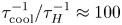
Magnetic reconnection is an important process in astrophysical environments, as it reconfigures magnetic field topology and converts magnetic energy into thermal and kinetic energy. In extreme astrophysical systems, such as black hole coronae and pulsar magnetospheres, radiative cooling modifies the energy partition by radiating away internal energy, which can lead to the radiative collapse of the reconnection layer. In this paper, we perform two- and three-dimensional simulations to model the MARZ (Magnetic Reconnection on Z) experiments, which are designed to access cooling rates in the laboratory necessary to investigate reconnection in a previously unexplored radiatively cooled regime. These simulations are performed in GORGON, an Eulerian two-temperature resistive magnetohydrodynamic code, which models the experimental geometry comprising two exploding wire arrays driven by 20 MA of current on the Z machine (Sandia National Laboratories). Radiative losses are implemented using non-local thermodynamic equilibrium tables computed using the atomic code Spk, and we probe the effects of radiation transport by implementing both a local radiation loss model and $P_{1/3}$ multi-group radiation transport. The load produces highly collisional, super-Alfvénic (Alfvén Mach number $M_A \approx 1.5$), supersonic (Sonic Mach number $M_S \approx 4-5$) strongly driven plasma flows which generate an elongated reconnection layer (Aspect Ratio $L/\delta \approx 100$, Lundquist number $S_L \approx 400$). The reconnection layer undergoes radiative collapse when the radiative losses exceed the rates of ohmic and compressional heating (cooling rate/hydrodynamic transit rate = $\tau _{\text {cool}}^{-1}/\tau _{H}^{-1}\approx 100$); this generates a cold strongly compressed current sheet, leading to an accelerated reconnection rate, consistent with theoretical predictions. Finally, the current sheet is also unstable to the plasmoid instability, but the magnetic islands are extinguished by strong radiative cooling before ejection from the layer.

Information

Type
Research Article
Copyright
Copyright © The Author(s), 2024. Published by Cambridge University Press

Access options

Get access to the full version of this content by using one of the access options below. (Log in options will check for institutional or personal access. Content may require purchase if you do not have access.)

Article purchase

Temporarily unavailable