-
- You have access: archive
- Open access
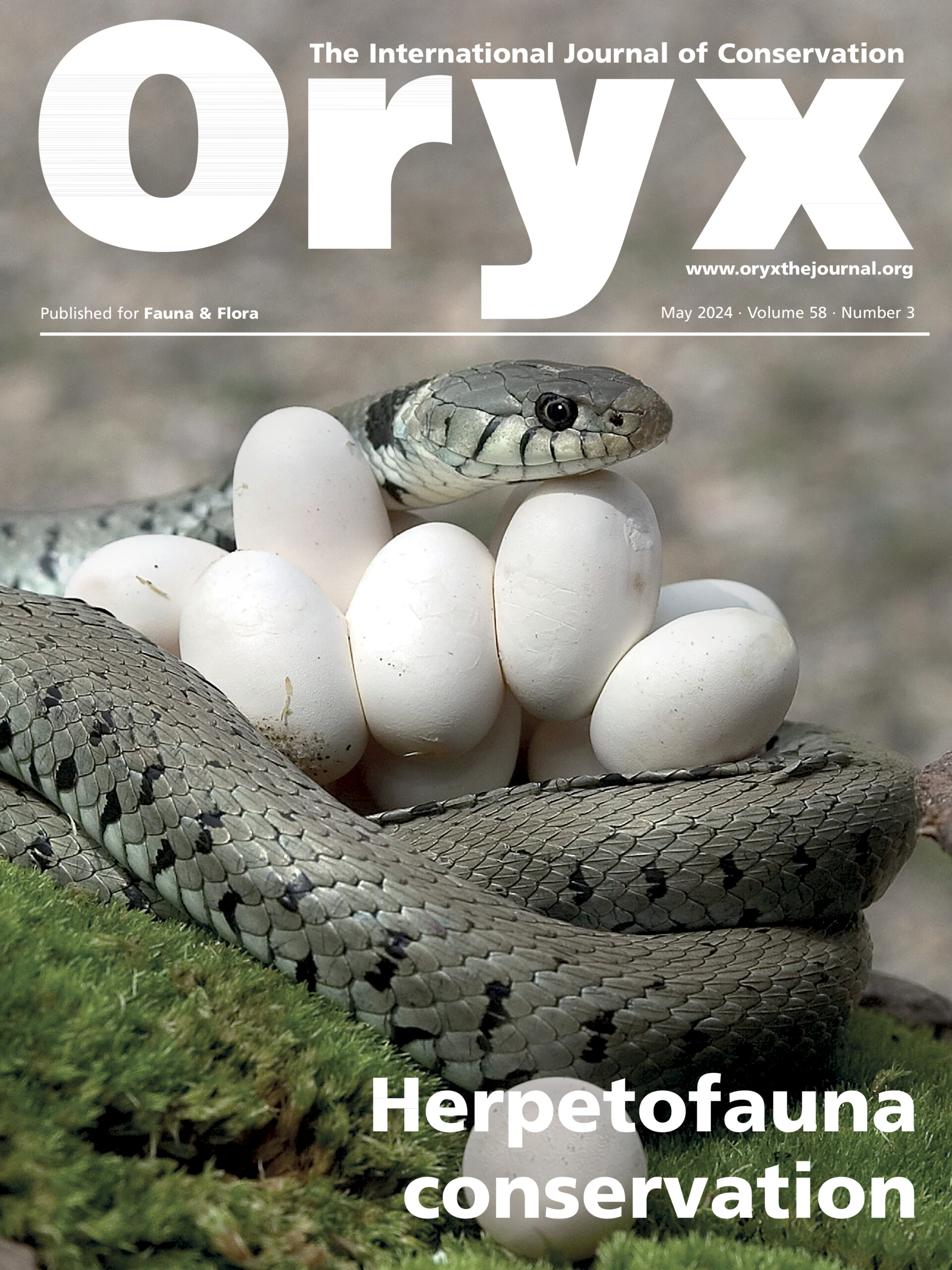
- ISSN: 0030-6053 (Print), 1365-3008 (Online)
- Editor: Dr Martin Fisher Fauna & Flora, UK
- Editorial board
Published for Fauna & Flora
Oryx—The International Journal of Conservation is a bimonthly, peer-reviewed, open access journal of biodiversity conservation, conservation policy and sustainable use, and the interaction of these subjects with social, economic and political issues. The journal has a particular interest in material that has the potential to improve conservation management and practice, supports the publishing and communication aspirations of conservation researchers and practitioners worldwide and helps build capacity for conservation. Besides articles and short communications, Oryx regularly publishes reviews, forum sections and letters, and every issue includes comprehensive reporting of international conservation news. For a personal subscription please visit: www.fauna-flora.org/appeals/oryx
Oryx—The International Journal of Conservation is a bimonthly, peer-reviewed, open access journal of biodiversity conservation, conservation policy and sustainable use, and the interaction of these subjects with social, economic and political issues. The journal has a particular interest in material that has the potential to improve conservation management and practice, supports the publishing and communication aspirations of conservation researchers and practitioners worldwide and helps build capacity for conservation. Besides articles and short communications, Oryx regularly publishes reviews, forum sections and letters, and every issue includes comprehensive reporting of international conservation news. For a personal subscription please visit: www.fauna-flora.org/appeals/oryx
Latest articles
Oryx Blog
-
Bali starlings and the three causes of happiness (Tri Hita Karana)
- 03 July 2026,
- Bali, often referred to as the ‘Island of the Gods’, is one of the world’s most popular tourist destinations, yet the island offers far more than luxurious villas, beautiful beaches and vibrant nightlife. In Tabanan Regency lies the Besikalung Wildlife Sanctuary, the last refuge for wildlife in this mixed landscape. Traffic hums along the roads. […] The post Bali starlings and the three causes of happiness (Tri Hita Karana) first appeared on Oryx—The International Journal of Conservation....
-
In search of rare pear species in the mountains of Armenia
- 09 April 2026,
- Finding trees representing rare and threatened pear species in Armenia can be compared to searching for a needle in a haystack. The country’s flora is rich in pears, including many endemic and threatened species that are often difficult to identify due to the variability of their diagnostic features. My research for wild pear conservation began more than 10 years ago with funding from Fauna & Flora […] The post In search of rare pear species in the mountains of Armenia first appeared on Oryx—The International Journal of Conservation....
-
Latest issue: Bird conservation
- 01 April 2026,
- Latest issue: Bird conservation The latest issue of Oryx features a selection of articles on bird conservation, bringing together studies that span multiple continents, species and conservation challenges. In the lead article, Risi et al. highlight the importance of Aldabra in the Seychelles for the red-footed booby, following an atoll-wide survey that for the first time […] The post Latest issue: Bird conservation first appeared on Oryx—The International Journal of Conservation....
Oryx on the Cambridge Core Blog
Celebrating Women and Girls in Science: Contributions to Conservation Research
Over harvesting could wipe out water frogs in parts of Turkey
Ecotourism transforms attitudes to marine conservation