





Bipolar disorder is a severe mood disorder with a lifetime prevalence of 1–2% and is considered the sixth leading cause of disability among women of reproductive age.Reference Merikangas, Akiskal, Angst, Greenberg, Hirschfeld and Petukhova 1 Women with bipolar disorder are at increased risk of having a serious episode of illness in relation to pregnancy and childbirth: they have at least a one in five risk of suffering a postpartum psychosis and an even higher risk (up to 40–50%) of experiencing any mood episode in the postpartum period, including non-psychotic major depression.Reference Di Florio, Forty, Gordon-Smith, Heron, Jones and Craddock 2 , Reference Wesseloo, Kamperman, Munk-Olsen, Pop, Kushner and Bergink 3 A personal or family history of postpartum psychosis can increase this risk still further.Reference Jones and Craddock 4 When considering pregnancy, women with bipolar disorder face many decisions, ranging from whether to have a child, whether to stop or change their medication because of fear of effects on the fetus,Reference Bodén, Lundgren, Brandt, Reutfors, Andersen and Kieler 5 and how best to plan for the birth and the potentially dangerous postnatal period. 6 Understanding how decisions in this complex area of healthcare are reached and identifying the barriers which prevent women from accessing the treatment they need could inform the development of better information and advice for these women and their partners.
To our knowledge, this study is the first to explore the factors that women with bipolar disorder regard as important when deciding whether to have children and considering how to stay well in the perinatal period. We used a service-user-led design as this can improve recruitment and aid with the collection of rich data.Reference Ennis and Wykes 7
Method
Design
This study employed a qualitative design, using semi-structured interviews, conducted between October 2012 and November 2013.Reference Braun and Clarke 8 As this is a difficult-to-access population (contributing to the lack of research in this area), it was decided to ‘triangulate’ the results from the 21 semi-structured interviews with data collected by a different method, that is, written contributions from women with bipolar disorder in response to a thread posted on the internet forum of the charity Bipolar UK for a period of 11 months (July 2014–June 2015). Triangulation is a method used in qualitative research to further validate a study's results.Reference Flick, Flick, von Kardoff and Steinke 9 This also enabled the inclusion of views from the subgroup of women who had decided against having a child because of their bipolar disorder (a population that were challenging to recruit for interview as they could not be reached through pre-conception clinics or pregnancy advice workshops).
Participants
Women were purposively sampled to ensure diversity in cultural and socioeconomic status and experience of childbearing, and were recruited via the South London and Maudsley NHS Foundation Trust and via workshops at the charity Bipolar UK. Those recruited through the NHS (76%) were referred by general psychiatrists, perinatal psychiatrists and via posters in clinics. An additional five women (24%) were recruited via Bipolar UK workshops. Inclusion criteria were a diagnosis of bipolar disorder and to be contemplating pregnancy or currently or recently pregnant. Women without capacity to give informed consent were excluded. No interviewees were in an episode of mania or depression at the time of interview.
Data collection
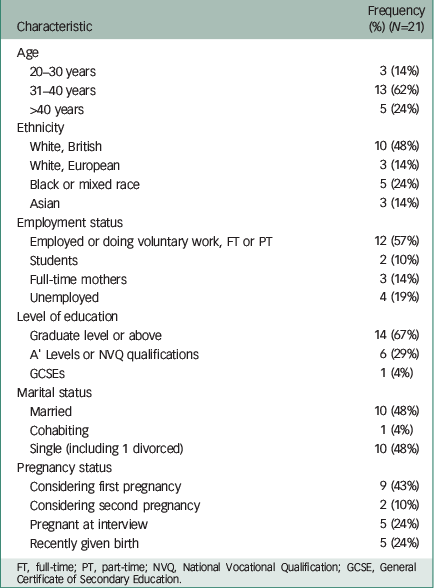
Demographic information (Table 1), details of previous psychiatric and pregnancy history and current diagnosis were collected. A semi-structured interview schedule was developed to elicit information on the factors influencing decision-making regarding pregnancy and childbirth (see the data supplement). This schedule then formed the basis of questions posted on the internet forum. Ethical approval was obtained from Camden & Islington Research Ethics Committee (11/LO/1469). Interviews (mostly at the participants’ homes) were recorded and transcribed verbatim. Informed consent was recorded and data were anonymised. To recruit women via the internet forum, a request for participation (making it clear that this research had received ethical approval and any contributions would be used anonymously) was posted on the forum by a Bipolar UK moderator (see data supplement) on behalf of the researchers.
| Characteristic | Frequency (%) (N=21) |
|---|---|
| Age | |
| 20–30 years | 3 (14%) |
| 31–40 years | 13 (62%) |
| >40 years | 5 (24%) |
| Ethnicity | |
| White, British | 10 (48%) |
| White, European | 3 (14%) |
| Black or mixed race | 5 (24%) |
| Asian | 3 (14%) |
| Employment status | |
| Employed or doing voluntary work, FT or PT | 12 (57%) |
| Students | 2 (10%) |
| Full-time mothers | 3 (14%) |
| Unemployed | 4 (19%) |
| Level of education | |
| Graduate level or above | 14 (67%) |
| A' Levels or NVQ qualifications | 6 (29%) |
| GCSEs | 1 (4%) |
| Marital status | |
| Married | 10 (48%) |
| Cohabiting | 1 (4%) |
| Single (including 1 divorced) | 10 (48%) |
| Pregnancy status | |
| Considering first pregnancy | 9 (43%) |
| Considering second pregnancy | 2 (10%) |
| Pregnant at interview | 5 (24%) |
| Recently given birth | 5 (24%) |
FT, full-time; PT, part-time; NVQ, National Vocational Qualification; GCSE, General Certificate of Secondary Education.
Data analysis
Data were analysed using an inductive thematic analysisReference Braun and Clarke 8 with the aid of the NVivo software programme for data management. Themes from the e-forum data were combined with the interview data and a coding framework was developed. To address elements of subjectivity in the coding and interpretation of data, C.D. and a non-service-user researcher (H.S., see Acknowledgements) independently coded a proportion of the transcripts before comparing results and resolving differences. After achieving a 90% inter-rater agreement, the results were then checked by a senior academic (L.H.) for final consensus coding.
Results
Sample characteristics
Twenty-one women were interviewed, average age 35.5 (range 21–49, s.d.=6.11). All women had been diagnosed with Bipolar 1; average age at diagnosis was 25.8 years (range 18–36). Nine women interviewed in this study were considering their first pregnancy (43%). Five women were pregnant at the time of interview (24%), for two of whom it was their first pregnancy. Four women had given birth recently (from 9 weeks to 10 months previously), while one had a 4-year-old and had decided not to have any more children. See Table 1 for other characteristics.
Fifty more women participated anonymously via the Bipolar UK e-forum, contributing a total of 84 posts. From analysis of their posts, a total of 13 (26%) had decided not to have a child because of their bipolar disorder; 7 of them (14%) deciding against a second child, and six (12%) stating that they were and would remain childless. Data from interviews and posts on the internet forum were analysed together as the majority of themes raised in interviews were echoed on the e-forum. As noted above, the forum made it possible to gather the views of women who had chosen not to have any children because of their bipolar disorder and also raised the issue of discrimination against women with bipolar disorder seeking infertility treatment, a subject which had not been raised in interviews.
Themes
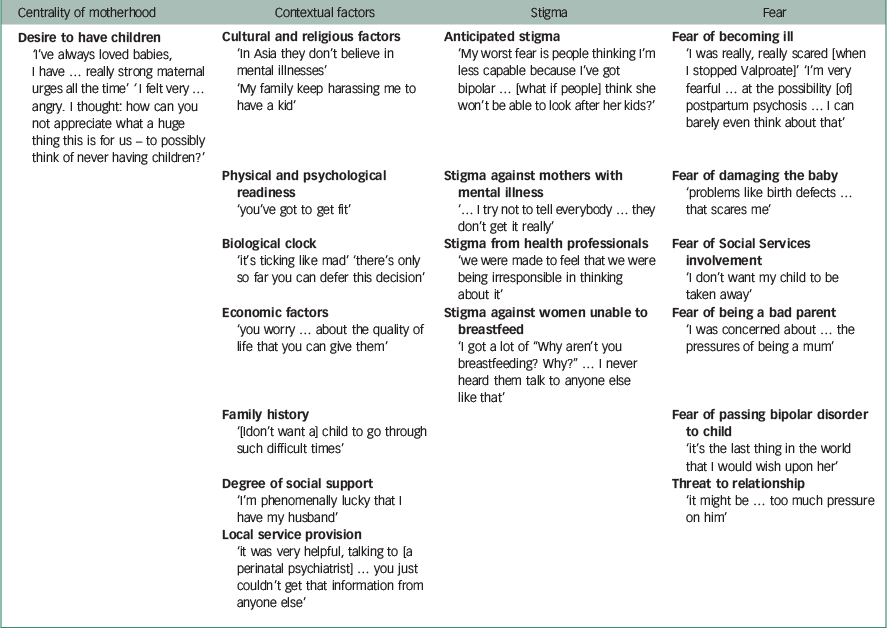
The thematic analysis of factors influencing decision-making around pregnancy for women with bipolar disorder generated four superordinate themes: Centrality of Motherhood, Contextual Factors, Stigma and Fear. The themes, subthemes and illustrative quotes are shown in Table 2.
| Centrality of motherhood | Contextual factors | Stigma | Fear |
|---|---|---|---|
Desire to have children
|
Cultural and religious factors
|
Anticipated stigma
|
Fear of becoming ill
|
Physical and psychological readiness
|
Stigma against mothers with mental illness
|
Fear of damaging the baby
|
|
Biological clock
|
Stigma from health professionals
|
Fear of Social Services involvement
|
|
Economic factors
|
Stigma against women unable to breastfeed
|
Fear of being a bad parent
|
|
Family history
|
Fear of passing bipolar disorder to child
|
||
Degree of social support
|
Threat to relationship
|
||
Local service provision
|
Centrality of motherhood
A major theme running through all stages of the decision-making process was the strength of the desire to have a child – what we have termed the ‘centrality of motherhood’. Women referred to ‘having always wanted to have children’ and many regarded it as part of the natural course of life, as this young interviewee described: ‘I really believe that … if I don't have children, I somehow haven't fulfilled my earthly purpose’ (P20). A woman on the e-forum posted that, despite being ‘terrified of postpartum depression’ her fears were outweighed by her desire to have a child: ‘I'm scared … but ultimately my desire to be a mother is more than my worries’.
Contextual factors
Cultural and religious factors
These factors were important to some as attitudes to mental illness differ widely among different ethnic groups, and religious upbringing can influence attitudes to issues like abortion and optimal family size. One Asian woman said her family did not understand her illness because they ‘didn't believe’ in mental illness, while a woman of African descent described how her extended family were ‘harassing’ her to have a child as they thought it would benefit her mental health.
Physical and psychological readiness
Women highlighted the need to prepare physically as well as mentally for the pregnancy and the birth: ‘I'm too fat at the moment to have a baby … I've got to lose 4 stone’ (P16).
Time pressure
Many women felt they needed to plan pregnancy well in advance because of the time involved in changing medications and preparing mentally and physically for motherhood. In addition, many had delayed having children due to their illness, or sometimes due to the associated instability in their lives, and were now very anxious that time was running out for them, as this woman on the e-forum expressed: ‘Having bipolar has … greatly delayed the decision and now due to age … I have to make the choice’.
Economic factors
Women considering starting a family referred to delaying making a decision because of a desire to be financially secure enough to raise a child. As Participant 10 said: ‘[Because of] my illness, I haven't worked for years … I come from quite a secure background and … I wanted to re-create that … [but] due to my illness … I doubt … I could manage it’.
Family history
For women who had had a parent with bipolar disorder, issues of whether they could do a better job of parenting were particularly important: ‘we had a very … disrupted childhood and not a happy family life. My big fear is … I would end up reproducing that’ (P6).
Social support
For most married and cohabiting women in this study, their partner's involvement in the decision-making process was critical, with more than one woman saying she would not have considered having a baby without her partner's support: ‘he is my rock in many, many ways’ (P13). There was concern about how much support they would need during the pregnancy and after the birth, but also over the need to provide stability and continuity for the child growing up in case she suffered further episodes of illness. Not all partners were in favour of having a family (which was a big factor in some women deciding against it; two of the six women on the e-forum who had decided not to have children said it was because their partners were against it), and some had very different views about taking medications in pregnancy, as one said: ‘I know he's dead against me taking any medication’ (e-forum). Most women – and not just the 48% of interviewees who were single mothers – said how important support from their family was, particularly if they were unwell postnatally.
Local service provision
This was also a consideration; some were immediately referred to a specialist perinatal service for pre-conception counselling, while others were not. The former reported a high level of satisfaction – describing it as ‘absolutely invaluable’ (P3) and ‘vital’ (P4) – while several women recounted how they had only finally got the information they needed when they had actively sought advice from such a specialist (P6, P7, P12, P20 and echoed on the e-forum). On the whole, women felt that general psychiatrists – and GPs – lacked training and knowledge in this area, so those who were not referred to a specialist felt let down by the lack of information available from professionals they consulted for advice. One woman, who had had two postpartum psychoses requiring admission to a Mother and Baby Unit, felt that if she had been properly advised it might have prevented the very damaging second episode: ‘If I'd had a care plan I could have also been on medication … at the end of the pregnancy and just after birth … which might have meant this didn't happen at all’ (P2).
Stigma
Women's consciousness of stigmatising attitudes towards them as people with a mental illness was evident and affected the decisions they made about treatment choices such as their desire not to take medication postnatally because of the pressure to breastfeed and be a ‘normal’ mother. There are four subthemes in this category (see Table 2 for additional quotes).
Anticipated stigma
Participants worried that their friends might disapprove of them having children because of their mental health problems, or feared that people might consider them incapable of looking after their children: ‘I worry whether some of my friends … will say … “Should you really be having children? … You've got mental health problems! What happens if you, kind of, drown your baby?”’ (P20).
Experienced stigma from society
Rather than feeling supported, ignorance and stigma about bipolar alienated several women from friends and even family, and they described being treated in a discriminatory way. Some felt the stigma they experienced in society was partly driven by the ‘very negative’ media presentation of mental illness, especially sensationalist news stories focusing on the very rare instances of psychotic mothers harming their children: ‘It's just the scare stories isn't it? It's the very occasional person with severe postnatal depression who harms her child that's in the media … not the people who've managed … it frustrates me the way that bipolar is depicted’ (P3).
Stigma from health professionals
Some women also reported discriminating attitudes directly from health professionals. Frequently, women reported great difficulty in accessing information from health professionals about pregnancy, whom they looked to help them ‘navigate the maze of medication and all the accompanying problems and mental fears and anxieties in order to have a child’ (P13). Encountering a frustratingly negative attitude towards their desire for children was a common theme: Participant 3, who had asked her psychiatrist repeatedly for information and advice on pregnancy, was frustrated and angry when she wasn't given any. ‘It was like bashing my head up against a brick wall’ (P3). Some felt that the reluctance to give them information – or refer them to a specialist who could – was partly due to stigmatising attitudes towards them as potential mothers. For example, a woman for whom lithium had been the only successful treatment said that she had sought information on taking lithium during pregnancy from five different psychiatrists over a number of years but had been unsuccessful. She felt that they would not help her because they did not think she should have a child. Having sought out a specialist perinatal psychiatrist who gave her the information she needed, she commented: ‘It would have been good … to have some hard facts from them, rather than … just sort of putting me off really’ (P7). This participant went on to have a child without relapsing.
Some regarded the lack of information available in this area of healthcare as evidence in itself of discrimination against them for having a mental rather than physical illness: ‘If you had a diagnosis of cancer, you'd get given every possible outcome of every medication – everything is given to you on a plate … but with bipolar, it shouldn't be any different, really’ (P20). This view was echoed on the e-forum with one woman posting that the doctor checking her baby after birth had said ‘bipolar people shouldn't have kids’, and another saying: ‘I felt that … they were discriminating against me’. Participant 13 reported feeling ‘judged’ by hospital staff: ‘It's implicit that they view those of us that have got bipolar …[as not having] adequate parenting skills’ (P10). In light of the lack of advice available to them, a number of women thought it would be useful to have ‘some kind of guide or booklet for women’, which was ‘not forbiddingly medical … and “doomy and gloomy”’ (P13).
Stigma against women unable to breastfeed
Women described the stigma directed against them when they could not breastfeed because of the medication they needed to take to prevent relapse: some felt they were ‘judged’ by maternity staff and other new mothers as inadequate, which upset them and added to their stress at a vulnerable time: ‘it was always … “Why don't you breastfeed?” … it did really make me cry’ (P4). This stigma also meant that some new mothers didn't receive the help they needed with bottle-feeding: ‘… nobody showed us how to feed her [with a bottle] and we hadn't a clue’ (P9).
Fear
Because of the risk of having a serious episode, several women were very frightened at the prospect of being pregnant, especially at the thought that they would have to stop or change medication, and this had been a significant factor in delaying parenthood. Some reported searching on the internet and finding inaccurate accounts which had alarmed them and added to their anxiety.
Fear of becoming ill
Among those who had already had a child, fear of having another postnatal episode was a major reason why they had decided not to have any more, as one said: ‘I couldn't face the prospect of getting ill again’ (P2). Women who had suffered a postpartum psychosis were particularly scared of this happening again and so were more likely to state that they intended to have no further children as a result, both because of what they themselves would have to suffer and because they did not want their first child to suffer while they were in hospital (P2, P13 and e-forum). Some women were so frightened by the pregnancy and/or birth instigating an episode that they had considered adoption or surrogacy to try to avoid physically delivering the baby themselves (P6, P7, P10 and e-forum). But those who had thought about this option said they had rejected it because – with their history of mental illness – they doubted they would be ‘allowed’ to adopt even if they had been well for some time. Similarly, when planning for the birth, several said they had considered interventions such as induction and/or a Caesarian section because they feared a long labour with no sleep would add to the risk of triggering an episode. Women who had already had a child were generally far more interested in the ‘mechanics’ of the birth and had firmer ideas on what treatments they wanted to receive; for example, Participant 12 said she did not want to have another protracted labour which she felt had contributed to her becoming ill the first time: ‘I want to make sure that I'm induced if it's dragging on’.
Fear of medication causing harm to the baby
Many women in this study were also fearful that they might harm their baby by remaining on their medication. Some women who had been prescribed valproate and subsequently heard that it was teratogenic were very anxious to stop taking it or switch to an alternative. Weighing the chances of damaging their unborn child against the possibility of becoming ill when medication-free was described as extremely difficult and provoked much anxiety. Some women reported that their fear of getting ill when pregnant or postnatally was greatly exacerbated by being told their pregnancy was officially labelled ‘high risk’ – a common categorisation used by maternity services to flag up women that might need extra monitoring – though one said she regarded the label as ‘a double-edged sword’ as it made her feel anxious but also ‘special’.
Fear of Social Services
A number of women were fearful that Social Services might be called in because of their mental health issues, and were frightened that that could lead to their child being taken away from them, so much so that this fear had prevented them from asking for help when their condition was deteriorating. As one woman on the e-forum said: ‘I am scared of getting pregnant again because I don't want my child to be taken away … now that I have been diagnosed … It scares me so much’.
Fear of being a bad parent
A number of other concerns also provoked fear and anxiety; for example, concern about their parenting ability was a significant worry for some. Only one mother voiced her fear that she might get so ill she might physically harm her baby, but many were worried that they might be ‘inconsistent’ because of mood swings or that they themselves might become a burden to their child: ‘It's 24 hours with a baby … I don't want to become a bad parent’ (P16).
Fear of passing on bipolar disorder
The ‘genetic issue’ was raised by several interviewees and was a particularly prominent concern among women posting on the e-forum, though some women who had become mothers expressed the view that at least they were well-placed to help if their child developed the condition.
Fear of damage to relationship
Women were also worried about the ‘incredibly intense pressures on relationships that the illness brings’ and were anxious that if they felt they had made the wrong decision about treatment, or their partner had to look after a child while they were in hospital for several months, the strain might prove too much: ‘I was scared that … my marriage would really suffer’ (P7).
Discussion
To our knowledge, this study is the first to investigate the factors influencing the decision-making around pregnancy in women with bipolar disorder. Accessing information to inform decision-making was generally very difficult for participants, as professionals were described as lacking the specialist knowledge to answer their questions adequately and were reluctant to refer them to a specialist, often because they held discriminatory attitudes towards them as potential mothers. This echoes a previous report of women with other disorders finding it difficult to access information on perinatal mental health, particularly around risks and benefits of medication.Reference Megnin-Viggars, Symington, Howard and Pilling 10 An additional concern related to the weight gain associated with many medications for bipolar disorderReference Allison, Mentore, Heo, Chandler, Cappelleri and Infante 11 as obesity is known to increase the risk of birth complications.Reference McDonald, Han, Mulla and Beyene 12 Fear was also a major theme, with women finding the term ‘high risk’ unhelpful, frightening and uninformative; indeed, several women described their terror of becoming dangerously ill. As a result, some were considering Caesarean section to avoid a long labour (though there is no evidence whether this would be helpful in preventing relapse), and surrogacy or adoption to avoid the postnatal period of risk. Others expressed their fear of the baby being harmed by teratogenic medication, and some were especially worried that they were taking valproate, which the European Medicines Agency has issued strong warnings against in pregnancy. 13 Women were also concerned about the effects of a traumatic birth and coping with the sleep deprivation associated with caring for a young baby. A supportive partner and family were seen as important factors in mitigating these effects.
Stigma against women with bipolar disorder becoming mothers was cited as a significant issue, as has been described elsewhere for women with other mental disorders.Reference Dolman, Jones and Howard 14 There has been no previous research examining the influence of stigma against women with bipolar disorder in relation to childbirth and only two small qualitative studies about their experience postnatally in relation to parenthood.Reference Venkataraman and Ackerson 15 , Reference Wilson and Crowe 16 This study supports the literature reporting stigma against women with mental illness and doubts about their capabilities as mothers, which discourages them from talking openly about what they are experiencing and can act as a deterrent to help-seeking.Reference Clement, Schauman, Graham, Maggioni, Evans-Lacko and Bezborodovs 17 , Reference Jeffery, Clement, Corker, Howard, Murray and Thornicroft 18 In addition to the stigmatising attitudes they feared and experienced in relation to motherhood, women reported feeling stigmatised by health professionals when they needed to bottle-feed their infants because of the medications they were taking (namely lithium). A systematic review of mothers’ experiences of bottle-feeding (whether from choice or because of problems experienced) reported similar themes of shame, a sense of failure and worry,Reference Lakshman, Ogilvie and Ong 19 but the concerns of women with bipolar disorder in particular have not been reported previously; such stigma might be associated with a deterioration of a woman's mental state postnatally.
Strengths and limitations
Strengths include a sample with representation of women at different stages in their journey through or prior to motherhood, and from different ethnic backgrounds. However, a relatively high proportion of interviewees were educated to degree level or above (67%), which might partly be explained by half of the sample being recruited via pre-conception clinics which tend to see a disproportionate number of educated women from higher socioeconomic groups as they are more likely to have actively sought specialist advice on pregnancy. The novel service-user-led design employed in this study was particularly appropriate for this previously unexplored area of research to ensure the development of user-relevant research questions and to counteract reluctance to disclose potentially upsetting experiences. The positive impact of service-user involvement in health and social care research has been demonstrated by an international systematic review.Reference Brett, Staniszewska, Mockford, Herron-Marx, Hughes and Tysall 20 However, the principal researcher's position as a service-user researcher who had had similar experiences to her participants (as a woman with bipolar disorder who had had two children and experienced a postpartum psychosis) could be viewed as both a strength and a limitation. As other studies have found, it was an advantage in terms of recruitment and obtaining rich dataReference Ennis and Wykes 7 but may have affected the interpretation of the data. We made efforts to guard against researcher bias by having an independent researcher conduct a parallel analysis of data and, in a further attempt to enhance confidence in the findings, methodological triangulation was employed.Reference Flick, Flick, von Kardoff and Steinke 9 Triangulation refers to the use of more than one method for gathering data as a validation strategy and, although both methods of collecting data – direct interviews and internet discussion where responses were delivered in written form – have limitations in terms of generalisability, it was felt these two sources complemented each other and strengthened the validity of the findings. Given the anonymity of internet communication, participants on the e-forum may have felt freer to discuss their experiences.Reference Engqvist, Ferszt, Åhlin and Nilsson 21
The data obtained via the internet forum was also very valuable because it was able to gather the views of women who had made the decision not to have children because of their bipolar disorder (such women would not be attending pre-conception clinics or pregnancy advice workshops, the two main sources of recruitment for interview). Only one woman interviewed said she would not be having a second child, whereas 13 (26% of respondents) wrote in their forum posts that they had decided against becoming pregnant, including 6 (12%) who said they had decided against having any children because of what they saw as the risks due to their illness.
Clinical and research implications
Results of the combined thematic analysis of the qualitative interviews and e-forum texts highlight the complexity of decision-making around pregnancy for women with bipolar disorder and the anxiety this causes them at a time when they need to be as stress-free as possible. Women described how much they wanted good advice to help them make difficult choices over medication, the conduct of labour and birth and treatment in the postpartum period, and how ‘frustrated’ and ‘angry’ they were that such information and support was often denied. This emphasises the need to implement nationally the recommendations of NICE 6 which recognise the need for specialist up-to-date advice, preferably a considerable time before a woman becomes pregnant. The expression of fear by women with bipolar disorder about taking medication in pregnancy is in line with previous research indicating a high level of maternal anxiety over the teratogenicity of medications for depression in pregnancy.Reference Ververs, Kaasenbrood, Visser, Schobben, de Jong-van den Berg and Egberts 22 , Reference Einarson, Selby and Koren 23 Women in this study suggested that information on the pros and cons of different treatments should be delivered in a comprehensible, jargon-free way, with a compassionate understanding of the potential it had for provoking greater anxiety in the recipients, who were understandably hoping that they would have a relatively ‘normal’ pregnancy and birth. Einarson and colleaguesReference Einarson, Selby and Koren 23 demonstrated that a majority of women with depression resumed taking their medication while pregnant after receiving well-informed counselling on the subject; women in this study suggested that it is professionals as well as women who need to be informed of the up-to-date evidence base. Indeed, recent research found that perinatal suicides were associated with a lack of prescribing of medication.Reference Khalifeh, Hunt, Appleby and Howard 24 An individualised risk–benefit analysis is therefore needed for women with bipolar disorder and other serious affective disorders. 6
Research into the effect of high-quality pre-conception counselling for women with bipolar disorder would be helpful in establishing how much it influenced medication decisions and whether it reduced the rate of relapse in this population. It would also be informative to investigate the usefulness or otherwise of a decision aid in this area. Such a tool has been developed to help women with decisions about taking antidepressants in pregnancyReference Walton, Ross, Stewart, Grigoriadis, Dennis and Vigod 25 and the development of something similar for bipolar disorder would be in line with NICE recommendations 6 Fear of Social Services removing the child is an issue that has been raised in many studies on perinatal mental disorders.Reference Megnin-Viggars, Symington, Howard and Pilling 10 , Reference Dolman, Jones and Howard 14 Anxiety and stress caused by such fear could be detrimental for the baby in uteroReference Beydoun and Saftlas 26 as well as for the mother, and health professionals could potentially alleviate some of the distress by raising the subject themselves (as most women fear introducing it) and reassuring women about how rarely babies are removedReference Howard, Thornicroft, Salmon and Appleby 27 or how, in some circumstances, Social Services can be a source of support. Peer support groups – preferably aimed at mothers with bipolar disorderReference Venkataraman and Ackerson 15 – and parenting classesReference Reupert and Maybery 28 were suggested by participants as ways of improving their child-rearing abilities.
Maternity services could mitigate the problems faced by women forced to bottle-feed their infants by adopting a more sensitive and non-judgemental approach to mothers in this situation. As suggested by nurse educator Professor John Mozingo: ‘mothers should be reassured that bonding, attachment and infant health are not irreversibly damaged [by bottle-feeding] and the quality of their mothering should not be questioned because of the feeding method chosen’.Reference Mozingo, Davis, Droppleman and Merideth 29 They might also encourage mothers to use methods to enhance bonding such as ‘skin-to-skin’ contact and maintaining eye contact while bottle-feeding. Despite the emotionally taxing dilemmas faced when contemplating pregnancy and the challenges of being a mother with mental illness, this study also attests to the enormous importance women with bipolar disorder attach to having children.Reference Dolman, Jones and Howard 14
Finally, the results of this study have implications for the training of all health professionals working with women with bipolar disorder of childbearing age, not just psychiatrists but GPs, psychiatric nurses and all maternity staff, underlining the need to increase knowledge of bipolar disorder and its importance in the perinatal period and reduce stigmatising attitudes.Reference Clement, Schauman, Graham, Maggioni, Evans-Lacko and Bezborodovs 17 , Reference Ross and Goldner 30
Acknowledgements
We thank Hannah Savage for help with analysis, and all the women who participated. C.D. thanks the (NIHR) Collaboration for Leadership in Applied Health Research and Care South London at King's College Hospital NHS Foundation Trust for its support. The views expressed are those of the authors and not necessarily those of the NHS, the NIHR or the Department of Health.


 Open access


eLetters
No eLetters have been published for this article.