



Understanding the quality and variety of the diets of local populations is essential to assess needs and evaluate the effectiveness of subsequent interventions designed to improve dietary intake. In the UK, local health and social care organisations are often limited to collecting dietary data through health and lifestyle surveys( Reference Cox 1 , 2 ). Diet is just one of many topics covered in these surveys (e.g. references Reference Harrison, McElduff and Edwards3 and Reference Barrow and Harrison4) and concerns about the impact of lengthy surveys on response rates are valid. Consequently dietary assessment is usually based on a few questions, which, in the absence of any validated short-form assessment format, can lead to potentially spurious results. Development of a short, valid tool to incorporate within local health and lifestyle surveys would improve confidence in the results obtained. Moreover, an established and proven method to assess diet quality in local surveys would ideally be used routinely for all surveys of this type. The information obtained from such a survey would complement the data routinely received from the Public Health Outcomes Framework on fruit and vegetable consumption, giving greater detail which could be used to guide interventions and monitor their effectiveness( 5 ). Meaningful comparisons could be made not only within the local population, but with other areas that also used the survey method.
Currently there are no widely used, convenient and reliable methods for assessing diet quality in a population setting in the UK. Various dietary assessment tools are used in nutrition research. These can be too time consuming, expensive and labour intensive to use in most population health surveys( Reference Cade, Thompson and Burley 6 ). There are some short-form diet questionnaires that are used in research settings such as PrimeScreen and the Michigan healthy diet indicator. These were developed in the USA( Reference Rafferty, Anderson and McGee 7 , Reference Rifas-Shiman, Willett and Lobb 8 ) and their generalisability for assessing diet quality at local levels in UK settings is questionable. Other approaches focus on specific food types( Reference Bogers, Van Assema and Kester 9 – Reference Thompson, Kipnis and Subar 11 ), specific nutrient intakes( Reference Brown and Griebler 12 – Reference Roe, Strong and Whiteside 15 ), specific populations( Reference Buzzard, Stanton and Figueiredo 16 – Reference Ling, Horwath and Parnell 19 ) or are used to screen patients’ diets( Reference Block, Gillespie and Rosenbaum 20 – Reference Segal-Isaacson, Wylie-Rosett and Gans 23 ). These tools are therefore not appropriate for use in population surveys.
Local health organisations in the UK rarely have a nutritional epidemiologist and thus any survey tool needs to be relatively straightforward to administer and then analyse. Short methods cannot collect meaningful data on nutrient intakes. However, local health departments are concerned primarily with the quality of peoples’ diets, to inform policy making and commissioning. All local authority areas receive data on adult fruit and vegetable intake as part of the Public Health Outcomes Framework (http://www.phoutcomes.info/). While it is acknowledged that this reflects only one part of a healthy balanced diet, it is used as an indicator for a healthy diet( 24 ). Developing a measure or score of wider diet quality may be the most appropriate way of presenting the results in a simple and informative way for policy makers, with the additional benefit that it can be used to identify differences between population groups within a local authority boundary – essential for effectively targeting services or interventions. The concept of a healthy diet score based on a short dietary assessment tool has been used successfully in other countries to categorise adults by the overall healthiness of their diets( Reference Hann, Rock and King 25 – Reference Toft, Kristoffersen and Lau 30 ). While it is not appropriate to use these specific tools in the UK due to dietary differences, the results of these studies support the development of similar tools in the UK.
There is a need to develop new dietary assessment tools in the UK that are self-administered, comparatively easy for people to complete, simple to analyse and interpret, and capture the level of detail of dietary intake that is appropriate in population health and lifestyle surveys. Our research aims to develop a quick, simple, cost-effective method to collect dietary information from a large number of people. The present paper describes a short-form FFQ (SFFFQ) and its validation in comparison to a previously validated more comprehensive FFQ and a 24 h telephone diet recall. A dietary quality score (DQS) based on the SFFFQ is described and the components of the SFFFQ that significantly predict the FFQ’s DQS are presented.
Materials/participants and methods
A systematic review was conducted which found that no short-form diet questionnaire had previously been developed for integration within population health surveys in the UK. A number of informative tools, including PrimeScreen( Reference Rifas-Shiman, Willett and Lobb 8 ), the Dietary Instrument for Nutrition Education (DINE)( Reference Roe, Strong and Whiteside 15 ), the Fruit/Vegetable/Fiber Screener and the Fat Screener( Reference Johnson 31 ), were identified and were used to inform the development of the SFFFQ. Expert knowledge about culturally specific foods was used to tailor the tool to the UK population. The result was a twenty-item non-quantitative SFFFQ which focuses on fruit, vegetables, fibre-rich foods, high-fat and high-sugar foods, meat, meat products and fish. The SFFFQ asks about foods and drinks respondents ‘might have during a “typical” week, over the past month’ (see online supplementary material 1 for a copy of the SFFFQ) and asks respondents to tick one frequency option (ranging from ‘rarely or never’ to ‘5+ a day’) for each of the twenty items. The tool also contains questions about basic demographic information and questions about alcohol consumption and exercise.
The SFFFQ was compared against a 217-item FFQ which was used in the UK Women’s Cohort Study( Reference Cade, Burley and Greenwood 32 , Reference Cade, Burley and Alwan 33 ). The FFQ asks how often, on average, specific amounts of each food have been eaten during the past 12 months. The FFQ is capable of assessing nutrient intakes and has been validated against 4 d diet records( Reference Spence, Cade and Burley 34 ).
The questionnaire data were collected between June and August 2006. Participants were UK residents in the borough of Bolton and those living in the eastern sector of the city of Leeds, in Northern England. One thousand adults in East Leeds former Primary Care Trust area and 999 in Bolton were randomly selected from lists of those registered with a general practitioner and living within the study area, and were sent a preliminary postcard introducing them to the research. A week later they were sent a ‘stage one pack’ which included a copy of the SFFFQ along with a personalised introductory letter, a participant information sheet and a consent form. A freepost envelope was included to return the completed SFFFQ and signed consent. Reminder postcards were sent out one week later and as a final encouragement to join the study, a further copy of the ‘stage one pack’ was sent to non-responders after two weeks from the initial posting( Reference Harrison and Cock 35 ).
Five weeks after returning a completed SFFFQ, participants were sent a ‘stage two pack’ which included a copy of the longer FFQ, a personalised covering letter, a freepost envelope and an invitation to take part in a telephone interview about the foods they eat. Reminder postcards and ‘stage two reminder packs’ followed.
To show agreement of at least 10 % between the SFFFQ and the FFQ in classifying diet as poor, moderate or optimum, with a κ coefficient of at least 0·7, 200 participants would need to complete both FFQ. Based on the findings of an earlier population survey covering one of the same populations( Reference Harrison and Cock 35 ), it was assumed that 20 % of those contacted would consent to take part in the study and return a completed SFFFQ. It was expected that 60 % of these participants would then return a completed FFQ. To obtain these numbers 1660 participants in Leeds and Bolton combined would need to be invited to take part in the study. Of those asked if they would take part in the telephone interview, 36·5 % consented to be interviewed; however a pragmatic decision was made to interview fifty individuals (2·5 % of the total sample), this was based on logistical constraints rather than a sample size calculation. A telephone 24 h recall interview was conducted on a random sample of people willing to be interviewed, stratified by sex and location (East Leeds or Bolton). A personalised letter and booklet of photos (selected from Nelson et al.( Reference Nelson, Atkinson and Meyer 36 )) to help the participants estimate portion sizes were sent out to the participants and they were telephoned within three weeks of receiving the booklet to complete the diet recall. This booklet contained nineteen sets of photographs of food with differing portion sizes.
The diet recall covered a 24 h period, up until midnight the day before the interview. It was broken down into three passes: a quick list, a detailed pass and a review( Reference Tran, Johnson and Soultanakis 37 ). Information on brands, cooking and preparation methods, additions before consumption and portion sizes was recorded. The telephone interviews took place during November and December of 2006.
All nutritional analyses were carried out using the Nutritional Epidemiology Group’s in-house nutrient analysis program, Diet and Nutrition Tool for Evaluation (DANTE). Diet recalls and FFQ were excluded if they reported implausible energy intakes of <2092 or >25 104 kJ/d (<500 or >6000 kcal/d; this is standard practice within the research group( Reference Taylor, Burley and Greenwood 38 )). Participants were not excluded based on the energy intake captured by the SFFFQ as this tool was not designed to capture total energy intake.
A DQS was calculated for the SFFFQ, FFQ and 24 h diet recall and was composed of fruit, vegetable, oily fish, fat and non-milk extrinsic sugar (NMES) intakes reflecting five dietary components recognised as indicators of a healthy diet( 39 ). NMES are sugars that are not naturally incorporated into the cellular structure of foods( 40 ) and include sugars added to food such as fructose and glucose syrups, sugars in fruit juices/processed foods and table sugar. They do not include sugar from fruit, vegetables and milk. Although the SFFFQ does not aim to capture nutrient intake it was felt that the frequency of high-fat and high-NMES foods on the SFFFQ could give an idea of fat and NMES intakes which would be an important indication of diet quality.
Standard portion sizes (based on portion sizes used in nutrition guidelines e.g. 80 g for fruit and vegetables, the portion sizes included on the longer FFQ or UK food purchasing data) were assigned to each food item on both the SFFFQ and the longer FFQ. These portions were then multiplied by the daily frequency that was associated with each frequency response on the two FFQ, giving an estimate of grams of each FFQ food item (twenty for the SFFFQ and 217 for the FFQ) consumed per person per day. Those food items that were fruit, vegetables or oily fish were then summed to give an estimate of the total grams of intake for these food groups per person per day. The SFFFQ and FFQ food items were then matched to the UK food composition tables to give an estimate of the NMES and fat contents of the food items and therefore the amounts of NMES and fat individuals were consuming per day. This process was used to determine the grams of each of the five components of the DQS that each person was estimated to consume.
Scores of 1–3 were allocated for each component, with a score of 3 corresponding to meeting the UK dietary recommendations for that group (http://www.food.gov.uk/sites/default/files/multimedia/pdfs/nutrientinstitution.pdf; see Table 1). Thus the minimum DQS was 5 and the maximum, indicating optimum dietary intake for these foods, was 15.
Components that make up the dietary quality score and their cut-offs

NMES, non-milk extrinsic sugars.
* Recommendations for fat were based on 35 % of total energy of the Estimated Average Requirements for women and men: 9351 kJ/d (2235 kcal/d).
Statistical analysis
SPSS version 15 was used to conduct the statistical analyses. Paired t tests were used to compare the means of the DQS and its components as measured by the SFFFQ with the FFQ and the diet recall. Agreement between the methods was assessed using the κ coefficient; the DQS was split into tertiles for comparisons (<8, 9–11 and >12). Agreement was considered to be very good for κ=0·81–1·00, good for κ=0·61–0·80, moderate for κ=0·41–0·60, fair for κ=0·21–0·40 and poor for κ=<0·20. Correlation between the SFFFQ and the two other methods was assessed using Spearman’s rank order correlation coefficient.
For comparisons, a healthy diet was defined as having an overall DQS of >12 measured using the FFQ. The value of 12 was chosen as a cut-off as the average DQS was 11·4 for the FFQ and therefore a score of >12 was above average. The twenty food items of the SFFFQ were compared with the DQS of the FFQ using logistic regression. The calculated odds ratios estimated which foods on the SFFFQ were the best predictors of diet quality as measured by the FFQ; an odds ratio greater than 1 indicated an increased chance of having a healthy diet if that particular food item was chosen.
Results
The numbers of returned dietary assessments were as follows: 826 SFFFQ, 729 FFQ and fifty diet recalls. The response rate for the SFFFQ was 41 % and for those who returned the FFQ (only those completing the SFFFQ) it was 88 %. A total of sixty participants were randomly selected from those who expressed an interest in taking part in the telephone interview. Of these, fifty people were interviewed. Due to the exclusion of participants returning blank FFQ and participants who recorded implausible energy intakes, 705 FFQ and forty-seven diet recalls were included in the analysis (see Fig. 1).
Number of respondents included in the present analyses (SFFFQ, short-form FFQ)

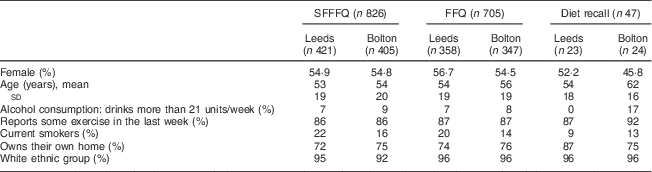
Table 2 shows that approximately half of the participants were female and their average age ranged between 53 and 62 years, depending on which dietary assessment method had been completed. The majority of participants engaged in some exercise, were non-smokers and had moderate alcohol consumption. Over 90 % of participants were white and approximately 75 % owned their own home. Demographic characteristics were similar for participants completing the three different dietary assessments except that there were slightly fewer smokers and a higher percentage owning their own home among those completing a diet recall.
Demographic information of the participants: randomly selected adults from East Leeds and Bolton, Northern England, 2006
SFFFQ, short-form FFQ.
The mean DQS derived from the SFFFQ was 11·4 (sd 1·6) from a possible 15 (Table 3). For the FFQ it was also 11·4 (sd 1·7) and was 9·5 (sd 1·9) for the 24 h diet recall. No statistically significant differences were observed for the mean DQS between the SFFFQ and the FFQ. The DQS derived from the 24 h diet recall was significantly lower than the DQS from the SFFFQ (P<0·001).
Average dietary quality scores (DQS; range 5–15) and component weights from the dietary assessment tools completed by randomly selected adults from East Leeds and Bolton, Northern England, 2006

SFFFQ, short-form FFQ; NMES, non-milk extrinsic sugars.
* P values from paired t test comparing SFFFQ and FFQ.
† P values from paired t test comparing SFFFQ and diet recall.
The weight of the food components which had been coded to make up the DQS differed significantly between the SFFFQ and the FFQ (P<0·001). The FFQ estimated consumption in grams of all components to be approximately double compared with the SFFFQ, except for oily fish which gave similar, but still significantly different, gram weights (P=0·01; Table 3). The mean difference between the FFQ and the SFFFQ was 2·2 portions (175 g) for fruit, 1·6 portions (126 g) for vegetables and approximately 40 g for both fat and NMES. The SFFFQ agreed more closely with the diet recall in estimated grams of the DQS’s components, with no significant differences seen in the grams of fruit (0·6 portions) and vegetables (0·1 portions) between the methods. Oily fish was significantly lower in the diet recall (P=0·009), while intakes of fat (P<0·001) and NMES (P=0·003) were significantly higher in the diet recall compared with the SFFFQ.
The overall DQS showed fair agreement between the SFFFQ and the FFQ (κ=0·38, P<0·001). The components of the DQS showed moderate agreement for oily fish intake (κ=0·46, P<0·001), fair agreement for fruit (κ=0·35, P<0·001) and vegetables (κ=0·27, P<0·001) and poor agreement for NMES (κ=0·20, P<0·001) and fat (κ=0·09, P<0·001) intakes between the SFFFQ and the FFQ. The DQS and its components showed poor agreement between the SFFFQ and the diet recall (κ=0·02–0·07) except for fruit intake, where agreement was fair (κ=0·20, P=0·027; Table 4).
Correlation and agreement between the dietary assessment tools completed by randomly selected adults from East Leeds and Bolton, Northern England, 2006

SFFFQ, short-form FFQ; DQS, diet quality score; NMES, non-milk extrinsic sugars.
* Overall DQS split into tertiles for comparison by κ.
† Correlation coefficient cannot be calculated for DQS as this has been converted to a categorical variable.
The components of the DQS were all significantly correlated when comparing the SFFFQ with the FFQ (all P<0·001). Comparison of the SFFFQ with the diet recall showed weaker association, with correlation coefficients significant only for fruit (P=0·017) and vegetable intakes (P=0·022; Table 4).
A number of individual food items on the SFFFQ significantly predicted whether the participants had a healthy diet. A healthy diet is defined by having an overall DQS of >12 measured using the FFQ. Reporting consumption of 1 portion/d for fruit, salad, vegetables, wholemeal bread/chapattis, whole meats (chicken or turkey), white fish (not in batter) or oily fish as measured by the SFFFQ significantly increased the odds of having a healthy diet as measured by the FFQ. Those reporting consumption of 1 portion/d for chips, crisps, sweet biscuits, ice cream, fizzy drinks, whole meats (beef, lamb, pork or ham), processed meats or battered fish on the SFFFQ were less likely to consume a healthy diet as measured by the FFQ (Table 5). Having a portion of fruit or vegetables per day on the SFFFQ increased the odds of being classified as having a healthy diet on the FFQ by 27 % (fruit: 95 % CI 9, 49 %, P<0·001; vegetables: 95 % CI 9, 49 %, P=0·007). The odds of having a healthy diet were decreased by 67 % (95 % CI 47, 79 %, P<0·001) for each portion increase of crisps per day.
Logistic regression analysis of individual SFFFQ items for predicting a healthy dietFootnote * as measured by the FFQ among randomly selected adults from East Leeds and Bolton, Northern England, 2006

SFFFQ, short-form FFQ; DQS, diet quality score; NMES, non-milk extrinsic sugars.
* A healthy diet is defined as having an overall DQS of >12 measured using the FFQ.
† All food items contribute to the total fat and NMES DQS categories.
Discussion
The SFFFQ was designed to be used in large population surveys where detailed dietary assessment is not feasible. The mean DQS for the SFFFQ and the FFQ are the same and show fair agreement. The DQS components are all significantly correlated between the SFFFQ and the FFQ, despite significant differences in the grams (based mainly on differences in consumption frequency) of fruit, vegetables, oily fish, fat and NMES between the two measures. This indicates that although the SFFFQ is not suitable for estimating absolute dietary intake it is suitable for ranking people according to diet quality, meeting its primary objective. Classifying people on their diet quality with a simple tool will allow researchers and public health professionals to form a general understanding about diet in particular populations. This will allow them to measure trends in dietary patterns over time and identify communities that may require dietary intervention in order to decrease the prevalence of obesity and risk of chronic disease in these communities.
A useful way to summarise the results from the SFFFQ is to calculate the DQS presented in the current paper. An Excel spreadsheet is provided as supplementary material to the present paper (see online supplementary material 2) which can be used for this purpose. Researchers can enter the results from their SFFFQ data collection and the DQS will be automatically calculated. This adds an additional dimension to this dietary assessment tool, increasing its usefulness in larger population surveys. This score reflects important aspects of diet quality (fruit, vegetable, oily fish, fat and NMES intakes) but does not cover all aspects of the UK’s dietary recommendations (http://www.food.gov.uk/sites/default/files/multimedia/pdfs/nutrientinstitution.pdf). It should be noted when applying the DQS that advice to include ‘plenty of starchy foods’, ‘some protein-rich foods’, ‘some milk and dairy’ and ‘just a little saturated fat and salt’ were not included in the score. Additionally, applying a DQS will not capture the complexity of individuals’ diets and is appropriate only for use in population-level analyses. The DQS is applied universally (i.e. it does not vary by age, sex or ethnicity) and it will not be appropriate for use in all contexts.
Although agreement is the most appropriate comparison for validation studies, the majority of published research reports associations between the methods, measured only by correlation coefficients. The correlations in dietary components between the SFFFQ and the FFQ were comparable with others reported in the literature as evidence of validity. For fruit, correlation coefficients of 0·32 to 0·71 have been reported by comparing short dietary assessment questionnaires with weighed records( Reference Andersen, Johansson and Solvoll 41 ), FFQ( Reference Rifas-Shiman, Willett and Lobb 8 , Reference Block, Gillespie and Rosenbaum 20 , Reference Segal-Isaacson, Wylie-Rosett and Gans 23 , Reference Toft, Kristoffersen and Lau 30 ) and diet histories( Reference Laviolle, Froger-Bompas and Guillo 28 , Reference Osler and Heitmann 42 ). Correlation coefficients for vegetable intake ranged from 0·36 to 0·70 for other short-form dietary assessment tools in the literature compared with weighed records( Reference Andersen, Johansson and Solvoll 41 ), FFQ( Reference Rifas-Shiman, Willett and Lobb 8 , Reference Segal-Isaacson, Wylie-Rosett and Gans 23 , Reference Toft, Kristoffersen and Lau 30 ) and diet histories( Reference Osler and Heitmann 42 ). The measure of agreement used in the present study, the κ statistic( Reference Cohen 43 ), can be used to compare categorical scales; hence we split the DQS into tertiles for comparison between the tools. The κ value comparing the SFFFQ and the FFQ was 0·38, considered to be ‘fair’ agreement( Reference Landis and Koch 44 ). This compares well with other dietary screeners, for example, measuring fast-food consumption in adolescents where κ of 0·03 was obtained compared with three 24 h recalls( Reference Nelson and Lytle 45 ).
The SFFFQ and the diet recall did not show good agreement or particularly good correlation. It is important to note that these two dietary assessment methods aim to measure different aspects of dietary intake. The diet recall measures actual intake for a 24 h period and the SFFFQ measures usual intake over the last month. Other factors that may have affected the association seen includes the time lapse between measures (5 months), seasonal difference between the administration of the SFFFQ and the diet recall( Reference Fowke, Schlundt and Gong 46 ) and the small sample size of the diet recall arm. Additionally, only single 24 h recalls were conducted for these participants when repeat 24 h recalls would have been more appropriate for estimating usual intake( Reference Mackerras and Rutishauser 47 ).
Another limitation of the present research, common to all studies attempting to validate dietary assessment, is that the reference methods do not reflect true intake. As the FFQ and the SFFFQ are likely to have similar errors, the correlations seen may have been an overestimation of the correlation between the SFFFQ and the true intake( Reference Cade, Thompson and Burley 6 ). The FFQ looks at consumption over the past 12 months while the SFFFQ looks at consumption over the previous month. The FFQ had ten different consumption frequency options available for respondents to tick ranging from ‘never’ to ‘6+ per day’. The SFFFQ had eight frequency options ranging from ‘rarely or never’ to ‘5+ a day’ for more commonly consumed items and six options for less commonly consumed items ranging from ‘rarely or never’ to ‘7+ times a week’. The different reference periods and the different categories used between the two methods may have contributed to the different intakes seen. Additionally, the respondents (40 % of total sample) may differ from the representative population they are selected from; they may be a more motivated population, which may reduce our ability to generalise the findings to the UK population. However, the comparisons between the SFFFQ and the FFQ were made on a large sample of people and were compared using both agreement and correlation, factors identified as important components of validation studies( Reference Serra-Majem, Andersen and Henríque-Sánchez 48 ).
A number of comparable studies using measures of diet quality based on short dietary assessment tools have been conducted internationally. An American study which developed a Healthy Eating Index based on food intake, nutrient intake and dietary variety found the tool to significantly correlate with various biomarkers from r=0·24 for lutein to r=0·41 for α-carotene (correlation was not significant for lycopene or cholesterol). The authors concluded that it was a useful tool to describe diet patterns in women( Reference Hann, Rock and King 25 ). A Recommended Food Score was developed from twenty-three of the sixty-two items on an FFQ designed in the USA. This was a simple calculation based on whether these ‘healthy’ foods were consumed at least once weekly and the Recommended Food Score was shown to be inversely associated with mortality in women( Reference Kant, Schatzkin and Graubard 26 ). A similar approach to the DQS of the present study was taken in Denmark with a DQS based on fruit, vegetable, fat and fish intakes. It was deemed to be an appropriate tool to classify individuals into high, average and low diet quality as it was shown to be associated with a high diet quality as measured by a 198-item FFQ and the absolute risk of IHD( Reference Toft, Kristoffersen and Lau 30 ). These studies and the current result support the proposal of a DQS based on a short dietary assessment tool being used to summarise diet quality.
Having a daily portion of certain food types significantly predicted whether a participant had a healthy diet as measured by the FFQ. Reporting consumption of oily or white fish, salad or whole chicken/turkey was especially strongly associated with a healthy diet. Participants reporting daily consumption of chips, processed meats or battered fish were significantly less likely to have a healthy diet. This finding highlights individual food items that are more strongly associated with a healthy diet, information that could be useful for the future development of short dietary assessment methods. It suggests that populations could be ranked on their diets based on the result of just a few questions when resources for population health surveys are even more limited. Additionally, the four food items that were not significantly associated with a good DQS may be able to be removed from the SFFFQ, allowing it to be shortened further. These were: ‘Fruit juice (not cordial or squash)’; ‘Beans or pulses like baked beans, chickpeas, dahl’; ‘Fibre-rich breakfast cereal, like Weetabix, Fruit ’n Fibre, porridge, muesli’; and ‘Cheese/yoghurt’.
A worthwhile focus for future research would be assessing if the instrument was sensitive enough to capture change over time, as would assessing whether the SFFFQ DQS shows agreement with other measures of dietary quality or could be used to predict other risk factors for chronic disease.
The results of the current validation study show that using the SFFFQ in large population surveys instead of a longer, more time-consuming and expensive FFQ may be appropriate in studies that do not require nutrient intake information but only require an indication of diet quality. The SFFFQ is a quick and easy and therefore cheap dietary assessment tool that could be used in situations where the use of longer and more expensive dietary assessment tools is not feasible. The DQS based on fruit, vegetable, oily fish, NMES and fat intakes was found to be a useful tool in ranking diet quality.
Acknowledgements
Acknowledgements: The authors would like to thank the participants who took part in this research. Thanks also to Faye Taylor who provided statistical advice and Neil Hancock for contributing to the development of the dietary quality score calculator. Financial support: The work was supported by the Public Health Initiative at the Department of Health, UK. The Public Health Initiative had no role in the design, analysis or writing of this article. Conflict of interest: None. Authorship: C.L.C. was involved with data collection, analysis and interpretation of the data and wrote the initial draft of the manuscript. R.A.H. proposed and designed the study, supervised the project and assisted in the preparation of the manuscript. J.E.C. and J.K.R. assisted in designing the study, interpretation of the data and preparation of the manuscript. S.W. was involved with the running of the study and contributed to the preparation of the manuscript. J.T. designed the Access database used to analyse the dietary data and contributed to the preparation of the manuscript. Ethics of human subject participation: This study was conducted according to the guidelines laid down in the Declaration of Helsinki and all procedures involving human subjects were approved by the Trent Multi-Centre Research Ethics Committee (05/MRE04/83). Written informed consent was obtained from all participants.
Supplementary material
To view supplementary material for this article, please visit http://dx.doi.org/10.1017/S1368980016001099



