


Obesity is a major risk factor for many metabolic disorders and non-communicable diseases such as CVD, diabetes and certain forms of cancer(1, Reference Warburton, Nicol and Bredin2). Obesity prevalence is increasing rapidly worldwide(Reference James3). Scotland has one of the highest prevalence rates of obesity in Europe and rates of adults who were either overweight or obese increased markedly between 1995 and 2003 (55·6–64·0 % in men; 47·2–57·3 % in women)(Reference Hirani, Bromley, Sproston and Shelton4).
Physical inactivity is an established risk factor for the development and maintenance of obesity(Reference Weinsier, Hunter, Heini, Goran and Sell5). Recently, considerable attention has been given to the role of sedentary behaviour (for example, television viewing, computer, sitting, playing video games) in obesity. Although epidemiological studies indicate that sedentary behaviours are associated with obesity independently of physical activity(Reference Martínez-González, Martínez, Hu, Gibney and Kearney6–Reference Mummery, Schofield, Steele, Eakin and Brown9), current physical activity recommendations(10–Reference Saris, Blair and van Baak14) do not include limiting sedentary behaviour. This may be due to limitations of the current evidence. For example, measurements of physical activity in epidemiological studies are largely restricted to leisure-time pursuits, with domestic activities (such as housework and gardening) rarely taken into account. Domestic activities represent a substantial proportion of total physical activity in middle-aged(Reference Stamatakis, Sproston and Primatesta15) and older-aged(Reference Lawlor, Taylor, Bedford and Ebrahim16) individuals and are explicitly encouraged by public health recommendations(10–13) and obesity-preventing recommendations(Reference Saris, Blair and van Baak14). However, we(Reference Stamatakis, Hillsdon and Primatesta17) and others(Reference Lawlor, Taylor, Bedford and Ebrahim16) have found that domestic activities may not protect against obesity. Studies that examined the inter-relationships between physical activity, sedentary behaviour and adiposity used BMI alone as a surrogate measure of obesity. It could be argued that waist circumference (WC) merits separate attention as it has been shown to be more closely linked to health outcomes than BMI(Reference Janssen, Katzmarzyk and Ross18, Reference Bigaard, Tjønneland, Thomsen, Overvad, Heitmann and Sørensen19).
The aim of the present study was to examine the relationships between participation in different physical activity types (including domestic physical activity), sedentary behaviour, and obesity, defined using both BMI and WC standards in a nationally representative population.
Methods
Study population
The 2003 Scottish Health Survey is a nationally representative sample of adults living in households in Scotland(20). The sample was selected using a multi-stage stratified probability sampling design with postcode sectors selected at the first stage and household addresses selected at the second stage. Stratification was based on geographical areas and not on individual characteristics. Further details of the study design are described elsewhere(21). Ethical approval was granted by the local research ethics councils.
Measurements
Interviews were conducted in the participants' homes with questions about physical activity participation in the prior 4 weeks. Questions included frequency (number of days in the last 4 weeks) and duration (min/d) of participation in four physical activity domains: (a) heavy housework (for example, scrubbing floors, cleaning windows); (b) heavy ‘do-it-yourself (DIY)’/gardening (for example, sweeping leaves, digging, building work); (c) walking for any purpose; (d) sports, for example, cycling, swimming, aerobics, dancing, playing football and racket sports. This category included a total of approximately ninety individual sporting activities that are typically performed during leisure time.
Respondents were also asked to indicate what their usual walking pace was (slow, average, brisk or fast) and whether exercises and sports made them feel out of breath or sweaty. Occupational activity was assessed by asking respondents how physically active they are at work (very active, fairly active, not very active, not at all active). Their response was combined with information on whether occupation was full or part time and the nature of their occupation using the Standard Occupational Classification 1990(22). The derived variable grouped respondents' occupational activity into sedentary, light, or moderate/vigorous. These physical activity questions have been used in the 1998 Scottish Health Survey and the 1997, 1998 and 2006 Health Surveys for England(23). The criterion validity of the physical activity questions used in 1998 and 2003 is supported by a recent study on 106 general population English adults (forty-five men) where the output of accelerometers (worn for two non-consecutive weeks over a 1-month period) was compared against a slightly modified version of the above questions(24). The questionnaire appeared to be a valid measure of time spent in moderate to vigorous physical activity; intra-class correlation coefficients were 0·47 in men (P = 0·03) and 0·43 in women (P = 0·02). In terms of test–retest reliability, the coefficients of time spent in moderate to vigorous physical activity were 0·89 for men (P < 0·001) and 0·76 in women (P < 0·001). Additionally, these physical activity measures have demonstrated excellent convergent validity in grading a plethora of biochemical and physiological CVD risk factors by non-domestic physical activity types, such as walking and sports(Reference Stamatakis, Hillsdon and Primatesta17).
Sedentary behaviour was assessed by asking questions on the time spent on television and other screen-based entertainment, such as computer and video games during leisure time on weekdays and weekends. Height and weight were measured by the interviewers using Chasmors stadiometers (Chasmors Ltd, London, UK) and Tanita electronic digital scales (Tanita Corporation, Tokyo, Japan), respectively, and BMI was calculated (kg/m2). Occupational class was determined using the National Statistics Socio-economic Classification (NS-SEC). Additional questions assessed respondents' perceived health status (very good/good/fair, bad/very bad), frequency of consumption of energy-dense snacks (chips, sweets and chocolates, ice cream, crisps, cakes/scones/pastries/biscuits), soft drinks (including sodas but excluding low-energy drinks and fruit juice) and alcohol consumption. Snacks and soft drinks consumption frequency was assessed using a scale (six times/d to less than once per month). These questions were included in the Health Surveys for England between 1993 and 2006 and in the Scottish Health Survey (1995 and 1998). WC was measured by trained nurses during a subsequent visit a few days later and was defined as the horizontal line passing through the midpoint between the iliac crest and the costal margin.
Data handling and statistical analyses
WC-defined obesity (WC-OB) was considered to be ≥ 88 cm in women and ≥ 102 cm in men(25). BMI-defined obesity (BMI-OB) was defined as a BMI ≥ 30 kg/m2.
Adults who reported that they did not walk for at least 5 min in the 4 weeks before the interview and had some limiting long-standing illness were excluded from analyses as having suspected mobility limitations. The following activity types were classified as moderate to vigorous intensity (MVIA): (a) heavy housework and heavy ‘do-it-yourself (DIY)’/gardening which were combined into a single category (heavy ‘domestic activity’); (b) swimming, cycling, running, weight training, aerobics, football/rugby, tennis/badminton and squash of any intensity; (c) any other sporting and exercise activities that made respondents feel out of breath or sweaty; (d) brisk and fast walking. Duration and frequency information was used to calculate total MVIA time. Respondents were excluded if they reported either averages of >8 h/d of non-occupational MVIA, >6 h/d of domestic activity, >5 h/d of walking, >4 h/d of sports, or 10 h/d of television and other screen-based entertainment time (TVSE) as unrepresentative outliers. In total we excluded eighty-seven respondents with extreme MVIA values and another 208 with extreme TVSE values.
General physical activity recommendations (30 min or more of MVIA on at least 5 d per week)(10, 12) are for general health but are insufficient for protecting against obesity. An expert committee has recommended that 45–60 min/d of moderate-intensity activity are required to prevent excess weight gain and 60–90 min/d are required for weight maintenance for the post-obese(Reference Saris, Blair and van Baak14). Therefore, respondents in the present study were classified in activity categories reflecting adherence to these general and obesity-preventing recommendations:
(1) Inactive (those who reported no MVIA time);
(2) Insufficiently active to achieve general recommendations (less than 150 min MVIA per week);
(3) Sufficiently active to adhere to general but not obesity-preventing recommendation (between 150 and 420 min of MVIA per week);
(4) Sufficiently active to adhere to the obesity-preventing recommendation, at least 60 min/d of MVIA (at least 420 min per week)(Reference Saris, Blair and van Baak14).
For sedentary behaviour, respondents were grouped into three TVSE categories ( < 2 h/d, ≥ 2 h to < 4 h/d, ≥ 4 h/d).
To examine differences by sociodemographic factors, χ2 tests were used. Backward stepwise multiple logistic regression assessed the mutually adjusted odds of BMI-OB and WC-OB (dependent variables) by TVSE category and average daily MVIA time spent in walking, domestic activity and sports (no time, >0 to < 30 min, ≥ 30 min) as independent variables. We also examined BMI-OB and WC-OB by TVSE time within activity level categories. Sex-adjusted multiple logistic regression models examined differences in obesity prevalence by TVSE time within each physical activity category. All analyses were mutually adjusted for TVSE time, other activity types and potential confounders (age, NS-SEC category, occupational physical activity, general health, dietary indicators and alcohol intake). Results are presented as OR and 95 % CI. All analyses were performed using SPSS 13 (SPSS, Inc., Chicago, IL, USA) and were weighted for non-response to provide estimates that are representative of adults living in Scotland.
Results
Of the 7615 eligible households, 76 % agreed to participate (n 5090), with 83 % of adults (n 7638) completing the physical activity interview. Among those, valid height, weight and waist measurements were obtained from 88 % (n 6692), 85 % (n 6474) and 65 % (n 4947) respondents, respectively. Following exclusions for mobility limitations and outliers (n 45), complete data for 6215 (2775 men and 3440 women) for BMI-OB analyses and 4822 (2167 men and 2655 women) for WC-OB analyses were available. Table 1 presents the means and standard deviations of key study variables. Men had significantly higher WC (P < 0·001) and spent more time than women in domestic activity (P < 0·05), walking (P < 0·01), sports and exercises (P < 0·001), overall MVIA (P < 0·001) and TVSE (P < 0·001) than women.
(Mean values and standard deviations)
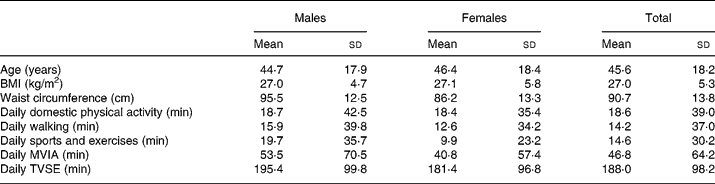
MVIA, moderate to vigorous intensity activity; TVSE, television and other screen-based entertainment time.
BMI and WC were highly correlated; age-adjusted partial correlation coefficients were 0·86 in both men and women (P < 0·001). Spearman coefficients between BMI-OB and WC-OB were 0·68 in men and 0·63 in women (P < 0·001).
BMI-defined and waist circumference-defined obesity
Overall, 22·0 % of men and 25·2 % of women were obese by BMI and 28·3 % of men and 37·7 % of women by WC-OB. BMI-OB and WC-OB increased with age, poorer health status, and lower age of education completion (Table 2). Among women only, BMI-OB increased inversely with NS-SEC category and occupational activity level. WC-OB was inversely associated with NS-SEC category in both sexes. Frequent consumption of soft drinks, snacks and alcohol was inversely associated with BMI-OB and WC-OB.
Distribution of BMI-defined obesity (BMI ≥30 kg/m2) and waist circumference-defined obesity (≥88 cm for women and ≥102 cm for men) by selected characteristics of the sample

NS-SEC, National Statistics Socio-economic Classification.
* Significant for men's BMI-defined obesity (P < 0·01; χ2 test).
† Significant for women's BMI-defined obesity (P < 0·01; χ2 test).
‡ Significant for total BMI-defined obesity (P < 0·01; χ2 test).
§ Significant for men's waist-defined obesity (P < 0·01; χ2 test).
∥ Significant for women's waist-defined obesity (P < 0·01; χ2 test).
¶ Significant for total waist-defined obesity (P < 0·01; χ2 test).
Sedentary time
Participants reporting ≥ 4 h/d TVSE were more likely to be men, ≥ 65 years, from a lower NS-SEC category, to have higher BMI-OB and WC-OB rates, and to have bad or very bad health, lower education level, and sedentary jobs (χ2P < 0·01; data not shown).
Physical activity levels
Overall, 27·6 % (32·5 % men and 23·0 % women) met the general recommendations and 23·7 % (22·8 % men and 24·6 % women) met the obesity-preventing recommendation. Meeting either physical activity recommendation (general or obesity-preventing) was associated with being male, being non-obese, aged 16–44 years, being from higher NS-SEC category, being at least moderately active at work, reporting good or very good health, and having higher education levels (all P < 0·001; data not shown).
Prevalence of BMI-defined and waist circumference-defined obesity by physical activity types and physical activity levels
Overall, the patterns for BMI-OB and WC-OB by activity types were substantively the same and there was an inverse gradient of both BMI-OB and WC-OB with average time spent walking and time doing sports (Fig. 1). In contrast, no trend was found across heavy domestic activity categories for BMI-OB and WC-OB.
(a) Prevalence of BMI-defined obesity (BMI ≥ 30 kg/m2) in adults living in Scotland aged 16 years and over, by average daily time spent in each activity. (b) Prevalence of waist circumference-defined obesity ( ≥ 88 cm for women and ≥ 102 cm for men) in Scottish adults aged 16 years and over, by average daily time spent in each activity. ( ), no time; (
 ), >0 to < 30 min/d; (
 ), ≥ 30 min/d. *P < 0·001.

Table 3 presents the fully adjusted OR and 95 % CI for being obese (BMI-OB or WC-OB) by physical activity types (model 1) and MVIA levels (model 2) followed by TVSE time and other potential confounders including sex. Only walking was significantly related to BMI-OB (multivariate P < 0·001). Both walking and sports were strongly related to WC-OB (multivariate P < 0·001). However, among walkers, BMI-OB and WC-OB rates were not different between those reporting under 30 and 30 min or more per d (P = 0·22 for BMI-OB; P = 0·52 for WC-OB). Because domestic activity was largely unrelated to obesity, model 2 was repeated with overall physical activity levels that included walking and sports only (model 3). Excluding domestic activity did not alter the results' direction, but the observed trends became stronger.
(Odds ratios and 95 % confidence intervals)

NS-SEC, National Statistics Socio-economic Classification.
*P < 0·001 for trend.
† Model 1 mutually adjusted for other activity types and TVSE time. Adjusted for age, sex, NS-SEC, self-reported health status, and consumption of soft drinks, energy-dense snacks and alcohol.
‡ Model 2 mutually adjusted for TVSE time. Adjusted for age, sex, NS-SEC, self-reported health status, and consumption of soft drinks, energy-dense snacks and alcohol.
§ Model 3, as model 2 and adjusted for domestic activity.
Independent relationships of television and other screen-based entertainment time with BMI-defined and waist circumference-defined obesity
A stronger positive relationship of TVSE with WC-OB than with BMI-OB was observed in all MVIA groups (excluding domestic activity), except for the inactive group (Fig. 2). In the inactive group (multivariate P < 0·01) and in the group meeting the recommendation (P < 0·05) to prevent obesity there was a trend of increasing BMI-OB with TVSE time, while the trend for those meeting the general recommendations reached borderline significance (multivariate P = 0·07). Substantial proportions of respondents meeting either of the MVIA recommendations and reporting ≥ 4 h/d of TVSE were classified as BMI-OB (approximately 19 %) or having WC-OB (approximately 27 %). The odds of having WC-OB by TVSE within each MVIA category were also examined, with and without domestic activities (Table 4). In the MVIA level-stratified analysis, the odds of WC-OB in the TVSE ≥ 4 h/d category were significantly higher compared with TVSE < 2 h/d across all MVIA categories. The OR for the effect of TVSE on WC-OB among those who are more active (meeting either activity recommendation) were larger. Excluding domestic activities increased the odds of WC-OB with TVSE time across all MVIA categories, with the exception of those classified as inactive. For example, the odds increased from 2·08 to 3·30 when domestic activities were excluded for those meeting the obesity-preventing recommendation. BMI-OB showed similar associations with TVSE within each MVIA category and the observed associations were strengthened by excluding domestic activities, as shown in Table 5. In contrast to the different TVSE and WC-OB relationship patterns by MVIA level (Table 4), the OR for the effect of TVSE on BMI-OB were not markedly different across MVIA groups.
(a) Prevalence of BMI-defined obesity (BMI ≥ 30 kg/m2) by sedentary time within physical activity categories. (b) Prevalence of waist circumference-defined obesity ( ≥ 88 cm for women and ≥ 102 cm for men) by television viewing and other screen-based entertainment time within physical activity categories. (□), less than 2 h/d; (), 2 to < 4 h/d; (■), ≥ 4 h/d.

(Odds ratios and 95 % confidence intervals)

* All models adjusted for age, sex, National Statistics Socio-economic Classification, education, self-reported health status, and consumption of soft drinks, energy-dense snacks and alcohol.
(Odds ratios and 95 % confidence intervals)

* All models adjusted for age, sex, National Statistics Socio-economic Classification, education, self-reported health status, and consumption of soft drinks, energy-dense snacks and alcohol.
Discussion
Physical activity, sedentary time and obesity
Current public health and clinical recommendations for physical activity(10–Reference Saris, Blair and van Baak14) concentrate solely on MVIA and provide no guidance on sedentary behaviour. To our knowledge, this is the first study to examine the relationships between different types of physical activity, sedentary behaviour and obesity, defined using both BMI and WC. In this representative Scottish sample, both physical activity and sedentary behaviour were independently related to BMI and WC. This independence in relation to obesity has been previously reported in European Union(Reference Martínez-González, Martínez, Hu, Gibney and Kearney6) and Australian(Reference Salmon, Bauman, Crawford, Timperio and Owen7) studies which, unlike the present study, did not differentiate between physical activity types and did not adjust for occupational physical activity. Our findings are in agreement with the Australian study where high levels of physical activity were not always protective against excess adiposity, if it was counteracted by high sedentary behaviour(Reference Salmon, Bauman, Crawford, Timperio and Owen7). In the present study, prevalence of obesity was still high in respondents who met the obesity-preventing recommendation and reported ≥ 4 h of TVSE per d (one in five by BMI-OB; one in four by WC-OB). There is limited but consistent evidence that energy expended during non-sitting/non-MVIA times (standing, fidgeting like movements while seated and while standing, indoor ambulation) can vary by up to approximately 8300 kJ/d (2000 kcal/d) between individuals(Reference Black, Coward, Cole and Prentice26, Reference Coward27) and may substantially contribute to the daily energy expenditure(Reference Levine, Schleusner and Jensen28, Reference Levine, Vander Weg, Hill and Klesges29). Since we only considered screen-based entertainment sitting time and MVIA, there is a possibility that respondents with high MVIA who were obese had compromised total energy expenditure. This could have been due to very low levels of low-grade activity, especially if their high TVSE times were a sign of very high sitting times in general. Another possibility is that some obese individuals grossly over-reported MVIA and as a result they are classified as meeting the public health recommendations, a hypothesis supported by studies showing that obese individuals have the tendency to over-report physical activity in general(Reference Forbes30, Reference Washburn, Jacobsen, Sonko, Hill and Donnelly31). Despite this possibility of over-reporting of physical activity by obese individuals, the present study reinforces suggestions that sedentary behaviour should specifically be targeted, especially among those with existing obesity(Reference Saris, Blair and van Baak14).
Types of physical activity
We found that associations between physical activity and obesity are type-specific and even the heavier forms of domestic activity do not appear to be protective towards obesity, confirming previous observations in elderly British women(Reference Lawlor, Taylor, Bedford and Ebrahim16) and English adults(Reference Stamatakis, Hillsdon and Primatesta17). A possible explanation is that domestic activities, such as housework and gardening, differ from other types of physical activity, such as walking, cycling and swimming, in that the latter are mainly aerobic and are characterised by the use of large muscle groups employed in a rhythmic and dynamic nature(32). Most domestic physical activities mainly utilise smaller upper-body muscles and are more intermittent, less rhythmic and often non-locomotor. As a result, although the energy expenditure rate of these activities may be similar to that of brisk walking if they are performed continuously(Reference Ainsworth, Haskell and Whitt33), in reality they are intermittent in nature producing lower energy expenditure. Another possible explanation is that the survey questions capture light-intensity domestic activity as well as heavy-intensity, diluting true relationships with BMI-OB and WC-OB. Residual confounding may be present due to the different degree of accuracy to which each activity component is reported. For example, sports participation involves conscious planning, making it therefore easier to recall than routine activities such as domestic tasks(Reference Matthews and Welk34). However, it remains a possibility that domestic physical activities are not of a sufficient intensity and energy expenditure to protect against obesity.
BMI, waist circumference and physical activity
Surprisingly, no association between sports and BMI-OB was observed. Sports are of higher intensity with higher energy expenditure than walking(32). However, BMI is limited as a surrogate adiposity measure confounded by muscle mass, which is maintained and often increased by many sports and exercises. Individuals with high levels of absolute muscle mass may appear to be overweight or obese when, in fact, they have relatively low body fat(Reference Prentice and Jebb35). This may partially explain the weaker relationships between BMI-OB and total physical activity, whilst WC may be a better measure of adiposity for epidemiological studies examining physical activity/adiposity relationships. This is supported by a 14-week exercise intervention programme in obese premenopausal women where body weight, and thus BMI remained constant, but WC significantly reduced(Reference Ross, Janssen, Dawson, Kungl, Kuk, Wong, Nguyen-Duy, Lee, Kilpatrick and Hudson36).
The dietary paradox
We observed an inverse relationship between intakes of soft drinks, snack foods and alcohol consumption with obesity (BMI-OB and WC-OB). At face value this may suggest that these dietary items are not detrimental. However, selective under-reporting of specific dietary components, such as snack items, is well documented(Reference Livingstone, Prentice, Strain, Coward, Black, Barker, McKenna and Whitehead37, Reference Poppitt, Swann, Black and Prentice38).
Strengths and limitations of the study
The present study is a large and nationally representative survey with adequate variability of the key outcomes to detect significant relationships. Weighting factors were applied to all analyses to ensure appropriate removal of non-response-related bias, making these results more generalisable to the general population compared with other studies in the field that have focused on usually occupationally-defined cohorts. To minimise the effect of unmeasured confounding, adjustments were made for occupational activity, social class, dietary indicators, and other potential confounders. The convergent validity of the physical activity questions is supported by their ability to grade obesity status by physical activity and sedentary behaviour levels. We have also documented excellent convergent validity of these questions in grading a plethora of biochemical and physiological disease risk factors(Reference Stamatakis, Hillsdon and Primatesta17).
A limitation of the present study, as with most epidemiological studies, is the lack of criterion validity for each individual activity type reported, and the inherent limitations of self-report in accurately capturing habitual activities, such as housework and walking. As a cross-sectional survey, the issue of causality remains unresolved. Reverse causality, such that obesity causes lower participation in MVIA and increased time spent in TVSE, cannot be excluded. Finally, TVSE does not capture all sedentary behaviour, since occupational screen-based work and computing is not included. Although we adjusted for occupational physical activity levels, it is likely that quantifying occupational sedentary behaviour would further strengthen inverse observed relationships between sedentary behaviour and obesity(Reference Mummery, Schofield, Steele, Eakin and Brown9). Finally, our analyses did not consider a full 24 h period and all types of sedentary time. It is therefore unclear how sleeping, commuting or non-TVSE sedentary time (for example, reading) relates to the risk for obesity.
Conclusions
Moderate–vigorous physical activity and sedentary behaviour are both strongly and independently related to the risk of obesity, both defined by BMI and WC. Not all currently recommended physical activity types confer protection against obesity, for example domestic activities, which in the present study are largely unrelated. With the limitations of BMI as a surrogate measure of adiposity, WC may be a better measure to use in epidemiological studies when assessing adiposity in relation to physical activity. Prospective studies are required to inform future revisions of public health recommendations. However, we recommend that current guidelines should specifically refer to sedentary behaviour as well as physical activity.
Acknowledgements
The Scottish Health Survey, on which the present paper was based, was funded by the Scottish Executive. The views expressed are those of the authors, not of the funders. None of the authors has a conflict of interest to declare. E. S. was involved in the conception and design of the study, analysis, interpretation, manuscript preparation, manuscript revision and manuscript approval. V. H. was involved in the manuscript preparation, manuscript revision and manuscript approval. K. R. was involved in manuscript revision and manuscript approval.



