





Introduction
Urban surfaces – comprising façades, roofs, pavements, and other architectural elements – constitute the dominant physical layer of human settlements. With urban land expanding globally by approximately 9687 km2 annually, the impact of urban surfaces on global environmental conditions has become profound. The average surface-to-ground area ratio of buildings is 9.48, indicating that for every square kilometer of land occupied, nearly 9.5 square kilometers of urban surface area is created. This translates to an estimated 91,832 km2 of new urban surfaces each year, significantly shaping urban microclimates and broader climatic conditions (Cruz Reference Cruz2024; Yang et al. Reference Yang, Wang, Stathopoulos and Marey2023).
Far from inert, urban surfaces actively engage in thermodynamic exchanges through radiative heat absorption, conductive heat transfer, and convective airflow. Smooth, flat surfaces with high thermal emissivity and low albedo tend to absorb substantial amounts of solar radiation, thereby elevating surface temperatures (Polidori et al. Reference Polidori, Ferrari, Ronchetti, Tommasi and Nalini2023). Additionally, their geometry often restricts convective heat dissipation and increases longwave radiative emissions into urban canyons, intensifying urban heat island (UHI) effects (Yang et al. Reference Yang, Wang, Stathopoulos and Marey2023). The UHI phenomenon arises from the combined influences of anthropogenic heat release, reduced sky-view factors, and the thermal inertia of urban materials, often resulting in urban areas maintaining temperatures 2°C–6°C higher than surrounding rural zones (Vilchez-Russell and Rafferty Reference Vilchez-Russell and Rafferty2024).
While the consequences of the UHI and heat waves for human thermal comfort and building energy performance are well documented, their implications for urban biodiversity – particularly for thermally sensitive organisms – remain less comprehensively explored (Polidori et al. Reference Polidori, Ferrari, Ronchetti, Tommasi and Nalini2023; Scheffers et al. Reference Scheffers, De Meester, Bridge, Hoffmann, Pandolfi, Corlett, Butchart, Pearce-Kelly, Kovacs, Dudgeon, Pacifici, Rondinini, Foden, Martin, Mora, Bickford and Watson2016). The present study, thus, focuses on nesting conditions for wild bees, with particular emphasis on cavity-nesting types that are often targeted as species for nature conservation efforts. In dense urban environments, these bees can be supported by artificial nesting aids during their most vulnerable developmental stages, from egg to pupa, when they remain immobile and entirely dependent on the nest’s microclimate conditions. Even brief exposures to elevated temperatures during these stages can induce metabolic stress, oxidative damage, developmental delays, and elevated mortality rates, severely threatening their ecological functions (Radmacher Reference Radmacher2011). Recently, experimental research on solitary bees has further clarified these vulnerabilities; larvae exposure to heatwaves peaking at 37°C resulted in a 385% increase in mortality compared to controls, with over 90% of fatalities occurring within the first 10 days of development. Notably, this study confirmed that it is not merely sustained high mean temperatures, but also short-term thermal spikes that drive significant mortality, emphasizing the necessity for microclimatic regulation at the scale of individual nesting cavities (Melone et al. Reference Melone, Stuligross and Williams2024).
Despite the crucial role of wild bees in supporting urban biodiversity and ecosystem services, most existing artificial nesting aids lack engineering features that address thermal performance (Ferrari and Polidori Reference Ferrari and Polidori2022). Widely deployed “insect hotels” in urban contexts typically consist of solid wood blocks, clay elements, or bundled hollow stems arranged horizontally within protective housings. While these designs aim to replicate natural cavities and are primarily intended to provide warming benefits during cooler seasons, they rarely incorporate strategies to reduce heat retention or radiative heating during hot summer days. As a result, such artificial nesting aids may unintentionally function as thermal traps during heatwaves, exposing developing bee larvae to potentially lethal temperatures (Polidori et al. Reference Polidori, Ferrari, Ronchetti, Tommasi and Nalini2023).
It’s important to recognize that artificial nesting devices do not fully imitate natural nesting habitats. In nature, cavity-nesting bees often use vertically oriented plant stems, dead wood, or naturally shaded materials within complex ecosystems. However, in dense urban areas, artificial nesting aids attached to building façades are among the most common and actively encouraged conservation measures (MacIvor Reference MacIvor2017; MacIvor and Packer Reference MacIvor and Packer2015). This study does not aim to replicate pristine natural nesting conditions; instead, it examines whether existing human-made nesting aids – already a key part of urban biodiversity efforts – can be made thermally more effective through geometric design. By addressing the thermal challenges of current devices, this research highlights the potential of building envelope design to serve as a bridge between conservation practices and microclimatic regulation.
A regenerative design perspective that extends beyond human-centered performance allows urban surfaces to be understood as multifunctional ecological infrastructure. Rather than serving solely aesthetic or thermal functions for buildings, these surfaces can mediate environmental stressors affecting multiple species. For wild bees in particular, such mediation is critical, as their survival and adaptive capacity depend on thermally regulated habitats distributed across fragmented urban landscapes.
Within this context, vertical urban surfaces – especially building façades – emerge as strategic interfaces. Beyond defining the visual character of cities, façades contribute to ecological connectivity and can support genetic diversity by functioning as distributed habitat infrastructure. At the same time, they form expansive vertical planes exposed to solar radiation at varying angles throughout the day and across seasons, significantly influencing urban heat gain (Meggers Reference Meggers2015). Their structural stability, controlled exposure, and protection from precipitation make them common mounting locations for artificial nesting aids, particularly on southeast-and south-facing walls that favor early spring activity. Yet conventional façade systems typically rely on flat, homogeneous outer layers optimized for aesthetics or insulation performance. Such configurations often retain heat, elevate surface temperatures, and restrict convective cooling, conditions that may inadvertently undermine their ecological intent.
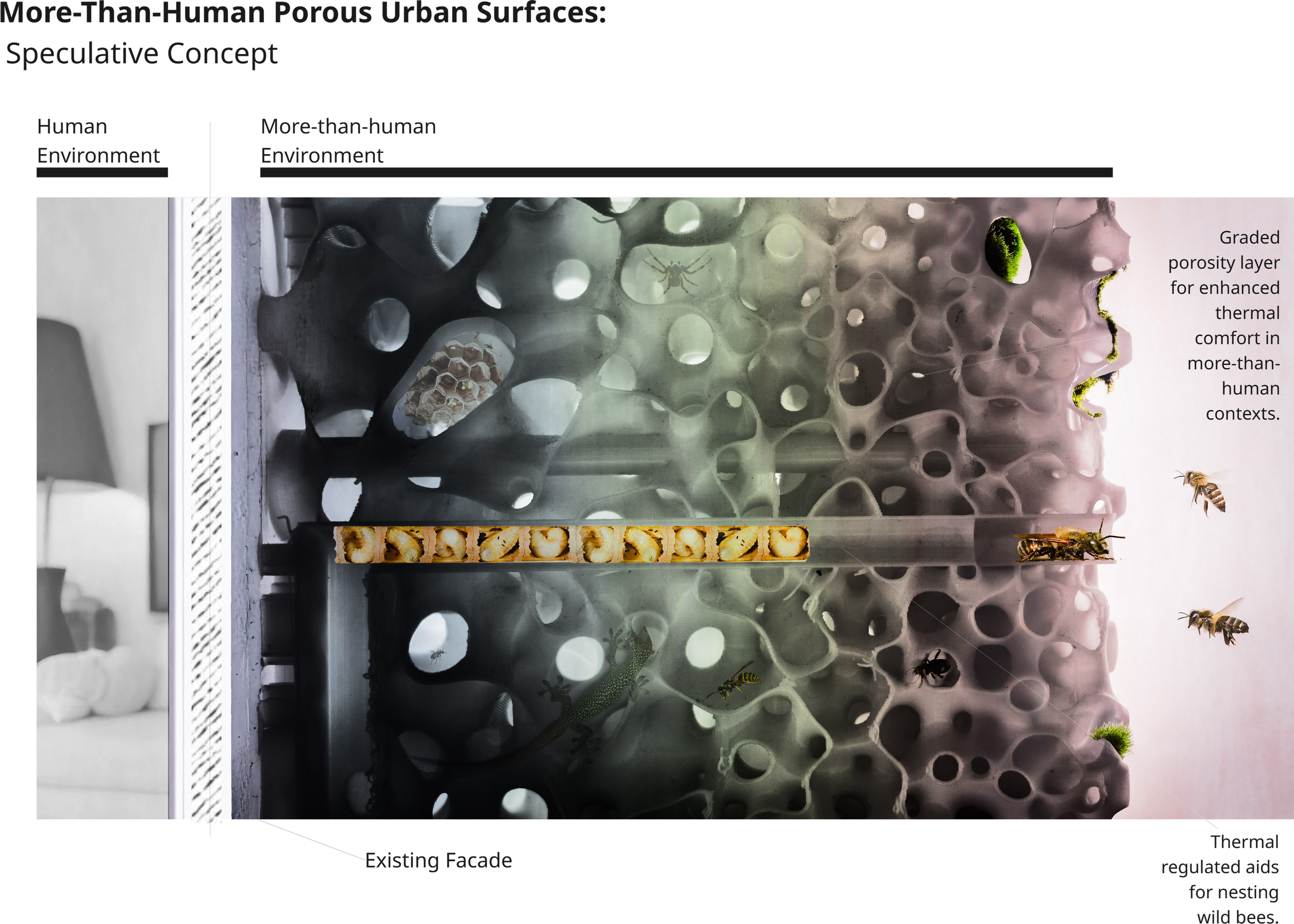
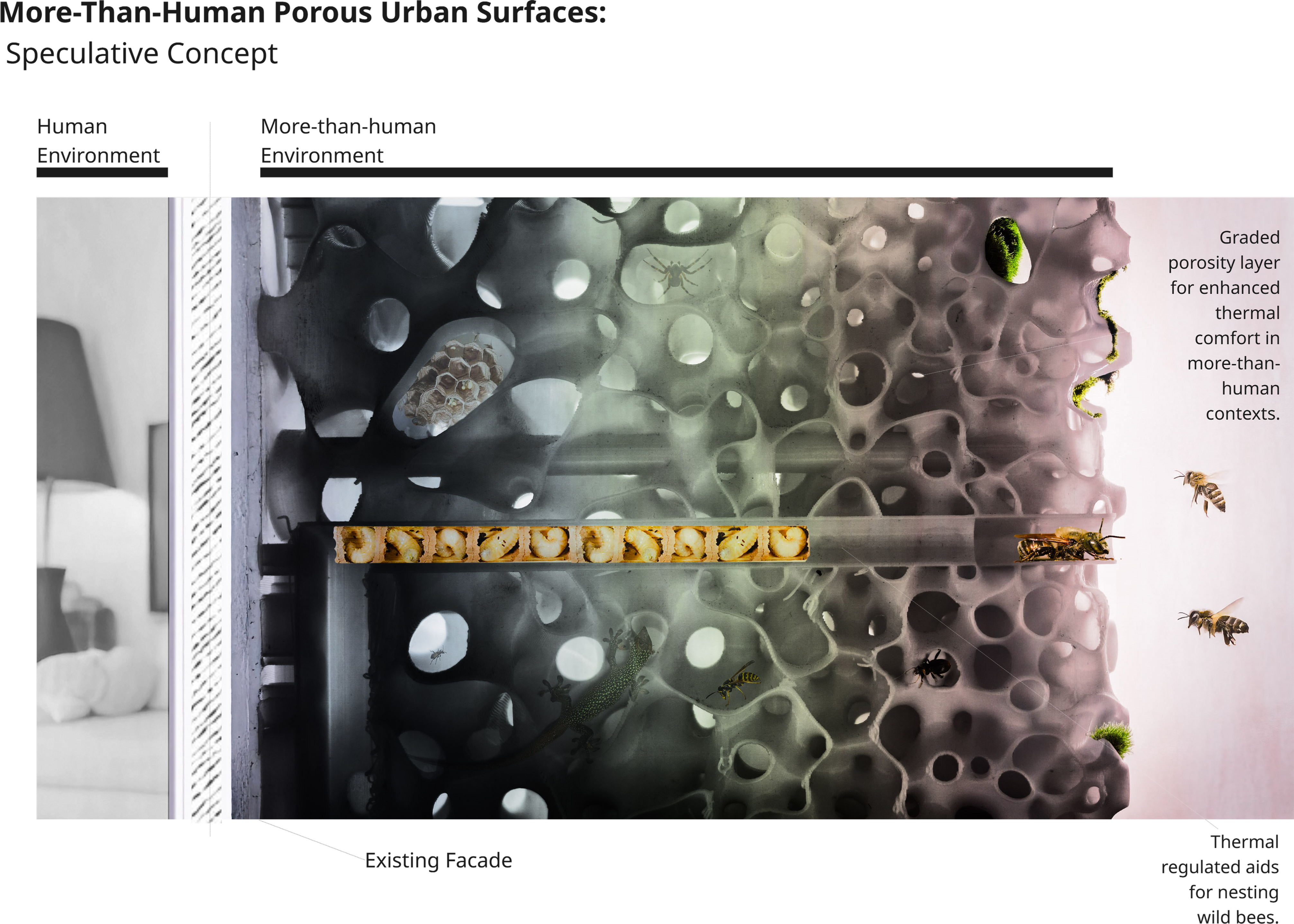
Reconsidering the geometry of the façade’s outer layer, therefore, becomes essential. Instead of maintaining thermally uniform surfaces, façades can be transformed into bioreceptive, thermally responsive structures (see Figure 1). Volumetric porous geometries with high surface-area-to-volume ratios can enhance localized airflow, introduce radiative self-shading, and alter conductive and convective heat pathways. Mechanisms such as turbulence-induced convection and reduced direct solar exposure contribute to localized thermal moderation. When nesting cavities are integrated within such geometries, the surrounding porous matrix may act as a microclimatic buffer, mitigating extreme temperature fluctuations experienced by developing bee larvae
Conceptual sectional representation of a speculative façade system integrating graded porous geometry to support thermally moderated nesting habitats for wild bees.
To realize these complex structures, additive manufacturing, specifically Fused Deposition Modeling (FDM), provides the necessary precision and geometric freedom. Cellular porous geometries – three-dimensional structures composed of interconnected voids and solid networks – have been widely studied for their ability to combine low material use with multifunctional performance, including mechanical strength, thermal regulation, and enhanced fluid transport. Among these, mathematically defined structures such as triply periodic minimal surfaces (TPMS) and adaptive density minimal surfaces (ADMS) are particularly promising, as their underlying implicit formulations enable precise control of porosity, surface area, and material distribution across space, supporting multifunctional performance including structural stability and thermal exchange.(Andréen and Soar Reference Andréen and Soar2023; Barakat and Sun Reference Barakat and Sun2024; Catchpole-Smith et al. Reference Catchpole-Smith, Sélo, Davis, Ashcroft, Tuck and Clare2019; Geier and Alihussein Reference Geier and Alihussein2021; Spherene Reference Spherene2022a). By leveraging these engineered geometries, the balance among conduction, convection, and radiation can be controlled within a single material, enabling integrated thermal management without additional layers.
In light of these challenges, the main research question in this study is whether the internal temperature of wild bee nesting aids – specifically within the cavities or tubes where bees nest – can be effectively modified by altering the shape of the surrounding volume. It is hypothesized that porous cellular structures, created through additive manufacturing, can reduce thermal extremes by decreasing conductive heat transfer, enhancing convective air flow around nesting cavities, and providing radiative shading. The overall goal for thermal performance is to keep internal nest temperatures below critical biological limits, especially over 30°C, where larval development and survival are at risk. In this initial set of experiments, the aim was to prevent heat retention.
To evaluate this hypothesis, three experiments were carried out under identical outdoor conditions. The first compared four porous geometric designs – TPMS and ADMS, each with uniform and graded porosity – to a standard artificial reed-based nesting aid. The second focused on material effects by testing cellulose-based PLA and wood-PLA within the same graded TPMS geometry. The third examined the influence of thermal mass by comparing a hollow ADMS-graded structure with a clay-filled version. All samples (150 mm × 150 mm × 200 mm) were mounted side-by-side on a southeast-facing façade in Stuttgart, Germany, and continuously monitored 24/7 throughout August 2024. Instead of separate runs for each variation, all configurations were exposed to the same environmental conditions simultaneously, enabling direct comparison of their thermal responses under typical summer fluctuations. These experiments demonstrate the potential for integrating thermally functional porous geometries into façade-mounted artificial nesting systems.
Background
Cavity-nesting wild bees and thermal vulnerability
Cavity-nesting wild bees represent approximately 30% of global bee diversity, utilizing pre-existing cavities such as hollow plant stems, dead wood, rock crevices, and increasingly, artificial nesting aids. In Central Europe, nearly one-third of the ∼600 native wild bee species are cavity nesters (Biella et al. Reference Biella, Tommasi, Guzzetti, Pioltelli, Labra and Galimberti2022). These solitary bees play crucial roles in urban ecosystems as primary pollinators, thereby using and maintaining floral diversity, and supporting trophic interactions vital for ecosystem services (Polidori et al. Reference Polidori, Ferrari, Ronchetti, Tommasi and Nalini2023). Unlike eusocial bees (e.g., honeybees), cavity-nesting solitary bees exhibit a reproductive strategy in which each female constructs, provisions, and seals her own nest independently. While this solitary strategy mitigates the risk of colony-level pathogen outbreaks, it renders each brood entirely dependent on passive thermal buffering provided by the nest structure once the female dies or completes provisioning (Westrich and Dathe Reference Westrich and Dathe1998).
The thermophysiological performance of developing bees inside nesting cavities is governed by heat transfer dynamics – specifically, the interaction of conduction, convection, and radiation between the external environment and the nest microclimate. The thermal inertia of cavity walls, pore structure, and material conductivity significantly influence the rate at which external temperature fluctuations propagate into the nest’s interior. In traditional natural substrates (e.g. hollow stems of wood or reeds), thermal diffusivity can be moderate to high, depending on wall thickness and moisture content, leading to pronounced transmission of external thermal peaks (Kierat et al. Reference Kierat, Szentgyörgyi, Czarnoleski and Woyciechowski2017; Polidori et al. Reference Polidori, Ferrari, Ronchetti, Tommasi and Nalini2023).
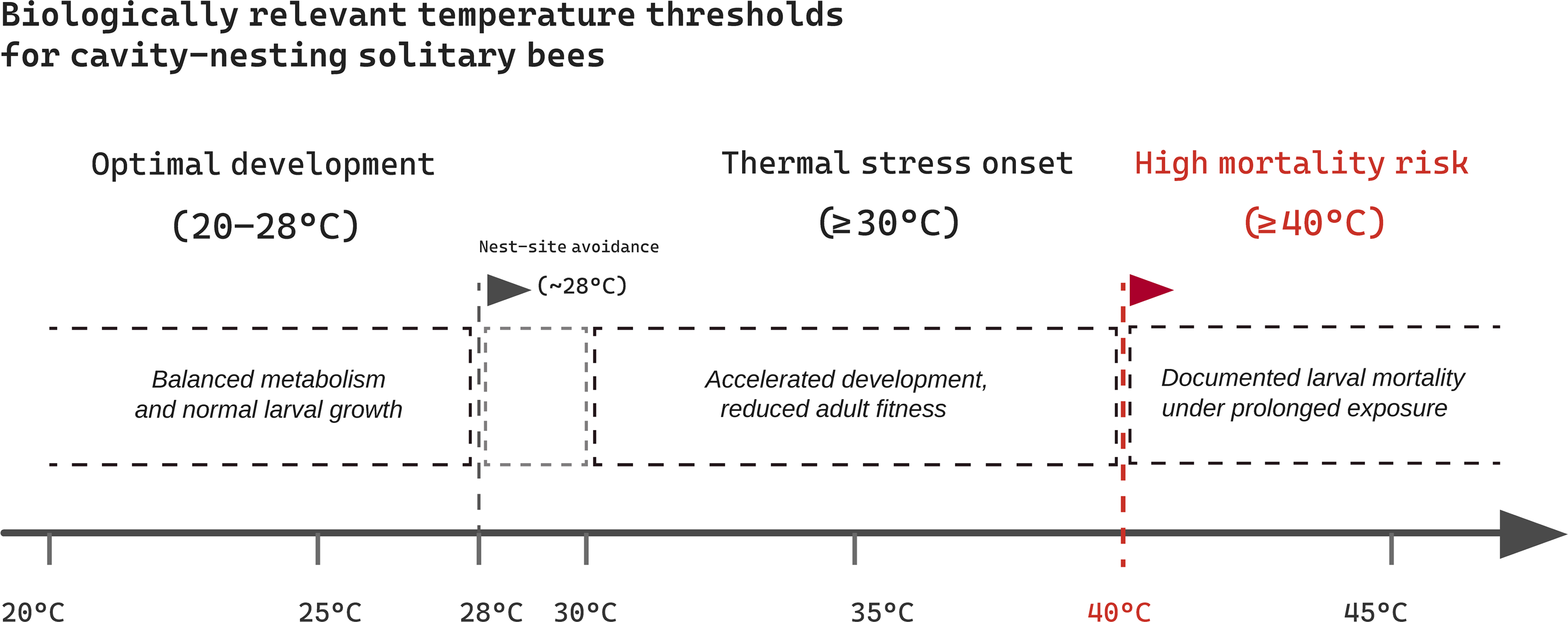
Optimal temperatures for cavity-nesting bee development, such as the locally abundant Osmia bicornis, typically range between 20°C and 25°C, where metabolic rates remain balanced, developmental timing proceeds normally, and adult bees achieve typical body sizes and sufficient lipid stores for overwintering (Ostap-Chec et al. Reference Ostap-Chec, Kierat, Kuszewska and Woyciechowski2021; Radmacher and Strohm Reference Radmacher and Strohm2010, Reference Radmacher and Strohm2011). However, experimental and field studies show that even modest increases above this range begin to impose physiological stress for bee individuals. For instance, O. bicornis females avoid nesting sites exceeding 28°C (Ostap-Chec et al. Reference Ostap-Chec, Kierat, Kuszewska and Woyciechowski2021), suggesting the presence of behavioral thresholds aimed at mitigating thermally induced fitness costs during offspring development.
In all, temperatures above 30°C mark a critical biological inflection point for many solitary bees. Under such conditions, accelerated developmental rates occur, leading to premature emergence and potential phenological mismatches with floral resources (Giejdasz and Fliszkiewicz Reference Giejdasz and Fliszkiewicz2016), while reduced adult body size can compromise overwintering survival (Radmacher and Strohm Reference Radmacher and Strohm2010). Even moderate increases above this range can destabilize population structures through increased male-biased emergence (Fitch et al. Reference Fitch, Glaum, Simao, Vaidya, Matthijs, Iuliano and Perfecto2019; Melone et al. Reference Melone, Stuligross and Williams2024; Vanderplanck et al. Reference Vanderplanck, Martinet, Carvalheiro, Rasmont, Barraud, Renaudeau and Michez2019). Around 35°C–40°C, solitary bee development becomes severely compromised. For example, Melone et al. (Reference Melone, Stuligross and Williams2024) showed that exposing larvae to 37°C for 4–7 consecutive days increased larval mortality by 385%, with peak temperature being a stronger predictor of mortality than duration. Radmacher and Strohm (Reference Radmacher and Strohm2010, Reference Radmacher and Strohm2011) similarly found that temperatures above 35°C delay larval development and diminish adult reproductive fitness. At temperatures of 40°C and above, thermal lethality becomes likely under prolonged exposure (Ferrari and Polidori Reference Ferrari and Polidori2022; Polidori et al. Reference Polidori, Ferrari, Ronchetti, Tommasi and Nalini2023).
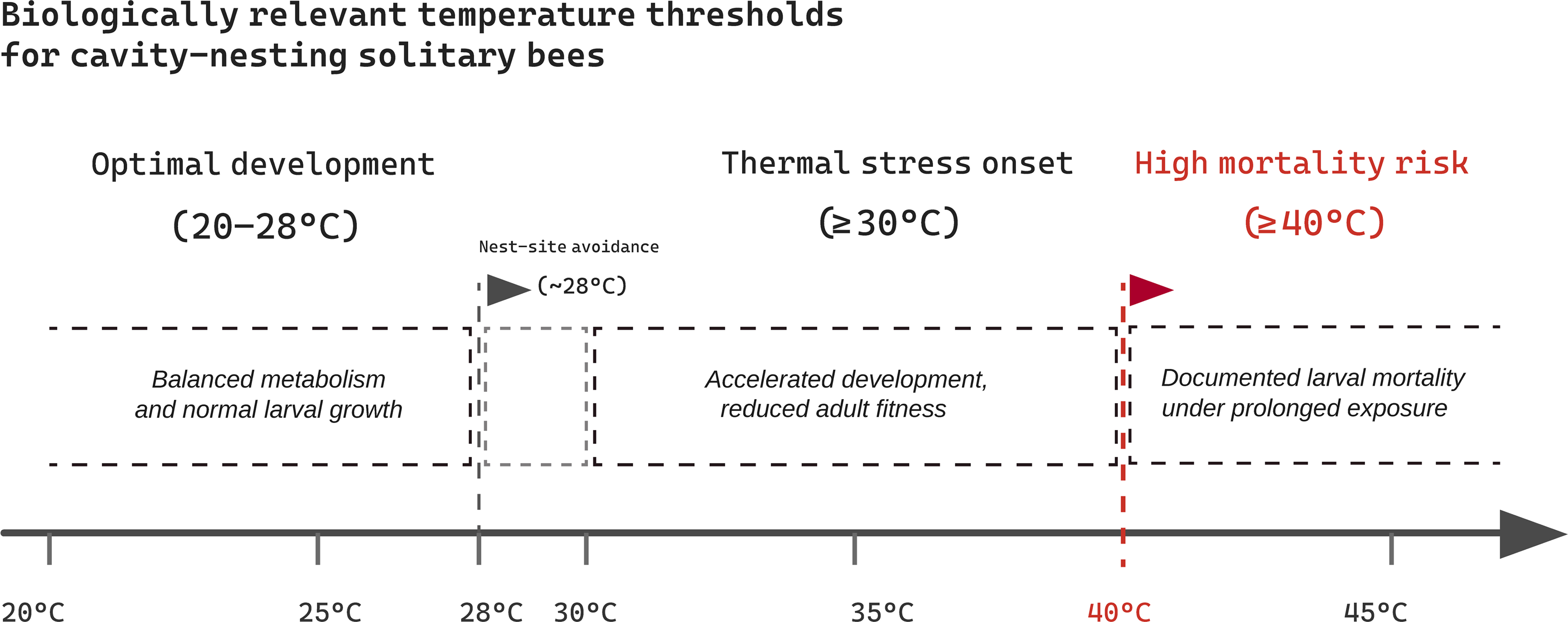
Thermal stress also indirectly threatens bee survival by affecting the physical properties of larval provisions. Melone et al (Reference Melone, Stuligross and Williams2024) and Radmacher and Strohm (Reference Radmacher and Strohm2010) documented that at elevated temperatures, pollen and nectar masses within sealed brood cells either desiccate into hard, impenetrable masses or liquefy into viscous slurries that can drown larvae. These physical transformations compromise larval nutrition and further elevate mortality risks (see Figure 2).
Biologically relevant temperature thresholds for cavity-nesting solitary bees. Optimal development occurs at 20°C–25°C; temperatures ≥30°C are associated with thermal stress, and prolonged exposure ≥40°C has been linked to increased larval mortality.
Urban environments intensify thermal risks for cavity-nesting bees (Polidori et al. Reference Polidori, Ferrari, Ronchetti, Tommasi and Nalini2023). As UHI and heatwaves grow more frequent across Europe – currently the fastest-warming continent (Copernicus Climate Change Service (C3S) 2023) – most existing nesting aids offer limited capacity to buffer rapid thermal spikes, in current and future scenarios. Their geometry and material properties tend to retain heat, increasing offspring vulnerability and turning sun-exposed nesting sites into ecological traps under extreme conditions (Ferrari and Polidori Reference Ferrari and Polidori2022).
Porous cellular structures for thermal control
Advances in computational design and additive manufacturing have propelled metamaterials – whose properties emerge primarily from their geometry rather than their intrinsic material characteristics – into the architectural realm (Knippers et al. Reference Knippers, Speck and Nickel2016; Speck and Knippers Reference Speck and Knippers2012). Once restricted to domains such as photonics and aerospace engineering, metamaterials now offer architects the possibility of creating multifunctional materials that can precisely regulate heat, sound, and structural behavior (Andréen and Soar Reference Andréen and Soar2023; Dutto et al. Reference Dutto, Zanini, Jeoffroy, Tervoort, Mhatre, Seibold, Bechthold, Studart, Dutto, Tervoort, Studart, Zanini, Jeoffroy, Mhatre, Seibold and Bechthold2022) This shift is driven by current demands for building envelopes that not only serve structural purposes but also actively regulate environmental conditions, to support the multifunctional envelope logic (Knippers and Speck Reference Knippers and Speck2012), thereby affecting climate and biodiversity resilience.
An additional benefit is the monomaterial approach, which simplifies end-of-life recycling and prevents performance problems at material interfaces in composite systems, especially under thermal or mechanical stress (Dutto et al. Reference Dutto, Zanini, Jeoffroy, Tervoort, Mhatre, Seibold, Bechthold, Studart, Dutto, Tervoort, Studart, Zanini, Jeoffroy, Mhatre, Seibold and Bechthold2022; Reynolds Reference Reynolds2020). Among monomaterial solutions, functionally graded structures – those in which local geometry or density varies spatially to fine-tune properties – are emerging as compelling tools for designing high-performance building components (Knippers and Speck Reference Knippers and Speck2012).
Within this approach, porous cellular structures are notable for their ability to control heat transfer through geometry as well as to achieve mechanical performance with minimal material use. Defined by networks of pores – often, but not always, interconnected – these structures have high surface-to-volume ratios that enable the management of conductive, convective, and radiative heat transfer processes (Wadley and Queheillalt Reference Wadley and Queheillalt2007a). Their performance depends on their ability to balance these three variables: conduction through the solid matrix relies on ligament thickness and connectivity, with increased porosity usually decreasing thermal conductivity. However, tailored geometrical arrangements can offset these effects by creating optimized heat flow paths (Long et al. Reference Long, Liu, Sun and Lu2024). Convective heat transfer becomes significant when pore sizes exceed certain thresholds, typically around 3–5 mm; above this size, buoyancy-driven airflow can substantially boost heat dissipation, whereas smaller pores suppress convection and enhance insulation (Xuan et al. Reference Xuan, Fang, Lu, Yang and Tao2024). Radiative transfer, meanwhile, gains prominence in structures with large internal surface areas, where complex geometries facilitate significant absorption and emission of thermal radiation, particularly under high-temperature conditions (Hegman and Babcsán Reference Hegman and Babcsánn.d.; Huang et al. Reference Huang, Wang, Feng, Peng, Huang and Song2024).
Due to these properties, porous geometries have been widely applied in engineering as efficient heat exchangers (Sajjad et al. Reference Sajjad, Rehman, Ali, Park and Yan2022; Wadley and Queheillalt Reference Wadley and Queheillalt2007b). Additionally, interconnected cellular structures exhibit features observed in various biological role models, where organisms have evolved complex architectures to passible manage thermal and structural needs – such as self-shading, optimized surface exposure, and enhanced fluid movement through pore connectivity and size variation, which generate internal pressure differentials that drive passive fluid flow (Andréen and Soar Reference Andréen and Soar2023; King et al. Reference King, Ocko and Mahadevan2015; Korb Reference Korb2003; Reynolds Reference Reynolds2020; Wadley and Queheillalt Reference Wadley and Queheillalt2007b).
Translating functional geometries into architectural components has become increasingly feasible due to recent advancements in additive manufacturing. These technologies now enable the fabrication of complex, highly customized building elements that integrate performance and form (Dutto et al. Reference Dutto, Zanini, Jeoffroy, Tervoort, Mhatre, Seibold, Bechthold, Studart, Dutto, Tervoort, Studart, Zanini, Jeoffroy, Mhatre, Seibold and Bechthold2022). Of growing interest is the capacity of 3D printing to generate hierarchical porous structures, where large-scale openings support convective cooling, and smaller, tortuous pores restrict heat transfer by conduction and radiation (Piccioni et al. Reference Piccioni, Turrin and Tenpierik2020; Reynolds Reference Reynolds2020; Xuan et al. Reference Xuan, Fang, Lu, Yang and Tao2024).
Despite this potential, the practical deployment of porous cellular structures in architecture remains at an early stage. Laboratory studies have demonstrated that such geometries can reduce internal temperatures and dampen thermal peaks, partly due to their high surface-area-to-volume ratios and interconnected pore networks, which facilitate convective heat exchange. However, detailed analyses of their behavior under real environmental conditions, particularly when used as microhabitats within façade systems, remain limited (Craig and Grinham Reference Craig and Grinham2017; Dutto et al. Reference Dutto, Zanini, Jeoffroy, Tervoort, Mhatre, Seibold, Bechthold, Studart, Dutto, Tervoort, Studart, Zanini, Jeoffroy, Mhatre, Seibold and Bechthold2022; Reynolds Reference Reynolds2020).
Against this backdrop, the current set of experiments examines how porous cellular structures, as surrounding geometries for nesting tubes, influence the temperature inside these tubes, which serve as critical microhabitats for nesting aid. The research aims to determine how these geometries affect thermal regulation, specifically whether porous structures effectively buffer external heat or inadvertently trap it, potentially raising internal temperatures above safe levels. If significant heat retention is not observed, future studies may explore additional passive cooling strategies to help maintain optimal thermal conditions for wild bees
Methodology
Geometric design rationale
In this initial set of experiments, the aim was to investigate how various geometric strategies in cellular porous structures influence passive microclimate regulation within cavity-nesting aids. To this end, two types of minimal surface geometries were selected for comparison: one periodic and one non-periodic. This distinction was guided by both biological analogs and engineering precedents, where porous systems exhibit either periodic organization or spatially graded porosity for thermal regulation. Periodic structures offer consistent and predictable thermal and flow behavior, which is valuable for overall structural performance and simulation control (Barakat and Sun Reference Barakat and Sun2024; Catchpole-Smith et al. Reference Catchpole-Smith, Sélo, Davis, Ashcroft, Tuck and Clare2019). Non-periodic geometries, on the other hand, allow for spatial adaptation – making it possible to fine-tune airflow and thermal exchange in specific zones through variable flow resistance (Spherene Reference Spherene2022a; Yan et al. Reference Yan, Wang, Li and Deng2023).
For the periodic geometry, the Schwarz Diamond TPMS was selected due to its well-documented thermal and mechanical performance, as shown in comparative studies where it outperformed other TPMS variants such as the Gyroid and Primitive surfaces in terms of heat transfer efficiency and isotropic permeability (Barakat and Sun Reference Barakat and Sun2024; Catchpole-Smith et al. Reference Catchpole-Smith, Sélo, Davis, Ashcroft, Tuck and Clare2019). As a counterpoint, an Adaptive Density Minimal Surface (ADMS) was chosen to represent non-periodic behavior. ADMS geometries, such as those based on the Spherene model, enable continuous spatial modulation of pore size and curvature via scalar-field manipulation, offering localized thermal and airflow tuning while maintaining a smooth, uninterrupted surface (Spherene Reference Spherene2022a). The contrast between globally uniform performance (TPMS) and locally adaptable behavior (ADMS) provides a framework for evaluating which geometric approach best supports microclimate stabilization under outdoor conditions, particularly in relation to the biological thresholds previously identified.
Porosity configuration and grading strategy
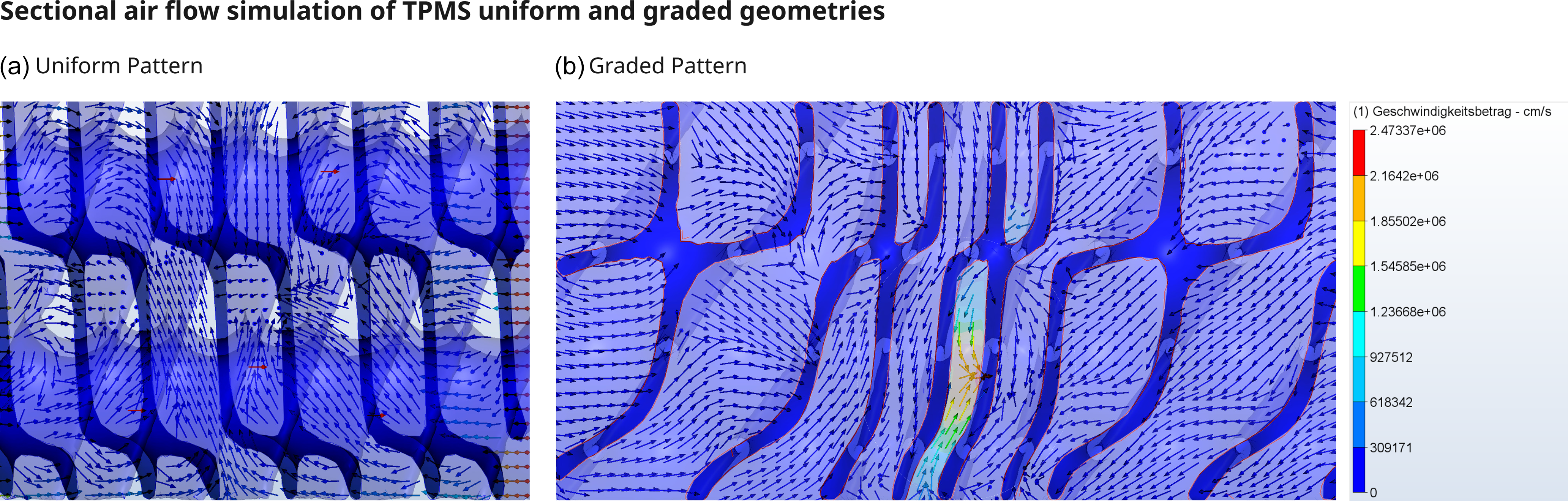
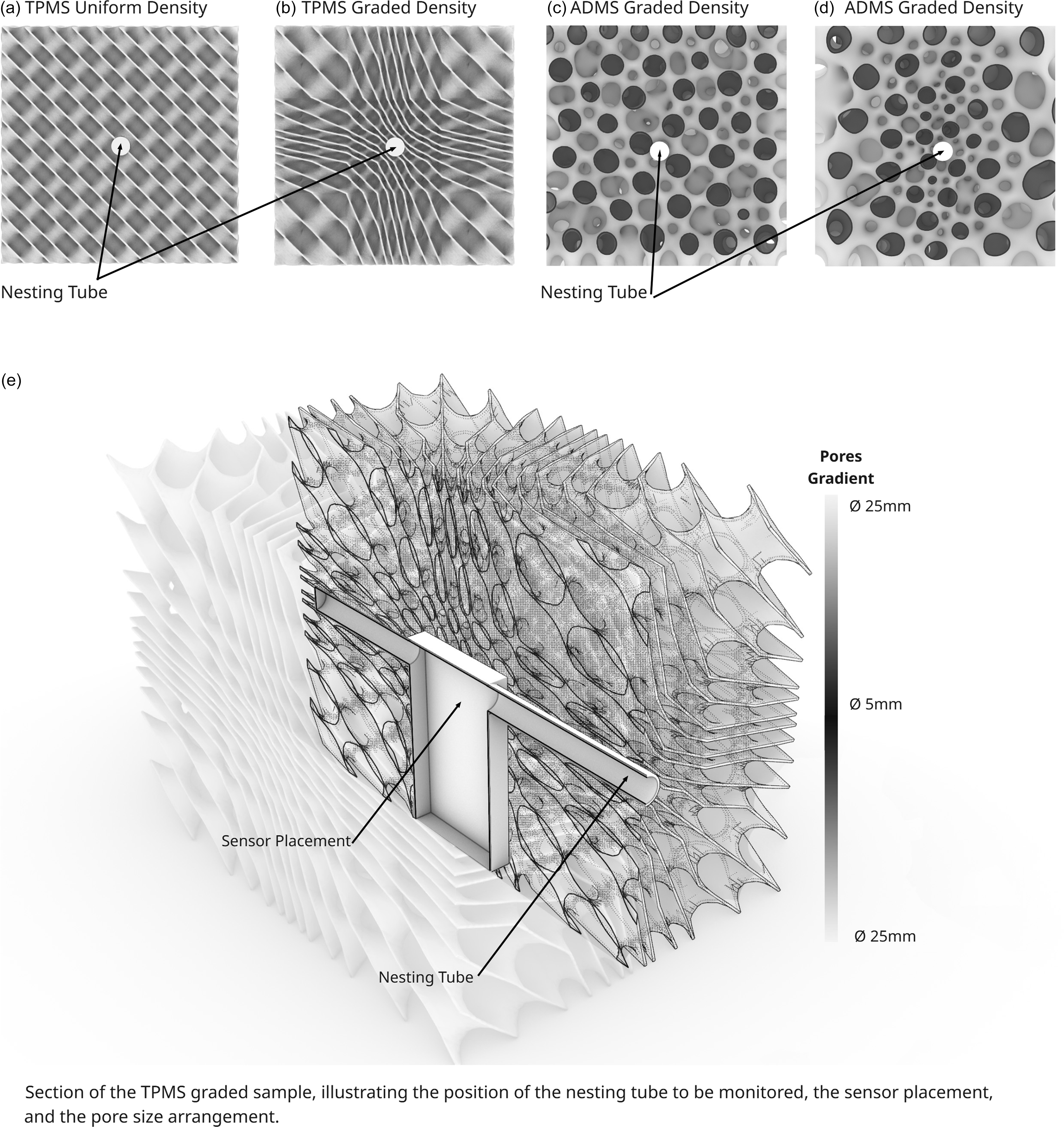
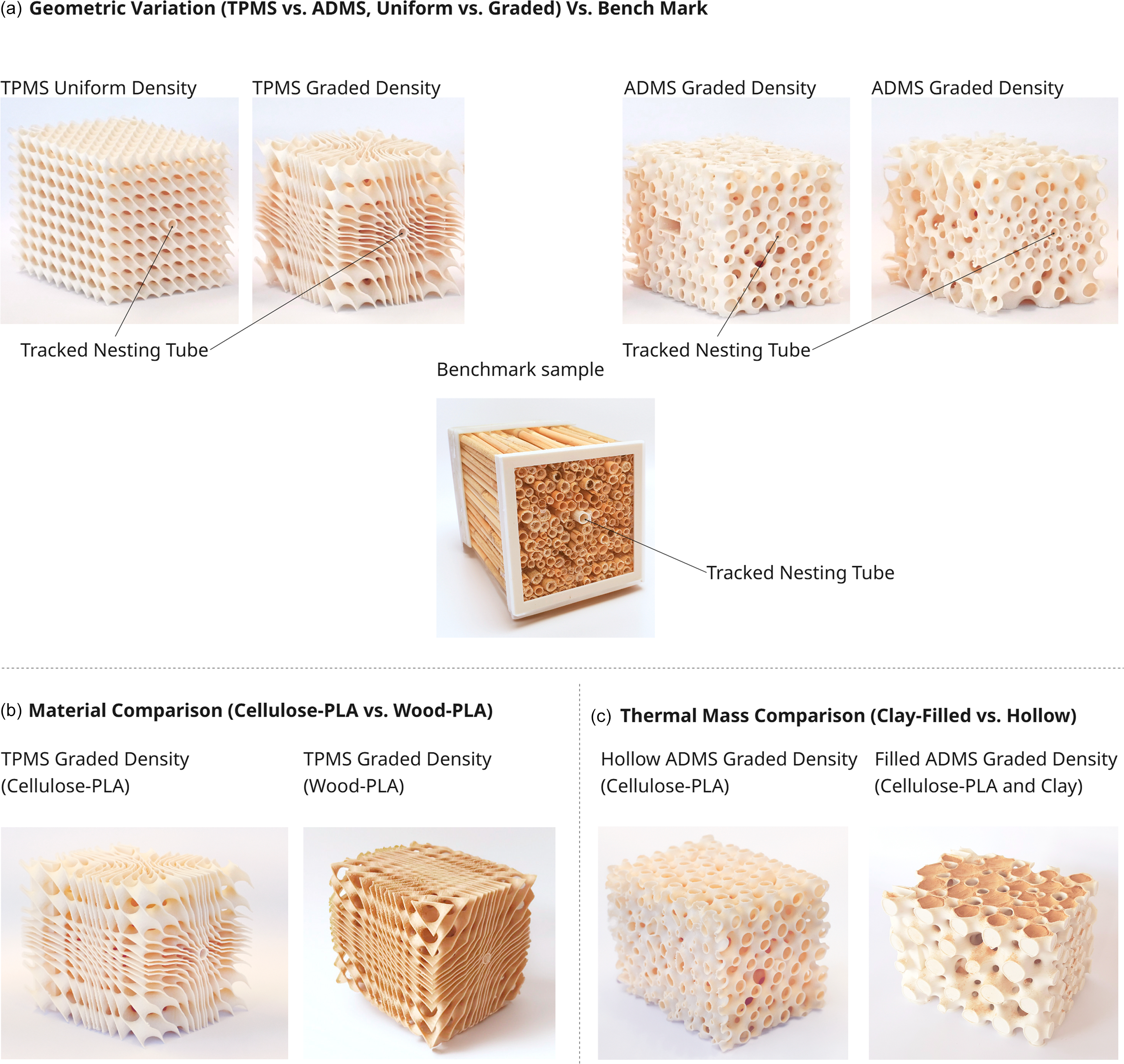
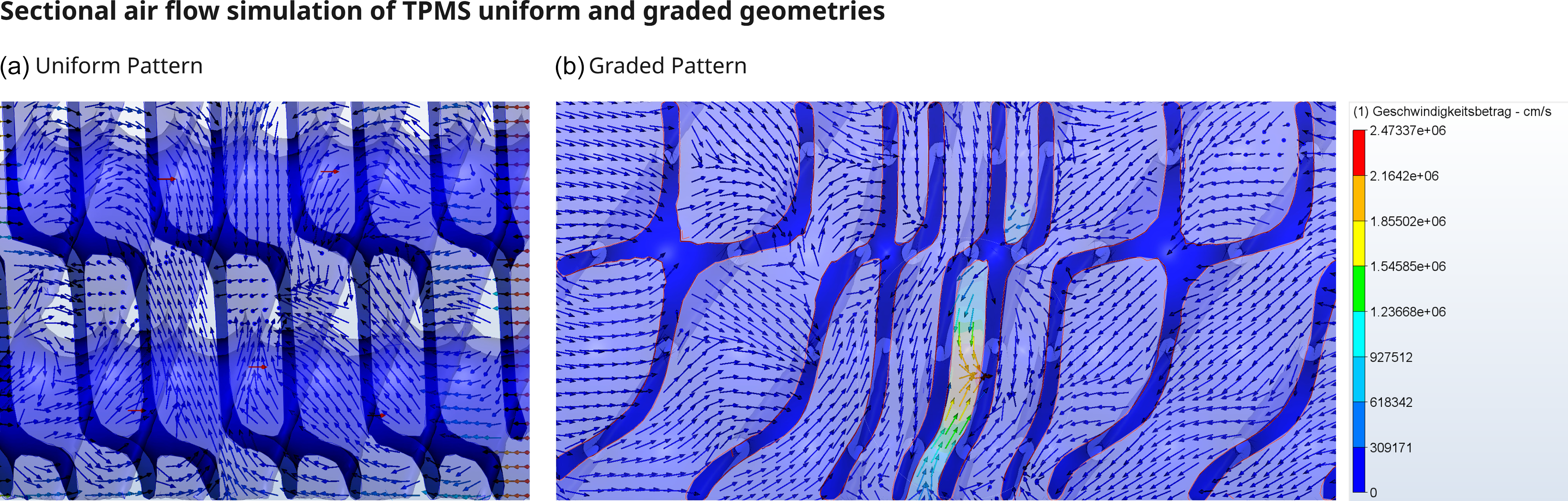
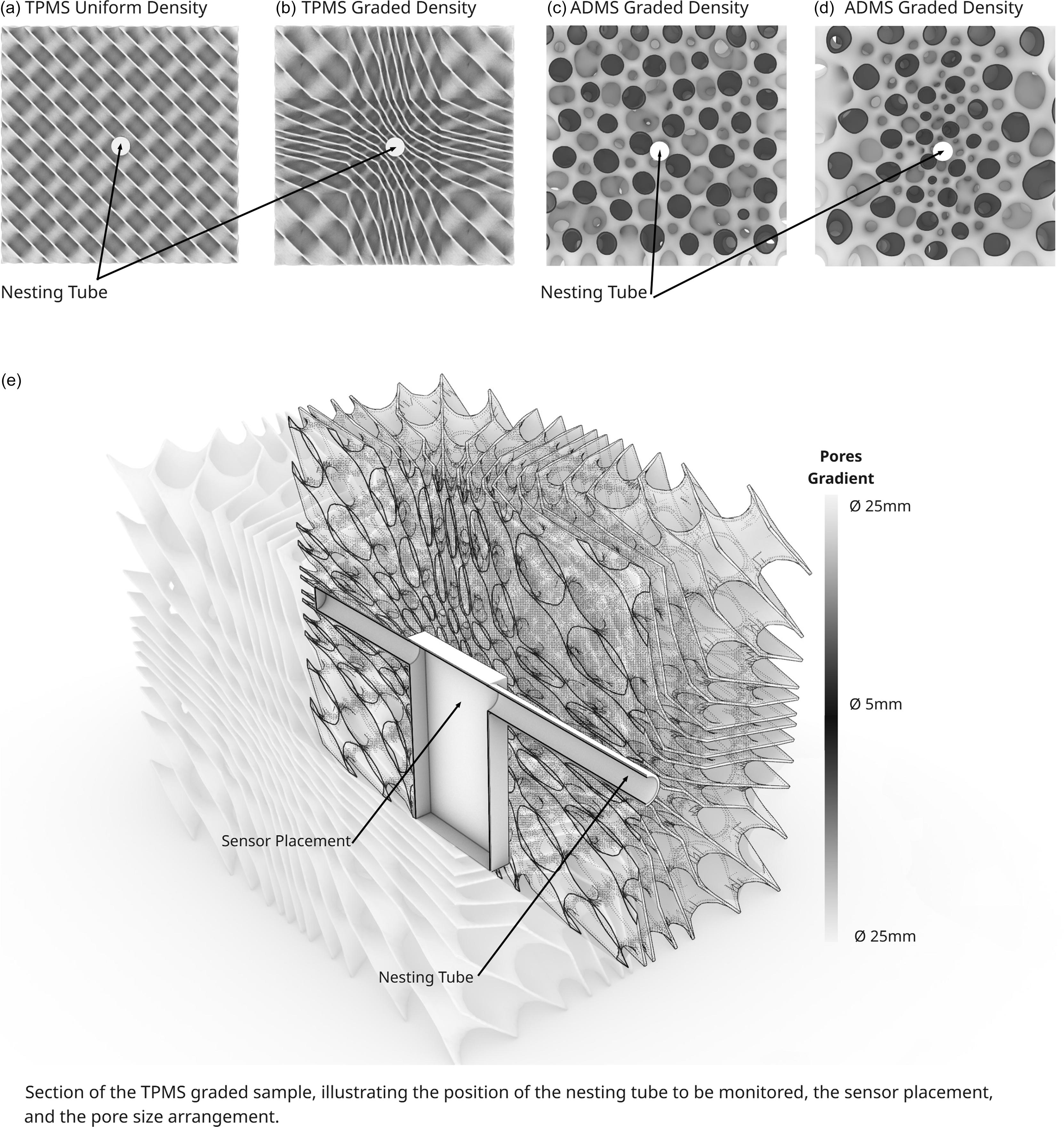
Graded porosity has been noted in the literature to enhance convective heat transfer by introducing localized velocity gradients and turbulent zones within open-cell structures (Andréen and Soar Reference Andréen and Soar2023; Yan et al. Reference Yan, Wang, Li and Deng2023) (see Figure 3). This effect is particularly relevant in scenarios where transient forced convection – that is, unsteady, externally induced air movement – can amplify localized heat exchange across porous boundaries, as observed in biomimetic structures such as termite mounds (Andréen and Soar Reference Andréen and Soar2023; Korb Reference Korb2003). For this reason, each cellular type (TPMS and ADMS) was fabricated in two configurations: one with uniform pore sizes of 15 mm and another with graded pore sizes ranging from 5 mm near the nesting tube to 25 mm at the outer boundary. The goal was to maximize external ventilation while reducing thermal load near the nesting cavity. A 5 mm lower limit was chosen based on evidence that convection becomes negligible below this threshold, transitioning the dominant mode to conduction (Xuan et al., Reference Xuan, Fang, Lu, Yang and Tao2024). This led to four distinct geometric configurations: periodic uniform, periodic graded, non-periodic uniform, and non-periodic graded, all featuring connected pores (see Figure 3a–b).
Sectional airflow simulation of TPMS geometries comparing (a) uniform and (b) graded pore configurations under forced convection conditions. Air enters from opposing boundaries at 3 m/s and moves through the porous cellular network. Arrows indicate airflow direction, while the color scale represents velocity magnitude (cm/s). The graded configuration shows localized flow acceleration and disturbances within the pore network. Simulation generated using Autodesk CFD 2024.
Nesting tube configuration
Each sample measured 150 × 150 × 200 mm (width × height × depth) and incorporated a horizontal cylindrical nesting tube with a 5 mm diameter running through the center of the geometry. All porous walls were printed with a constant wall thickness of 1 mm. Depending on the configuration, pore size was either uniform (15 mm) or graded (5 mm near the nesting tube increasing to 25 mm toward the exterior). The horizontal orientation reflects common artificial nesting aids (“insect hotels”), where bundled stems or drilled wooden blocks are typically mounted horizontally within façade-mounted housings; this configuration was therefore selected to represent prevalent urban conservation devices rather than natural vertical plant stems. Temperature and humidity were monitored inside the nesting tube as proxies for the brood microhabitat within the porous matrix (see Figure 4e).
Geometric configurations of the porous nesting-aid samples: (a) TPMS uniform density, (b) TPMS graded density, (c) ADMS uniform density, and (d) ADMS graded density. The graded configurations vary pore diameter from approximately 5 mm near the nesting tube to 25 mm toward the outer boundary. (e) Sectional view of the TPMS graded sample showing the nesting tube position, sensor placement, and pore-size distribution. All samples measure 150 × 150 × 200 mm, with a 5 mm diameter nesting tube and 1 mm wall thickness.
Digital modeling and fabrication
Geometries were created within Rhinoceros 3D (Robert McNeel & Associates 2023c). The TPMS diamond geometries were generated using Grasshopper – a visual programming environment – and scripted in GhPython, Rhino’s native Python interface for algorithmic modeling (Robert McNeel & Associates 2023b, 2023a). The scalar field defining the implicit surface was generated based on the following mathematical formulation:
 $$\displaylines{f\left( {x,\;y,\;z} \right)\; = \;sin\left( {s\cdot x} \right)\cdot sin\left( {s\cdot y} \right)\cdot sin\left( {s\cdot z} \right)\;\;\; + \;sin\left( {s\cdot x} \right) \cr \,\,\,\,\,\,\,\,\,\,\,\,\,\,\,\,\,\,\,\,\,\,\,\,\,\,\,\,\,\,\,\,\,\,\,\,\cdot cos\left( {s\cdot y} \right)\cdot cos\left( {s\cdot z} \right)\;\; + \;cos\left( {s\cdot x} \right)\cdot sin\left( {s\cdot y} \right) \cr \,\,\,\,\,\,\,\,\,\,\,\,\,\,\,\,\,\,\,\,\,\,\,\,\,\,\,\,\,\,\,\,\,\,\,\,\cdot cos\left( {s\cdot z} \right)\; + \;cos\left( {s\cdot x} \right)\cdot cos\left( {s\cdot y} \right)\cdot sin\left( {s\cdot z} \right) \cr} $$
Where $s$
is a scaling factor controlling the periodicity and pore size. In the uniform density configuration,
$s$
is a scaling factor controlling the periodicity and pore size. In the uniform density configuration, $s$
remains constant across the entire domain, producing a spatially homogeneous porous lattice. Conversely, the graded density configuration introduces a spatially varying scaling factor,
$s$
remains constant across the entire domain, producing a spatially homogeneous porous lattice. Conversely, the graded density configuration introduces a spatially varying scaling factor, $s$
=
$s$
= $\left( {x,\;y,\;z} \right)$
, allowing the frequency of the trigonometric terms to vary locally. This modulation results in a functionally graded TPMS, where the periodicity – and therefore porosity – varies continuously across space. The iso-surface where
$\left( {x,\;y,\;z} \right)$
, allowing the frequency of the trigonometric terms to vary locally. This modulation results in a functionally graded TPMS, where the periodicity – and therefore porosity – varies continuously across space. The iso-surface where $f\left( {x,\;y,\;z} \right)\;$
defines the solid-void boundary of the geometry. The ADMS geometries were generated using Spherene (Reference Spherene2022a), which implements an algorithmic, field-based approach to produce non-periodic minimal surfaces with controlled local variations in density and pore size.
$f\left( {x,\;y,\;z} \right)\;$
defines the solid-void boundary of the geometry. The ADMS geometries were generated using Spherene (Reference Spherene2022a), which implements an algorithmic, field-based approach to produce non-periodic minimal surfaces with controlled local variations in density and pore size.
Samples were fabricated using Fused Deposition Modeling (FDM), a layer-based additive manufacturing process that enables precise control over thin-walled porous geometries. Two biobased, low-toxicity filament materials were selected to ensure compatibility with potential biological occupation: a cellulose-reinforced PLA (10% cellulose content; thermal conductivity ≈ 0.183 W/m·K) and a wood-filled PLA (40% wood fiber; thermal conductivity ≈ 0.04–0.085 W/m·K).
Experimental setup and environmental conditions
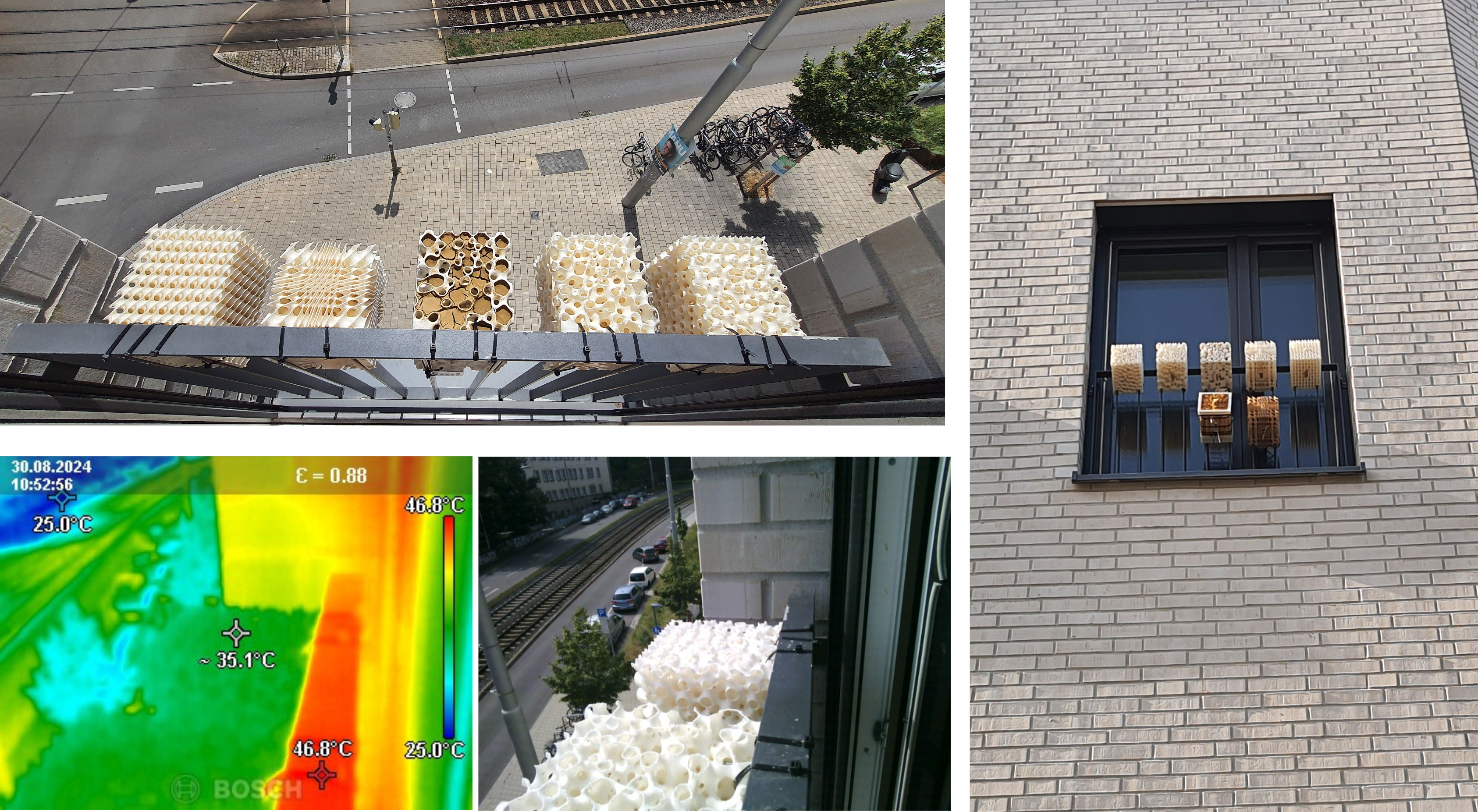
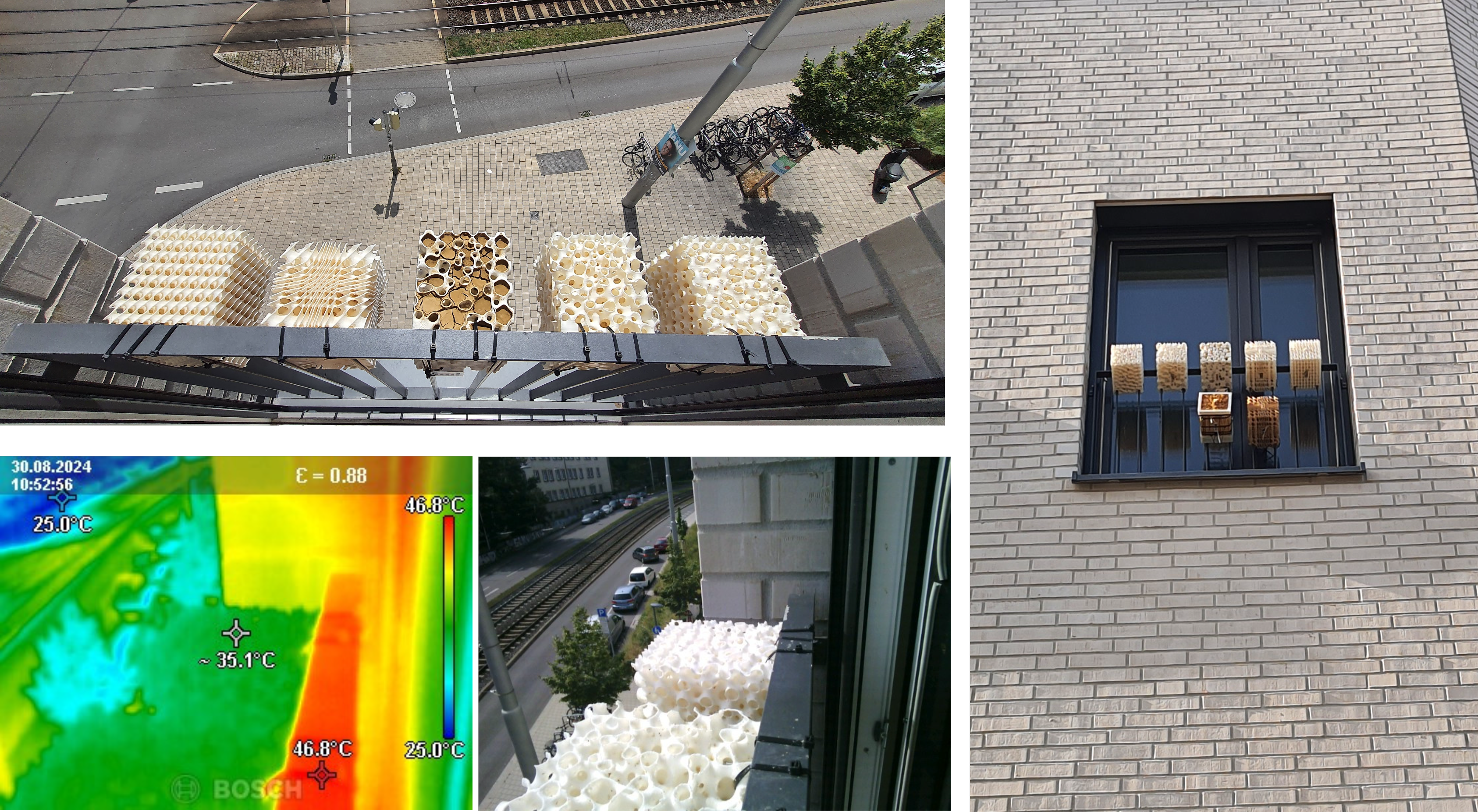
To investigate how the internal temperature of a nesting tube is affected by porous geometries, material properties, and thermal mass, three comparative experiments were conducted simultaneously under the same outdoor conditions (see Figure 5). These experiments took place on a southeast-facing façade in Stuttgart, Germany, during August 2024 to replicate summer solar exposure. The façade received direct sunlight roughly from 08:00 to 15:00 daily, with ambient temperatures between 13°C and 39°C during the testing period. All prototypes and the benchmark were installed side-by-side on the same façade under identical conditions, ensuring valid comparisons within the context of artificial, façade-mounted nesting solutions.
Outdoor experimental setup installed on a southeast-facing façade in Stuttgart, Germany. Seven samples were mounted simultaneously for comparative monitoring under identical environmental conditions, including four porous geometries (TPMS uniform, TPMS graded, ADMS uniform, ADMS graded), two variants for material and thermal-mass comparisons, and a traditional reed-stem nesting aid used as a benchmark. The window glass visible in the background is part of the façade and did not serve as a reflective surface in the experiment. Lower images show infrared thermography and close-up views of the installed sample.
Experimental configurations
Geometric variation (TPMS vs. ADMS, uniform vs. graded) Vs. bench mark
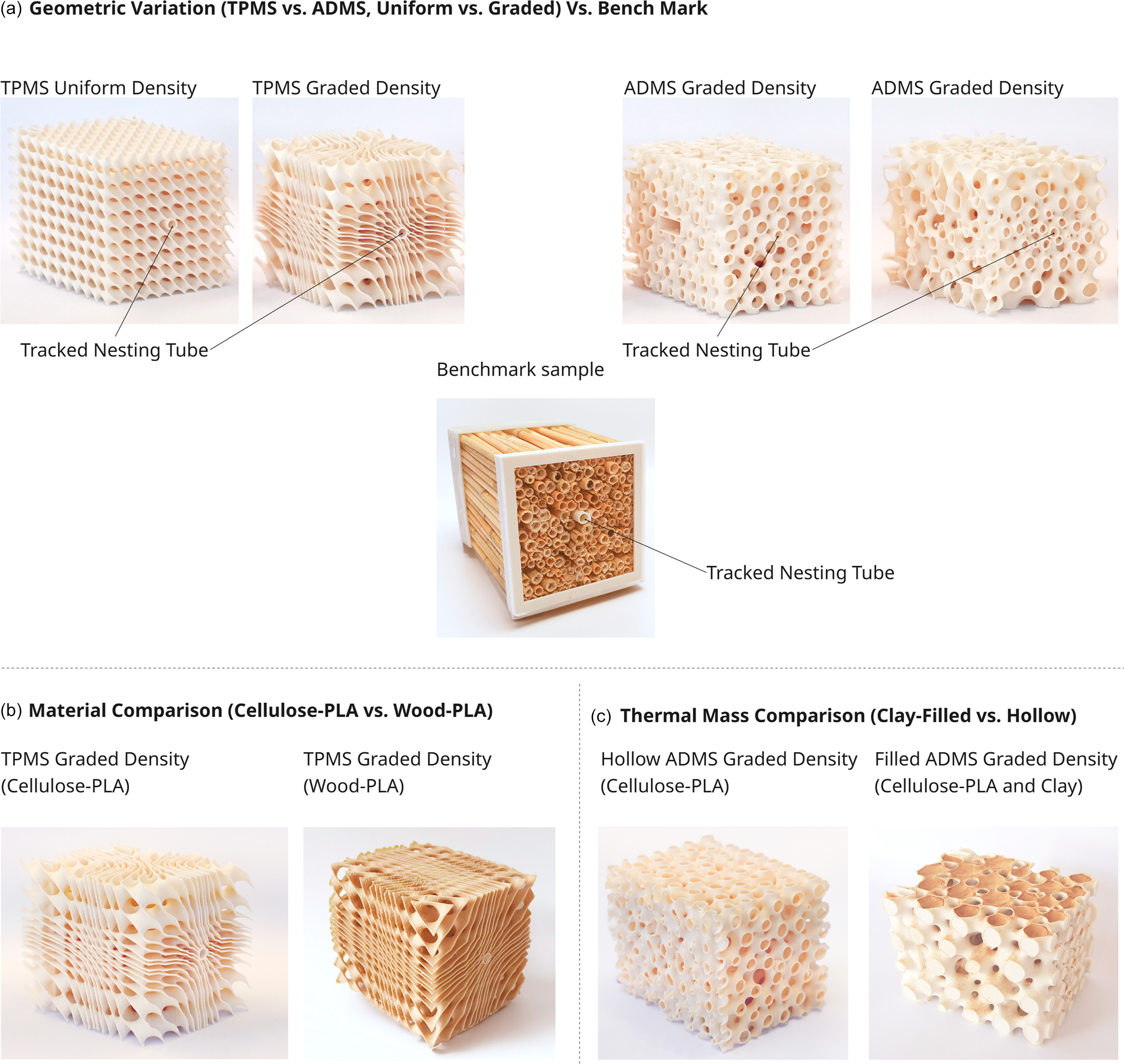
The first experimental set focused on how geometric configuration and porosity gradients influence thermal regulation in wild bee nesting aids. Four samples were 3D-printed using cellulose-based PLA (10% cellulose content; thermal conductivity ≈ 0.183 W/m·K). Two types of porous structures were tested – Triply Periodic Minimal Surfaces (TPMS) and Adaptive Density Minimal Surfaces (ADMS) – each fabricated in two porosity configurations:
-
Uniform porosity: constant 15 mm pore size throughout.
-
Graded porosity: ranging from 5 mm near the nesting tube to 25 mm at the outer boundary.
To contextualize geometric performance within existing urban conservation practice, a commonly used artificial nesting aid composed of bundled hollow reed stems was included as a benchmark. This configuration reflects typical insect hotel typologies widely installed on façades in urban settings. This sample matched the 3DP geometries in external dimensions (150 × 150 × 200 mm), nesting tube diameter (5 mm), and sensor placement. The reed stem aid was installed on the same southeast-facing façade and monitored under identical environmental conditions (see Figure 6a).
Samples from the three experimental sets: (a) geometric variation with porous 3D-printed structures and traditional benchmark; (b) material comparison using cellulose-PLA and wood-PLA; (c) thermal mass comparison between hollow and clay-filled geometries. All samples include a tracked nesting tube.
This experimental set enabled direct comparison among the four geometries and against a traditional artificial nesting aid typology, thereby evaluating the thermal advantages (or limitations) of geometry-informed design relative to long-standing façade-mounted insect hotel configurations commonly used in urban biodiversity initiatives.
Material comparison (cellulose-PLA vs. wood-PLA)
To investigate the role of material thermal conductivity in otherwise identical geometries, the second experiment used the TPMS-graded geometry as the control form. One sample was printed in cellulose-based PLA, and the other in wood-based PLA containing 40% wood fiber. Both materials are biobased and non-toxic, selected for their biocompatibility. This setup isolated the material’s influence on internal thermal buffering, independent of geometric differences (see Figure 6b).
Thermal mass comparison (clay-filled vs. hollow)
The third experiment assessed whether increasing thermal mass within the ADMS porous matrix could reduce temperature fluctuations inside the nesting tube. The ADMS geometry generates two independent, continuous void volumes, allowing selective modification of one pore network without sealing the entire structure.
Two ADMS graded samples were tested: one remained fully hollow, preserving both void networks and maximizing airflow, while in the second sample, one of the two pore volumes was completely filled with commercially available powdered clay commonly used in artificial bee nesting aids. The clay was mixed into a paste and poured into one continuous void domain, occupying approximately 50% of the total box volume and obstructing roughly half of the airflow pathways, while the central 5 mm nesting tube remained unobstructed.
The hollow sample weighed approximately 700 g, whereas the clay-filled version weighed 2700 g – an increase of about 286% in total mass. The selected clay has a bulk density of approximately 1600–1800 kg/m3 (compacted), a specific heat capacity of 800–1000 J/kg·K, and a relatively low thermal conductivity of 0.2–0.6 W/m·K depending on moisture content. Compared to the air-filled pore network, this substitution substantially increased thermal mass while reducing convective exchange and was therefore expected to dampen diurnal temperature fluctuations (see Figure 6c).
Monitoring and data collection
The temperature and humidity inside the nesting tubes were continuously recorded using Tapo T310 sensors, which feature a temperature accuracy of ±0.3°C and a relative humidity accuracy of ±3%. Data was logged at 15-minute intervals, yielding approximately 3000 data points per sample throughout the month-long test. Thermal imaging of the exterior surfaces of each structure was performed using a Bosch GTC 400 C camera to visualize surface temperature distribution and detect potential hotspots or areas of self-shading.
Performance metrics and threshold evaluation
Data analysis included calculating mean, maximum, and minimum temperatures inside the nesting tubes for each sample. Exposure durations above critical thermal thresholds were computed:
-
Moderate thermal risk: temperatures between 30°C and 35°C.
-
High thermal risk: temperatures exceeding 35°C.
-
Lethal thermal risk: temperatures exceeding 40°C.
These thresholds correspond to biologically documented stress and mortality ranges for cavity-nesting solitary bees, as discussed in the background section.
Descriptive statistical analysis was conducted to compare internal temperature distributions among sample types. For each geometry, minimum, maximum, and mean temperatures were calculated, along with the cumulative duration of exposure above biologically relevant thresholds (30°C, 35°C, and 40°C).
The experimental design focuses on enhancing current artificial nesting typologies rather than on mimicking natural nesting substrates, which can vary in orientation, shading, and ecological context.
Results
Geometric variation (TPMS vs. ADMS, uniform vs. graded) vs. bench mark
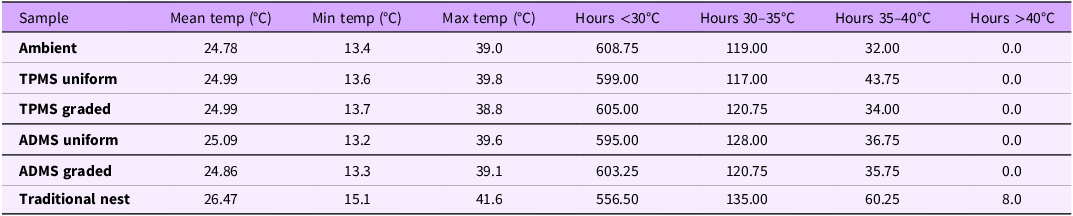
The four cellulose-based PLA 3DP samples – periodic uniform, periodic graded, non-periodic uniform, and non-periodic graded – had average internal temperatures between 24.86°C and 25.09°C. The lowest temperatures recorded for these samples ranged from 13.2°C to 13.7°C, while the highest values did not go beyond 39.8°C. See Table 1.
Internal temperature statistics and thermal exposure distribution (August 2024, 15-min intervals, ±0.3°C accuracy)
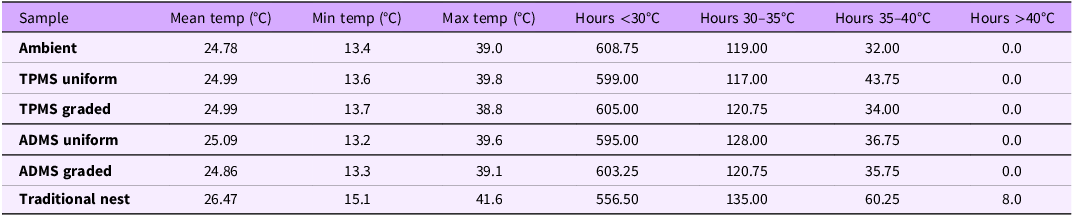
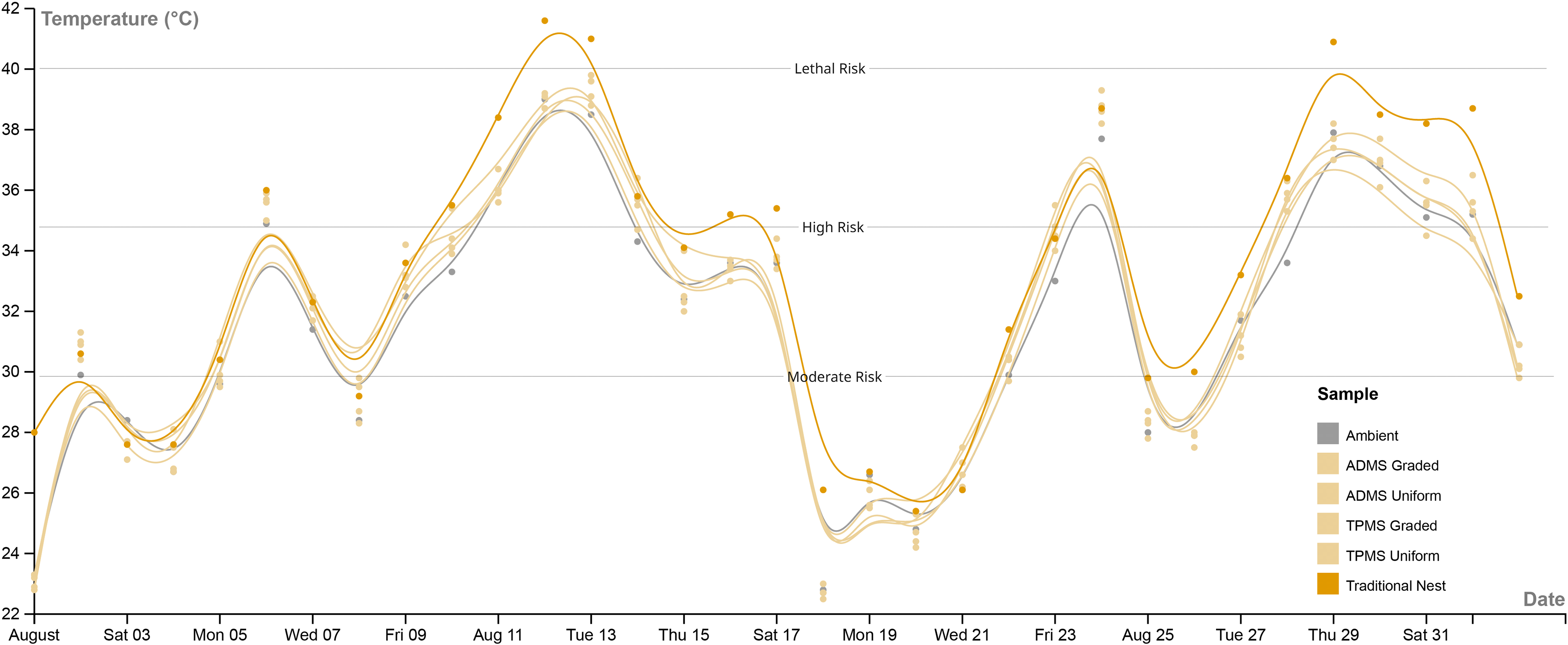
The overall differences in mean and maximum temperatures among the cellulose-based PLA 3DP designs were minimal, regardless of periodicity or pore grading, with all staying below the lethal thermal thresholds (see Figure 7).
Timeline of internal temperatures for all samples from Experiment (a) and ambient air during August 2024. Risk zones indicate moderate (30°C–35°C), high (35°C–40°C), and lethal (>40°C) exposure.
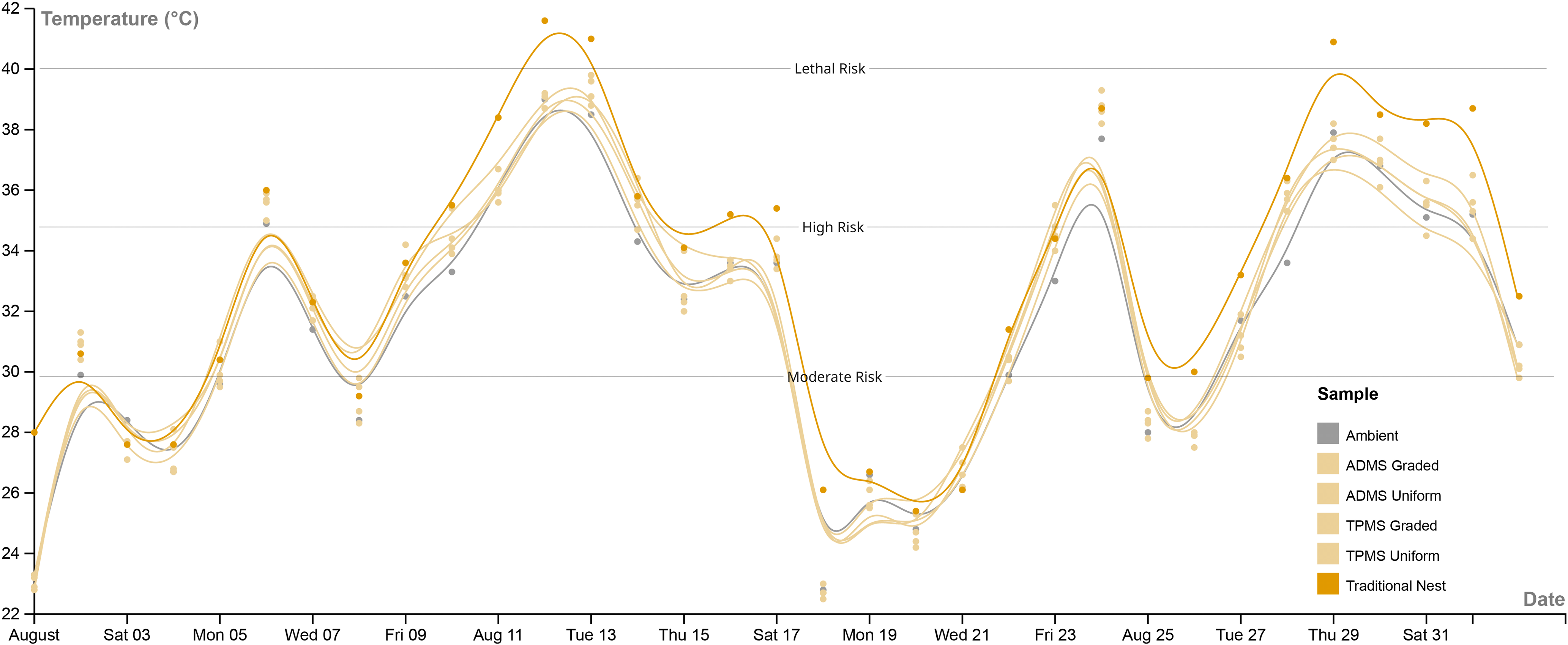
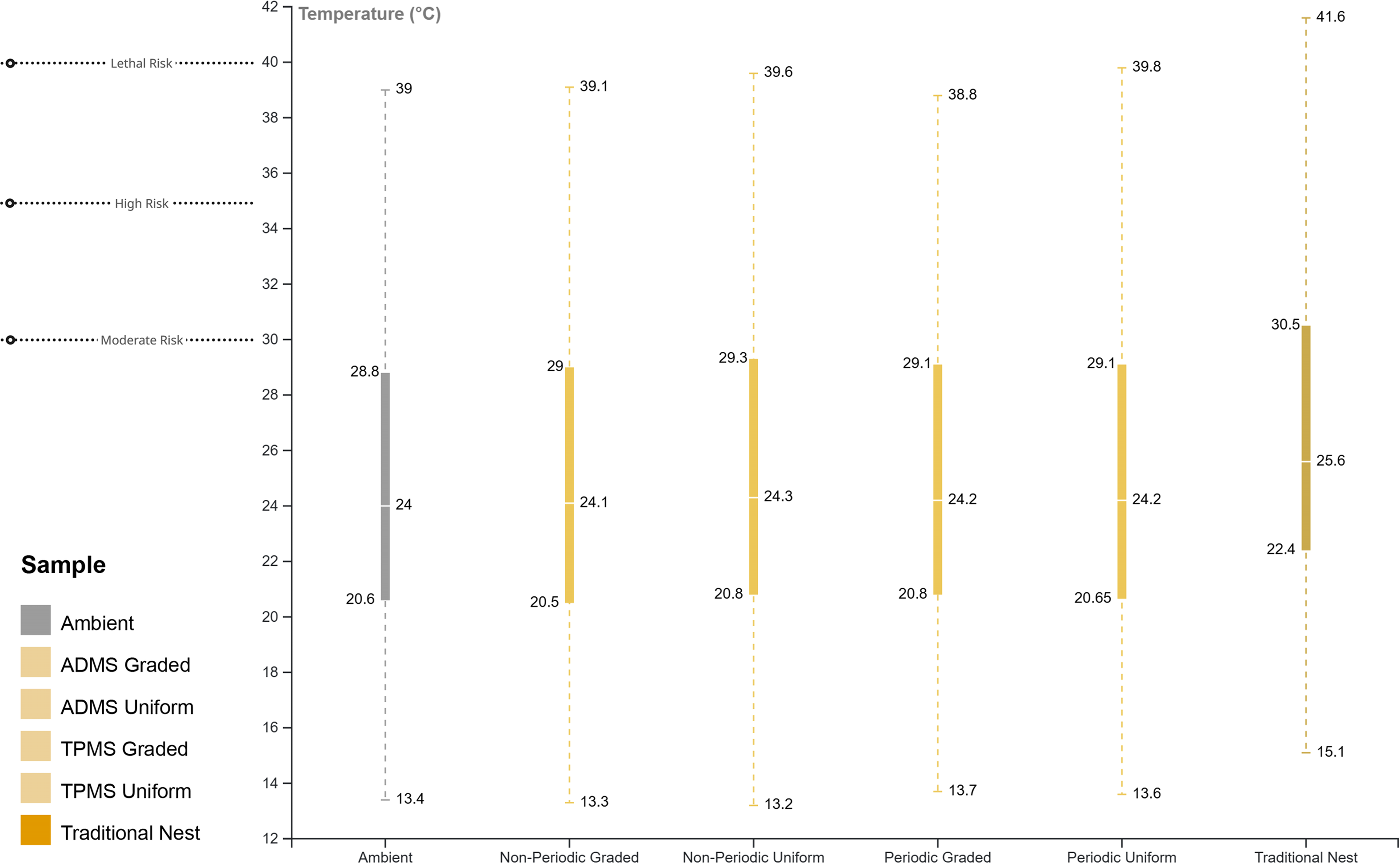
In contrast, the traditional nesting aid showed a higher mean internal temperature of 26.47°C, approximately 1.4 K higher than the 3DP designs. Most importantly, the traditional nest reached a maximum temperature of 41.6°C, surpassing the 40°C threshold associated with high mortality and developmental impairment in bee offspring. None of the 3DP geometries exceeded this critical temperature at any time during the monitoring period (see Figure 8).
Interval plot showing minimum, maximum, and average internal temperatures for all samples in Experiment (a) and ambient air during August 2024. Risk zones mark thresholds for moderate, high, and lethal thermal exposure.
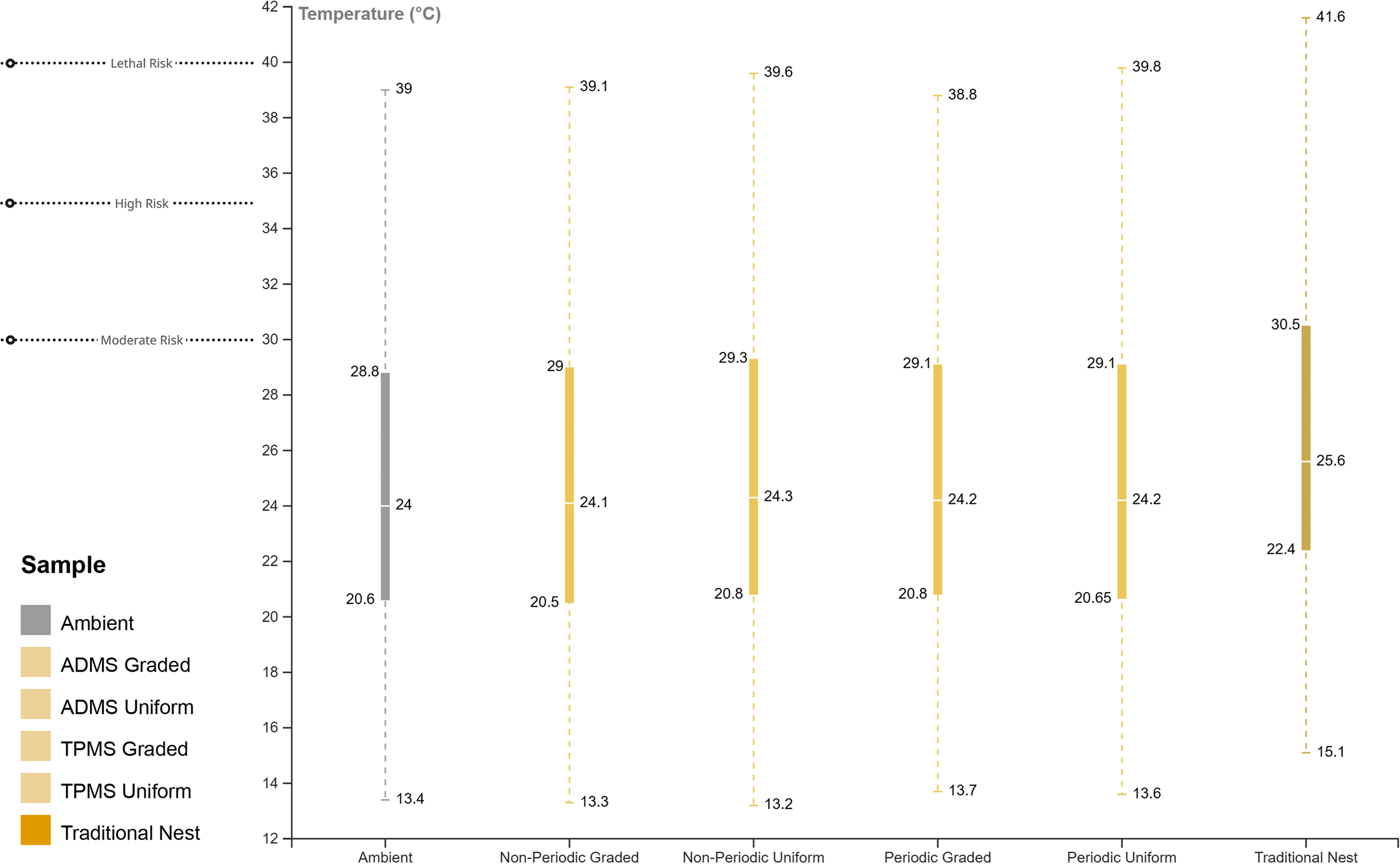
Thermal exposure analysis further revealed differences in the time each sample spent above biologically relevant thresholds (30°C, 35°C, and 40°C). The traditional nesting aid experienced temperatures above 40°C for a cumulative 8 hours. All cellulose-based PLA 3DP structures maintained temperatures below this potentially lethal threshold throughout the entire period. A breakdown of thermal exposure intervals is shown in Table 1, indicating the hours spent at temperatures below 30°C, between 30°C and 35°C, between 35°C and 40°C, and above 40°C.
These results indicate that 3DP porous cellular geometries provided better thermal moderation than the traditional nest material. Although all samples experienced periods with internal temperatures above 30°C, the traditional nesting aid remained above this threshold for longer durations and reached higher maximum temperatures, including several hours above 40°C. Heat retention in the 3DP structures was comparatively minor, as their internal temperatures tended to follow ambient conditions more closely and did not exhibit prolonged elevated values after peak heating.
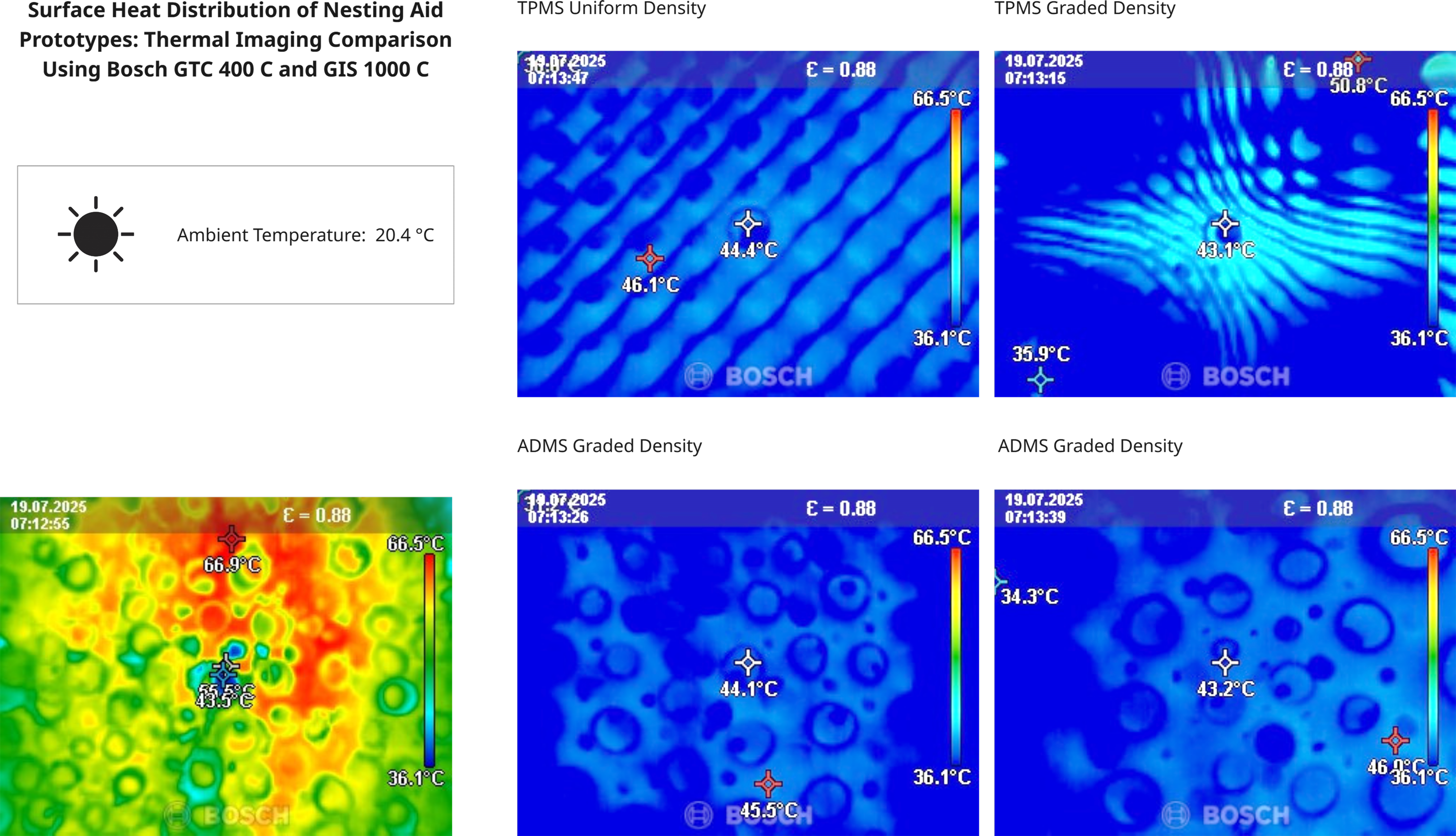
In addition to internal temperature monitoring, thermal imaging was performed using a Bosch GTC 400C thermal camera to visualize surface heat distribution across the different geometries. The images revealed that the traditional benchmark nest developed pronounced surface hotspots. The 3DP porous geometries exhibited more uniform surface temperature profiles, with significantly lower maximum values and smoother gradients (see Figure 9). The graded configurations – especially TPMS Graded – showed patterns suggestive of self-shading and directional heat dissipation, reinforcing the role of geometry in passive surface cooling.
Surface temperature profiles of samples from Experiment (a), captured with Bosch GTC 400 C and GIS 1000 C. The benchmark shows hotspots up to 66.9°C, while porous geometries display more uniform and cooler distributions. Ambient temperature: 20.4°C.

Material comparison (cellulose-PLA vs. wood-PLA)
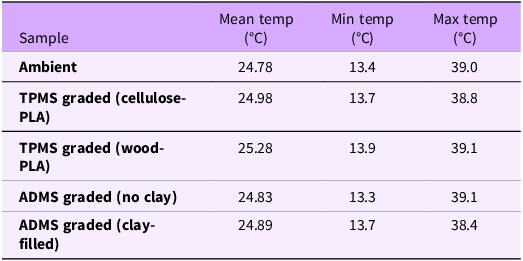
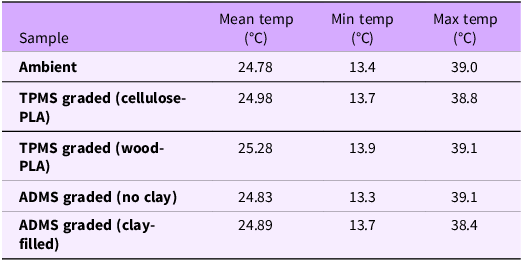
The material comparison aimed to determine whether two FDM-printable, biobased PLA composites with low toxicity – chosen for their suitability for hosting wild bees – would significantly influence the microclimate inside nesting tubes under outdoor solar exposure. The materials varied in fiber content and appearance (light cellulose-PLA versus darker wood-PLA), suggesting that thermal behavior could differ due to composition or surface color. However, as shown in Table 2, the average internal temperature differed by only 0.3 K (24.98°C for cellulose-PLA versus 25.28°C for wood-PLA), with similarly close minimum and maximum values. These small differences indicate that the internal thermal response is primarily influenced by the open, ventilated porous design rather than the specific PLA composite used. Assessing the potential impact of surface optical properties (such as absorptance related to color) would require targeted measurements and is identified as future work.
Internal temperature statistics for material and thermal-mass variations (August 2024, 15-min intervals, ±0.3°C accuracy)
Thermal mass comparison (clay-filled vs. hollow)
The clay-filled ADMS graded sample – where one of the two independent pore networks (approximately 50% of the total volume) was completely filled with clay – showed a mean internal temperature of 24.89°C, only 0.06 K higher than the fully hollow ADMS graded configuration (24.83°C), which preserved both interconnected air-filled pore volumes. The clay-modified sample exhibited a slightly lower maximum temperature, but overall differences remained minor. Despite a 286% increase in total mass due to clay infill, neither average nor peak internal temperatures changed substantially under the tested outdoor conditions (see Table 2).
Conclusions and discussion
The results of this initial testing phase – comprising three small-scale experimental comparisons between 3D-printed (3DP) prototypes and a benchmark artificial nesting aid – indicate modest differences in thermal performance under peak summer conditions. Across all configurations, internal temperatures closely followed ambient fluctuations. However, during peak heating periods, the porous 3DP geometries remained below the 40°C threshold, whereas the benchmark artificial nest exceeded this level for approximately eight cumulative hours. Average and maximum temperatures of the 3DP samples were slightly lower, resulting in reduced cumulative exposure above biologically critical thresholds.
The overall similarity among temperature profiles reflects strong thermal coupling between all tested structures and the surrounding air, indicating limited buffering capacity at this scale. Within this shared behavior, the absence of lethal temperature exceedance in the porous samples is consistent with their high surface-area-to-volume ratios and interconnected pore networks, which facilitate convective and diffusive heat exchange (Dutto et al. Reference Dutto, Zanini, Jeoffroy, Tervoort, Mhatre, Seibold, Bechthold, Studart, Dutto, Tervoort, Studart, Zanini, Jeoffroy, Mhatre, Seibold and Bechthold2022; Huang et al. Reference Huang, Wang, Feng, Peng, Huang and Song2024; Wadley and Queheillalt Reference Wadley and Queheillalt2007b). The comparatively low thermal mass of the thin-walled printed structures may further limit short-term heat accumulation under intense solar exposure (Dutto et al. Reference Dutto, Zanini, Jeoffroy, Tervoort, Mhatre, Seibold, Bechthold, Studart, Dutto, Tervoort, Studart, Zanini, Jeoffroy, Mhatre, Seibold and Bechthold2022; Reynolds Reference Reynolds2020).
Although geometric variation was the primary design parameter under investigation, the four porous configurations exhibited relatively similar thermal profiles under the tested conditions. Differences in material composition and infill were even less pronounced. Substituting cellulose-based PLA with wood-PLA composites altered mean internal temperatures by only 0.3 K, while introducing clay infill to increase thermal mass shifted mean temperatures by less than 0.1 K. However, the clay infill increased overall weight by approximately 286%, raising practical concerns regarding façade integration. These results suggest that open, ventilated porosity and low thermal mass contribute more to heat dissipation than variations in composite material or localized infill at this scale. These results indicate that, under the climatic conditions tested, differences among porous geometries, material types, and infill strategies produced only minor variations in internal temperature, suggesting limited buffering capacity at this scale.
Infrared imaging showed localized surface hotspots on the traditional reed-based nest during peak solar exposure, while the porous cellular structures displayed more spatially uniform surface temperature patterns and visible self-shading. Because thermography captures only surface conditions, these observations remain qualitative.
From an ecological perspective, maintaining internal nest temperatures below 30°C–35°C is critical for the development and survival of solitary bees, particularly during their nesting and early development stages (Giejdasz and Fliszkiewicz Reference Giejdasz and Fliszkiewicz2016; Ostap-Chec et al. Reference Ostap-Chec, Kierat, Kuszewska and Woyciechowski2021; Radmacher and Strohm Reference Radmacher and Strohm2010). The exposure of the benchmark artificial nest to temperatures above 40°C underscores the vulnerability of façade-mounted insect hotels under extreme heat conditions (Melone et al. Reference Melone, Stuligross and Williams2024). The porous prototypes consistently avoided lethal thresholds; however, they did not eliminate exposure to stress levels above moderate. Geometry-based moderation therefore reduces – but does not fully resolve – the thermal risks associated with increasingly frequent urban heat events.
It is important to emphasize that the comparison conducted here evaluated potential improvements relative to commonly deployed artificial nesting aids rather than natural nesting substrates. In natural contexts, cavity-nesting bees often utilize vertically oriented plant stems, shaded wood cavities, or substrates embedded within vegetated microhabitats. Such conditions may exhibit different thermal buffering capacities due to shading, orientation, moisture content, and ecological embedding. The present study therefore addresses the performance of façade-mounted conservation devices as currently implemented in urban settings, identifying opportunities for geometric refinement within this typology.
Several limitations should be acknowledged. Long-term exposure to fluctuating wind, humidity, rainfall, ultraviolet radiation, and potential pore blockage by debris may alter airflow and heat exchange performance. Beyond temperature regulation, additional habitat requirements – such as moisture balance, gas exchange, pathogen resistance, and structural durability – require systematic evaluation before further deployment. Equally important is empirical validation of biological acceptance: occupancy rates, reproductive success, and species-specific responses to biocomposite materials remain to be tested in field-based studies.
From a design perspective, optimizing thermal performance while ensuring structural integrity, manufacturability, and cost-effectiveness remains a challenge. More complex geometries may offer benefits, but can also increase fabrication time and costs. Additionally, fine pore structures may limit printability and durability.
Integrating biodiversity-supportive systems into existing building envelopes is part of a broader ambition to promote multispecies coexistence in urban environments. However, scaling porous cellular systems toward façade-integrated applications introduces additional challenges. Beyond small-scale prototypes, integration into building assemblies would require evaluation of structural performance, anchoring systems, fire safety, UV stability, and long-term material durability. At larger scales, thermal behaviour would also interact with substrate materials and surrounding construction layers, potentially modifying the buffering effects observed here. Geometry alone may therefore not be sufficient to ensure robust protection during extreme heat events, and further development may benefit from hybrid strategies combining graded porosity with selective thermal mass or evaporative cooling mechanisms.
Supplementary material
The supplementary material for this article can be found at https://doi.org/10.1017/S2977905726100079.
Data availability statement
The authors confirm that the data supporting the findings of this study are available in the supplementary materials.
Acknowledgements
The author expresses gratitude to the members of the Cluster of Excellence IntCDC at the University of Stuttgart for their valuable insights on various aspects of the design and experimental process. Special appreciation goes to Professor Jenny Sabin (Cornell University/IntCDC, Stuttgart) for assisting in framing the concept during the initial stages. The author also thanks Joel Kimmel (University of Stuttgart) for technical discussions on TPMS simulation and thermal behavior, and Fabian Eidner (University of Stuttgart) for insights into implementing such geometries in large-scale additive manufacturing setups.
Author contributions (CRediT taxonomy)
Maria Claudia Valverde Rojas: Conceptualization; Methodology; Investigation; Data Curation; Formal Analysis; Visualization; Writing – Original Draft. Doris Österreicher: Methodology; Supervision; Writing – Review & Editing. Leonie Fischer: Validation; Supervision; Writing – Review & Editing. Jan Knippers: Conceptualization; Supervision; Writing – Review & Editing.
All authors have approved the submitted version of the manuscript and agree to be accountable for all aspects of the work.
Financial support
This work was supported by the Deutsche Forschungsgemeinschaft (DFG, German Research Foundation) under Germany’s Excellence Strategy - EXC 2120/1 – 390831618.
Competing interests
The authors declare no conflicts of interest related to the research, authorship, or publication of this article.
Ethics statement
This study did not involve human participants, animal experiments, or the use of personally identifiable data and therefore did not require ethical approval. All experimental procedures complied with relevant institutional and environmental guidelines.


 Open access

