




Introduction
Global populations are aging, making the promotion of healthy aging increasingly vital (Teater & Chonody, Reference Teater and Chonody2020; World Health Organization, 2020a). Given projections that the number of individuals reaching older adulthood will increase in the coming years (Statistics Canada, 2024), the World Health Organization (WHO) has designated 2021–2030 the Decade of Healthy Aging, denoting a commitment to healthy aging initiatives (World Health Organization, 2020a). The WHO defines healthy aging as maintaining abilities that support personal well-being in older age (World Health Organization, 2020b). Older adults, classified as those over the age of 65 (Statistics Canada, 2024), have described healthy aging as the maintenance of physical health, independence, mobility, having a social support network, and engaging in meaningful activities that promote mental health and well-being (Teater & Chonody, Reference Teater and Chonody2020). However, aging presents several life changes and challenges which can lead to impairments in well-being and increased morbidity risk (Bodner & Bergman, Reference Bodner and Bergman2016; Freedman & Nicolle, Reference Freedman and Nicolle2020). Life changes may include deteriorating physical health, shrinking social networks and support systems, spousal bereavement, and reduced social connectedness in the community (Valtorta et al., Reference Valtorta, Moore, Barron, Stow and Hanratty2018; World Health Organization, 2020a).
Holt-Lunstad et al. (Reference Holt-Lunstad, Robles and Sbarra2017) define social connectedness as an overarching concept describing social relationships, including structural, functional, and qualitative connectedness components. Social isolation and loneliness are two critical gerontological topics, which fall under structural and functional sources of connectedness, respectively. De Jong Gierveld and van Tilburg suggest that social isolation and loneliness be defined as separate concepts, whereby social isolation is the objective quantity of social relationships, and loneliness is the subjective discrepancy between the quantity and quality of desired social relationships (Newall & Menec, Reference Newall and Menec2017). The inability to achieve desired social relationships leads to a loss of sense of belonging and results in feelings of loneliness (Newall & Menec, Reference Newall and Menec2017). Newall and Menec (Reference Newall and Menec2017) propose that the most vulnerable older adults are those who are socially isolated and who also experience loneliness.
In Canada in 2018, 92% of older adults lived at home, with the remainder residing in long-term care, and 27.9% of people 65 and older lived alone (Government of Canada, 2022). In 2020, almost one in five people over 65 experienced loneliness (Statistics Canada, 2023). Given these high numbers of older adults living alone and experiencing loneliness, this phenomenon is a pressing concerns (Duffner et al., Reference Duffner, Janssen, Deckers, Schroyen, de Vugt, Köhler, Adam, Verhey and Veenstra2024; Patil & Braun, Reference Patil and Braun2024). Reduced social support networks increase risks of social isolation and loneliness (Fakoya et al., Reference Fakoya, McCorry and Donnelly2020; Patil & Braun, Reference Patil and Braun2024). When social support is low and networks are limited, experiencing loneliness threatens mortality as significantly as factors like sedentary behaviour, smoking, and excess alcohol consumption (Holt-Lunstad et al., Reference Holt-Lunstad, Robles and Sbarra2017).
Although community services and interventions exist to support older adults aging in place (AIP) or living at home in the community (Pani-Harreman et al., Reference Pani-Harreman, Bours, Zander, Kempen and van Duren2020), experiences of loneliness and social isolation are still common (Paquet et al., Reference Paquet, Whitehead, Shah, Adams, Dooley, Spreng, Aunio and Dube2023; Schnittger et al., Reference Schnittger, Wherton, Prendergast and Lawlor2012). While strategies to promote physical health into older years are widely valued and implemented in care plans, there is a need for practical and accessible interventions to promote improved psychosocial outcomes for older adults (Freedman & Nicolle, Reference Freedman and Nicolle2020), particularly for those most vulnerable. The American Veterinary Medical Association (2025) defines HAI as the relationship or behaviour between people and animals. The relationship can vary from positive to negative and occur in a variety of contexts. Clinical guidelines for social isolation and loneliness in older adults, published in 2024, included an acknowledgement of animal interactions as effective means to reduce loneliness while also stating that current empirical evidence on this topic is limited (Canadian Coalition for Seniors’ Mental Health, 2024). With the recognition that preventing social isolation and loneliness for older adults is critical to support healthy aging (Gardiner et al., Reference Gardiner, Geldenhuys and Gott2018; Paquet et al., Reference Paquet, Whitehead, Shah, Adams, Dooley, Spreng, Aunio and Dube2023), creative interventions are needed. Health professionals have an opportunity to improve quality of life for older adults by providing individualized recommendations for support while recognizing and validating the experience of loneliness for older adults in their care, particularly by accounting for perceived support through HAI.
Following the model proposed by Holt-Lunstad (Reference Holt-Lunstad2018), this review explores how HAI might improve an older adult’s sense of social connectedness, by acting as a protective source of social support and offering quality connectedness when objective structural connectedness (social isolation) and functional connectedness (loneliness) compromise well-being. Expanding current understandings of ‘what is a social connection’ to include HAI could equip care providers with additional strategies to reduce or prevent loneliness in older adults. Therefore, we must consider how social networks change with aging, which social relationships are characterized as effective in preventing or treating loneliness, and whether HAI needs to be considered when assessing degree of social connectedness. The findings of this review are expected to highlight gaps in current evidence, providing a foundation for future work on the value of HAI in healthy aging. The inclusion of HAI in assessments of psychosocial risk for aging individuals could redefine the construct of ‘what it means to be socially isolated’, validating the inherent value of animal connections to human health and well-being, particularly when considering loneliness prevention for older adults living alone. The aim of this study was to understand if and how animals are described as a form of social connection in studies evaluating degree of social isolation and perceived loneliness.
Methods
A scoping review was conducted using the Preferred Reporting Items for Systematic Reviews and Meta-analysis Protocol for Scoping Reviews (PRISMA-ScR) developed by the Joanna Briggs Institute (Peters et al., Reference Peters, Godfrey, McInerney, Munn, Tricco and Khalil2020). The JBI created a checklist for guidance and consistency in conducting scoping reviews based on the work by Arksey and O’Malley (Reference Arksey and O’Malley2005) and Levac et al. (Reference Levac, Colquhoun and O’Brien2010). Scoping reviews enable authors to examine the extent, range, and nature of knowledge on existing published literature within a chosen topic, resulting in clear identification of knowledge gaps. Once gaps are illustrated, future research can be developed to bolster the knowledge base. To support the study objectives, the following framework was used:
-
a) Identify area of evidence to be scoped
-
b) Define boundaries of relevant evidence
-
c) Search literature databases and select sources
-
d) Chart selected sources according to objectives
-
e) Collate and summarize evidence map to identify areas for future work
The research questions to be explored were as follows:
-
1. To what extent is HAI included in studies investigating social isolation and loneliness amongst older adults?
-
2. How is HAI described by older adults in studies of social isolation and loneliness?
-
3. How might HAI impact loneliness for older adults living alone?
Librarians from Veterinary Medicine and Health Sciences libraries were consulted to select relevant databases, validate keywords used, and tailor the search strategy to be replicable and comparable. Six databases were selected based on content relevance, including Medline, APAPsych Info, Scopus, Web of Science Core Collection, Embase, and Cochrane Reviews. The database search was performed once on April 22, 2021, and again on June 27, 2024. The first search included databases Web of Science, Embase, Medline, APAPsych Info, Scopus, and PubMed. The second search included all with the addition of Cochrane Reviews, excluding PubMed which is now covered within Medline. Given the length of time following the first search, the authors performed a second search, retrieving additional articles published after 2021. A broad approach was employed to ensure sufficient coverage of published literature while maintaining a focused and manageable retrieval of sources with relevance to the research questions.
Informal, exploratory background searches of peer-reviewed biopsychosocial literature involving older adults and animals identified an abundance of published studies, which were used to solidify the database search strategy. Due to the improved recognition of the importance of healthy aging for older adults since the turn of the century, a publication date cut-off of 2000 was chosen to align with societal movements supporting aging research. Unpublished grey literature (i.e., web articles, book sections, and company reports) identified in background searches were largely contextual and anecdotal, lacking conclusive evidence, so they were excluded from further evaluation in this review. Additionally, peer-reviewed literature retrieved during preliminary background searches was retained and used to assess effectiveness of search strategy by determining if the same articles were obtained in the formal search.
All six databases were searched using the same overall strategy, with minor readjustments to match the respective database algorithm. To optimize the merit of our findings, only peer-reviewed content was considered due to the extensive scope of existing published literature. The database search was performed using natural and controlled keywords pertaining to animal interventions: animal companion ownership, companion animal contact, animal-assisted interventions (AAI), older adults, and constructs of social isolation, loneliness, or social connectedness. All three authors selected the keywords which were chosen based on current terminology (i.e., older adults in lieu of seniors) and included synonyms to broaden the iterative search strategy. Articles were selected for initial review if the keywords were included in the title, abstract, or listed keywords of the publication. The terms ‘aged’ and ‘aging population’ were nonexclusive to older adults and included any ‘aging’ demographic; thus, they were removed due to content irrelevance. The term ‘animals’ was often too broad as it included nondomestic and laboratory animals; the use of the term ‘pet’ was broadly applied to include any domestic species that serves as an animal companion. Identified keywords including ‘animal companionship’, ‘Zooeyia’, ‘human-animal relationship’, ‘human-animal bond’, and ‘pet attachment’ were used to obtain literature reflecting the relational nature of the HAI.
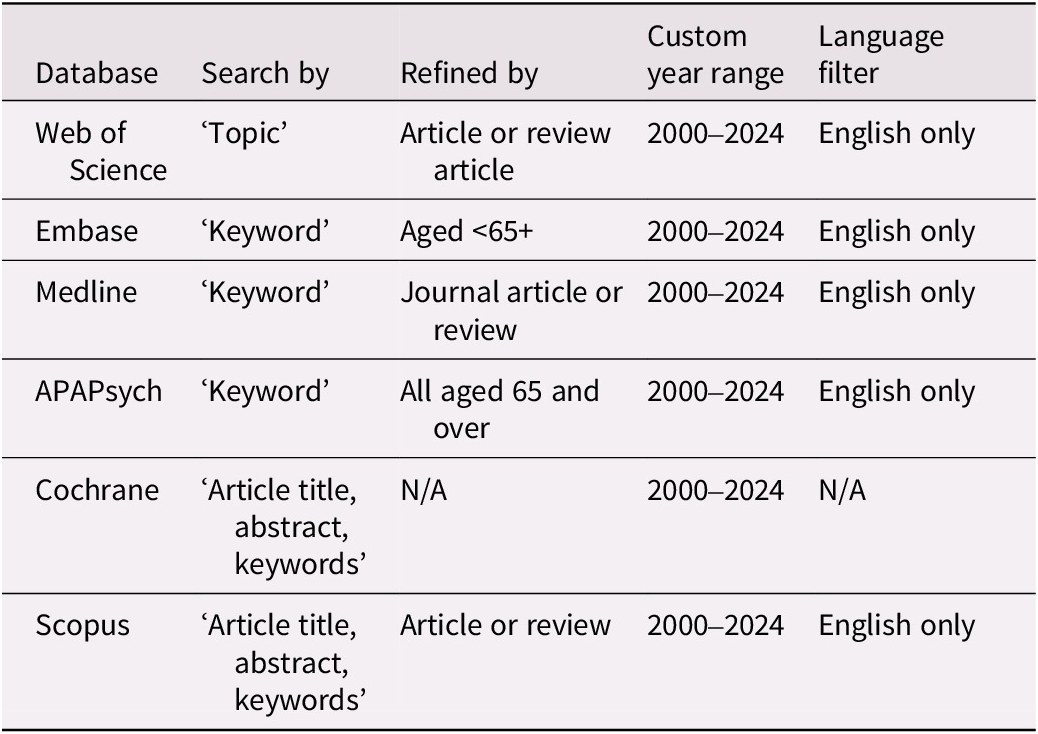
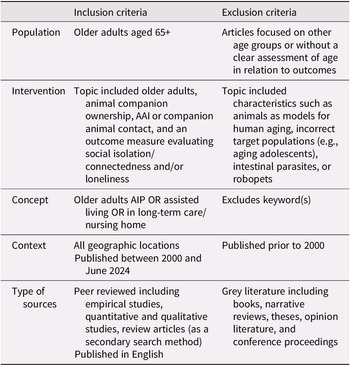
Database search modifications were used to reflect the eligibility criteria (Table 1). Minor alterations in the search strategy keywords were made where necessary to reflect the unique algorithm of each database. Results from each database search were exported to reference manager EndNote™ (Version 21.4, Clarivate), and duplicates were eliminated manually within the software upon completion of each database search. A comprehensive explanation of the search strategy can be obtained by contacting the authors.
Database search modifications
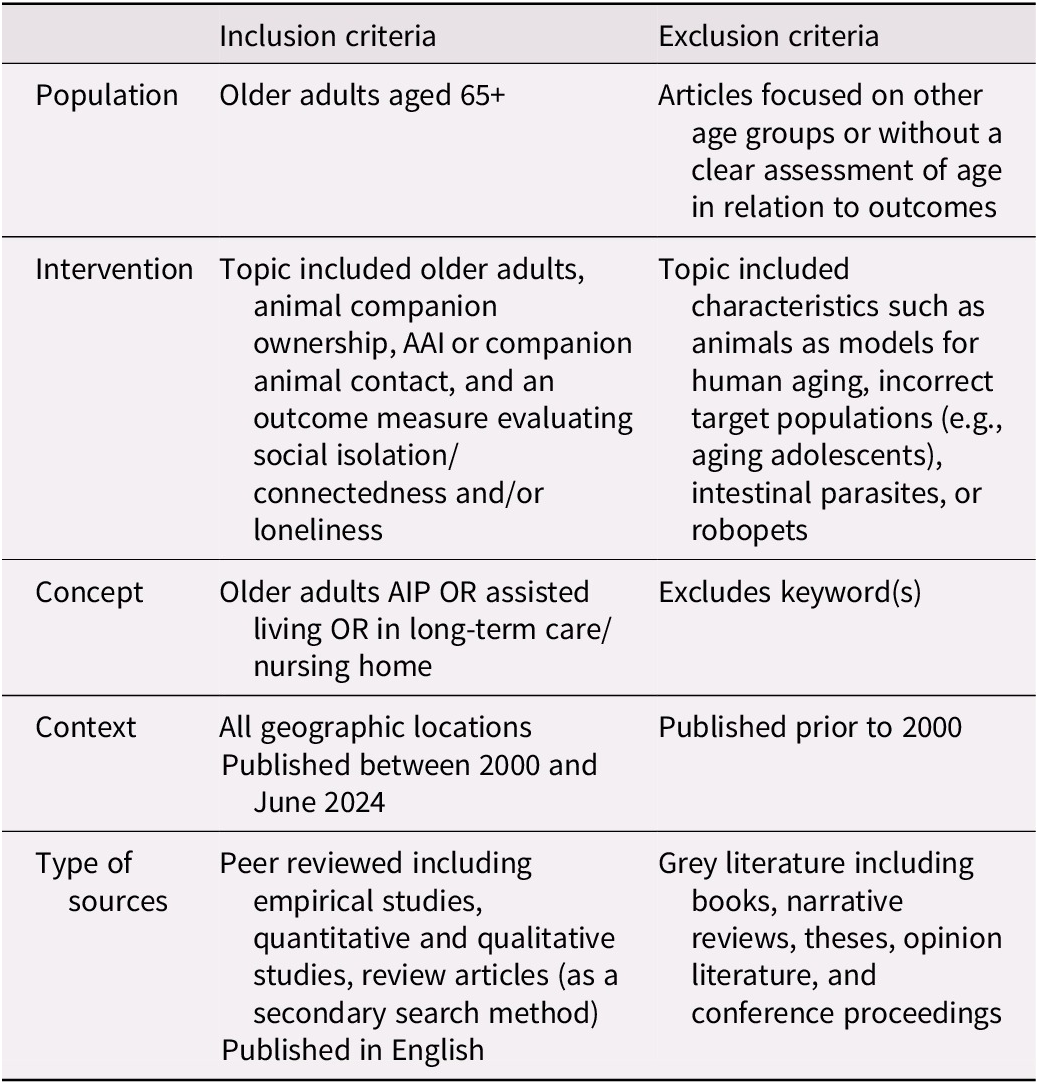
A list of eligibility criteria for the inclusion or exclusion of literature for this scoping review was based on research topic and review of background literature (Table 2). All retrieved literature had to be peer-reviewed, include a focus on older adults and an animal intervention including animal companion ownership, AAI, or companion animal contact (e.g., volunteer dog walking), and had to evaluate loneliness, social isolation, and/or social connectedness outcomes. Older adults were defined loosely as those over 65, including studies that had a reasonably close minimum age range and/or stratified their population demographic to allow for interpretation specific to older adults in the study. If the focus of the study could not immediately be identified by title, it was included for evaluation by abstract and then full-text content. Various comorbidity studies that included older adults and AAI programmes were also included, for example, AAI for dementia patients. Studies were deemed irrelevant if the topic of focus involved characteristics such as animals as models for human aging, incorrect target populations such as aging adolescents, intestinal parasites or robopets as the sole focus.
Eligibility criteria
Studies were included if they were written in English and excluded if only available in a language other than English. The publication range for inclusion was between January 1st, 2000, and June 27th, 2024. All articles included in the scoping review were primary original, peer-reviewed pieces. Any reviews, scoping reviews, and meta-analyses were utilized to identify primary articles not found through the database search and were subsequently excluded from analysis. During full-text review, articles were excluded from analysis if they did not have a measure of assessment for social connection, social isolation, or loneliness, if they did not provide clear stratification or focus on an older adult population, if the articles were narrative or not peer reviewed, or if they did not include HAI.
The results of each database search were first independently downloaded and then combined with articles from secondary searches in reference manager EndNote™ (Version 21.4, Clarivate), to manage and organize citations. All three authors collaborated on screening the retrieved literature first by title and then by abstract; full-text articles were retrieved for studies that passed abstract screening. One author conducted in-depth review of each full-text article to assess its relevance and adherence to the inclusion criteria. Final inclusion of studies was based on consensus among all authors.
Data were extracted and charted from the articles using a descriptive analytical approach (Arksey & O’Malley, Reference Arksey and O’Malley2005). All authors met to determine the relevant information to extract from each source, which was then organized in charts within Excel (Version 16.93, Microsoft). Collected data included general information (authors, title, year, journal, study type, country, and place of residence [at home, including assisted-living, or in long-term care], research methods, number of participants, keywords), thematic information (topic of the source paper including main conclusions, loneliness, social isolation, or social support outcomes), population demographics (age range, gender identity, marital status, race or ethnicity, socioeconomic status, education level, comorbidities), and animal intervention details (type of animal intervention and animal species). If studies were not focused exclusively on older adults, age demographic information had to be clearly stratified, and only information pertinent to older adults was extracted from the results of the study. The descriptive analytical approach allowed for identification of common themes within the collected literature, which was subcategorized based on each of the research questions. The commonalities identified guided the application of charted data into categorical tables in Word (Version 16.93, Microsoft), creating thematic definitions to answer each research question. After completion of the charting process, the authors met to discuss the themes and definitions, how they applied to the scoping review objectives, and how they answered the research questions.
Following data extraction, qualities used to characterize HAI were thematically analysed and categorized into primary themes and subthemes. Established themes were recognized by analysing overlaps in the published literature, both quantitatively (by frequency of citation) and qualitatively (by synthesizing and proposing definitions based on those identified themes). The first research question was evaluated by investigating the intervention type (animal companion ownership, AAI, or companion animal contact) and the quality of HAI, while the second research question was evaluated by identifying conclusive outcomes for loneliness and social isolation through intervention type for older adults. Subthemes were further defined for each question, subdivided into the categories of animal companion ownership, AAI, or companion animal contact. Descriptions of each subtheme were synthesized, and citations were tabulated. Frequency of citation was quantified for each theme. The total number of citations in each category provides support for inclusion or rejection of themes and indicates gaps in the existing literature.
Results
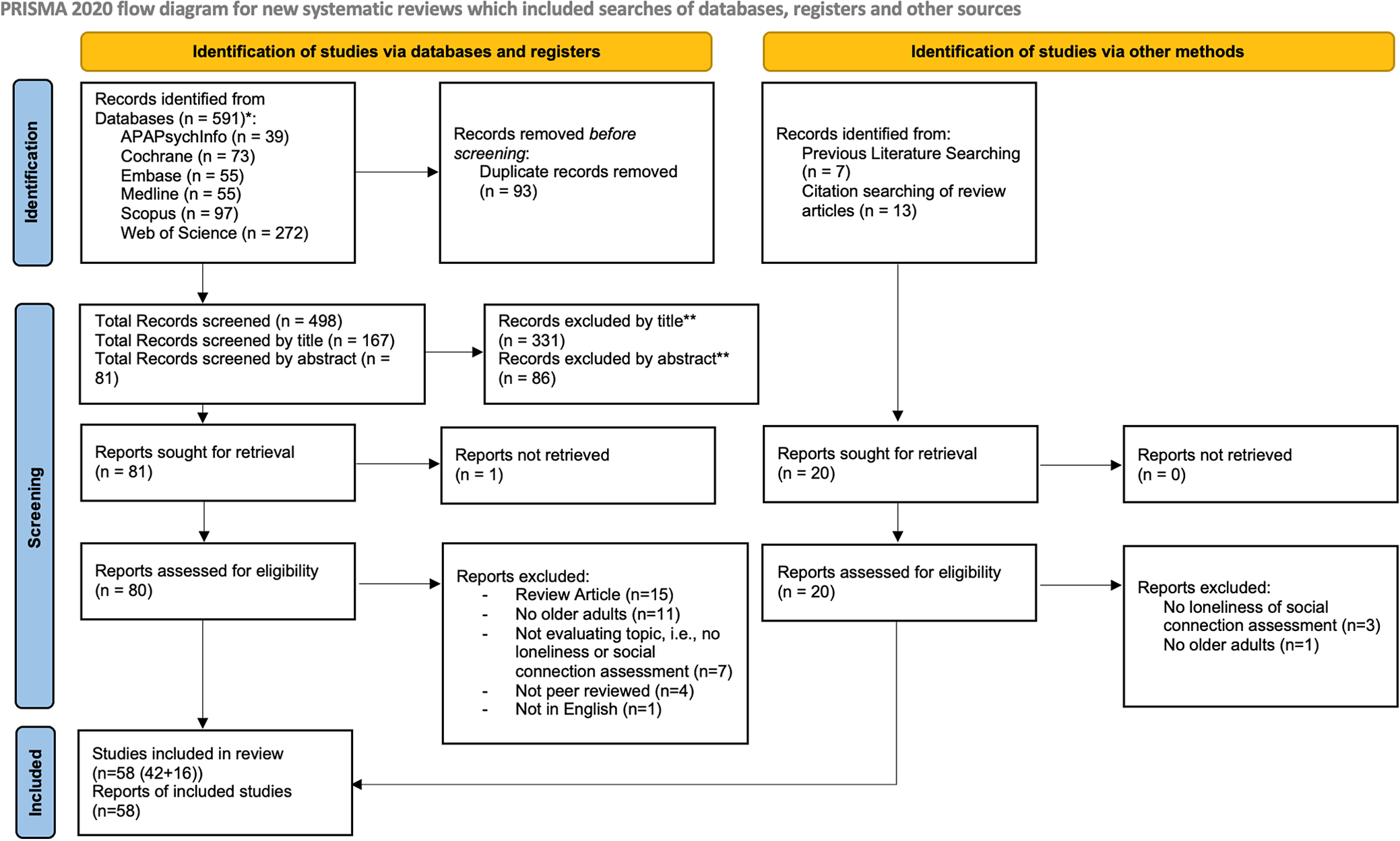
Study selection was completed by identification of relevant sources, study screening, and final inclusion of sources following the PRISMA-ScR flow chart (Figure 1). After database searches and de-duplication, a total of 498 articles were included for review. After reviewing the 498 articles by title, 167 remained for review by abstract. Three authors independently read through the titles and abstracts to determine eligibility. Any discrepancies were resolved through group discussion. One article was excluded because only the abstract and not the full text was available in English. After title and abstract review, 81 primary articles remained for full-text review by one author. After full-text review, a total of 42 articles remained eligible. Twenty additional articles were identified through exploratory background searching and secondary review of meta-analyses and review articles. The 20 additional articles were screened with a full-text review and then added to the original 42 eligible articles. After inclusion of eligible articles obtained in secondary review (16), the final number of articles included was 58 (see Supplementary Material for Scoping Review Citations and Article Data).
PRISMA selection flowchart.
Source: Page MJ, McKenzie JE, Bossuyt PM, Boutron I, Hoffmann TC, Mulrow CD, et al. The PRISMA 2020 statement: an updated guideline for reporting systematic reviews. BMJ 2021;372:n71. doi:10.1136/bmj.n71. http://www.prisma-statement.org/.
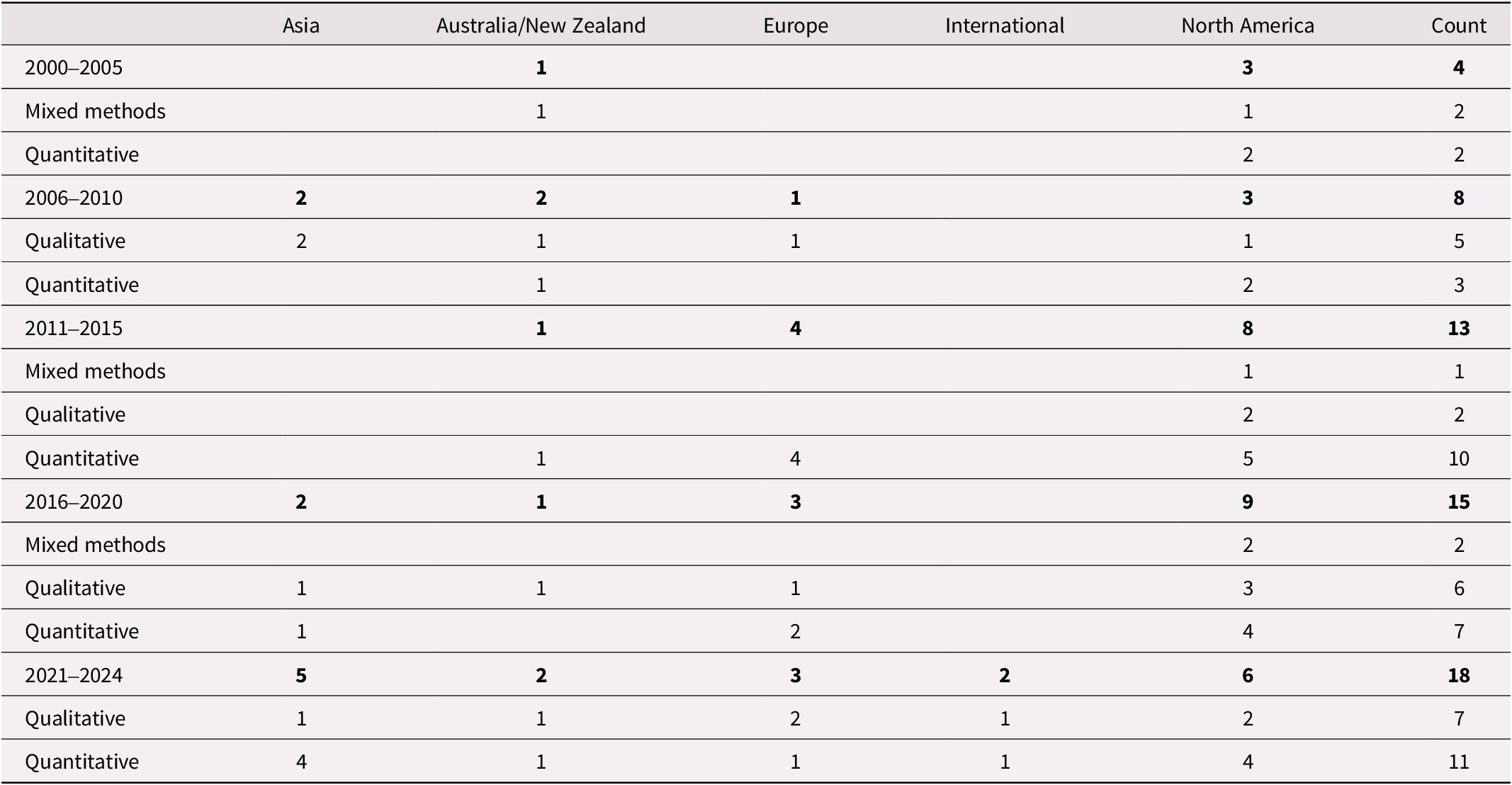
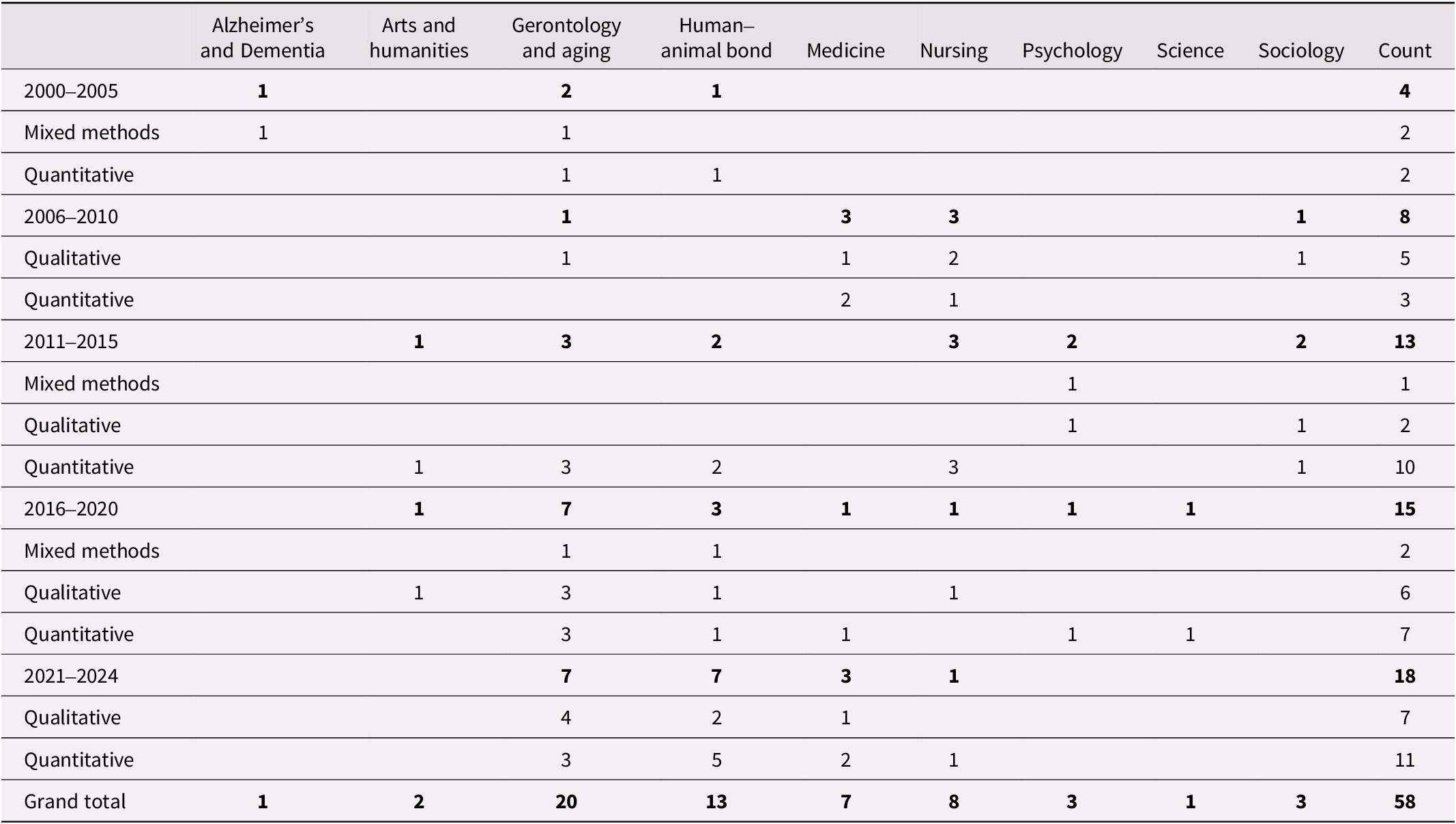
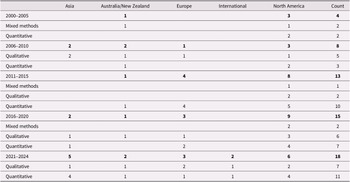
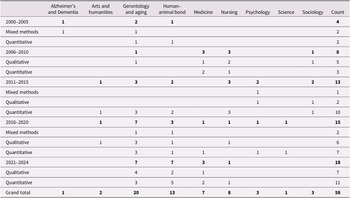
Eligible studies were published between 2000 and 2024, with the popularity of the topic steadily increasing from 2000 to the time of writing. There was a large focus on descriptive studies (n = 26; 44.8%), followed by qualitative variations (n = 19; 32.6%), experimental (n = 7; 12.0%), mixed methods (n = 5; 8.6%), and a singular case study (n = 1; 1.7%). Sample sizes varied and were reflective of the methodology employed. Countries of origin spanned the globe, enabling some cultural or geographic comparisons to be made. The most frequently published studies were from the United States (n = 23; 39.7%), Australia (n = 6; 10.3%), and Japan (n = 5; 8.6%) (Table 3a). Selected studies were published in a variety of journal disciplines, including gerontology (n = 20; 34.5%), human–animal interaction (n = 13; 22.4%), and nursing (n = 8; 13.8%) (Table 3b). The majority of studies investigated the impact of dogs and cats, followed by dogs alone, a variety of species, ‘pets’ (without species specification), fish, rabbits, and chickens. Twenty-three studies targeted their focus on specific populations, including those living alone during the COVID-19 pandemic; dementia patients; older adults in rural locations; 2SLGBTQIA+ individuals; older adults living with HIV, chronic illness, and/or disability; and military veterans.
-
1. To what extent is HAI included in studies investigating social isolation and loneliness for older adults?
Table 3a.Who is in your study?
 Table 3b.
Who is in your study?
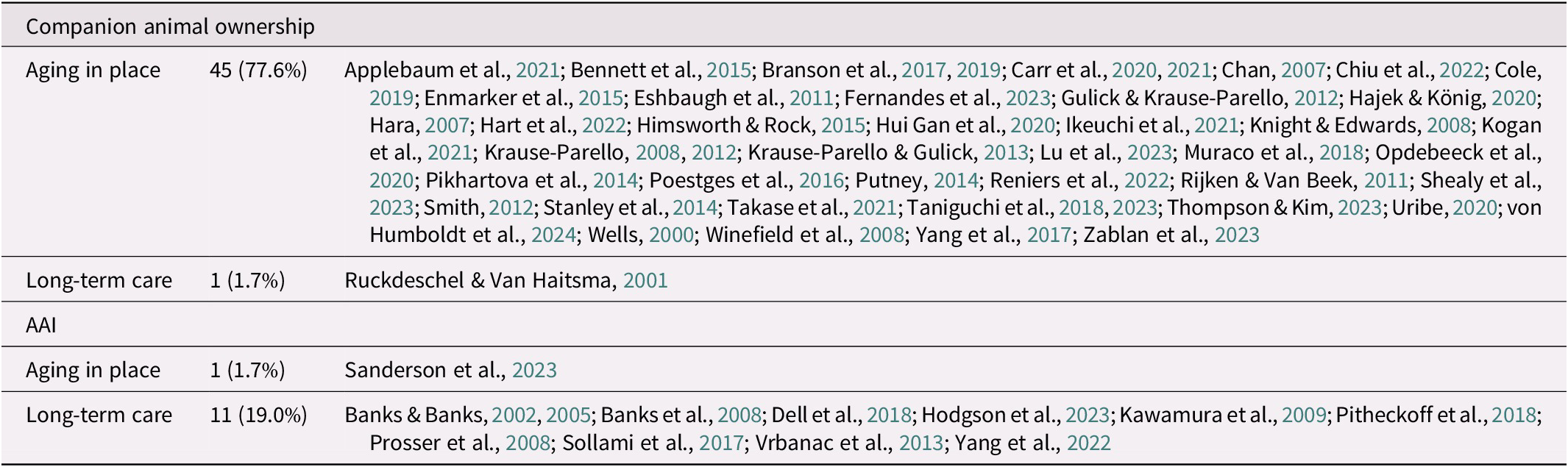
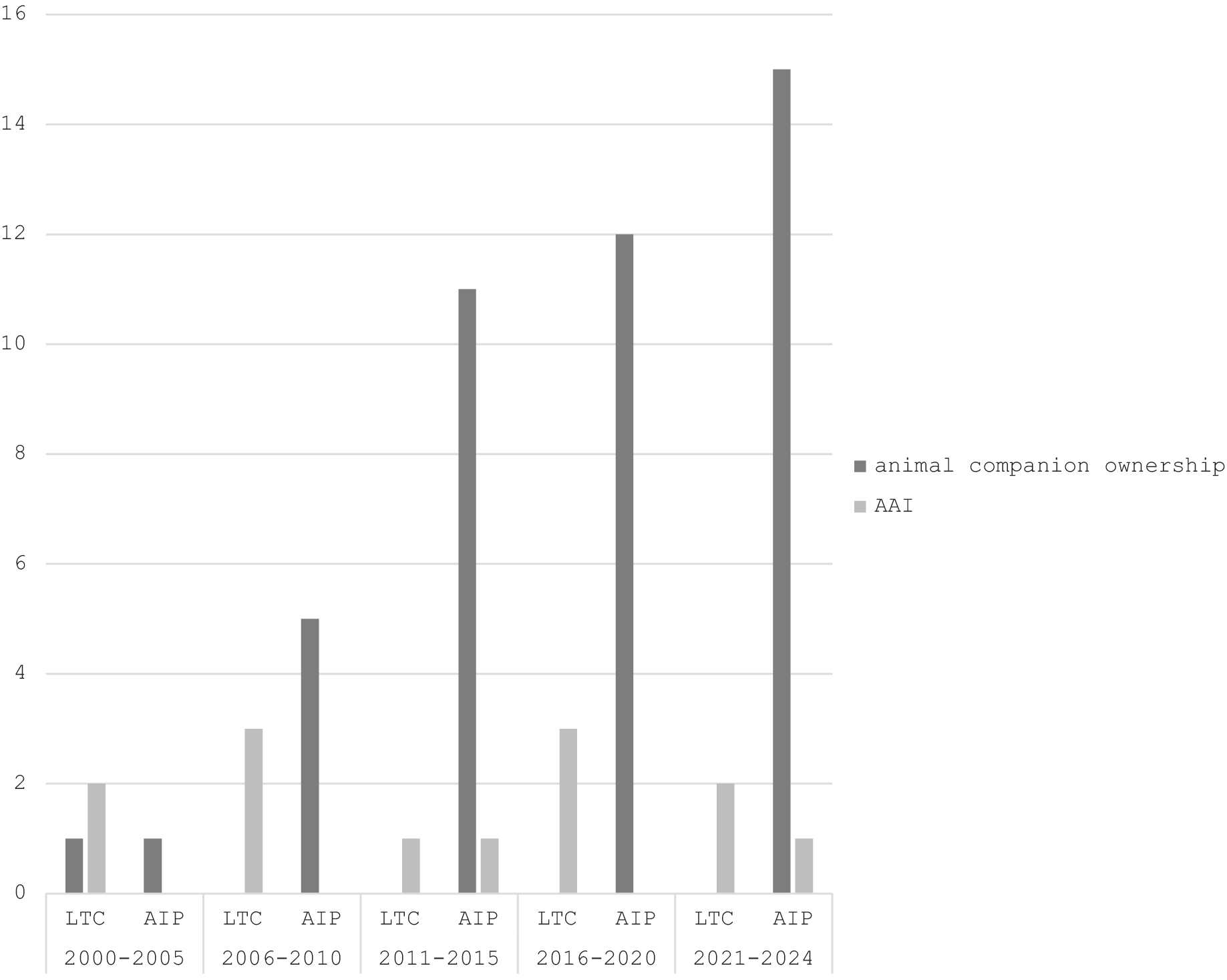
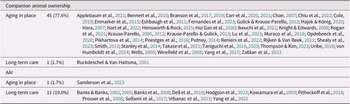
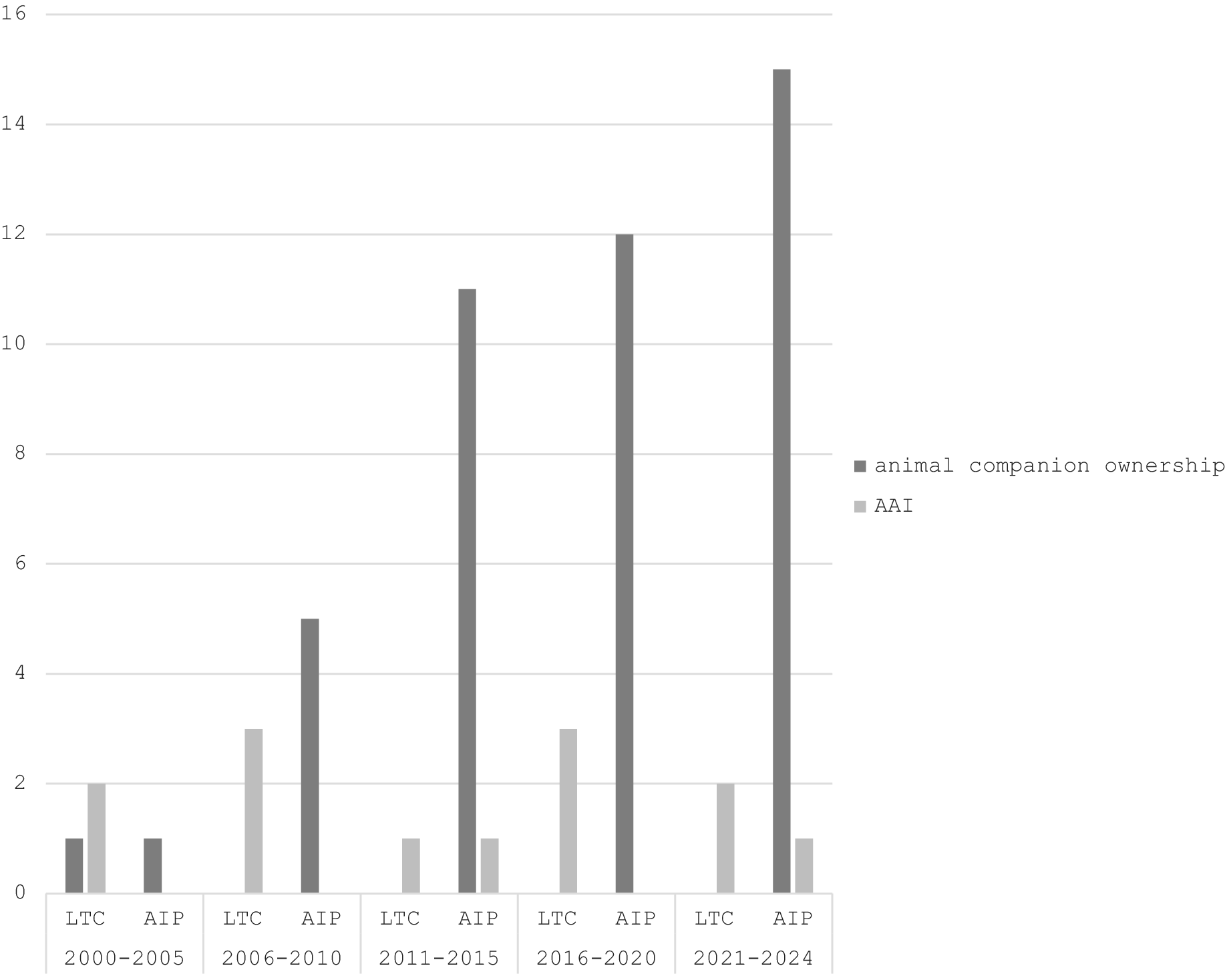
Among the reviewed literature, HAI was referenced as either animal companion ownership (N = 46) or AAI (N = 12); the majority of studies (n = 46; 79.3%) evaluated the effect of animal companion ownership for older adults AIP in the community (Table 4). Place of residence was characterized by home setting as either AIP, including assisted-living (N = 46), or in long-term care (LTC; N = 12). Regardless of location, studies of animal companion ownership have steadily increased over time, whereas studies of AAI have remained consistent in publishing frequency (Figure 2). Studies exploring animal companion ownership and psychosocial health are commonly inconclusive, often due to lack of success in establishing a change in a particular health outcome of interest. Studies of animal companion ownership that do illustrate a change in a desired health outcome are frequently contradicted by subsequent studies, leading to an inability to establish evidence-based recommendations for utilization of the HAI as a preventative health intervention.
Where are they located? (n = 58)
Where are they located? (n = 58).
Metrics used to evaluate degree of loneliness and/or social connection were included and described for 67.2% (n = 39) of studies. The most common assessment tool was the UCLA Loneliness Scale, followed by short-item scales, open-ended questions, and the De Jong Gierveld Loneliness Scale. Social isolation was commonly assessed using short-item scales or the Lubben Social Network Scale. Metrics used to evaluate HAI were described in 43.1% (n = 25) of studies. The human–animal relationship was most frequently evaluated using the Lexington Attachment to Pets Scale and open-ended questions. Five studies used the Pet Attachment Scale, Monash Dog-Owner Relationship Scale, or Comfort from Companion Animal Scale. Participant demographics varied, with many studies including a majority of women, reported ages ranged from 65 to 101 years.
-
2. How is HAI described by older adults in studies of social isolation and loneliness?
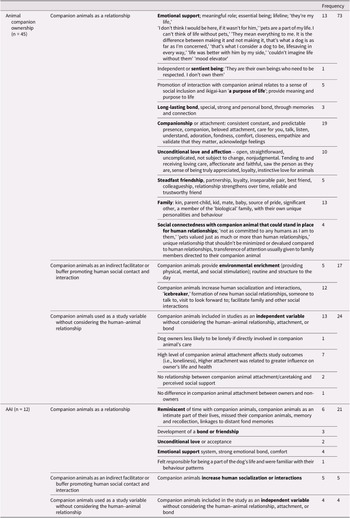
Studies revealed diverse conceptualizations of companion animal attachment among older adults. The role of animals was thematically categorized as either a meaningful relationship, a facilitator of human social contacts, or where companion animals were used as a study variable without considering the human–animal relationship (Table 5). Results were described categorically for animal companions and for those participating in AAI.
Terminology used to describe human–animal interactions in studies of social connectedness
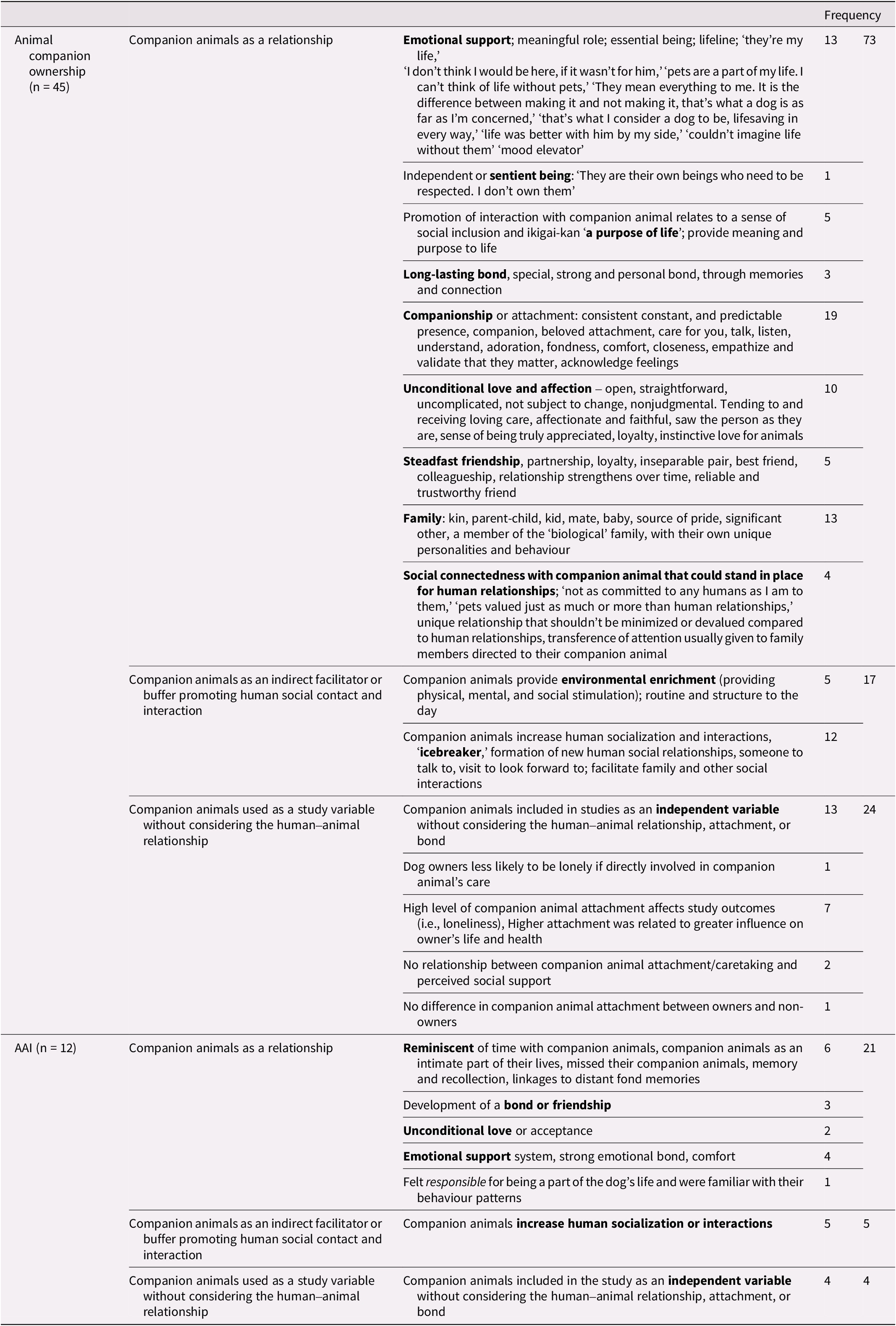
Note: Frequency of above-mentioned themes may overinflate emphasis on positive descriptions of human–animal relationships. Measure of frequency indicates the common terminology used when describing human–animal interactions.
The role of animal companions for older adults
The connection provided through HAI for those living with a companion animal was most frequently described as a relationship providing emotional support, companionship, a long-lasting bond, purpose for life, unconditional love and affection, friendship, family, as sentient beings, and as a suitable bridge to human social relationships. Older adults most frequently described HAI with animal companions as a meaningful relationship (Table 5). The most frequently depicted theme was animals providing companionship, followed by emotional support and as family. Companionship was described as a constant, predictable presence bringing comfort and closeness. Emotional support was described as coming from an essential bond that life would not be the same without. Animal companions were considered members of the family in relation to providing emotional support. Animal companions were described as a unique member of the family, with their own personality and behaviour. They were referred to as kin, kids, or babies bringing a source of pride to the family unit. Animal companions were less frequently regarded as a study variable without considering the human–animal relationship when evaluating loneliness and social connectedness outcomes. In these studies of social connectedness where social isolation and/or loneliness were investigated for older adults living with animal companions, older adults were asked the status of companion animal ownership, and their yes/no response was correlated to other findings within the study (e.g., Carr et al., 2021; Taniguchi et al., 2023). The least frequent description of HAI was depicting animal companions as a mechanism for enhancing human social interactions as an icebreaker or environmental enricher. In these studies of social connectedness, the role of animal companions was portrayed as a means for the formation of new social relationships, with a visit to look forward to, knowing that there would be someone to talk to.
The role of animal-assisted interventions for older adults
When considering AAIs, the role of animals in interventions was most frequently described as a relationship providing emotional support, a friendship or bond, unconditional love, acting as a stimulus for reminiscence, and as a being to be responsible for. Older adults engaging in AAI most frequently described AAI animals as a meaningful relationship (Table 5). AAI animals were most frequently described as providing an outlet for reminiscence, particularly for those residing in LTC with or without cognitive impairment. AAI animals were commonly noted as being an intimate part of the lives of older adults, with many people expressing that they missed their animal companions, and the ability to engage in AAI again brought linkages to distant fond memories. AAI animals were less frequently portrayed as a mechanism for enhancing human social interactions. The role of AAI described in studies of social connectedness was to enhance social interactions and improve social engagement, particularly in LTC. The least frequent description of AAI animals was companion animals being used as a study variable without considering the human–animal relationship.
-
3. How might HAI impact loneliness for older adults living alone
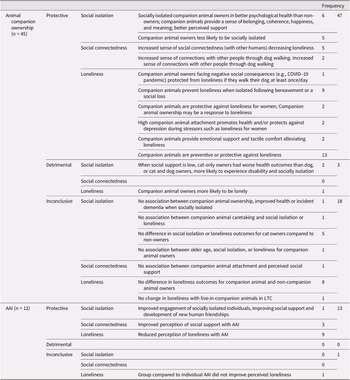
Animal interactions were categorized as protective, detrimental, or inconclusive in their influence on loneliness and social connectedness based on outcomes (Table 6). Results were described categorically for animal companions and for those participating in AAI.
Measuring social connectedness, isolation, and loneliness in relation to human–animal interaction
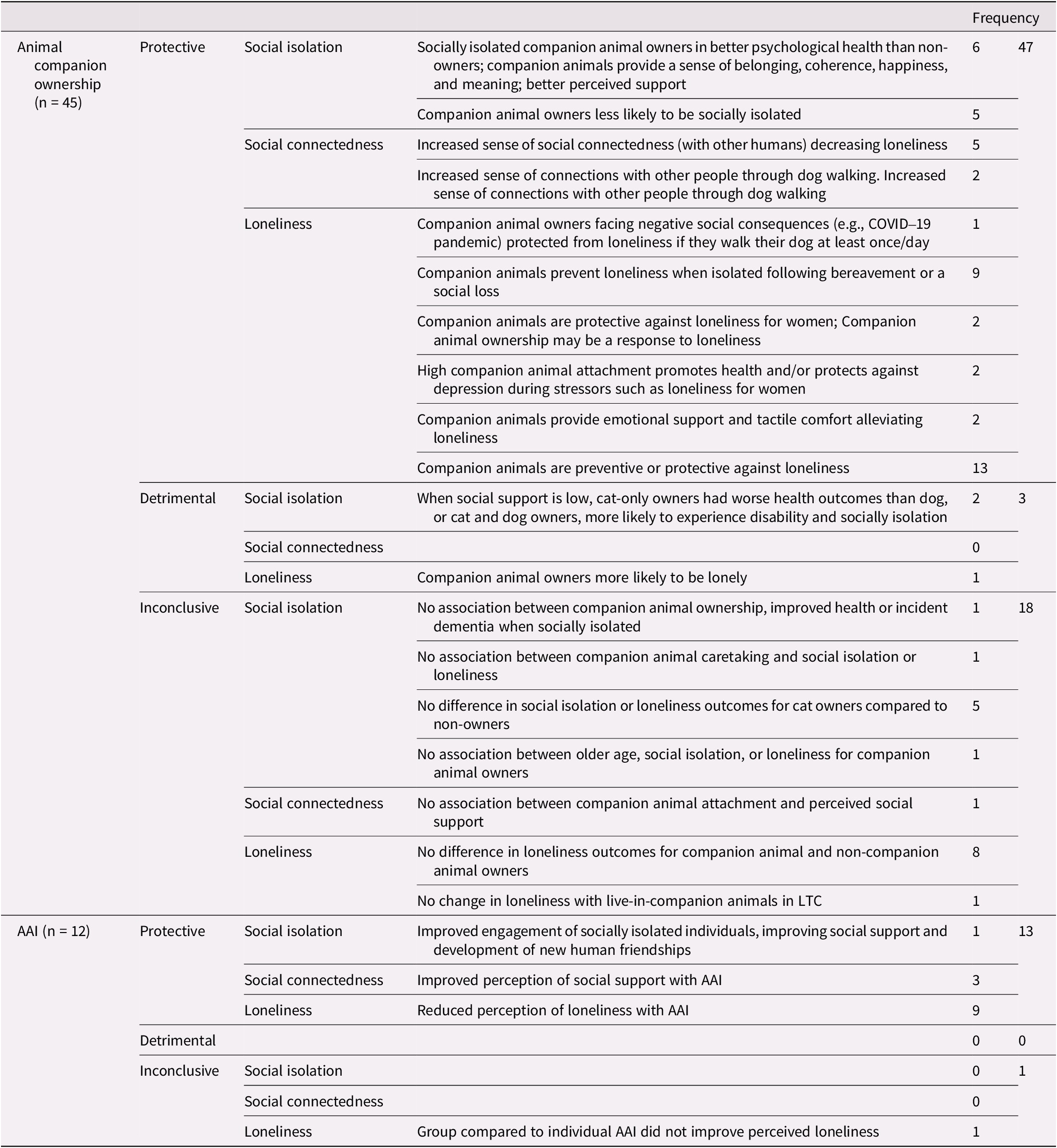
The role of animal companions for older adults
Studies evaluating the impact of animal companions on social isolation illustrated a predominantly protective benefit (n = 45 counts; 67.2%). Studies were next most frequently found to be inconclusive regarding the relationship between animal companions and social connection (n = 19 counts; 28.4%). A small number of studies found animal companions to be harmful in relation to loneliness and social connection, worsening health outcomes (n = 3 counts; 4.5%) (Table 6).
The role of animal-assisted interventions for older adults
Most studies evaluating the impact of AAI on social connection found AAI to be protective against social isolation (92.8%). A single study found AAI to be inconclusive in regard to improving social connection (7.1%). No studies found AAI to be detrimental to perception of loneliness and social connection for older adults (Table 6).
Discussion
This scoping review examined how HAI is understood by older adults AIP or in LTC in relation to the concepts or experiences of social connectedness through evaluation of studies on social isolation and loneliness. Findings illustrate that older adults highly value HAI as a meaningful relationship regardless of animal interaction type or place of residence. The damaging impact of social isolation and loneliness for older adults is recognized as the next ‘Geriatric Giant’ facing the global aging population (Canadian Coalition for Seniors’ Mental Health, 2024; Duffner et al., Reference Duffner, Janssen, Deckers, Schroyen, de Vugt, Köhler, Adam, Verhey and Veenstra2024; Patil & Braun, Reference Patil and Braun2024). Not everyone who lives alone experiences loneliness, so targeted preventative care interventions and efforts should prioritize those without sufficient social networks who are experiencing loneliness (Newall & Menec, Reference Newall and Menec2017). This review identifies a critical gap in understanding how HAI improves perceived social connectedness, particularly when objective structural connectedness (social isolation) and functional connectedness (loneliness) threaten well-being for older adults.
This scoping review highlights that connection to companion animals by any means was overwhelmingly regarded as a meaningful relationship for older adults who wish to seek out those connections. HAI may represent an underrecognized source of social support and should be considered an integral component in promoting psychosocial well-being. The recent guidelines on Social Isolation and Loneliness released by the Canadian Coalition for Seniors’ Mental Health (2024) underscore the urgency to address knowledge gaps surrounding the relational impact of companion animals for older adults. With fewer than 60 peer-reviewed studies that met the inclusion criteria for the present review, most being published in the last decade, further exploration is needed to fully understand the relationships between HAI, social connectedness, and healthy aging.
Older adults who have cared for animal companions at some point in their life and enjoyed a strong connection with them often expressed a desire to reconnect with animals, aligning with previous research (Banks & Banks, Reference Banks and Banks2002). The life changes and shrinking social networks that can accompany the aging process lead older adults to place substantial value on connections with their animal companions, indicating that these relationships are both unique and important to some members of this demographic. Given these findings, healthy aging strategies could be bolstered by considering human–animal relationships as independent connections, separate from but similarly valued as those with humans, within assessments of social networks for older adults.
Recently, Kretzler et al. (Reference Kretzler, König and Hajek2022) found a significant association between companion animals, social isolation, and loneliness, with companion animal interaction improving the lives of people. These findings were supported by a meta-analysis conducted by Hoang et al. (Reference Hoang, King, Moore, Moore, Reich, Sidhu, Tan, Whaley and McMillan2022), who recommended AAI, particularly with dogs, as an effective intervention to reduce loneliness and social isolation. The present review suggests that older adults may experience an enhanced sense of social connectedness from HAI regardless of it is a new interaction in an AAI context or with a personal animal companion. Studies included in our review clearly illustrate the positive effect of animal interaction through AAI on loneliness outcomes, but there was less conclusive evidence connecting animal companion ownership similarly. To build a deeper understanding of and appreciation for the value of HAI in healthy aging, AAI and animal companion ownership need to both be considered in psychosocial studies examining social isolation and loneliness (Allen & Hogg, Reference Allen and Hogg2022).
There is clear evidence that close relationships with animal companions, referred to as human–animal bonds, HABs, are important in the lives of older adults (Gee & Galik, Reference Gee and Galik2019). The HAB is defined as the ‘mutually beneficial relationship between people and animals. It’s influenced by behaviors essential to the mental, physical, and social health and wellbeing of both’ (American Veterinary Medical Association, 2025). Gee and Galik (Reference Gee and Galik2019) questioned whether the HAB exists in AAI, positing that the benefits of HAI may only be realized through ownership and sustained, regular contact. In contrast, the present review suggests that the benefits of HAI are experienced through connections formed in both AAI and animal companion ownership, improving perceived social support and promoting social connectedness for older adults. Importantly, these authors highlight the dynamic nature of relationships formed through HAI, noting that not all aspects of the human–animal relationships are always positive or beneficial, and an expanded and comprehensive reframe of the HAB definition provided by American Veterinary Medical Association (2025) is needed.
Characterizations of HAI in healthy aging uncovered in this review include animals as a valued relationship, as a social catalyst, or as a study variable without considering the human–animal relationship. Older adults frequently characterize the HAI as a meaningful relationship, a significant source of companionship and emotional support (Applebaum et al., Reference Applebaum, Ellison, Struckmeyer, Zsembik and McDonald2021), and a stimulus for reminiscence (Banks & Banks, Reference Banks and Banks2002). The theme of companion animals as a relationship was consistent across animal intervention types; older adults acknowledge animal companions and animals encountered in AAI as meaningful relationships. Animal ownership is regarded by older adults as an important source of companionship, as illustrated in studies that elicited open-ended responses from participants (Knight & Edwards, Reference Knight and Edwards2008). However, when context is not considered while analysing or interpreting study findings, ambiguity, inconclusive results, or contradictory conclusions are possible. Of the AIP-focused studies included in this review, 25 were descriptive quantitative studies and may have incompletely captured the relevant and dynamic human–animal relationship. Neglecting to contextualize relationships with companion animals in HAI research poses limitations and highlights the need for studies applying a holistic and relational lens to illustrate the value of the HAI in healthy aging. A large cross-sectional study by Barrett et al. (Reference Barrett, Fitzgerald, Al-Wahsh and Musa2024) illustrates this gap, as authors concluded that older adults with animal companions experienced increased loneliness compared to their non-animal companion owning peers, a finding clearly disputed by the present review. A single time-point evaluation of the impact of companion animals on human health neglects the relational and dynamic nature of the human–animal relationship. While companion animals may not completely prevent feelings of loneliness, they may be protective against the harmful consequences of negative psychosocial events (Raina et al., Reference Raina, Waltner-Toews, Bonnett, Woodward and Abernathy1999; Rogers et al., Reference Rogers, Hart and Boltz1993). When studies only ask if older adults have contact with or own animal companions, but do not elaborate upon what that animal means to them or how they find support through their human–animal relationship, the supportive, protective role of HAI may be underestimated or even contradicted.
Few studies in this review evaluated both social isolation and loneliness outcomes concurrently in relation to HAI (Carr et al., Reference Carr, Friedmann, Gee, Gilchrist, Sachs-Ericsson and Koodaly2021; Chan, Reference Chan2007; Fernandes et al., Reference Fernandes, Sousa, Sá-Couto and Tavares2023; Hajek & König, Reference Hajek and König2020; Kogan et al., Reference Kogan, Currin-McCulloch, Bussolari, Packman and Erdman2021; Lu et al., Reference Lu, Ren, Guo, Zhou, Wang and Zhang2023). Without connecting these constructs, it is unknown whether HAI is effective at preventing or treating loneliness in all contexts, or only when social support networks are limited or inadequate, as suggested by some authors (Allen & Hogg, Reference Allen and Hogg2022; Sridar & Rauktis, Reference Sridar and Rauktis2024). Expanding HAI research to examine effects on all aspects of social connection will further support effective implementation and evaluation of the role of animals in healthy aging in a variety of social contexts (Friedmann et al., Reference Friedmann, Gee, Simonsick, Studenski, Resnick, Barr, Kitner-Triolo and Hackney2020; Hughes et al., Reference Hughes, Verreynne, Harpur and Pachana2020).
Looking ahead, targeted research is needed to identify appropriate HAI for older adults in order to achieve desired healthy aging outcomes (Friedmann & Gee, Reference Friedmann and Gee2019). This requires further studies specifically relating to social connection, social isolation, loneliness, and HAI for older adults AIP and in LTC. In particular, there are knowledge gaps around the potential use of AAI for older adults AIP, such as animal fostering, or planned visits from an AAI group. No studies were identified that evaluated ‘companion animal contact’, which we defined as activities such as volunteer dog walking, pet sitting, or visiting with family member’s animals, where there was no formal AAI and the older adults were not living with the animal as an animal companion. This is an area with great opportunity for future research to determine the extent of the role that casual activities with animals could play for older adults, without the added responsibility of animal companion caretaking. There are also gaps in understanding the value of or challenges associated with animal companion ownership within LTC, such as those transitioning with an animal companion from the community into LTC. Future work on HAI should investigate both the concepts of loneliness and social isolation in tandem with support networks, considering animals as active components within these networks.
The role of animals in HAI requires an interdisciplinary approach to understanding and preserving animal welfare, minimizing risks at the human–animal interface, and appropriately fostering healthy and meaningful human–animal relationships (Gee & Mueller, Reference Gee and Mueller2019). Obradović et al. (Reference Obradović, Lagueux, Michaud and Provencher2020) illustrate a need to incorporate the perspectives of human health professionals and animal companion owners to understand the importance of HAI and support sustained connections while also recognizing and mitigating potential risks and benefits. The caregiving responsibilities involved in animal companion ownership must be more clearly understood, as they may inadvertently contribute to isolation if support is insufficient (Enders-Slegers & Hediger, Reference Enders-Slegers and Hediger2019). While dogs are the most common species included in studies (Jain et al., Reference Jain, Syed, Hafford-Letchfield and O’Farrell-Pearce2020), other species may also have the capacity to alleviate or prevent loneliness. Future research to examine the barriers and risks associated with each HAI approach would allow evidence-based and individualized recommendations of HAI as social prescriptions while protecting both human and animal health and welfare. The application of HAI as a social prescriptions, which Drinkwater et al. (Reference Drinkwater, Wildman and Moffat2019) defines as ‘non-medical interventions to address wider determinants of health and to help patients improve health behaviours and better manage their conditions’, could significantly improve holistic health for those without sufficient perceived social connectedness.
Limitations
To include studies from multiple research traditions, we eliminated the application of a critical appraisal. While this supported a broad examination of the phenomenon in question, there may have been limitations introduced based on varied study quality. Grey literature was excluded, which may have limited the illustration of current understanding of and practices related to the value of the HAI in healthy aging. The search and screening strategy may not have identified published content pertaining to older adults in studies that were not exclusively investigating that population. There was a dearth of data concerning older adult gender diverse and/or racialized populations, which may have been related to our search strategy or may illustrate an additional gap in the extant literature. Finally, the restriction of our review to older adults AIP or in LTC and our chosen definition of AAI may have limited the breadth of our findings.
Conclusion
The purpose of this scoping review was to reflect on the current research concerning HAI in relation to social connectedness, social isolation, and/or loneliness for older adults, particularly older adults AIP or in LTC. This review illustrates the perceived protective nature of HAI against loneliness and associated negative psychosocial outcomes while highlighting numerous knowledge gaps concerning psychosocial outcomes for older adults engaging in animal interactions. Future work requires interdisciplinarity and a focus on context-specific applications of HAI interventions in healthy aging care plans, that is, in what contexts and under what circumstances animal interactions may be leveraged to support human health and well-being. Interdisciplinary approaches and evidence-based applications of HAI interventions could help reduce stress on the healthcare system as populations age and become further at risk of experiencing loneliness.
Many older adults value HAI as meaningful relationships with the power to prevent or alleviate social isolation and loneliness. Developing a better understanding of how HAI influences social connectedness for older adults in the context of established relationships with animals will support the development of innovative solutions. Inclusion of HAI during screening for social isolation and loneliness is a justified alteration to practice that supports healthy aging while validating these often under-valued relationships that can significantly benefit the lives of our aging friends, neighbours, and family members. Ultimately, approaches that centre the needs and priorities of older adult companion animal caretakers and animal lovers will enhance the future development of policies and programmes that harness these important bonds to the benefit of humans and animals.
Supplementary material
The supplementary material for this article can be found at http://doi.org/10.1017/S0714980825100421.
Acknowledgements
The authors express gratitude to University of Saskatchewan librarians Susan Bolton and Vicky Duncan for their invaluable support in conducting the literature search for this review. Their expertise and dedication were instrumental in ensuring a comprehensive and rigorous review process.
Financial support
No external funding was received to support this scoping review.




 Open access

