


Over the past several decades, women's participation in the medical profession has increased substantially. In the USA and the UK, women account for 34% 1 and 47% 2 of physicians, respectively, whereas women comprise more than 50% of physicians in parts of northern and eastern Europe.Reference Ramakrishnan, Sambuco and Jagsi 3 For psychologists, the trend is even sharper, with 2.1 female psychologists for every male psychologist in the USA in 2013.Reference Lin, Nigrinis, Christidis and Stamm 4 Clear gender patterns do exist regarding medical specialties, with women constituting a larger percentage of residents in family medicine, obstetrics and gynaecology, paediatrics and psychiatry, whereas men dominate in anaesthesiology, emergency medicine, internal medicine, surgery and radiology. 5 Notably, the increase in female physicians and psychologists has not been mirrored in female scholarship. In the USA, 47% of students entering medical school in 2013 were women, compared with only 38% of medical faculty, 21% of full professors and 16% of deans.Reference Lautenberger, Dandar, Raezer and Sloane 6 Several studies have reported gender imbalances in academia in favour of men, regarding funding,Reference Waisbren, Bowles, Hasan, Zou, Emans and Goldberg 7 peer-review,Reference Budden, Tregenza, Aarssen, Koricheva, Leimu and Lortie 8 , Reference Wenneras and Wold 9 hiring,Reference Moss-Racusin, Dovidio, Brescoll, Graham and Handelsman 10 salariesReference Jagsi, Griffith, Stewart, Sambuco, DeCastro and Ubel 11 and financial ties to industry.Reference Rose, Sanghani, Schmidt, Karafa, Kodish and Chisolm 12 Moreover, only a minority of editors-in-chief, editorial board members and journal reviewers are women.Reference Amrein, Langmann, Fahrleitner-Pammer, Pieber and Zollner-Schwetz 13 , Reference Erren, Groß, Shaw and Selle 14 Although it has been suggested that the career ‘pipeline’ in academia will gradually ensure a more equal gender balance,Reference Ley and Rosenberg 15 a critical mass of women in science has existed for decades, and a more proactive approach is needed if gender equality is ever to be achieved.Reference Etzkowitz, Kemelgor, Neuschatz, Uzzi and Alonzo 16 – 19
Authorship gender gap
Metrics related to academic publication are increasingly used to measure research productivity and to distribute resources.Reference Wilsdon 20 Here, too, women lag behind. Several studies have found a gender gap in authorship in the academic literature. Although the proportion of women among first and last authors of original medical research has increased over the past decades in both the USAReference Jagsi, Guancial, Worobey, Henault, Chang and Starr 21 and the UK,Reference Sidhu, Rajashekhar, Lavin, Parry, Attwood and Holdcroft 22 women are still underrepresented, a pattern that is particularly notable for last authorship, which typically reflects senior status. Filardo and colleaguesReference Filardo, da Graca, Sass, Pollock, Smith and Martinez 23 showed that female first authorship in original research published in six high-impact general medical journals increased significantly from 27% in 1994 to 37% in 2014. Notably, decreased momentum was observed in the 2000s, with a slight decrement in female firstReference Filardo, da Graca, Sass, Pollock, Smith and Martinez 23 and last authorshipReference Sidhu, Rajashekhar, Lavin, Parry, Attwood and Holdcroft 22 in some journals. Similar patterns have been observed in several fields of medicine,Reference Bergeron, Wilken, Miller, Shapiro and Bhattacharyya 24 – Reference Lundberg, Ozen, Gunes-Ayata and Kaplan 29 as well as in psychologyReference Duch, Zeng, Sales-Pardo, Radicchi, Otis and Woodruff 30 and other academic disciplines.Reference Duch, Zeng, Sales-Pardo, Radicchi, Otis and Woodruff 30 – Reference Lariviere, Ni, Gingras, Cronin and Sugimoto 32 In psychiatry, studies of authorship in high-impact journals reveal a comparable gender imbalance,Reference Amering, Schrank and Sibitz 33 , Reference Süßenbacher, Amering, Gmeiner and Schrank 34 despite the relatively balanced gender distribution of professionals in the speciality. 5 , Reference Penny, Jeffries, Grant and Davies 35 Süβenbacher and colleaguesReference Süßenbacher, Amering, Gmeiner and Schrank 34 showed that overall female authorship in high-impact journals increased from 24.6% in 1994 to 33.2% in 2004 and 38.9% in 2014. The magnitude of the increase was smaller between 2004 and 2014, as female overall and first authorship increased less than before and female corresponding authorship plateaued, indicating a possible ceiling effect.
The reasons behind these gender imbalances are likely to be complex and multifaceted. Since high-impact science is increasingly emerging from team research,Reference Wuchty, Jones and Uzzi 36 the fact that there are fewer women in senior team leader positions may render their research output less attractive to high-impact journals. Other suggested reasons include gender differences in attitudes towards competition;Reference Niederle and Vesterlund 37 explicit and implicit gender bias and sexism;Reference Wenneras and Wold 9 , Reference Yedidia and Bickel 38 inequalities in the distribution of scientific labour, with women performing more operational and fewer conceptual and prestigious tasks;Reference Macaluso, Lariviere, Sugimoto and Sugimoto 39 a lack of senior female role models and mentors;Reference Yedidia and Bickel 38 and the fact that women often assume greater responsibility for raising children and receive less support from their spouses.Reference Carr, Ash, Friedman, Scaramucci, Barnett and Szalacha 40 , Reference Westring, Speck, Dupuis Sammel, Scott, Conant and Tuton 41 A review of empirical evidence on women's choice or rejection of careers in academic medicineReference Edmunds, Ovseiko P, Shepperd, Greenhalgh, Frith and Roberts 42 found consistent support for four themes: that women are more devoted to teaching than to research; that women who do engage in research are encouraged to pursue a career in academic medicine; that women lack adequate role models; and that women experience gender bias and discrimination. Although it has been suggested that gender imbalances may largely reflect women's preferences and informed choices,Reference Ceci and Williams 43 this review did not find consistent support for the assumptions that women are less interested in research, that women lose commitment to research as their training progresses, or that women are deterred from academic careers by financial considerations or concerns about work–life balance.Reference Edmunds, Ovseiko P, Shepperd, Greenhalgh, Frith and Roberts 42
Aims
The aim of this study was to analyse authorship trends regarding gender in the field of eating disorders by assessing research papers published in eating disorder specialty journals, as well as in high-impact psychiatry and clinical psychology journals. Although previous studies describe overall publication trends within the field,Reference Theander 44 – Reference Clinton 46 no analysis based on author gender has been performed. Since eating disorders are often stereotypically and erroneously labelled as disorders that affect girls and women,Reference Boysen, Ebersole, Casner and Coston 47 and women publish more extensively on topics related to ‘women's health’,Reference Carnes, Morrissey and Geller 48 we hypothesise that overrepresentation of women in fields relevant to eating disorders may have a greater influence on publication gender balance than has been observed in general psychiatry.
Method
The prevalence of female first and last authorship of original research articles on the topic of eating disorders was assessed in three sets of scientific journals: (a) six journals with a primary focus on eating disorder research, International Journal of Eating Disorders, Journal of Eating Disorders, European Eating Disorders Review, and Eating Disorders: The Journal of Treatment & Prevention, Eating Behaviors, and Body Image; (b) the nine general psychiatry journals with the highest 2015 (the last year available at assessment) journal impact factor (JIF) according to InCites™ Journal Citation Reports®, available via Web of Science: World Psychiatry, JAMA Psychiatry (previously called Archives of General Psychiatry), American Journal of Psychiatry, Molecular Psychiatry, Biological Psychiatry, Psychotherapy and Psychosomatics, Journal of the American Academy of Child and Adolescent Psychiatry, British Journal of Psychiatry, and Journal of Child Psychology and Psychiatry; and (c) six non-specialist clinical psychology journals that publish original research with high 2015 JIF according to InCites™ Journal Citation Reports®: Journal of Abnormal Psychology, Journal of Consulting and Clinical Psychology, Journal of Clinical Child & Adolescent Psychology (previously called Journal of Clinical Child Psychology), Behaviour Research and Therapy, Health Psychology, and Journal of Abnormal Child Psychology.
Importantly, journals were included in the analysis even if they did not cover the entire 20-year observation period; for example, the first volume of Journal of Eating Disorders was published in 2013 and the first volume of Eating Behaviors in 2000.
Data collection
Following the methodology described by Filardo et al,Reference Filardo, da Graca, Sass, Pollock, Smith and Martinez 23 data were collected for original research articles (including meta-analyses) from January 1997 to December 2016; however, in the present study, every issue published during this 20-year period was assessed. Most of the journals were scanned for original research related to eating disorders. For journals with more than 12 issues per year, however, this method proved to be unwieldy; these journals were assessed through PubMed using a search algorithm consisting of the journal name AND [anorexi* OR bulimi* OR eating OR feeding OR dietary OR starv* OR weight OR appetite OR ‘body image’ OR ‘body dissatisfaction’] and the search results were then further examined for relevance. In the case of the eating disorder specialty journals, all original articles (including meta-analyses) were included.
For each article included in the study, the gender of the first and last author was classified as female, male or unknown. If there was only one author, this was included in the analysis as first author, and no last author was registered. When the first or last author was a group author, the gender composition of the group in question was not further investigated; however, in cases where there was a single last author but where it was also explicitly stated that the research had been done on behalf of a group, the gender of the last author was included in the analysis. Author gender was determined by assessment of the first name. If unclear, internet search engines were used to detect biographical information or photos that could clarify author gender. The same approach was applied for first names that are used for both genders, or when first names could be either female or male depending on language context. If gender still could not be determined, it was registered as unknown.
A seventh eating disorders specialty journal, Eating and Weight Disorders, was initially included, but since this journal almost exclusively prints first initials and full last names, the assessment process was too unreliable. Furthermore, the five general medical journals with the highest 2015 JIF (New England Journal of Medicine, Lancet, JAMA, BMJ and Annals of Internal Medicine) were also assessed. This, however, yielded only nine original articles on the topic of eating disorders over the 20-year period. Likewise, assessment of the five multidisciplinary science journals that publish original research with the highest 2015 JIF (Nature, Science, Nature Communications, Proceedings of the National Academy of Sciences and GigaScience) yielded only 30 papers on topics broadly related to eating disorders. Thus, analysis of authorship trends in these journals was not pursued.
In order to estimate how applying other author sequence conventions than the ‘first-last-author-emphasis' norm used here may influence the results, we also collected data on gender distribution among authors according to a ‘sequence-determines-credit’ approach in all included journals for the first and last years of the observation period. Here, we followed the suggestion by Tscharntke et al Reference Tscharntke, Hochberg, Rand, Resh and Krauss 49 that ‘the first author should get credit for the whole impact […], the second author half, the third a third, and so forth, up to rank ten. When papers have more than ten authors, the contribution of each author from the tenth position onwards is then valuated just 5%’ (p. 2). Impact was equated to 1.0 regardless of actual JIF, and we assessed changes in the gender distribution of credit in the three sets of journals between 1997 and 2016.
Data analysis
First, descriptive statistical analyses were performed separately for each year and journal. In the case of the high-impact psychiatry and clinical psychology journals, data were combined into total numbers for each set of journals before analyses were performed to maximise statistical power. Since a considerable year-to-year variance was discovered, data were also combined into four consecutive 5-year periods, or quinquennials (Q1: 1997–2001, Q2: 2002–2006, Q3: 2007–2001 and Q4: 2012–2016), for all journals and sets of journals to avoid skewing the results. For all trends over time, Pearson's chi-squared tests were then performed. Alpha levels <0.05 were considered significant. Odds ratios (OR) and 95% confidence intervals were calculated for select differences between journals. For all statistical analyses, IBM® SPSS® version 24 was used.
Research ethics
Since this was a bibliometric study using publicly available data, no ethical approval was needed.
Results
Where are papers on eating disorders being published?
In total, 5429 eating disorder papers were included in the analysis. Of those, 4677 papers were published in eating disorder specialty journals (JIF range 1.175–4.068), 342 in high-impact psychiatry journals (JIF range 6.615–20.205) and 410 in high-impact clinical psychology journals (JIF range 3.579–5.538). Overall, 5429 first authors and 5141 last authors were assessed. Of all assessed authors, 42 (0.4%) were registered as being of unknown gender.
Over the 20-year observation period, the total number of papers published on eating disorders increased by 136% (Q1: n = 834; Q2: n = 1204; Q3: n = 1421; Q4: n = 1970). Across the observation period, the numbers of eating disorder papers published in eating disorder specialty journals and in high-impact clinical psychology journals increased by 161% and 207%, respectively, whereas the number of eating disorder papers published in high-impact psychiatry journals decreased by 50.5% (Fig. 1). The percentage of total articles on eating disorders published in specialty journals increased by 8.3 percentage points (P < 0.001) from 80.5% in Q1 to 88.8% in Q4.
Number of eating disorder papers published in eating disorder specialty journals and in high-impact psychiatry and psychology journals in 1997–2016.

Author gender and position
The results of the gender assessment are presented in detail in Table 1. As can be seen, trends over time differ somewhat for specific eating disorder specialty journals. In Figs 2 and 3, data are shown for all specialty journals, high-impact psychiatry journals and high-impact clinical psychology journals, for Q1–4. In Table 2, all changes in female first and last authorship over time compared with the baseline level of Q1 are shown, along with P-values.
Female first authorship as percentage of total in specialised eating disorder journals, and in eating disorder papers published in high-impact psychiatry and psychology journals in 1997–2016.
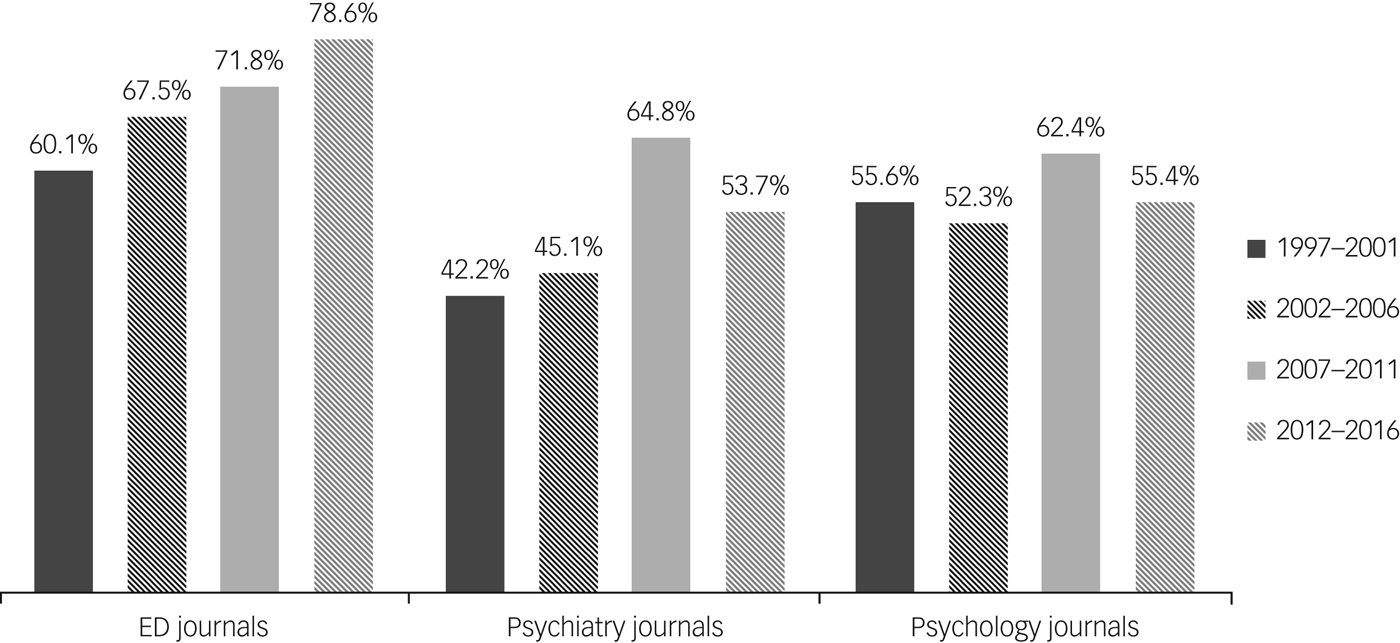
Female last authorship as percentage of total in specialised eating disorder journals, and in eating disorder papers published in high-impact psychiatry and psychology journals in 1997–2016.

Female first and last authorship in eating disorder papers as percentage of total and as number of papers in specific journals

IJED, International Journal of Eating Disorders; JED, Journal of Eating Disorders; EEDR, European Eating Disorders Review; EDJT&P, Eating Disorders: The Journal of Treatment & Prevention; EB, Eating Behaviors; BI, Body Image; ED combined, all specialised eating disorder journals combined; Psychiatry, high-impact psychiatry journals combined; Psychology, high-impact clinical psychology journals combined; F first, female first authorship; F last, female last authorship; n/a, not applicable.
Changes in authorship compared with baseline period 1997–2001
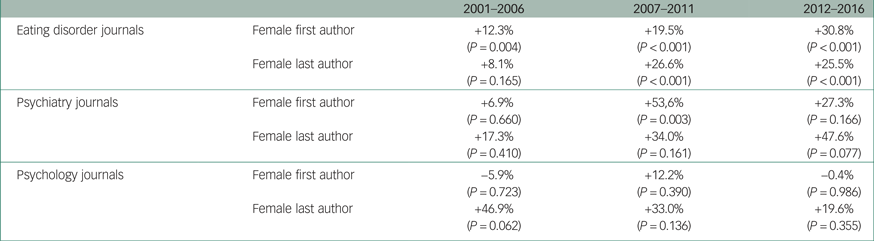
When analysed in quinquennials, female first authorship as the share of total authorship in specialty journals increased by 30.8% (P < 0.001) over the 20-year observation period. In high-impact psychiatry journals, the share of female first authorship increased between Q1 and Q3 (53.6%; P = 0.003), followed by a non-significant decrease. Female last authorship as share of total authorship in specialty journals and in high-impact psychiatry journals increased by 25.5% (P < 0.001) and 47.6% (P = 0.077), respectively, between Q1 and Q4; however, for high-impact psychiatry journals this change was not statistically significant. In high-impact clinical psychology journals, no significant changes in female first or last authorship were observed.
For three of the four quinquennials, first authors of eating disorder papers were significantly less likely to be female in the high-impact psychiatry journals compared with the eating disorder specialty journals (Q1: OR 0.47, 95% CI 0.31–0.71; Q2: OR 0.39, 95% CI 0.27–0.59; Q3: 0.72, 95% CI 0.43–1.19; Q4: OR 0.31, 95% CI 0.18–0.54) and in the high-impact clinical psychology journals (Q1: OR 0.80, 95% CI 0.46–1.42; Q2: OR 0.53, 95% CI 0.31–0.87; Q3: 0.65, 95% CI 0.44–0.95; Q4: OR 0.33, 95% CI 0.24–0.47). Likewise, for three of the four quinquennials, last authors of eating disorder papers were significantly less likely to be female in the high-impact psychiatry journals compared with the eating disorder specialty journals (Q1: OR 0.51, 95% CI 0.33–0.80; Q2: OR 0.56, 95% CI 0.37–0.85; Q3: 0.50, 95% CI 0.30–0.82; Q4: OR 0.60, 95% CI 0.35–1.04); the difference was only significant for the last quinquennial in the high-impact clinical psychology journals (Q1: OR 0.73, 95% CI 0.41–1.32; Q2: OR 1.29, 95% CI 0.77–2.18; Q3: 0.76, 95% CI 0.52–1.09; Q4: OR 0.62, 95% CI 0.46–0.87).
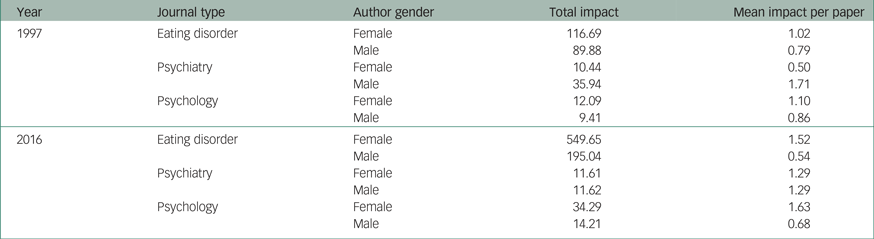
The results of the additional analysis by applying a ‘sequence-determines-credit' approach is presented in Table 3 in the form of the total generated impact for female and male authors and the mean sums of female and male author impact per paper for the three sets of journals in 1997 and 2016.
Analysis by ‘sequence-determines-credit’ approach
Discussion
This study reveals that, similar to the trends of female authorship reported in general medical and psychiatric journals, female first and last authorship of eating disorder papers has increased in the past two decades in eating disorder specialty journals as well as in high-impact psychiatry journals. Also, similar to findings of previous studies, a plateau or decline can be seen in the last 5-year period in female first authorship in high-impact psychiatry journals and in female last authorship in eating disorder specialty journals.
Notably, for all three sets of journals studied, the shares of female first and last authors of eating disorder papers are consistently higher than shares reported in previous studies on psychiatry papers in general. Whereas Süβenbacher and colleaguesReference Süßenbacher, Amering, Gmeiner and Schrank 34 reported a share of 18.4% of female first authorship in all research papers in high-impact psychiatry journals in 1994, increasing to 37.4% in 2004, we found that the shares of female first authors of eating disorder papers in Q1were 60.1, 42.2 and 55.6% in eating disorder specialty journals, high-impact psychiatry journals and high-impact clinical psychology journals, respectively. Likewise, whereas Süβenbacher et al,Reference Süßenbacher, Amering, Gmeiner and Schrank 34 reported a share of 43.3% of female first authors in 2014, we found that the shares of female first authors of eating disorder papers in Q4 were 78.6, 53.7 and 55.4% in eating disorder specialty journals, high-impact psychiatry journals and high-impact clinical psychology journals, respectively. Similar patterns were seen for female last authorship, although these numbers were generally lower than those for female first authorship, probably reflecting a relative lack of female senior scholars.
Our data also reveal that the number of eating disorder papers published in high-impact psychiatry journals has actually decreased over the 20-year observation period. The opposite trend is clearly visible in the number of papers published in eating disorder specialty journals and in high-impact clinical psychology journals – both with much lower JIF ranges. As a result, while the scientific output on eating disorders has grown dramatically over the observation period, eating disorder research has increasingly been relegated to eating disorder specialty journals. In fact, almost 90% of eating disorder research papers were published in one of the specialty journals during Q4. Similar statistics are not available for other subspecialties within psychiatry for comparison. Certainly, a high JIF does not necessarily imply an overall higher journal qualityReference Wilsdon 20 (see below for further discussion), and publication in a specialty journal may often be a wise choice in terms of dissemination and citation.Reference Soh, Walter, Touyz, Russell, Malhi and Hunt 50 Nonetheless, the decreasing coverage of eating disorder research in high-impact psychiatry journals is noteworthy.
Several possible explanations for this trend exist. First, the output and quality of eating disorder specialty journals may have improved, increasing the attractiveness for researchers within the field to publish their work there. Assessing JIFs over time through InCites™ Journal Citation Reports® indicates that this may be the case for some but not all of the specialty journals in our study (see also below for a discussion of JIF in relation to quality). However, such a tendency of subspecialisation is not unique to the field of eating disorder researchReference Rixe, Rixe, Glick, Lehman and Olympia 51 , Reference Baier, Wilczynski and Haynes 52 and should affect other areas of psychiatry as well.Reference Goldblatt, Schechter, Maltsberger and Ronningstam 53
Second, in a comparison between the number of papers on eating disorders and number of papers on panic disorder and agoraphobia – conditions of equivalent disease burden – published in high-impact psychiatry journals, an apparent bias against publishing eating disorder papers has been reported.Reference Frost, Murphy, Webster and Schmidt 54 Possible reasons raised included negative attitudes towards eating disorders among journal editors and medical professionals in general.Reference Fleming and Szmukler 55 Here, the existence of eating disorder specialty journals might hypothetically encourage reviewers who believe that eating disorder topics are not of interest to readers of general psychiatry journals to recommend resubmission of such papers to a specialty journal instead. Such a tendency could be further strengthened by gender bias, both in the form of misperceptions about eating disorders as being primarily a ‘women's health issue’Reference Boysen, Ebersole, Casner and Coston 47 and as bias against female authors per se.
It is also possible that an increase in the number of systematic reviews and meta-analysesReference Ioannidis 56 – article types that are often published in high-impact journals – over the 20-year observation period may have led to a simultaneous decrease in the overall number of original articles published in these journals, with such being allocated papers to specialty journals. However, it is not obvious why this tendency should have affected papers on eating disorders more than other areas of psychiatry, if not for the hypothetical bias highlighted above. Notably, meta-analyses were also included in our data-set.
Finally, the possibility that eating disorder research may generally be of lower quality, such as less often being conducted in the form of randomised controlled trials as preferred by high-impact journals, has also been raised.Reference Mendlowizc M, Figueira and Souza 57 In the USA, research on eating disorders and suicide are the most underfunded of all psychiatric conditions relative to disability-adjusted life years,Reference Insel 58 meaning that research in the field may suffer owing to inadequate or absent funding. Again, since it is known that female researchers generally have lower access to funding,Reference Waisbren, Bowles, Hasan, Zou, Emans and Goldberg 7 female eating disorder researchers may suffer even more from such inadequacy.
Several conclusions can be drawn from the gender data. First, female first and last authorship are more common in the field of eating disorders than in psychiatry research in general. In fact, a majority of first authors were women in all quinquennials studied in eating disorder papers published in specialty journals and in high-impact psychology journals, and in eating disorder papers published in high-impact psychiatry journals in Q3 and Q4. Furthermore, a majority of last authors were women in papers published in eating disorder specialty journals in Q3 and Q4. Unfortunately, no readily available data on the gender distribution of clinicians and researchers in the field of eating disorders exist to determine the extent to which this reflects the actual gender composition of the field. In contrast to other fields,Reference Amrein, Langmann, Fahrleitner-Pammer, Pieber and Zollner-Schwetz 13 , Reference Erren, Groß, Shaw and Selle 14 the current editorial and advisory boards for the six eating disorder specialty journals included in the present study are 58% female (range 31–73%; data not shown). Indeed, the gender statistics on authorship in eating disorder papers may be a more accurate reflection of the actual gender distribution within the field than has been found for general psychiatry.
However, the present study reveals that the rates of female authorship of eating disorder papers – although higher than in psychiatry papers in general – are lower in high-impact journals than in the specialty journals. Compared with specialty journals, both first and last authors of eating disorder papers were significantly less likely to be female in the high-impact psychiatry and clinical psychology journals during most of the observation period. Three possible explanations could account for this finding: (a) a lower share of female scholars in the field of eating disorder research conduct studies of high enough quality to be published in high-impact journals compared with their male colleagues (owing to inadequate resources, etc.); (b) there is gender bias against female scholars in the publication process (for example, in peer review) in high-impact journals; or (c) female scholars choose to submit fewer papers to high-impact journals, perhaps because of an explicit or implicit understanding of both aforementioned explanations.
Strengths and limitations
This is the first study to explore female authorship and publication trends in the field of eating disorders. In contrast to previous studies on authorship trends in medical journals, where select volumes were sampled, we searched all issues of all journals over a 20-year period. Since the results indicate a considerable year-to-year variance within the larger trends, this method is likely to have yielded more reliable data. Furthermore, only 0.4% of all authors were registered as being of unknown gender – a much smaller percentage than in the comparable non-eating-disorder studies.
A basic assumption of our study is that while all listed authors of a medical paper should meet the standard criteria for authorship of the International Committee of Medical Journal Editors, the first author is usually the researcher who contributed most to the study and the last author is usually a senior researcher with main oversight responsibility. Thus, the positions as first and last author are generally considered the most prestigious; i.e. a ‘first-last-author-emphasis' norm. Although this has traditionally been a common model for authorship sequence in the medical field,Reference Riesenberg and Lundberg 59 it is unlikely that all papers included in the present analysis follow this norm. Conventions of author sequence vary across disciplines and over time. Examples of alternative models are the ‘sequence-determines-credit’ approach (whereby the sequence of authors reflects a declining importance of their contribution), the ‘equal contribution’ norm (whereby authors use alphabetical sequence to acknowledge similar contributions or to avoid disharmony in collaborating groups), and the ‘percent-contribution-indicated’ approach (whereby each author's contribution is detailed).Reference Tscharntke, Hochberg, Rand, Resh and Krauss 49 Applying a ‘sequence-determines-credit’ approach, for example, would not alter our findings regarding first authorship, but last authorship would be given less credit (depending on the number of co-authors). In order to assess whether a different author sequence norm could have affected our results in a major way, we performed a separate analysis of the first and last years of the observation period applying the ‘sequence-determines-credit’ approach. To the best of our knowledge, there are no established bibliometric tools for this approach, and our assessment is merely an indication of how an alternative author sequence norm could affect the findings. Of course, trends in the number of co-authors in scientific papers also affect the results; in the context of this study, it is primarily the proportions of female and male author impact that are of interest. Similar to the main analysis, the results from this alternative analysis show that, in the specialty journals, female author impact increased during the observation period, whereas male author impact decreased. The same pattern was seen in the high-impact clinical psychology journals. In the high-impact psychiatry journals, there was a clear gender gap in 1997 but not in 2016; notably, this change was primarily due to a reduction in male author impact. This indicates that even though an alternative author sequence norm would be likely to alter our results somewhat, the overall pattern would remain.
Our choice of including general psychiatry and clinical psychology journals based on their JIFs could potentially be seen as exacerbating a regrettable trend of using journal metrics for purposes other than originally intended, e.g. for allocating funding, making promotion choices, marketing universities or estimating the quality of individual papers.Reference Wilsdon 20 Furthermore, whereas a JIF is calculated based on average citation counts, papers are not cited solely because of their high quality, but also because they may be controversial or outright wrong. Thus, although a high JIF is usually considered to be prestigious, it does not automatically entail a high journal quality, and, as noted above, submitting a paper to a specialty journal may often be a wise choice in terms of dissemination. Nonetheless, sources such as InCites™ Journal Citation Reports® are often used to get an overview of which journals are most influential in a certain field of research. Since the purpose of this study was not primarily to challenge inappropriate use of bibliometrics but to assess actual publication patterns, using JIF to identify journals for comparison was considered acceptable.
Three of the assessed eating disorder specialty journals were launched during the observation period (in 2000, 2004 and 2013), in contrast to only one of the general psychiatry journals (in 2002) and none of the clinical psychology journals. This could have affected the number of papers published in the three sets of journals, skewing the data somewhat. However, the publication trends found in this study cannot be explained by the number of journals alone.
We applied a binary approach to gender, and coding was performed solely by means of external attributes, as described in the Methods section. It should therefore be noted that it is not certain that all assessed authors would self-identify as belonging to the gender that they were ascribed to in this study or that they necessarily see binary gender as relevant to their identity. This type of critique can be raised against most established binary gender analyses. However, it is important to note that regardless of one's views on gender identity, a fully gender neutral approach to data collection and statistics risks resulting in gender blindness, i.e. failure to recognise actual inequalities and the maintenance of the status quo. 60
Implications
In sum, this study reveals several trends in the publication of eating disorder research papers – most of which can be presented both as ‘good news’ and ‘bad news’. First, over a 20-year observation period, the total output of eating disorder research papers in all assessed journals combined increased dramatically. Yet, the number and share of eating disorder papers published in high-impact psychiatry journals decreased significantly, so that eating disorder research was increasingly allocated to specialty journals. Second, the shares of female first and last authorship in eating disorder papers were significantly higher than the minority shares previously reported in general medical and psychiatry journals, and they increased over the observation period in specialty journals, as well as in high-impact psychiatry journals. Yet, both first and last authors of eating disorder papers were significantly less likely to be female in the high-impact psychiatry and clinical psychology journals during most of the observation period.
Based on these findings, a number of recommendations can be made in order to diminish the gap between specialty journals and high-impact journals. First, given the observed trends, editorial boards of top general psychiatry and psychology journals should include individuals with expertise in eating disorders. Such reviewers could aid not only in evaluating the quality of eating disorders science, but also in appraising the extent to which the findings are of relevance to a general readership. Second, outdated perceptions of the nature and general importance of eating disorders need to be replaced with contemporary understanding, so that they can assume their rightful place among the severe psychiatric syndromes that carry considerable somatic and psychiatric morbidity and high mortality. Third, larger systematic issues require top-down and proactive changes to increase female representation in the highest ranks of academia, to equalise funding across genders, and to ensure that junior female researchers find adequate financial and mentorship support to remain in the field.
Funding
C.M.B. acknowledges funding from the Swedish Research Council (VR Dnr: 538-2013-8864).


 Open access


eLetters
No eLetters have been published for this article.