




Introduction
Environmental problems occur at multiple scales and are closely linked to socioeconomic, political, and cultural factors that shape human-ecosystem interactions. Early environmental perspectives often emphasised biological and physical components, treating human activities as external influences (Freudenburg & Gramling, Reference Freudenburg, Gramling, Dunlap and Catton1989). However, public debate and scientific attention have been explicitly focused on environmental pollution and its consequences for human health and the deterioration of natural areas, notably following the publication of Carson’s influential book “Silent Spring” (Carson, Reference Carson1962). Addressing environmental problems and developing effective solutions requires integrating physical and biological aspects with social, economic, and cultural decisions (Caduto, Reference Caduto1992). This integration depends not only on trained professionals but also on collaboration with a scientifically literate society, particularly in science, technology, engineering, and mathematics (Campbell et al., Reference Campbell, Mehtani, Dozier and Rinehart2013). In this context, Environmental Education (EE) rather than constituting a traditional academic discipline, integrates scientific methods, regional cultural perspectives, and structured educational processes (Garza-Sánchez et al., Reference Garza-Sánchez, Garza-Almanza, Velásquez-Angulo and Romero-González2011). This integrative approach involves a dynamic and purposeful learning experience that connects scientific knowledge with social context, facilitating informed decision-making and the development of environmental responsibility (Maldonado-Salazar, Reference Maldonado-Salazar2020; Ramírez-Beltrán, Reference Ramírez Beltrán2020). A central challenge of EE is to understand how individuals’ actions can play a significant role in mitigating and preventing environmental harm. By recognising this relationship, individuals can participate in collective efforts to reduce environmental degradation and promote long-term societal well-being (Ávila-González, Reference Ávila-Akeberg and González-Martínez2016; Salas-Canales, Reference Salas-Canales2021).
Environmental protection is a global concern that transcends political borders. UNESCO (1980) recognised this and promoted EE worldwide. This initiative included the development of legislative proposals and encouraged the institutional and citizen participation, particularly in collaboration with the United Nations Environment Program (UNEP) (UNESCO, 2005). The primary objectives of EE include communicating environmental information, developing skills and habits that reduce environmental impacts, promoting values oriented toward conservation, and providing guidelines for preventive, corrective, and conservation-focused decision-making (UNESCO, 1980). To support the development of informed citizens capable of responsible decision-making, it is essential to implement EE programmes from the earliest levels of formal education (Martínez-Castillo, Reference Martínez-Castillo2010; Saha et al., Reference Saha, McKenzie, Emery, Resasco, Taylor, Krishnan and Corwin2024; Severiche-Sierra et al., Reference Severiche-Sierra, Gómez-Bustamante and Jaimes-Morales2016; UNESCO, 1997; Villanueva-Blas, Reference Villanueva-Blas, Medina-Moreno and Sánchez-Huarcaya2020).
The importance of EE lies in its capacity to equip individuals and communities with a comprehensive understanding of the complexity of the natural system, enabling them to address current environmental conflicts and anticipate future issues (Llopiz-Guerra et al., Reference Llopiz-Guerra, Ruiz, Hernandez, Mejia, Nunayalle and Sanchez2024; Martínez-Castillo, Reference Martínez-Castillo2010). Achieving this requires moving beyond the classroom as a traditional learning space by incorporating alternative environments that connect theoretical knowledge with practical experience (Tovar-Gálvez, Reference Tovar-Gálvez2020; Villamizar, Reference Villamizar2011). This approach involves learning both within and beyond formal educational institutions, drawing on the complementary principles of formal and non-formal education (Touriñan-López, Reference Touriñan-López1996). Together, these forms of education complement one another, affecting individuals from diverse social backgrounds and educational levels (García & Priotto, Reference García2009).
EE programmes traditionally emphasise environmental care and conservation; however, there is growing interest in incorporating wildlife into EE initiatives (La Hart & Tillis, Reference La Hart and Tillis1974; Ortencio, Reference Ortencio2017). Such programmes often focus on conspicuous fauna because of their size, appearance, behaviour, or symbolic appeal (Morgan, Reference Morgan1992; Wagler & Wagler, Reference Wagler and Wagler2014). Unfortunately, less visible or culturally stigmatised animal groups are often overlooked (Rodríguez-Casallas & Escobar, Reference Rodríguez-Casallas and Escobar2014). In recent years, government, educational, and community-based initiatives have incorporated insects into EE programmes due to their high diversity, ecological importance, morphological and physiological complexity, ease of handling, and abundance even in urban environments (Guzmán-Mendoza et al., Reference Guzmán-Mendoza, Calzontzi-Marín, Salas-Araiza and Martínez-Yáñez2016; Rodríguez-Casallas & Escobar, Reference Rodríguez-Casallas and Escobar2014). Among insects, butterflies are the most commonly used group in an educational context (Howe et al., Reference Howe, Nguyen, O’Connor, Woodward, Clarke, Ducker, Dilger and Fagan-Jeffries2025; Rodríguez-Casallas & Escobar, Reference Rodríguez-Casallas and Escobar2014).
Nevertheless, EE initiatives remain limited for certain insect species that are subject to negative cultural perceptions Howe et al., Reference Howe, Nguyen, O’Connor, Woodward, Clarke, Ducker, Dilger and Fagan-Jeffries2025; (Lorenz et al., Reference Lorenz-Reaves, Libarkin and Ording2014). This is especially relevant in tropical regions such as Oaxaca, Mexico, where vector-borne diseases, including dengue, malaria, chagas, and leishmaniasis, are prevalent. These diseases are transmitted by vectors such as mosquitoes (Culicidae), kissing bugs (Reduviidae), fleas (Siphonaptera), and ticks (Ixodidae) (OPS/OMS, 2001). Control strategies for vector-borne diseases typically involve the application of insecticides or biological agents (DOF, 2009). However, these measures often have broad-spectrum effects that reduce biodiversity, decrease the population sizes of various arthropods, and may pose risks to human health (Ansari et al., Reference Ansari, Moraiet, Ahmad, Malik, Grohmann and Akhtar2014). These practices may also reinforce generalised fear or aversion toward insects.
In response, recent initiatives have promoted EE by studying insects to address negative perceptions and foster ecological understanding (e.g., Howe et al., Reference Howe, Nguyen, O’Connor, Woodward, Clarke, Ducker, Dilger and Fagan-Jeffries2025; Rodríguez-Casallas & Escobar, Reference Rodríguez-Casallas and Escobar2014). These programmes use insects as didactic tools in biology education, particularly in schoolyard settings, allowing students to engage directly with organisms they can observe in their immediate environment.
The objective of this study is to use insects as the central component for an EE programme that integrates formal and non-formal teaching strategies. Specifically, the programme was designed to support awareness among secondary school students (aged 12–15) living in areas with a high incidence of vector-borne diseases by emphasising the ecological importance of local arthropods and supporting the development of critical thinking and problem-solving skills using educational approaches not typically included in the conventional school curriculum.
Material and methods
The EE workshop was held at Technical Secondary School No. 10 in the municipality of San Pedro Pochutla, Oaxaca. The secondary school serves 615 students. Before the workshop, a diagnostic questionnaire was administered to estimate each student’s knowledge and perceptions of insects. A total of 112 students enrolled in the first (n = 61) and third (n = 51) grades participated in the workshop. Each group participated for three hours per week, with one hour of instruction per day, for a total of 270 instructional hours across all groups. Responses from the questionnaires were categorised and analysed using descriptive statistics. Data analysis and visualisation performed using R 4.3.3 (R Core Team, 2024) programme and the ggplot2 (Wickham, Reference Wickham2016) and ggalluvial (Brunson & Read, Reference Brunson and Read2023) packages. In order to evaluate differences in response distribution, a chi-square test of independence was conducted, using simulated p-values (2000 bootstrap replicates) to account for categories with cell counts below 5, and the Wilcoxon Signed-Rank Test was used to compare score results in understanding between first- and third-year students.
The workshop incorporated three complementary teaching strategies: the first followed a formal education (Coombs & Ahmed, Reference Coombs and Ahmed1974; Touriñan-López, Reference Touriñan-López1996) and consisted of theoretical and practical sessions organised in modules. These sessions covered general aspects of insect biology, including: life cycle, physiology, morphology, and ecological roles. Students were also trained in basic insect collection techniques, as well as in the construction and use of the entomological nets and manual aspirators. This part of the work consumed approximately 36 hours per group, for a total of 180 hours. At the end of the theory part, an oral questioning session on insect morphology helped verify students’ understanding.
The second strategy involved collaborative learning through small teams of 4–5 students, each responsible for caring for an arthropod over 2 months. Arthropods with a lifespan exceeding three months were selected for this activity, including tarantulas, ant colonies, and butterflies at different developmental stages.
The third strategy focused on local biodiversity through field sampling conducted on the school campus. Two sampling sessions were carried out: the first in November and the second in January. During the first session, each group was divided into two teams of 10–11 students, whereas during the second session, groups consisted of 4 or 5 students. Sampling areas included open spaces with secondary vegetation, gardens, buildings, and the margins of a nearby stream. Insects were collected using direct capture methods, and only morphologically different individuals were euthanised for educational purposes. Each sampling session consisted of a 2-hour captive search period, totalling 20 hours dedicated to field collection. Throughout these activities, the workshop coordinator and a secondary school teacher guided and supervised the students.
After collection, the specimens were preserved in 70% ethanol; butterflies and dragonflies were euthanised using ethyl acetate in lethal chambers and stored in waxed bags. In the laboratory, the specimens were observed under a stereomicroscope, sorted by morphotypes, and identified to the order level using the taxonomic key of Cheli (Reference Cheli2010). Most specimens were mounted on styrofoam board using conventional pins and stored in improvised entomological boxes. Students prepared written reports describing the observed morphological structures. Subsequently, they used this to create posters, which they presented to their peers and secondary school teachers at the Entomo-Expo showcase.
Caring for an arthropod
As an extension of the workshop, third-grade students proposed an extra activity focused on caring for an arthropod. To document this experience, students created a log to record general observations about their arthropod’s behaviour. First-grade students were excluded from the care activity because they were considered too immature to handle the commitments and risks involved.
Entomo-expo
As part of the non-formal education component, a school-wide fair called “Entomo-Expo” was organised at the school. During this event, participating students presented their research posters and biological material, providing opportunities for peer learning and knowledge exchange. Students’ performance and knowledge acquisition were evaluated by two teachers from the institution and an external assistant, promoting collaborative learning and reflective assessment.
Final survey
To evaluate knowledge retention and longer-term learning outcomes, a final survey was conducted 2 months after the workshop concluded. The survey consisted of 24 questions and an associated drawing activity. Questions were grouped into six thematic categories: five questions focused on general knowledge and perceptions of insects; five on theoretical understanding and information dissemination; seven on collection and laboratory procedures; two on the Entomo-Expo experience; and five on the overall evaluation of the workshop and learning outcomes. Analysis focused on seven questions corresponding to the initial diagnostic survey, allowing for an assessment of consolidated knowledge associated with participation in the environmental education workshop.
Coding was conducted by a single researcher; therefore, intercoder reliability was not formally assessed. To enhance consistency, categories were developed iteratively and refined using our coding and definitions established for each category. Ambiguous responses were revisited iteratively to ensure they were assigned consistently according to the established coding scheme.
This study employed a pre–post-observational design without a control group. This design allows for the assessment of within-group changes over time, but does not explain attitudes maintained by community actions.
Results
Initial diagnostic questionnaire
The initial questionnaire consisted of six main questions and one open-ended question. While most responses were similar in content, they vary in perception.
In response to the question: “What is an insect?” we received 86 responses, categorised into 10 groups. The majority of the respondents (82.5%) described insects as “animals” (64%) or “beings” (18.6%). In contrast, 17.2% identified them more specifically as arthropods or insects or provided examples, such as invertebrates, pets, or microorganisms. Out of 86 students who answered this question, only 12.7% reported never having seen insects in their homes. Probability of responses showed significant differences among categories (X 2 = 299.81; df = NA; P = 0.0004998).
Regarding their reaction upon seeing an insect, we define five categories: “kill it,” “let it go,” “observe and let it go,” “feel fear,” and “react depending on the insect.” The most common response was “kill it” (52.4%), followed by “let it go” (25.6%). The remaining three categories collectively accounted for 22% of the responses. Probability of responses showed significant differences among categories (X 2 = 73.419; df = NA; P = 0.0004998).
Responses to the question: “Are insects harmful to your health?” were categorised into five groups. The most frequent category was “Some,” accounting for 37.2% of responses, followed by “No” at 32.6%. The “Yes, they are harmful” category accounted for 25.6% of the answers. The least frequent response was “Don’t know” at 3.5%, while 1.1% of the respondents did not answer the question. Probability of responses showed significant differences among categories (X 2 = 47.837; df = NA; P = 0.0004998)
When asked, “Have you included insects in your diet?” more than half of the respondents (62%) answered affirmatively (X 2 = 73.419; df = NA; P = 0.0004998). Six categories emerged when asked: “Mention some importance of insects?” The most common responses highlighted their importance to the environment (42%) and their significance to the planet (31%). Additionally, 12% viewed insects as important for humans, while 3% considered them unimportant, 7% did not know, and 5% did not respond.
Students’ descriptions and reactions upon seeing an insect were illustrated in alluvial diagrams (Figure 1a and 1b), created from the pre-workshop survey. In contrast to boys, first-year secondary school girls perceived insects as pets (Figure 1a), provided examples of what an insect is, and expressed feelings toward these animals. However, regardless of their description, the prevailing action for both boys and girls was to kill the insect.
Alluvial diagrams before workshop with the first (a) and third (b) students from the secondary school.

On the other hand, third-year secondary school students (Figure 1b) described insects using academic terms such as “Arthropod” or specific species names learned during the workshop. They refrained from using personal descriptions or expressing feelings when referring to insects. Nonetheless, the predominant action for both genders remained killing the insect.
Sampling and identification
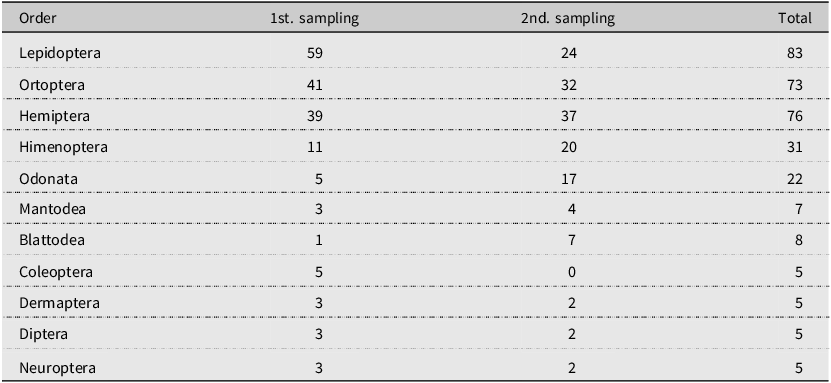
During the first and second sampling sessions, 320 specimens were collected. The first session yielded 173 individuals from 11 orders, while the second yielded 147 individuals from 10 orders (Table 1). Anatomical drawings of specimens were created, and some were used in posters made by the students and displayed to peers during the Entomo-Expo.
Orders collected in gardens and open areas at technical secondary school N° 10

Caring for an arthropod
Out of the seven teams tasked with caring for their arthropods, only one team was unsuccessful because their arthropod escaped. The species selected by the team included tarantulas, ant colonies, butterflies in their larval stage, and stink bugs.
Evaluation of the entomo-expo
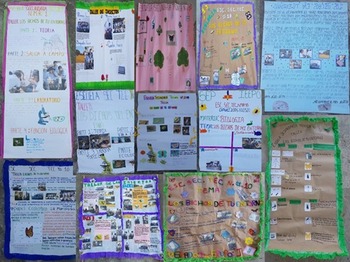
Both grades created a total of 23 posters, which varied in size. The dimensions of the posters ranged from 1.10 × 1.20 cm to 1.30 × 1.50 cm. Among the 23 posters presented, 51% of the content consisted of graphics and diagrams, while the remaining 49% was text. To assess the knowledge gained, the evaluators considered the student’s academic grade. Third-year students demonstrated a higher level of understanding, scoring 86.5%, compared to first-year students, who scored 65.8% (W = 183; P < 0.005; d = 1.73 [absolute value]; confidence interval 95% = 1.2, 2.26 [absolute values]).
At the Entomo-Expo, each report included a section on the ecological role of insects. Among these reports, 30% focused on the ecological roles of flies, cockroaches, ants, mantises, dragonflies, and grasshoppers. In addition, 26% addressed the ecological role of butterflies, 13% discussed the ecological role of bees, while 31% did not mention the ecological role of any insect (see Figures 2 and 3).
Posters from first-grade students.

Posters from third-grade students.

Final diagnostic evaluation
The workshop was associated with a general understanding of what constitutes an insect. The posed question was: “How do you differentiate an insect from any other animal?” A total of 12 answer categories were provided, with the most common being “By their morphology,” (Probability of responses showed significant differences among categories; X 2 = 398.81; df = NA; P = 0.0004998). Accounting for 59% of responses. This category included answers from all participants who accurately described or mentioned the distinguishing structures found in insects.
In contrast to the initial survey, when asked about their reactions upon seeing an insect, it was noticeable that, after the workshop, the response category “let it go” had the highest frequency, at 23.2%, Probability of responses showed significant differences among categories (X 2 = 93.446; df = NA; P = 0.0004998), and a wider range of responses were collected toward insects.
When asked if they would include insects in their diet, 55.4% responded “No”. Among those who stated they would not include insects, we identified 12 different reasons, leaving the two main perceptions: environmental and individual. In terms of environmental perception, 43.1% supported the idea that insects are living beings, understood their role in helping the planet, acknowledged that some species could become extinct, and recognised their place within the vegetation. In terms of individual perception, 35.9% of respondents mentioned caution, dislike, disgust, observations of insect feeding habits, perceptions of dirtiness, unfamiliarity, and the view that insects are strange.
Finally, in response to the question “Are insects important?” 77.6% of participants considered them significant. When asked about the importance or relationship of insects to them, 22 different response categories emerged. The most common response was “pollination” (Probability of responses showed significant differences among categories; X 2 = 369.64; df = NA; P = 0.0004998), which accounted for 39.2% of the answers (see Figure 4).
The importance of insects and the relationship between students and insects.

The alluvial diagrams presented in Figure 5a and 5b, derived from post-workshop surveys, illustrate students’ descriptive and behavioural responses to insects, specifically their descriptive language and emotional and behavioural reactions. Students predominantly used the specialised vocabulary introduced during the workshop when describing the insect. Their descriptions focused on the insect’s morphological characteristics and anatomical structures, reflecting the educational content delivered during the session. Regarding their changes in reported student behaviour were observed. There was a marked decrease in the tendency to kill the insect, along with an increase in expressions of positive emotions such as happiness and curiosity; the most common response changed to releasing the insect (Figure 5a). In contrast, third-year secondary school students (Figure 5b) demonstrated a tendency to use academic terminology, particularly when referencing anatomical structures. These students identified between 1 and 6 anatomical features of the insect, indicating reported engagement with the scientific content. Despite their use of academic language, this group still showed a tendency to kill the insect. Nevertheless, they also exhibited reactions such as amazement, curiosity, and a willingness to observe or preserve the insect.
Alluvial diagrams derived from post-workshop surveys with first (A) and third-year (B), secondary school students.

Students drawings after workshop
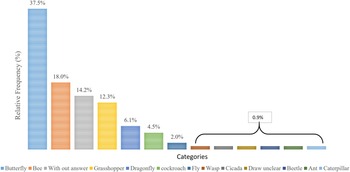
We identified 13 insect´s groups in drawings. The most common was the butterfly, followed by the bee. A common topic was pollination, as both insects were recognised by students as key contributors to this essential ecological process (Figure 6).
Draws categories after the workshop.

Discussion
This study employed insects as a didactic tool to implement an EE workshop, using insects present in the schoolyard to promote adolescents’ awareness of their local environment. The aim was to encourage reflection on local environmental issues and promote biodiversity conservation through direct engagement with organisms familiar to students’ everyday surroundings (Rodríguez-Casallas & Escobar, Reference Rodríguez-Casallas and Escobar2014). The workshop integrated theoretical components, outdoor activities, and practical exercises, employing both formal and non-formal education strategies and was associated with student engagement and comprehension of core biological and ecological concepts, including insect morphology, physiology, and ecological roles.
Responses to the pre-workshop questionnaire indicated that killing insects was the most common reaction among students when encountering them (>50%). Notably, fewer than 3% of the students reported doing so out of fear. In comparison, over 70% of the students justified their actions based on the perception that insects were dangerous and posed a health risk. However, after the workshop, students’ responses became more diverse, and the frequency of killing behaviour declined. These changes are consistent with a complex interplay among knowledge acquisition, behavioural outcomes, and reported changes in attitudes toward insect conservation. The persistence of some negative responses, particularly among third-grade students, highlights the complexity of translating conceptual understanding into action-oriented changes toward insects and suggests the need for further interventions to bridge the gap between knowledge and change in behaviour attitude (Ajzen, Reference Ajzen1991). However, modifying the general social reaction norm toward not killing these animal groups will imply a shift at the community level; killing insects (whether physically or chemically) is continually reinforced due to the persistence of vector-borne diseases (Gobierno del Estado de Oaxaca, 2025). In order to follow a different course of action, the EE workshop may represent an initial step toward creating new perspectives on the acquisition and the adoption of conservation-oriented behaviours, as well as sustained, age-appropriate interventions shaped by new knowledge, values and beliefs (Stern et al., Reference Stern, Dietz, Abel, Guagnano and Kalof1999).
Across grade levels, interest and participation in the theoretical sessions were sustained through complementary field work, collaborative activities, and hands-on experience. The final theoretical section focused on insects as disease vectors, a topic of particular relevance in the coastal region of Oaxaca, Mexico, where vector-borne diseases such as dengue, malaria, chikungunya, Zika, and chagas are prevalent (PAHO/WHO, S.F.). As a result, public health authorities in the region continuously implement vector control protocols and awareness campaigns to reduce primary transmission of disease. However, these efforts may also contribute to a generalised aversion toward insects, often leading to their indiscriminate extermination (Rodríguez-Casallas & Escobar, Reference Rodríguez-Casallas and Escobar2014). This context underscores the importance of EE initiatives that distinguish between disease vectors and the broader ecological role of this animal group. In this sense, EE can help transform perceptions rooted in fear or perceived risk into attitudes that support coexistence and reduce the tendency to indiscriminately kill all insects.
The practical activity involved collecting insects in the schoolyard areas, which played a central role in the EE. Before the activity, students’ knowledge of insects was assessed orally to ensure safe participation. Students showed particular interest in collecting Lepidoptera (butterflies), likely reflecting a preference for this group. They also demonstrated considerable effort in capturing specimens of the order Odonata (dragonflies and damselflies), despite the physical challenges posed by their flight. These activities involved physical engagement and coordination, contributing to a dynamic learning environment that integrates cognitive and motor skills. Similar results were obtained for Howe et al. (Reference Howe, Nguyen, O’Connor, Woodward, Clarke, Ducker, Dilger and Fagan-Jeffries2025) working with students from prep, primary and high school.
Through direct observation, specimen handling, and teamwork, students gained practical experience and reanalysed the importance of the surrounding environment. Laboratory-based preservation and mounting activities reinforced students’ understanding of insect morphology and diversity, and helped them successfully identify 11 arthropod orders. It is important to note that these activities emphasised experimental learning alongside classroom instruction, elements that have been shown to promote meaningful learning in EE contexts (Rodríguez-Casallas & Escobar, Reference Rodríguez-Casallas and Escobar2014). This ability to classify insects in detail is consistent with increased familiarity with insect diversity and morphology following participation in the activities (Howe et al., Reference Howe, Nguyen, O’Connor, Woodward, Clarke, Ducker, Dilger and Fagan-Jeffries2025; Rodríguez-Casallas & Escobar, Reference Rodríguez-Casallas and Escobar2014).
For the poster presentation, all students followed a similar format that combined text and visual elements; the aim was to provide a forum for students to communicate key concepts effectively. However, the age disparity between first and third-grade alums was a notable factor influencing students’ fluency and participation. First-grade students tended to be more reserved and experienced greater difficulty in expressing their knowledge. In contrast, third-grade students produced larger posters with more text and visual support and demonstrated fluency in oral presentations. Overall, the EE activity encouraged active participation, peer feedback, and collaborative learning across presenters.
Students also expressed a strong interest in learning about insect preservation and mounting techniques, and handled specimens carefully during mounting procedures (Figure 7).
Insect mounting by third-year students (blur image).

The processes of insect mounting and poster preparation reinforced student knowledge through social interaction and public presentation of the Entomo-Expo. This culminating event formalised and communicated student learning to a broader audience. During the Entomo-Expo, field-based activities, including insect collection in schoolyard habitats, played a central role in the EE activity. Students actively engage with one another as they present the materials they developed throughout the course. This included the entomological display boxes, the written reports, and the presentation of their posters. They also shared their knowledge of insect biology with attendees at the event, demonstrating enthusiasm and keen interest in the topics discussed. It was also clear that students showed an understanding and concern for local habitat and insect conservation. These outcomes are consistent with EE’s objectives, which emphasise the importance of creating materials that support learning. This approach facilitates knowledge sharing, develops important skills, and fosters curiosity while promoting environmental awareness and informed interest. Ultimately, this engagement may support positive actions aimed at environmental conservation and the preservation of ecosystems (UNESCO, 1997).
The preparation of written reports and illustrative drawings indicated consolidation of observational skills and conceptual knowledge. By the end of this stage, students have produced a detailed report on the observed insect structures and successfully illustrated their acquired knowledge (Figure 8).
Insect drawings showing their anatomic structures.

An additional activity proposed by third-grade students involved caring for an arthropod as part of a long, non-formal learning experience. Importantly, first-grade students were excluded from the arthropod care activity. Although caring activity was not originally planned and lacked a predetermined duration, it allows students to apply theoretical knowledge in a practical context. Similar initiatives at the international level include providing shelters or suitable habitats for insects during vulnerable periods such as winter months (Goulson et al., Reference Goulson, Hughes and Derwent2002). As this initiative originated by the students, it is consistent with a shift in perception and increased willingness to consider insects as organism worthy of attention and care. We believe that in our results, the process of caring may be associated with some of the increase in behavioural responses observed in third-grade students.
Analysis of questionnaire responses enables identification of areas where learning objectives were met and those that require further reinforcement. Employing a structured yet flexible teaching approach allowed for the assessment of students’ understanding of EE concepts and highlighted the value of integrating outdoor activities with classroom instructions. In this case study, insects provided a simple, cost-effective, and accessible means to teach ecological concepts and foster environmental awareness (Martínez-Miguélez, Reference Martínez-Miguélez1998). Additionally, organising questionnaire responses helped identify key elements that were either adequately addressed or needed further attention.
In regions affected by insect-borne diseases, the use of insects in EE can foster more nuanced perceptions of environmental responsibility (Eslava-Zapata et al., Reference Eslava-Zapata, Zambrano-Vivas, Chacón-Guerrero, González-Júnior and Martínez-Nieto2018). While theoretical instruction remains essential, the inclusion of experimental and outdoor learning activities enhances engagement, supports deeper understanding, and is associated with the development of competencies in autonomy, collaboration, and environmental stewardship (Eckes et al., Reference Eckes, Großmann and Wilde2018). Integrating formal and non-formal educational approaches thus offers a dynamic perspective for EE, especially in a rural context where human communities and natural ecosystems should coexist harmoniously.
This study is based on a pre–post-design without a control group, which limits the ability to directly attribute observed changes to the intervention. Changes in knowledge, attitudes, and reported behaviours may be influenced by external factors such as maturation, prior exposure, or concurrent learning experiences. Additionally, the use of self-reported questionnaire data may introduce response biases, including social desirability effects. Therefore, findings should be interpreted as associations and patterns of change over time rather than as evidence of causal effects. Future studies incorporating control groups or longitudinal designs would strengthen causal inference.
Supplementary material
To view supplementary material for this article, please visit https://doi.org/10.1017/aee.2026.10196
Acknowledgements
The authors would like to express their sincere gratitude to the staff of the study’s secondary school (Technical Secondary School No. 10) for their collaboration and discussions during all workshop.
Financial support
This research received no specific grant from any funding agency, commercial, or not-for-profit sectors.
Ethical statement
All students participating in the entomology workshop were informed about the nature, purpose, and activities involved. Participation was completely voluntary. The institution acknowledged the academic and educational value of the workshop and approved its implementation within the school setting. All activities were conducted in accordance with ethical standards for educational research and practice.
Author Biographies
Victor Aguirre-Hidalgo I am a senior professor-researcher at the University of Sierra Juárez (UNSIJ). I hold a PhD from the University of Plymouth, UK. I have taught undergraduate and postgraduate students and supervised undergraduate and postgraduate theses in Biology, Natural Sciences, and Forestry Engineering. My research interests include database analysis, population dynamics, education, and social participatory systems. I have written research articles in education, herpetology, and forestry systems, and divulgation articles for non-professional audiences, and I have also participated in the editing of books and book chapters.
Ricardo Clark-Tapia I am a Senior Researcher at the Universidad de la Sierra Juárez. I hold a PhD in Science from the Instituto de Ecología at UNAM. My research focuses on ecology at different levels of organisation, with an emphasis on population ecology, communities, and landscape ecology, as well as geodiversity, genetics, and education. I have published scientific articles as an author or co-author in various national and international journals, books, and book chapters. I have contributions to human resource development through teaching and supervising social service projects, research internships, and undergraduate and graduate theses.
Dhipnaidy Quiroz-Barrita I hold a Bachelor’s in Biology from the Universidad de la Sierra Juárez. I am currently working as a biology teacher with secondary school students. I like implementing participatory processes during my teaching sessions.
Florentino Mendez-Gijon I am a professor-researcher. I hold a PhD in Innovation in Educational Technology. Since 2010, I have been a professor-researcher at Universidad de la Sierra Juárez and have also been teaching graduate-level courses at Universidad Lasalle Oaxaca. In 2015, I became a certified instructor for Cisco Systems’ NetAcad Academy, teaching courses such as IT Essentials, CCNA Routing & Switching, CCNA Security, and CyberOps Associate. Additionally, since 2016, I have worked as a Virtual Advisor for Prepa en Línea SEP. My primary areas of interest include Computer Science and technology education.
Cecilia Alfonso-Corrado I hold a Bachelor’s degree in Biology from the Universidad Autónoma de Aguascalientes and a PhD from the Instituto de Ecología, UNAM. I am a full-time research professor at the Universidad de la Sierra Juárez, Oaxaca, where I have been working on research projects on population genetics, ecology, and conservation biology of tropical mountain ecosystems and cloud forests. My work has been published in numerous scientific journals, books, and book chapters. I also work with undergraduate and master’s students.
Miguel Á. García-García I hold a PhD in Conservation and Use of Natural Resources at CIIDIR Unidad Oaxaca, IPN. Specialist in Systematics, Taxonomy and Ecology of spider communities. I am a full-time research professor at the Universidad de la Sierra Juárez. I am also an active member of the American Arachnological Society, the International Arachnological Society, the Linnean Society and the Mexican Society of Entomology. I have published research articles in national and international journals. I have teaching experience from elementary school to university level.





 Open access

