Although the energy required to synthesise protein and fat has been demonstrated in rats(Reference Pullar and Webster1) and humans(Reference Roberts and Young2,Reference Hall3) , the energy required to synthesise lean tissue (LT; e.g. skeletal muscle, internal organs and bone) and adipose tissue (AT; e.g. abdominal and subcutaneous adipose tissue) is obscure. Elucidation of the energy required for LT synthesis is important for individuals who aim to increase their skeletal muscle mass, such as athletes. Elucidating the energy required for AT synthesis may have implications for nutritional therapy for individuals such as anorexia nervosa and malnourished. In addition, AT not only stores fat but also has endocrine and immune functions(Reference Speakman and Hall4).
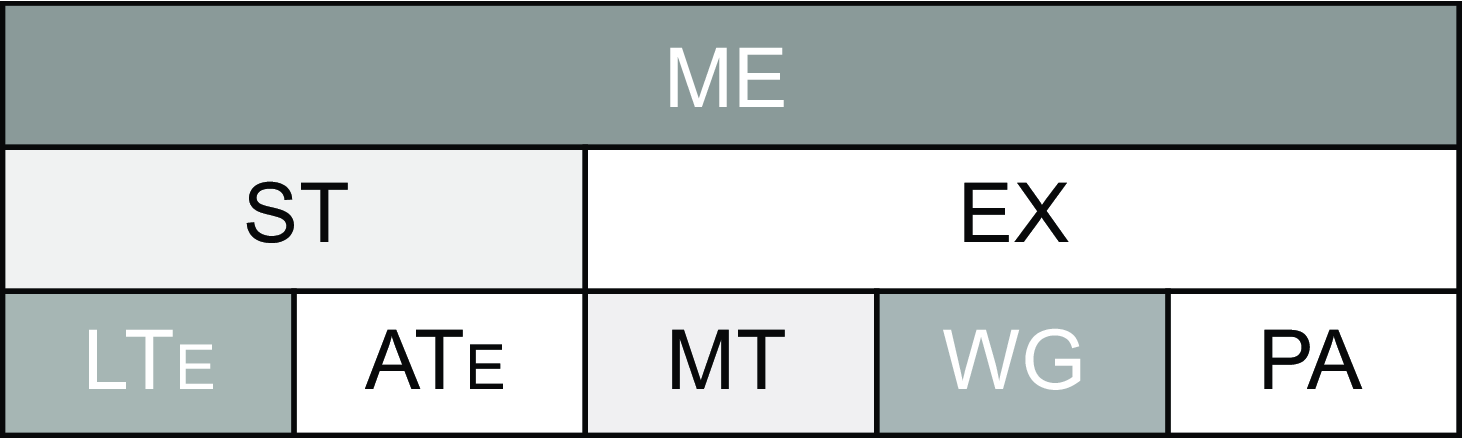
Spady et al. showed that the energy stored in the body is calculated by measuring the difference between energy intake (metabolisable energy, ME) and the energy expenditure (EX)(Reference Spady, Payne and Picou5). EX is the sum of the energy required to maintain the body (MT), for the synthesis of newly accumulated tissues and physical activity (PA). Thus, the energy required to synthesise newly accumulated tissue, that is the energy required for body weight (BW) gain (WG) is calculated by subtracting MT and PA from EX. During BW gain, energy is stored in the LT and AT. The energy stored in LT (ΔLTE) and AT (ΔATE) are calculated by accreted LT (ΔLT) and AT (ΔAT) multiplied by their respective energy densities of 5·23 kJ/g LT and 30·96 kJ/g AT(Reference Sekiguchi, Kitaguchi and Kondo6). The sum of the energy stored in these tissues is the energy stored in the body (ST), which is the difference between ME and EX. The relationship of these energies is shown in Fig. 1.
Theoretical distribution of ME. ME, metabolisable energy; ST, stored energy; EX, expended energy; LTE, energy stored in the lean tissue; ATE, energy stored in the adipose tissue; MT, energy for body maintenance; WG, energy for body weight gain; PA, energy for physical activity.

The sum of the weights of ΔLT and ΔAT is ΔBW. Thus, ΔLT and ΔAT are calculated using the following simultaneous equations(Reference Sekiguchi, Kitaguchi and Kondo6,Reference Inoue, Maeda and Fujii7) :
 $$\Delta {\rm{LT }}\ \left( {\rm{g}} \right) + \Delta {\rm{AT}}\ \left( {\rm{g}} \right) = \Delta {\rm{BW }}\ \left( {\rm{g}} \right)$$
 $$\Delta {\rm{LT }}\ \left( {\rm{g}} \right) \times 5.23\ {\rm{ }}\left( {{\rm{kJ}}/{\rm{g}}} \right) + \Delta {\rm{AT}}\ \left( {\rm{g}} \right) \times 30.96\ {\rm{ }}\left( {{\rm{kJ}}/{\rm{g}}} \right) = {\rm{ST}}\ \left( {{\rm{kcal}}} \right)$$
Theoretically, the energy at the point at which ΔLT/ΔBW reaches 100 % on the regression line, which indicates the relationship between ΔLT/ΔBW and WG, is considered to be the energy expended to synthesise LT. Conversely, the energy at the point at which ΔLT/ΔBW reaches 0 % is considered to be the energy expended to synthesise AT.
To determine this relationship, it was necessary to prepare the animals with different ΔLT/ΔBW values. These animals can be prepared by feeding them diets containing different ratios of protein, fat and carbohydrates(Reference Dulloo and Girardier8). It has been shown that the energy required for protein synthesis is greater than that for fat(Reference Pullar and Webster1–Reference Hall3). Bray et al. (Reference Bray, Smith and de Jonge9) showed that resting energy expenditure and body protein (lean body mass) increased with a high-protein diet in humans. This greater resting energy expenditure may be associated with the greater energy expended for protein synthesis. It can be assumed that the energy required to synthesise LT is greater than that required to synthesise AT because the synthesis of proteins requires a large amount of energy. Thus, it is considered that WG differs in animals with different ΔLT/ΔBW values.
Therefore, we investigated the effects of standard, high-protein and high-fat diets on ΔLT/ΔBW and WG in growing rats to determine the energy required for the synthesis of LT and AT.
Materials and methods
Animals and outline of the procedure
Twenty-seven 5-week-old male Sprague-Dawley rats were obtained from CLEA Japan. The rats were divided into groups fed a standard diet (N, n 12), high-protein diet (HP, n 8) and high-fat diet (HF, n 7) and were individually housed in metabolic chambers. The rats were fed the respective diets for 7 d prior to the study to acclimatise them to the diets and metabolic chambers. Water and diet were provided ad libitum. Six rats in the N group were euthanised after the 7-d acclimatisation period to determine the weight of the gastrointestinal contents, which was used to calculate the BW gain, as described below. The remaining rats were used to measure EX for 4 weeks as described below. Water and diet were provided ad libitum. BW, food intake and EX were measured daily. The temperature of the animal room was 23 ± 1°C; the dark period was from 08.00 to 20.00, and the light period was from 20.00 to 08.00.
This study was conducted in accordance with the Guidelines for Proper Conduct of Animal Experiments of the Science Council of Japan and was approved by the Experimental Animal Committee of the Research Integrity Committee of Osaka University of Health and Sport Sciences (approval numbers 21-2 and 21-4).
Diet
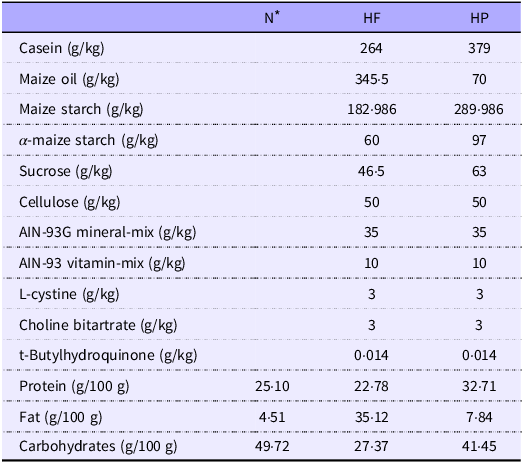
Table 1 shows the composition of the diets used. A commercial standard diet CE-2 (CLEA Japan) was used for the N group.
Dietary composition

N, normal; HF, high fat; HP, high protein.
* Information such as the raw materials and content of vitamins and minerals are available on the manufacturer’s (CLEA Japan) website (https://www.clea-japan.com/en/products/general_diet/item_d0030).
Not all ingested energy is absorbed or metabolised. In the present study, we used the energy metabolised in the body. Thus, we used ME as energy intake for this study. The ME of the diets used in this study was determined based on reports by MaCraken(Reference McCracken10) and Raman et al. (Reference Raman, Baum and Colman11), and the values have been reported previously(Reference Okamura and Maeda12). Briefly, 5–6 rats were individually housed in metabolic cages and fed each diet for 7 d. For the next 7 d, the rats were fed the same diet ad libitum, food intake was measured, and all faeces and urine were collected. The energy content of each diet, faeces and urine was measured using bomb calorimetry (Japan Food Research Center). The faeces were freeze-dried, and urine was dried in an oven at 60°C(Reference Król and Speakman13) to avoid loss of short-chain fatty acids (SCFA) prior to bomb calorimetry analysis, whereas undried specimens were used for diet analysis. Samples weighing approximately 0·4–0·5 g were used. ME was calculated by subtracting the energy excreted into the faeces and urine from the energy intake for the last 7 d. ME was 1323 kJ/100 g for the N diet, 2248 kJ/100 g for the HF diet and 1675 kJ/100 g for the HP diet.
Measurement of energy expenditure
EX was measured using an open-circuit system(Reference Lim, Murakami and Lee14) in rats individually housed in metabolic chambers 22 cm × 34 cm ×14 cm (width × depth × height). The chamber was ventilated at 2100–4100 ml/min depending on the rat BW and oxygen consumption. During the experiment, a portion of the ventilated air (150 ml/min) was collected in a 250 L Douglas bag (Yagami) for 23 h and 45 min, and the oxygen concentration was measured using a portable gas monitor (VO2000, S & ME.). Oxygen consumption was calculated by multiplying the difference in oxygen concentration between the room air and sampled air by the ventilation rate of the chamber, and the EX was calculated as 20·08 kJ/l oxygen. The EX was converted per 24 h.
Sampling of organs and tissues, and whole-body biochemical analyses
The rats were euthanised under isoflurane anesthesia. Internal organs (heart, liver, kidneys, adrenal glands, spleen, pancreas and intestines), skeletal muscles (flexor hallucis longus, soleus, gastrocnemius and plantaris) and AT (perirenal, retroperitoneal, epididymal and mesenteric) were collected and weighed. After removing the intestinal contents, the intestines were weighed. The collected blood, internal organs, skeletal muscles and AT were returned to the abdominal cavity of the carcass and frozen for biochemical analysis.
The carcass was dried in an oven at 60°C(Reference Król and Speakman13) to avoid loss of SCFA. The dried samples were pulverised into a powder using a mill (Vita-Max Absolute Blender, Osaka Chemical Co., Ltd). The total lipid content was determined using the Folch method. Approximately 1 g of the sample was homogenised in chloroform: methanol (2:1), the chloroform layer was dried and the weight of the residue was measured. Protein content was calculated as the nitrogen content of the sample, which was determined using the Kjeldahl method multiplied by 6·25. For glycogen, approximately 100 mg of the sample was decomposed with 30 % potassium hydroxide, ethanol was added to precipitate the glycogen, which was then dissolved in an appropriate amount of water and coloured using the phenol-sulphuric acid method, and the absorbance was measured(Reference Lo, Russell and Taylor15).
Theoretical distribution of metabolisable energy
Figure 1 shows the theoretical distribution of ME. Because the ME is expended or stored, the ST was calculated as the difference between the ME and EX.
EX consists of MT, WG and PA. In the present study, PA was considered minimal because rats were in the chamber; thus, WG was calculated by subtracting only MT from EX. In humans, MT is considered to be 1·5 × basal metabolic rate (BMR)(Reference Spady, Payne and Picou5). In the present study, as the rats were in the chamber, their PA was assumed to be minimal, as mentioned above. However, no data are available for the appropriate factor to multiply BMR to obtain the energy required to maintain the body in sedentary rats. According to Gleeson et al. (Reference Gleeson, Brown and Waring16) the lowest EX of the sedentary rats during the resting period was 1·66 kJ/kg/h which was considered to be their BMR, and the EX during the rats eating (2·88 kJ/kg/h) was 1·7 × the lowest EX, and the EX during the active period while not eating (1·95 kJ/kg/h) was 1·2 × the lowest EX. The average of 1·7 and 1·2 was 1·45. In the present study, the rats had ad libitum access to food. Therefore, we set the MT as 1·5 × estimated BMR(Reference Terpstra17).
Calculation for lean tissue and adipose tissue deposition
When animals grow, the sum of the increases in the weight of LT (ΔLT) and AT (ΔAT) is the BW gain (ΔBW). In addition, energy is stored in either LT or AT. Therefore, the energy stored in the body (ST) is the sum of the energy stored in LT (LTE) and AT (ATE). Thus, ΔLT and ΔAT can be calculated using the following simultaneous equation(Reference Sekiguchi, Kitaguchi and Kondo6,Reference Inoue, Maeda and Fujii7) :
 $$\Delta {\rm{LT }}\ \left( {\rm{g}} \right) + \Delta {\rm{AT}}\ \left( {\rm{g}} \right) = \Delta {\rm{BW }}\ \left( {\rm{g}} \right)$$
 $$\Delta {\rm{LT }}\ \left( {\rm{g}} \right) \times 5.23\ {\rm{ }}\left( {{\rm{kJ}}/{\rm{g}}} \right) + \Delta {\rm{AT}}\ \left( {\rm{g}} \right) \times 30.96\ {\rm{ }}\left( {{\rm{kJ}}/{\rm{g}}} \right) = {\rm{ST}}\ \left( {{\rm{kJ}}} \right)$$
Equation 1 indicates that the sum of the increases in LT and AT is the BW gain and Equation 2 indicates that the sum of LTE and ATE is the energy stored in the body.
The LTE and ATE were calculated by multiplying the energy density of each tissue by the accreted tissue weight obtained using this simultaneous equation.
The BW without gastrointestinal content weight was used to calculate the BW gain in Equation 1 because the gastrointestinal content was measured as BW, but this was not the body. The gastrointestinal content weight used for this calculation was obtained by sampling organs and tissues, as described above. The BW without the gastrointestinal contents of the rats at the start of the study was assumed to be 89·45 % of their BW because the gastrointestinal content accounted for 10·55 % (se 0·78) of the BW of the rats that were euthanised before starting the study.
Statistics
The sample size was calculated from a statistical power (1 − β) of 0·8, α error of 0·05 and a significant minimum effect size (f) of 1·0. As there was no available information regarding changes in the energy required for BW gain due to differences in diets, we set the effect size to 1 to find a 1 sd difference. This power calculation determined that a minimum sample size of five animals was required to detect a statistically significant difference in the energy required for BW gain using G * Power 3·1. One-way ANOVA was used for comparisons among groups, and the Bonferroni test was used as a post hoc test (IBM SPSS Statistics version 27.0.1.0). Pearson’s correlation was used to determine the relationship between ΔLT/ΔBW and the energy required for BW gain, as the data passed the Shapiro–Wilk test. Statistical significance was set at P < 0·05.
Results
Table 2 shows that the BW gain in the HF was the highest, but not significantly differ from the HP group.
Body weight (Mean values with their standard errors)

N, normal; HF, high fat; HP, high protein.
Values with different letters differ significantly.
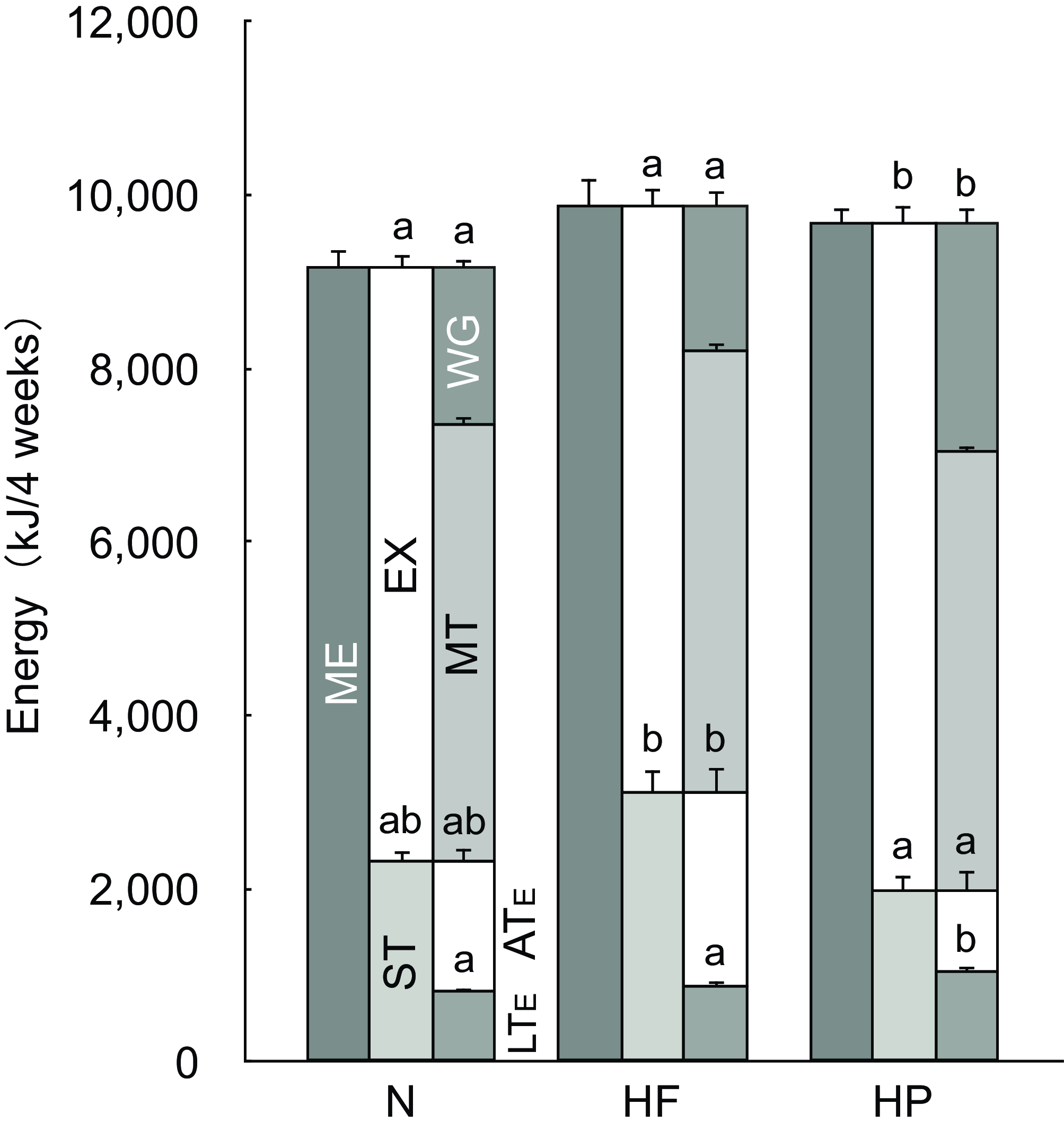
Figure 2 and online Supplementary Table S1 show the distribution of ME. The EX, WG and LTE were higher in the HP group than in the N and HF groups. The ST and ATE were the greatest in the HF group, which did not differ from that of the N group.
Distribution of ME. Means and se. Values with different letters differed significantly. ME, metabolisable energy; ST, stored energy; EX, expended energy; MT, energy for body maintenance; WG, energy for body weight gain; LTE, energy stored in the lean tissue; ATE, energy stored in the adipose tissue; N, normal; HF, high fat; HP, high protein.

The energy density per gram of accumulated tissue in the HF group (12·9 kJ/g (se 0·8)) was significantly higher than that in the HP group (8·6 kJ kcal/g (se 0·8), P = 0·003, d = 1·813), whereas that in the N group (11·3 kJ /g (se 0·5)) was not different from either the HF (P = 0·620, d = 0·795) or HP groups (P = 0·087, d = 1·355).
Table 3 shows the increases in the weights of LT (ΔLT) and AT (ΔAT). ΔLT was significantly greater in the HP group than in the other two groups, whereas ΔAT was the greatest in the HF group, which did not differ from that in the N group. The ratio of ΔLT to the increase in BW (ΔLT/ΔBW) was the highest in the HP group but was not significantly different from that in the N group. The ratio of ΔAT to the increase in BW (ΔAT/ΔBW) was higher in the HF group than that in the HP group, whereas the ratio in the N group did not differ from that in the HF or HP groups.
Accretion of LT and AT (Mean values with their standard errors)

LT, lean tissue; AT, adipose tissue; N, normal; HF, high fat; HP, high protein.
Values with different letters indicate significant differences. The Bonferroni test was used as a post hoc test.
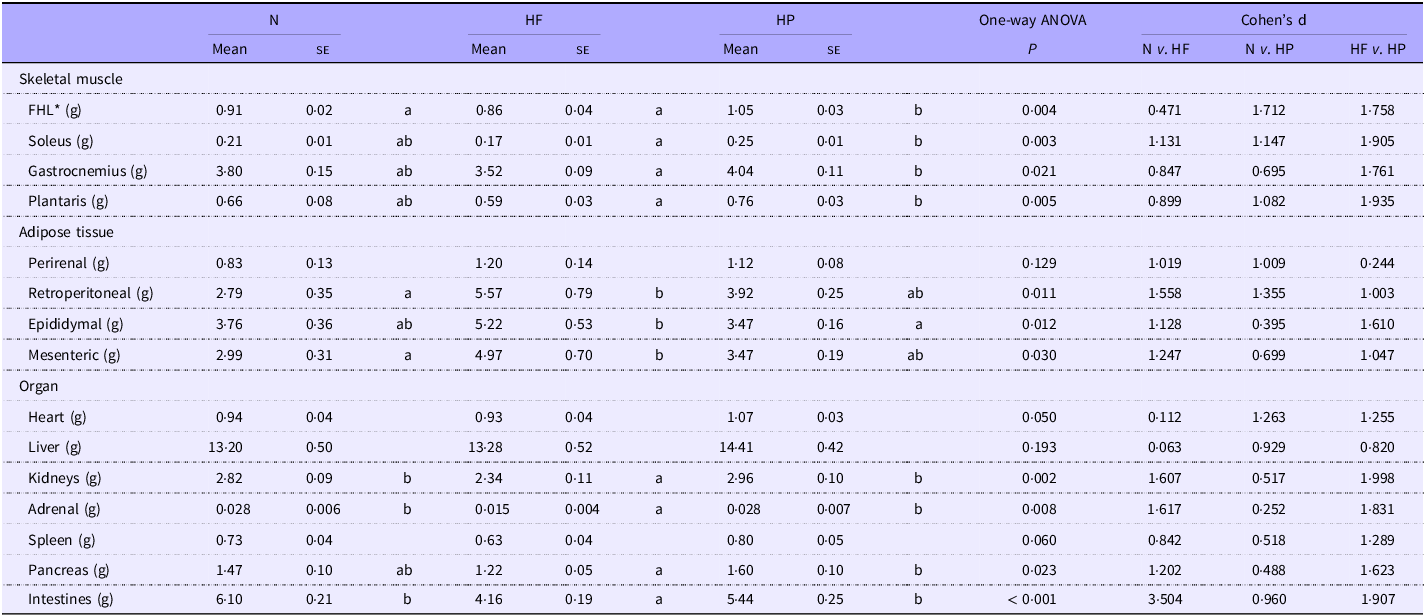
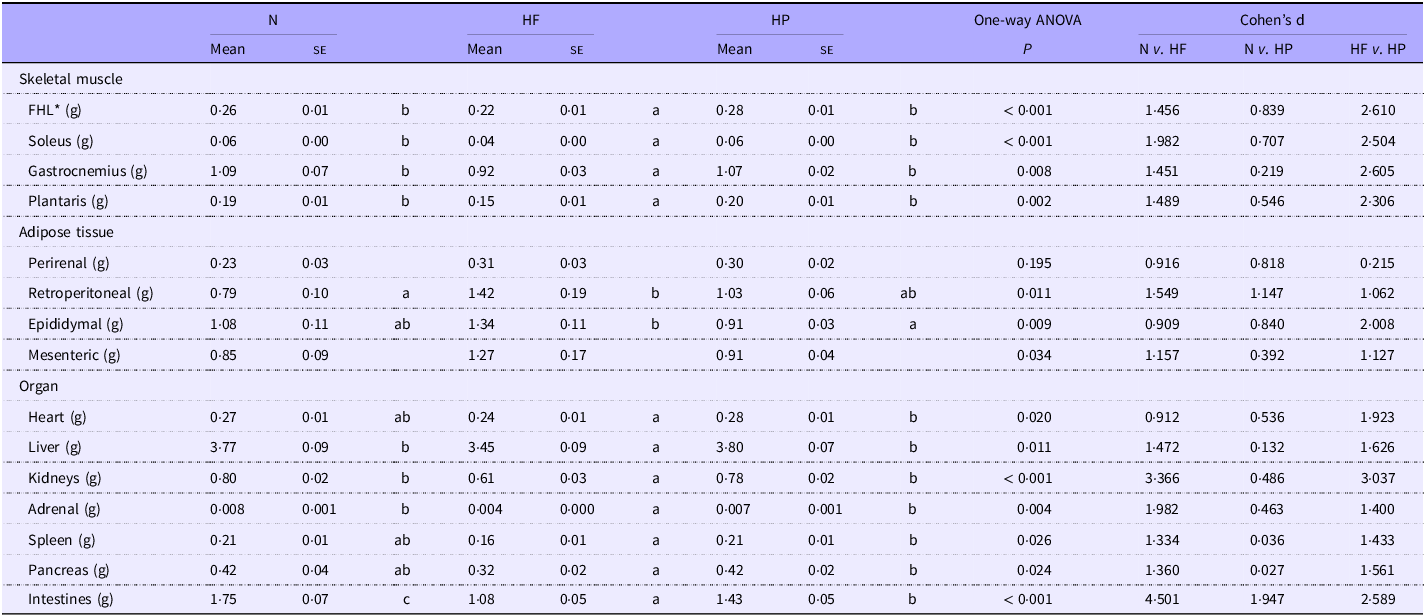
Table 4 shows organ and tissue weights. The skeletal muscle weight was significantly greater in the HP group than in the HF group. There was no significant difference in the skeletal muscle weight between the HP and the N group except for FHL. The AT weight except for perirenal was the highest in the HF group than the other groups, while the weight of retroperitoneal and mesenteric did not significantly differ from the HP group and the weight of epididymal did not differ from the N group. The weights of the kidneys, adrenal, pancreas and intestines were the lowest in the HF group, but the pancreas weight was not significantly different between the N group.
Organ and tissue weight (Mean values with their standard errors)

N, normal; HF, high fat; HP, high protein.
Values with different letters indicate significant differences. Bonferroni test was used as a post hoc test.
*FHL, flexor hallucis longus.
Table 5 shows the organ and tissue weights per 100 g of BW. The skeletal muscle weight was the lowest in the HF group. The weights of the retroperitoneal and epididymal AT were the highest in the HF group. Retroperitoneal AT did not differ between the HF and HP groups, and epididymal AT did not differ between the HF and N groups. The internal organ weights were lowest in the HF group, but the weights of the heart, spleen and pancreas did not differ from those in the N group.
Organ and tissue weight per 100 g of body weight (Mean values with their standard errors)

N, normal; HF, high fat; HP, high protein.
Values with different letters indicate significant differences. Bonferroni test was used as a post hoc test.
*FHL, flexor hallucis longus.
Table 6 shows the whole-body protein, total lipid and glycogen contents. The protein content did not differ among the groups, whereas the total lipid content was the highest in the HF group. The glycogen content was higher in the HP group than in the other groups.
Protein, total lipid and glycogen contents in the whole body (Mean values with their standard errors)

N, normal; HF, high fat; HP, high protein.
Values with different letters indicate significant differences. The Bonferroni test was used as a post hoc test.
Table 7 shows the whole-body protein, total lipid and glycogen contents per 100 g of BW. The total lipid content was the highest in the HF group.
Weight of protein, total lipid and glycogen in 100 g of the whole-body components (Mean values with their standard errors)

N, normal; HF, high fat; HP, high protein.
Values with different letters indicate significant differences. Bonferroni test was used as a post hoc test.
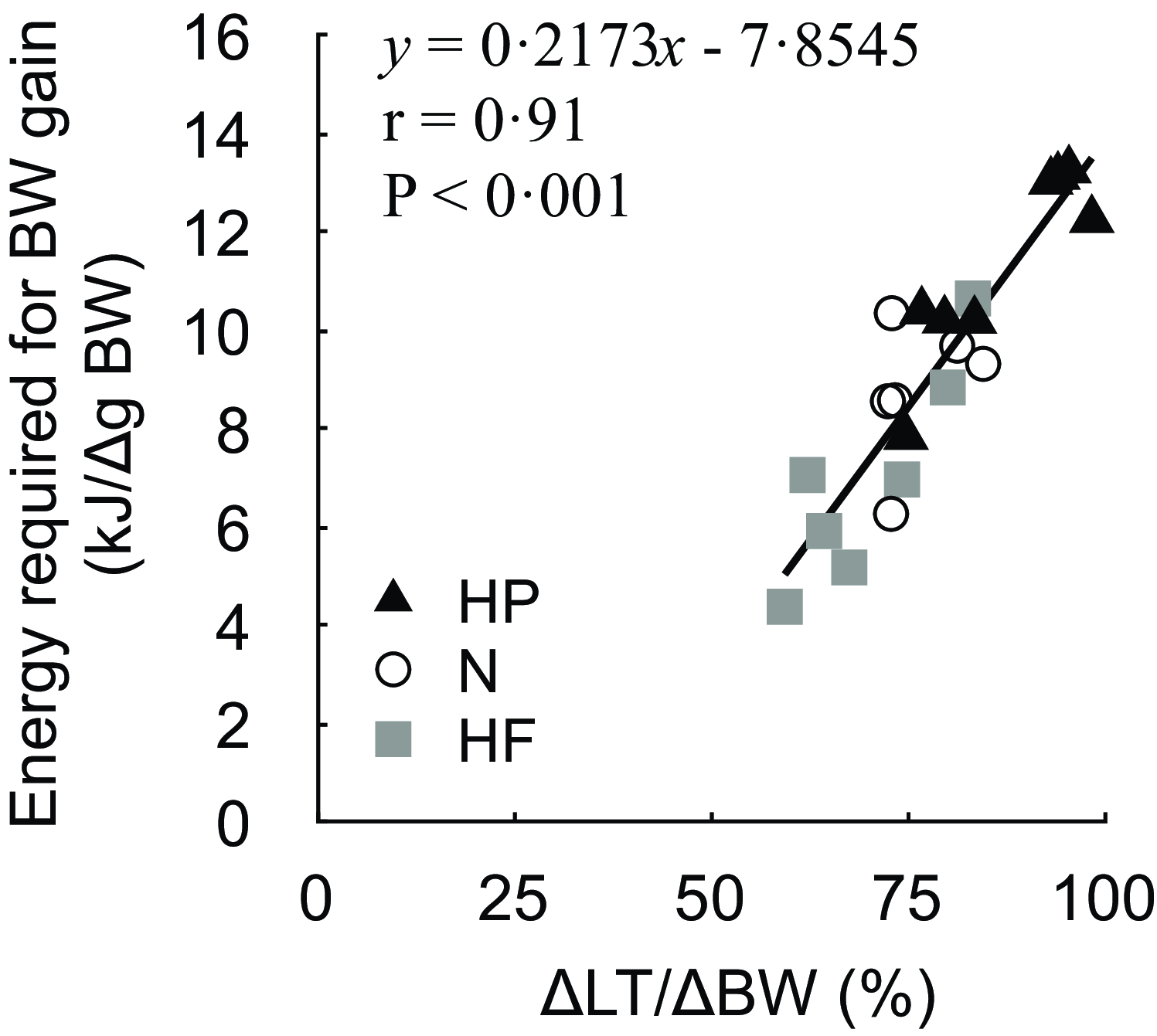
Figure 3 shows the positive correlation between ΔLT/ΔBW and the energy required to gain 1 g of BW, which was calculated by dividing ΔBW by WG. The energy required to gain 1 g of BW was significantly higher in the HP group (11·3 kJ/g (se 0·6)) than in the HF group (7·0 kJ/g (se 0·8), P < 0·01, d = 2·103), while there was no difference between the N group (8·8 kJ/g (se 0·5)) and the HF group (P = 0·315, d = 0·966) or HP group (P = 0·074, d = 1·442). The regression line demonstrated that the energy required to gain 1 g of BW at the point of 100 % on ΔLT/ΔBW was 13·9 kJ/g, while the energy required to gain 1 g of BW at the point of 0 % on ΔLT/ΔBW was −7·9 kJ/g.
Relationship between ΔLT/ΔBW and the energy required for body weight gain. LT, lean tissue; BW, body weight; N, normal; HF, high fat; HP, high protein.

Discussion
In this study, no differences in ME were observed between the groups, but BW gain was the highest in the HF group among the groups. Thermic effect of food (TEF) of protein is greater than that of carbohydrates, which is greater than that of fat(Reference Hall and Guo18). The higher BW gain in the HF group was presumably due to the smaller TEF of the HF diet, which resulted in less EX and more ST. This greater ST was thought to be associated with the higher BW gain in the HF group relative to the N group. In the HP group, it was assumed that the TEF of the HP diet was higher than that of the other diets. Therefore, the ST may be small in the HP group. However, LT accretion in the HP group was greater than in the other two groups. Because the energy density of LT is lower than that of AT, LT can accumulate with less ST. Therefore, it is considered that the increase in the BW of the HP group was not smaller than that of the other groups. The increase in LT was greatest in the HP diet, and the increase in AT was greatest in the HF diet. The AT increase accounted for 13–30 % of BW gain, while 47–72 % of the energy stored in the body was stored in AT. Thus, the accumulation of LT and AT differed among the groups fed different diets, whereas a large proportion of energy was stored in the AT, even though the weight increase in the AT was not very large.
Energy is required for several metabolic pathways(Reference Hall and Guo18). Major macronutrient fluxes such as gluconeogenesis, de novo lipogenesis, triacylglycerol (TAG) synthesis and protein turnover require energy, and these flux rates can be influenced by both the energy content of the diet and its composition(Reference Hall and Guo18). In the present study, the amount of energy required for BW gain differed depending on diet. It was higher in the HP diet group than in the N and HF diet groups. When TAG accumulates in AT, metabolic processes differ depending on the TAG substrate. Regarding carbohydrates, de novo lipogenesis is involved in TAG deposition. In the case of proteins, deamination and urea synthesis are involved, in addition to de novo lipogenesis. It is considered that the more metabolic processes involved in accumulating TAG, the more energy is expended. It is suggested that the energy expended to accumulate TAG was greater in the HP diet than in the other diets. Ingested amino acids are utilised for body protein synthesis, and proteins accumulate in the LT, which also requires energy. The amount of amino acids ingested during the study, as estimated by the ME and protein contents of the diets was 140·9 g for the N group, 94·0 g for the HF group and 175·7 g for the HP group. In addition, the accretion of LT was the greatest in the HP diet group. It is suggested that the energy expended to accumulate protein in the body is greater in the HP diet than in the other diets. Therefore, it seems reasonable that the energy required for BW gain in the HP diet group was highest among the three groups.
A positive correlation was observed between ΔLT/ΔBW and energy required for BW gain. It is considered that the energy used for weight gain when ΔLT/ΔBW is 100 % is the energy required for the synthesis of LT, which was 13·9 kJ/g in this study. In other reports of ours, the energy required to synthesise LT was 12·2 kJ/g(Reference Sekiguchi, Kitaguchi and Kondo6) and 12·6 kJ/g(Reference Inoue, Maeda and Fujii7), which are comparable to the energy observed in the present study. To our knowledge, no other studies have reported the energy required to synthesise LT. To increase LT, it is considered rational to add the energy required for LT synthesis and the energy accumulated in the LT. The energy density of LT is 5·2 kJ/g. Therefore, the additional energy intake required to increase LT was estimated to be approximately19 kJ/g. However, the results of the present study could not elucidate the energy required for AT synthesis. Sekiguchi et al. (Reference Sekiguchi, Kitaguchi and Kondo6) reported that the energy required for AT synthesis was 4·6 kJ/g, and that the energy required to accumulate AT, including the energy stored in AT, was approximately 35·6 kJ/g. In their study, the rats with smaller ΔLT/ΔBW were included than the rats in the present study; therefore, the regression curve was different from that in the present study, and a positive value was obtained when ΔLT/ΔBW = 0. Rats with smaller ΔLT/ΔBW are necessary to determine the energy required for AT synthesis.
In this study, growing rats were used. Inoue et al. (Reference Inoue, Maeda and Fujii7) reported that in a 2-week study that used rats of 4, 7, 9 and 14 weeks of age, the increase in AT was most of or more than the BW gain at 9 and 14 weeks of age, and some rats of 14 weeks of age showed a decrease in LT. In the present study, it was necessary to examine rats at an age when LT was increasing. Additionally, weight gain was small in 9- and 14-week-old rats. We considered it better to conduct this study during a period of large weight gain for the calculation. Therefore, 6-week-old rats were used in this study.
As discussed below, the values obtained in the present study may vary with age but may not differ significantly among species. When athletes attempt to increase their BW, their aim is to increase muscle mass (which accounts for a large part of the LT) without increasing the AT. To do this, they increase their energy intake and perform resistance exercise training. Garthe et al. (Reference Garthe, Raastad and Refsnes19) reported that increasing energy intake by approximately 2100 kJ per d and adding training to athletes for 8–12 weeks resulted in a 2·7 kg increase in BW with a 1·7 kg increase in fat-free mass and a 1·1 kg increase in fat mass. Miyauchi et al. (Reference Miyauchi, Oshima and Asaka20) showed that when male college American football players increased their daily energy intake by 2100 to 4200 kJ and performed power training for 1 year, they gained 9·7 kg in BW, with an fat-free mass of 5·2 kg and an fat mass of 4·5 kg. When calculating the energy accumulated in the body from the increase in fat-free mass and fat mass, and the energy density of these components, approximately 80 % of the accumulated energy was stored in the fat mass. In addition, the energy density of skeletal muscle is 5200 kJ/kg(Reference Sekiguchi, Kitaguchi and Kondo6,Reference Inoue, Maeda and Fujii7) . Therefore, when 1 kg of skeletal muscle is accumulated, 5200 kJ/kg of energy should be accumulated. However, skeletal muscle mass does not increase by 1 kg within a few days. Therefore, the added energy intakes in these studies may have been too high.
The present study has several limitations. The energy density of LT in the equation used in this study does not consider the energy density of the bone. In addition, energy is required for bone synthesis, which is particularly important during the growth period. However, to the best of our knowledge, this energy is not clear, and we are unable to describe this energy from the data of the present study. Rats are known to be coprophagous. In the experiments performed to measure oxygen consumption, we noticed that the amount of faeces was small or that faecal matter was sometimes not seen in the chamber when the rats were fasted or fed restricted diets. In the present study, there was a normal amount of faeces in the chamber. Therefore, the rats might have eaten their faeces, although it was assumed that the amount was not large. Regarding the influence of different animal species, it has been shown that the energy required for protein synthesis does not markedly different between different species(Reference Welle and Nair21–Reference Barry, Davis and Hughson23). The BMR in species of different sizes is proportional to the BW raised to the 0·75 power(Reference Terpstra17). It has been reported that the contribution of protein turnover to the resting metabolic rate is approximately 20 % in an average human(Reference Welle and Nair21). Assuming that this contribution is comparable among species, differences in the energy required for LT synthesis may not be large among species. Regarding sex differences, there are no sex-related differences in the metabolic pathways involved in protein synthesis. Therefore, we presume that there are no sex differences in the energy required for LT synthesis. As animals age, it is assumed that the body needs to synthesise more tissue to gain weight due to increased breakdown compared with synthesis, leading to an increase in the energy required to gain BW. Therefore, the values obtained in this study may have differed according to age. We used the energy of 1·5 × the estimated BMR as the energy for maintaining the body (MT). The BMR is assumed to be lower in animals with a higher proportion of body fat. In the present study, the total lipid content of the whole body was higher in the HF diet group. Animals with high body fat had less LT. The BMR depends on the amount of LT. Therefore, it can be inferred that the BMR of the HF group was low. Because WG was calculated by subtracting MT from EX in the present study, WG increased as MT decreased, leading to an increase in the energy required for BW gain.
In conclusion, the energy expended to synthesise LT was 13·9 kJ/g. Therefore, combined with the energy stored in LT, the energy required to accumulate LT is approximately 19 kJ/g in growing rats. However, the energy required for the synthesis of AT has not been elucidated.
Supplementary material
For supplementary material/s referred to in this article, please visit https://doi.org/10.1017/S000711452400326X
Acknowledgement
This research received no specific grants from any funding agency, commercial sector or not-for-profit sectors.
K. Ob., M. K. and K. Ok. designed the research; K. Ob. and M. K. conducted the research; K. Ob. analysed the data; and K. Ob., M. K., E. K. and K. Ok. wrote the paper. K. Ok. was the primary responsibility for the final content. All the authors have read and approved the final manuscript.
The authors declare that they have no known competing financial interests or personal relationships that could influence the work reported in this study.