





Introduction
The scholarly literature on political science education and research has largely overlooked the structural, curricular, and ideological dynamics that shape the field within non-democratic political systems (Almond Reference Almond1990; DeLeon Reference DeLeon1995; Sloam Reference Sloam2008). Comparative analyses of political science as an academic discipline have tended to focus on democratic contexts, neglecting the unique challenges and constraints faced by the discipline in authoritarian or totalitarian regimes (Smith Reference Smith1997; Thompson Reference Thompson2008). In non-democratic countries, the state-controlled structure of higher education enables significant government intervention and the imposition of official ideological priorities in the curriculum and content of political science programs (Altman Reference Altman2006; Levitsky and Way Reference Levitsky and Way2010). This results in the ideological orientation of both the formal educational curricula and the substantive focus of academic political science research (Perry Reference Perry2015). Consequently, the teaching, study, and production of knowledge within the field of political science in non-democratic environments fundamentally differs from the academic norms and practices observed in democratic societies (Ahram and Goode Reference Ahram and Goode2016; Collins, Sharplin and Burkhanov Reference Collins, Sharplin and Burkhanov2024).
This lacuna in the comparative politics literature calls for closer examination of the ways in which the structural features and ideological imperatives of non-democratic political systems shape the academic discipline of political science (Janenova Reference Janenova2019). Analyzing the curricular frameworks, research agendas, and pedagogical approaches that emerge under conditions of authoritarian control can offer valuable insights into the complex relationship between political power and knowledge production. Such an investigation is crucial for developing a more nuanced and contextually-grounded understanding of the diverse manifestations of political science as a field of study across divergent regime types.
The Iranian case offers a salient example for examining the impact of authoritarian control on the academic field of political science. The curriculum, research, and intellectual content are determined through a top-down, state-centric policy process, which shapes the organization and orientation of the discipline. Under such conditions, adherence to the official state ideology and homogenization of the academic system supersede critical thinking and problem-solving skills. This reflects a concerted effort by the state to limit the generation of independent analysis that could challenge the regime’s narratives or undermine its political legitimacy (Mobrand Reference Mobrand2019; Ma Reference Ma2023).
The research aims to characterize the Islamization of political science within the academia of the Islamic Republic. This Islamization process involves the manipulation of political science by changing its content through curricular and research orientation to depoliticize and decontextualize the field. The goal is to instrumentalize the direction and focus of both political science research and teaching to serve the agenda and maintain the hegemonic rule of the governing political system (Hazır Reference Hazır2015). This phenomenon can be understood as an erosion of the academic independence and critical perspective of the field, where it is being re-oriented to align with and support the regime’s ideological and political objectives, rather than maintaining an objective, contextual, and impartial approach to the study of politics (Reny Reference Reny2016).
While state involvement in education is not unique to authoritarian regimes and exists in both democratic and non-democratic contexts (Apple Reference Apple2004; Altbach Reference Altbach2009), the scope, intent, and institutional mechanisms differ significantly. This study deliberately centers on political science within higher education because of the field’s central role in producing not just knowledge, but politically significant actors – policy advisors, civil servants, and intellectuals. In authoritarian regimes like Iran, higher education becomes a controlled site of elite socialization, where ideological conformity is not just encouraged but enforced through strategic curriculum design, research supervision, and faculty appointment. Unlike other disciplines or earlier stages of education, political science at the university level represents a critical junction where intellectual independence could threaten regime legitimacy – thus warranting targeted Islamization. This focus enables a sharper examination of how authoritarianism reshapes a discipline most closely tied to statecraft and governance.
‘Islamization’ as depoliticization and decontextualization of social and political sciences refers to an ideological and institutional process that the Iranian regime engages in within the academic field of political science through policymaking in higher education. This process aims to remove the creative, problem-solving, and critical nature of political science, transforming it into a platform to support the regime’s domestic and foreign policies (Nakajima Reference Nakajima2013). This strategic restructuring of the discipline serves to align political science education and research with the ideological agenda and narratives propagated by the official ideology of religious autocracy. The process involves aligning academic curricula, research, and institutional practices with the political and policy-making style of these regimes, (Hanson and Sokhey Reference Hanson and Sokhey2020) which often prioritize the consolidation of authoritarian control over promoting critical, updated, and problem-solving-oriented political science as a field. Such Islamization tends to limit academic freedom and marginalize modern political science approaches that could contribute to improving governance, democracy, civil society, and related matters.
Literature review
Recent scholarship has drawn attention to the complex relationship between political scientists, academic autonomy, and the public sphere under both democratic and authoritarian pressures. Flinders (Reference Flinders2024) warns of a ‘Faustian bargain’ in which scholars, pressured to demonstrate societal relevance and impact, risk compromising their critical independence – a condition he terms ‘impotence through relevance.’ Yet, large-scale empirical studies offer a more nuanced view. Brans and Timmermans (Reference Brans and Timmermans2024), analyzing data from over 12,000 European political scientists, find that most remain normatively engaged and active across diverse arenas – from civil society to government – refuting claims that engagement equates to co-option. Similarly, Real-Dato and Verzichelli (Reference Real-Dato and Verzichelli2022) argue that contemporary crises in Europe have reinvigorated the public role of political scientists, emphasizing how partisanship, visibility, and contextual salience shape disciplinary relevance. However, as Tsirbas and Zirganou-Kazolea (Reference Tsirbas and Zirganou-Kazolea2022) show in the Greek referendum context, access to public discourse may be selectively granted to those reinforcing dominant political narratives. Together, these insights highlight how scholars operate under varied constraints – be they ideological, technocratic, or media-driven – and underscore the need to examine how political scientists in authoritarian contexts, such as Iran, are systematically marginalized or instrumentalized through structural control, rather than subtle incentive structures.
The evolving role of political scientists in shaping public discourse, advising policymakers, and engaging with society has attracted increasing scholarly attention, particularly in light of growing political polarization and illiberal governance. In democratic settings, political scientists have often played crucial roles as public intellectuals and policy advisors (McCoy, Rahman and Somer Reference McCoy, Rahman and Somer2018). However, in authoritarian regimes like Iran, their role is strategically curtailed or reoriented to align with regime narratives. As documented in recent work, including contributions in European Political Science, political scientists’ public visibility is contingent upon their conformity to state-sanctioned discourse, which in Iran is shaped by Islamization and ideological filtration mechanisms. This contrast reinforces the importance of analyzing how authoritarian structures reshape not only academic curricula but also the public role of intellectuals in legitimizing or challenging regime authority.
Academic freedom within political science departments is directly linked to the broader concept of political and scientific freedom. The ability of political scientists to conduct research, teach, and engage in public discourse without external constraints is fundamental to the integrity of the discipline. Academic environments that foster open inquiry, critical debate, and intellectual diversity are essential for advancing knowledge in political science. Restrictions on academic freedom, whether through institutional censorship, political interference, or societal pressures, undermine the capacity of political science departments to address pressing global challenges effectively. Safeguarding academic freedom is thus not only a matter of institutional policy but also a prerequisite for maintaining the rigor and relevance of political science as a field.
Recent global trends underscore that academic freedom is under increasing pressure not only in authoritarian regimes but also in democratic contexts facing democratic backsliding. The Academic Freedom Index (AFI), developed by Kinzelbach, Lindberg and Lott (Reference Kinzelbach, Lindberg and Lott2024), has become an important instrument for evaluating the autonomy of higher education across regimes. Hungary offers a salient case where the Orbán government’s systematic encroachment on university independence, most notably the forced relocation of Central European University, illustrates how state intervention can curtail scholarly freedom even within a formally democratic system (Pap Reference Pap2022). While the Iranian case represents overt ideological control through Islamization, the Hungarian case reflects subtler, yet deeply impactful, constraints on academic freedom, funding, and governance structures (Enyedi Reference Enyedi2018). These comparative examples illuminate how diverse political systems instrumentalize higher education for ideological or political gain, and they offer a broader lens through which to interpret Iran’s academic transformations.
While recent European scholarship has focused on the nuanced public roles of political scientists under democratic strain (Real-Dato and Verzichelli Reference Real-Dato and Verzichelli2022; Tsirbas and Zirganou-Kazolea Reference Tsirbas and Zirganou-Kazolea2022; Brans and Timmermans Reference Brans and Timmermans2024), few studies have empirically examined how authoritarian regimes structurally engineer academic disciplines to suppress critical inquiry. By providing systematic, data-driven evidence on the Islamization and depoliticization of political science in Iran, this study contributes a rare and necessary perspective on how regime ideology shapes not only curricula and research agendas, but the very function of political science as a discipline.
Authoritarian knowledge and the politics of intellectual realignment
The relationship between political power and knowledge production has long been a subject of critical inquiry within the social sciences. Scholars have extensively examined how dominant political ideologies and structures can shape and constrain the content, methodology, and intellectual orientation of academic disciplines, particularly in non-democratic contexts (Foucault Reference Foucault1980; Bourdieu Reference Bourdieu1988; Apple Reference Apple2004). Theories of the sociology of knowledge further elucidate how the organization and outputs of academic fields are deeply embedded within broader power dynamics and institutional structures (Berger and Luckmann Reference Berger and Luckmann1966; Kuhn Reference Kuhn1996).
In democratic contexts, these dynamics often take the form of institutional incentives, technocratic framing, or market-driven research pressures. But in authoritarian regimes, the mechanisms are more overt: knowledge is not steered but restructured; intellectual fields are not only managed but redefined.
In authoritarian systems, the state often exercises direct control over higher education through mechanisms such as curricular oversight, faculty appointments, research funding allocation, and censorship (Altbach Reference Altbach2009; Ignatieff Reference Ignatieff2024). This enables regimes to align academic knowledge production with their ideological imperatives and political interests, privileging research agendas and pedagogical approaches that legitimate the ruling government’s narratives and consolidate its grip on power.
The concept of ‘depoliticization’ provides a useful lens for understanding the process of state intervention in academic ideological systems and realignment of knowledge in social science. Depoliticization involves the deliberate removal of political issues from public discussion or debate, often shifting them into technocratic or administrative realms where they are insulated from democratic oversight and public scrutiny (Flinders and Buller Reference Flinders and Buller2006; Flinders and Wood Reference Flinders and Wood2015; Wood Reference Wood2016). In the context of academia, depoliticization manifests through the restructuring of higher education curricula and research agendas to emphasize technical and apolitical knowledge over critical inquiry and normative debate (Giroux Reference Giroux2002; Newman Reference Newman2005; Morrissey Reference Morrissey2015).
The Iranian case exemplifies how the structural features and power dynamics of a religious-ideological autocracy can profoundly constrain the academic freedom, intellectual diversity, and vocational relevance of political science. Instrumentalizing the discipline to consolidate its hegemonic rule, the Islamic Republic has effectively redefined political science as a means of disseminating regime propaganda and masking domestic political realities. This process of ‘depoliticization,’ or more broadly ‘decontextualization,’ involves strategically shifting the academic focus away from critical issues such as governance, accountability, and democratic transformation (Olssen and Peters Reference Olssen and Peters2005; Zizek Reference Zizek2009).
This study builds its theoretical approach on two key, but reinterpreted, concepts: depoliticization and decontextualization. Traditionally, depoliticization refers to the transfer of contentious issues from democratic deliberation to insulated, technocratic domains (Flinders and Buller Reference Flinders and Buller2006). In Iran, this mechanism takes a more direct form: political education is stripped of interpretive plurality, reduced to doctrinal transmission. Rather than relocating politics, the state recasts politics as ideology, producing a closed epistemic space in which debate is not regulated but eliminated.
Decontextualization, meanwhile, refers to the strategic displacement of academic focus from contemporary political challenges – such as governance failures or institutional reform – toward abstract or historical themes. In the Iranian case, political science is not merely narrowed in scope; it is disconnected from lived political reality. The result is not an absence of content, but the saturation of content with pre-approved historical and theological narratives that remove the possibility of analytic engagement with present-day statecraft. Together, these processes constitute a mode of intellectual realignment, characterized by a state-directed transformation of political science into an instrument of symbolic authority. This realignment is intentional, rooted in institutional practices such as the role of the Supreme Council of the Cultural Revolution. It reflects an epistemic logic that prioritizes stability and obedience over critique and complexity.
By reframing depoliticization and decontextualization in this way, we move beyond their democratic origins and offer a framework capable of capturing how authoritarian systems do not simply suppress knowledge but reengineer it. This framework anchors our empirical investigation into Iran’s political science infrastructure and helps explain the ideological precision with which the field has been reshaped.
In the context of the Islamic Republic, the ‘Islamization of political science’ emerges as a central mechanism within the broader process of depoliticization and decontextualization of the discipline. This Islamization refers to the systematic efforts to reframe and reorient the study of politics through the imposition of Islamic ideological frameworks, principles, and narratives, effectively transforming the content, methodologies, and ultimate purpose of the discipline to align with the political and theological objectives of the ruling establishment.
Islamic cultural revolution and the transformation of political sciences in Iran
One of the key factors driving the Islamic Revolution in Iran was the constrained development of academic freedom and the limited specialization within major universities’ political science and international relations programs.
The Islamic Revolution in Iran fundamentally transformed the country’s academic landscape, particularly in the humanities and social sciences, through processes of ideological realignment and institutional restructuring (Golkar Reference Golkar2017). Prior to the revolution, universities lacked the academic freedom and intellectual diversity needed to critically analyze Iran’s pressing political, social, and economic challenges. This contributed to growing discontent that fuelled the revolutionary ferment.
After the revolution, the new Islamic government perceived universities as bastions of secular, leftist, and anti-clerical influences that required control. Sweeping reforms, referred to as the ‘Cultural Revolution,’ were implemented to Islamize higher education and align it with the revolutionary regime’s ideological agenda (Golkar Reference Golkar2012). This process included purging faculty deemed ideologically unaligned, restructuring curricula, and expanding Islamic studies and indoctrination programs (Roshannahad Reference Roshannahad2004). As a result, universities and academic institutions were closed, effectively excluding students and professors who were liberal, leftist, or opposed to the policies of the Islamic Republic (Razavi Reference Razavi2009).
The Supreme Council of the Cultural Revolution was established to oversee the Islamization of universities, select professors, centralize curriculum planning, and restrict critical and liberal voices (Moradi Reference Moradi and Koch2022). This restructuring aimed to remake universities into vehicles for propagating the Islamic Republic’s religious-political vision, rather than spaces for independent inquiry. Controlling the production and dissemination of knowledge was a strategic priority for consolidating the new regime’s ideological control (Supreme Council of the Cultural Revolution 2024).
The duties of the Supreme Council of the Cultural Revolution included training and selecting qualified professors for teaching at universities, selecting students, Islamizing the university environment, and changing educational programs so that their work serves the people. Over time, this council transformed into the central policymaking body for higher education in the Islamic Republic, tasked with managing universities, selecting and approving professors, confirming university presidents, centralizing curriculum planning and design, particularly in the humanities and social sciences, preventing the dominance of liberal spaces, restricting freedom of expression, and removing critical and liberal professors (Supreme Council of the Cultural Revolution 2024).
Depoliticization and Islamization of political science in the Islamic Republic
The alteration of the content within humanities disciplines was a central motivation behind the Cultural Revolution in Iran. Islamist leaders, including Khomeini, believed these fields had been unduly influenced by Western culture and needed to be purified and Islamized (Paya Reference Paya2023). They contended that the research focus, methodologies, curricula, and training within these disciplines required extensive reform. Supporters of the Cultural Revolution saw the humanities and social sciences as prime examples of ‘cultural invasion’ that necessitated rigorous purification. From their perspective, these academic domains had become corrupted by foreign, un-Islamic influences and had to be remade to align with the revolutionary regime’s ideological tenets.
The Supreme Council of the Cultural Revolution was tasked with overseeing the implementation of Islamic values within Iran’s higher education system. In line with this mandate, university courses were categorized into five groups, with the humanities (including the social sciences) being a central focus that underwent significant revolutionary changes (Sobhe Reference Sobhe1982).
The Islamization of the humanities and social sciences, particularly political science, in Iran has been an ongoing process since the establishment of the Islamic Republic, implemented differently across successive governments and various bureaucratic institutions. In recent years, particularly during the presidency of Ebrahim Raisi (who later died in a plane crash), the policy was intensified and effectively prioritized, gaining momentum through directives from Supreme Leader Khamenei and the IRGC. During this period, numerous professors in the humanities and social sciences were dismissed as part of the purgation policy’s effort to remove critical and independent voices from academia. The Islamization strategy is institutionalized through a structured network of bodies, including the Ministry of Science, Research, and Technology (MSRT), the Supreme Council of the Cultural Revolution, Khamenei’s office, and other branches of government, receiving substantial annual budgets to implement its objectives. However, in the context of the Iran–Israel war, shifts in Iran’s governmental structure following the death of the former president, the ascendance of reformist factions, recent political unrest, economic pressures resulting from sanctions imposed by the second Trump administration, and societal movements, such as the ‘Women, Life, Freedom’ protests, have pushed the Islamization policy largely into the shadows. Increased domestic and international scrutiny, coupled with concerns over potential destabilization, has substantially slowed active enforcement, compelling the regime to exercise greater caution in implementing overt Islamization measures within higher education institutions.
The curricula and research focus within the social science and humanities fields have fundamentally changed, with these transformations being more pronounced in disciplines such as political science. The Islamization of political science within the academic system has been primarily achieved through two key strategies: (1) altering course content and ideologizing the undergraduate curriculum, and (2) redirecting research focus and scope. The grand goals of this strategic initiative are designed through the Supreme Council of the Cultural Revolution, whose membership includes high-ranking officials from the presidency, military, religious institutions, ideological bodies, as well as representatives of Khamenei, the Leader of the Islamic Republic. This strategic approach has been channelled through the Ministry of Science, Research and Technology (MSRT), which has subsequently dictated its implementation across all public and private universities in the country.
Through Islamization, political science curricula were integrated with religious and ideological courses. A significant portion of these courses were Islamized, and courses focused on theoretical issues, detached from the practical aspects of politics and governance in Iran, were expanded (Khalili Reference Khalili2018). Historical courses with an ideological perspective were also broadened. Additionally, in the field of international relations and foreign policy, many courses were included to justify the revolutionary and radical perspective of the Islamic Republic towards the international system (Sariolghalam Reference Sariolghalam, Tickner and Wæver2009; Nabavi Reference Nabavi2022). Figure 1 illustrates this process.
The process of Islamization of political science in Iranian Academia.

Methodology and data
To empirically investigate the implementation of the two key strategies employed in the Islamization of political science, a multi-pronged research approach was undertaken. I structured the analysis into two parts. In the first part, I analyzed the ideological content of the curriculum in Bachelor’s degree programs. This included quantitative and qualitative analysis of Bachelor’s degree curricula in political science programs across Iranian universities. This examination focused on evaluating the integration of religious and ideological course content within the undergraduate curriculum.
In the second part of the study, I focused on postgraduate research by examining the directions and scope of academic inquiry through content analysis and quantitative assessment of articles published in Persian-language, peer-reviewed journals in Iran. Additionally, I conducted a systematic bibliometric analysis of publications in Iranian political science journals to identify prevailing trends, research priorities, and theoretical orientations reflected in the scholarly literature.
I have refined the scope to focus exclusively on undergraduate curricula and peer-reviewed political science journals to ensure a more coherent and comparable analysis of disciplinary patterns and pedagogical orientations. This decision ensures methodological clarity and avoids conflating distinct academic forms. These two data sources – curricula and journal articles – are sufficient to capture the ideological coordination within Iran’s higher education system, given the centralized influence of the Supreme Council of the Cultural Revolution and the Ministry of Science across all levels of academic production.
Analyzing undergraduate curricular content
To examine the ideological structuring and depoliticization of political science curricula in Iran, I analyzed the official undergraduate curriculum for the political science degree program as developed and approved by the Ministry of Science, Research, and Technology (MSRT) in 2018. This curriculum, which is standardized and centrally implemented across all public and private universities, includes required and elective modules that collectively form the educational foundation for political science students nationwide. My sampling strategy therefore included all foundational and specialized courses within the MSRT framework – not only ideologically oriented ones – ensuring a comprehensive and unbiased review of the full curriculum structure.
To analyze content, I employed a two-stage mixed-method approach. First, I used deductive thematic content analysis to classify each course according to its dominant orientation: (1) ideological (aligned with regime narratives), (2) theoretical/philosophical/historical, or (3) practical/applied. This involved close reading of each course’s description, assigned textbooks, and stated learning outcomes. These documents were obtained from official course plans and teaching materials provided by the MSRT and the Supreme Council of the Cultural Revolution, which all public and private universities across the country are required to follow.
Second, I applied a quantitative content estimation strategy. Each course was assigned an approximate percentage of ideological versus theoretical content based on the proportion of sessions, readings, and learning outcomes that clearly reflected either regime-centric narratives or academic knowledge traditions. For example:
The course ‘Foreign Policy of the Islamic Republic’ was coded as 90% ideological and 10% theoretical. This was based on official syllabi that emphasized topics such as ‘Imam Khomeini’s doctrine of resistance,’ ‘Opposition to Zionism and Western imperialism,’ and assigned texts authored by political figures affiliated with the regime. In contrast, the course ‘History of International Relations’ was coded 40% ideological and 60% theoretical due to a more balanced reading list including classical realist texts (e.g., Morgenthau) alongside Islamic narratives.
To establish what constitutes ‘ideological content,’ I relied on the regime’s stated educational objectives as outlined in:
Supreme Council of the Cultural Revolution’s Resolutions (1996–2024),
The Cultural Engineering Document (Supreme Council of the Cultural Revolution n.d.),
Directives from the Office of the Supreme Leader in Universities, and Official MSRT curriculum design handbooks.
These documents clearly define ideological goals such as ‘promoting Islamic political thought,’ ‘resisting Western epistemological invasion,’ and ‘educating faithful elites.’ Course content was assessed against these criteria to determine its alignment. This multi-layered coding process provides a replicable and transparent foundation for our content analysis and ensures our conclusions are firmly grounded in the regime’s own stated frameworks.
My primary emphasis in analyzing education and teaching in political science has been on the undergraduate level, which serves as a foundational component in the higher education system. The new undergraduate program comprises a total of 138 credit units, categorized as follows: 22 units in general courses, 28 units in basic courses, 78 units in specialized courses, and 10 units in elective courses (approved political science field courses by Ministry of Science Research and Technology 2018).
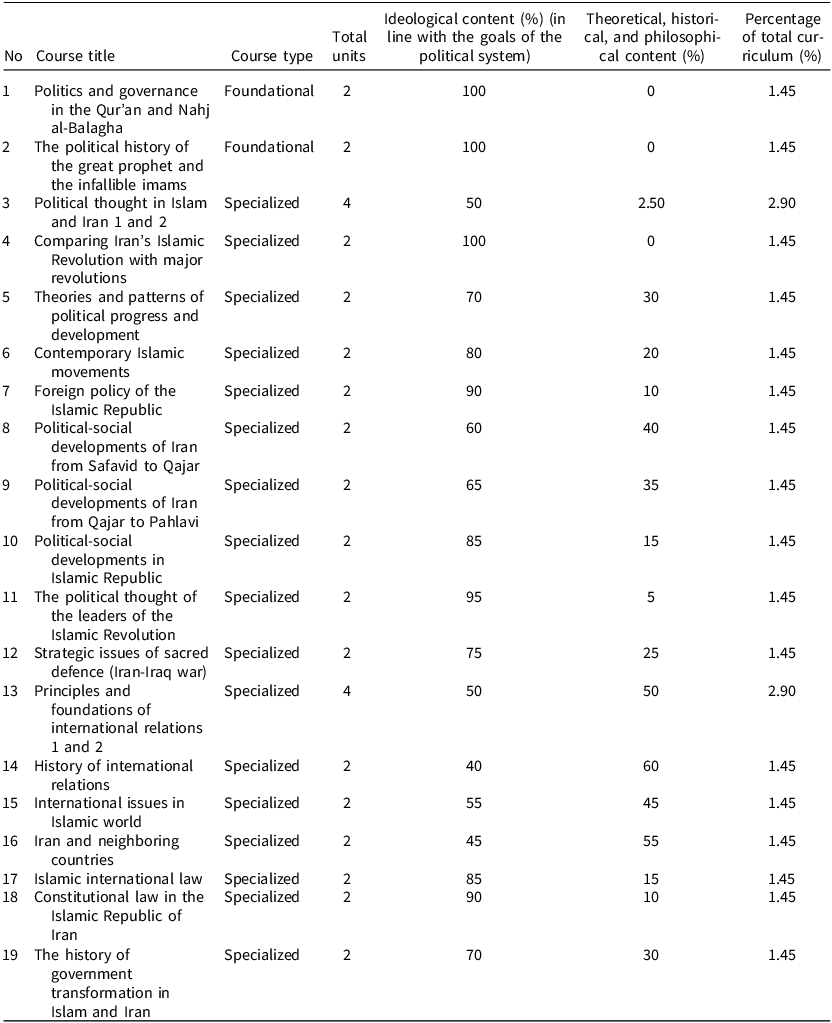
I reviewed 106 units comprising of specialized and foundational curriculum courses. Among these, I identified 19 courses (totalling 42 units) that contain distinct ideological, theoretical, historical, or philosophical content. My review focuses on the official curriculum of the Ministry of Science, Research, and Technology in Iran, which is disseminated to universities for implementation and includes designated source books for each course.
Through this examination of the program, course plans, and resources, I assessed the extent to which the goals of these courses align ideologically and contribute to the depoliticization and erosion of political science. I reviewed each course’s official description and syllabus to categorize the content based on its ideological, theoretical, historical, and philosophical components. The ideological content was quantified by assessing the percentage of course material that directly supports the political system’s goals. Similarly, the theoretical, historical, and philosophical content was quantified using the same approach. By dividing the curriculum into foundational and specialized courses, I compared their focus areas and assessed their alignment with ideological objectives. The Table 1 illustrates the types of courses reviewed and their corresponding ideological content percentages.
Courses with ideological content and Islamization in the political science curriculum of Iranian universities

The weighted average formula is applied to calculate the average percentage of course content, taking into account the number of units each course contributes. This method is appropriate because it reflects the varying significance of courses based on their unit value. The formula is expressed as:
 $${\rm{Weighted}}\;{\rm{Average}}\;{\rm{Ideological}}\;{\rm{Content}}\; = \;{{\sum {\left( {Ideological\;Content \times Total\;Units} \right)} } \over {\sum T otal\;Units}}\;$$
 $$\eqalign{& {{\rm{Weighted}}\;{\rm{Average}}\;{\rm{Theoretical}}({\rm{including}}\;{\rm{historical}},{\rm{and}}\;{\rm{philosophical}})\;{\rm{Content}} } \cr& \quad\quad\quad\quad\quad\quad\quad\quad\quad\quad\quad\quad\quad\quad\quad\; = {{\sum {\left( {Theoretical\;Content \times Total\;Units} \right)} } \over {\sum T otal\;Units}}}$$
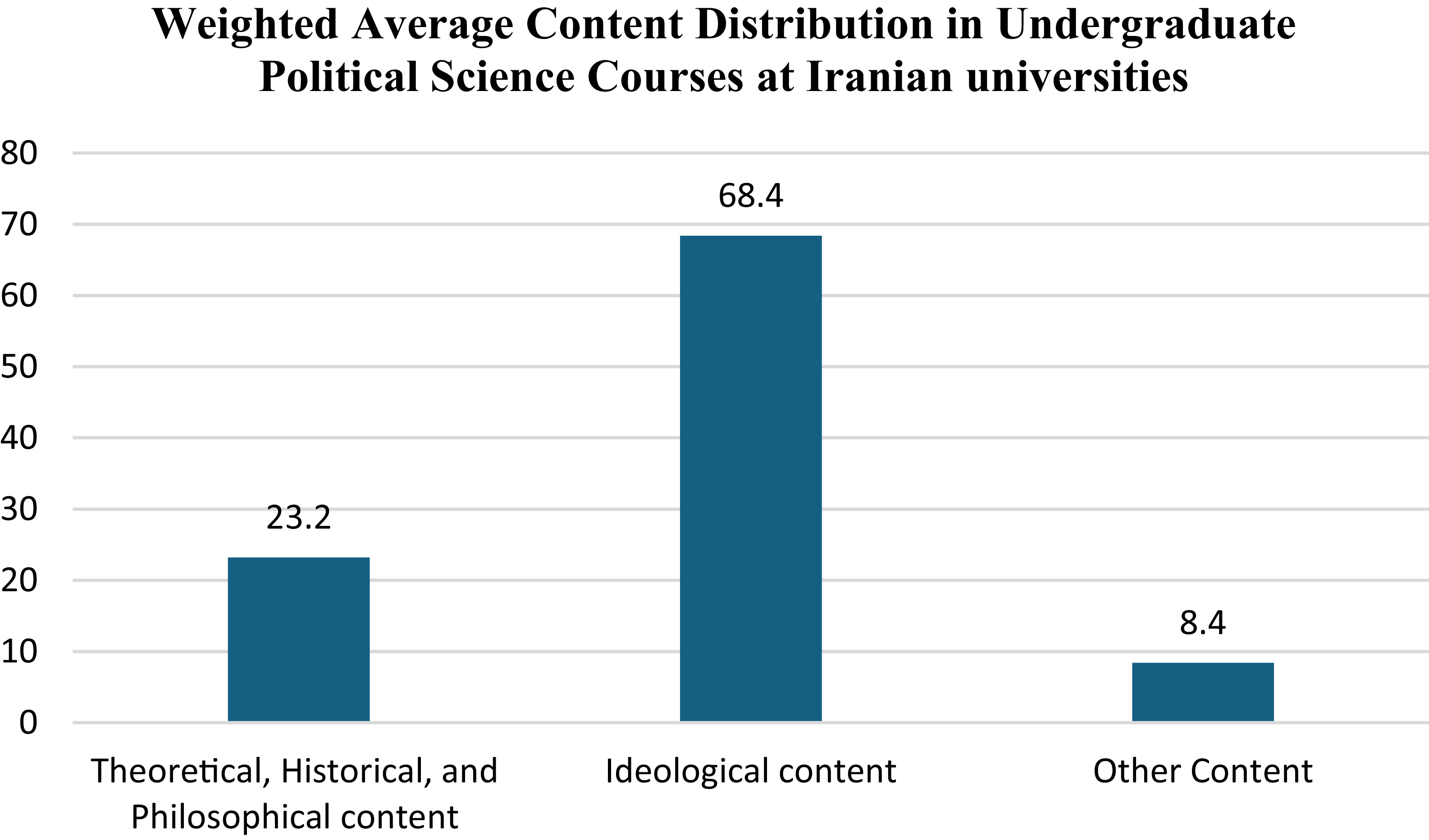
The weighted average of ideological content compared to theoretical, historical, and philosophical content in Iranian political science courses, distinguishing between foundational and specialized undergraduate courses, is shown in Figure 2.
Weighted average content distribution in undergraduate political science courses.

As depicted in Figure 2, approximately 68.4% of the content in both foundational (basic) and specialized undergraduate courses in political science exhibits ideological content, aligning closely with the objectives and frameworks of the political system, thereby departing from the original nature of political science. Within this category, 23.2% of the remaining content focuses on theoretical, philosophical, and historical subjects, omitting the introduction of analytical tools for addressing contemporary governance-related issues. Some courses overlap in the curriculum as they address both ideological and theoretical aspects simultaneously. Other content includes practical applications, contemporary issues, and interdisciplinary insights that are not directly covered under ideological or theoretical categories. These topics are not the primary focus of the research, as their contribution to the overall landscape of political science in Iran is relatively minor.
Part of the curriculum consists of 74 elective units, from which students are required to successfully complete between 10 and 12 units. Among the elective courses, there are five packages focusing on Iranian issues, political-Islamic studies, regional studies, international studies, and public policy. Each package consists of 10–14 units of elective courses, totalling 74 units across all packages. Undergraduate students are required to complete 10 credits from these packages, with a minimum of two units from each package.
As can be seen in Figure 3, after analyzing the content of the courses, we have categorized these five packages into four topics: (a) theoretical-philosophical, (b) historical, (c) foreign policy and international relations, and (d) ideological. The ideological package comprises 26% of the courses, the foreign policy and international relations package 39.08%, the theoretical-philosophical package 20.20%, and the historical package 14.72% of the nature and content of these elective courses.
Content distribution of elective courses in the political science curriculum.

The analysis of undergraduate curricula reveals that ideological content constitutes a significant component of political science programs. This ideological focus is often integrated with theoretical, historical, and philosophical content, which collectively aims to steer students away from active engagement in policymaking processes and critical perspectives in political science at the undergraduate level. Moreover, the curriculum tends to limit opportunities for teamwork and engagement in applied politics, which are crucial for practical political experience. Despite the inclusion of elective courses related to foreign policy and international relations, these courses are still designed to manipulate students and reinforce the regime’s ideological perspectives concerning the international system and major global powers.
Analyzing the research content and scope of Iranian political science journals
To identify prevailing research directions within authoritarian academic environments and to examine how postgraduate studies, including their structure and thematic orientation, shape scholarly output, I conducted a content-based and statistical analysis of articles published in peer-reviewed Iranian political science journals. This supplementary investigation was intended to substantiate and validate the preliminary observations regarding the thematic orientation and instrumentalization of political science research within the Iranian academic landscape.
In the field of political science in Iran, there are 51 Iranian/Persian scholarly and research journals that are approved by the MSRT. These journals employ a grading system that provides benefits for professors in terms of promotion, as well as incentives for students, when they publish in these outlets.
My aim was to examine the number of articles published in these 51 journals over a ten-year period and to identify the main thematic categories, with a particular focus on prioritizing the key research areas within Iranian political science academia. Of these 51 journals, 25 belong to security- military related centres, research institutes, and affiliated universities, while the rest belong to public universities or research institutes that offer political science programs and education. Three journals are also privately owned. Among these journals, approximately five are relatively old, predating 2010, while the rest obtained publication permits after 2010 and have been published since 2012. While some journals have historical roots predating the Islamic Revolution, many have undergone transformations in name, publishing practices, and thematic orientations throughout the period of the Islamic Republic.
Articles were collected from three national databases in Iran (MagIran, Noormags, and SID), the journals’ own websites, and Google Scholar, ensuring comprehensive coverage of the 51 political science journals. Most of these journals are indexed in the national databases and are available in Persian with English abstracts. Additionally, approximately three journals are published in English, and five are also present in international databases such as Scopus. I examined the articles published in these journals between 2012 and Spring 2024. Each journal maintains a publication standard of 10–12 articles per issue; in my analysis, I focused on an average of 11 articles per issue as a representative measure for the study. Total articles per journal type were calculated by multiplying the average number of articles per issue by the number of issues per year and the number of years (12 years for 2012–2023, plus a partial year for 2024). Table 2 identifies the number of journals analyzed, their institutional affiliations, and the total number of articles selected for content analysis.
Journal characteristics

To categorize the articles from the 51 political science journals into seven thematic categories, Latent Dirichlet Allocation (LDA) was employed. LDA is a generative probabilistic model that allows sets of observations to be explained by unobserved groups, helping to identify the underlying topics within a large corpus of text (Blei, Ng and Jordan 2023). This method was chosen for its robustness and ability to handle large datasets effectively.
Using Python libraries such as NLTK and spaCy, the articles’ abstracts and keywords were preprocessed. This involved:
-
A. Tokenization: Breaking down the text into individual words or tokens.
-
B. Lemmatization: Reducing words to their base or root form.
-
C. Removing Stop Words: Eliminating common words that do not contribute to the main content (e.g., ‘and’ ‘the’).
-
D. TF-IDF Transformation and Topic Modelling with LDA:
The preprocessed text was transformed using TF-IDF (Term Frequency-Inverse Document Frequency) to quantify the importance of each word in the corpus, enabling the identification of significant keywords. The TF-IDF matrix was then used as input for the LDA model. The LDA algorithm was configured to identify seven distinct topics, corresponding to the seven categories of interest:
-
1. Issues related to foreign policy with a focus on Iranian foreign policy.
-
2. Regional studies with an emphasis on the Middle East, Central Asia, and South Asia.
-
3. Western political thought, focusing on classical, modern, and postmodern political philosophy.
-
4. Issues related to Islamic politics and Islamic thought, emphasizing Shia political thought.
-
5. Contemporary political history of Iran, critically addressing the Qajar and Pahlavi periods, and supportively discussing the Safavid period.
-
6. Issues related to global governance, focusing on Europe, the United States, Russia, and China.
-
7. Issues related to politics and governance in Iran during the Islamic Republic era, with both supportive and critical approaches.
Each article was assigned to the most relevant category based on the highest probability score from the LDA model. This probabilistic approach ensured that articles were categorized according to their primary themes. A manual review of a sample of categorized articles was conducted to ensure accuracy and to refine the categorization process. This step involved reading abstracts and verifying the LDA assignments.
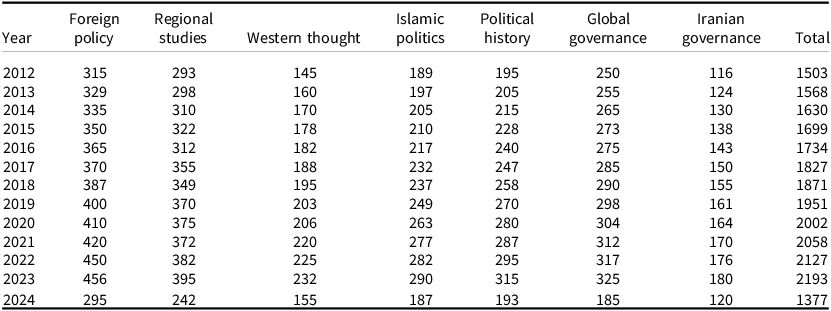
By employing LDA for topic modelling, I systematically and professionally categorized the articles from the 51 political science journals into seven predefined categories. This method allowed us to extract significant themes and analyze the discourse within Iranian political science journals effectively. The data in the tables and visualizations provide a clear representation of the trends and focus areas on the political science literature over the analyzed period. Using the LDA method, the articles were categorized into various topics over the years 2012–Spring 2024, as detailed in Table 3.
Topic categorization of political science articles (2012–2024)

Figure 4 shows the distribution of articles in each category as a percentage of the total number of articles published annually from 2012 to Spring 2024. Each line represents one of the seven categories, illustrating how the focus areas in Iranian political science literature have evolved over time.
Temporal trends in the topical distribution of political science publications (2012–Spring 2024).

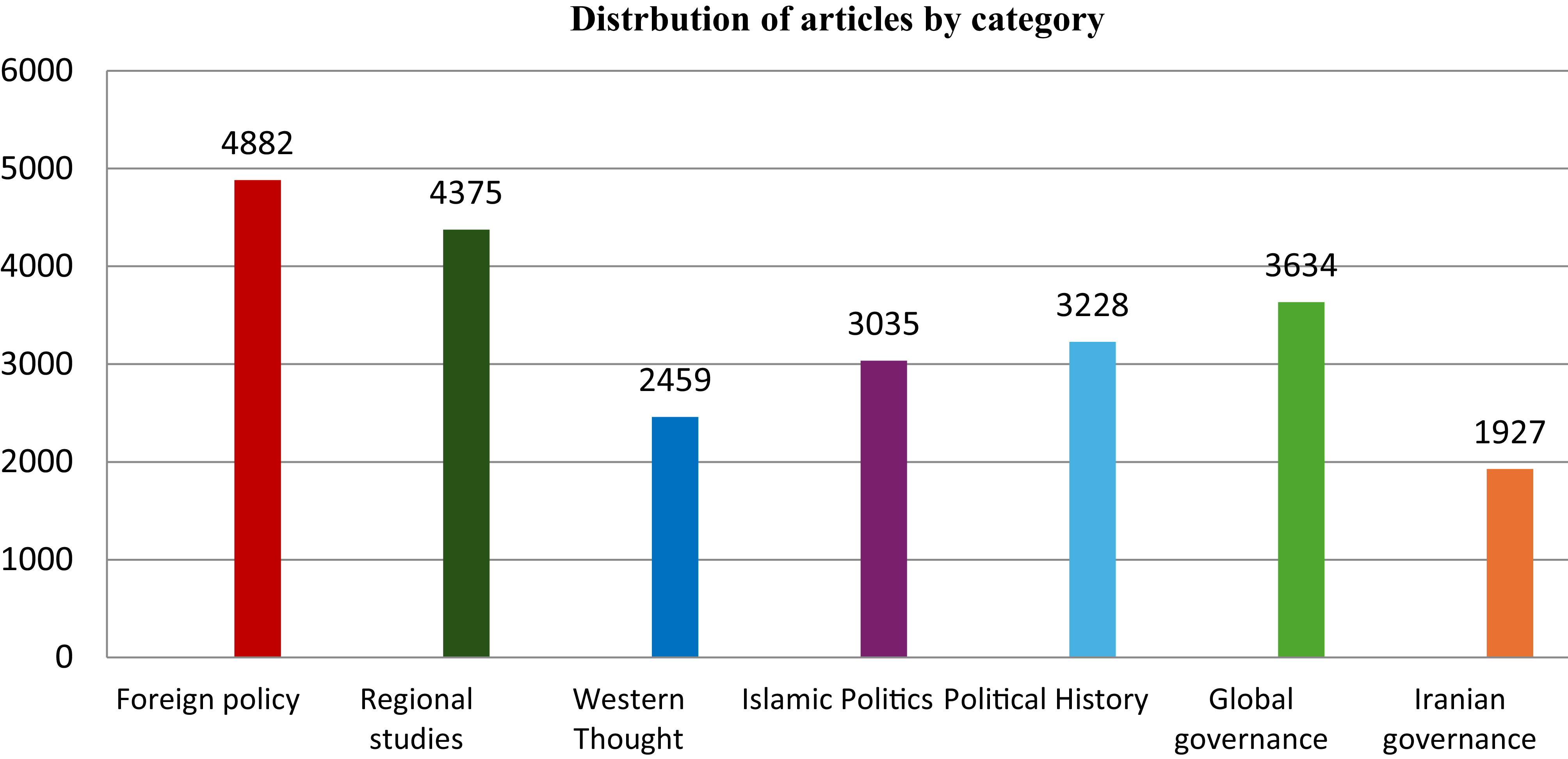
Figure 5 also illustrates the distribution of articles by number within each category from 2012 to Spring 2024.
Distribution of articles by category.

Additionally, Figure 6 shows the distribution of topics across the three journal categories. Most papers in public university journals and security- or military-related journals focus on foreign policy, regional studies, and global governance. In contrast, papers on Iranian governance and internal politics receive less attention, both in terms of publication frequency and overall presence across all three journal categories.
Distribution of topics among three journal categories.

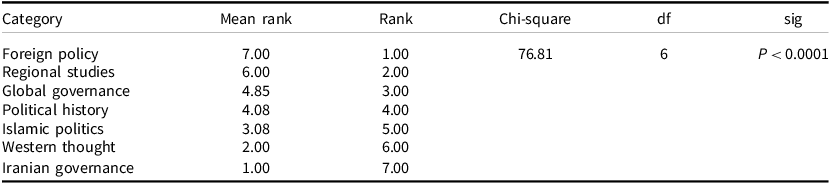
I also conducted a Friedman test to compare the mean ranks among categories, including Foreign Policy, Regional Studies, Western Thought, Islamic Political Thought, Political History, Global Governance, and Iranian Governance. The results of this analysis are presented in Table 4.
Results of Friedman test analysis for mean ranks across political science categories

The Friedman test analysis of academic journal publication outputs across political science categories from 2012 to 2024 revealed a statistically significant difference in the mean ranks of the categories. The statistic Chi-square (χ2) value was 76.81, with 6 degrees of freedom (r−1), and a significance level of p < 0.0001. These results indicate an overall statistically significant difference in the mean ranks of the categories. The Friedman test results indicate that Foreign Policy, Regional Studies, and Global Governance emerged as the top three ranked fields, reflecting a substantial volume of scholarly articles published in these subfields. Following these top-ranked categories, Political History, Western Thought, and Islamic Political Thought occupied a middle tier in terms of publication frequency. Finally, the Iranian Governance category exhibited the lowest overall publication output among the fields analyzed.
These findings highlight the relative emphasis and prioritization of different subfields within political science research and publication over the past decade. The statistically significant differences in mean ranks across the categories suggest there may be systematic biases or trends in the distribution of scholarly output in this academic discipline. A macro analysis of research trends in Iranian journals reveals a deliberate shift in the field of political science towards foreign policy, regional studies, history, and philosophy, with relatively less emphasis on domestic politics and Iran’s governance problems.
Discussion and conclusion
The data extracted from this study indicate that the design and structure of undergraduate courses, along with the content of specialized political science journals, suggest that political science in Iran has been decontextualized and depoliticized. This trend aligns with government objectives and has been facilitated through processes of Islamization.
While this research does not directly analyze pedagogy or assessment practices, the curriculum content-characterized by a dominance of ideologically driven courses and a notable absence of modules on policy analysis, comparative governance, or research methodology – suggests a limited institutional commitment to fostering analytical reasoning and independent critical thinking (Giroux Reference Giroux2002; Mobrand Reference Mobrand2019; Flinders Reference Flinders2024).
The empirical findings of this study, drawn from both curriculum content and a decade of journal article outputs, reveal a patterned and systematic epistemic closure within the Iranian political science agenda. Rather than exhibiting a random distribution of research themes, the findings reveal a pronounced convergence around ideologically sanctioned topics, including Islamic governance, resistance-oriented foreign policy, and historical narratives that reinforce regime legitimacy. Conversely, topics central to democratic accountability such as domestic governance, elections, civil society, institutional reform, and corruption are underrepresented or entirely absent. This pattern does not arise from spontaneous academic interest, but from an institutionalized regime of epistemic gatekeeping driven by entities like the Supreme Council of the Cultural Revolution and the Ministry of Science, Research and Technology. These bodies control curricular design, faculty appointments, and journal oversight, thereby shaping not only what is taught, but also what can be credibly researched and published.
The statistical data and trends extracted from this study indicate that Iran’s higher education policies generate structural patterns of depoliticization and ideological alignment within the field of political science. This interpretation aligns with findings from authoritarian research systems in other contexts, where top-down control mechanisms shape not only what is taught but also what can be researched and published.
For example, in China, researchers note that while certain social science themes may flourish, inquiry into regime-sensitive topics like civil rights or internal governance is systematically discouraged through informal controls and institutional disincentives. Similarly, in Kazakhstan, academic output is channelled through patriotic discourses aligned with state-building narratives (Hanson and Sokhey Reference Hanson and Sokhey2020). In Uzbekistan and Russia, also, academic journals filter submissions through ideological compatibility with regime positions, creating a publication climate of anticipatory conformity (Sharapova Reference Sharapova2005; Perry Reference Perry2015; Ahram and Goode Reference Ahram and Goode2016).
These cases illustrate what has been described as ‘policy-driven knowledge regimes,’ (Beidollahkhani Reference Beidollahkhani2025) in which research topics are not subject to overt external censorship but are instead internally aligned with state narratives through the mechanisms of academic infrastructure and governance (Oleksiyenko Reference Oleksiyenko2022; Kovács and Spannagel Reference Kovács and Spannagel2025).
In this light, the Iranian case is not an outlier, but part of a broader trend in which authoritarian systems exert subtle but pervasive control over political knowledge production. The result is not merely reduced academic freedom, but the ideological redesign of an entire discipline, with significant implications for the role of political science in society.
After ideological oriented foreign policy studies and Islamic politics, research in high-frequency areas tends to focus on political Islam, Western political philosophy, and contemporary political history, reflecting recurring thematic priorities within the existing scholarly literature. Contemporary political history particularly emphasizes critiquing the Qajar and Pahlavi periods while supporting the historical narratives endorsed by the leaders of the Islamic Republic. The issue reflects the Iranian political system’s focus on managing and controlling the output of the country’s political science academic system. Political science, being an interdisciplinary field with diverse research trends, is inherently critical and problem-solving in nature, particularly with an emphasis on reforming governance processes, expanding democracy, and restructuring institutions.
As an Islamic autocracy, the Islamic Republic of Iran has sought to manage and erode this academic discipline, redirecting its research focus to align with the grand narratives propagated by the government and its leaders regarding political phenomena and global developments, especially those pertaining to the governance system and international politics. This dynamic has transformed political science in Iran into a tool for affirming the official state narratives, rather than encouraging the critical and problem-solving approach that is characteristic of the discipline. The reorientation of political science research serves to consolidate the Islamic Republic’s control over the production and dissemination of knowledge, limiting the potential for scholarly discourse to challenge the existing power structures and policies.
This issue reflects the tension between the inherent nature of political science as a field that thrives on critical analysis and problem-solving, and the authoritarian tendencies of the Islamic Republic to maintain a tight grip on the academic sphere and suppress perspectives that diverge from the official state agenda.
As highlighted, the inherent inefficiency of political science in authoritarian regimes is evident. The higher education policies of such regimes often exhibit a range of distorted functions, transforming those trained in political science into official proponents of the totalitarian government’s agenda. In these contexts, political science takes on a fluid, malleable nature, as its democratic, liberal, and policy-oriented aspects become decontextualized. The discipline’s practical and foundational attributes are diminished, reducing political science to a mere performative exercise, devoid of its critical and problem-solving capacities.
The findings of this study contribute to broader debates on the role of political science in authoritarian regimes, especially in relation to how academic disciplines are reengineered to align with ideological state agendas. In contexts like Iran, the suppression of methodological diversity and the privileging of regime-sanctioned themes mirror trends identified in other authoritarian systems such as China, Kazakhstan, Uzbekistan and Hungary (Perry Reference Perry2015; Enyedi Reference Enyedi2018; Hanson and Sokhey Reference Hanson and Sokhey2020; Mirakilov and Saida Reference Mirakilov and Saida2025; Mulvey and Lee Reference Mulvey and Lee2025). Multiple global academic freedom indices, most notably the Academic Freedom Index (AFi) developed by the V-Dem Institute and the Global Public Policy Institute (GPPi) have identified Iran as one of the most severely restricted environments for higher education (Kinzelbach, Lindberg and Lott et al. Reference Kinzelbach, Lindberg, Lott and Panaro2025). This supports our finding that political science in Iran serves less as a field of critical inquiry and more as an instrument for state legitimation. This study complements recent comparative work on epistemic closure, ideological curriculum reform, and the transformation of political science under illiberal governance.
The findings also speak to broader debates about the possibility of academic resilience or reform within authoritarian contexts. While European experiences of democratic backsliding illustrate that political scientists may retain public influence despite institutional constraints, the Iranian case demonstrates a more entrenched system of ideological restructuring. Here, the problem is not merely political interference, but the transformation of the academic system itself into a mechanism of regime reproduction.
In such a system, reform cannot be limited to academic freedom protections or peer-reviewed integrity. Instead, this requires dismantling the centralized mechanisms of ideological control, particularly those exercised through institutions such as the Supreme Council of the Cultural Revolution, Khamenei’s representatives’ offices in universities, and MSRT. Any meaningful regime reform must therefore consider higher education as a site of political engineering, where curriculum design, faculty appointment, and research prioritization are strategically deployed to suppress dissent and shape regime-compatible elites.
Infrastructural changes in Iranian higher education and the expansion of academic freedom are directly linked to structural transformations within the political system, its institutional culture, and constitutional reforms that may have been unattainable or highly unlikely under the framework of the Islamic Republic.
At the same time, the Iranian academic diaspora and transnational research networks may play a vital role in preserving the critical functions of political science outside formal institutions. As comparative studies show, public intellectuals can navigate hostile political environments through diverse channels (Shahibzadeh Reference Shahibzadeh2021; Yan and Li Reference Yan and Li2024; Ahmed, Akbarzadeh and Yilmaz Reference Ahmed, Akbarzadeh and Yilmaz2025). Although Iran’s context presents uniquely hard boundaries, informal and digital spaces may still offer room for contestation, solidarity, and critical inquiry.
The deformation of political science under authoritarian rule serves to suppress alternative perspectives and critical analysis that could challenge the existing power structures and policies. Instead, the discipline is co-opted to validate and perpetuate the official state narratives, undermining its ability to meaningfully contribute to the advancement of democratic governance and evidence-based policymaking. This dynamic reflects the fundamental tension between the emancipatory potential of political science as a field of study and the authoritarian impulse to control the production and dissemination of knowledge. In such repressive environments, the original purpose of political science – to foster critical thinking, promote democratic values, and inform effective policymaking – is subverted in service of the regime’s consolidation of power and ideological dominance.
The critical and somewhat democratic/liberal nature of political science often conflicts with the academic environment of authoritarian and oppressive systems, which seek to align and coordinate political science with the objectives of non-democratic governments. In Iran, political science has deviated from its inherent nature and has become a tool for the totalitarian regime to advance its ideological goals. This does not imply that political science lacks practical and instrumental value in democratic governments; indeed, in such contexts, its practical applications for governance issues, including foreign policy, are prioritized in academic research and higher education. However, in Iran, the field has been ideologically manipulated to serve the purely ideological objectives of the non-democratic regime.
This nature has taken an anti-developmental direction. For instance, within the academic system and research field of political science, numerous articles attempt to justify the Islamic Republic’s anti-Israel and anti-Western stances through new theoretical constructions of political science, often aligning with the views of the regime’s leaders. Additionally, various theses and articles support the Islamic Republic’s ideological endorsement of regional proxy groups, Islamic fundamentalist movements, and the promotion of political Islam.
Conversely, focusing on research related to governance and power structures in Iran, especially from a critical perspective, often results in punitive measures. Under these circumstances, academic policy in the country deviates from its neutral state, becoming an ideological and justificatory framework that endorses and supports government actions across various domains, including societal and foreign policy matters. Researchers who do not align with this government-justifying approach, whether intentionally or not, often redirect their studies toward philosophical, historical, or regional topics that fall outside of governmental concerns. This strategy helps them avoid livelihood issues, job loss, and the risk of government repression.
For example, within the Iranian context, translations of Western scholarship in political philosophy or theoretical discussions in politics are highly popular among professors, university lecturers, and students. Many professors build their academic reputation by translating theoretical texts and discussing them in universities and the media. In doing so, they carefully navigate the regime’s ‘red lines’ in academia, avoiding politically sensitive topics while still engaging with intellectual debates. This approach allows them to pursue academic recognition and fame, establishing themselves as respected scholars and public intellectuals within Iran while remaining within acceptable boundaries. Some scholars also focus on history, critically examining the foundations of Iran’s national identity. By analyzing historical narratives from critical, ethical, ethnic, or Islamic perspectives, their work both engages in scholarly critique and indirectly aligns with the regime’s discourse on national identity. This strategy allows researchers to critique secular interpretations of Iranian history while remaining within acceptable boundaries set by the state.
The Islamization of political science in Iran has not been confined to curricular design or research orientation but has also been reinforced through stringent mechanisms of faculty selection and ideological vetting. Hiring and promotion within universities are subject to extensive Gozinesh (selection) procedures and ‘general qualifications’ assessments, which operate as powerful instruments of political control. These processes have discouraged many faculty members from pursuing critical or policy-oriented research, as failure to demonstrate ideological conformity can result in professional marginalization or even exclusion from academia. Faced with livelihood pressures and the risks associated with ideological scrutiny, a significant number of scholars in political science shift their focus toward less contentious areas, such as abstract theoretical debates, Western political thought, or philosophical traditions. Others pursue reputational capital by translating or summarizing the works of foreign scholars, a strategy that allows them to maintain academic visibility without challenging official red lines. In this way, the structures of ideological filtering and Gozinesh reinforce the broader depoliticization of political science in Iran, systematically displacing critical inquiry in favor of safe, regime-compatible intellectual production.
Therefore, many critical issues related to the government, such as corruption, civil society, power structures, elections, and ethnic and racial matters, are regarded as security-sensitive and classified topics in the research field. Only researchers affiliated with research centers connected to government intelligence and military organizations are permitted to investigate these areas. The results of their research are typically provided to government authorities in a confidential and secure manner, rather than being disseminated publicly. In authoritarian regimes, the level of academic freedom in political science is severely constrained, leading to the depoliticization and decontextualization of the field. This restriction impedes the discipline’s ability to address governance improvements, democratic expansion, and the correction of problematic trends within political structures, both domestically and internationally. Consequently, the transformation of political science in these contexts undermines its potential to contribute effectively to the development and reform of political systems.
Data availability statement
The data used in this study are derived from publicly available sources. No proprietary or confidential datasets were used.
Funding statement
This research project was supported by the British Academy Research Support Grant, award reference LTRSF24\100049.
Competing interests
The author declares no competing interests.






 Open access

