




Ulbe Bosma's The World of Sugar offers a comprehensive global history of sugar production and consumption, tracing how the commodity has shaped empires, transformed environments, and restructured political economies over two millennia. Through a macro-historical lens, Bosma highlights the central role of sugar in capitalist development – from early Asian innovations to the Atlantic plantation complex, and from colonial regimes of slavery to industrialized, state-sponsored sugar capitalism. His narrative draws attention to how sugar production and trade enabled technological change, fuelled economic empires, influenced dietary habits, and connected distant regions into a global sugar market.
Despite its broad scope, the book often privileges the perspective of the elites – planters, scientists, industrialists, bureaucrats – at the expense of the experiences and political agency of the labouring populations, which limits the narrative’s capacity to reflect grassroots struggle. In this comment, I approach The World of Sugar from the standpoint of a Brazilian scholar working on labour history, racial capitalism, and subaltern resistance in the sugar cane regions. My intention is not to dismiss Bosma’s work but to question its silences and interpretive framing. Here, I am interested in exploring three main points. First, I criticize the top-down narrative structure of the book, which marginalizes the voices of coerced workers and autonomous subjects. Second, I reflect on the under-representation of Brazil and its racialized and gendered labour order despite its central role in modern sugar capitalism. Finally, I consider how peasant movements and their alternative agrarian projects are largely absent from the story. Taken together, these critiques foreground the labour from below that has shaped, disrupted, and contested the frontiers of sugar.
A History from Above
The dramatis personae brought by The World of Sugar on its first pages consists of colonial and bourgeois sugar elites, scientists, industrialists, and state actors – figures portrayed as central agents of industrial modernity. Together with a handful of abolitionists, these actors drive the narrative. The book foregrounds a world constructed and narrated by the powerful by focusing on families, institutions, and policymakers as the protagonists of sugar capitalism. This historiographical orientation reflects a long tradition in global history that emphasizes the agency of elites while marginalizing the experiences, subjectivities, and political imaginaries of labouring classes, as well as unruly subjects and defiant communities.
Bosma’s macro-historical synthesis is ambitious and thoroughly researched. It is based on secondary sources and follows a top-down logic. This opens up space for important questions: are the elites solely responsible for shaping the sugar frontier – for installing boilers, managing railways, and refining raw sugar? Is capital the only protagonist on this world stage? The book offers little insight into the everyday lives of those who shaped this world through strenuous and coerced labour. Bosma refers to resistance moments, such as the Christmas Day uprising in Jamaica in 1831 and the massive strike by Filipino and Japanese plantation workers in Hawai’i, but the subjectivity, knowledges, and visions of enslaved people and workers are barely addressed. The book does not explore how these labouring classes organized, resisted, and envisioned alternative futures within or against the world of sugar. At stake is the historical constitution of the sugar frontiers, foregrounded by central events and powerful actors, while the experiences and resistance of labouring populations remain marginalized.
In this respect, Bosma departs from scholarly work that emphasizes writing history from below to capture the complexity of human experience from the perspective of the colonized, racialized, and gendered subjects whose struggles and culture shaped the world of sugar.Footnote 1 It is true that Chapter Three examines slavery in detail and Chapter Eleven pays special attention to the proletariat. But the framework remains structural and economic, leaving little room for political agency or grassroots mobilization. The result is a powerful but incomplete account – one that makes labour visible only insofar as it serves to advance the sugar frontier.
A more grounded, bottom-up approach would focus on the peasantry, the enslaved, and waged and unwaged labourers as historical agents who resisted, negotiated, and, in many cases, attempted to dismantle the frontiers of sugar capitalism altogether. Readers would benefit from a nuanced engagement with the lives and voices of those who bore the costs of sugar’s expansion on their bodies, environments, and communities.
It is also worth noting that the book occasionally adopts an optimistic tone regarding the spread of sugar frontiers in the Global South. In Chapter Eleven, Bosma suggests that commodity-producing economies could potentially favour workers given new institutional arrangements. But the assumption that sugar frontiers could benefit labouring people overlooks the deep-rooted social and ecological violence of capitalist agro-industrial expansion. In the Global South, monocultural expansion has exacerbated the degradation of people and nature. Even in contexts where smallholders or peasant farmers cultivate sugar, this does not automatically translate into prosperity, welfare, or human progress. As long as land and production remain colonized by global capitalist markets extracting value from the metabolism between people and nature, the structural realities of land concentration, market dependency, and racialized and gendered divisions of labour will continue to shape the lives of rural workers.
Bosma acknowledges that historically most jobs in the sugar industry were arduous, poorly paid, and characterized by human toil. In my view, a history from below would emphasize how both unfree and “free” subjects have struggled to escape diverse labour regimes, employing strategies to survive and subvert highly racialized and gendered forms of exploitation and to move from monocultures to multi-species forms of production. The book adopts a macro-structural approach to the world of sugar, but including submerged perspectives would show how market breakdowns, legal disputes, and agrarian revolts have created opportunities to challenge sugar capitalism. These disruptions empower actors marginally present in Bosma’s narrative: insurgent landless women and men, indigenous and migrant labourers, and the peasantry – all of whom have long made alternative claims to land, autonomy, and a life beyond the sugar cane field.
Brazil’s Minor Role in the Contemporary World of Sugar
The World of Sugar largely sidelines Brazil’s central role in shaping sugar capitalism, despite the country’s historical and current importance for sugar production and export. Bosma rightly emphasizes Brazil’s importance during the colonial period, including its dominance in the sixteenth and seventeenth centuries and the Atlantic entanglements of slavery, sugar, and the export economy. But Brazil’s structural and political centrality in the global sugar economy, especially since the twentieth century, is largely overlooked.
This absence is particularly striking given Brazil’s rise as the world’s largest sugar producer in the post-war period. Readers familiar with the political economy of sugar will be surprised that the book is so silent about Brazil’s sophisticated agro-industrial model developed since the creation of the Institute of Sugar and Alcohol by Getúlio Vargas in 1933. Changes in land concentration, labour control and migration, mechanization, technological innovations, export regulations, and corporate–state alliances have shaped Brazil’s sugar industry modernization. These transformations are essential to understand not only the development of the Brazilian sugar complex, but also the kind of capitalism it promotes – a form heavily characterized by authoritarianism, environmental degradation, and the oppression of workers.
Bosma notes the paradox that strong protectionism tends to favour transnational corporations. In Brazil, this is not a paradox but a long-standing feature. Successive authoritarian regimes – from Vargas’s Estado Novo to the military dictatorship – have actively shaped the sugar industry through subsidies, land grabs, repression of labour mobilization, and union control and fostered export-oriented development. The sugar mill owners (usineiros) not only benefitted from this system but were often the system itself. In many sugar-producing Brazilian states, mill owners have held office as mayors or governors and served as federal legislators in Brasília. The fusion of economic and political power – what Brazilian sociology has long referred to as patrimonialismo – is a key feature of sugar capitalism in Brazil.Footnote 2 The state has not only supported the sugar industry, but it has also been captured by it. This dynamic has entrenched inequality, weakened labour rights, and undermined rural welfare. Sugar capitalism in Brazil has produced not only sweet commodities from sugar cane, but also underdevelopment, malnutrition, landlessness, and educational deficits among sugar workers and their families. These are not unintended consequences, but structural results of long-standing corporate welfare. These unexplored intimate relationships of power between capitalist classes and the state add further nuance to the protectionism shaping the contours of the global sugar economy.
Any serious consideration of the Brazilian sugar industry must also address the ideological frameworks that have underpinned its dominance. One of the most enduring is the myth of racial democracy propagated by sociologist Gilberto Freyre. Bosma refers to Freyre as “the great sociologist of its plantation past and prophet of a multiracial future” (p. 187) and points out that he “did not romanticize the plantation” but offered a “creolized identity” amid the rise of white racism. This view has been vigorously challenged by Black Brazilian intellectuals such as Beatriz Nascimento, Lélia Gonzalez, Abdias do Nascimento, and Clóvis Moura, who have long criticized Freyre’s work as ideological and sexist. They point out that his defence of the idea that Portuguese slavery was “more benevolent” than other forms obscured the realities of racism, sexual exploitation, and economic domination. In particular, Gonzalez showed how Freyre’s depiction of racial harmony obscured the structural violence faced by Black women whose unpaid reproductive labour sustained the plantation system.Footnote 3 What Freyre portrayed as harmonious racial mixing was in practice racial and sexual violence. By reproducing Freyre’s framework without criticism, Bosma risks reiterating the Casa-Grande standpoint. A more critical engagement with Black feminist and anti-colonial thought would allow readers to recognize how the sugar frontier functioned not only economically, but also as racial, ethnic, and sexual systems of power, perpetuating injuries on Black and indigenous communities in Brazil. It would also show how communities have resisted these hierarchies – by challenging not only the economic structures imposed by the sugar elites, but also the epistemologies and cultural myths that sustain their dominance.
Today, the Brazilian sugar industry is not only a place of capital accumulation, but also a place of racial and sexual division of labour. White mill owners command Black male workers. And women continue to be under-represented in the lowest-paid segments of the sugar workforce while subsidizing the agro-industrial sugar bourgeoisie with their unpaid reproductive labour.Footnote 4 Yet, these dynamics remain invisible in Bosma’s narrative.
Countering the Sugar Frontier
The book also lacks depth when it comes to showing how insurgent and peasant communities can contest and reshape the sugar frontier. The Brazilian case is a particularly striking example of this omission. The history of Brazilian sugar workers in the twentieth century is rich with episodes of labour resistance, from wildcat strikes and union organizing to land occupations and rural uprisings. Important movements such as the Ligas Camponesas (Peasant Leagues) and later the Movimento dos Trabalhadores Rurais Sem Terra (Landless Workers Movement – MST) played a central role in challenging the logic of the sugar agro-industry and demanding agrarian reform. These were not isolated protests but long-term, coordinated efforts to reclaim land, democratize agrarian relations, and reject monocultural dependency. The MST in particular has become a global reference in the fight against agribusiness and food empires, imperialism, and genocide, but it remains completely unmentioned in Bosma’s narrative.
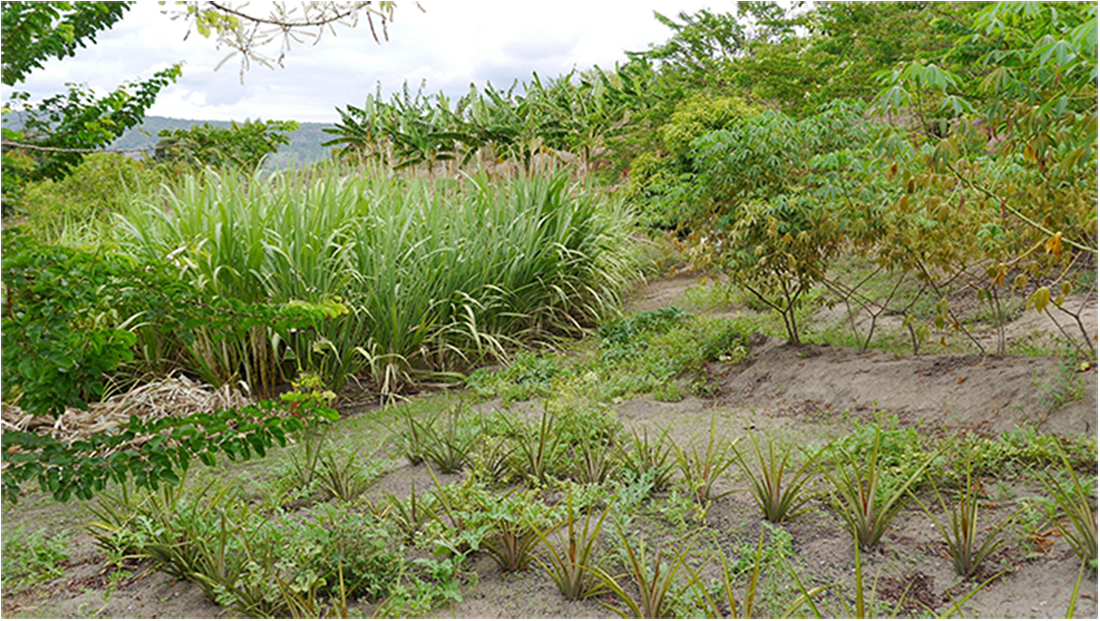
Furthermore, the historical role of the quilombos – maroon communities formed by escaped slaves and indigenous peoples – deserves special mention, as they serve as a counterpoint to the sugar frontier. The Quilombo dos Palmares, the longest-lived community of fugitives in Brazilian history, which lasted almost the entire seventeenth century and survived the Dutch invasion of north-east Brazil, is among the most impressive rejections of the sugar plantation economy and its dehumanization of people. Today, quilombola and peasant communities continue to defend their ancestral lands against the expansion of the sugar industry by developing subsistence farming, agro-ecology, and multi-species cultivation as alternatives to monoculture. To offer a compelling example from my most recent research – conducted in collaboration with peasant communities – at the foot of Serra da Barriga in Alagoas, where the Quilombo dos Palmares once stood, nearly 10,000 people now occupy the lands of a former sugar mill owner. Across approximately 12,000 hectares, they cultivate food, restore the region’s biodiversity, and pursue a collective struggle for autonomy and territorial rights (Figure 1). In doing so, they actively challenge the dominance of the sugar frontier and reclaim a historical landscape of resistance. These communities are also active political actors, standing up to the sugar frontiers in the present. They constitute sites of knowledge, spaces from which alternative historical narratives and political projects around territory and land emerge.
Decolonising land and labour: where sugar monoculture and capitalist labour exploitation used to dominate, today a diversified polyculture thrives ‒ manioc, watermelon, pineapple, beans, bananas, mangoes, peanuts and sugar cane grow side by side. Sugar cane is no longer a cash crop here but is used for local consumption as juice and dessert. Agricultural production is geared towards the subsistence and food sovereignty of the communities living in land encampments, who organize political struggles for agrarian reform in the sugar cane region of Alagoas, Northeast Brazil.
A history of sugar that ignores such forms of resistance risks reproducing the narrative of inevitability upon which plantation regimes have long depended. In Bosma’s narrative, the world of sugar often appears as an unstoppable force, driven by demand, profitability, and technological transfer and institutional change. However, this obscures how the boundaries of sugar have been repeatedly challenged – and sometimes pushed back – by the most diverse populations. As my own fieldwork in Alagoas, Brazil, shows, peasants, indigenous, landless workers, and quilombolas are not only resisting the sugar frontier but also actively reshaping it.Footnote 5 They are replacing the sugar cane fields with biodiverse, autonomous, and collectively managed productive landscapes that reject both corporate monocultures and agro-industrial despotism, as well as the colonial legacy they perpetuate.
Bosma’s assertion that environmental concerns drove the mechanization of sugar production in Brazil must also be questioned. In reality, mechanization was largely a response to rising labour costs amid the increasing mobilization of workers. Brazilian employers, historically accustomed to flouting laws and allowing exploitative and informal working conditions, faced pressure from strikes, labour inspections, and public denunciations to introduce technologies that could bypass the need for human labour. The rise in deaths from overwork – known locally as canguru in Alagoas – testifies to the deadly pressure placed on workers to meet production targets.Footnote 6
While Bosma briefly cites Amnesty International’s 2008 report on Brazilian sugar cane workers subjected to slavery-like conditions (p. 294), he omits the broader political and labour context that led to these revelations. During Luiz Inácio Lula da Silva’s second term as president (2007–2010), a wave of strikes, legal actions, investigative journalism, and civil society mobilization exposed the systemic labour abuses in the sugar industry. Despite the Workers’ Party’s historical alignment with organized labour, the federal government often intervened in ways that favoured the sugar bourgeoisie – especially as Brazil positioned itself as a global leader in ethanol production. Promoted as a green and strategic commodity, ethanol helped rebrand the sugar industry as a sustainable sector, justifying investment, export expansion, and labour flexibilization in the name of international competitiveness. In this context, many employers accelerated mechanization, reducing dependence on seasonal manual labour. Simultaneously, the state redirected surplus rural labour into equally precarious construction jobs through the infrastructure-led development programme known as PAC- These labour shifts were not environmentally motivated but were driven by cost efficiency and the containment of dissent.
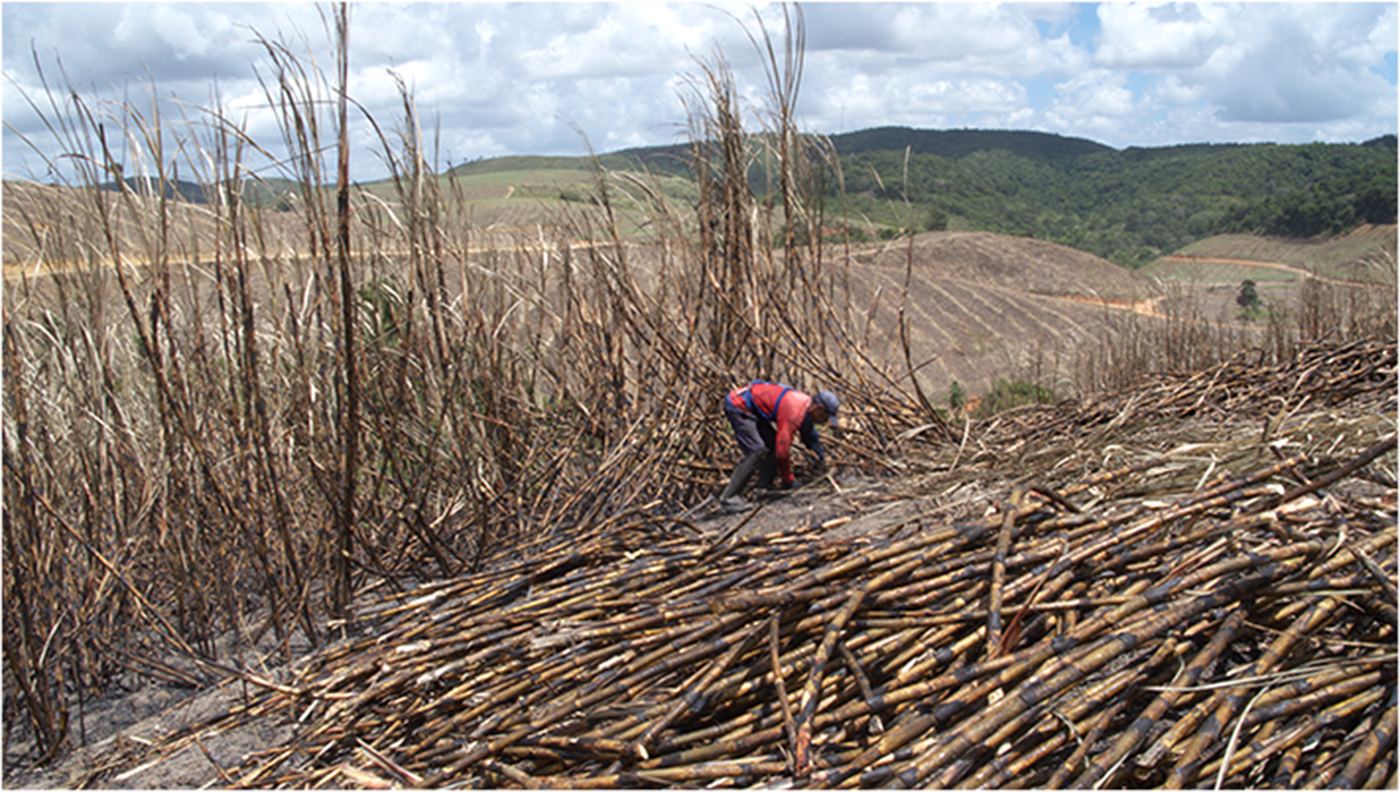
In short, Bosma misses the opportunity to frame sugar not only as a commodity, but also as a field of struggle. The agency of landless workers, sugar cane cutters (Figure 2), and peasant movements is not a footnote in the global history of sugar – it is one of its most important drivers. The historical and ongoing contestation of the sugar frontier by labouring and landless people deserves to be placed at the centre of the narrative, not on the margins. An alternative approach, informed by research by Black and indigenous people, would focus on how indigenous and quilombola communities, peasant movements, and workers’ struggles have not only contested but also disrupted and reshaped the world of sugar, fully becoming a radical force of change.
The cane cutter of a large sugar mill in Alagoas bends down to cut the cane near the ground, where most of the saccharoses are located. He then cuts off the remaining leaves and forms rows of cut cane for later mechanical collection. This hard, multi-task labour is repeated thousands of times during the working day and leads to many musculoskeletal disorders and other diseases such as canguru (general cramps that can be fatal), physical exhaustion, burnout and even deaths from overwork among sugar workers.
The World of Sugar is undoubtedly an important contribution to global history. It collates a vast range of material and traces the intertwining of sugar with empire, science, industry, health, and politics over the centuries. Bosma’s mastery of the global scale is admirable. But like many ambitious syntheses, the book constructs a grand narrative that risks silencing those whose labour made it possible. If sugar helped create the modern world, we need to ask more precisely: whose world, at whose expense, and who resisted its creation?
In this review, I have argued that The World of Sugar has critical gaps regarding labour and the political agency of those from below. The top-down historiographical structure marginalizes the experiences of workers, peasants, and maroons; under-represents Brazil’s role in modern sugar capitalism; and overlooks the long and ongoing struggles of landless workers, indigenous, and quilombola communities.
What is missing is not just details or national nuances – it is a shift in perspective. A history from below could add to The World of Sugar more in-depth views of monocultural cane fields as a racialized, gendered, and ecological system of domination that made life for humans and non-humans impossible – considering the interplay between the high mortality rates of the enslaved, the enormous and ongoing deforestation and loss of biodiversity, and the recent health phenomena leading to deaths – in many plantations the world over. It would take seriously the subjectivities and strategies of those who have fought for their own survival and for the abolition of the world of sugar – from the enslaved and indentured to peasant, quilombolas, and agro-ecological communities reclaiming land today, often amid the bloodshed of state and agro-industrial violence. These are not historical footnotes. They are fundamental to understanding how the sugar frontier is changing.
Bosma ends the book by pinning his hopes on a ban on excessive added sugar in processed foods and beverages and a reduction in global sugar consumption as a strategy to mitigate the harmful effects of sugar. The violence of sugar capitalism cannot be addressed through dietary solutions alone; it also involves a politics of land and labour. Of course, sugar consumption cannot be disentangled from politics, as The World of Sugar shows. But sugar capitalism cannot be “tamed” by better legislation on consumer choices alone, for the issue is not only about consumption. Moreover, the majority world does not live on processed foods with added sugar. Quite the opposite: while small-scale agriculture and land in the Global South produce most of the food and bear the cost of feeding the planet, agro-industrial capitalism and the food empires reap the rewards. The narrative must be reframed to reflect the already existing alternatives to sugar capitalism. Sugar has been fought over through collective action, decolonial knowledge, and material struggles. As my own research with peasant communities in Alagoas shows, the world of sugar is not inevitable or untouchable. It is being undone and reimagined – plot by plot, occupation by occupation, creole seed by creole seed – by those who refuse to accept sugar capitalism and its modern forms of enslavement, labour coercion, and environmental degradation as the horizon of the possible. By foregrounding voices from below, Bosma’s narrative could resonate more strongly with the ongoing struggles for healthy food production, labour autonomy, and land liberation that are unsettling the sugar frontier.


 Open access

