




Introduction
Small, disc or nail-like objects similar to modern and ethnographic examples of labrets—worn through piercings beneath the lower lip—are well documented in the material culture of Neolithic South-west Asia (10 000–6 000 BC, Aurenche & Kozlowski Reference Aurenche and Kozlowskı2005; Baysal Reference Baysal2019) but contextual evidence for their use in the early Neolithic has been lacking. As a result, no standardised terminology for these artefacts currently exists. Examples may be recorded as ‘spools’, ‘tokens’ or ‘stone plugs’, among other things (for example Aurenche & Kozlowski Reference Aurenche and Kozlowskı2005: 31, 239–44; Nilhamn Reference Nılhamn, Akkermans, Brüning, Huigens and Nieuwenhuyse2014: 179; see also Casella & Croucher Reference Casella and Croucher2011: 211 on ambiguity) and are often not recognised as being part of personal ornament assemblages (Keddie Reference Keddıe1981: 59). In part, this lack of recognition stems from the materials from which these artefacts are made; while stone is widely used in ornamentation from the Epipalaeolithic onwards, clay is rarely associated with ornamentation practices in the Neolithic across most of South-west Asia, yet the above forms also appear in clay, particularly at some later Neolithic sites such as Sabi Abyad (Akkermans et al. Reference Akkermans2012). Similar issues surround the recognition and classification of so-called bucranium idols from Early Neolithic sites in the Balkans (Krauß et al. Reference Krauß, Marinova, Brue and Weninger2018). The manufacture and use of labret-like artefacts in South-west Asia begins in the Pre-Pottery Neolithic A (PPNA, c. 10 000–8800 BC) and continues through the Chalcolithic (c. 6000–3000 BC; Aurenche & Kozlowski Reference Aurenche and Kozlowskı2000: 61–3). An exceptionally prolific, diverse and complex use of personal ornaments is found at the early Neolithic (PPNA-B) site of Boncuklu Tarla in south-east Türkiye, where more than 100 000 ornamental artefacts have been excavated to date (Kodaş Reference Kodaş2019; Kodaş et al. Reference Kodaş, Çiftçi, Labedan-Kodaş and Özkan2020, Reference Kodaş, Yelözer, Çiftçi and Baysal2022). Putative labrets are also found in the Boncuklu Tarla assemblage: the earliest examples were recovered from PPNA levels at the site and their use continued until occupation ended later in the Pre-Pottery Neolithic (approximately 10 000–7000 BC). These artefacts offer a unique window into the use of body perforation ornaments by the inhabitants of early sedentary communities; many were found in situ in burial contexts, highlighting their association with the head and, in some cases, with tooth wear characteristic of labret use.
In this article, we explore the use of these ornaments and how they change the picture of early Neolithic personal ornamentation from a purely fluid and adaptable practice based on temporary augmentation of appearance, to the inclusion of transformative activities with long-term physical consequences. In situ evidence for the use of various forms of labrets in lips and similar ornaments in ears, as well as the wear on teeth by labret usage, are cited to support the hypothesis that different forms of ornaments were used to transgress different bodily boundaries. We argue that the finds from Boncuklu Tarla represent the earliest contextual evidence for the use of body augmentation requiring perforation of bodily tissue in South-west Asia and advocate for the reinterpretation of existing narratives of ornament use, which place initial engagement with body perforation practices at around the middle of the seventh millennium BC (Keddie Reference Keddıe1989; Nilhamn Reference Nılhamn, Akkermans, Brüning, Huigens and Nieuwenhuyse2014; Garve et al. Reference Garve, Garve, Türp and Meyer2017). We also consider the implications of the breaking of the skin boundary (Garve et al. Reference Garve, Garve, Türp and Meyer2017: 232), the bridging of the divide between the external and internal self and the deliberate infliction of pain (Gonthier & Durieux Reference Gonthier, Durieux, Moncel and Fröhlich2009: 81) and what these might mean for the structuring of identities in early sedentary communities.
Defining labret and ear ornament use in archaeological contexts
A labret is an item of bodily ornamentation that is worn by its insertion through a hole that has been created for the purpose, usually a perforation of the upper or lower lip (Gonthier & Durieux Reference Gonthier, Durieux, Moncel and Fröhlich2009). In most cases, labrets have two parts: a shaft and a head or flange (Keddie Reference Keddıe1981: 59–60). Items of similar form and function can also be used to ornament the ear, through the perforation of either the fleshy lobe or the cartilage. Both lip and ear ornamentation result in potentially permanent alteration of the body that may outlast the use of the ornaments themselves. Because of the physical adaptation required in their use, and the associated pain, ornaments used in body perforations are often associated with adults as an indication of maturity and social status (Keddie Reference Keddıe1981: 60). The social implications of body ornamentation can be significant: ethnographic studies show that labrets are used as indicators of sexual or social maturity/status or of group or ethnic affiliation (Gonthier & Durieux Reference Gonthier, Durieux, Moncel and Fröhlich2009), and non-wearers might be regarded as different and dangerous. In some contexts, however, labrets are also seen as aiding in strength, aggressiveness and even the ability to speak or hear (Garve et al. Reference Garve, Garve, Türp and Meyer2017). In other circumstances, they are used in the communication of identity and economic status (Rorabaugh & Shantry Reference Rorabaugh and Shantry2017). The use of labrets has implications for both the representation and perception of self, incorporating notions of time and the individual—both in their own right and as part of a group (Gonthier & Durieux Reference Gonthier, Durieux, Moncel and Fröhlich2009). Regional labret grammars display not only belonging but also adherence to associated social practices shared within and between groups and regions (Rorabaugh & Shantry Reference Rorabaugh and Shantry2017). Body modification through cranial shaping at some sites in South-west Asia also appears to be associated with regional identities (Croucher Reference Croucher2012: 98) but this practice was associated with early childhood, unlike the body perforations, which were practised in adulthood. In these contexts, the body itself is a primary medium of communication, the main location for signifying identity and experience and for moderating social relations and interactions.
In prehistory, our approaches to interpreting the body are materially informed (Sørensen Reference Sørensen, Hughes, Rebay-Salisbury and Sorensen2010). Existing ornament typologies based on the form and use of archaeological artefacts, ranging from Neolithic Africa (Gonthier & Durieux Reference Gonthier, Durieux, Moncel and Fröhlich2009) to the Pacific Rim (Keddie Reference Keddıe1981), show shared features that display a combination of practical and aesthetic considerations. Although the shape of these artefacts is often suggestive of their use in body perforations, sufficient contextual evidence is rarely found to support precise interpretation. Rare incidences of atypical wear to the anterior surfaces of the lower incisors are comparable with dental attrition from modern and ethnographic labret use (Torres-Rouff Reference Torres-Rouff2003; Frayer et al. Reference Frayer, Nava, Tartaglia, Vidale, Coppa and Bondioli2020) and grave contexts provide crucial proximity data, indicating which areas of the body were likely to have been augmented. The burial of a young adult female at the Late Neolithic site of Tell Sabi Abyad included a rock crystal labret that was found in situ in front of the mandible (Nilhamn Reference Nılhamn, Akkermans, Brüning, Huigens and Nieuwenhuyse2014: 179). Wear or faceting on the lower incisors suggests consistent use of labrets over an extended period of time before death—and probably since later adolescence, given the age at death of this individual (Torres-Rouff Reference Torres-Rouff2003). Dating to around 6000 BC, this burial constitutes the earliest well-contextualised evidence for the use of a labret in South-west Asia. Here, we use both context and osteological evidence to explore similar breaking of the skin boundary at Boncuklu Tarla.
Labrets and ear ornaments at Boncuklu Tarla, south-east Türkiye
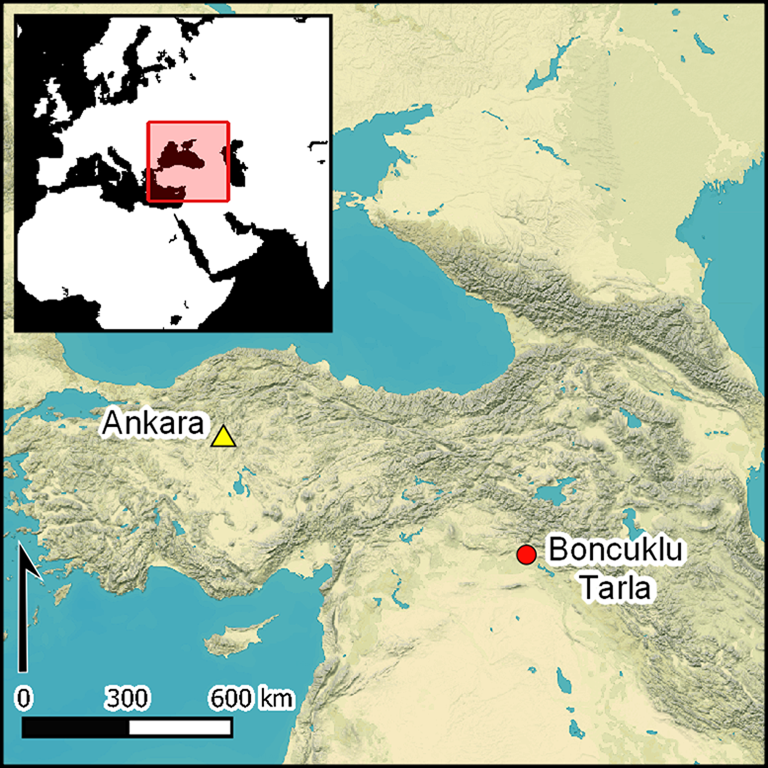
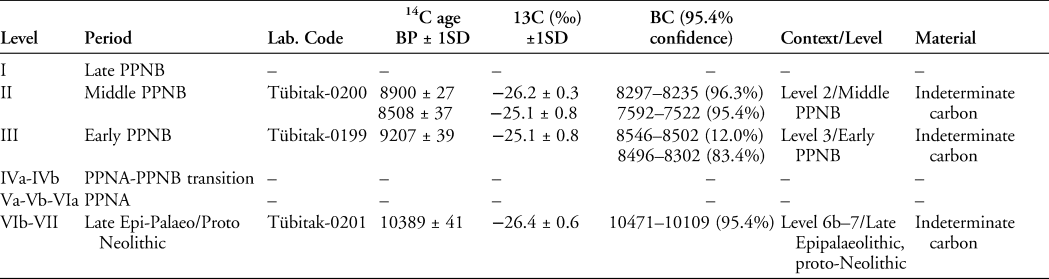
The site of Boncuklu Tarla is located in Mardin province in south-east Türkiye. It sits within the boundary of the village of Ilısu, which gave its name to the hydroelectric dam project that prompted the rescue excavation work carried out at the site. The settlement is on a natural hill 2km to the west of the Tigris River on the Nevale Mahrek stream (Figure 1) (Ökse et al. Reference Ökse, Görmüş and Atay2010; Kartal et al. Reference Kartal, Taşkıran, Bulut and Dinç2014). Work at the site between 2012 and 2017 has provided information relating to the Pre-Pottery Neolithic cultures of the region, with settlements dating from the Epipalaeolithic to the Pre-Pottery Neolithic B (PPNB, see Table 1 for radiocarbon dates). The site exhibits intense use of personal ornaments, with a wide variety of forms and materials, most of which are beads from grave contexts.
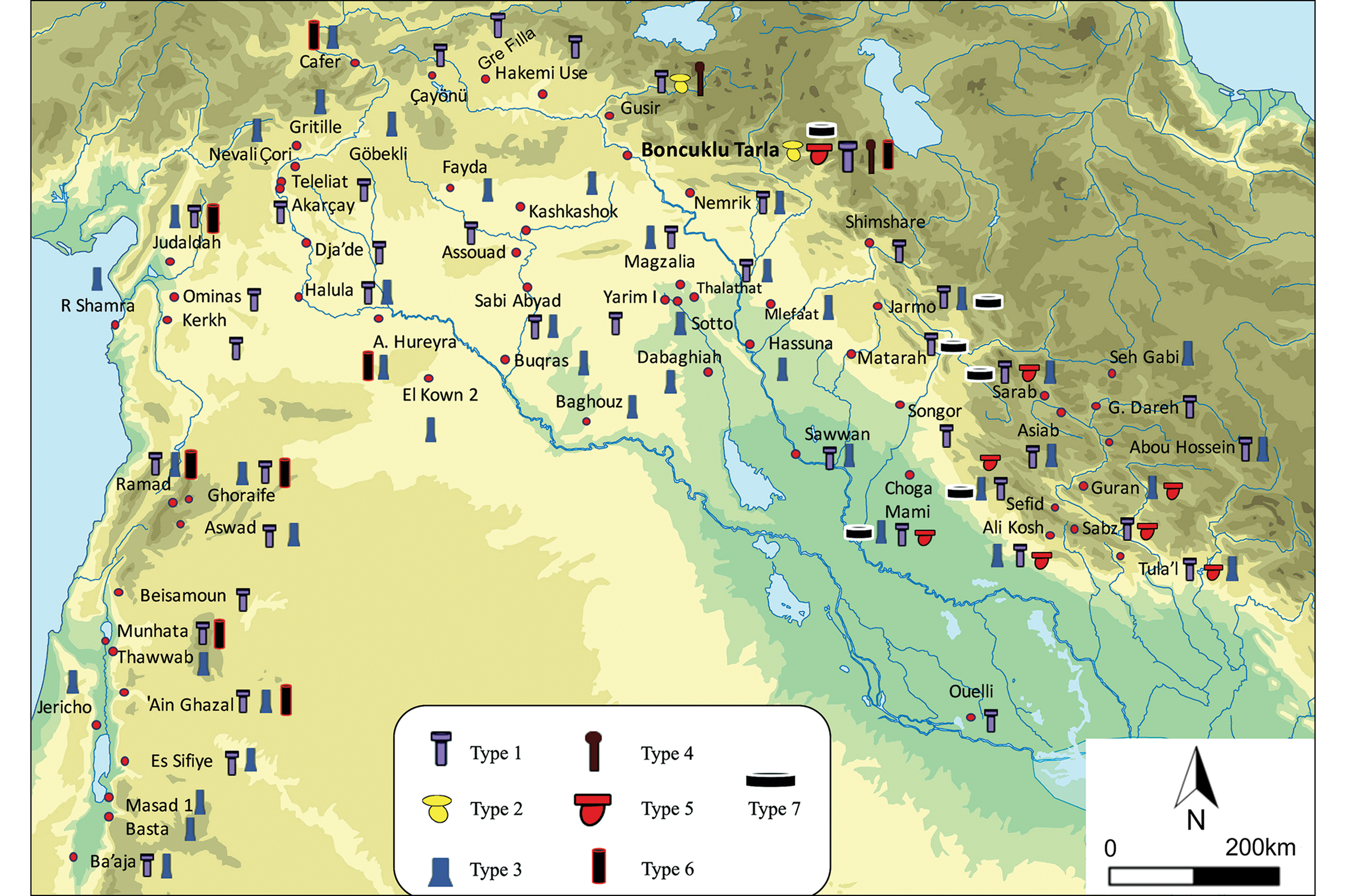
The location of Boncuklu Tarla and the distribution of labrets and ear ornaments in South-west Asia (figure by E. Kodaş).
Habitation levels and radiocarbon dates of Boncuklu Tarla, Türkiye. SD: standard deviation.
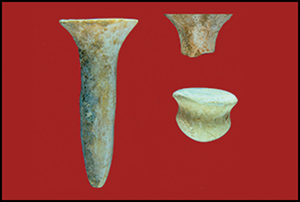
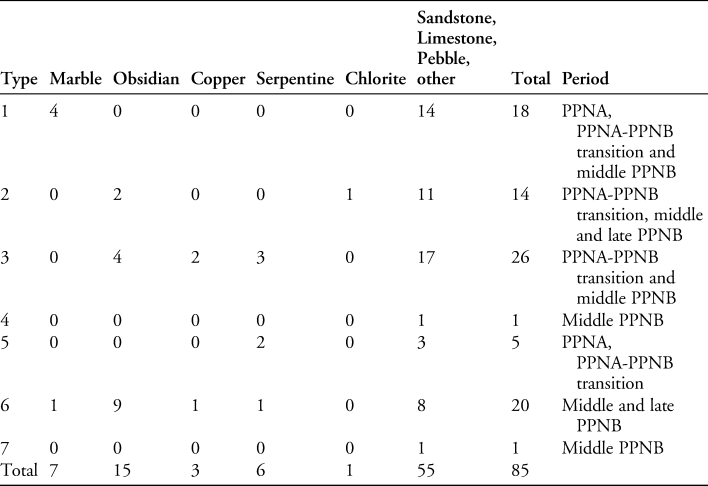
There are currently 106 examples of ornaments intended for use in body perforations, 85 of which are complete (Table 2). Common materials include serpentine, limestone, chlorite, flint, obsidian and copper (Figure 2, Table 2). There are more than 3500 copper items of ornamentation at Boncuklu Tarla, 500 of which were hot-worked or annealed. All of the copper labret-like and ear ornaments discussed here were crafted from pieces of native copper that were cold worked, often treated like stone. The material is unlikely to have had any health-related side effects other than the possibility of allergic reaction (Li et al. Reference Li2016). Although most of the ornaments that were probably used in body perforations date to the PPNB, a significant number were recovered from PPNA levels. While some were discovered in various architectural contexts, 85 complete, and several incomplete, examples derive from graves of adult males and females where they were on, or close to, the skeletons. Most of these burials are middle PPNB (n = 49) or PPNA–B transition (n = 16) in date, only five are from the PPNA, three from the early PPNB and 12 from the late PPNB. No body perforation ornaments are associated with sub-adult individuals, and none are yet dated to the earliest proto-Neolithic habitation levels.
Distribution of Boncuklu Tarla labrets and ear ornaments by type, raw material and period (for typology see Figure 3).
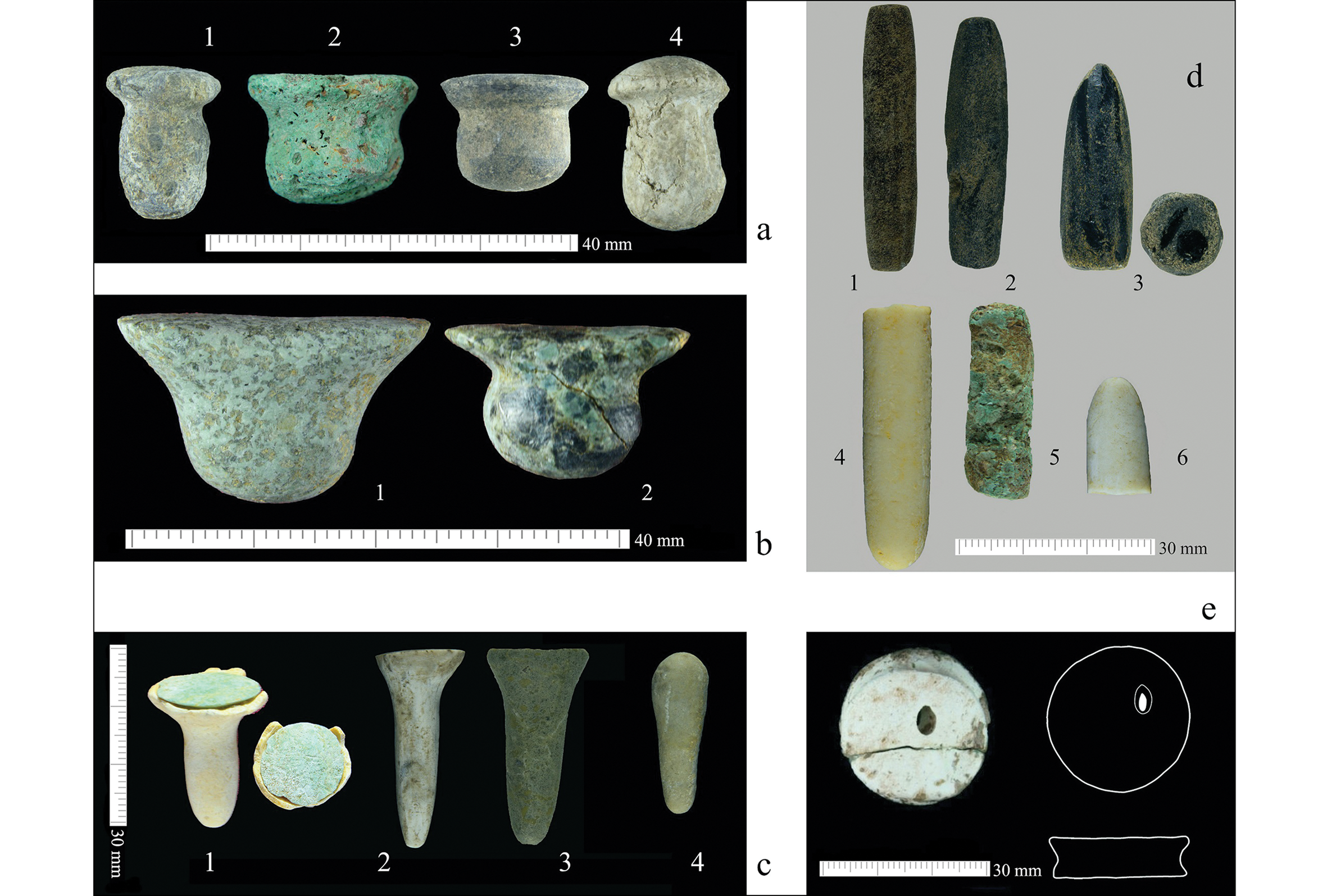
Examples of labrets from Boncuklu Tarla. Type 1: c1–3; type 2: a1 & a4; type 3: a2 & a3; type 4: c4; type 5: b1 & b2; type 6: d1–6; type 7: e (photographs from the Boncuklu Tarla Excavation Archive).

Characteristics of the ear ornaments and labrets from Boncuklu Tarla.
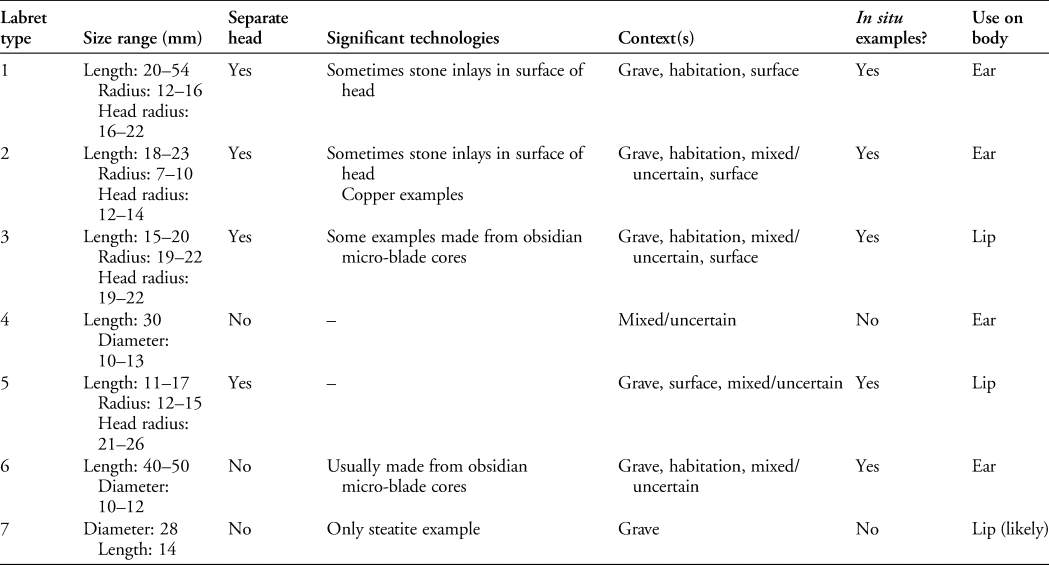
The 85 examples that were complete enough for typological classification are made from a variety of raw materials (Table 2), the most common of which are limestone, obsidian and assorted river pebbles. The remaining 21 ornaments are classified as having uncertain form and are not evaluated here. Seven types can be distinguished (Figure 2, Figure 3, Tables 2 & 3), although these are somewhat unstandardised. Our typology was developed from that of Aurenche and Kozlowski (Reference Aurenche and Kozlowskı2005: 30, 231–44), with the addition of new types among the Boncuklu Tarla assemblage (Table 2). Technically, any artefact in this typology with a defined head could be used as a labret; however, this form is also suited to use in ear perforations, so our findings add further nuance.
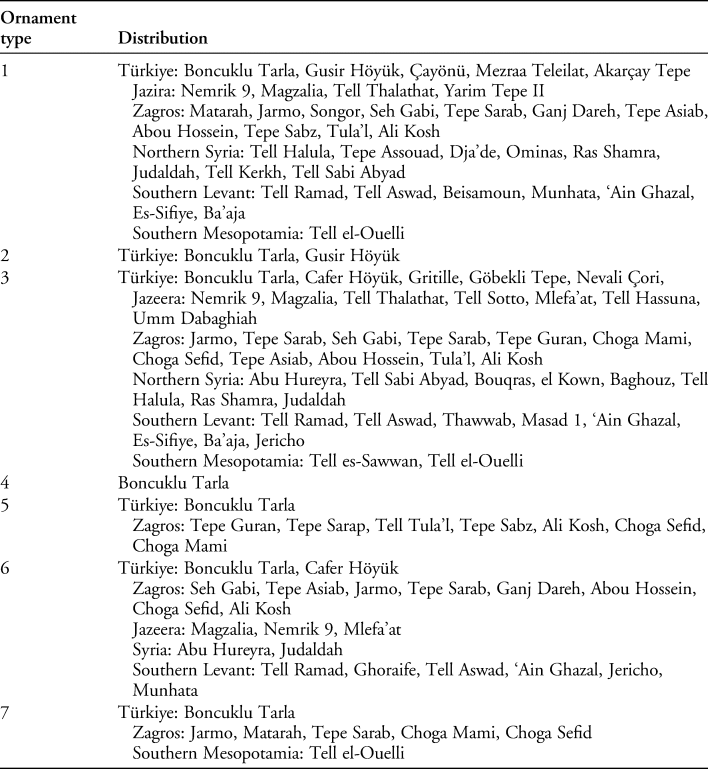
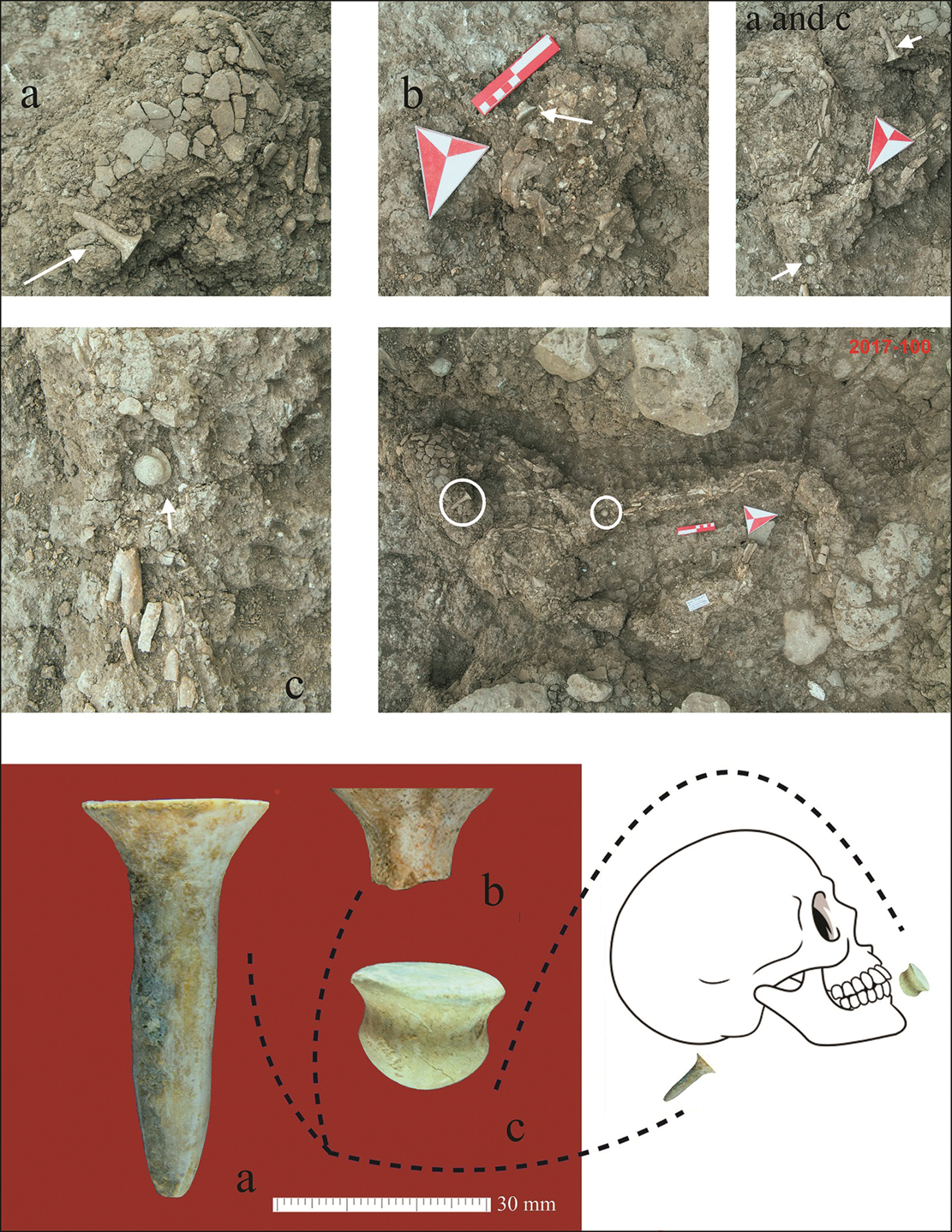
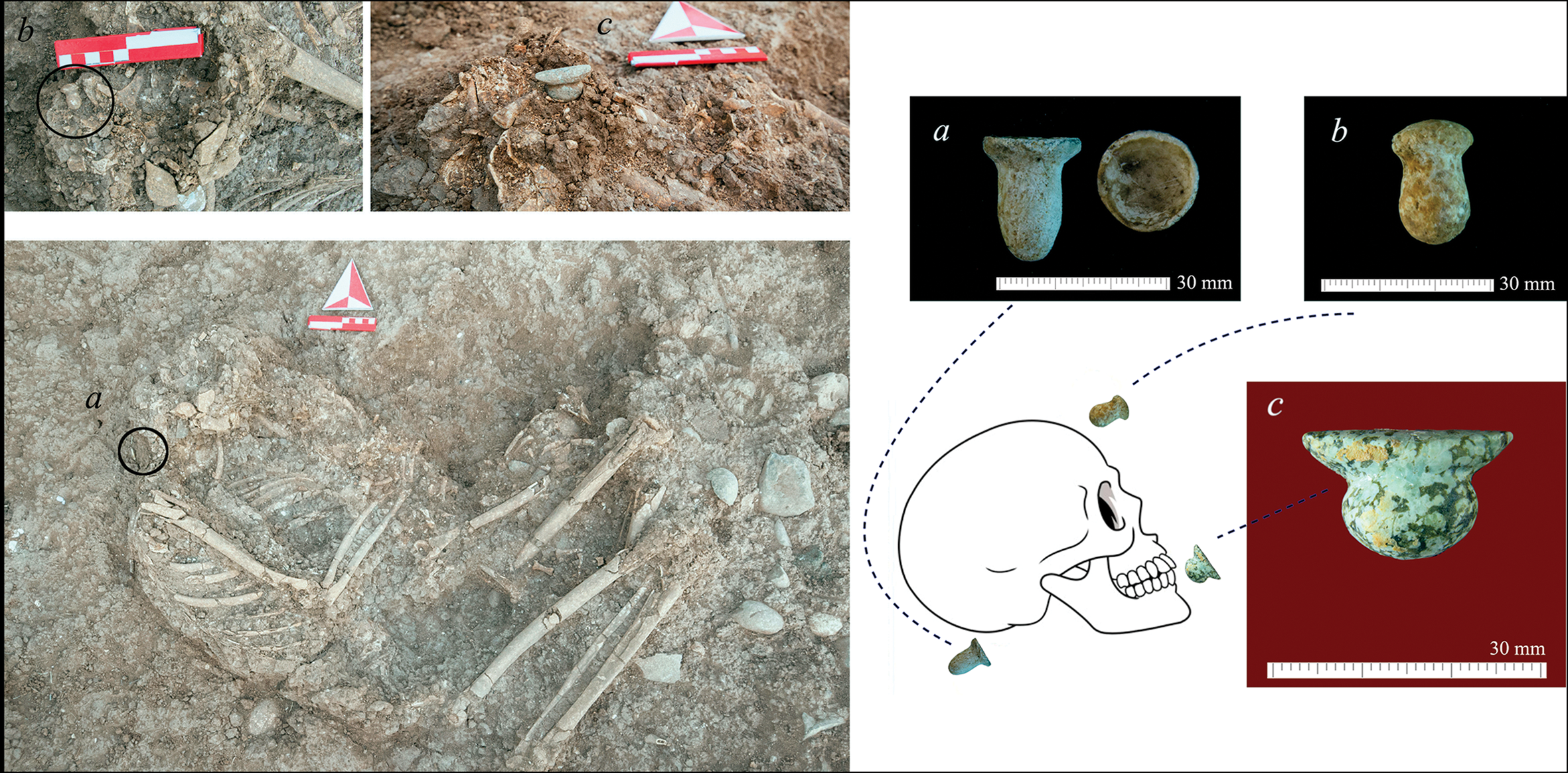
Type 1 ornaments are notable for the surface inlays in the heads of some examples, usually serpentine into limestone (Tables 2 & 3, Figure 2c, no. 1, Figure 3, no. 1), and a long shaft, giving the artefacts a nail-like appearance (Figure 2c, nos. 1–3). This type is found in south-east Anatolia and across South-west Asia (Table 4). At Boncuklu Tarla, in situ examples in graves were found in the region of the ear and sometimes parallel to the external ear canal (Figure 4). This indicates use as ear decorations rather than labrets. Type-1 artefacts from the PPNA, PPNA–B transition and PPNB all exhibit similar characteristics, although inlaid examples come only from the PPNA–B transition levels in the eastern settlement area. A single smaller artefact dated to the middle PPNB and made from marble (Figure 2c, no. 4) has a more conical shape than the other nail-type examples and thus constitutes the only type-4 ornament currently known (Figure 2c, no. 4, Figure 3, no. 4). As this artefact was not found in situ, we can only suggest that its use was similar to type 1 based on the similarity of morphology. Like type 1, some type-2 examples (Figure 2a nos. 1 & 4, Figure 3, no. 2) also have inlays in the head, although the heads are convex and have a sharper transition. Examples come from the PPNA, PPNA–B transition and throughout the PPNB. Copper appears only in the PPNB; and obsidian examples are from the middle and late PPNB levels. As with type 1, they were recovered from the ear area or parallel to the external ear canal (Figure 5) and are therefore identified as ear ornaments.
Regional distribution of lip and ear ornaments by type according to published sources (Voigt Reference Voıgt1988; Aurenche & Kozlowski Reference Aurenche and Kozlowskı2000: 66–8; Aurenche & Kozlowski Reference Aurenche and Kozlowskı2005: 30, 237, 238, 240, 242, 243; Cauvin et al. Reference Cauvın, Aurenche, Cauvın, Balkan-Atlı, Özdoğan, Başgelen and Kuniholm2011: 12; Erim-Özdoğan Reference Erim-Özdoğan, Özdoğan, Başgelen and Kuniholm2011: 221–2; Hauptmann Reference Hauptmann, Özdoğan, Başgelen and Kuniholm2011; Karul Reference Karul, Özdoğan, Başgelen and Kuniholm2011: 4; Özbaşaran & Duru Reference Özbaşaran, Duru, Özdoğan, Başgelen and Kuniholm2011; Özdoğan Reference Özdoğan, Özdoğan, Başgelen and Kuniholm2011; Schmidt Reference Schmıdt, Özdoğan, Başgelen and Kuniholm2011: 67; Tekin Reference Tekin, Özdoğan, Başgelen and Kuniholm2011: 158).
Grave 2017/100, PPNA, showing artefacts associated with the skeleton (poor condition) in situ and after cleaning: a) and c) are type-1 nail forms used in ears; b) is a type-3 mushroom-form labret (photographs from the Boncuklu Tarla Excavation Archive, figure by authors).
Grave 2017/103, PPNA, flexed skeleton with associated artefacts shown in situ and after cleaning: a) is type 1 and b) is type 2, both were used in the ears; c) is a type-5 labret worn through the lip (photographs from the Boncuklu Tarla Excavation Archive, figure by authors).
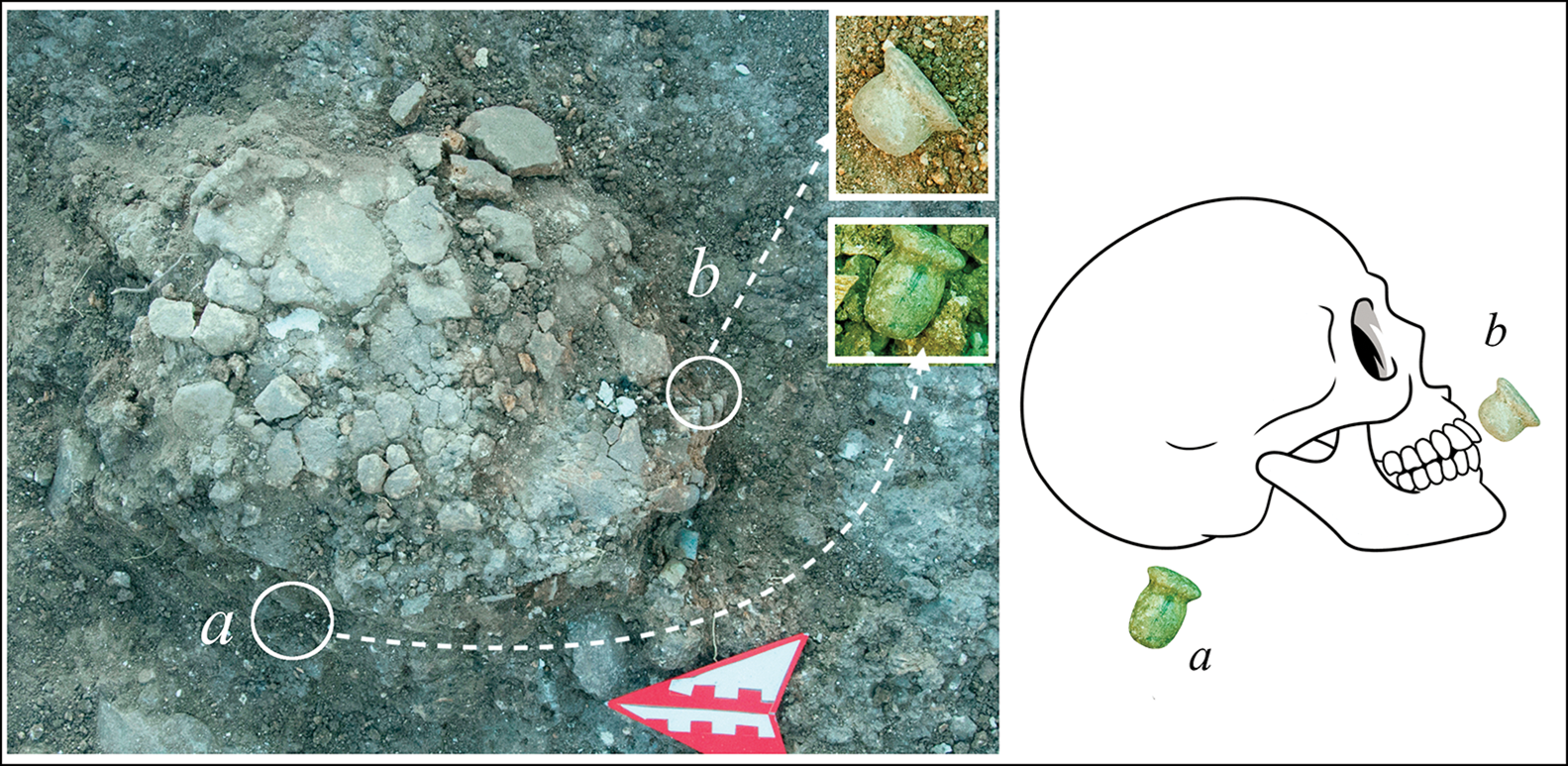
Most type-3 artefacts (Figure 2a, nos. 2–3, Figure 3, no. 3 & Figure 4) come from grave contexts. In some cases, length and diameter are almost the same. Some are similar to types 2 and 5 in profile but with a more pronounced neck area and more bulbous body. Similar examples come from a wide area across South-west Asia (Table 4). At Boncuklu Tarla this type comes from graves of the PPNA–B transition and from the middle PPNB. They are found either in the neck or ribcage area (Figure 6) and are therefore interpreted as true lip labrets. Type-5 artefacts are more exaggerated: the heads are wider than their body length, with either rounded or triangular profiles (Figure 2b, Figure 3, no. 5 & Figure 7)—though both show a characteristic T-form and are similar in size. Type-5 artefacts come from PPNA and PPNA–B transition levels at Boncuklu Tarla and their distribution within South-west Asia is limited to the southern Zagros region. This suggests that the use of type-5 was more restricted than type-2 artefacts with a round body and convex centre, which were present throughout the Neolithic across South-west Asia. That examples of type-5 have been found at Boncuklu Tarla indicates wider connections with the southern Zagros.
Grave 2017/16 Middle PPNB skull with in situ artefacts: a) is type 2, used in ear; b) is a type-3 labret (photographs from the Boncuklu Tarla Excavation Archive, figure by authors).
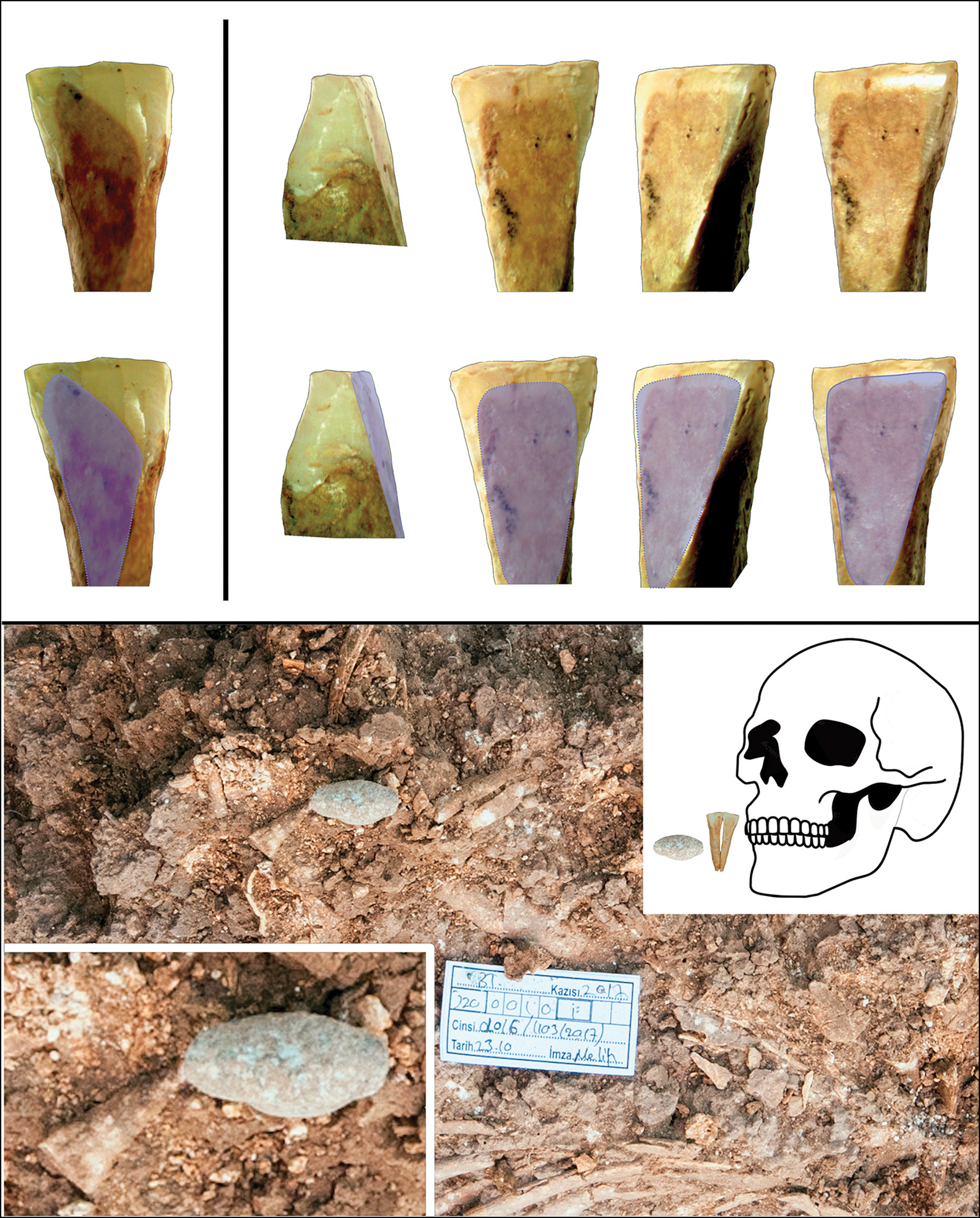
Grave 2017/103, PPNA: a type-5 labret example from inside the mouth (inset illustration). Top half of the Figure shows labial wear on the lower incisors of the individual caused by habitual adornment with the labret (photographs from the Boncuklu Tarla Excavation Archive, figure by authors).
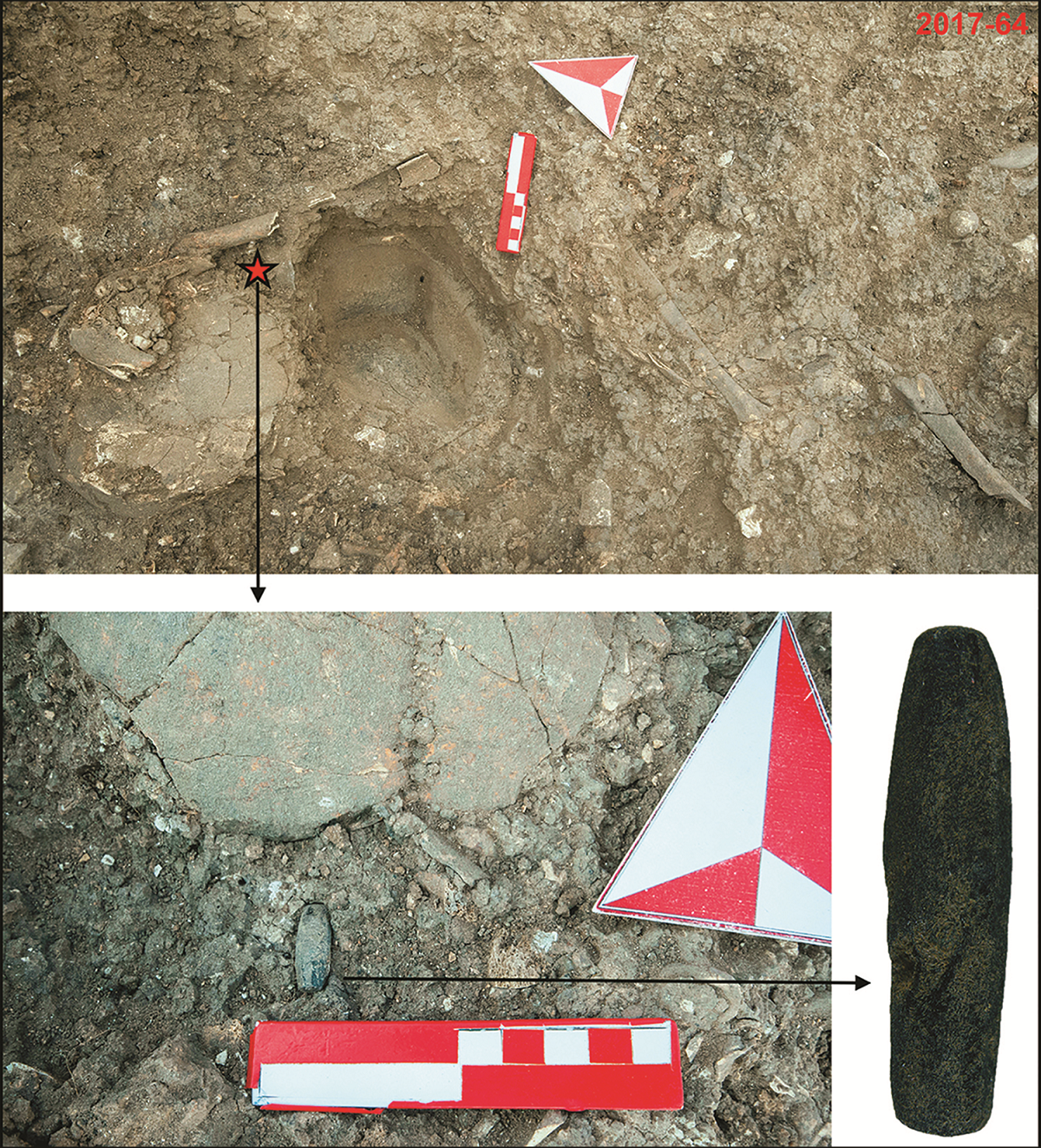
Type-6 artefacts are commonly made of obsidian, usually in the form of adapted micro-blade cores that were reshaped and polished (Figure 2d & Figure 3, no. 6). In some cases, the negatives of the removals can still be seen. The use of these cores to make ear decorations indicates a combination of recycling and symbolic activity, given that obsidian sources were not local. Type-6 artefacts date to the middle and late PPNB at Boncuklu Tarla, but are known from settlements of the Neolithic and Chalcolithic in the wider region (Table 4). They were found in several graves at Boncuklu Tarla (Figure 8), in most cases they are not in situ due to taphonomic processes or disturbance by later burials; however, examples recovered from the region of the head suggest use in ear perforations, as is also indicated by the lack of a defined head.
A middle PPNB type-6 ear ornament made from obsidian, found in grave 2017/64 (photographs from the Boncuklu Tarla Excavation Archive; figure by authors).
Type 7 consists of a single soapstone disc of middle PPNB date with concave sides and a small hole in the middle (Figure 2e, Figure 3 no. 7). It was found broken in half in a grave context, the pieces in opposite corners of the grave. Ethnographic examples indicate that such a form could be used as an ear decoration or labret (Reddish Reference Reddish2013). Similar artefacts are known from Neolithic and Chalcolithic settlements in the Zagros and southern Mesopotamia. In ethnographic examples, perforations in labrets are associated with the tethering of the ornament to the teeth to prevent its loss (Keddie Reference Keddıe1981: 63).
Evidence for labret use
In the context of South-west Asia, labret-like objects have been variously interpreted using inconsistent terminology (Aurenche & Kozlowski Reference Aurenche and Kozlowskı2000; Gebel et al. Reference Gebel2017), leading to terminology-led interpretations in which contextual evidence for functionality is lacking. Recovery of labrets in situ in grave contexts is therefore long awaited. At Boncuklu Tarla, a significant proportion are from grave contexts. While some, especially those in multiple burials, have been disturbed by post-depositional processes, including rodent activity, sufficient examples from secure contexts exist to offer important insights into their use. Some had not moved and remained lodged in position on the upper or lower surface of the skull or under the lower jaw.
Type-1 and type-2 artefacts are associated with the soft tissue of the ear or the ear canal area and were therefore probably inserted in perforations in the soft tissue or cartilage of the ear. To accommodate these artefacts, perforations would have needed to be of sufficient diameter that, once healed, the physical adaptation was likely to have been permanent. Evidence for the use of type-4 and type-6 artefacts remains elusive (Aurenche & Kozlowski Reference Aurenche and Kozlowskı2005: 30; Gebel et al. Reference Gebel2017); at Boncuklu Tarla, examples of these types were found in the region of the head but no more specific associations were observed. Type-5 artefacts, resembling types 1 and 2, can be interpreted as ear ornaments and, based on similarities in morphology, so may type 4. Ethnographic evidence (La Salle Reference La Salle2008) indicates that type 7 would likely have been used in a lip perforation as a labret. It is possible that it was broken through the middle for the purpose of insertion as it had a relatively large diameter.
In contrast, some examples of type-3 and type-5 artefacts were found within the rib cages of skeletons, close to the mandible, or within the oral cavity (Figure 7, lower). In addition to the recovery of a type-5 artefact from within the oral cavity of the skeleton from grave 2017/103 (PPNA), osteological analysis revealed wear on the anterior surface of this individual's lower incisors (Figure 7, upper). Localisation of the wear to the lower anterior dentition suggests that it was not caused by diet and there is no indication that such wear would be related to craft activities as has been suggested at other sites (Boquentin et al. Reference Bocquentin, Crevecoeur, Semal and Edwards2013). It is probable that the damage was caused by the long-term insertion of a stone item—such as the associated type-5 labret—in the mentolabial sulcus region (between the lower lip and the chin), the back (proximal flange) of which made abrasive contact with the tooth enamel. Over time, such contact would leave a characteristic faceting, which has been recorded in examples from diverse regions including the Pacific North-west and the Andes (for example Cybulski Reference Cybulski1974; Torres-Rouff Reference Torres-Rouff2003). Similar faceting of the labial and/or buccal surfaces of teeth from older male members of the Early Neolithic population at Mehrgarh, Pakistan, have been interpreted as evidence for labret use in the absence of extant labrets at the site (Frayer et al. Reference Frayer, Nava, Tartaglia, Vidale, Coppa and Bondioli2020). Ethnographic examples suggest that types 3 and 5 are suitable forms for such a location (Keddie Reference Keddıe1981; Eczet Reference Eczet2012) and we therefore conclude that medial labial perforation for the insertion of stone labrets was practised at Boncuklu Tarla from at least the PPNA.
Given the minimum 7mm diameter of both the labrets and ear ornaments, marked bodily alteration, visible even if the ornament was removed, would have resulted from their use. Initial use of these artefacts—the perforation of flesh and the process of enlarging the hole sufficiently to accommodate the eventual insertion of a full-size labret—required planning and the investment of time. Although analysis is ongoing, at Boncuklu Tarla at least seven male and nine female adults had such perforations but none have been associated with sub-adults, suggesting that this activity was age related. Recent examples from the Pacific Rim, where the use of large labrets of many forms was widespread, indicate that this process could be structured and carry social significance in terms of age, status and rites of passage (Keddie Reference Keddıe1981: 60). This corporal alteration represents the transition from ‘associated’ to ‘attached’ objects at one with the person (Sørensen Reference Sørensen, Hughes, Rebay-Salisbury and Sorensen2010: 56–7). The fabrication of the human body—through which the body may be reshaped or added to, using objects active in creating social relations through visual or other sensual means of communication and as ‘co-producers’ of society—is one of the ultimate ways in which lines are blurred between subject and object (Sofaer Reference Sofaer and Sofaer2007). Labrets also cause significant change to the way in which the wearer speaks, eats and breathes, so that this physical augmentation produces a multisensory change perceived by both wearer and viewer (La Salle Reference La Salle2008: 32), as well as a significant risk to the health of participants in the practice (Torres-Rouff Reference Torres-Rouff2003: 249). The diversity in ornament forms and materials utilised at Boncuklu Tarla leads us to suggest that the act of adding ornaments to the body was likely as important as the colour, texture or form of the augmentation.
Although labrets and ear ornaments were common in the ornamentation practices of the Early Neolithic in some regions of South-west Asia, there is no evidence of their use at the Neolithic sites of central Anatolia. They are, however, recorded in small numbers at sites around the western Anatolian peninsula, mostly in forms unfamiliar in the east (Baysal Reference Baysal2019, Reference Baysal2022: 7), and in the Aegean, where some examples show greater resemblance to the early eastern artefacts (Ifantidis Reference Ifantidis2019: 73). Ornaments associated with body perforation are by no means an omnipresent element of Neolithic ornamentation practices and have not yet been linked directly with the westward spread of Neolithic populations and lifeways into Europe.
Conclusion
The combination of contextual and physical anthropological evidence at Boncuklu Tarla confirms, for the first time, that personal ornamentation using body perforation was practised early in the Neolithic period and typological comparison of ornaments between sites shows that these practices were widespread as early as the PPNA. Repeated association of type-1 artefacts with the area around the ear in burials at Boncuklu Tarla suggest that these ornaments were inserted into the flesh or cartilage of the ear. Morphological similarities between types 1, 4 and 6 allow the ramifications of this association to be extended to all of these types. Likewise, associations between type-3 and type-5 artefacts and the rib cage or oral cavity of skeletons suggest that these types were intended as ornaments for lower lip perforations. This new evidence from Boncuklu Tarla will help disambiguate the terminology surrounding these artefacts and opens the way for a re-evaluation of existing South-west Asian Neolithic data, allowing us to explore regional ‘labret grammars’ hinted at in existing data (Figure 1) (Rorabaugh & Shantry Reference Rorabaugh and Shantry2017).
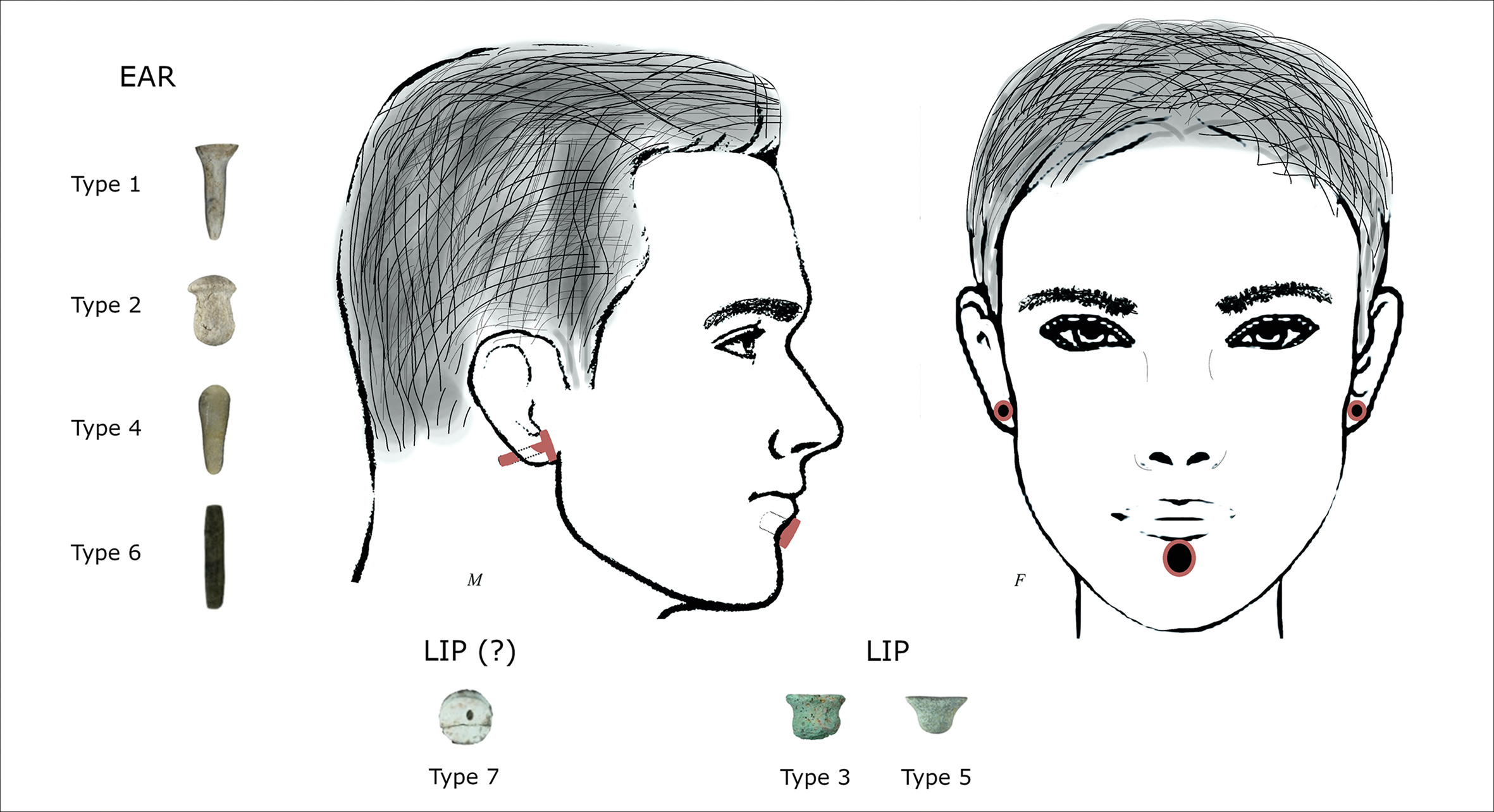
Although only a small proportion of the range of ornaments in use during the Neolithic were intended for ear and lip decoration, the presence of these ornaments shows that the people of Boncuklu Tarla practiced ornamentation that involved the permanent adaptation of the human body in at least two areas: the ear and lower lip (Figure 9). Such practice may be characterised as a corporal ornamentation tradition (Eczet Reference Eczet2012); the attaching of ornaments to the body and thereby augmenting the human form.
Illustration of hypothetical use of the PPN labrets and ear ornaments at Boncuklu Tarla (figure by authors).
While beads and pendants are common within the burials of babies and children, ear and lip ornaments are not; at Boncuklu Tarla labret-like artefacts have so far only been found in association with adults—suggesting that ornamentation practices varied according to age. Ear and lip ornaments were crafted from similar materials to other, non-perforating, ornaments at the site, suggesting that the corporal ornamentation tradition was an integral element within general ornamentation activity. We do not yet understand raw-material choice, but some relationship with regional material availability and site-specific preferences are observable based on similarities to choice of bead material. Despite the remaining questions, many items of unknown use in ornament assemblages can now be reinterpreted in association with the human body, defining different permanent or temporary ways of constructing appearance as part of a community's system of communication (Sørensen Reference Sørensen1997: 95) and structuring of individual and group identity.
Acknowledgements
We extend our thanks to the Ministry of Culture and Tourism of the Republic of Türkiye who provided the permissions for the Boncuklu Tarla Excavation Project.
Funding statement
This research received no specific grant from any funding agency or from commercial and not-for-profit sectors.


 Open access

