


The increase in the portion size of foods sold in supermarkets and served in restaurants has been blamed as a major contributor to the obesity epidemic( Reference Nestle 1 , Reference Hill and Peters 2 ). For designing effective prevention measures, a good understanding of how people compose meals and choose portion sizes when they eat out of home and when they prepare meals at home is required.
To assess the usefulness of interventions targeting portion size of meals, it is essential to know what portion sizes consumers choose from what food categories and whether consumers change their behaviour because of a manipulation. Furthermore, it is important to know whether portion size choices translate into actual food consumption. Notably, an apparent lack of instruments exists to assess people’s choice of portion sizes for meal compositions that can be used to evaluate interventions in large samples. For large-scale assessment of food behaviour, previous studies have used FFQ or 24 h recalls. However, these instruments assess dietary patterns and consumption frequencies of particular foods. A more recent experimental approach, the fake food buffet( Reference Bucher, van der Horst and Siegrist 3 ), assessed portion size choices of meal compositions in small samples. However, to the best of our knowledge, no instrument exists to date that can be used for large-scale assessment of people’s choices of portion sizes for meal compositions. The goal of the present study is therefore to develop and validate an instrument for assessing people’s choices of meal portion sizes for large samples. In the present study, we develop a web-based tool that allows planned food portion sizes to be assessed and we investigate the agreement of these portions with actual subsequent consumption. Such an instrument will allow research on how the choice of portion size is affected, for example, by different intervention measures such as nutrition information, product labels or advertisements, in large samples. It can thus be used to evaluate the potential of large-scale intervention measures.
To date, most efforts have focused on developing methods that assess past consumption, while little research has been conducted to develop and validate tools to measure planned food choices. Being able to predict decisions on future portion sizes and agreement with later consumption is essential to assess the potential of interventions targeting portion size behaviour.
In the current literature, only data on the assessment methods of past consumption are available. Of the techniques to measure past food intake and portion size choice, weighing food on plates before and after eating is the most accurate. However, the ‘weighing method’ not only requires effort in terms of costs, labour and time, but also is disruptive for the study subjects. There are many circumstances where scales are not available or weighing is tedious, and the usage of scales becomes increasingly difficult as the size of the study population increases.
To overcome the limitations of weighing food, many alternative techniques to estimate food consumption by individuals have been developed. Daily consumption methods consist of several 1 d food recalls or records to estimate the quantity of a person’s usual food intake or diet histories and FFQ to obtain retrospective information on patterns of food intake during a longer period( Reference Gibson 4 ). These tools may be interviewer- or self-administered; paper-and-pencil- or web-based (for a comparison of traditional and web-based tools, see references 5 and 6).
The estimate of portion sizes consumed is probably the largest source of measurement error in most dietary assessment methods. Errors arise from failures to accurately quantify amounts and from divergent conceptions of what a ‘normal’ portion size is( Reference Gibson 4 , Reference Guthrie 7 ).
Previous research has shown that the accuracy of portion size estimates varies with type and size of food. Large errors occur for estimates of foods low in weight but high in volume such as salads, for small quantities and for certain non-staple foods( Reference Gittelsohn, Shankar and Pokhrel 8 ). In addition, it appears that the estimation error increases with the size of the portions( Reference Young and Nestle 9 ).
Respondents’ ability to correctly describe consumed portion sizes without the use of measurement aids was described as poor. Guthrie compared estimated serving sizes of twelve foods with actual serving sizes. She found that while beverages were estimated quite well, portion sizes of solid foods were overestimated by more than 50 % by a large proportion of respondents( Reference Guthrie 7 ).
To enhance the accuracy of portion estimates, portion size measurement aids are commonly used. Household measures, food drawings or photographs, and food models are often utilized for different approaches. Measurement aids can be classified into two- and three-dimensional types( Reference Cypel, Guenther and Petot 10 ). Food models and replicates have been used in food consumption surveys( Reference Quigley and Watts 11 – Reference Parnell, Scragg and Wilson 13 ) and in experimental behavioural research( Reference Bucher, van der Horst and Siegrist 14 , Reference Bucher, van der Horst and Siegrist 15 ). It has been shown that portions selected from fake foods agree well with amounts served from the corresponding real foods( Reference Bucher, van der Horst and Siegrist 3 ). However, the use of three-dimensional anchors for portion size estimation is limited to specific applications in which participants can access the models. Therefore, photographs as portion size measurement aids are increasingly being used. Nelson and Haraldsdóttir summarized practical advice on the development of photograph series and their validation( Reference Nelson and Haraldsdóttir 16 , Reference Nelson and Haraldsdóttir 17 ).
The mean differences between served portion sizes and subsequent estimates of portion sizes from photographs were found to be acceptable( Reference Lucas, Niravong and Villeminot 18 – Reference Ovaskainen, Paturi and Reinivuo 20 ). But, to date, few studies have tried to validate food portions from pictures in comparison with actual food consumption( Reference Faggiano, Vineis and Cravanzola 21 – Reference De Keyzer, Huybrechts and De Maeyer 23 ).
As an example, De Keyzer et al. measured recall ability with photographs after 1–2 d and 4 d( Reference De Keyzer, Huybrechts and De Maeyer 23 ) and found correlations ranging from 0·42 to 0·75; however, their choice was limited to bread, margarine, water and coffee.
In conclusion, studies on the usefulness of photographic material for portion size estimation in dietary recall studies are quite positive, when the photographic material more closely reflects a daily-life food choice situation.
However, to assess the usefulness of interventions targeting portion size, it is essential to know whether consumers change their behaviour because of a manipulation and whether intended portion size choices translate into actual food choices. However, no validated tools exist to measure the portion size choices of meal composition in large-scale samples.
In the present study we therefore develop a web-based tool that assesses portion size choices of meal compositions and we investigate whether people can estimate compositions of meals that they intend to consume in the near future using this tool.
From the literature on portion size estimation of past food consumption, we hypothesize that people can estimate future food consumption to some level of precision and we expect that photographic material is helpful. When the photographic material displays a daily life situation such as composition of a meal that people may have for lunch or dinner, they may rely on their previous experiences and habits in similar everyday food choice situations.
To get insight into the degree to which people rely on their previous experiences, habits and attitudes when making decisions on food based on photographic material, the association between these food factors and food choices will be analysed. From previous research, we know that food preferences( Reference Drewnowski 24 ), energy requirements( Reference Bucher, van der Horst and Siegrist 15 ) and health interests( Reference Roininen, Tuorila and Zandstra 25 ) positively correlate with food choices. A correlational analysis of aggregated data from Finnish (n 467), Dutch (n 477) and British (n 361) consumers revealed a positive association (r=0·44, P<0·01) between health interest and consumption frequency of healthy foods (low-fat cheese sandwich, low-fat chocolate bar, non-fat milk, light soft drink) and a negative association (r=−0·48, P<0·01) between health interest and consumption frequency of pleasant foods (e.g. full-fat cheese sandwich, full-fat chocolate bar, full-fat milk, regular soft drink)( Reference Roininen, Tuorila and Zandstra 25 ). A correlational study( Reference Keller and van der Horst 26 ) in a random sample from the German-speaking part of Switzerland (n 1122) revealed a positive association between liking healthy foods (vegetables, salad and fruits; r=0·38, P<0·001), health interest (r=0·36, P<0·001) and consumption frequency of vegetables, salad and fruits. That study also revealed a positive association (r=0·28, P<0·001) between liking unhealthy foods (cookies, chocolates and pastries) and consumption frequencies of these foods, and a negative association (r=−0·16, P<0·001) between health interest and consumption frequencies of these unhealthy foods. Furthermore, it has been shown that an individual’s personal energy requirement calculated from body weight, age and gender is related to served amounts in a buffet setting( Reference Bucher, van der Horst and Siegrist 15 ).
Therefore, for a daily meal, we expect a good agreement between food selection from photographic material and food preferences, energy requirements, health interest and consumption of real meals.
In the present paper we describe the design and analysis of two studies. In the first study, we conducted an Internet survey to develop the ‘web-buffet’. The web-buffet is an online food buffet where participants can choose their composition of preferred foods. In the second study, we validated the web-buffet in the laboratory. We compared participants’ choices of portion sizes from the web-buffet with their consumption of the same real meal some time later. This web-based tool allows relevant factors of people’s food and portion choices to be examined in large samples of the general population. It can also be used to examine intervention measures to improve individuals’ food choices and dietary behaviours in large samples.
Study I
The aim of the first study was to develop the web-buffet and assess the correlation between participants’ meal selection from the web-buffet and their food preferences, health interests and energy requirements.
If the web-buffet serves as a valid instrument to measure participants’ meal composition and choice of portion size when selecting from the web-buffet, participants should behave in a similar natural way as in other food choice situations and rely on their food preferences, health interests and energy requirements while choosing from the web-buffet. Therefore, we expected positive correlations between food preferences and chosen amounts of food, energy requirements and total energy chosen. Furthermore, we expected a positive relationship between health interest and choice of more healthful foods from the web-buffet.
Photographic material of the web-buffet
One hundred and forty-four photographs were taken of meals containing poultry, fish or a sausage with varying proportions of rice, fries or pasta and either carrots or beans. The foods used for the pictures were all replicates (Döring GmbH, Munich, Germany). In previous studies, the energy contents of the fake foods were estimated in comparison to corresponding real food items (for methodological details, see references 3 and 15). The 144 possible food combinations contained between 943 kJ (fish and beans) and 3906 kJ (sausage and fries). All photographs with information on amounts and estimated energy contents can be found on the authors’ website (http://www.cb.ethz.ch/research/web-buffet).
Materials for the questionnaire
Food preferences for all foods offered were measured with the question, ‘How much do you like…’ on a 6-point scale (1=‘I don’t like it at all’; 6=‘I like it very much’). Immediate hunger was measured with the question, ‘How hungry do you feel right now?’ on a 6-point scale (1=‘not hungry at all’; 6=‘very hungry’). Health interest was measured with a translated version of the General Health Interest Scale by Roininen et al.( Reference Roininen, Lähteenmäki and Tuorila 27 ). Five general items were used (e.g. ‘I am very particular about the healthiness of food’). Specific items focusing on low fat or vitamins were not used. Participants answered on a 6-point scale ranging from 1=‘does not apply at all’ to 6=‘applies a lot’. Cronbach’s α was 0·84.
Participants
As previous research found evidence for medium-sized correlations between taste preferences, energy requirements and health interests, a sample size of sixty-eight would be appropriate to test at least medium correlations with a power of 0·80 on an α level of 0·05( Reference Cohen 28 ). However, we aimed to double this sample size to ensure the sample had a high variety with regard to gender, age and education.
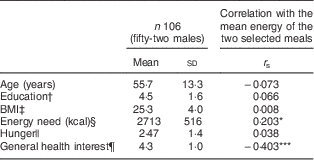
An online questionnaire with the web-buffet was sent to 195 people of a panel. Panel participants were previously recruited via an invitation letter sent to addresses randomly drawn from the Swiss telephone book. One hundred and seventeen persons completed the questionnaire (60 % response rate). People who did not eat sausages, fries or fish were excluded from participation by a filter question (n 11). Data from 106 persons were analysed (Table 1).
Study I: descriptive characteristics of the study population and correlation analysis of control variables with the mean energy of the meals selected from the web-buffet
r s, Spearman’s correlation coefficient.
Significance: *P<0·05, ***P<0·001.
† Categories ranged from 1 (no education) to 6 (university degree).
‡ BMI was calculated from self-reported weight and height measures (kg/m2).
§ Daily energy requirements were estimated from self-reported body weight, age and gender( 29 ).
|| On a scale from 1 (‘not hungry at all’) to 6 (‘very hungry’).
¶ Average of five items derived from Roininen et al.( Reference Roininen, Lähteenmäki and Tuorila 27 ).
Procedure
In the questionnaire, participants were asked to select two meals they would like to eat for lunch in a cafeteria next week from a web-buffet. Participants could therefore choose a protein component (sausage, poultry or fish), a vegetable (beans or carrots) and a side dish (rice, pasta or fries). Pictures of the foods with labels were shown to the respondents (Fig. 1(A)).
(colour online) The web-buffet. (A) Participants could first decide on the foods they liked and then choose a meal composition. (B) Example of the choice offered to a participant who selected fish, carrots and pasta. Note: All foods on these pictures are replicates (Döring GmbH, Munich, Germany)

On the next survey page, participants were shown meals with the foods they had chosen in eight different proportions (Fig. 1(B)). They could choose a meal on a plate with a fixed amount of meat/fish and a varying amount of vegetables and side dishes. The amount of vegetables increased linearly while the amount of side dishes decreased linearly from meal 1 to meal 8. An example of the selection a person would have been presented if she or he had chosen carrots, pasta and fish is shown in Fig. 1(B). Participants were allowed to use the forward and back buttons to look at all possible combinations and change their choices. In total 144 combinations were possible, allowing the respondents to select meals that contained between 943 kJ and 3906 kJ.
In the next step, the participants could choose a second meal for the next week from the same food selection. After the meal choice task, food preference, general health interests and anthropometric data were assessed.
Data were analysed using the statistical software package IBM SPSS Statistics version 20. Bivariate correlations were calculated; for normal data, Pearson (r) and for non-normal data, Spearman correlation coefficients (r s) are reported. All tests are based on a 0·05 significance level.
The study was conducted according to the guidelines laid down in the Declaration of Helsinki. Written informed consent was obtained from all participants, who were informed about the study’s aim subsequent to study completion. Ethical approval from the institutional review board was not required.
Results
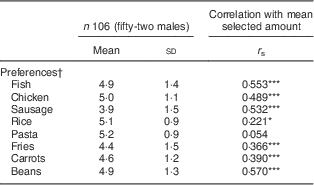
The results of Study I indicate a good agreement of chosen food quantities with personal preferences (Table 2). The correlations of the preferences for meat (chicken, sausage or fish) with the respective selection ranged from r s=0·49 to 0·55. Likewise, the amounts of vegetables selected (beans or carrots) were positively associated with the respective preferences (beans r s =0·57, carrots r s =0·39). For the starchy side dishes, the preferences for fries and the amount of fries chosen were significantly related (r s =0·37), as were the amount of rice and the preference for rice (r s =0·22). The preference for pasta and the amount of pasta chosen were not related. The average preference for pasta was very high (mean=5·2, sd=0·9).
Study I: correlation of reported preferences with the mean energy of the foods selected from the web-buffet
r s, Spearman’s correlation coefficient.
Significance: *P<0·05, ***P<0·001.
† Food preferences were measured on a 6-point scale (1=‘I don't like it at all’; 6=‘I like it very much’).
The variable health interest was positively associated with the amount of vegetables chosen (r s =0·36, P<0·001) and negatively with the amount of meat (r s =−0·33, P<0·001) and starchy side dishes (r s =−0·31, P<0·001). Overall, participants’ health interest was negatively related to the average amount of energy chosen (r s =−0·403, P<0·001).
Furthermore, the mean energy of the chosen meals was positively related to the personal energy needs (r s =0·203, P<0·05), which was calculated from self-reported weight, gender and age( 29 ), and negatively related with a person’s health interests. Reported hunger was not related to the energy of the meals selected from the web-buffet (Table 1).
The energy selected for the first meal was significantly related with the energy selected for the second meal (r s =0·30, P<0·001). The amounts of energy chosen from vegetables, meats and starchy side dishes were positively related between meals 1 and 2, while the amounts of the individual meal components were negatively related between the two meals (Table 3).
Study I: correlation and composition of the meals selected from the web-buffet (n 106)

r s, Spearman’s correlation coefficient.
Significance: *P<0·05, **P<0·01, ***P<0·001.
† Number and percentage of people who selected this option.
‡ Mean energy and standard deviation if the food was selected.
§ Energy from sausage, fish or chicken.
|| Energy from fries, pasta or rice.
¶ Energy from carrots or beans.
Conclusions
Study I demonstrated a good performance of the web-buffet. The total energy of the two meals, including the amount of vegetables, meat and starchy side dishes, that participants selected from the photographic material were significantly positively related, even though people chose different food items for the two meal occasions. This indicates that participants tended to choose a constant meal composition, but varied the food items between the two meals.
In addition, people’s preferences were significantly related to the amounts they chose for their meals, while health interest was positively related to the amount of vegetables served and negatively related to the total amount of energy served. Further, the choice was related to participants’ calculated energy needs. Although the relationship was small, it is still relevant, as the chosen meals represent only a fraction of what a person eats during one day. This indicates that participants relied on their food preferences, health interests and energy requirements, and behaved naturally when selecting food from the web-buffet as they would in other daily life situations.
Study II
The aim of the second study was to assess the agreement of pre-selected portion sizes from the web-buffet with actual food consumption. Based on the first study, we expected a good agreement between food choice from the web-buffet and actual food consumption, as in both situations people relied on their food choice habits and preferences.
Materials
For practical reasons the study was limited to one meal: a sausage, green garden beans and fries. The web-buffet therefore consisted of photographs from one meal with varying proportions of beans and fries. The corresponding real foods (sausages, French fries and beans) were obtained from local retailers and prepared in an experimental kitchen.
Participants
A high correlation is an indicator for a high performance of the online test. A sample size of twenty-two is appropriate to test at least a large correlation with a power of 0·80 on an α level of 0·05( Reference Cohen 28 ). Slightly more participants were invited to participate in the experiment to make sure that the sample size was still large enough even if participants were to drop out during the experiment.
Thirty-four students participated in a cafeteria meal evaluation study in exchange for a free lunch. One student, who forgot to fill out the questionnaire, was therefore excluded. Another person was excluded as her data could not be matched with the online data; she entered the wrong personal code and could not be distinguished from the persons who only signed up for the study but did not show up for the meal consumption. The final sample consisted of thirty-two students (nineteen males) with a mean age of 24·4 years (sd=4·0 years), who were, on average, normal weight (mean BMI=22·5 kg/m2, sd=2·9 kg/m2).
Procedure
Students were invited to participate in a cafeteria meal degustation. Prior to the eating event, participants were sent an online questionnaire including the pictorial material of the web-buffet developed in Study I and were asked to select the amount of food they would like to eat. The questionnaire had to be filled out at least 24 h before the eating event. In the online questionnaire, participants were asked to decide on one of the eight meals that came closest to what they would like to eat (Fig. 2(A)).
(colour online) Students were invited for a cafeteria meal degustation. Sausage, fries and beans were offered. (A) Participants were asked in an online questionnaire to decide on the portion they would like to eat at the degustation event. Photographs were taken of food replicates produced by Döring GmbH, Munich, Germany. (B) Buffet offered to participants 24–48 h after they filled in the questionnaire. Photographs were taken of real foods that were offered at the degustation

The meal evaluation was carried out over five consecutive days. Participants were invited individually into the study room to serve themselves food from a small buffet (Fig. 2(B)). Upon entering, the participant was handed a plate with a fried sausage on it and he/she was instructed to help him- or herself to as much fries and beans as he/she would like to eat. The participants were informed that they could not take a second serving and they were left alone to serve up their meals.
After serving, the participant was invited to sit down at a table to eat the meal and fill out a short questionnaire on the liking of the offered food. Walls separated the tables and participants could not communicate or see each other. The experimenter weighed the serving vessels in another room before and after serving. The participants were unaware that the food was weighed, as scales were situated outside the dining room.
After a participant had finished eating and had handed the plate back to the experimenter, he/she was given a second questionnaire to assess anthropometrics. Meanwhile, the experimenter weighed possible leftovers in another room, out of view of participants. Once each participant had finished serving his/her food, the vessels were refilled with fresh beans and fries for the next person.
Data were analysed using the statistical software package IBM SPSS Statistics version 20. The agreement of the pre-selected meals and the consumed meals was assessed with the Bland–Altman method( Reference Bland and Altman 30 ). Bivariate correlations were calculated; for normal data, Pearson (r) and for non-normal data, Spearman correlation coefficients (r s) are reported. All tests are based on a 0·05 significance level.
The study was conducted according to the guidelines laid down in the Declaration of Helsinki. Written informed consent was obtained from all participants, who were informed about the study’s aim subsequent to study completion. Ethical approval from the institutional review board was not required.
Results
To validate the web-buffet, we compared the amounts chosen from the pictures in the online survey with actual food consumption. Data from thirty-two students, who participated in the cafeteria meal evaluation study, were analysed. The results of the study are summarized in Table 4. The correlation of the energy selected from the photographs and the energy consumed was high (r=0·63, P<0·001). A plot of the energy consumed against the energy selected in the online questionnaire is shown in the online supplementary material, Supplemental Fig. 1(A).
Study II: comparison of the energy selected from the web-buffet with actual energy served and consumed subsequently at a real buffet (n 32, nineteen males)

r s, Spearman’s correlation coefficient.
Significance: *P<0·05, ***P<0·001.
† A correlation coefficient could not be calculated, as almost all participants ate the entire sausage and there was no variation in the data.
The agreement of the energy selected from pictures in the online questionnaire with energy intake was assessed with the Bland–Altman method( Reference Bland and Altman 30 ). The percentage differences in energy between the meals consumed and the meals selected were plotted against the mean energy values of those two meals. The Bland–Altman plot shows that the mean energy consumed (=3364 kJ, sd=830 kJ) was slightly higher compared with the mean energy selected from pictures in the online questionnaire (=2998 kJ, sd=471 kJ; see online supplementary material, Supplemental Fig. 1(B)). The mean difference was 367 kJ, sd=599 kJ (10·5 %). In addition, the trend shows that participants who previously selected a small portion ate less than expected, while participants who pre-selected a large portion ate more than expected.
All but seven of the participants ate the entire meal they had served (mean leftovers=531 kJ, sd=160 kJ; n 7).
Conclusion
The pre-selected meal from the web-buffet was significantly related to the amounts of real foods that participants served and consumed within the laboratory during the meal evaluation study. The good agreement between meals selected from the photographic material and consumption of the meal demonstrates a high performance of the web-buffet. However, there was a tendency for people who selected a smaller amount from the web-buffet to eat less food than indicated, while people who selected big portions ate more than they had predicted.
Overall, there was an average underestimation of what would be consumed during the degustation, which might be because the foods in real life were more appealing than they appeared on the photographs and that expectations from the cafeteria meal were low in advance.
General discussion
The use of replica foods allows the study of people’s food choices and meal compositions in well-controlled experimental settings( Reference Bucher, van der Horst and Siegrist 3 ). Several experimental studies have demonstrated that the ‘fake food buffet’ is a beneficial method to examine how, for example, environmental cues influence and change the way people compose their meals( Reference Bucher, van der Horst and Siegrist 14 , Reference Bucher, van der Horst and Siegrist 15 ). The development of the web-buffet is based on the fake food buffet with a similar aim and scope. However, by means of the web-based tool, people’s food choices can also be examined in a large sample.
In two studies, we developed the method and assessed its validity. The good agreement of food choices from the web-buffet with respondents’ preferences, energy requirements, health interests and actual consumption demonstrates a high performance of the tool. The agreement of the new tool to estimate future consumption is well within the range of studies that compared portion size from photographic material to past food consumption( Reference Turconi, Guarcello and Gigli Berzolari 22 , Reference De Keyzer, Huybrechts and De Maeyer 23 ).
However, there was an average underestimation of subsequent consumption by about 11 %, likely because foods in real life are more appealing than in the photographs.
Further, we found an underestimation by those who selected larger portions and an overestimation by those who selected smaller portions, meaning that people who expected to eat a big portion consumed a bigger portion while people who expected to consume a small portion ate less during the degustation.
This phenomenon is similar to the so-called ‘flat slope syndrome’, which is well known from 24 h food recalls( Reference Faggiano, Vineis and Cravanzola 21 , Reference Stunkard and Waxman 31 ). The flat slope syndrome is the tendency towards underestimation of energy by those who eat larger portions and overestimation by those who eat smaller portions( Reference Stunkard and Waxman 31 , Reference Flegal 32 ).
In addition and notably, the validity assessment was rather tough because of the length of time between the meal pre-selection and consumption (24–48 h), during which participants had the opportunity to completely change their minds and serve a different composition than they had indicated.
The web-buffet does not contain a fully representative selection of foods available in everyday life. However, the scope of the tool is not to measure particular food product choice, but rather the choice of food categories and quantities. In this respect, the finding that people vary their particular food products, but choose constant meal compositions (e.g. constant amounts of starch foods or vegetables), is of importance. Thus a future version of the web-buffet would benefit from adding side dish options such as salad and desserts.
Further, the web-buffet at present does not offer a suitable option for vegetarians; therefore, a future version of the web-buffet should include alternative sources of protein such as tofu or legumes.
Despite the mentioned limitations, to our knowledge, the present study is the first one that has assessed the agreement of meal composition selected from photographic material with actual food intake. It was demonstrated that respondents are able to select foods they like, in their choice of combination from web-based photographic material, and that this selection serves as a valid proxy for their actual food consumption.
The web-buffet has several beneficial possibilities of application. It facilitates the study of people’s food choices and meal composition in a large sample, which allows an experimentally well-controlled study of external influences on food choices in a large sample of the general population. In addition, it permits the study of individual differences in food choices such as the influence of people’s personality, attitudes towards healthy eating, nutritional knowledge or eating styles on food choice and meal composition. Furthermore, the question can be examined regarding how individual differences in food choice interact with external influences, such as whether individuals with different levels of nutritional knowledge, health awareness or eating styles change their food choices in response to different environmental cues. It can thus help to better understand the cognitive processes underlying food choice and meal composition. Moreover, it can help to examine interventions to improve individual food choices and dietary behaviours in large samples.
The photographic material for the construction of the web-buffet with information on portion sizes and energy contents can be obtained from the authors’ website (http://www.cb.ethz.ch/research/web-buffet).
Acknowledgements
Financial support: This research received no specific grant from any funding agency in the public, commercial or not-for-profit sectors. Conflict of interest: None. Authorship: T.B. and C.K. jointly designed the study. T.B. led the analysis and the writing and C.K. provided feedback at all stages. Ethics of human subject participation: The study was conducted according to the guidelines laid down in the Declaration of Helsinki; ethical approval from the institutional review board was not required.
Supplementary material
To view supplementary material for this article, please visit http://dx.doi.org/10.1017/S1368980014002456



