







1. Introduction and statement of results
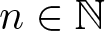
A partition of 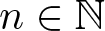 $n \in \mathbb{N}$ is an $r$-tuple $(n_1,n_2,\ldots,n_r)\in \mathbb{N}^r$ with $r\le n$ such that $ n_1\geq n_2\geq \cdots\geq n_r\geq 1$ and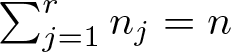 $\sum_{j=1}^rn_j=n$. We call $n_j$ the $j$-th part of the partition and denote by $p(n)$ the number of partitions of $n$. By Euler, the generating function for $p(n)$ is given by
 \begin{equation*}
\sum_{n\ge0} p(n)q^n=\prod_{n\ge1} \frac{1}{1-q^n}.
\end{equation*}
\begin{equation*}
\sum_{n\ge0} p(n)q^n=\prod_{n\ge1} \frac{1}{1-q^n}.
\end{equation*} More generally, a  $k$-coloured partition of $n$ is a partition of $n$ where each part is assigned one of $k$ colours, and $p_k(n)$ counts the number of $k$-coloured partitions of $n$. Note that $p_1(n)=p(n)$. The generating function of $p_k(n)$ is given by
 \begin{equation*}
\sum_{n\ge0}p_k(n)q^n=\prod_{n\ge1}\frac{1}{(1-q^n)^k},
\end{equation*}
\begin{equation*}
\sum_{n\ge0}p_k(n)q^n=\prod_{n\ge1}\frac{1}{(1-q^n)^k},
\end{equation*}where we set 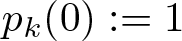 $p_k(0):=1$. This identity makes $p_k(n)$ important in combinatorics and in other fields of mathematics. One such application can be found in algebraic geometry. For a smooth, projective surface $S$, there is a smooth projective variety of dimension $2n$, called the Hilbert scheme of $n$ points over a surface, denoted by $S^{[n]}$. We denote the topological Euler characteristic of $S$ and $S^{[n]}$ by $\chi(S)$ and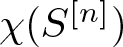 $\chi(S^{[n]})$, respectively. The generating function of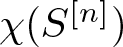 $\chi(S^{[n]})$ is given by (see [Reference Göttsche12, equation $(2)$, Theorem 0.1]),
 \begin{equation*}
\sum_{n\ge0}\chi\left(S^{[n]}\right)q^n=\prod_{n\ge1}\frac{1}{(1-q^n)^{\chi(S)}}.
\end{equation*}
\begin{equation*}
\sum_{n\ge0}\chi\left(S^{[n]}\right)q^n=\prod_{n\ge1}\frac{1}{(1-q^n)^{\chi(S)}}.
\end{equation*}Thus we have
 \begin{equation*}
\chi\left(S^{[n]}\right)=p_{\chi(S)}(n).
\end{equation*}
\begin{equation*}
\chi\left(S^{[n]}\right)=p_{\chi(S)}(n).
\end{equation*}To give another example, in their study of supersymmetric gauge theory and random partitions, Nekrasov and Okounkov [Reference Nekrasov and Okounkov15] proved the famous formula
 \begin{equation*}
\sum_{\lambda\in\mathcal P}q^{|\lambda|}\prod_{h\in\mathcal H(\lambda)}\left(1-\frac{\alpha}{h^2}\right)=\prod_{n\geq1}(1-q^n)^{\alpha-1}, \quad \alpha\in{\mathbb C}.
\end{equation*}
\begin{equation*}
\sum_{\lambda\in\mathcal P}q^{|\lambda|}\prod_{h\in\mathcal H(\lambda)}\left(1-\frac{\alpha}{h^2}\right)=\prod_{n\geq1}(1-q^n)^{\alpha-1}, \quad \alpha\in{\mathbb C}.
\end{equation*} Here,  $\mathcal P$ denotes the set of all partitions, $|\lambda|$ denotes the size of the partition, and $\mathcal H(\lambda)$ denotes the (multi)set of hook lengths of $\lambda$. Key combinatorial applications of this formula, as well as extensions and an elementary proof, were given by Han [Reference Han8].
Inspired by Bessenrodt–Ono’s proof [Reference Bessenrodt and Ono2] that  $p(a)p(b) \gt p(a + b)$ for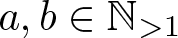 $a,b\in{\mathbb N}_{ \gt 1}$ with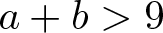 $a+b \gt 9$, Chern–Fu–Tang [Reference Chern, Fu and Tang4] showed that the same inequality holds for $p_k(n)$ with finitely many exceptions. They then speculated on a strengthening of this result, inspired by the log-concavity results of Nicolas [Reference Nicolas16] and DeSalvo–Pak [Reference DeSalvo and Pak6]. Specifically, they conjectured that for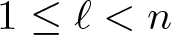 $1\le\ell \lt n$ and $k\geq 2$, except for $(k,n,\ell)=(2,6,4)$, we have
 \begin{equation*}
p_k(\ell+1)p_k(n-1)\geq p_k(\ell)p_k(n).
\end{equation*}
\begin{equation*}
p_k(\ell+1)p_k(n-1)\geq p_k(\ell)p_k(n).
\end{equation*}Three of the authors and Tripp [Reference Bringmann, Kane, Rolen and Tripp3] proved this conjecture. In this paper, we modify and strengthen this conjecture.
Theorem 1.1. For 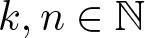 $k,n\in\mathbb N$ with $k\geq3$ and $(k,n)\neq(3,1)$, $p_k$ is strictly log-concave. That is, we have
 \begin{equation*}
p_k^2(n) \gt p_k(n-1)p_k(n+1).
\end{equation*}
\begin{equation*}
p_k^2(n) \gt p_k(n-1)p_k(n+1).
\end{equation*}We deduce the following.
Corollary 1.2. (1) For 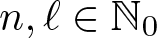 $n,\ell \in \mathbb{N}_0$ with $0\le \ell\le n-2$ and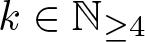 $k\in \mathbb{N}_{\ge4}$, we have
 \begin{equation*}
p_k(n-1)p_k(\ell+1) \gt p_k(n)p_k(\ell).
\end{equation*}
\begin{equation*}
p_k(n-1)p_k(\ell+1) \gt p_k(n)p_k(\ell).
\end{equation*} (2) For  $k=3$ and $1\le \ell\le n-2$, we have
 \begin{equation*}
p_3(n-1)p_3(\ell+1) \gt p_3(n)p_3(\ell).
\end{equation*}
\begin{equation*}
p_3(n-1)p_3(\ell+1) \gt p_3(n)p_3(\ell).
\end{equation*} (3) For  $k=2$ and $1\le \ell \le n-2$ with $(n,\ell)\neq (6,4)$, we have
 \begin{equation*}
p_2(n-1)p_2(\ell+1) \gt p_2(n)p_2(\ell).
\end{equation*}
\begin{equation*}
p_2(n-1)p_2(\ell+1) \gt p_2(n)p_2(\ell).
\end{equation*}Next, we prove a result which extends Corollary 1.2 to partitions of general length. For this, we require the following definition.
Definition. For a sequence  ${\boldsymbol a}=(a_1,a_2,\ldots,a_r)\in \mathbb{N}^r$, we define
 \begin{equation}
p_k({\boldsymbol a}):=p_k(a_1)p_k(a_2)\ldots p_k(a_r).
\end{equation}
\begin{equation}
p_k({\boldsymbol a}):=p_k(a_1)p_k(a_2)\ldots p_k(a_r).
\end{equation}In this notation, Corollary 1.2 states (under the conditions of Corollary 1.2)
 \begin{equation}
p_k(n-1,\ell+1) \gt p_k(n,\ell).
\end{equation}
\begin{equation}
p_k(n-1,\ell+1) \gt p_k(n,\ell).
\end{equation} Noting that  $(n-1, \ell+1)$ and $(n, \ell)$ are both partitions of the same length, we next recall a partial ordering on partitions of the same length, known as ‘majorization’. Related notions were considered earlier by Muirhead [Reference Muirhead14], Lorenz [Reference Lorenz13], Dalton [Reference Dalton5], Schur [Reference Schur18], and others. The following particular notation and terminology was given by Hardy, Littlewood, and Pólya [Reference Hardy, Littlewood and Pólya9], [Reference Hardy, Littlewood and Pólya10, Subsection 2.18].
Definition 1.3. For partitions  ${\boldsymbol a}=(a_1,\ldots,a_r)$ and ${\boldsymbol b}=(b_1,\ldots,b_r)$ of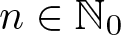 $n\in{\mathbb N}_0$, we say ${\boldsymbol b}$ majorizes ${\boldsymbol a}$, denoted by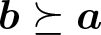 ${\boldsymbol b}\succeq{\boldsymbol a}$, if
 \begin{equation*}
\sum_{j=1}^\nu a_j\leq \sum_{j=1}^\nu b_j, \text{for all } \nu \in \{1,2,\ldots,r-1\}.
\end{equation*}
\begin{equation*}
\sum_{j=1}^\nu a_j\leq \sum_{j=1}^\nu b_j, \text{for all } \nu \in \{1,2,\ldots,r-1\}.
\end{equation*} If  $\boldsymbol{b}$ majorizes $\boldsymbol{a}$ and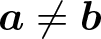 $\boldsymbol{a}\neq \boldsymbol{b}$, then we write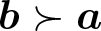 $\boldsymbol{b}\succ \boldsymbol{a}$.
Note that the partition  $(n, \ell)$ majorizes the partition $(n-1, \ell+1)$, and (1.2) implies that $p_k$ reverses this partial ordering. In our next result, we extend the inequality in (1.2) to other majorizations.
Theorem 1.4. Let  ${\boldsymbol a}=(a_1,a_2,\ldots,a_r)$ and ${\boldsymbol b}=(b_1,b_2,\ldots,b_r)$ be partitions of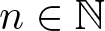 $n\in{\mathbb N}$ with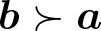 ${\boldsymbol b}\succ {\boldsymbol a}$. Then we have, for $k\ge 3$,
 \begin{equation}
p_k({\boldsymbol a}) \gt p_k({\boldsymbol b}).
\end{equation}
\begin{equation}
p_k({\boldsymbol a}) \gt p_k({\boldsymbol b}).
\end{equation}Remark 1. The proof of Theorem 1.4 requires a careful blending of analytic and combinatorial techniques. We use combinatorial properties of majorized partitions to reduce Theorem 1.4 to a proof of Corollary 1.2. However, these combinatorial techniques alone do not seem to be sufficient to show Corollary 1.2 directly. Instead, Corollary 1.2 follows by asymptotic arguments from [Reference Bringmann, Kane, Rolen and Tripp3]. As noted above, Corollary 1.2 is a special case of Theorem 1.4. This implies that Theorem 1.4 extends Corollary 1.2.
The paper is organized as follows. In Section 2, we prove Theorem 1.1 and Corollary 1.2. Section 3 is devoted to the proof of Theorem 1.4. We finish this paper with questions for future research in Section 4.
2. Proofs of Theorem 1.1 and Corollary 1.2
We first define convolutions of sequences.
Definition 2.1. Let 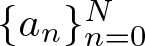 $\{a_n\}_{n= 0}^N$ and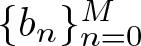 $\{b_n\}_{n= 0}^M$ be sequences of positive integers. Their convolution (this is also sometimes called the Cauchy product) is the sequence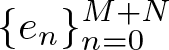 $\{e_n\}_{n=0}^{M+N}$ (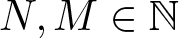 $N,M\in {\mathbb N}$) with
 \begin{equation*}
e_n:=\sum_{j=0}^na_j b_{n-j}.
\end{equation*}
\begin{equation*}
e_n:=\sum_{j=0}^na_j b_{n-j}.
\end{equation*} The following lemma, which is direct to show, gives the convolution of  $p_{k_1}$ and $p_{k_2}$.
Lemma 2.2. The convolution of  $p_{k_1}$ and $p_{k_2}$ is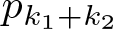 $p_{k_1+k_2}$.
The following lemma strengthens an equivalent definition of log-concavity of a sequence of positive integers (originally proven for a sequence of non-negative integers) from [Reference Sagan17]. The proof is straightforward, so we omit it here.
Lemma 2.3. Let 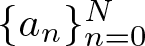 $\{a_n\}_{n=0}^N$ be a sequence of positive integers and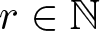 $r\in{\mathbb N}$. Then the strict inequality
 \begin{equation}
a_{\ell+1} a_{m-1} \gt a_{\ell} a_{m}
\end{equation}
\begin{equation}
a_{\ell+1} a_{m-1} \gt a_{\ell} a_{m}
\end{equation}for all  $ r \leq \ell+1 \lt m \leq N$ is equivalent to the strict inequality,
 \begin{equation}
a_n^2 \gt a_{n-1}a_{n+1}
\end{equation}
\begin{equation}
a_n^2 \gt a_{n-1}a_{n+1}
\end{equation}for all  $r\leq n\leq N-1$.
Proof. Firstly, assume that (2.1) holds. Then (2.2) follows directly by taking  $\ell=n-1$ and $m=n+1$. Note that, for $1\le r\le \ell+1 \lt m\le N$, we have $n=\ell+1\ge r$ and $n\le N-1$.
For the other direction, define 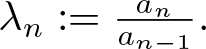 $\lambda_n:= \frac{a_n}{a_{n-1}}.$ From (2.2), we have, for $r\le n \le N$,
 \begin{equation*}
\lambda_n=\frac{a_n}{a_{n-1}} \gt \frac{a_{n+1}}{a_n}=\lambda_{n+1}.
\end{equation*}
\begin{equation*}
\lambda_n=\frac{a_n}{a_{n-1}} \gt \frac{a_{n+1}}{a_n}=\lambda_{n+1}.
\end{equation*} Thus, the sequence 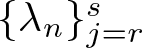 $\{\lambda_n\}_{j=r}^{s}$ is strictly decreasing. If we take $r\le \ell+1 \lt m\le N$, then we have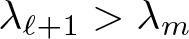 $\lambda_{\ell+1} \gt \lambda_{m}$, i.e.,
 \begin{equation*}
\frac{a_{\ell+1}}{a_{\ell}} \gt \frac{a_{m}}{a_{m-1}}.
\end{equation*}
\begin{equation*}
\frac{a_{\ell+1}}{a_{\ell}} \gt \frac{a_{m}}{a_{m-1}}.
\end{equation*}So (2.1) holds.
Remark 2. If  $r=1$ in Lemma 2.3, then $a_n$ is called strictly log-concave.
The following lemma eases our work. The proof is inspired from [Reference Engel7, Section 2] (see also [Reference Wang and Zhang19, Theorem 1.2]).
Lemma 2.4. The convolution of two strictly log-concave sequences is strictly log-concave.
Proof. Let 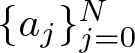 $\{a_j\}_{j=0}^N$ and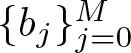 $\{b_j\}_{j=0}^M$ be two strictly log-concave sequences. This means by definition,
 \begin{equation*}
a_j^2 \gt a_{j-1}a_{j+1}\ \text{for } 1\le j \le N-1,\quad b_j^2 \gt b_{j-1}b_{j+1}\ \text{for } 1\le j \le M-1.
\end{equation*}
\begin{equation*}
a_j^2 \gt a_{j-1}a_{j+1}\ \text{for } 1\le j \le N-1,\quad b_j^2 \gt b_{j-1}b_{j+1}\ \text{for } 1\le j \le M-1.
\end{equation*}So, by Lemma 2.3, we have
 \begin{equation}
\begin{split}
a_{\ell+1}a_{m-1}& \gt a_\ell a_m\ \text{for } 1 \le \ell+1 \lt m \le N,\\
b_{\ell+1}b_{m-1}& \gt b_\ell b_m\ \text{for } 1 \le \ell+1 \lt m \le M.
\end{split}
\end{equation}
\begin{equation}
\begin{split}
a_{\ell+1}a_{m-1}& \gt a_\ell a_m\ \text{for } 1 \le \ell+1 \lt m \le N,\\
b_{\ell+1}b_{m-1}& \gt b_\ell b_m\ \text{for } 1 \le \ell+1 \lt m \le M.
\end{split}
\end{equation} We next let  $m=\ell+1$ and $\ell= m-1$, to get
 \begin{equation}
\begin{split}
a_\ell a_m& \gt a_{\ell+1}a_{m-1}\ \text{for } 1 \le m \lt \ell+1 \le N,\\
b_\ell b_m& \gt b_{\ell+1}b_{m-1}\ \text{for } 1 \le m \lt \ell+1 \le M.
\end{split}
\end{equation}
\begin{equation}
\begin{split}
a_\ell a_m& \gt a_{\ell+1}a_{m-1}\ \text{for } 1 \le m \lt \ell+1 \le N,\\
b_\ell b_m& \gt b_{\ell+1}b_{m-1}\ \text{for } 1 \le m \lt \ell+1 \le M.
\end{split}
\end{equation}Following the definition of convolution, we let
 \begin{equation}
e_k := \sum_{m = 0}^k a_m b_{k-m}\ \text{for } 0\le k\le N+M.
\end{equation}
\begin{equation}
e_k := \sum_{m = 0}^k a_m b_{k-m}\ \text{for } 0\le k\le N+M.
\end{equation} To prove that 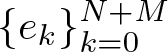 $\{e_k\}_{k=0}^{N+M}$ is strictly log-concave, we need to show that
 \begin{equation*}
e_k^2 \gt e_{k-1}e_{k+1}\ \text{for } 1\le k \le N+M-1.
\end{equation*}
\begin{equation*}
e_k^2 \gt e_{k-1}e_{k+1}\ \text{for } 1\le k \le N+M-1.
\end{equation*}Plugging this into (2.5), we need to show that
 \begin{equation}
e_k^2=\sum_{0 \le \ell,m \le k} a_\ell b_{k-\ell}a_mb_{k-m} \gt \sum_{\substack{0\le \ell \le k-1\\0\le m\le k+1}} a_\ell b_{k-\ell-1}a_mb_{k-m+1}=e_{k-1}e_{k+1}.
\end{equation}
\begin{equation}
e_k^2=\sum_{0 \le \ell,m \le k} a_\ell b_{k-\ell}a_mb_{k-m} \gt \sum_{\substack{0\le \ell \le k-1\\0\le m\le k+1}} a_\ell b_{k-\ell-1}a_mb_{k-m+1}=e_{k-1}e_{k+1}.
\end{equation} We first assume that  $m \gt \ell-1$. Note that,
 \begin{equation*}
m \gt \ell+1 \Rightarrow k- m +1 \lt k-\ell .
\end{equation*}
\begin{equation*}
m \gt \ell+1 \Rightarrow k- m +1 \lt k-\ell .
\end{equation*} So if  $m \gt \ell+1$, then, by (2.3), we have,
 \begin{equation*}
a_\ell a_m-a_{\ell+1}a_{m-1} \lt 0\ \text{and } b_{k-\ell}b_{k-m}-b_{k-\ell-1}b_{k-m+1} \lt 0.
\end{equation*}
\begin{equation*}
a_\ell a_m-a_{\ell+1}a_{m-1} \lt 0\ \text{and } b_{k-\ell}b_{k-m}-b_{k-\ell-1}b_{k-m+1} \lt 0.
\end{equation*}This implies that
 \begin{equation*}
(a_\ell a_m -a_{\ell+1}a_{m-1})(b_{k-\ell}b_{k-m}-b_{k-\ell-1}b_{k-m+1}) \gt 0.
\end{equation*}
\begin{equation*}
(a_\ell a_m -a_{\ell+1}a_{m-1})(b_{k-\ell}b_{k-m}-b_{k-\ell-1}b_{k-m+1}) \gt 0.
\end{equation*} Next assume that  $m \lt \ell+1$. Note that,
 \begin{equation*}
m \lt \ell+1 \Rightarrow k- m +1 \gt k-\ell.
\end{equation*}
\begin{equation*}
m \lt \ell+1 \Rightarrow k- m +1 \gt k-\ell.
\end{equation*} If  $m \lt \ell+1$, then, by (2.4), we have
 \begin{equation*}
a_\ell a_m-a_{\ell+1}a_{m-1} \gt 0\ \text{and } b_{k-\ell}b_{k-m}-b_{k-\ell-1}b_{k-m+1} \gt 0.
\end{equation*}
\begin{equation*}
a_\ell a_m-a_{\ell+1}a_{m-1} \gt 0\ \text{and } b_{k-\ell}b_{k-m}-b_{k-\ell-1}b_{k-m+1} \gt 0.
\end{equation*}Again, this implies that
 \begin{equation*}
(a_\ell a_m-a_{\ell+1}a_{m-1})(b_{k-\ell}b_{k-m}-b_{k-\ell-1}b_{k-m+1}) \gt 0.
\end{equation*}
\begin{equation*}
(a_\ell a_m-a_{\ell+1}a_{m-1})(b_{k-\ell}b_{k-m}-b_{k-\ell-1}b_{k-m+1}) \gt 0.
\end{equation*} Thus if 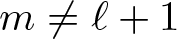 $m\ne \ell+1$, then we have
 \begin{equation}
\begin{split}
(a_\ell a_m-a_{\ell+1}a_{m-1})(b_{k-\ell}b_{k-m}-b_{k-\ell-1}b_{k-m+1}) \gt 0.
\end{split}
\end{equation}
\begin{equation}
\begin{split}
(a_\ell a_m-a_{\ell+1}a_{m-1})(b_{k-\ell}b_{k-m}-b_{k-\ell-1}b_{k-m+1}) \gt 0.
\end{split}
\end{equation} Next note that if  $m=\ell+1$, then we have
 \begin{equation*}
(a_\ell a_m-a_{\ell+1}a_{m-1})(b_{k-\ell}b_{k-m}-b_{k-\ell-1}b_{k-m+1})=0.
\end{equation*}
\begin{equation*}
(a_\ell a_m-a_{\ell+1}a_{m-1})(b_{k-\ell}b_{k-m}-b_{k-\ell-1}b_{k-m+1})=0.
\end{equation*} Note that by our convention, we let  $a_k=b_k=0$ for $k \lt 0$.
Now, if we sum (2.7) over  $-1\le \ell,m\le k+1$ on both sides, we get
 \begin{align}
& \sum_{-1 \le \ell,m \le k+1} (a_\ell a_m-a_{\ell+1}a_{m-1})(b_{k-\ell}b_{k-m}-b_{k-\ell-1}b_{k-m+1}) \gt 0 \nonumber\\
&\Rightarrow \sum_{-1 \le \ell,m \le k+1} \left(a_\ell b_{k-\ell}a_mb_{k-m}+a_{\ell+1}b_{k-\ell-1} a_{m-1}b_{k-m+1}\right) \nonumber\\
& \gt \sum_{-1 \le \ell,m \le k+1} \left(a_\ell b_{k-\ell-1} a_mb_{k-m+1}+a_{\ell+1}b_{k-\ell}a_{m-1}b_{k-m}\right).
\end{align}
\begin{align}
& \sum_{-1 \le \ell,m \le k+1} (a_\ell a_m-a_{\ell+1}a_{m-1})(b_{k-\ell}b_{k-m}-b_{k-\ell-1}b_{k-m+1}) \gt 0 \nonumber\\
&\Rightarrow \sum_{-1 \le \ell,m \le k+1} \left(a_\ell b_{k-\ell}a_mb_{k-m}+a_{\ell+1}b_{k-\ell-1} a_{m-1}b_{k-m+1}\right) \nonumber\\
& \gt \sum_{-1 \le \ell,m \le k+1} \left(a_\ell b_{k-\ell-1} a_mb_{k-m+1}+a_{\ell+1}b_{k-\ell}a_{m-1}b_{k-m}\right).
\end{align}We first rewrite the left-hand side as
 \begin{align}
\sum_{-1 \le \ell,m \le k+1}& \left(a_\ell b_{k-\ell}a_mb_{k-m}+a_{\ell+1}b_{k-\ell-1} a_{m-1}b_{k-m+1}\right)\nonumber \\
& = \sum_{0 \le \ell,m \le k} a_\ell b_{k-\ell}a_mb_{k-m}+\sum_{\substack{-1\le\ell\le k-1\\1\le m\le k+1}} a_{\ell+1}b_{k-\ell-1} a_{m-1}b_{k-m+1}\nonumber \\
&= 2 \sum_{0 \le \ell,m \le k} a_\ell b_{k-\ell}a_mb_{k-m}
\end{align}
\begin{align}
\sum_{-1 \le \ell,m \le k+1}& \left(a_\ell b_{k-\ell}a_mb_{k-m}+a_{\ell+1}b_{k-\ell-1} a_{m-1}b_{k-m+1}\right)\nonumber \\
& = \sum_{0 \le \ell,m \le k} a_\ell b_{k-\ell}a_mb_{k-m}+\sum_{\substack{-1\le\ell\le k-1\\1\le m\le k+1}} a_{\ell+1}b_{k-\ell-1} a_{m-1}b_{k-m+1}\nonumber \\
&= 2 \sum_{0 \le \ell,m \le k} a_\ell b_{k-\ell}a_mb_{k-m}
\end{align}by replacing  $m\mapsto m+1$ and $\ell \mapsto \ell-1$ in the second sum.
We next rewrite the right-hand side of (2.8). We have
 \begin{align}
\sum_{-1 \le \ell,m \le k+1} &\left(a_\ell b_{k-\ell-1} a_mb_{k-m+1}+a_{\ell+1}b_{k-\ell}a_{m-1}b_{k-m}\right) \nonumber\\ &= \sum_{\substack{0\le \ell \le k-1\\ 0\le m \le k+1}} a_\ell b_{k-\ell-1} a_mb_{k-m+1}+\sum_{\substack{-1\le\ell\le k\\1\le m\le k}} a_{\ell+1}b_{k-\ell}a_{m-1}b_{k-m} \nonumber\\ &= 2 \sum_{\substack{0\le \ell \le k-1\\0\le m\le k+1}} a_\ell b_{k-\ell-1} a_mb_{k-m+1},
\end{align}
\begin{align}
\sum_{-1 \le \ell,m \le k+1} &\left(a_\ell b_{k-\ell-1} a_mb_{k-m+1}+a_{\ell+1}b_{k-\ell}a_{m-1}b_{k-m}\right) \nonumber\\ &= \sum_{\substack{0\le \ell \le k-1\\ 0\le m \le k+1}} a_\ell b_{k-\ell-1} a_mb_{k-m+1}+\sum_{\substack{-1\le\ell\le k\\1\le m\le k}} a_{\ell+1}b_{k-\ell}a_{m-1}b_{k-m} \nonumber\\ &= 2 \sum_{\substack{0\le \ell \le k-1\\0\le m\le k+1}} a_\ell b_{k-\ell-1} a_mb_{k-m+1},
\end{align}by replacing  $m\mapsto \ell+1$ and $\ell\mapsto m-1$ in the second sum. Using (2.8), (2.9), and (2.10), we obtain (2.6).
From this, we conclude the following lemma.
Lemma 2.5. Theorem 1.1 holds if it holds for  $k\in\{3,4,5\}$ $(n \gt 1~\text{if}~k=3)$.
Proof. Note that one can write 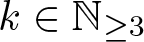 $k\in \mathbb{N}_{\geq 3}$ as
 \begin{equation*}
k=3j_1+4j_2+5j_3,
\end{equation*}
\begin{equation*}
k=3j_1+4j_2+5j_3,
\end{equation*}with  $j_1,j_2,j_3 \in \mathbb{N}_{0}$. Hence, by Lemma 2.4 and Lemma 2.2, in order to prove Theorem 1.1, it is enough to check the strict log-concavity of $p_k(n)$ for $k\in \{3,4,5\}$, unless $n=1$. For $n=1$, the claim follows directly for $k\neq3$ by computing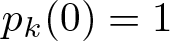 $p_k(0)=1$,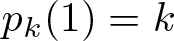 $p_k(1)=k$, and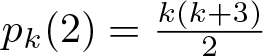 $p_k(2)=\frac{k(k+3)}{2}$.
We next require the following theorem, which was proven by three of the authors and Tripp [Reference Bringmann, Kane, Rolen and Tripp3, Theorem 1.2]. Throughout, the notation  $f(x)=O_{\leq}(g(x))$ means that $|f(x)|\leq g(x)$ for a positive function $g$ and for all $x$ in the domain in which $f$ and $g$ are defined.
Theorem 2.6. Let 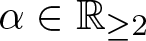 $\alpha \in \mathbb{R}_{\geq 2}$ and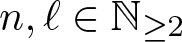 $n,\ell \in \mathbb{N}_{\geq 2}$ with $n \gt \ell +1$. Set $N:=n-1-\frac{\alpha}{24}$,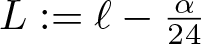 $L:=\ell-\frac{\alpha}{24}$, and suppose that $L \geq \max\{2\alpha^{11},\frac{100}{\alpha-24}\}$. Then we have
 \begin{multline*}
p_{\alpha}(n-1)p_{\alpha}(\ell+1)-p_{\alpha}(n)p_{\alpha}(\ell)\\=\pi \left(\frac{\alpha}{24}\right)^{\frac{\alpha}{2}+1}(NL)^{-\frac{\alpha+5}{4}} \left(\sqrt{N}-\sqrt{L}\right)e^{\pi \sqrt{\frac{2\alpha}{3}}\left(\sqrt{N}+\sqrt{L}\right)}\left(1+O_{\leq}\left(\frac{14}{15}\right)\right).
\end{multline*}
\begin{multline*}
p_{\alpha}(n-1)p_{\alpha}(\ell+1)-p_{\alpha}(n)p_{\alpha}(\ell)\\=\pi \left(\frac{\alpha}{24}\right)^{\frac{\alpha}{2}+1}(NL)^{-\frac{\alpha+5}{4}} \left(\sqrt{N}-\sqrt{L}\right)e^{\pi \sqrt{\frac{2\alpha}{3}}\left(\sqrt{N}+\sqrt{L}\right)}\left(1+O_{\leq}\left(\frac{14}{15}\right)\right).
\end{multline*}We now use Theorem 2.6 and a computer calculation to show Theorem 1.1. We start with the following lemma.
Lemma 2.7. We have
 \begin{equation*}
p_k^2(n) \gt p_k(n-1)p_k(n+1)
\end{equation*}
\begin{equation*}
p_k^2(n) \gt p_k(n-1)p_k(n+1)
\end{equation*}if either  $k=3$ and $2\le n \le 2\cdot 3^{11}+1$, $k=4$ and $1 \le n \le 2\cdot 10^5$, or $k=5$ and $1 \le n \le 8\cdot 10^5$.
Proof. The right-hand side of Theorem 2.6 is always positive thanks to the assumption that  $n \gt \ell+1$. Taking $\alpha=k \in \{3,4,5\}$, $n\mapsto n+1$, and $\ell=n-1$ gives, for $n\geq 2k^{11}+\frac{k}{24}+1$,
 \begin{equation}
p_k^2(n) \gt p_k(n-1)p_k(n+1).
\end{equation}
\begin{equation}
p_k^2(n) \gt p_k(n-1)p_k(n+1).
\end{equation} So we are left to show that  $p_k(n)$ is strictly log-concave for $k\in\{3,4,5\}$ and for $n\leq 2k^{11}+1$ (as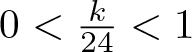 $0 \lt \frac{k}{24} \lt 1$). The upper bound of $n$ for $k\in \{3,4,5\}$ were done. Using a computer (Apple MacBook Air M3, 8 GB RAM, and 256GB memory throughout).
Remark 3. By Lemma 2.5 and Lemma 2.7, we are left to verify Theorem 1.4 for the following cases:
(1) $2\cdot 10^5+1 \le n \le 2\cdot 4^{11}+1$ for
$k=4$,
$2\cdot 10^5+1 \le n \le 2\cdot 4^{11}+1$ for
$k=4$,(2)
$8\cdot 10^5+1 \le n \le 2\cdot 5^{11}+1$ for
$k=5$.




The remaining cases in the above remark seem to be too heavy to verify numerically. For the case of general log-concavity, the numerical difficulty was overcome in [Reference Bringmann, Kane, Rolen and Tripp3, Section 4] by using certain sequences to establish upper and lower bounds for  $p_k(n)$ to tackle the remaining cases. We next recall these sequences. Let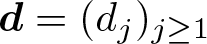 ${\boldsymbol d}=(d_j)_{j\ge1}$ be a sequence of positive integers with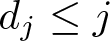 $d_j\leq j$, and for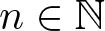 $n\in \mathbb{N}$ we recursively define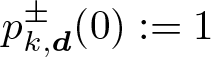 $p_{k,{\boldsymbol d}}^{\pm}(0):=1$ and, for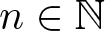 $n\in{\mathbb N}$,
 \begin{align*}
p_{k,{\boldsymbol d}}^{-}(n)&:= \frac{k}{n}\sum_{\ell=1}^{d_n}\sigma(\ell)p_{k,{\boldsymbol d}}^-(n-\ell),\\
p_{k,{\boldsymbol d}}^{+}(n)&:= \frac{k}{n}\sum_{\ell=1}^{d_n}\sigma(\ell)p_{k,{\boldsymbol d}}^+(n-\ell)+knp_{k,{\boldsymbol d}}^+(n-d_n-1),
\end{align*}
\begin{align*}
p_{k,{\boldsymbol d}}^{-}(n)&:= \frac{k}{n}\sum_{\ell=1}^{d_n}\sigma(\ell)p_{k,{\boldsymbol d}}^-(n-\ell),\\
p_{k,{\boldsymbol d}}^{+}(n)&:= \frac{k}{n}\sum_{\ell=1}^{d_n}\sigma(\ell)p_{k,{\boldsymbol d}}^+(n-\ell)+knp_{k,{\boldsymbol d}}^+(n-d_n-1),
\end{align*}where  $\sigma(\ell) := \sum_{d\mid\ell}d$ denotes the sum of divisors of $\ell$. We also set
 \begin{equation*}
p_{k,{\boldsymbol d}}^{\pm}(n):=0\ \text{for } n\leq -1.
\end{equation*}
\begin{equation*}
p_{k,{\boldsymbol d}}^{\pm}(n):=0\ \text{for } n\leq -1.
\end{equation*} Using these sequences, upper and lower bounds for  $p_k(n)$ were established in [Reference Bringmann, Kane, Rolen and Tripp3, Lemma 4.1].
Lemma 2.8. For 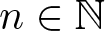 $n\in \mathbb{N}$ we have
 \begin{equation*}
p_{k,{\boldsymbol d}}^-(n)\leq p_k(n)\leq p_{k,{\boldsymbol d}}^+(n).
\end{equation*}
\begin{equation*}
p_{k,{\boldsymbol d}}^-(n)\leq p_k(n)\leq p_{k,{\boldsymbol d}}^+(n).
\end{equation*}It turns out that the first inequality in Lemma 2.8 is often strict. The following lemma is not hard to show.
Lemma 2.9. For a sequence 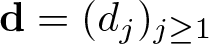 $\textbf{d}=(d_j)_{j\ge1}$ with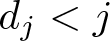 $d_j \lt j$, we have $p_{k,{\boldsymbol d}}^-(n) \lt p_k(n)$.
Following [Reference Bringmann, Kane, Rolen and Tripp3, Proposition 4.3], for  $k=4$, we define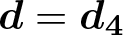 $\boldsymbol{d}=\boldsymbol{d}_{\boldsymbol4}$ by
 \begin{equation*}
d_j = d_{4,j} :=
\begin{cases}
j & \text{if } j \leq 2 \cdot 10^5, \\[8pt]
\left\lfloor 250 \, j^{\frac{1}{3}} \right\rfloor & \text{if } 2 \cdot 10^5 \lt j \leq 3.5 \cdot 10^6, \\[8pt]
\left\lfloor 1125 \, j^{\frac{1}{3}} \right\rfloor & \text{if } j \gt 3.5 \cdot 10^6
\end{cases}
\end{equation*}
\begin{equation*}
d_j = d_{4,j} :=
\begin{cases}
j & \text{if } j \leq 2 \cdot 10^5, \\[8pt]
\left\lfloor 250 \, j^{\frac{1}{3}} \right\rfloor & \text{if } 2 \cdot 10^5 \lt j \leq 3.5 \cdot 10^6, \\[8pt]
\left\lfloor 1125 \, j^{\frac{1}{3}} \right\rfloor & \text{if } j \gt 3.5 \cdot 10^6
\end{cases}
\end{equation*} Moreover, for  $k=5$, we define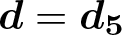 $\boldsymbol{d}=\boldsymbol{d}_{\boldsymbol5}$ by
 \begin{equation}
d_j = d_{5,j} :=
\begin{cases}
j & \text{if } j \leq 8 \cdot 10^5, \\[8pt]
\left\lfloor 25 \, \sqrt{j} \right\rfloor & \text{if } 8 \cdot 10^5 \lt j \leq 2 \cdot 10^7, \\[8pt]
\left\lfloor \frac{43}{2} \, \sqrt{j} \right\rfloor & \text{if } j \gt 2 \cdot 10^7.
\end{cases}
\end{equation}
\begin{equation}
d_j = d_{5,j} :=
\begin{cases}
j & \text{if } j \leq 8 \cdot 10^5, \\[8pt]
\left\lfloor 25 \, \sqrt{j} \right\rfloor & \text{if } 8 \cdot 10^5 \lt j \leq 2 \cdot 10^7, \\[8pt]
\left\lfloor \frac{43}{2} \, \sqrt{j} \right\rfloor & \text{if } j \gt 2 \cdot 10^7.
\end{cases}
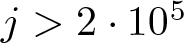
\end{equation}To prove Theorem 1.1, we need the following lemma, which is not hard to show.
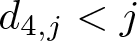
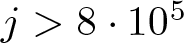
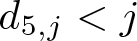
(1) If
$j \gt 2\cdot 10^5$, then we have
$d_{4,j} \lt j$.(2) If
$j \gt 8\cdot 10^5$, then we have
$d_{5,j} \lt j$.
We are now ready to prove Theorem 1.1.
Proof of Theorem 1.1
We are left to prove Theorem 1.1 for the cases mentioned in the remark below Lemma 2.7.
We first consider the case  $k=4$. Note that $2\cdot 4^{11}+1 \lt 8.4\cdot 10^{6}$. In the proof of [Reference Bringmann, Kane, Rolen and Tripp3, Proposition 4.3], it was shown that, for all $n \leq 8.4 \cdot 10^6$, we have
 \begin{equation}
\frac{p_{4,{\boldsymbol{d_4}}}^-(n)}{p_{4,{\boldsymbol{d_4}}}^+(n-1)}\geq\frac{p_{4,{\boldsymbol{d_4}}}^+(n+1)}{p_{4,{\boldsymbol{d_4}}}^-(n)}.
\end{equation}
\begin{equation}
\frac{p_{4,{\boldsymbol{d_4}}}^-(n)}{p_{4,{\boldsymbol{d_4}}}^+(n-1)}\geq\frac{p_{4,{\boldsymbol{d_4}}}^+(n+1)}{p_{4,{\boldsymbol{d_4}}}^-(n)}.
\end{equation} Combining Lemma 2.9 with Lemma 2.10 (1), for  $n \gt 2\cdot 10^5$, we have $p_{4,\boldsymbol{d_4}}^{-}(n) \lt p_4(n)$. Using (2.13) and Lemma 2.8, we obtain, for $2\cdot10^5 \lt n\leq8.4\cdot 10^6$,
 \begin{equation*}
p_4^2(n) \gt p_{4,{\boldsymbol{d_4}}}^-(n)^2\geq p_{4,{\boldsymbol{d_4}}}^+(n-1)p_{4,{\boldsymbol{d_4}}}^+(n+1)\geq p_4(n-1)p_4(n+1).
\end{equation*}
\begin{equation*}
p_4^2(n) \gt p_{4,{\boldsymbol{d_4}}}^-(n)^2\geq p_{4,{\boldsymbol{d_4}}}^+(n-1)p_{4,{\boldsymbol{d_4}}}^+(n+1)\geq p_4(n-1)p_4(n+1).
\end{equation*} We next consider the case  $k=5$. Note that $2\cdot 5^{11}+1 \lt 9.9 \cdot 10^7$. We use the sequence in (2.12). In the proof of [Reference Bringmann, Kane, Rolen and Tripp3, Proposition 4.3] it was shown that, for $n \leq 9.9 \cdot 10^7$,
 \begin{equation*}
\frac{p_{5,{\boldsymbol{d_5}}}^-(n)}{p_{5,{\boldsymbol{d_5}}}^+(n-1)}\geq\frac{p_{5,{\boldsymbol{d_5}}}^+(n+1)}{p_{5,{\boldsymbol{d_5}}}^-(n)}.
\end{equation*}
\begin{equation*}
\frac{p_{5,{\boldsymbol{d_5}}}^-(n)}{p_{5,{\boldsymbol{d_5}}}^+(n-1)}\geq\frac{p_{5,{\boldsymbol{d_5}}}^+(n+1)}{p_{5,{\boldsymbol{d_5}}}^-(n)}.
\end{equation*} Combining Lemma 2.9 with Lemma 2.10 (2), for  $n \gt 8\cdot 10^5$, we have $p_{5,\boldsymbol{d}}^{-}(n) \lt p_5(n)$. Applying Lemma 2.8, we obtain, for $8\cdot 10^5 \lt n\le 9.9 \cdot 10^7$,
 \begin{equation*}
p_5^2(n) \gt p_5(n-1)p_5(n+1).
\end{equation*}
\begin{equation*}
p_5^2(n) \gt p_5(n-1)p_5(n+1).
\end{equation*}Combining gives the claim.
We are now ready to prove Corollary 1.2.
Proof of Corollary 1.2
(1) By Theorem 1.1, we have, for 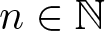 $n\in \mathbb{N}$ and $k\ge 4$,
 \begin{equation*}
p_k^2(n) \gt p_k(n-1)p_k(n+1).
\end{equation*}
\begin{equation*}
p_k^2(n) \gt p_k(n-1)p_k(n+1).
\end{equation*} In particular, this holds for  $1\leq n\leq N-1$ (for any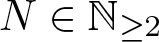 $N\in \mathbb{N}_{\ge 2}$). We now use Lemma 2.3 with $r=1$,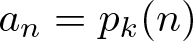 $a_n=p_k(n)$,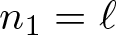 $n_1=\ell$, and $n_2=n$. Then we have, for $1\leq \ell+1 \lt n\le N$,
 \begin{equation*}
p_k(n-1)p_k(\ell+1) \gt p_k(n)p_k(\ell).
\end{equation*}
\begin{equation*}
p_k(n-1)p_k(\ell+1) \gt p_k(n)p_k(\ell).
\end{equation*}This yields (1).
(2) For  $n\ge 2$, we have, by Theorem 1.1,
 \begin{equation*}
p_3^2(n) \gt p_3(n-1)p_3(n+1).
\end{equation*}
\begin{equation*}
p_3^2(n) \gt p_3(n-1)p_3(n+1).
\end{equation*} This in particular holds for any  $2\le n\le N-1$. Again we use Lemma 2.3 with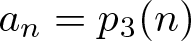 $a_n=p_3(n)$, $r=2$,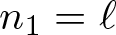 $n_1=\ell$, and $n_2=n$. Then, for all $2\leq \ell+1 \lt n\le N$,
 \begin{equation*}
p_3(n-1)p_3(\ell+1) \gt p_3(n)p_3(\ell).
\end{equation*}
\begin{equation*}
p_3(n-1)p_3(\ell+1) \gt p_3(n)p_3(\ell).
\end{equation*}This completes the proof of (2).
(3) For  $k=2$, (2.11) implies the claim for $n \gt 2^{12}+1$. We used a computer to verify the cases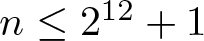 $n\leq 2^{12}+1$. This completes the proof of (3).
3. Proof of Theorem 1.4
To deal with the proof of Theorem 1.4, we next recall an important notion that appears frequently in number theory and combinatorics (see [Reference Arnold1, Subsection 1.2], [Reference Jenkinson11, Definition 5.1]).
Definition 3.1. For  ${\boldsymbol n}=(n_1,n_2,\ldots,n_r)\in \mathbb{N}^r$, we define a Robin Hood transformation (in the literature, the name ‘Pigou–Dalton’ transfer is also used) as a map $T\colon\mathbb{N}^r\to \mathbb{N}^r$, such that for some $1\leq j,\ell\leq r$ with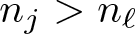 $n_j \gt n_\ell$, the vector $T({\boldsymbol n}):={\boldsymbol N}=(N_1,N_2,\ldots,N_r)$ satisfies $N_j=n_j-1,N_\ell=n_\ell+1$, and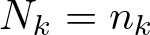 $N_k=n_k$ for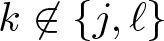 $k\not\in \{j,\ell\}$.
Remark 4. By Definition 3.1,  ${\boldsymbol n}$ majorizes $T({\boldsymbol n})$.
The following lemma is well-known in combinatorics.
Lemma 3.2. Let  ${\boldsymbol a}=(a_1,a_2,\ldots,a_r)$ and ${\boldsymbol b}=(b_1,b_2,\ldots,b_r)$ be partitions of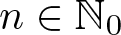 $n\in{\mathbb N}_0$. Then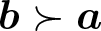 ${\boldsymbol b}\succ{\boldsymbol a}$ if and only if ${\boldsymbol a}$ is obtained from ${\boldsymbol b}$ by a finite number of Robin Hood transformations.
Proof. Using Muirhead’s work [Reference Muirhead14], Hardy–Littlewood–Pólya [Reference Hardy, Littlewood and Pólya10, Subsection 2.19, Lemma 2] proved the forward direction; also see [Reference Arnold1, Subsection 1.2].
We next prove the reverse direction. From Definition 1.3, it is clear that majorization is a partial ordering, in particular, a transitive ordering in the set of all partitions of a positive integer. Thus, from the observation in Remark 4 and the assumption that  ${\boldsymbol a}$ is obtained from ${\boldsymbol b}$ by a finite number of transformations, we have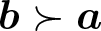 ${\boldsymbol b} \succ {\boldsymbol a}$. Hence, our proof is complete.
We are now ready to prove Theorem 1.4.
Proof of Theorem 1.4
We study how  $p_k$ behaves for all possible images of a partition ${\boldsymbol b}=(b_1,b_2,\ldots,b_r)$ of $n$ under a Robin Hood transformation $T$.
$T$.
Case 1 : 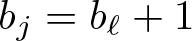 $b_j=b_\ell+1$. In this case
 \begin{equation*}
\begin{split}
T({\boldsymbol b})&=(b_1,b_2,\ldots,b_{j-1},b_j-1,b_{j+1},\ldots, b_{\ell-1},b_\ell+1,b_{\ell+1},\ldots,b_r)\\ &=(b_1,b_2,\ldots,b_{j-1},b_\ell,b_{j+1},\ldots,b_{\ell-1},b_j,b_{\ell+1},\ldots,b_r).
\end{split}
\end{equation*}
\begin{equation*}
\begin{split}
T({\boldsymbol b})&=(b_1,b_2,\ldots,b_{j-1},b_j-1,b_{j+1},\ldots, b_{\ell-1},b_\ell+1,b_{\ell+1},\ldots,b_r)\\ &=(b_1,b_2,\ldots,b_{j-1},b_\ell,b_{j+1},\ldots,b_{\ell-1},b_j,b_{\ell+1},\ldots,b_r).
\end{split}
\end{equation*} Thus,  $T({\boldsymbol b})$ is obtained from ${\boldsymbol b}$ by interchanging two components. Therefore
 \begin{equation*}
p_k({\boldsymbol b})=p_k(T({\boldsymbol b})).
\end{equation*}
\begin{equation*}
p_k({\boldsymbol b})=p_k(T({\boldsymbol b})).
\end{equation*} Case 2 : 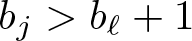 $b_j \gt b_\ell+1$. In this case
 \begin{equation*}
\begin{split}
T({\boldsymbol b})&=(b_1,\ldots,b_{j-1},b_j-1,b_{j+1},\ldots,b_{\ell-1},b_\ell+1,b_{\ell+1},\ldots,b_r).
\end{split}
\end{equation*}
\begin{equation*}
\begin{split}
T({\boldsymbol b})&=(b_1,\ldots,b_{j-1},b_j-1,b_{j+1},\ldots,b_{\ell-1},b_\ell+1,b_{\ell+1},\ldots,b_r).
\end{split}
\end{equation*} Note that, 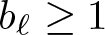 $b_{\ell}\ge 1$, so $b_j \gt b_{\ell}+1\ge 2$. Thus, by Corollary 1.2 (1), (2), we have,
 \begin{align*}
&p_k(T({\boldsymbol b}))\\
&\!\!=p_k(b_1)\ldots p_k(b_{j-1})p_k(b_j-1)p_k(b_{j+1})\ldots p_k(b_{\ell-1})p_k(b_\ell+1)p_k(b_{\ell+1}) \ldots p_k(b_r)\\
&\!\! \gt p_k(b_1)\ldots p_k(b_{j-1})p_k(b_j)p_k(b_{j+1})\ldots p_k(b_{\ell-1})p_k(b_\ell)p_k(b_{\ell+1}) \ldots p_k(b_r)=p_k({\boldsymbol b}).
\end{align*}
\begin{align*}
&p_k(T({\boldsymbol b}))\\
&\!\!=p_k(b_1)\ldots p_k(b_{j-1})p_k(b_j-1)p_k(b_{j+1})\ldots p_k(b_{\ell-1})p_k(b_\ell+1)p_k(b_{\ell+1}) \ldots p_k(b_r)\\
&\!\! \gt p_k(b_1)\ldots p_k(b_{j-1})p_k(b_j)p_k(b_{j+1})\ldots p_k(b_{\ell-1})p_k(b_\ell)p_k(b_{\ell+1}) \ldots p_k(b_r)=p_k({\boldsymbol b}).
\end{align*} To prove Theorem 1.3, by (1.1), we can assume that 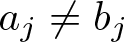 $a_j\ne b_j$ for $j\in \{1,2,\ldots, r\}$. Therefore, without loss of generality,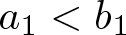 $a_1 \lt b_1$.
Since 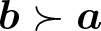 ${\boldsymbol b}\succ{\boldsymbol a}$, by Lemma 3.2, there exist Robin Hood transformations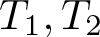 $T_1, T_2$,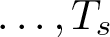 $\ldots , T_s$ such that
 \begin{equation*}
T_s\circ T_{s-1}\ldots \circ T_1(\boldsymbol{b})=\boldsymbol{a}.
\end{equation*}
\begin{equation*}
T_s\circ T_{s-1}\ldots \circ T_1(\boldsymbol{b})=\boldsymbol{a}.
\end{equation*} For  $1\le m \le s$, we let
 \begin{align*}
\boldsymbol{b}^{[m]}=\left(b^{[m]}_1,b^{[m]}_2,\ldots,b^{[m]}_r\right)&:= T_{m}\circ T_{m-1}\ldots \circ T_2\circ T_1(\boldsymbol{b}),
\\ \left(b^{[0]}_1, b^{[0]}_2, \ldots, b^{[0]}_r\right)&:= (b_1, b_2,\ldots , b_r).
\end{align*}
\begin{align*}
\boldsymbol{b}^{[m]}=\left(b^{[m]}_1,b^{[m]}_2,\ldots,b^{[m]}_r\right)&:= T_{m}\circ T_{m-1}\ldots \circ T_2\circ T_1(\boldsymbol{b}),
\\ \left(b^{[0]}_1, b^{[0]}_2, \ldots, b^{[0]}_r\right)&:= (b_1, b_2,\ldots , b_r).
\end{align*} Since 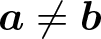 $\boldsymbol{a}\ne \boldsymbol{b}$, there exists at least one Robin Hood transformation $T_m$ with $m\in \{1,2,\ldots,s\}$, such that, for some $1\le \ell, j \le r$, we have $b^{[m-1]}_j \gt b^{[m-1]}_{\ell}+1$ (see Definition 3.1). Indeed if $b^{[m-1]}_j=b^{[m-1]}_{\ell}+1$ for every $1\le m \le s$, then we would have
 \begin{equation*}
\boldsymbol{b}=\boldsymbol{b}^{[1]}=\boldsymbol{b}^{[2]}\cdots=\boldsymbol{b}^{[s-1]}=\boldsymbol{a}.
\end{equation*}
\begin{equation*}
\boldsymbol{b}=\boldsymbol{b}^{[1]}=\boldsymbol{b}^{[2]}\cdots=\boldsymbol{b}^{[s-1]}=\boldsymbol{a}.
\end{equation*}This would be a contradiction. Therefore, by Case 2, we have
 \begin{equation*}
\begin{split}
p_k(\boldsymbol{b})\le p_k\left(\boldsymbol{b}^{[1]}\right)\le \cdots \le p_k\left(\boldsymbol{b}^{[m-1]}\right) \lt p_k\left(\boldsymbol{b}^{[m]}\right)\le \cdots \le p_k(\boldsymbol{a}).
\end{split}
\end{equation*}
\begin{equation*}
\begin{split}
p_k(\boldsymbol{b})\le p_k\left(\boldsymbol{b}^{[1]}\right)\le \cdots \le p_k\left(\boldsymbol{b}^{[m-1]}\right) \lt p_k\left(\boldsymbol{b}^{[m]}\right)\le \cdots \le p_k(\boldsymbol{a}).
\end{split}
\end{equation*}This finishes the proof.
4. Questions for future research
Since majorization only induces a partial ordering  $\prec$, it is natural to consider inequalities between $p_k({\boldsymbol a})$ and $p_k({\boldsymbol b})$, where neither $\boldsymbol{a}$ nor $\boldsymbol{b}$ majorizes the other. For $n,r,R\in{\mathbb N}$ with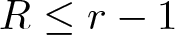 $R\leq r-1$ and sequences $\boldsymbol{c}=(c_1,\dots,c_r)$ and $\boldsymbol{d}=(d_1,\dots,d_r)$ with exactly $r$ parts that sum to $n$ (i.e., $\sum_{j=1}^{r} c_r=\sum_{j=1}^r d_r=n$), consider the ‘partial (strict) majorization’
 \begin{equation}
\sum_{j=1}^{\ell} c_j\leq \sum_{j=1}^{\ell} d_j\ \text{for } 1 \leq \ell \leq R\ \text{and } \sum_{j=1}^{\ell} c_j \lt \sum_{j=1}^{\ell}d_j \ \text{for some }1\leq \ell\leq R.
\end{equation}
\begin{equation}
\sum_{j=1}^{\ell} c_j\leq \sum_{j=1}^{\ell} d_j\ \text{for } 1 \leq \ell \leq R\ \text{and } \sum_{j=1}^{\ell} c_j \lt \sum_{j=1}^{\ell}d_j \ \text{for some }1\leq \ell\leq R.
\end{equation} Noting that  $p_k$ reverses the order from $\succ$ in Theorem 1.4, computer calculations were run to check whether weaker conditions led to reversed ordering as well. These indicated that the ordering is sensitive to the smallest parts of the partition. Hence, for a partition $\boldsymbol{a}=(a_1,\dots,a_r)$ with $a_1\geq a_1\geq\dots \geq a_r$, we set (although the non-increasing ordering for partitions used in this paper is more common, some authors define partitions with this reversed ordering on the parts) ${\boldsymbol{a}^*}:=(a_r,a_{r-1},\dots,a_{1})$. Set
 \begin{multline*}
\mathcal{S}_{n,r,R}^{*}:=\Big\{(\boldsymbol{a},\boldsymbol{b}): \boldsymbol{a}=(a_1,\dots,a_r), \boldsymbol{b}=(b_1,\dots, b_r)\ \text{are partitions of}\ n\\[-.35em]
\text{with}\ \boldsymbol{c}={\boldsymbol{b}^*}\ \text{and}\ \boldsymbol{d}={\boldsymbol{a}^*}\ \text{satisfying (4.1)}\Big\}.
\end{multline*}
\begin{multline*}
\mathcal{S}_{n,r,R}^{*}:=\Big\{(\boldsymbol{a},\boldsymbol{b}): \boldsymbol{a}=(a_1,\dots,a_r), \boldsymbol{b}=(b_1,\dots, b_r)\ \text{are partitions of}\ n\\[-.35em]
\text{with}\ \boldsymbol{c}={\boldsymbol{b}^*}\ \text{and}\ \boldsymbol{d}={\boldsymbol{a}^*}\ \text{satisfying (4.1)}\Big\}.
\end{multline*} By Lemma 3.2, it is straightforward to see that we have  $\boldsymbol{b}\succ\boldsymbol{a} \text{iff } (\boldsymbol{a},\boldsymbol{b})\in \mathcal{S}_{n,r,r-1}^{*}$. Thus, if $(\boldsymbol{a},\boldsymbol{b})\in \mathcal{S}_{n,r,r-1}^{*}$, then we have $p_{k}(\boldsymbol{a}) \gt p_k(\boldsymbol{b})$ for $k\geq 3$ by Theorem 1.4. Hence, for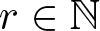 $r\in{\mathbb N}$ and $k\geq 3$, there exists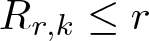 $R_{r,k}\leq r$ minimal such that for $(\boldsymbol{a},\boldsymbol{b})\in \mathcal{S}_{n,r,R_{r,k}}^{*}$, we have
 \begin{equation*}
p_{k}(\boldsymbol{a}) \gt p_k(\boldsymbol{b}).
\end{equation*}
\begin{equation*}
p_{k}(\boldsymbol{a}) \gt p_k(\boldsymbol{b}).
\end{equation*} In another direction, one can fix  $R$ and ask which $(\boldsymbol{a},\boldsymbol{b})\in \mathcal{S}_{n,r,R}^{*}$ and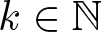 $k\in{\mathbb N}$ satisfy the inequality $p_k(\boldsymbol{a}) \lt p_k(\boldsymbol{b})$. Using a computer, we collect some data for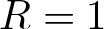 $R=1$ (with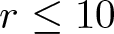 $r\leq 10$ and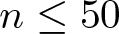 $n\leq 50$) in Table 1. In this case, (4.1) for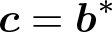 $\boldsymbol{c}={\boldsymbol{b}^*}$ and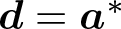 $\boldsymbol{d}={\boldsymbol{a}^*}$ becomes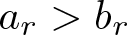 $a_r \gt b_r$.
Some output data
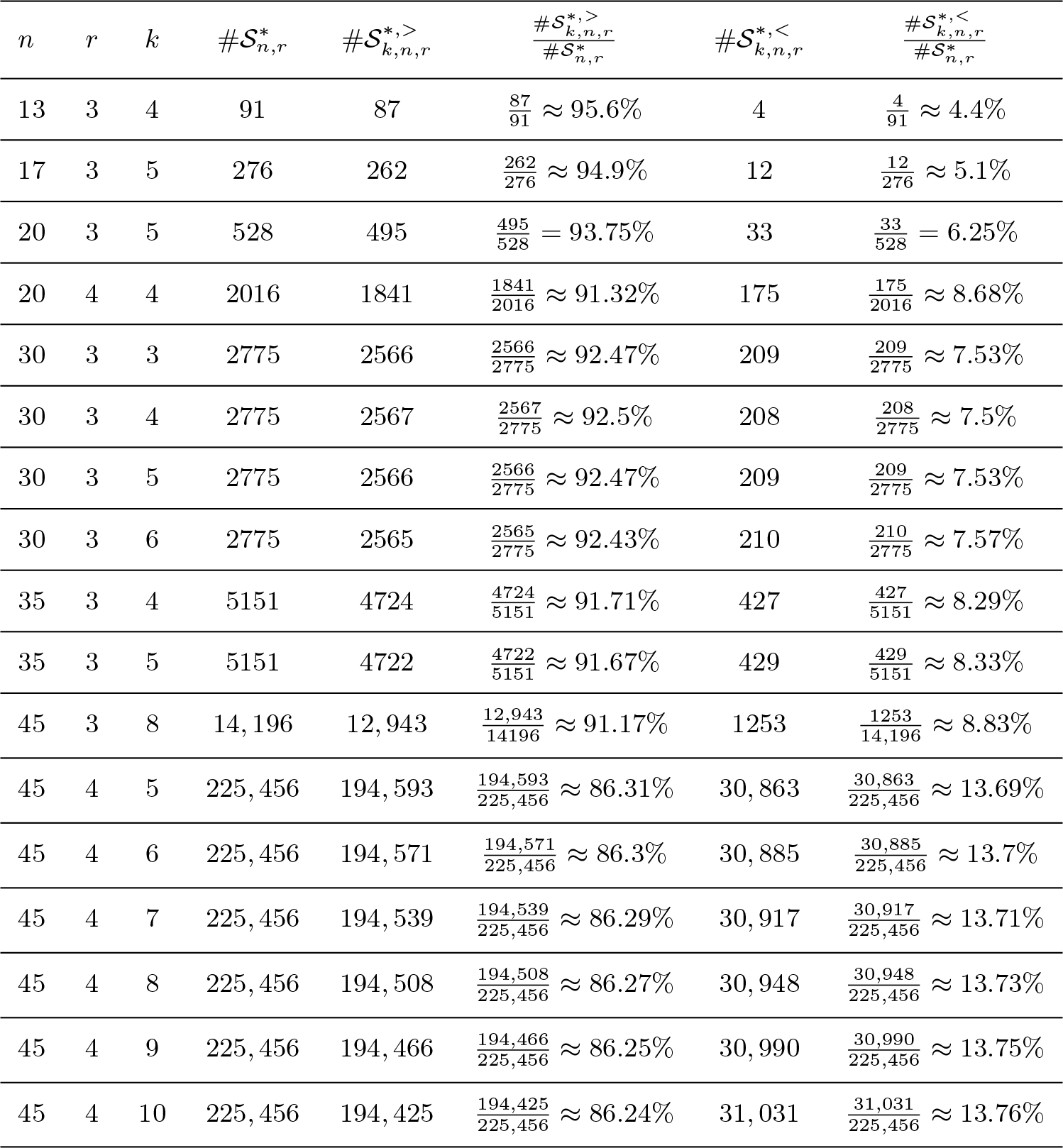
Table 1 Long description
The table lists results by parameters n, r, and k, giving the total count #S*_{n,r} and how that total splits into two categories: #S*_{k,n,r,> } (“greater-than”) and #S*_{k,n,r,< } (“less-than”), with each shown as a count and as a percentage of the total. In every row, the “greater-than” category is the majority, ranging from about 86.24% to 95.6%, while the “less-than” category ranges from about 4.4% to 13.76%. The highest “greater-than” share occurs at n=13, r=3, k=4: 87 of 91 (95.6%), leaving 4 of 91 (4.4%) in “less-than.” For n=30, r=3, totals are constant at 2775 across k=3 to 6, and the split changes only slightly (about 92.43%–92.5% “greater-than”). For n=45, r=4, the total is 225,456 for k=5 through 10, and the “greater-than” share decreases marginally as k increases (86.31% down to 86.24%), with a corresponding small rise in “less-than” (13.69% up to 13.76%). The largest totals appear at n=45, r=4 (225,456), where “less-than” counts are around 30,863 to 31,031 despite remaining a minority. Percentages are approximate in several rows, so small differences across nearby k values may reflect rounding as well as real variation.
For 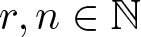 $r, n\in{\mathbb N}$, let $\mathcal{S}_{n,r}^{*}$ denote the set of pairs $(\boldsymbol{a},\boldsymbol{b})$ of partitions of $n$ with exactly $r$ parts satisfying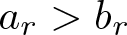 $a_r \gt b_r$. For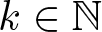 $k\in{\mathbb N}$, we then define
 \begin{align*}
\mathcal{S}_{k,n,r}^{*, \lt }&:=\left\{(\boldsymbol{a},\boldsymbol{b})\in \mathcal{S}_{n,r}^{*}:p_k(\boldsymbol{a}) \lt p_k(\boldsymbol{b})\right\},\\
\mathcal{S}_{k,n,r}^{*,=}&:=\left\{(\boldsymbol{a},\boldsymbol{b})\in \mathcal{S}_{n,r}^{*}:p_k(\boldsymbol{a})=p_k(\boldsymbol{b})\right\},\\
\mathcal{S}_{k,n,r}^{*, \gt }&:=\left\{(\boldsymbol{a},\boldsymbol{b})\in \mathcal{S}_{n,r}^{*}:p_k(\boldsymbol{a}) \gt p_k(\boldsymbol{b})\right\}.
\end{align*}
\begin{align*}
\mathcal{S}_{k,n,r}^{*, \lt }&:=\left\{(\boldsymbol{a},\boldsymbol{b})\in \mathcal{S}_{n,r}^{*}:p_k(\boldsymbol{a}) \lt p_k(\boldsymbol{b})\right\},\\
\mathcal{S}_{k,n,r}^{*,=}&:=\left\{(\boldsymbol{a},\boldsymbol{b})\in \mathcal{S}_{n,r}^{*}:p_k(\boldsymbol{a})=p_k(\boldsymbol{b})\right\},\\
\mathcal{S}_{k,n,r}^{*, \gt }&:=\left\{(\boldsymbol{a},\boldsymbol{b})\in \mathcal{S}_{n,r}^{*}:p_k(\boldsymbol{a}) \gt p_k(\boldsymbol{b})\right\}.
\end{align*}Then we can study the quantities
 \begin{equation*}
\frac{\#\mathcal{S}_{k,n,r}^{*, \lt }}{\#\mathcal{S}_{n,r}^{*}},\quad\frac{\#\mathcal{S}_{k,n,r}^{*,=}}{\#\mathcal{S}_{n,r}^{*}},\quad \frac{\#\mathcal{S}_{k,n,r}^{*, \gt }}{\#\mathcal{S}_{n,r}^{*}}.
\end{equation*}
\begin{equation*}
\frac{\#\mathcal{S}_{k,n,r}^{*, \lt }}{\#\mathcal{S}_{n,r}^{*}},\quad\frac{\#\mathcal{S}_{k,n,r}^{*,=}}{\#\mathcal{S}_{n,r}^{*}},\quad \frac{\#\mathcal{S}_{k,n,r}^{*, \gt }}{\#\mathcal{S}_{n,r}^{*}}.
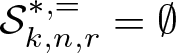
\end{equation*} Computer calculations indicate that 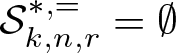 $\mathcal{S}_{k,n,r}^{*,=}=\emptyset$ for $k\geq 4$ and that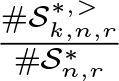 $\frac{\#\mathcal{S}_{k,n,r}^{*, \gt }}{\#\mathcal{S}_{n,r}^{*}}$ is much larger than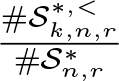 $\frac{\#\mathcal{S}_{k,n,r}^{*, \lt }}{\#\mathcal{S}_{n,r}^{*}}$. We give some indicative data in the table below.
As noted above, if  $(\boldsymbol{a},\boldsymbol{b})\in \mathcal{S}_{n,r,r-1}^{*}$ and $k\geq 3$, then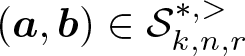 $(\boldsymbol{a},\boldsymbol{b})\in \mathcal{S}_{k,n,r}^{*, \gt }$, so it is reasonable to expect that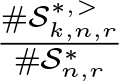 $\frac{\#\mathcal{S}_{k,n,r}^{*, \gt }}{\#\mathcal{S}_{n,r}^{*}}$ is larger than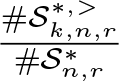 $\frac{\#\mathcal{S}_{k,n,r}^{*, \gt }}{\#\mathcal{S}_{n,r}^{*}}$. In view of these considerations, it is natural to ask the following questions.
(1) Do there exist
$r$ and
$k$ for which
$R_{r,k} \lt r-1$?(2) If
$R_{r,k} \lt r-1$ for some
$r$ and
$k$, then how does
$R_{r,k}$ grow, as a function of
$r$ or
$k$?(3) For fixed
$r$, can one evaluate
(4.2)and/or\begin{equation}
\lim_{n\to\infty} \frac{\#\mathcal{S}_{k,n,r}^{*, \gt }}{\#\mathcal{S}_{n,r}^{*}}
\end{equation}(4.3)\begin{equation}
\lim_{n\to\infty} \frac{\#\mathcal{S}_{k,n,r}^{*, \lt }}{\#\mathcal{S}_{n,r}^{*}}?
\end{equation}(4) Is the limit (4.2) (resp. (4.3)) equal to
$1$ (resp.
$0$) for
$k$ sufficiently large?(5) Can one prove that
$\mathcal{S}_{k,n,r}^{*,=}=\emptyset$ for
$k\geq 4$ and/or prove the weaker claim that
\begin{equation*}
\lim_{n\to\infty} \frac{\#\mathcal{S}_{k,n,r}^{*,=}}{\#\mathcal{S}_{n,r}^{*}}=0?
\end{equation*}








Acknowledgements
The first author has received funding from the European Research Council (ERC) under the European Union’s Horizon 2020 research and innovation programme (grant agreement No. 101001179).The research of the second author was supported by grants from the Research Grants Council of the Hong Kong SAR, China (project numbers HKU 17314122, HKU 17305923). The third author has received financial support under the scheme, the Prime Minister’s Research Fellowship, Govt. of India (PMRF, ID: 2503482). The fourth author’s work was supported by a grant from the Simons Foundation (853830, LR).


 Open access

