

INTRODUCTION
Many economic reforms fail due to governments’ inability to solve the dilemma of collective benefits and individual losses. Trade liberalization exemplifies this challenge: removing barriers to trade improves citizen welfare by lowering a price and fostering competition and productivity, while generating winners and losers in the short-term. A Coasian solution to this dilemma of collective benefits versus individual losses is to redistribute gains from trade winners to losers (Coase Reference Coase[1960] Reference Coase2013). The compensation hypothesis, or the literature on embedded liberalism, thus posits that a government can buy off opposition to trade by expanding social welfare programs and providing targeted subsidies and side-payments to losers (Cameron Reference Cameron1978; Naoi Reference Naoi2015; Ruggie Reference Ruggie1982).
Yet, the rise of protectionism in the U.S. and Europe in the past decade challenges the compensation hypothesis. Two research programs have sought to explain the failure of compensation. First, a burgeoning literature on backlash against globalization has documented voter-driven opposition to compensation through mechanisms such as partisan polarization, voter resentment, and racial coding of welfare programs (Bisbee et al. Reference Bisbee, Mosley, Pepinsky and Peter Rosendorff2020; Milner Reference Milner2019; Mutz Reference Mutz2018; Naoi Reference Naoi2020). Second, a literature on trade instrument choice has investigated what determines a government choice across substitutable policies to assist losers such as tariff or subsidy (Di Tella and Rodrik Reference Di Tella and Rodrik2020; Naoi Reference Naoi2009; Rodrik Reference Rodrik1986). This research program considers how rent-seeking and commitment problems shape inefficient policy choices. Both research programs explain why compensation fails and protectionism persists but fall short of specifying conditions under which government liberalizes and compensates. Consequently, they do not account for vast variations in trade liberalization and compensation across countries and industries.
In contrast to these demand-side approaches, we argue that constitutional structures shape the government’s ability to deliver compensation to different geographic profiles of industries and hence account for the pattern of trade liberalization across democracies and industries. Our approach considers an important procedural feature of trade liberalization achieved through preferential trade agreements: an executive branch negotiates trade agreements and a legislature ratifies them with majority support (Mansfield, Milner, and Rosendorff Reference Mansfield, Milner and Peter Rosendorff2000; Milner and Rosendorff Reference Milner1997; Naoi Reference Naoi2015). In light of this formal procedure of trade liberalization, we view compensation for trade losers as an interbranch contract between the executive and legislative branches, in which the executive promises redistributive compensation for legislative support for ratification. We consider trade liberalization as the result of successful policy substitution from the executive’s point of view to secure ratification, rather than as the result of how party or legislators maximize electoral survival. Constitutional differences between parliamentary and presidential systems dictate the process and outcome of this compensation contract, because constitutions govern the executive-legislature relations.
We argue that parliamentary and presidential systems liberalize and compensate industries with different geographic profiles because their constitutional rules specify who serves in the executive branch (actors), how they are chosen (incentives), and the bargaining between the two branches (power). In parliamentary systems, where party leaders play a fused role in negotiating trade agreements and making compensation deals within a party, the geographic concentration of industries facilitates the compensation bargain due to lower costs of contract negotiation and enforcement for a small number of concerned legislators/districts. Consequently, parliamentary systems are more likely to liberalize geographically concentrated products and compensate them with subsidies, while they are more likely to protect geographically diffused ones. Conversely, a separation of power in presidential systems means that the executive negotiates trade agreements while the legislature decides compensation budgets and separate actors serve the two branches with divergent political incentives. The executive and legislators bargain over ratification and compensation in the legislature, where a majority threshold binds the contract through successful legislation with a limited role of party leaders. The geographic diffusion of industries facilitates legislative majority coalition-building with a large number of concerned legislators/districts. As a result, presidential systems are more likely to liberalize and compensate geographically diffused products compared to geographically concentrated ones.
To test this argument, we construct new product-level data on agricultural trade liberalization for 155 Preferential Trade Agreements (PTAs) signed by 38 democracies between 1995 and 2016. Agricultural liberalization provides an ideal case to test our theory because the geographic distribution of agricultural production is relatively exogenous to politics and instead influenced by nature, such as terrain, soil, and climate conditions (Nunn and Qian Reference Nunn and Qian2011; Rickard Reference Rickard2018).
As an outcome measure of trade liberalization, we calculate the reduction in tariffs after a trade agreement in force at the Harmonized System 6-digit (HS6) product level. For a key variable of interest, we construct a novel crop-level geographic concentration measure with remote-sensed cropland data (Monfreda, Ramankutty, and Foley Reference Monfreda, Ramankutty and Foley2008; Ramankutty et al. Reference Ramankutty, Evan, Monfreda and Foley2008). Specifically, we compute the Herfindahl-Hirschman Index (HHI) of the geographic concentration across 145 commodities with a ground resolution of 10km × 10km. We link the crop-specific geographic concentration measure to tariff data at the HS6 level by manually matching crop types and individual product descriptions across all internationally traded agricultural goods.
Consistent with our hypothesis, the empirical analysis demonstrates that parliamentary systems are more likely to liberalize geographically concentrated crops than diffused crops through PTAs, compared to presidential systems. Notably, our Monte Carlo simulation indicates that the difference in predicted probabilities of liberalization between these two systems is of substantive importance: countries with parliamentary systems are 5.6 percentage points more likely, and those with presidential systems are 4.1 percentage points less likely, to liberalize concentrated crops compared to diffused crops. When the geographic concentration level is very high, i.e., a variable is set to its 90th percentile, parliamentary systems are 3.0 percentage points more likely, and presidential systems are 2.2 percentage points less likely, to liberalize crops at the given level of the geographic concentration, compared to their respective mean average levels of trade liberalization across crops. In contrast, when the geographic concentration is very low, i.e., a variable is set to its 10th percentile, a reverse pattern emerges: parliamentary systems are 2.6 percentage points less likely, whereas presidential systems are 1.8 percentage points more likely to liberalize crops relative to their respective mean predicted probabilities of liberalization.
To further explore the primary theoretical mechanism, we complement our large-scale statistical analysis with two sets of qualitative evidence. First, we employ a paired case study examining trade and compensation policies directed toward the geographically concentrated sugar industry in Japan (parliamentary) and the U.S. (presidential). Consistent with our prediction, we find that Japan has liberalized its tariff and import quota while expanding a sugar subsidy program. In contrast, the U.S. safeguards the sugar industry through tariffs and import quotas, while offering relatively minimal subsidies. Second, we present evidence from fifteen interviews with high-ranking trade and budget policymakers from the executive and legislative branches in Japan and the U.S. conducted between 2018 and 2021. These interviews corroborate our theoretical mechanisms linking constitutional structures with the pattern of agricultural liberalization as the result of compensation bargains.
This paper makes four distinct contributions. First, our paper contributes to a vast social science literature on the determinants and consequences of the failure of compensation. Governments around the world struggle to enact welfare-improving economic and social reforms due to their inability to compensate losers. Examples include social welfare reforms, energy transitions, and health care policies, among others. Our study is one of the first to consider the constitutional roots of this failure and thereby revive an important research program on the economic effects of constitutions (Haggard and McCubbins Reference Haggard and McCubbins2001; Persson and Tabellini Reference Persson and Tabellini2003).
Second, more specifically, we contribute to the literature on the impact of domestic political institutions on trade policies. In contrast to the previous studies that primarily focus on electoral institutions (e.g., Park and Jensen Reference Park and Jensen2007; Rickard Reference Rickard2018), we demonstrate how constitutional structures—specifically, parliamentary and presidential systems—account for patterns of trade liberalization across different geographic profiles of industries, even after controlling for the effects of electoral systems (Rickard Reference Rickard2018; Rogowski Reference Rogowski1987; see Milner Reference Milner1997 for an exception).
Third, although numerous scholars have investigated the commitment and enforcement problems associated with inefficient policy choices (Acemoglu and Robinson Reference Acemoglu and Robinson2001; Acemoglu Reference Acemoglu2003; Davis Reference Davis2021), our paper is among the first to consider the effect of constitutional structures on trade instrument choice. While studies linking domestic institutions and trade policy typically focus on a single policy instrument, our theory and empirical evidence explicitly consider the substitutability of tariffs and subsidies. We examine how commitment problems impede policy substitution, specifically, the use of subsidies to replace a reduction in tariffs.
The final contribution pertains to the studies on agricultural protection in democracies (Park and Jensen Reference Park and Jensen2007; Rogowski and Kayser Reference Rogowski and Kayser2002; Thies and Porche Reference Thies and Porche2007). Constitutional determinants of agricultural liberalization are of broad interest to political scientists because trade barriers contribute to high food prices which disproportionately affect the poor per Engel’s Law. In addition to our theoretical contribution, we provide an empirical framework to examine granular policy differences across products and a new measure of the geographic concentration that is standardized across countries and crops.
THEORY: COMPENSATION POLITICS AS INTER-BRANCH CONTRACT
Compensation Contract for Trade Liberalization
We define a compensation contract as the inter-branch consensus between the executive and legislative branches with regard to the depth of trade liberalization and whom and how much to compensate in order to secure the successful ratification of a trade agreement.
Our theory is based on four well-established premises about actors, incentives, and the institutional environment of the politics of trade agreements. First, in both parliamentary and presidential democracies, the executive branch negotiates trade agreements with a foreign government and the legislative branch ratifies them and appropriates the budget to compensate losers. The executive branch alone cannot enact trade liberalization without securing a majority support among legislators on the floor (Milner and Rosendorff Reference Milner1997; Naoi Reference Naoi2015).Footnote 1 Second, we assume that in both systems, the executive is relatively more supportive of free trade than the median legislator due to its representation of broader domestic constituencies, i.e., the median voter (Karol Reference Karol2000; Milner Reference Milner1988; Thies and Porche Reference Thies and Porche2007). The executive branch’s free trade bias may be even more pronounced in presidential systems, where a president runs for a nationwide district.Footnote 2 We further assume that when the executive branch must choose between tariffs and subsidies to secure ratification, the executive prefers subsidy over tariff because subsidy is associated with fewer deadweight losses than tariffs and because imposing tariffs will prompt a trade partner to retaliate by reducing market access for export industries (Tullock Reference Tullock, Alt and Shepsle1990). Subsidy, on the other hand, invokes less retaliation (Gilligan Reference Gilligan1997). Third, we assume that a trade agreement generates distributional effects geographically, i.e., some electoral districts, defined by geographical units, benefit from the agreement while others lose. Finally, we assume that legislators are office-seeking and that, for analytical simplicity, individual legislator’s decision to support ratification is purely determined by the net income effects of a trade agreement and compensation to their districts. This implies that legislators representing import-competing districts would prefer tariffs over subsidies when the probability of legislating compensation is low and would be indifferent between tariffs and subsidies when the probability is high. Legislators representing export-oriented districts and non-trading districts support ratification for the income benefits to industries and consumers, regardless of compensation.Footnote 3
Building on these premises, we argue that the executive seeks to achieve two interrelated goals. One is to negotiate an agreement that can be ratified by the legislature. Failure to ratify an agreement signals incompetence and a lack of leadership (Mansfield, Milner, and Rosendorff Reference Mansfield, Milner and Peter Rosendorff2000; Milner Reference Milner1997; Naoi Reference Naoi2015). The second goal is the electoral survival of co-partisans. The executive wants its co-partisan legislators to survive the next election; to stay in power by reducing adverse income effects of trade liberalization in districts.
Consequently, the key to successful ratification of a trade agreement is to identify representatives who might vote against trade liberalization on the floor and preempt Nay votes with the promise or actual delivery of compensation (Naoi Reference Naoi2015). A compensation contract is critical as targeted income compensation to losers—in the forms of subsidies, loans, and grants—can address both ratification and electoral survival problems by reducing the adverse income effects of a trade liberalization as long as these policy instruments can be distributed geographically.
Commitment and Information Asymmetry Problems in Compensation Contract
A primary challenge in negotiating a compensation contract is that the bargaining between the executive and legislative branches is supralegal, regardless of differences in constitutional structures (Weingast and Marshall Reference Weingast and Marshall1988). In fact, without legal means to bind the contract, neither the executive nor legislative branch could credibly commit to enforcing a compensation contract. The executive branch might promise compensation to legislators, but renege on them once a trade agreement is ratified (see Weingast and Marshall Reference Weingast and Marshall1988, on logrolling). Likewise, legislators may not comply with their initial commitments due to heterogeneous district interests or the lack of sufficient side-payments at the time of voting. Note that the timing of negotiating trade agreements and a legislature ratifying the agreement is inherently sequential, which worsens the commitment and enforcement problems (Drazen Reference Drazen2000).
Another challenge in negotiating and enforcing a compensation contract is the information asymmetry problem between the executive and legislative branches. In the context of trade liberalization, the contract between the executive and legislative branches requires that the executive branch has relatively accurate information about which districts or industries gain and lose from a trade agreement and the appropriate price for compensating these legislators (Naoi Reference Naoi2015). Yet, there exists information asymmetry between the two branches due to their inherently misaligned interests. On the one hand, legislators have incentives to maximize the amount of compensation they can extract from the executive branch by exaggerating the potential damage. On the other hand, the executive has incentives to buy off support with the lowest compensatory offer possible. Indeed, incomplete information is one of the key explanations for ratification failure in the literature (Milner and Rosendorff Reference Milner and Peter Rosendorff1996).
Below, we demonstrate that the geographic concentration of industries mitigates the commitment and information asymmetry problems in parliamentary systems, while geographic diffusion mitigates these problems in presidential systems.
Fusion versus Separation of Power
Parliamentary and presidential systems differ in who negotiates a trade agreement and decides the budget for compensation (actors), whether their political incentives align (incentives), and the institutional environment that facilitates versus constrains cooperation between the executive and legislature (power).
In parliamentary systems, the interbranch contract is likely to be negotiated and enforced within a party because party leaders have a fused role in negotiating both a trade agreement and the budget for compensation. Both Prime Minister (a chief of the state) and cabinet ministers are chosen from the elected legislators and these members of the executive branch concurrently serve as legislators. Therefore, the same actors—i.e., party leaders—negotiate and enforce a compensation contract within a party or a coalition of parties. The fused role of party leaders also allows parliamentary systems to negotiate a trade agreement and compensation in tandem as a packaged deal.Footnote 4 Beyond overlapping and concurrent appointments between the two branches, executives in parliamentary systems have tools to secure legislator’s support for ratification, such as leveraging personnel appointment power of the party leaders or by invoking the power of dissolution that can tie the fate of trade and budget legislation with an incumbent’s electoral fate in an early-timed election (e.g., Baron Reference Baron1998; Cheibub and Limongi Reference Cheibub and Limongi2002; Diermeier and Feddersen Reference Diermeier and Feddersen1998; Naoi Reference Naoi2015). Due to these two key institutional features, parliamentary systems are likely to form and enforce a compensation contract within a party or a coalition of parties.
In contrast, in presidential systems, the compensation contract is likely to be negotiated and enforced in the legislature with majority support during the ratification phase due to separate actors serving executive and legislative branches with diverging electoral incentives. A chief of the state (i.e., President) is directly elected by voters in a separate election. The president appoints cabinet ministers, who are not concurrent legislators and are usually “non-partisans”—economists, lawyers, business executives, and former governors and mayors—who possess no past legislative experience.Footnote 5 This separation of power and non-overlapping appointments implies that the executive branch can promise compensation but may struggle to follow through and enforce the promise unless there is a majority support in a legislature to support compensation bills (Moe and Caldwell Reference Moe and Caldwell1994). In the absence of concurrent appointments between the two branches, legislators are incentivized to invest effort in shaping compensation on the legislative floor rather than during the trade negotiation phase (we verify this conjecture in our interviews). The sequential phases of trade negotiation and budget decisionmaking in presidential systems stand in stark contrast to parliamentary systems where party leaders can negotiate both trade agreements and compensation budgets simultaneously. While party leaders in presidential systems have tools to induce cooperation from backbenchers in a legislature such as pork, committee assignments, and persuasion (Evans Reference Evans2004; McCarty and Poole Reference McCarty and Poole1995), they do not hold concurrent positions in the executive branch. Moreover, the executive branch lacks the power to dissolve legislatures and call for early-timed elections unlike their parliamentary counterparts.
Information Asymmetry Problems
Parliamentary systems are characterized by the lower information asymmetry problems due to overlapping legislator appointments between the two branches as well as party leaders’ fused role to negotiate both trade agreements and compensation contracts. Relative to their counterparts in presidential systems, cabinet members in parliamentary systems possess more detailed knowledge about not only their districts and industries but also about other districts and industries through current and past committee work and election campaign activities. Moreover, party leaders can negotiate a trade agreement and compensation in tandem within a party, which further reduces information asymmetry problems.Footnote 6 Therefore, executive branches in parliamentary systems are better able to find the appropriate price for compensation for legislators and industries.
Conversely, presidential systems are plagued with more information asymmetry problems due to non-overlapping appointments between the two branches with diverging electoral incentives. In presidential systems, the majority of cabinet members are non-partisans who lack comparable experience in running campaigns in congressional districts and in serving on policy committees. The executive branch thus possesses relatively little local information necessary to vet legislator demands and propose an appropriate price of compensation. Moreover, the sequential nature of negotiating a trade agreement and compensation worsens this information asymmetry as well as the aforementioned commitment problems. As a result, presidential systems are more likely to address this information asymmetry problem by directly tying the fate of ratification to the fate of compensation bills in a legislature. Relatively simultaneous exchanges of votes for compensation and votes for ratification ensure legislators communicate their demands more effectively and efficiently during the ratification phase rather than during a trade negotiation phase.
Geographic Concentration and Compensation Contract
The differences between parliamentary and presidential systems in who negotiates a compensation contract (party leaders versus a legislature) and where it is enforced (within a party or in the legislature) leads to distinct geographic profiles of industries that are likely to be liberalized and compensated. In parliamentary systems where party leaders enforce a compensation contract within a party, the geographic concentration of industries facilitates the formation and enforcement of a compensation contract with a smaller number of concerned legislators. Accordingly, we predict that parliamentary systems are more likely to liberalize and compensate geographically concentrated products and protect geographically diffused products with tariffs. This prediction challenges the canonical logic of collective action which predicts that geographically concentrated industries win government protection by overcoming the free-rider problem (Olson Reference Olson1965). Our theory suggests that, from the perspective of party leaders, the geographic concentration facilitates liberalization because of its lower negotiation and information costs in striking the compensation deal.
On the other hand, in presidential systems with non-overlapping appointments between the executive and legislative branches, a compensation contract is more likely to be negotiated and enforced on the legislative floor during the ratification phase. This is because the separation of power with non-concurrent appointments between the executive and legislative branches entails severe commitment and information asymmetry problems in striking a compensation contract. Importantly, what binds the contract in presidential systems is a majoritarian threshold. A majoritarian threshold on the legislative floor means that numbers become power: geographically diffused industries, with a larger number of concerned legislators, yield more power to pass the compensation bills. Accordingly, in presidential systems, governments are more likely to liberalize and compensate geographically diffused industries.
In sum, the constitutional differences between parliamentary and presidential systems shape where interbranch contracts are negotiated and enforced: within a party for parliamentary systems and in a legislature for presidential systems. The geographic concentration of industries facilitates the formation and enforcement of a contract within a party in parliamentary systems, while geographic diffusion facilitates contract formation in the legislature with a majority threshold in presidential systems. We thus predict heterogeneous effects of constitutional differences across varying levels of the geographic concentration of industries on trade liberalization.
Hypothesis 1. Parliamentary systems are more likely to liberalize geographically concentrated products and protect diffused products relative to presidential systems.
We consider trade liberalization as the result of successful policy substitution from the executive’s point of view to secure ratification, rather than as the results of how party or legislators maximize electoral survival. The logic of our hypothesis is consistent with McGillivray (Reference McGillivray1997)’s argument that diffused industry allows legislators to form a majority coalition with the lowest costs and hence wins trade protection in countries with weak party discipline (the U.S. is her case). However, our prediction is the opposite of hers because her model only considers a single policy instrument (tariff), while we consider geographic diffusion to facilitate substitution between tariff and compensation in presidential systems.Footnote 7
Moreover, our theory differs from the party discipline argument in two important ways (McGillivray Reference McGillivray1997; Nielson Reference Nielson2003). First, we consider commitment and information asymmetry problems that arise from the negotiations between the two branches, while the party discipline argument tends to focus on party behavior in the legislative branch alone. Second, the commitment and information asymmetry problems that our theory highlights are rooted in the constitutional structures rather than originating from the internal party dynamics. Accordingly, we argue that while strengthening party discipline may solve commitment problems to some degree, it does not solve the information asymmetry problems that plague compensation deals.Footnote 8
Finally, our theory is subject to two important scope conditions. First, our theory requires that legislative elections have districts comprised of geographic units (Catalinac and Motolinia Reference Catalinac and Motolinia2021; Fiva, Halse, and Smith Reference Fiva, Halse and Smith2021). Therefore, our theory does not apply to a country with a nation-wide closed-list proportional representation district, where voters choose parties not individual candidates. Second, another important scope condition is that the government can target either crop or geographic area for compensation.Footnote 9 Our theory of exchange between ratification vote and compensation does not hold if a government only has universalistic or formula-based compensation programs.
STATISTICAL ANALYSIS OF TRADE LIBERALIZATION
To test our hypothesis about constitutional structures, the geographic concentration of industries, and the degree of trade liberalization, we draw on a variety of original data. This section first describes our newly constructed data and measurement strategy. We then present our main empirical findings, which show that parliamentary systems are more likely to liberalize (protect) geographically concentrated (diffused) products compared to presidential systems.
Data and Measurement
Despite the theoretical significance of the geographic concentration of industries in explaining economic policy outcomes, assessing its impact on trade liberalization poses two significant empirical challenges. First, various political and economic factors shape the geographic concentration of industries, which may confound our inference regarding the effect of constitutional structure on trade policies. Second, our empirical test requires that we link product-level tariff reduction data with product-level geographic concentration data. While product-level data on trade liberalization is publicly available, it is difficult to obtain geographic concentration data at the product-level that is comparable across countries.
Geographic Concentration of Crop Production with Remote-Sensed Data
To overcome these challenges, we focus on agricultural trade liberalization. Agricultural trade provides an ideal case to test our theory. First, the geographic distribution of agricultural production is relatively exogenous to politics and correlates more with terrain, soil, and climate conditions. In this regard, we follow Nunn and Qian (Reference Nunn and Qian2011) which shows that crop production indeed depends heavily on time-invariant geoclimatic conditions and is less likely to be influenced by political institutions or constitutional design. Second, compensatory policy tools for the agricultural sector tend to be product-specific across democracies (Anderson, Martin, and Valenzuela Reference Anderson, Martin and Valenzuela2006), allowing us to analyze parliamentary and presidential systems in a relatively comparable manner. This uniformity in the design of agricultural compensation programs is in contrast to a diversity of compensation programs for manufacturing sectors that range from a universalistic welfare program (e.g., Northern European welfare states that are not industry-specific), to formulaic compensation specifically designed for trade losers (e.g., Trade Adjustment Assistance [TAA] in the U.S.), and to targeted subsidies for firms (e.g., Japan, see Estévez-Abe Reference Estévez-Abe2008).
For a measure of the geographic concentration of agricultural production, we leverage novel data that measures geographic distributions of agricultural production for 145 crops around the world using remote-sensed satellite images. In particular, we use the crop yield data constructed by Monfreda, Ramankutty, and Foley (Reference Monfreda, Ramankutty and Foley2008), which combines satellite image data of land-use from Ramankutty et al. (Reference Ramankutty, Evan, Monfreda and Foley2008) with national-, state-, or county-level census data for each country. The census data of crop production supplements the satellite image data to improve the accuracy of estimated yields. We obtain this crop yield data that combines remote-sensed data and census information from EarthStat.Footnote 10 For each country and for each crop, we extract the production volumes for each grid cell from the obtained raster format data overlaid over the map of each country. Unlike census data where data information is collected at county- or state-level, EarthStat data are not bound by administrative borders. Therefore, we can compare the concentration of crop production at the exact same unit across countries and across crops. The resulting dataset offers yields of 145 individual crops around the year 2000 at 5 minutes × 5 minutes spatial resolution in latitude by longitude (approximately 10 km × 10 km).Footnote 11 Figure 1 illustrates the granularity and the comparability of our remote-sensed data across various crops, visualizing the geographic distribution of sugarcane and rice production in Japan. Notice that rice (right) is produced in most parts of Japan whereas sugarcane (left) production is concentrated in two prefectures in the south.
Sugarcane and Rice Production per Grid (Approximately 10 km × 10 km)
Note: The figure shows sugarcane (left) and rice (right) production for Japan. It is visually clear that sugarcane production is more concentrated than rice production in Japan.

To quantify the geographic concentration of the crop yield from this land cover data, we then calculate the HHI. Specifically, we compute HHI for each crop, k, and for each country, i, to obtain our measure of the geographic concentration of agricultural production given by the following formula:
 $$ \begin{array}{rl}{Z}_{ik}:={\displaystyle \sum_{l=1}^{L_i}}\left(\right.\frac{P_{ikl}}{P_{ik}}{\left)\right.}^2,& \end{array} $$
where $ {P}_{ikl} $
is the production of crop k at grid cell l in country i,
$ {P}_{ikl} $
is the production of crop k at grid cell l in country i, $ {P}_{ik} $
is the total production of crop k in country i, and
$ {P}_{ik} $
is the total production of crop k in country i, and $ {L}_i $
is the total number of grid cells in country i. The more (less) concentrated the crop production is, the larger (smaller) the HHI for the product becomes. For instance,
$ {L}_i $
is the total number of grid cells in country i. The more (less) concentrated the crop production is, the larger (smaller) the HHI for the product becomes. For instance, $ \mathrm{HHI} $
will be unity if a crop is produced in one grid (i.e., concentrated), while
$ \mathrm{HHI} $
will be unity if a crop is produced in one grid (i.e., concentrated), while $ \mathrm{HHI} $
approaches zero as the production is equally distributed in every single grid (i.e., dispersed). In terms of our example in Figure 1, the HHI value of sugarcane production (
$ \mathrm{HHI} $
approaches zero as the production is equally distributed in every single grid (i.e., dispersed). In terms of our example in Figure 1, the HHI value of sugarcane production ( $ \approx 0.0148 $
) is much larger than that of rice (
$ \approx 0.0148 $
) is much larger than that of rice ( $ \approx 0.0007 $
). Given the skewed distribution of the geographic concentration measure, we log-transform the value for our empirical analysis.
$ \approx 0.0007 $
). Given the skewed distribution of the geographic concentration measure, we log-transform the value for our empirical analysis.
HHI is appropriate for our theoretical framework because it is a standardized and distance-free metric to capture the geographic concentration of crop production. In particular, our argument considers the number of concerned electoral districts to be theoretically more relevant for the formation and enforcement of a contract than the distance among them. In this regard, HHI is preferred to other measures of the geographic concentration proposed in the literature such as the one used in Busch and Reinhardt (Reference Busch and Reinhardt2000), which takes into account the spatial proximity.Footnote 12 To illustrate the advantage of our distance-free measure, consider tomatoes in the U.S., which are primarily produced in California and Florida. Although these two states are geographically apart, tomatoes are a concentrated crop in our theoretical framework. HHI is consistent with our theoretical framework because it measures overall concentration regardless of the geographic proximity of the area of crop production.
Linking Crop Names to Harmonized System (HS) Code
The granularity and coverage of our data allow us to link the set of crops for which we have measures of the geographic concentration to the product codes at the HS 6-digit level, which is the most detailed product classification for trade data that is standardized and comparable across countries. Yet, the crop names in EarthStat data do not necessarily align with the crop names appearing in HS product description. For example, “cabbage” in EarthStat dataset is described more generally as “brassica” (a genus of plants in the cabbage family) in HS, not just “cabbage.” Second, some crops in EarthStat do not have obvious corresponding HS products, e.g., “okra” is included within “Other” vegetables category of 070999 (HS6) while “kiwi” belongs to “fruit, edible; kiwifruit, fresh” category of 081050 (HS6). For these reasons, it is difficult to automate the merging of these two datasets. Hence, we manually search and match crop names one by one across various product descriptions. The details of the matching process are available in Section A.2 of the Supplementary Material.
Outcome Measure of Trade Liberalization
Once the matches between crop names and HS product codes are established, we develop the outcome measure of trade liberalization that varies across each crop within each PTA. Our universe of trade liberalization includes a total of 155 PTAs signed by two parties that have become in force between 1995 and 2016, where at least one of the two signatories is democracy. The PTA information comes from the Regional Trade Agreement Database of World Trade Organization (WTO).Footnote 13 We follow the convention in the literature and consider a country democracy when the Polity IV score is equal to or greater than 6. Our sample consists of 38 democracies that signed at least one PTA during this time period, of which 25 are presidential systems and 14 are parliamentary systems. Two countries in the dataset switched their constitutional structures once in the given time frame.Footnote 14 We remove the European Union member countries from our sample because it is a supra-national organization with a unified trade policy.Footnote 15 This, combined with the heterogeneous geographic dispersion across crops, allows us to systemically evaluate the effect of constitutional structure across democracies.
To accurately measure crop-level episodes of trade liberalization in each trade agreement, we calculate the difference between preferential rate and the Most-Favored Nation (MFN) tariff rate for each of the matched HS6 product categories. Specifically, we classify crops to have experienced trade liberalization when a preferential tariff rate is lower than the pre-existing MFN tariff rate. If PTA tariff rate for a given crop is identical to pre-existing MFN rate (non-zero) or higher, we consider the product to remain protected. Thus, for each of PTA’s importing country and crop, we construct an indicator variable that takes the value of 1 if the PTA tariff rate of a given crop is lower than the MFN tariff rate in post-PTA period, while zero otherwise. Formally, our outcome measure of trade liberalization $ {Y}_{pik}\in \{0,1\} $
for PTA p, importing country i, and crop k is computed as follows:
$ {Y}_{pik}\in \{0,1\} $
for PTA p, importing country i, and crop k is computed as follows:
 $$ \begin{array}{rl}{Y}_{pik}=\unicode{x1D7D9}\{{\tau}_{pik}^{\mathrm{PTA}}<{\tau}_{pik}^{\mathrm{MFN}}\},& \end{array} $$
where $ {\tau}_{pik}^{\mathrm{PTA}} $
and
$ {\tau}_{pik}^{\mathrm{PTA}} $
and $ {\tau}_{pik}^{\mathrm{MFN}} $
are the average preferential and MFN rates at the HS6-level, respectively. Both PTA and MFN tariff rates data are obtained from the World Integrated Tariff Solutions (WITS).Footnote
16 Note that using the data available through the WITS from a particular year might be limited as countries sometimes fail to report preferential tariffs even years after the agreements are in force (Barari and Kim Reference Barari and Kim2020), while some products receive delayed tariff reduction over time due to tariff phase-out negotiated among trade partners (Baier and Bergstrand Reference Baier and Bergstrand2007). Since our goal is to accurately capture the episode of trade liberalization, we verify and correct any inaccuracies in the timing reported by each country. We then compute the moving average of the tariff rates over varying time window lengths. For the ensuing analysis, we adopt a conservative approach, using a broad time window that spans ten years both before and after each trade agreement. Moreover, when a crop aligns with multiple HS6 categories, as illustrated above, we average the tariff rates across all the corresponding HS6 categories to minimize potential measurement errors.
$ {\tau}_{pik}^{\mathrm{MFN}} $
are the average preferential and MFN rates at the HS6-level, respectively. Both PTA and MFN tariff rates data are obtained from the World Integrated Tariff Solutions (WITS).Footnote
16 Note that using the data available through the WITS from a particular year might be limited as countries sometimes fail to report preferential tariffs even years after the agreements are in force (Barari and Kim Reference Barari and Kim2020), while some products receive delayed tariff reduction over time due to tariff phase-out negotiated among trade partners (Baier and Bergstrand Reference Baier and Bergstrand2007). Since our goal is to accurately capture the episode of trade liberalization, we verify and correct any inaccuracies in the timing reported by each country. We then compute the moving average of the tariff rates over varying time window lengths. For the ensuing analysis, we adopt a conservative approach, using a broad time window that spans ten years both before and after each trade agreement. Moreover, when a crop aligns with multiple HS6 categories, as illustrated above, we average the tariff rates across all the corresponding HS6 categories to minimize potential measurement errors.
Empirical Findings
Our objective is to estimate the effect of crop concentration and constitutional systems on tariff reduction. We focus on the difference between PTA and MFN tariff rates in the post-PTA period, while accounting for any crop-specific heterogeneity across trade agreements. To achieve this, we formulate a correlated random effect (CRE) model as described in Equation 3. This model permits arbitrary correlations between the crop-specific intercepts and predictors, while avoiding the incidental parameter problem present in non-linear logistic regression with crop fixed effects. In this regard, this model can be considered as a logistic regression with crop fixed effects (Wooldridge Reference Wooldridge2019).Footnote 17 Formally, for each PTA p, importing country i, and for each crop k,
 $$ {Y}_{pik}={\displaystyle \begin{array}{l}{\mathrm{logit}}^{-1}(\alpha +{\beta}_1{Z}_{ik}+{\beta}_2{D}_{pi}+{\beta}_3{Z}_{ik}\times {D}_{pi}\\ {}+\hskip2px {\Delta}^{\top }{X}_{pik}+{\Lambda}^{\top }{\overline{M}}_k),\end{array}} $$
where $ {Y}_{pik} $
is defined in Equation 2,
$ {Y}_{pik} $
is defined in Equation 2, $ {Z}_{ik} $
is the geographic concentration of crop k in country i defined in Equation 1, and
$ {Z}_{ik} $
is the geographic concentration of crop k in country i defined in Equation 1, and $ {D}_{pi} $
is the binary indicator of whether country i has a parliamentary system (= 1) or a presidential system (= 0).Footnote
18 We rely on the DPI to measure constitutional structures (Scartascini, Cruz, and Keefer Reference Scartascini, Cruz and Keefer2021). We include a set of various potential confounders
$ {D}_{pi} $
is the binary indicator of whether country i has a parliamentary system (= 1) or a presidential system (= 0).Footnote
18 We rely on the DPI to measure constitutional structures (Scartascini, Cruz, and Keefer Reference Scartascini, Cruz and Keefer2021). We include a set of various potential confounders $ {X}_{pik} $
that vary across PTAs, countries, and/or crops. This includes GDP per capita, population, agricultural population, production volume of each crop, Polity score, land size, and crop-level and total trade volume with the world for both PTA parties, the proportion of non-agricultural products liberalized in each PTA, crop-level and total trade volume with PTA partners and with all countries, average tariff rates, indicator variables for joint WTO and regional trade agreements membership, shared border with PTA partners, constitutional institutions of PTA partners, MFN tariff rates in pre-PTA period, an indicator variable if pre-PTA MFN tariff rate is equal to zero, and crop-level elasticity and differentiation. Table A2 in the Supplementary Material summarizes sources of variables used in this analysis. To account for crop-specific heterogeneity, we include the vector that consists of the mean of each variable for each crop across countries and PTA,
$ {X}_{pik} $
that vary across PTAs, countries, and/or crops. This includes GDP per capita, population, agricultural population, production volume of each crop, Polity score, land size, and crop-level and total trade volume with the world for both PTA parties, the proportion of non-agricultural products liberalized in each PTA, crop-level and total trade volume with PTA partners and with all countries, average tariff rates, indicator variables for joint WTO and regional trade agreements membership, shared border with PTA partners, constitutional institutions of PTA partners, MFN tariff rates in pre-PTA period, an indicator variable if pre-PTA MFN tariff rate is equal to zero, and crop-level elasticity and differentiation. Table A2 in the Supplementary Material summarizes sources of variables used in this analysis. To account for crop-specific heterogeneity, we include the vector that consists of the mean of each variable for each crop across countries and PTA, $ {\overline{M}}_k $
, such that
$ {\overline{M}}_k $
, such that
 $$ \begin{array}{rl}& {\overline{M}}_k:={\left[\begin{array}{l}\qquad {\overline{Z}}_k,\overline{D},{\overline{Z}}_k\times \overline{D},{\overline{X}}_k\qquad \end{array}\right]}^{\top }.\end{array} $$
Our quantity of interest (QOI) is the difference in predicted probabilities of liberalization between parliamentary and presidential systems at different levels of geographic concentration. To account for the varying baseline tendencies toward liberalization between these two regime types, we subtract the average levels of trade liberalization across crops specific to each institutional type. That is:
 $$ {\mathrm{QOI}}_z:={\displaystyle \begin{array}{l}\left({\pi}_{\mathrm{Parliamentary},\ z}\hskip0.35em -\hskip0.35em {\overline{\pi}}_{\mathrm{Parliamentary}}\right)\\ {}-\hskip2px \left({\pi}_{\mathrm{Presidential},\ z}\hskip0.35em -\hskip0.35em {\overline{\pi}}_{\mathrm{Presidential}}\right),\end{array}} $$
where $ {\pi}_{c,z} $
is the predicted probability of liberalization for a country with constitutional institution
$ {\pi}_{c,z} $
is the predicted probability of liberalization for a country with constitutional institution $ c\in \{\mathrm{Parliamentary},\mathrm{Presidential}\} $
and geographic concentration level of z, and
$ c\in \{\mathrm{Parliamentary},\mathrm{Presidential}\} $
and geographic concentration level of z, and $ {\overline{\pi}}_c $
is the mean predicted probability of liberalization for institution c across all crops. The predicted probabilities
$ {\overline{\pi}}_c $
is the mean predicted probability of liberalization for institution c across all crops. The predicted probabilities $ {\pi}_{c,z} $
for each political institution c is computed as follows:
$ {\pi}_{c,z} $
for each political institution c is computed as follows:
 $$ \left\{\begin{array}{l}{\pi}_{\mathrm{Parliamentary},\ z}={\mathrm{logit}}^{-1}\left(\alpha +{\beta}_1z+{\beta}_2+{\beta}_3z+{\Delta}^{\top }x+{\Lambda}^{\top}\overline{m}\right)\\ {}{\pi}_{\mathrm{Presidential},\ z}={\mathrm{logit}}^{-1}\left(\alpha +{\beta}_1z+{\Delta}^{\top }x+{\Lambda}^{\top}\overline{m}\right)\end{array}\right. $$
where x ( $ \overline{m} $
) indicates the median of (demeaned) covariates included in the model.
$ \overline{m} $
) indicates the median of (demeaned) covariates included in the model.
To draw a robust statistical inference about QOI, we rely on a Bayesian framework to estimate the parameters of our model. In doing so, we specify the weakly informative prior distribution as follows:
 $$ \begin{array}{rl}\beta, \Delta, \Lambda & \hskip-0.5em \sim \hskip0.5em \mathcal{N}(0,{(2.5/{s}_v)}^2)\end{array} $$
 $$ \begin{array}{rl}\alpha & \hskip-0.5em \sim \hskip0.5em \mathcal{N}(0,2.{5}^2),\end{array} $$
where $ {s}_v $
stands for the standard deviation of the predictor, v. This prior specification helps stabilize the posterior inference (Gelman, Hill, and Vehtari Reference Gelman, Hill and Vehtari2020) and the default choice for rstanarm package.Footnote
19 Sampling is conducted with a Markov Chain Monte Carlo (MCMC) method. We run 4 MCMC chains with 1,000 burn-in periods and 1,000 posterior draws each. We then simulate the predicted probabilities of liberalization for each system over different levels of the geographic concentration in our data, while holding other variables to their median values. The uncertainty estimates of QOI come from the posterior distributions of parameters. We verify the convergence with the Gelman–Rubin statistic and confirm the statistic is lower than 1.1 for all the estimated parameters.
$ {s}_v $
stands for the standard deviation of the predictor, v. This prior specification helps stabilize the posterior inference (Gelman, Hill, and Vehtari Reference Gelman, Hill and Vehtari2020) and the default choice for rstanarm package.Footnote
19 Sampling is conducted with a Markov Chain Monte Carlo (MCMC) method. We run 4 MCMC chains with 1,000 burn-in periods and 1,000 posterior draws each. We then simulate the predicted probabilities of liberalization for each system over different levels of the geographic concentration in our data, while holding other variables to their median values. The uncertainty estimates of QOI come from the posterior distributions of parameters. We verify the convergence with the Gelman–Rubin statistic and confirm the statistic is lower than 1.1 for all the estimated parameters.
Figure 2 shows the estimated difference in the predicted probabilities of liberalization for each political system as a function of the geographic concentration as defined in Equation 5. The positive (negative) values indicate that the predicted probability of liberalization is higher for parliamentary (presidential) systems. The figure reveals that parliamentary systems are more likely to liberalize geographically concentrated products, whereas presidential systems are more likely to liberalize geographically diffused products, consistent with our theoretical expectations. Additionally, the 95% credible intervals do not include zero for both highly concentrated and highly diffused crops, supporting our predictions. Note that the rug plots indicate an even distribution of the moderator variable (log of HHI) across both political systems, ensuring sufficient overlap in observations across a wide range of values.Footnote 20
The Effect of Geographic Concentration on the Differences in Predicted Probabilities of Liberalization Between Parliamentary and Presidential Systems
Note: The horizontal axis represents the level of the geographic concentration, while the vertical axis displays the difference in predicted probabilities between parliamentary and presidential systems, adjusted by their respective average levels of trade liberalization. The positive (negative) difference indicates that the predicted probability of liberalization is higher for parliamentary (presidential) systems. The colored rug plots on the x-axis indicate the distributions of parliamentary (red) and presidential (blue) systems at the different levels of the geographic concentrations.

The estimated effects hold substantive significance. At the 90th percentile of the geographic concentration (i.e., concentrated product), we observe that parliamentary systems are 3.0 percentage points more likely, and presidential systems are 2.2 percentage points less likely, to liberalize crops with the given concentration level, relative to their respective mean predicted probabilities of liberalization. Conversely, at the 10th percentile of the geographic concentration (i.e., diffused product), parliamentary systems exhibit a 2.6 percentage point lower likelihood of liberalization, while presidential systems show a 1.8 percentage point higher likelihood for crops with the given concentration level, compared to their respective mean predicted probabilities of liberalization. Taken together, parliamentary system countries are 5.6 percentage points more likely and presidential system countries are 4.1 percentage points less likely to liberalize concentrated crops compared to diffused crops. This suggests that our findings are not necessarily driven by one system alone, as observed in Section A.3 of the Supplementary Material.Footnote 21 Section A.3 of the Supplementary Material shows additional analyses that demonstrate that our results are robust when we include covariates such as party discipline and district magnitude, use alternative prior specifications, exclude Japan or the U.S., and account for potential selection mechanisms arising from pre-PTA subsidy levels.Footnote 22
QUALITATIVE EVIDENCE OF COMPENSATION CONTRACT
In this section, we provide qualitative evidence supporting the compensation hypothesis discussed. Our in-depth qualitative analysis is motivated by various measurement and attrition issues found in existing agricultural subsidy data and other domestic support measures. For example, the Producer Support Estimates (PSE)—a widely utilized measure for agricultural protection (e.g., Park and Jensen Reference Park and Jensen2007) generated by the Organisation for Economic Co-operation and Development (OECD)—aggregate import tariffs with other domestic measures, including price support and subsidies. Similarly, influential product-level study of agricultural protection such as Kasara (Reference Kasara2007), Anderson (Reference Anderson2010), and Anderson, Rausser, and Swinnen (Reference Anderson, Rausser and Swinnen2013) all use a bundled measure such as nominal rate of coefficient and nominal rate of assistance. This bundling of at-border measures and domestic support measures impedes our ability to test the substitution argument.Footnote 23 Section A.4 of the Supplementary Material further describes the limitations of existing subsidy data.
To address these empirical challenges, we first undertake a detailed case study of trade liberalization and domestic subsidy and subsidy-equivalent programs for the sugarcane industry in Japan (parliamentary) and the U.S. (presidential). We then present evidence from our interviews with fifteen top trade and budget policymakers in the executive and legislative branches in Japan and the U.S. conducted between 2018 and 2021.
Comparative Case Study: Sugar Industry in Japan and the U.S.
The sugarcane industry is an ideal case study because the geographic concentration of the crop in many economies is primarily determined by climate and soil suitability for growth. This makes its concentration largely exogenous to domestic politics. Despite the constitutional differences, sugar production in Japan and the U.S. is geographically concentrated, resulting in limited legislative voting power concerning compensation legislation. The sugar industry in both countries is import-competing and has consistently demanded government protection, which allow us to focus on institutional differences.
As shown in Figure 1, sugarcane production in Japan (left panel) is primarily concentrated in Kagoshima and Okinawa prefectures.Footnote 24 In the U.S., sugarcane and sugar beets are predominantly produced in the states of Florida and Louisiana. The left panel of Figure 3 illustrates this concentration, especially when compared to maize (corn) on the right panel, one of the most widely dispersed crops.Footnote 25
Sugarcane and Maize Production per Grid (Approximately 10 km × 10 km) in the U.S.
Note: The figures show sugarcane and maize production for the U.S. It is visually clear that sugarcane production is more concentrated than the production of maize.

Our theory posits that Japan would liberalize tariffs for geographically concentrated industries, such as sugar, and compensate them with subsidies and party leaders would enforce this contract within a party. Conversely, we expect that the U.S. would protect geographically concentrated industries like sugar with tariffs due to high uncertainty regarding legislating compensation for sugar.
Japan
Since the liberalization of sugar imports in 1963, Japan’s primary instrument of protection has been subsidies and the price support program (Honda Reference Honda2012, 5–6). This subsidy and price support program originated with the Law to Stabilize Sugar Price (LSSP) enacted in 1965, two years after the import liberalization. Despite its narrow scope of beneficiaries targeting a single crop, the law was easily legislated without logrolling or opposition due to party leaders enforcing it within the Liberal Democratic Party (LDP). Our search through the transcript of Diet deliberations between 1963 and 1965 suggests that no opposition to the sugar price stabilization program was expressed by legislators.Footnote 26
The evidence from trade negotiation and compensation for the sugar industry in Japan over an extended period consistently lends further support to our theory. Japan has reduced the import quota for sugar and other sweeteners in three trade agreements signed between 2007 and 2016: the Japan–Thailand Economic Partnership Agreement (JTEPA, signed in 2007), the Japan–Australia Economic Partnership Agreement (JAEPA, signed in 2014), and the Trans-Pacific Partnership Agreement (TPP, signed in 2016). During each liberalization episode, the Japanese government revised the LSSP, expanding the eligibility and scope of the subsidy program for sugar substitute producers.
A particularly notable revision took place in 2006, a year prior to the official signing of JTEPA, which doubled the import quota for Thailand’s sugar (Ministry of Foreign Affairs 2007). To compensate sugar and sweetener industries from this import liberalization, the revision expanded the scope of the sugar subsidy program to include the potato starch industry, which produces sugar substitutes and is geographically concentrated in the same three prefectures as the sugar cane industry. The expansion of this subsidy program did not require a legislative process as the Minister of Agriculture, Forestry, and Fisheries (MAFF) is bestowed a delegated authority to issue notifications to expand the list of eligible municipalities for the subsidy program. The Minister and the LDP legislator Toshikatsu Matsuoka issued the MAFF Notification No.1310 (“kokuji”) that expanded the list to production sites of potato starches (Agriculture and Livestock Industries Corporation 2006).
In sum, the fusion of power between the executive and legislative branches, as exemplified by the Minister and concurrent legislator expanding the subsidy program, facilitates the negotiation and enforcement of a contract with geographically concentrated sugar industry in parliamentary systems. A compensation contract led to successful trade liberalization of the sugar industry in Japan.
The U.S.
In contrast, the U.S. has opted to protect the sugar industry through tariffs and import quotas, rather than pursuing liberalization of the industry supported by subsidy programs.Footnote 27 The current structure of sugar protection can be traced back to the Agricultural and Food Act of 1981. Since then, the Presidents from both parties, including Ford, Carter, Reagan, and Bush, have defended import restrictions on sugar. The U.S. government has consistently excluded sugar from its list of commodities that may be negotiated for bilateral trade agreements, including those with the two largest sugar exporters, Thailand and Australia. Consistent with our theory, the executive branch shielded sugar from liberalization due to high legislative uncertainty regarding compensation for geographically concentrated industries.
To illustrate this uncertainty, we turn to the only significant liberalization episode involving sugar, the North American Free Trade Agreement. The NAFTA included provisions for phasing out tariffs on Mexico’s raw sugar from 16% to 0% by 2008. The sugar industry began lobbying hard to expand sugar support provisions in the 2008 Farm Bill. The Bill included a sugar-to-ethanol program to address increasing sugar imports from Mexico through NAFTA. The program was designed to keep sugar prices high by the government procurement system where the United States Department of Agriculture (USDA) purchases surplus sugar generated by increased imports from NAFTA and sells them to bioenergy producers to process them to ethanol with subsidies (Jurenas Reference Jurenas2008). The program was expected to benefit both the sugar industries concentrated in Florida and Louisiana and ethanol processing facilities in the Midwest especially those located around corn farms—which constitute a broader geographic coalition than was possible with the sugar industry alone.
Although the 2008 Farm Bill was legislated at the end, substantial proportion of roll-call votes deviated from the party line, especially for the Republicans (Curry and Lee Reference Curry and Lee2020). Reflecting processed food industries’ opposition to high sugar prices, since 2011, Republican Senator Patrick J. Toomey proposed sugar policy reform legislations to reduce government protection for the sugar industries (Smith Reference Smith2021). All reform proposals were defeated but vote tallies were very close and defections from the party line were again substantial (McMinimy Reference McMinimy2014). These episodes of high legislative uncertainty incentivized the sugar industry to lobby for trade protection through administrative routes, exemplified by anti-dumping and counterveiling duty investigations against Mexico.
In sum, the U.S. protects sugar with tariffs and import quotas due to high legislative uncertainty for compensating geographically concentrated products. When NAFTA was in effect to liberalize sugar, the compensation for sugar was negotiated and enforced in the legislature with a broader geographic coalition between sugar and ethanol industries to secure majority support. The party leaders played a limited role in enforcing the compensation contract with the high incidence of defections from the party line. Knowing the high legislative uncertainty of compensation, the sugar industry and executive branches consistently resorted to trade protectionism.
Evidence from Elite Interviews in Japan and the U.S.
This section further provides qualitative evidence from fifteen elite interviews we conducted with top policymakers in Japan and the U.S. We validate our theoretical mechanisms on (1) how constitutional rules shape who negotiates and enforces the contract (party leaders or the legislature) and where the contract is formed and enforced (within a party or in a legislature) and (2) why geographical concentration facilitates dealmaking in parliamentary regimes but geographic diffusion helps dealmaking in presidential systems. Table 1 shows the list of interviewees and Section C of the Supplementary Material details how we chose interviewees and Section D of the Supplementary Material describes how we adhered to the ethical and human subject principles set forth by the APSA.
List of Interviewees

Note: Interviews are conducted between September 2018 and June 2021. Positions described in the table above reflect retired, past, or current positions at the time of interviews. We do not specify the position status among the above three to further protect the anonymity of our subjects. Interview 1 is a group interview where interviewees are multiple officials from the ministry. Interviews 3 and 4 and 8 and 9 are different individuals holding the same title.
Parliamentary Systems: Fused Role of Legislators and Enforcement within a Party
The fused roles of party leaders in trade negotiation and domestic compensation became evident during these interviews. In 2013, when the Japanese government commenced TPP negotiations, the Abe Cabinet established the “Headquarter for Countermeasures for TPP,” comprising a “Negotiation Team” and a “Domestic Adjustment Team.” The Negotiation Team led Japan’s TPP negotiations with other governments, while the Domestic Adjustment Team negotiated compensation with domestic industries. The Abe administration appointed senior LDP legislators to both teams, who traveled together for the TPP negotiations. While the Negotiation Team attended international meetings, the Domestic Adjustment Team met with agricultural interest groups that stayed at nearby hotels, highlighting the fused role of party leaders in negotiating a trade agreement and compensation (Nishikawa Reference Nishikawa2017; Interviews 3, 5, 7).
The government’s ability to appoint concurrent legislators to the executive branch helped the Abe administration address the commitment problem. After the Domestic Adjustment Team made informal promises about compensation during trade negotiations, Prime Minister Abe quickly promoted the head of the team (Koya Nishikawa) to the Minister of Agriculture, Forestry and Fisheries (MAFF) upon their return. MAFF oversees budget allocation and regulation for farmers and thus, the Minister can follow through with the informal promises. The next head of the Domestic Adjustment Team (Hiroshi Moriyama) followed the exact same promotion path (Interview 4).
The fused role of party leaders is also evident from the simultaneous process of negotiating trade agreements and domestic compensation revealed in our interviews. Interest groups and legislators engage with the executive branch from the early stages of trade negotiations (Naoi and Urata Reference Naoi and Urata2013), allowing party leaders in both branches to collaboratively design trade liberalization and domestic compensation strategies (Interviews 1, 5, 6, 8, 9). To further quote our interviews with the bureaucrats (Interviews 8, 9):
-
Author(s): “What is the sequence of trade negotiation and negotiation for compensation?”
-
Bureaucrats: “Completely parallel. We present (a policy mix, added by the authors) in one package; here is the proposed tariff reduction and here is the amount of compensation.”
In sum, the evidence from the interviews lends support to our claim that party leaders negotiate both a trade agreement and compensation and that a contract is enforced within a party. Party leaders’ ability to design tariff reduction and compensation simultaneously during trade negotiations alleviates the commitment problems, compared to the sequential process in presidential systems, as we describe in the next section.
The geographic concentration of industries streamlines information gathering and reduces the costs of negotiating compensation packages, as it involves a smaller number of legislators. Our hypothesis is further corroborated by interviews with two Japanese bureaucrats who participated in the negotiation of a bilateral trade agreement (Interviews 8, 9).
-
Bureaucrats: “It is only Hokkaido (where potential trade losers are located, added by the authors), so there will be no problem if we can tame Hokkaido.”
-
Author(s): “How does it help to have only Hokkaido being affected?”
-
Bureaucrats: “A fewer legislators pressure us. Compensation also requires a smaller budget.”
Note that the bureaucrats mentioned the smaller number of legislators (districts) as the primary reason for the ease of “taming” opposition to tariff reduction, rather than the collective action capacity of geographically concentrated industries, which further supports our theory.
By contrast, the geographic diffusion of crops deters the executive branch to even consider trade liberalization. Rice is a good example. When we asked a government official who was responsible for budgeting agricultural compensation, whether they think about the feasibility of tariff reduction or the feasibility of compensation first, s/he responded that the feasibility of compensation was considered first and added that this is precisely why rice cannot be liberalized (Interview 11).
Party leaders serving a dual role of negotiating a trade agreement and the budget also help mitigate information asymmetry problems. The geographic concentration of industries (i.e., a smaller number of concerned legislators) further enables party leaders to invest more time in acquiring accurate information about how much liberalization that incumbents can tolerate and the optimal price for compensation to necessary to stay in the office. In our interview with a LDP legislator who participated in Japan’s negotiation of the Trans-Pacific Partnership Agreement, s/he described the process of vetting legislator demands for compensation (Interview 6):
I would call a (fellow LDP) legislator and ask—what is the maximum tariff reduction you can endure (meaning, can you survive the next election, added by the authors)? and s/he would give me the number. I pushed back each time and kept yelling at him/her—is that your final answer, I want your final answer! Sometimes, I hung up the phone to show my dissatisfaction with their answers.
Furthermore, the Domestic Adjustment Team was led by senior LDP legislators such as Koya Nishikawa and Hiroshi Moriyama, who represented agricultural constituencies and had a history of opposing agricultural liberalization. These appointments of legislators with agricultural expertise to the Domestic Adjustment Team were deliberate efforts to address the information asymmetry problem. Their close relationship with the agricultural sector assisted the executive branch in verifying the legitimacy of legislator demands for compensation (Nishikawa Reference Nishikawa2017).
Presidential Systems: Separation of Power and Enforcement on the Legislative Floor
Our American interviewees include two former American trade policy advisors, a former USTR official who led the negotiation of trade agreements, another USTR official who led Congressional affairs, and a member of the Council of Economic Advisers.Footnote 28 The separation of power in presidential systems means that there is no concurrent legislator appointment at the USTR, the agency that is tasked to negotiate a trade agreement.Footnote 29 Legislators do not just lack a formal role in negotiating a trade agreement. A former USTR official observed much lower legislator participation and initiative to acquire information during trade negotiations compared to the Japanese counterparts. Significantly fewer U.S. legislators, for instance, travel to trade negotiation sites compared to the Japanese counterparts. When USTR officials seek to receive feedback from Congressional members during the active negotiation phase, Congressional members are generally disinterested and not available to talk (Interview 12). There is “a mad rush” to meet with USTR officials, however, after the trade negotiation is complete and before an agreement hits the legislative floor for ratification (see Office of the United States Trade Representative 2015; U.S. Government Accountability Office 2007). As a former USTR official put it: “USTR does not have money to compensate,” so legislators do not invest time to influence compensation (or the content of trade agreements) until a negotiated agreement is about to reach the legislative floor for ratification (Interview 12). This sequential nature of negotiating a trade agreement and then compensation is in contrast to the simultaneous process reported by the Japanese interviewees. The difference is a direct consequence of the constitutional structure that defines a separate and independent role of the executive and legislative branches.
The geographic diffusion of industries facilitates mobilizing votes for ratification and compensation because a majority threshold binds a compensation contract on a legislative floor. An illustrative example is the Obama administration’s promise to increase funding for the beef industry to mobilize majority support for ratification of the Korea-U.S. Trade Agreement (KORUS). Cattle production is geographically diffused in the U.S., where the top 10 states constitute only 57% of total beef production. Despite the fact that beef was projected to be one of the largest beneficiaries of KORUS with improved access to the Korean market, beef still received USDA funding to “compensate” for receiving not enough market access with KORUS. This funding, in conjunction with the appointment of Montana senator Max Baucus as the Chair of the Senate Committee on Finance where reciprocal trade agreement legislation is reviewed (Interview 12), illustrates how mobilizing support from diffused industries is key to the successful ratification of trade agreements in presidential systems.
Non-overlapping appointments exacerbate the information asymmetry problem that the executive faces in vetting truthful information from legislators. When we asked how the USTR or executive branch would predict which legislators would cast a Nay vote, three of our interviewees said it was the past record of roll-call votes on trade bills—publicly available information—that the USTR found the most informative (Interviews 13, 14, 15). One of the interviewees said past roll-call votes, especially regarding Trade Promotion Authority, helped them predict (Interview 12).Footnote 30 The USTR’s prediction of roll-call votes is more uncertain with the entry of new Congressional members who lack past record of roll-call votes (Interview 12). This uncertainty has become an issue for KORUS ratification vote prediction, which led to the Obama administration renegotiating the agreement and adding extra deals such as beef funding to mobilize ratification support from Congress. The USTR rarely look into legislators’ district characteristics or record of receiving political donations (Interview 14). This information gathering process differs from the detailed and personal process described by party leaders in Japan (Interview 6).
In sum, our elite interviews have verified that party leaders design trade liberalization and compensation simultaneously and enforce them within a party in parliamentary systems, while a legislature ties the fate of ratification with compensation with a majority threshold in presidential systems. Moreover, the geographic concentration facilitates a compensation contract to form and be enforced within a party in parliamentary systems, while geographic diffusion helps legislators build a majority coalition in the legislature in presidential systems.
CONCLUDING REMARKS
This article has argued that constitutional structures shape government’s ability to commit and deliver compensation to different geographic profiles of industries, and hence account for the pattern of trade liberalization across democracies and industries. Our theory predicts that parliamentary (presidential) systems are more likely to liberalize concentrated (diffused) industries. We have empirically confirmed this argument with two sets of originally-compiled data: product-level data on agricultural trade liberalization and remote-sensed cropland data. We further substantiate our key theoretical mechanisms about compensation with qualitative case studies and elite interviews from Japan and the U.S.
Our findings have broader implications for studies on domestic institutions and economic policy. First, our findings suggest that presidential systems might be more susceptible to backlash against free trade than their parliamentary counterparts. Presidential systems’ ability to buy off opposition to trade hinges on a majority support in Congress, which is a higher hurdle than parliamentary systems. Indeed, emerging studies have discussed how renegotiating and reversing a trade agreement is prevalent in the U.S. regardless of which party is in power (Reinsch and de Montaigu Reference Reinsch and Tassin2019). Second, our findings suggest that the President might want to retain some policy tools to compensate trade losers unilaterally without navigating through a legislative route. President Trump’s use of the Market Facilitation System to compensate American farmers who were hurt by the trade war with China is the quintessential example of this unilateral policy tool.
Our theory of compensation contract applies to policies that are enacted through international agreements, where the executive branch is tasked to negotiate an agreement while a legislature decides compensation. We believe that our theory of compensation contract is broadly applicable to policy issues where policy proposals originate from the executives. Note that our theory does not apply to domestic reforms or policy changes initiated by the legislature because they do not share some of the key issues in compensation that arise from involving the two branches, such as commitment and information asymmetry problems.
Finally, we discuss two possible institutional solutions to address compensation failure. One is a formulaic compensation program, exemplified by TAA and the Agriculture Risk and Price Loss Coverage programs in the U.S. The second remedy involves increasing Congressional input into a trade agreement, like a consultation system where USTR officials hold meetings with legislators to discuss the current state of trade negotiations. These solutions, however, only address one of the problems, commitment or information asymmetry problems. Formulaic allocation of compensation can solve the former, but not the latter, because it does not incentivize individual legislators to communicate truthfully the extent of harm that trade liberalization poses in their districts. The formulaic allocation also does not tie the fate of ratification with the amount of compensation necessary for legislators to survive their next election. On the other hand, increasing congressional input can address information asymmetry but not commitment problems. Indeed, our interview evidence suggests that Congressional members do not invest time in shaping a trade agreement or compensation until a trade agreement is reached. We leave further exploration of these crucial trade-offs for future research.
SUPPLEMENTARY MATERIAL
To view supplementary material for this article, please visit https://doi.org/10.1017/S0003055425000127.
DATA AVAILABILITY STATEMENT
Research documentation and data that support the findings of this study are openly available at the American Political Science Review Dataverse: https://doi.org/10.7910/DVN/KYPBRP.
ACKNOWLEDGMENTS
We thank Shujiro Urata, Kazunobu Hayakawa, Lawrence Broz, Renee Bowen, Dapeng Cai, Peter Cowhey, Peter Gourevitch, Jason Davis, Taizo Kojima, Bruce Bueno De Mesquita, Helen Milner, Stephanie Rickard, Kaare Strom, Peter Rosendorff, Luke Sanford, and Alastair Smith for their invaluable comments. We have also received helpful feedback from the seminar participants at NYU’s IR Workshop, Yale’s Conference on Japanese Politics and Foreign Policy, Policy Research Institute of Ministry of Finance of Japan, UCSD’s Political Economy Lunch Group (PELG), the 2020 APSA panel on remote-sensed data, the 2020 IPES meeting hosted by the Ohio State University, the Research Workshop in International Relations at Harvard, and Nanzan University. We are grateful for the superb research assistance by Ahram Han, Jin Igata, Sota Ishii, Tomoki Okabe, Sichen Li, and Rachel Skillman. Amanda Muri provided excellent editorial assistance. Professor Kazuo Hashimoto at the Center for Research Strategy at Waseda University provided invaluable help with our collaboration. Finally, we thank legislators and bureaucrats who generously shared their experience and knowledge with us.
FUNDING STATEMENT
This project was supported by the Intellectual Exchange Grant from the Center for Global Partnership/Japan Foundation (PIs: Megumi Naoi and Shujiro Urata), UCSD’s Center for the Peace and Security Studies (cPASS), Waseda University’s Center for Research Strategy, and MIT’s fund for Undergraduate Experiential Learning Opportunities (ELOs) program.
CONFLICT OF INTEREST
The authors declare no ethical issues or conflicts of interest this research.
ETHICAL STANDARDS
The authors declare the human subjects research in this article was reviewed and approved by UCSD and certificate numbers are provided in the appendix. The authors affirm this article adheres to the principles concerning research with human participants laid out in APSA’s Principles and Guidance on Human Subject Research (2020).


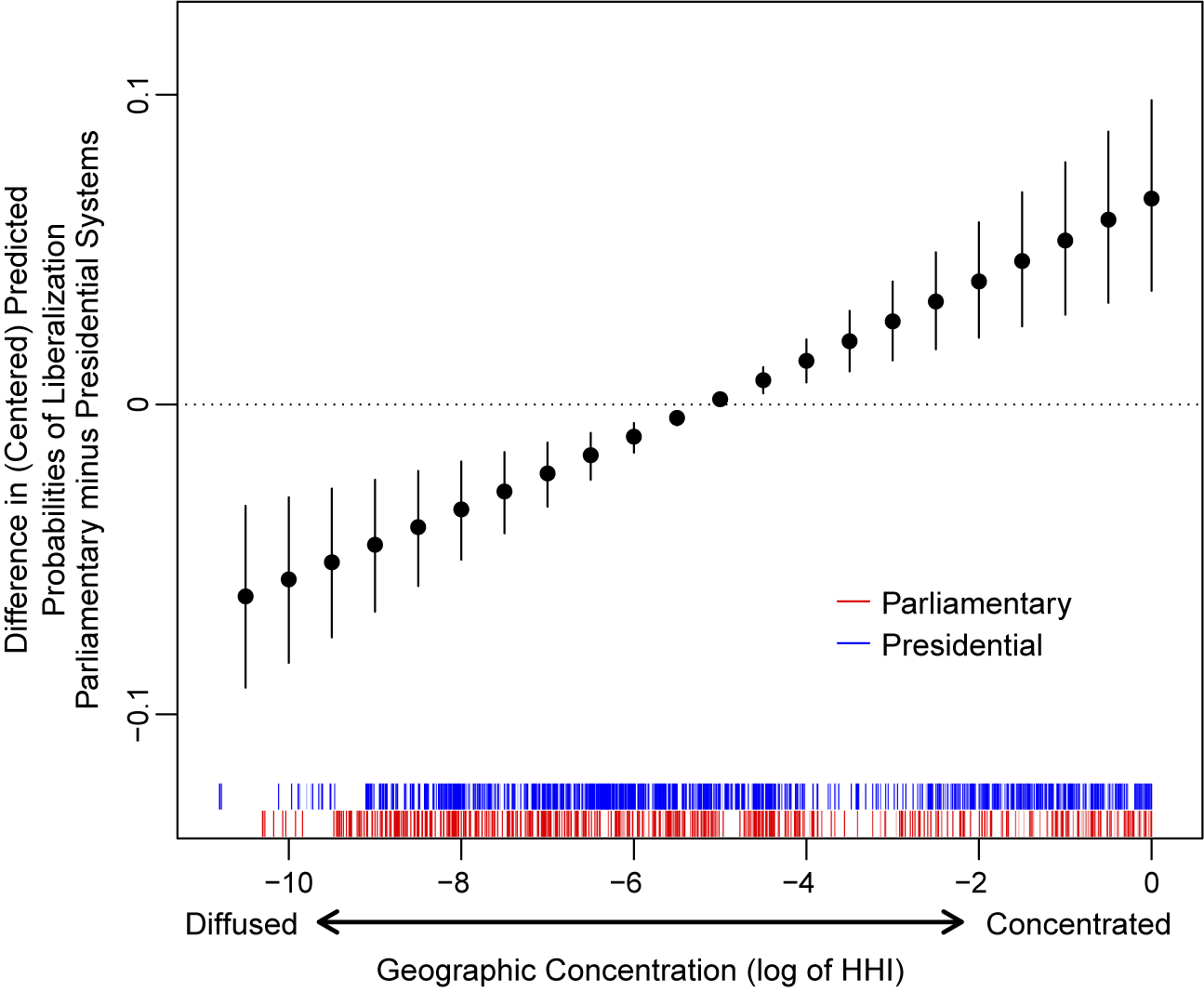


 Open access


Comments
No Comments have been published for this article.